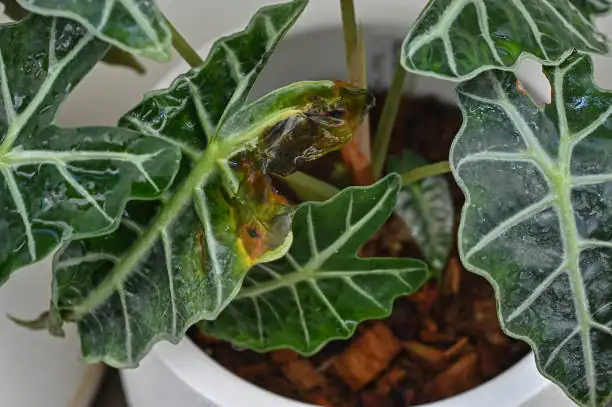
Beneath monsoon-washed canopies from India to New Guinea, great shields of green rise from the forest floor. They catch sifted light like sails, beads of rain skittering down their veins. This is where Alocasia—海芋 in Chinese, often called Elephant’s Ear—perfected the art of dramatic foliage. Today, these understory specialists stride into our living rooms on sturdy stalks, turning corners into indoor jungles. Their journey from Asian and Australasian rainforests to modern homes is a tale of ecology, hidden storage organs, careful historic food uses by some relatives, a tissue-culture revolution—and a few origin myths worth retiring.
From understory to icon: the real home of Alocasia
Alocasia is a genus in the aroid family (Araceae), native to tropical and subtropical Asia, Southeast Asia, and eastern Australia. Picture their niche: bright, filtered light beneath taller trees; warm, stable temperatures; and air that feels like velvet. Many species (there are roughly 90 described) grow as upright clumps, unfurling heart-, shield-, or arrow-shaped leaves on stout petioles. Indoors, most stay around 60–90 cm (2–3 ft), while a few giants can shoot up to about 3 m (10 ft) in ideal warmth and humidity.
Like other aroids, Alocasia can produce a spathe-and-spadix bloom—a pale hood clasping a central column. It’s a fascinating structure, but indoors you may never see it; these plants usually invest their energy in foliage.
Anatomy of a showstopper
- Leaves: Sculptural shields, often deep green and slightly leathery, etched with bold white or silvery veins; some cultivars shimmer with a subtle metallic sheen. Individual leaves commonly reach 30–50 cm (12–20 in).
- Growth: In peak summer conditions, an Alocasia may push a new leaf every week, each one unfurling in a slow spiral like a flag rising on a mast.
- Habit: Upright, clumping perennials that store energy in underground rhizomes or tubers—nature’s insurance policy against droughts or seasonal slowdowns.
Rhizomes and tubers: the survival engines
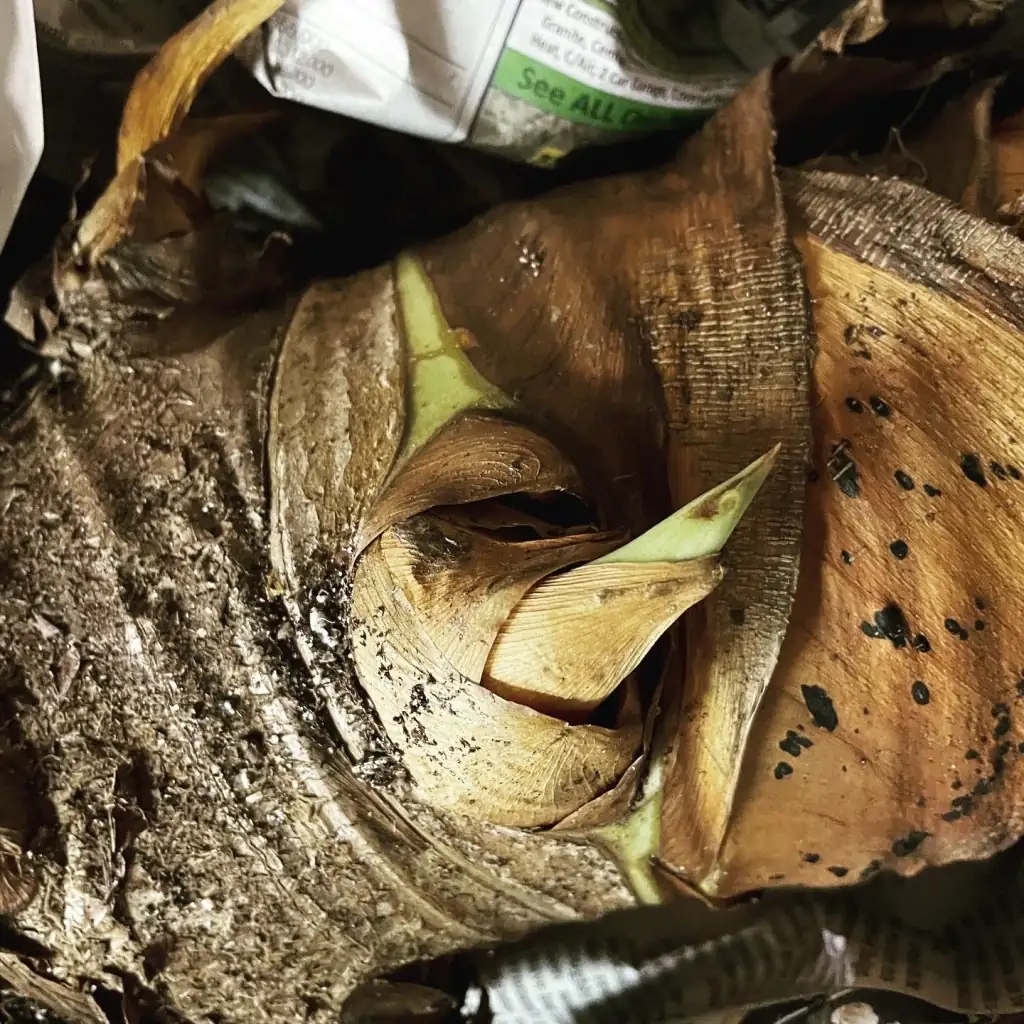
Beneath the soil, thickened rhizomes and tubers hoard starch and water. They:
- Power fresh foliage in bursts of growth.
- Spawn offsets that can be divided in spring.
- Help the plant ride out slower, drier, or cooler stretches (many Alocasias naturally ease into a dormancy-like pause in winter).
Edible? A careful footnote from the wild kitchen
In some tropical regions, people historically processed the starchy underground parts of certain related aroids—and selected Alocasia species such as Alocasia macrorrhizos (often called Giant Taro in horticulture)—as famine foods or staples. The key word is processed: raw tissues contain needle-like calcium oxalate crystals (and other irritants) that can cause intense mouth and throat irritation. Prolonged preparation is essential in traditional contexts.
For modern plant lovers, the rule is simple:
- Don’t treat ornamental Alocasia as food. They’re toxic to people and pets.
- Sap can irritate skin and eyes; wear gloves when pruning or dividing.
The modern boom: tissue culture and the cultivar kaleidoscope
The last few decades saw Alocasia rocket from conservatories into everyday homes. A big reason: tissue culture. By propagating tiny, clean pieces of growing tissue in sterile labs, growers can:
- Multiply rare plants quickly and uniformly.
- Make previously scarce cultivars widely available.
- Reduce the risk of passing along pathogens.
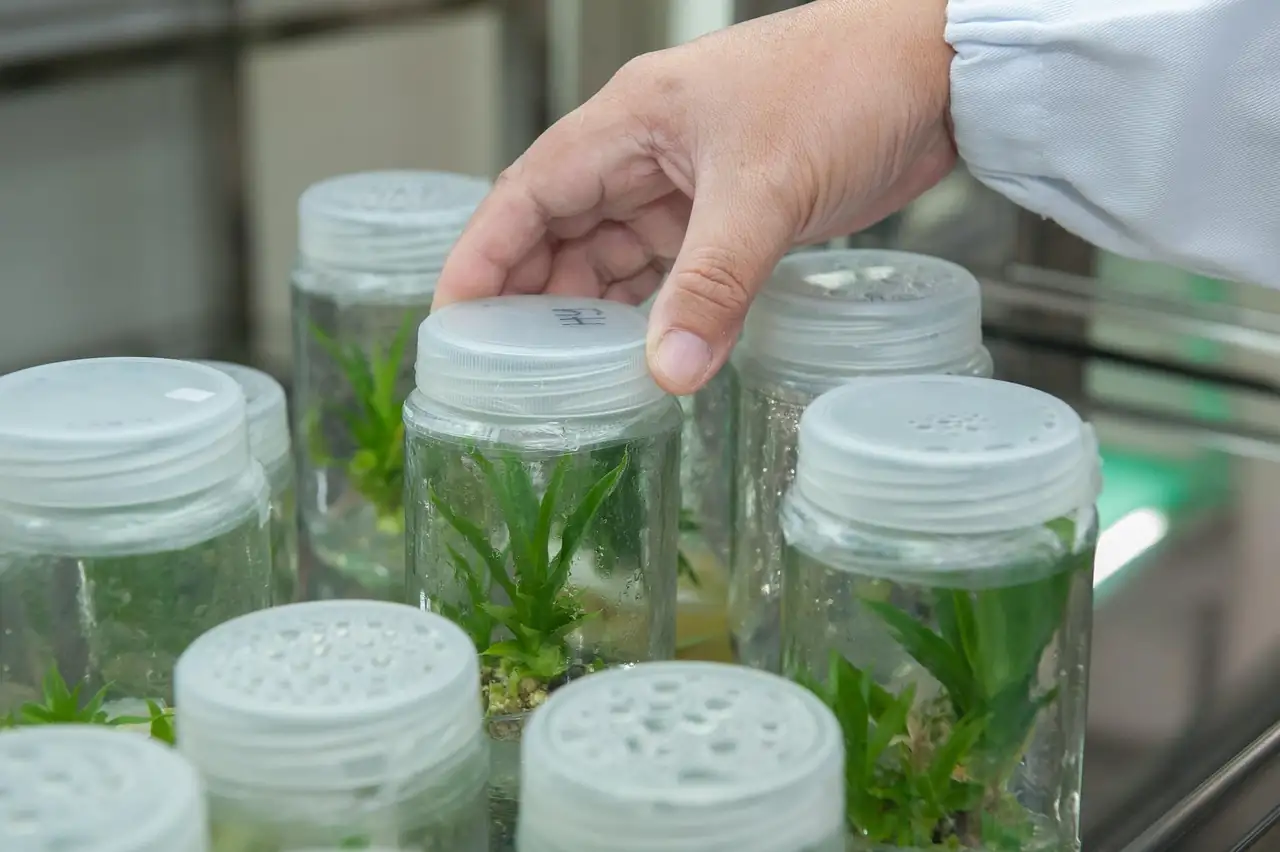
That’s why you can now find a dizzying range—from velvety arrows to dragon-scaled shields—at nurseries and online. Names you’ll meet include Alocasia ‘Dragon Scale’ (from A. baginda), A. ‘Silver Dragon’, A. micholitziana ‘Frydek’, and the ever-popular hybrid often sold as ‘Polly’.
Myth-busting corner
- Not African by origin: Despite nicknames like “African Mask Plant,” Alocasia’s native range is Asia through Southeast Asia to eastern Australia. The mask moniker nods to leaf shape, not geography.
- Not from the Amazon: The well-known hybrid Alocasia x amazonica isn’t from South America; the name traces back to the nursery trade. It’s a cultivated cross loved for bold contrast, not a jungle discovery.
- “Elephant’s Ear” ≠ one plant: The nickname is shared across several aroid genera (not just Alocasia). It’s about leaf size and shape, so don’t use the common name alone to ID a species.
- Food plant confusion: Taro (the staple crop) is usually Colocasia esculenta, a different genus. Some Alocasia relatives were historically eaten after thorough processing, but your ornamental Alocasia is not edible.
Bringing the rainforest home: care essentials
Think “bright shade” and “steady tropical comfort.”
Light
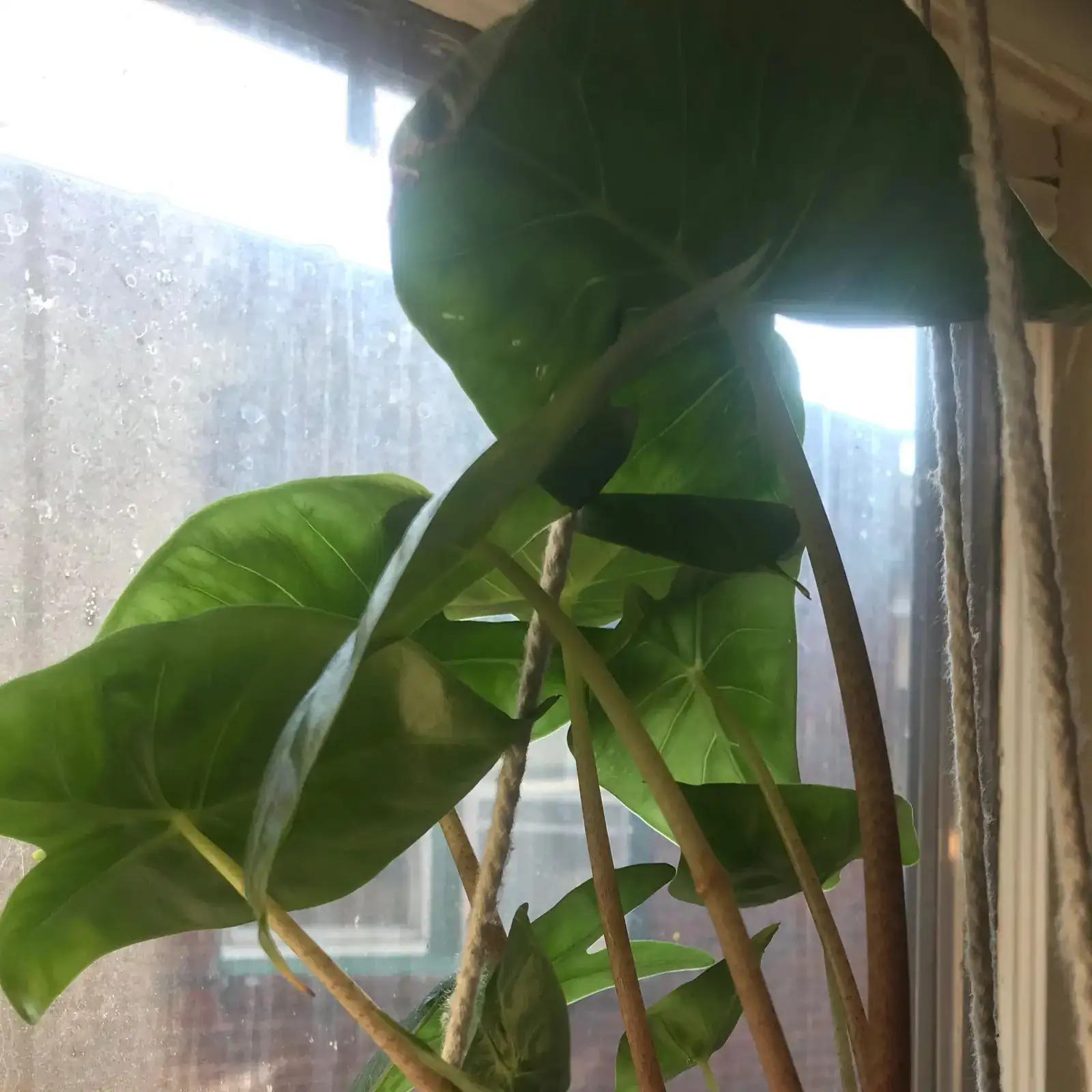
- Bright, indirect light or gentle dappled sun; about 3–5 hours of strong, filtered light daily.
- Avoid harsh midday rays that can scorch leaves.
Temperature
- Sweet spot: 15–29°C (60–85°F).
- Keep above 15°C (60°F), shield from drafts and sudden swings.
Humidity
- Loves 65%+ (aim for at least 50%).
- Use a humidifier or a pebble tray; group plants to create a moister microclimate.
Soil and pot
- Loose, airy, and well-draining yet moisture-retentive; slightly acidic (pH ~5.5–6.5).
- An aroid-style mix works well: peat or coco plus chunky orchid bark and perlite.
- Choose pots with excellent drainage; clay breathes, plastic holds moisture longer.
Watering
- Keep evenly moist, never soggy.
- Water when the top 5–8 cm (2–3 in) feels dry, then soak thoroughly and drain; empty saucers within about 30 minutes.
- Reduce in fall/winter as growth slows; keep lightly moist.
- Sensitive plants may prefer distilled water or tap water that’s rested 24 hours.
Feeding
- Spring–summer: balanced liquid fertilizer (e.g., 20-20-20) at half strength every 2–4 weeks, or slow-release every 6–8 weeks.
- Pause feeding in winter dormancy.
Pruning and handling
- Remove yellowing or damaged leaves at the base with clean tools.
- Wear gloves; sap can irritate skin.
Repotting
- Spring or summer, during active growth.
- Every 12–18 months for smaller types; 18–24 months for large floor plants.
- Size up modestly (about 2.5–5 cm / 1–2 in for small plants; 5–10 cm / 2–4 in for big ones).
Placement and hardiness
- Bright rooms out of direct blast—east or west windows are great.
- Bathrooms or kitchens work if bright and naturally humid.
- Outdoors only in frost-free climates (USDA 10–12).
Seasonal rhythm: a simple calendar
- Spring (Mar–May): Growth restarts; resume feeding and regular watering. Best time to repot and divide.
- Summer (Jun–Aug): Peak growth; maintain humidity, steady moisture, and protection from strong sun. Rapid leaf production is common.
- Fall (Sep–Nov): Taper fertilizer and watering slightly as growth slows.
- Winter (Dec–Feb): Many types partially or fully rest; keep warm (above 15°C/60°F), water sparingly, and expect some leaf drop.
Pests, diseases, and rescue tactics
- Usual suspects: spider mites (the top indoor pest), mealybugs, scale, aphids.
- Treatment: Gently wipe leaves; use insecticidal soap or neem oil; repeat as needed.
- Diseases: Root rot from soggy mix; fungal leaf spots; bacterial soft rot.
- Prevention: Fast-draining soil, avoid frequent overhead watering, ensure airflow, and isolate any plant showing trouble.
Quick bloom note (and why you might never see it)
Alocasia blooms are classic aroid spathe-and-spadix affairs in yellow to yellow-green tones. Indoors they’re uncommon; most plants pour resources into those grand leaves instead.
Buying and propagating
- What to look for: Firm stems, crisp leaves with rich color and clean undersides. Skip plants with spreading yellowing, brown spotting, or heavy pest signs. Avoid severely root-bound pots if possible.
- Division at home: In spring, unpot, gently tease soil from the rhizomes/tubers, and separate offsets so each piece has roots and a growth point. Pot into a well-draining mix and keep warm, humid, and bright (indirect light).
- Commercial propagation: Tissue culture underlies much of today’s availability and uniform quality.
Symbolism and the truth behind “flower language”
Despite the “flower” in flower language, Alocasia is adored for foliage. Modern symbolism casts it as:
- Resilience and growth—bold leaves standing tall through change.
- In Feng Shui circles, a plant of momentum and prosperity, often placed to encourage career energy.
These meanings are cultural and contemporary, not ancient lore tied to its native range. Think of them as reflective metaphors born from the plant’s posture and presence rather than age-old myth.
FAQs
- Why are my leaves turning yellow?
- Usually a watering issue (too wet or too dry). Low light, low humidity, cool temps, spent soil, or nutrient gaps can contribute. If only the oldest leaf yellows as a new one appears, that can be normal aging.
- Why is my plant drooping?
- Check moisture first—both drought and soggy roots cause wilt. Also consider dim light, recent temperature swings, or root rot (mushy, foul-smelling roots).
- Should I mist?
- Light morning misting helps a bit, but a humidifier is more reliable. Avoid constantly wet leaves to reduce spotting and fungal issues.
- Does Alocasia go dormant?
- Many do in winter. Growth can slow dramatically and some leaves may drop. Keep warm, skip fertilizer, and water sparingly—just enough to keep the mix from bone-dry stretches.
- What does overwatering look like?
- Yellowing, drooping, water-soaked or brown patches, and a limp look. Fungus gnats, moldy soil, or sour smells point to excess moisture and possible root rot.
Fun facts
- In warm, humid summers, many Alocasias can unfurl about one new leaf per week.
- “Elephant’s Ear” nods to those oversized, flared leaves.
- The genus includes many species and even more cultivars—veins, textures, and greens run the gamut from satin to armored “dragon” scales.
- Indoors, plants often skip flowers and double down on the leaf show.
From shadowed Asian and Australasian understories to the bright corners of modern homes, Alocasia carries a rainforest mood wherever it grows. Give it filtered light, steady warmth, and a generous sip of humidity, and it will stand tall—living sculpture with a pulse.