If you’ve ever wondered why some Baby Rubber Plants look perfectly plump and polished while others stretch and sulk, here’s the secret: it’s the light. Peperomia obtusifolia isn’t a sunbather, and it isn’t a cave-dweller either—it’s a canopy-lover that thrives in bright, filtered light. Map the light well and your plant will stay compact, glossy, and steadily lush year-round.
Meet the Baby Rubber Plant (Peperomia obtusifolia)
- Compact, evergreen, and succulent-like leaves that store water
- Usually stays 8–12 inches tall and wide indoors
- Grows slowly and neatly on desks and shelves
- Pet-safe, low-maintenance, and forgiving of the occasional missed watering
- Produces quirky, tail-like flower spikes in summer to early autumn (foliage is the star)
Think rainforest understory: warm, bright, and filtered—never harsh.
Light, Mapped: Finding the Sweet Spot
What “bright, filtered light” really looks like
- Aim for a bright room where direct sun is softened by a sheer curtain, blinds, or a setback from the window.
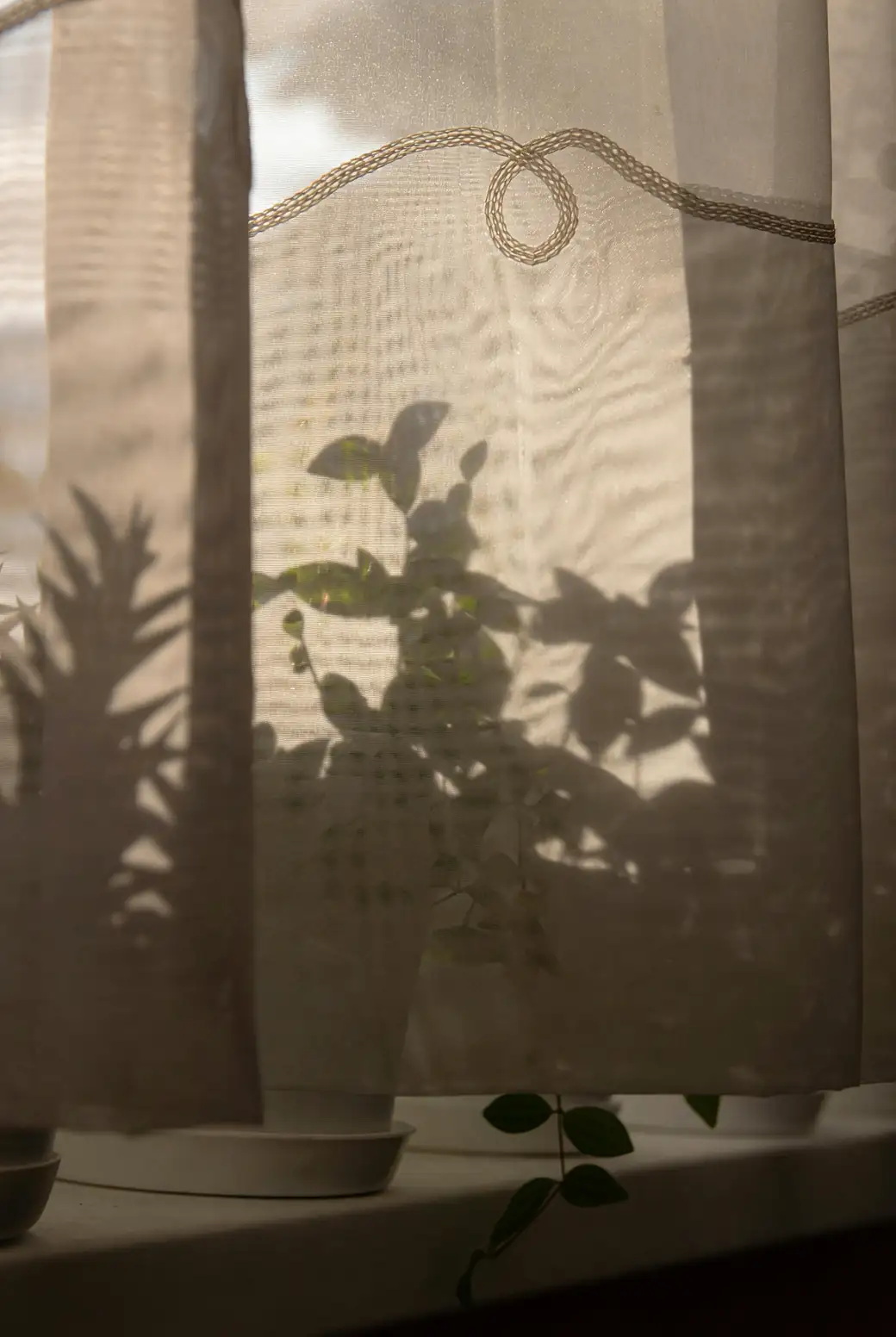
- A soft-edged shadow (hand test) is perfect; a crisp, dark shadow means the light is too intense.
- From spring to autumn, gently filter strong sun (roughly 40–50% shade is ideal). In winter, give it the brightest spot you have.
- It tolerates lower light but will grow looser and less dense, with smaller, less glossy leaves.
East vs. West windows (and what to do in each)
- East windows: Morning sun is gentle—this is prime real estate. Place your plant right on the sill or within 0–2 feet for dense, even growth.
- West windows: Afternoon sun can be harsh. Move the plant 2–6 feet back or hang a sheer curtain. In summer especially, filter or step it farther from the glass to prevent scorch.
- South windows: Great brightness—just filter with a sheer or place a few feet back.
- North windows: Often workable if unobstructed and bright, but watch for legginess. Consider a supplemental grow light in darker homes.
Distance cheat sheet
- East: sill to 2 ft (no filter needed for most homes).
- West: 2–6 ft back or use a sheer curtain; closer is fine in winter if filtered.
- South: 3–6 ft back with a sheer for midday sun.
- North: close to the glass; supplement if growth stretches.
Rotation = fuller, glossier foliage
Your Peperomia will lean toward its light source. Rotate the pot about half a turn weekly to:
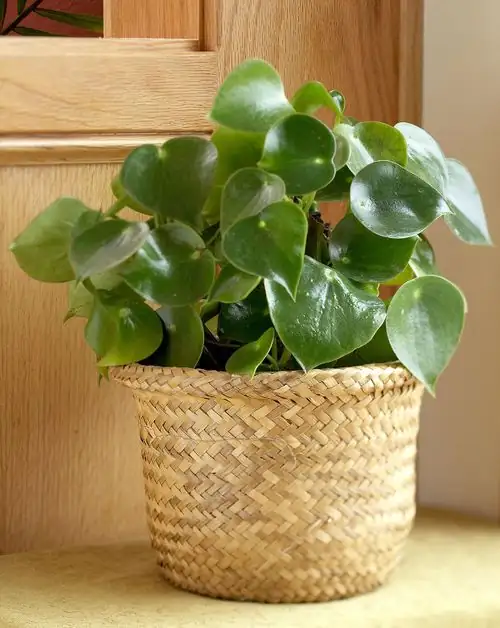
- Encourage even, compact branching
- Prevent a lopsided look
- Keep leaf sheen consistent on all sides
Pro tip: Pinch growing tips now and then to promote branching if you’ve been in lower light.
Winter Brightening (without burning)
Light drops dramatically in winter. Keep growth tidy and healthy with:
- A move closer to the brightest window; pull open blinds fully
- Clean window glass and dust leaves so they can capture more light
- Use a sheer only if direct midday sun is intense—otherwise, let more light in
- Add a small LED grow light on a timer for 10–12 hours if your space is dim
- Keep warm, above 10°C (50°F), and away from cold drafts
- Water less often and skip fertilizer until spring
Read the Leaves: Are You in the Sweet Spot?
Not enough light
- Stretched, leggy stems; wider gaps between leaves
- Smaller, thinner leaves; overall plant leans toward the window
- Variegation on variegated forms fades
- Potting mix stays wet for too long
Fix it: Move closer to bright filtered light, increase day length with a grow light, and rotate weekly.
Too much light
- Pale, bleached, or scorched patches; crispy edges or dull, “tired” sheen
- Soil dries too quickly; leaves may feel overly warm
- Sudden yellowing on older leaves when the plant is stressed
Fix it: Add a sheer curtain, step back from west/south windows, or shift to an east exposure.
Light and Water Work Together
Brighter light = faster growth and quicker drying soil; lower light = slower drying. Anchor your watering to the soil, not the calendar:
- Water when the top 2 inches (about 5 cm) of mix is dry, then soak thoroughly and empty the saucer.
- Typical rhythm: every 7–10 days in summer, every 2–3 weeks in winter—adjust for your light, temperature, pot size, and soil.
- Use a loose, fast-draining mix (peat/coco + perlite, with optional bark) and always a pot with drainage.
Overwatering in low light is the number one way to lose a Baby Rubber Plant—let the mix dry partially every time.
Variegated Baby Rubber Plants: Keep the Pattern Crisp
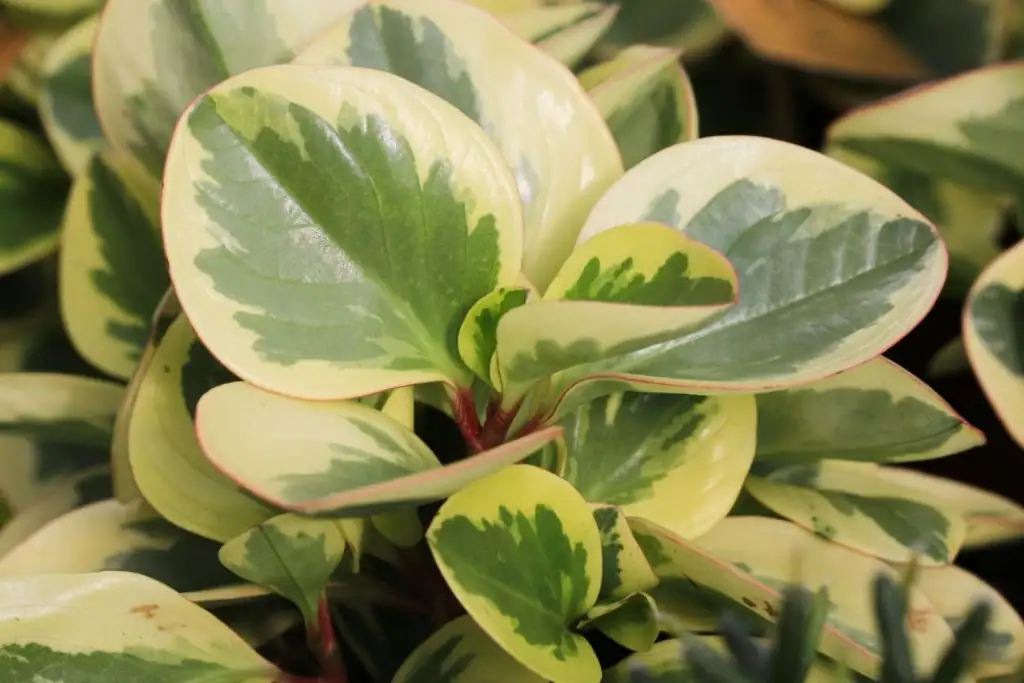
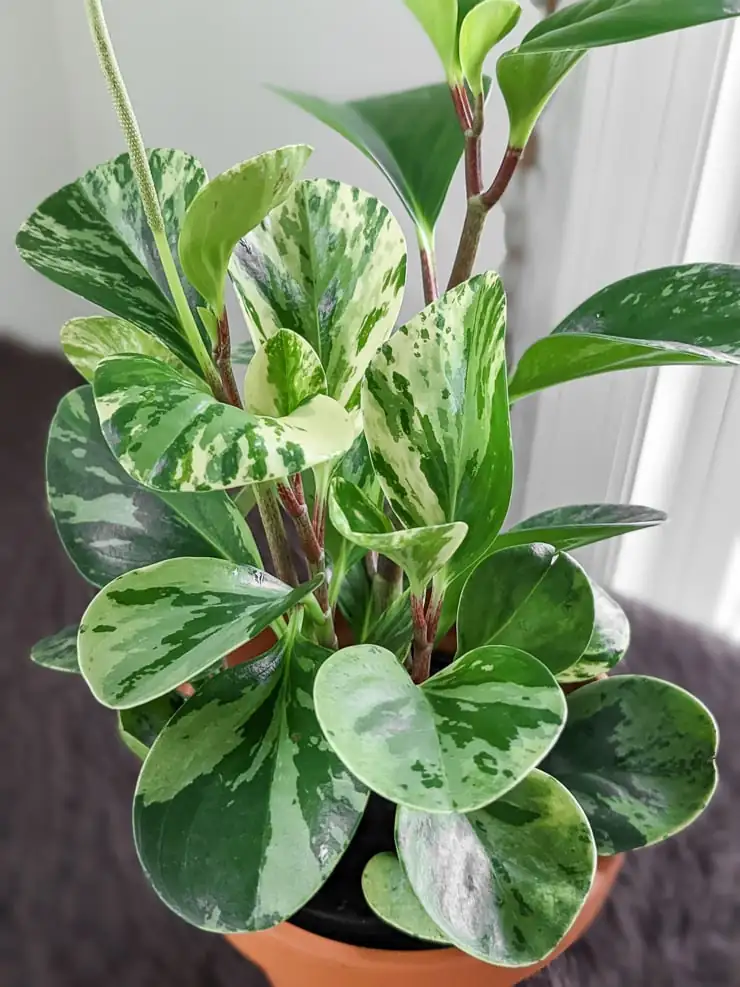
- They appreciate a notch brighter (still filtered) than solid green forms to maintain variegation.
- Feed lightly during active growth and avoid excess nitrogen, which can blur patterns and encourage stretched growth.
- Rotate weekly for even color on all sides.
Ideal Placements (and easy upgrades)
- East-facing desks, bedside tables, or shelves
- Near a south/west window with a sheer curtain
- Bright bathrooms with a window and good airflow
- Under a small LED grow light in darker corners (keep the light 8–14 inches above foliage, and avoid heat buildup)
A Five-Step “Light Map” for Your Home
- Scout the bright zones: Stand in each room around 9–11 a.m. and 3–5 p.m. Notice where light lingers longest.
- Do the shadow test: Soft-edged hand shadows = perfect filtered light; sharp shadows = too strong; no defined shadow = likely too dim.
- Place and buffer: Start at an east window or 2–4 feet back from a west/south window with a sheer.
- Set a rotation ritual: Half-turn every week; pinch tips if stems start to stretch.
- Tune with the seasons: In summer, add filtering; in winter, move closer and consider a 10–12-hour grow light assist.
Quick Care Boosters That Support Great Light
- Temperature: Best around 16–24°C (61–75°F); keep above 10°C (50°F).
- Humidity: Adapts to average home humidity; in very dry winters, a pebble tray or humidifier helps. Prioritize good airflow; avoid stagnant, constantly damp air.
- Pruning: Pinch to compact, remove tired leaves, and thin crowded stems for airflow.
- Repotting: Every 2–3 years, only one pot size up—this plant likes it slightly snug.
Symbolism and a Little Lore
Peperomia is often shared as a wish for steady, calm growth and homey comfort—the plant equivalent of “everything will be alright.” You may hear it nicknamed “Radiator Plant,” a popular moniker said to reflect its love of warm, bright perches in old homes near sunny windows. Whether or not that origin story is perfectly pinned down, the sentiment fits: give it cozy warmth and bright, filtered light, and it will reward you with reassuring, tidy growth.
Mini FAQ: Light Edition
- Can it handle direct sun? Gentle morning sun is fine; harsh midday/afternoon rays can scorch. Filter or step back.
- Will it live in low light? It’ll survive, but expect leggier growth and fewer glossy leaves. Bright filtered light is the sweet spot.
- Do I need to rotate it? Yes—half-turn weekly for dense, even growth and that signature gloss.
- Do variegated forms need more light? Slightly brighter (still filtered) light helps them keep their pattern crisp.
Dial in the light, keep the mix airy, and rotate with intention—your Baby Rubber Plant will stay compact, glossy, and effortlessly elegant, season after season.