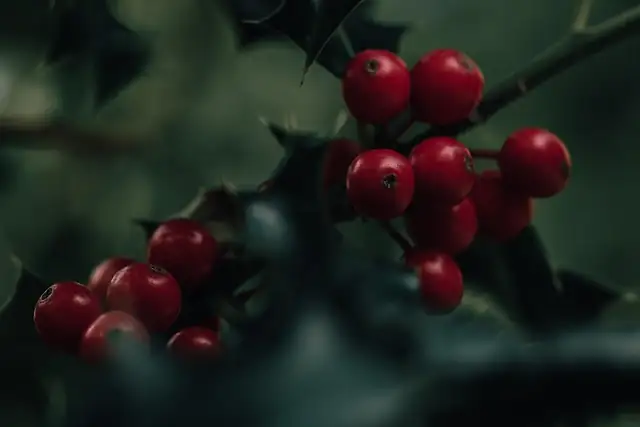
In the heart of winter, when the world is blanketed in cold and darkness, a vibrant splash of red and green stands resilient against the frost: the holly. Known scientifically as Ilex spp., this enchanting plant captivates not only with its striking appearance but also with the profound symbolism woven through centuries of cultural traditions.
A Timeless Symbol of Hope and Protection
Holly has long been a beacon of hope and protection, its evergreen leaves and bright berries offering a promise that life endures even through the darkest months. This symbolism is richly layered, a tapestry of ancient beliefs and modern interpretations.
From Pagan Rituals to Christian Traditions
The journey of holly through history is a fascinating one. In Celtic mythology, holly was revered as the evergreen counterpart to the oak, ruling over the dark half of the year. Celtic chieftains wore holly wreaths as crowns, believing them to bring good luck and protection from harm. The Druids, too, saw holly as a sacred plant, associating it with fertility and eternal life.
As the Roman Empire expanded, the Saturnalia festival celebrated the god Saturn, using holly to decorate homes and temples. This festival reminded people that the sun would return, bringing abundance and renewal.
Later, early Christians adopted holly into their own winter celebrations. The sharp, spiny leaves came to symbolize the crown of thorns worn by Christ, while the red berries represented his blood. Thus, holly became intertwined with Christmas traditions, a symbol of Christ’s sacrifice and the eternal life promised through faith.

The Holly and the Ivy: A Symbolic Dance
The famous carol “The Holly and the Ivy” beautifully encapsulates the duality of holly’s symbolism. In pre-Victorian Britain, holly was often simply referred to as “Christmas,” a testament to its integral role in holiday lore. The carol speaks to the harmony between the holly and the ivy, representing masculine and feminine forces of nature—a dance of balance and renewal.
The Botanical Marvel: Beauty and Resilience
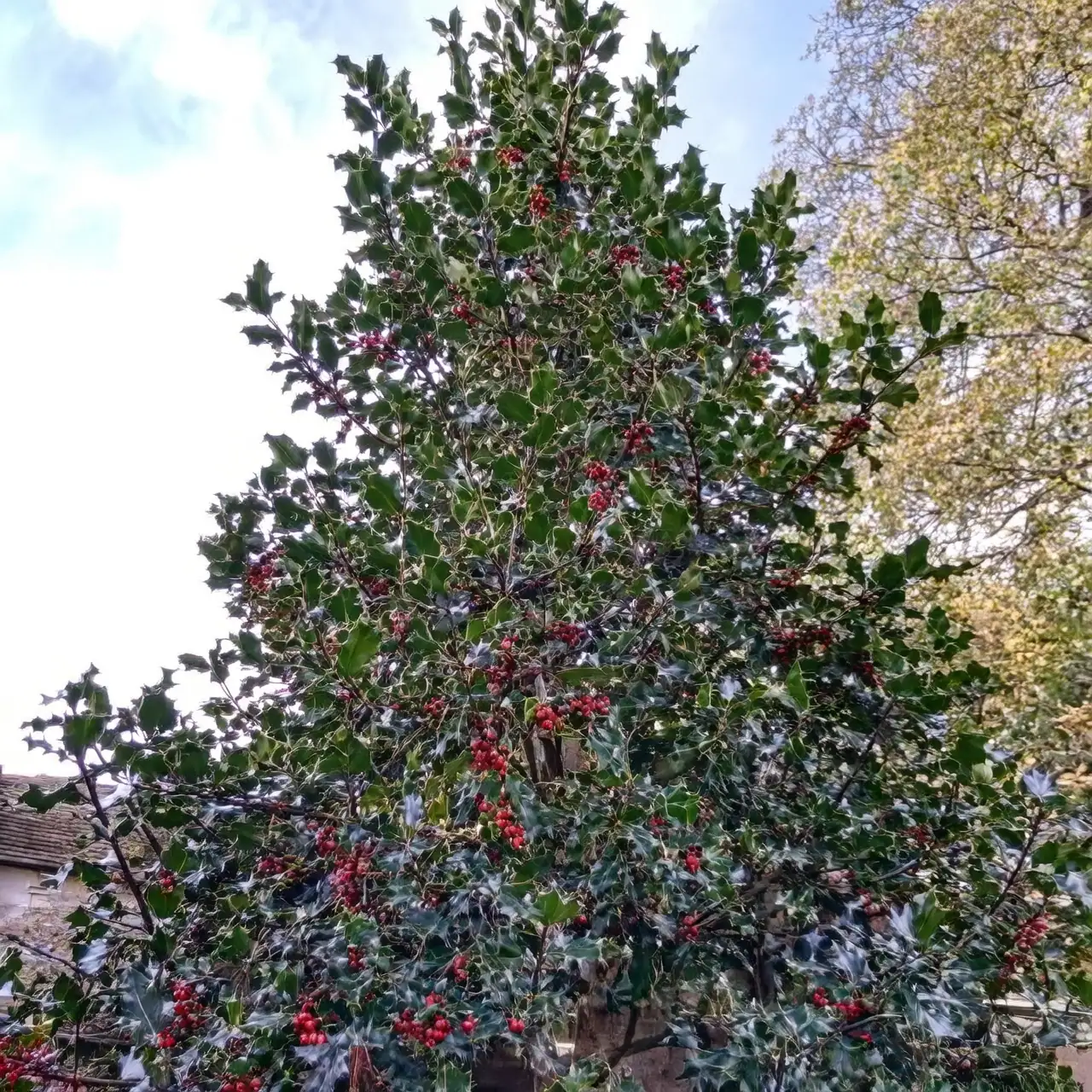
Beyond its symbolism, holly’s botanical characteristics are equally fascinating. With its glossy, spiny leaves and vibrant berries, holly is as much a feast for the eyes as it is a boon for wildlife. Birds, particularly robins, rely on holly berries as a crucial food source during the winter months, when sustenance is scarce.

Growing and Caring for Holly
Hollies are remarkably diverse, ranging from compact shrubs to towering trees. They thrive in a variety of environments, from full sun to partial shade, and prefer well-draining, slightly acidic soils. While they are generally hardy, offering shelter from harsh winds can prevent winter burn.
For those looking to bring holly into their gardens, it’s important to note that many varieties are dioecious, meaning that both male and female plants are needed for berry production. Planting them within 30–40 feet of each other ensures pollination and a bountiful berry harvest.
Holly in the Modern World: Tradition Meets Innovation
Today, holly continues to hold a cherished place in holiday décor. From wreaths adorning doors to sprigs accenting festive table settings, holly infuses a space with warmth and tradition. Its ability to brighten the darkest days with its radiant foliage and berries makes it a perennial favorite in winter celebrations.
Fun Facts and Modern Uses
- The Wand of Protection: In the world of Harry Potter, holly is the wood of choice for Harry’s wand, echoing its traditional association with protection.
- A Material of Craft: Historically, holly wood was prized for its density and fine grain, often dyed black to imitate ebony in crafts and furniture.
As you gather with loved ones this holiday season, consider the holly not just as decoration but as a living link to a rich tapestry of history and symbolism. Whether it’s protecting your home from malevolent spirits or simply adding a touch of natural elegance to your festivities, holly is a timeless reminder of resilience, hope, and the enduring beauty of nature.