Plant Features
- Size: Up to about 16 m (52 ft) tall, developing a broad oval canopy with age.
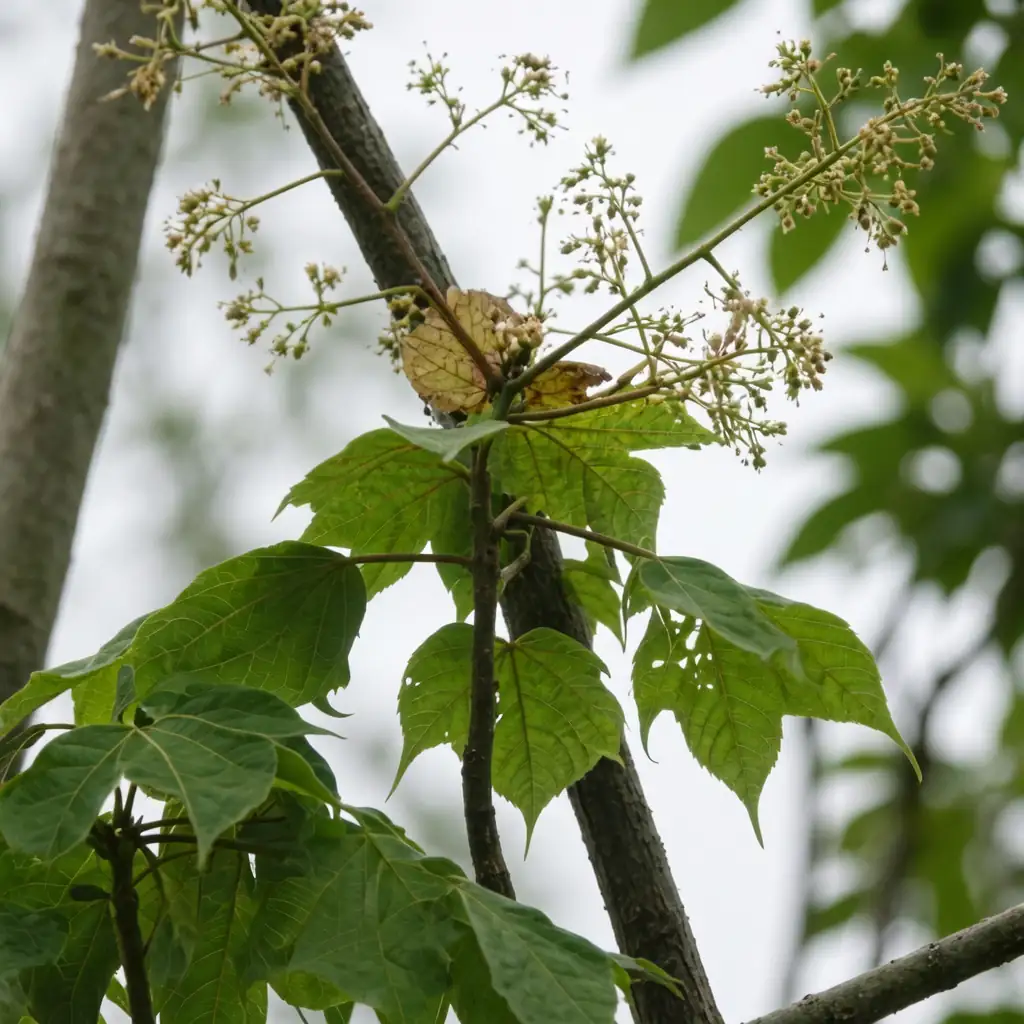
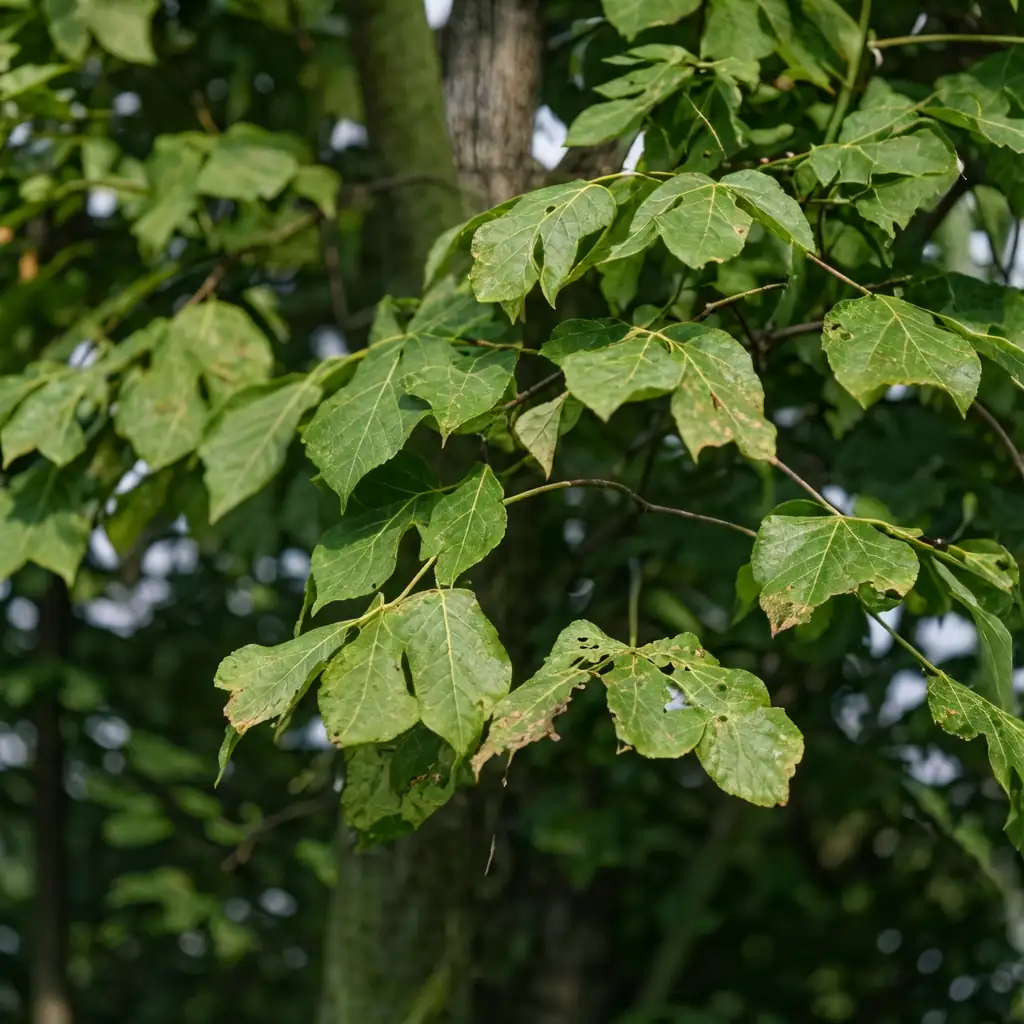
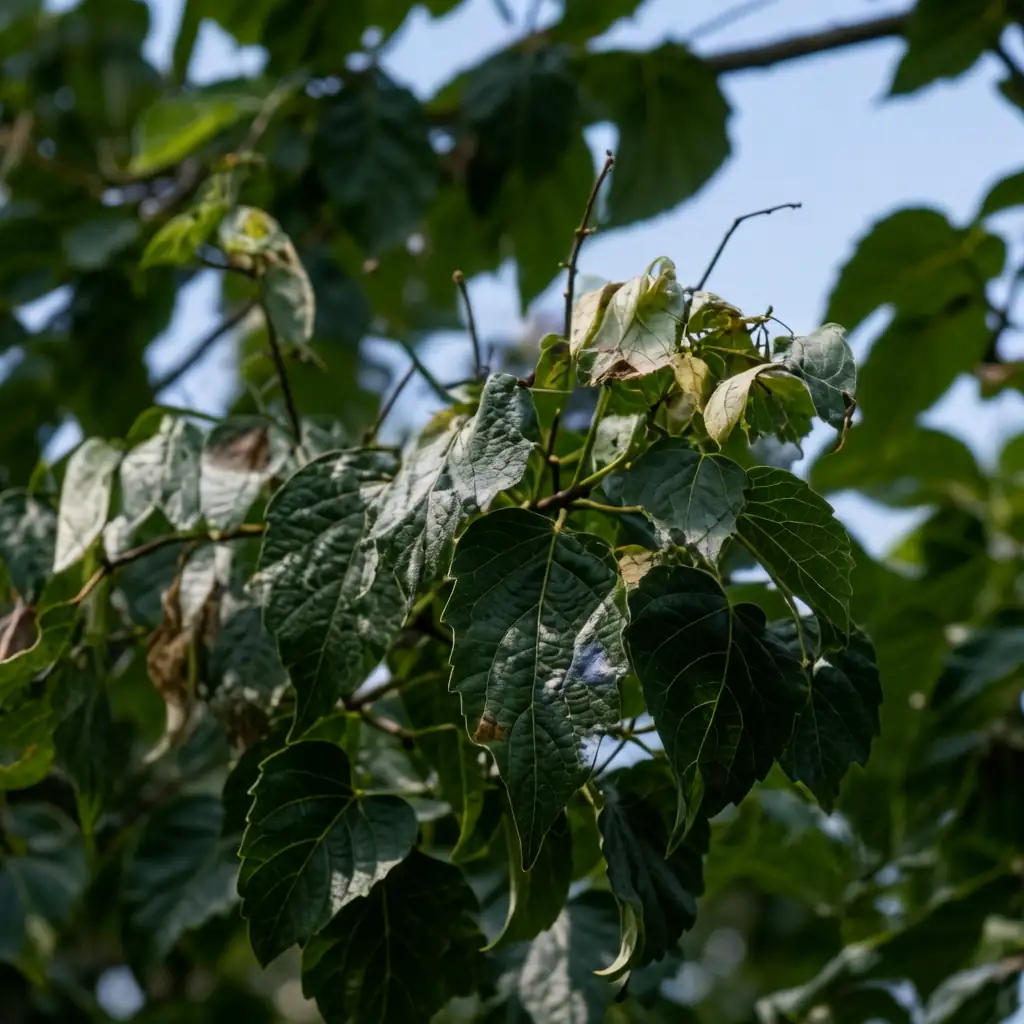
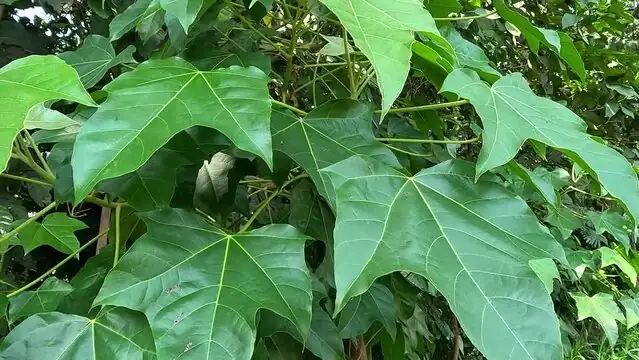
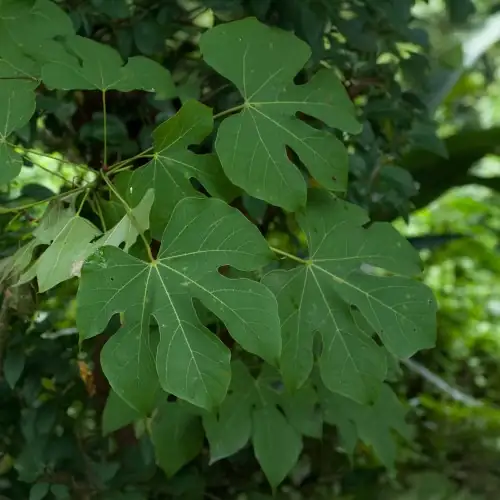
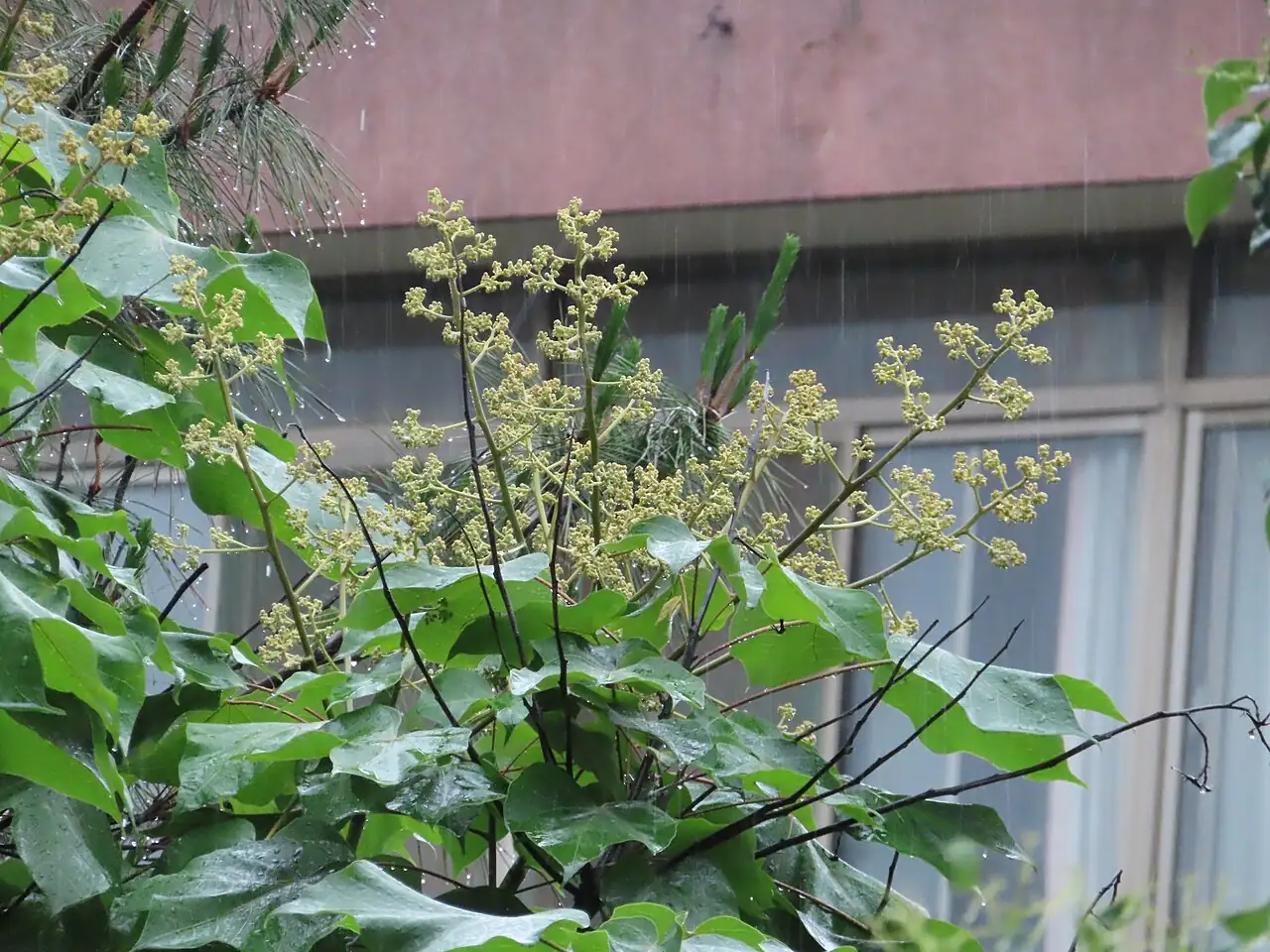
- Foliage: Leaves are large with a heart-shaped base and are palmately lobed (usually 3–5 lobes) with smooth margins. Petioles (leaf stalks) are often about as long as the leaf blade. Young twigs are notably green, smooth, and quite ornamental. It tends to leaf out later in spring and may shed leaves relatively early in autumn.
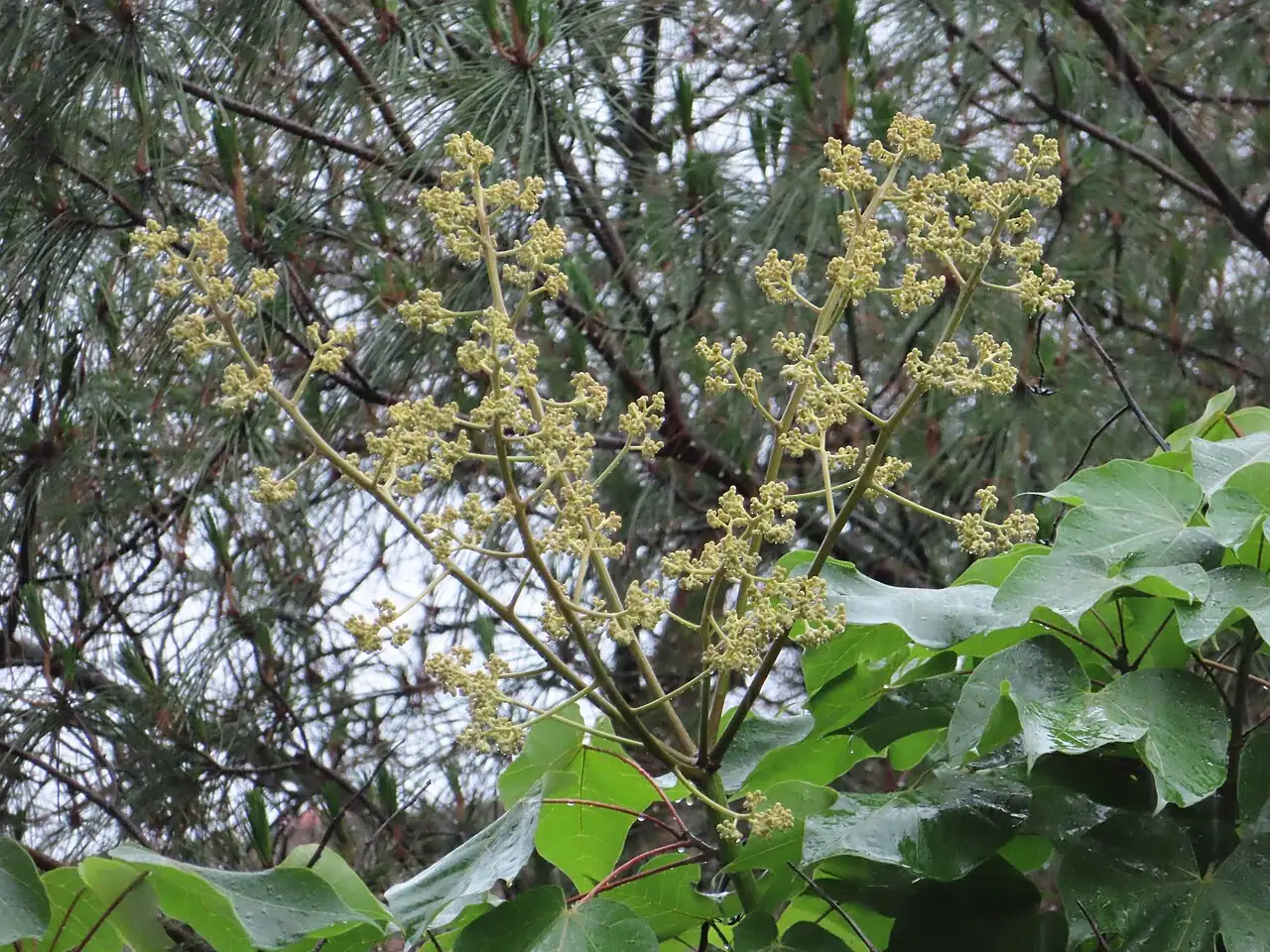
- Flower: Flowers are small and somewhat understated, with narrow strap-like sepals that curl outward; overall color is yellow‑green often tinged or flushed with red. After flowering, it forms distinctive spoon-shaped capsules marked by prominent net-like veins.
- Flowering Season: June (early summer)
- Growth Habit: Upright, tall deciduous tree with a straight trunk and a neat oval crown; late spring leaf-out and sometimes early autumn leaf drop.
Environment
Sunlight
Full sun for strongest growth and best canopy; tolerates light shade.
Temperature
Warm-temperate tree; typical active growth around 15–30°C (59–86°F). Young trees benefit from protection from severe frost and cold winds.
Humidity
Prefers evenly moist conditions and performs best where the soil doesn’t stay dry for long stretches.
Soil
Deep, fertile, moisture-retentive but well-drained soil. Tolerant of calcareous/limestone soils; avoid persistently waterlogged ground.
Placement
Best outdoors in open ground with room for its mature canopy—along roads, in parks, near homes, and on slopes (including limestone areas).
Hardiness
Approximately USDA Zone 7–10 (winter minimums roughly -18 to -1°C / 0 to 30°F depending on provenance); best in warm-temperate regions and away from harsh exposure.
Care Guide
Difficulty
Easy to moderate in the landscape once established; generally not a long-term container plant due to its eventual size.
Buying Guide
Pick a young tree with a straight central leader and healthy, unscarred trunk. Look for clean, evenly colored foliage and vigorous green twigs; avoid plants that are pot-bound, have soft/blackened roots, or show heavy insect residue or spotting.
Watering
After planting, water deeply and keep soil evenly moist through the first 1–2 growing seasons. Once established it becomes moderately drought-tolerant, but grows faster and looks better with regular watering during hot, dry spells. Let the top layer of soil dry slightly between waterings; never leave roots sitting in standing water.
Fertilization
In spring, top-dress with compost or use a balanced slow-release fertilizer. On already-fertile soils it needs little feeding; avoid overdoing nitrogen, which can push weak, overly lush growth.
Pruning
Prune in late winter to early spring to build a strong framework: remove dead/damaged wood, crossing branches, and maintain a single leader when young. Avoid heavy pruning during active growth.
Propagation
Most commonly grown from seed. Sow fresh seed in spring with warmth and consistent moisture for best germination. Semi-ripe cuttings can work but are less commonly used than seed.
Repotting
Not usually kept in pots long-term. If container-grown while young, pot up in spring into a deep container with excellent drainage, then plant out before it becomes root-bound.
📅 Seasonal Care Calendar
Leaf-out is relatively late in spring. Flowers typically appear in June; fruit develops through summer and generally matures around September–October. Leaf drop can be relatively early in autumn.
Pests, Diseases & Safety
Common Pests & Diseases
Generally a sturdy tree. Possible issues include aphids, scale insects, and caterpillars—manage with pruning of infested shoots, horticultural oils, and appropriate biological/targeted controls. In poorly drained sites, root stress and decline can occur; improving drainage and avoiding waterlogging are key preventatives.
Toxicity
No widely cited, well-established toxicity for typical household exposure, but it’s still best practice not to ingest any plant parts and to keep fallen leaves/seeds away from pets and small children.
Culture & Symbolism
Symbolism: In Chinese culture it’s closely tied to the feeling of seasonal turning—especially the clear signal of autumn—because it can drop leaves earlier than many trees.
History & Legends: Its habit of leafing out late yet sometimes shedding early inspired the saying: “When a parasol tree leaf falls, everyone knows autumn has come.”
Uses: Primarily an ornamental shade and street tree. Appreciated for its broad canopy, handsome leaves, and tolerance of urban/industrial air pollution, making it useful in parks, avenues, and even greening around factories or mining areas. It also pairs beautifully with palms, bamboo, and banana plants for an East Asian garden mood.
FAQ
What is the scientific name of Chinese parasol tree?
Firmiana simplex.
When does it flower?
Most commonly in June (early summer).
When does it fruit?
Fruits typically mature around September–October.
How big does it get?
In good conditions it can reach about 16 m (52 ft) tall with a broad oval canopy.
Where should I plant it?
Plant it outdoors in open ground with full sun and enough space for its mature crown, in deep, well-drained soil (it also tolerates limestone soils).
Fun Facts
- Its late spring leaf-out and sometimes early autumn leaf drop helped inspire a famous saying about how a single falling leaf can announce the arrival of fall.
- It’s often chosen for city planting because it tolerates several air pollutants better than many large shade trees.
- The smooth green young twigs can be surprisingly decorative even when the tree isn’t in flower.
- Its spoon-shaped fruit capsules have a striking netted vein pattern that makes them easy to recognize.