Plant Features
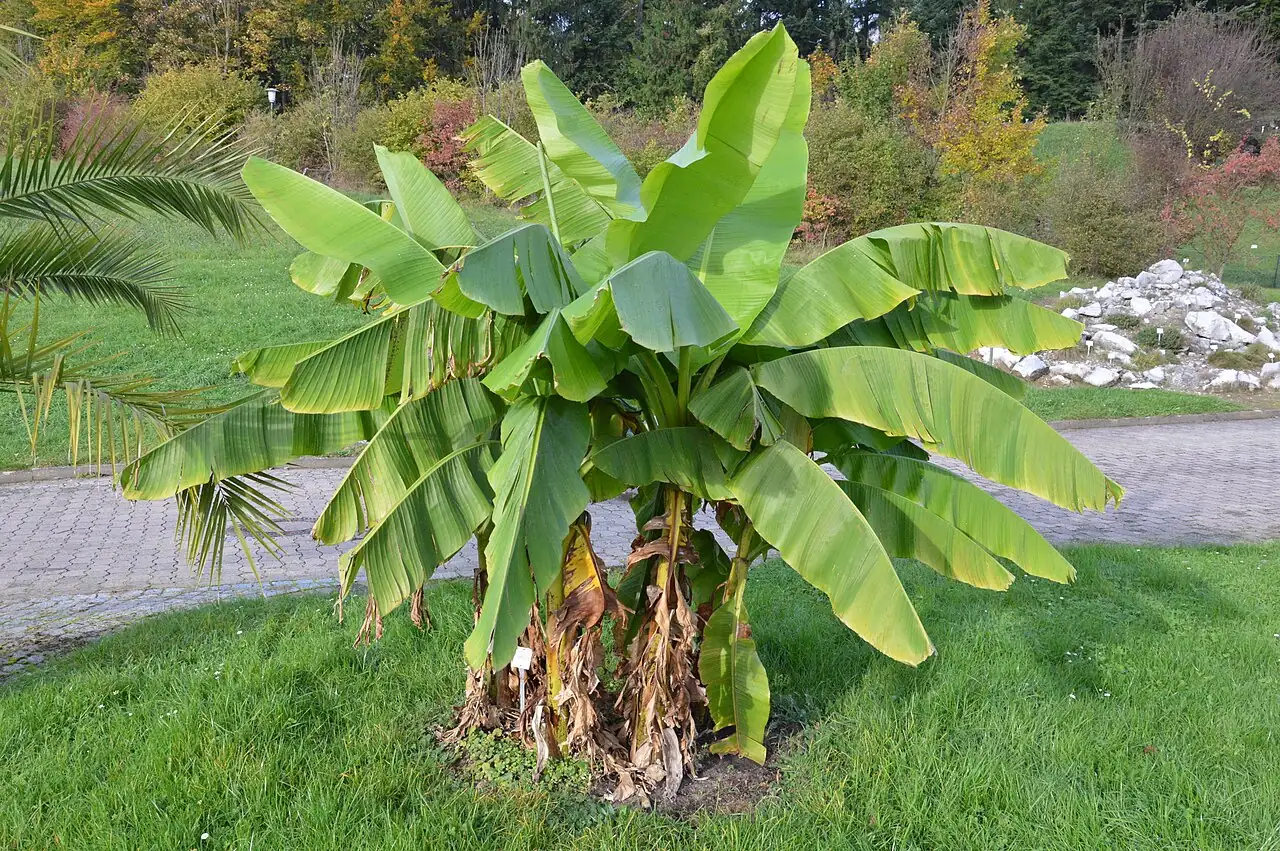
- Size: Typically 2.5–4 m (8–13 ft) tall with a spread around 1.5–3 m (5–10 ft) in good conditions.
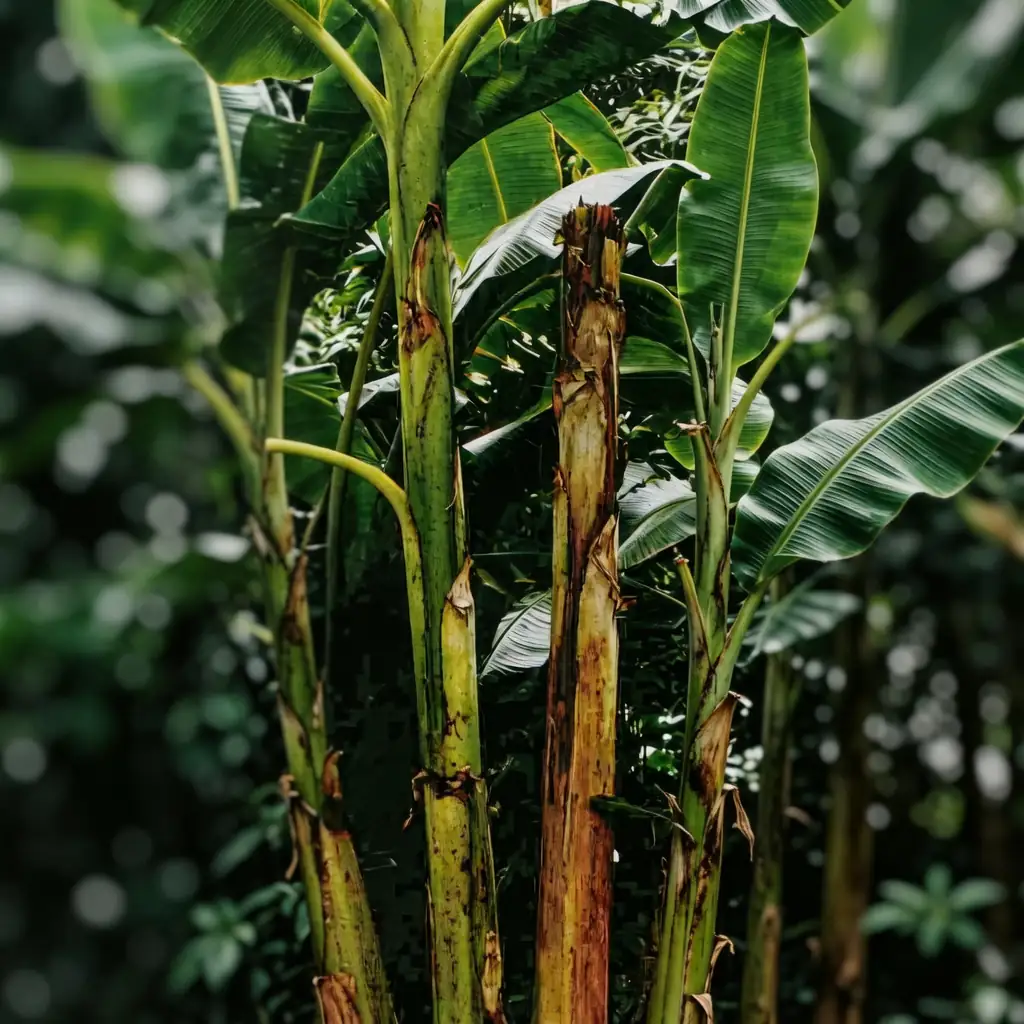
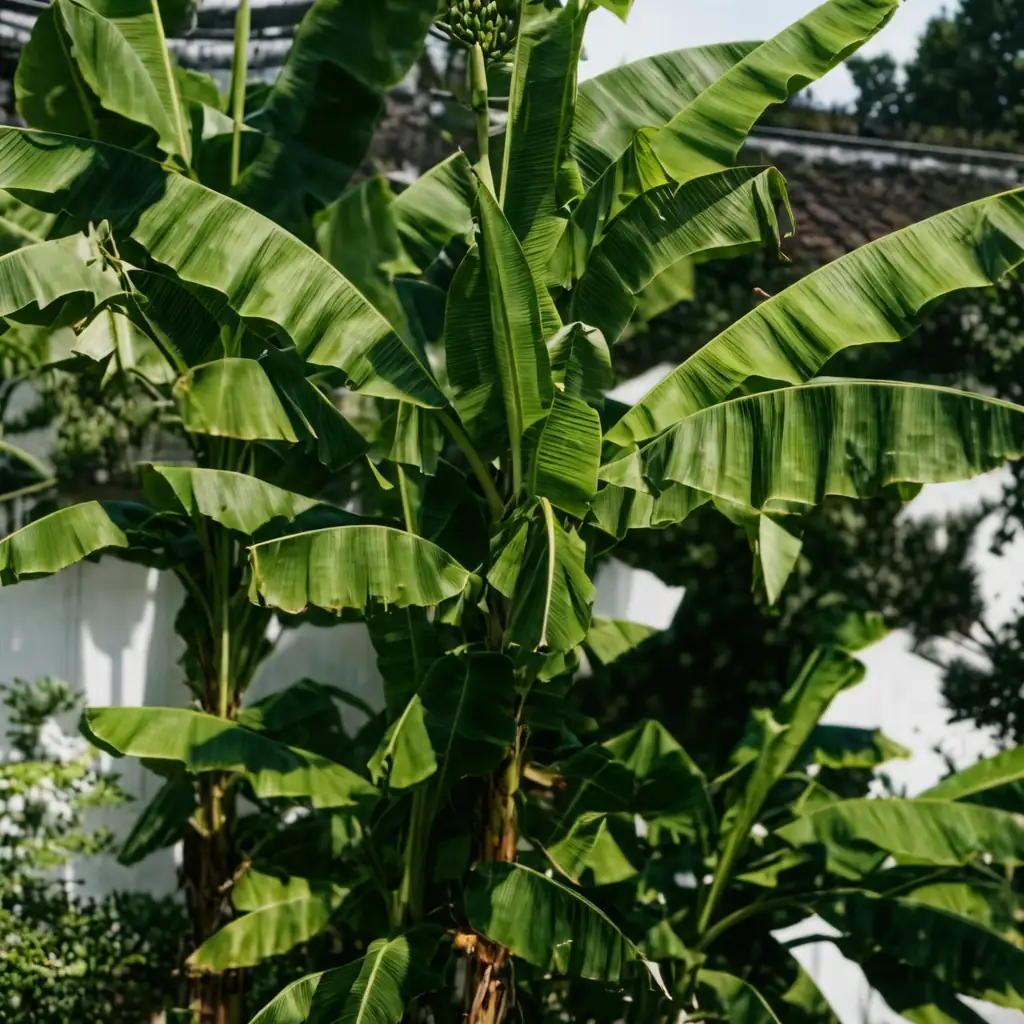
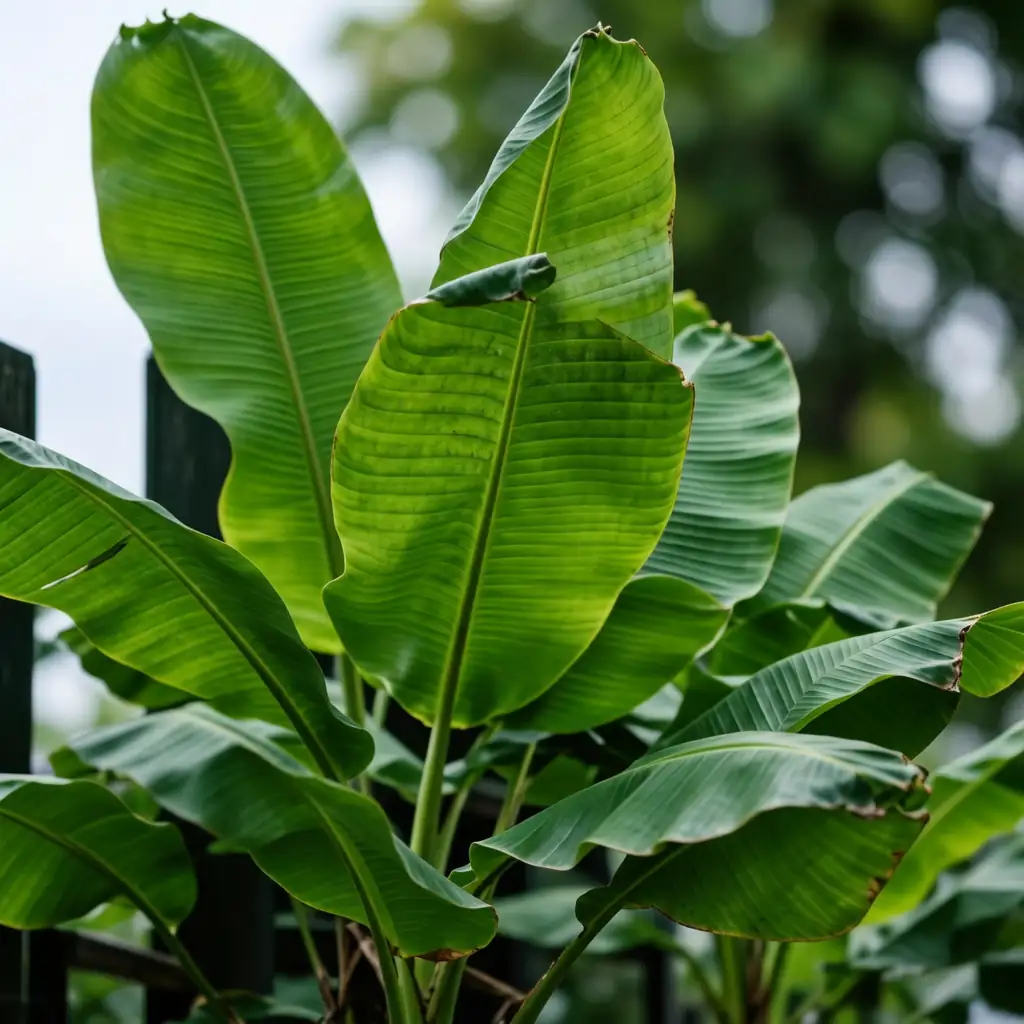
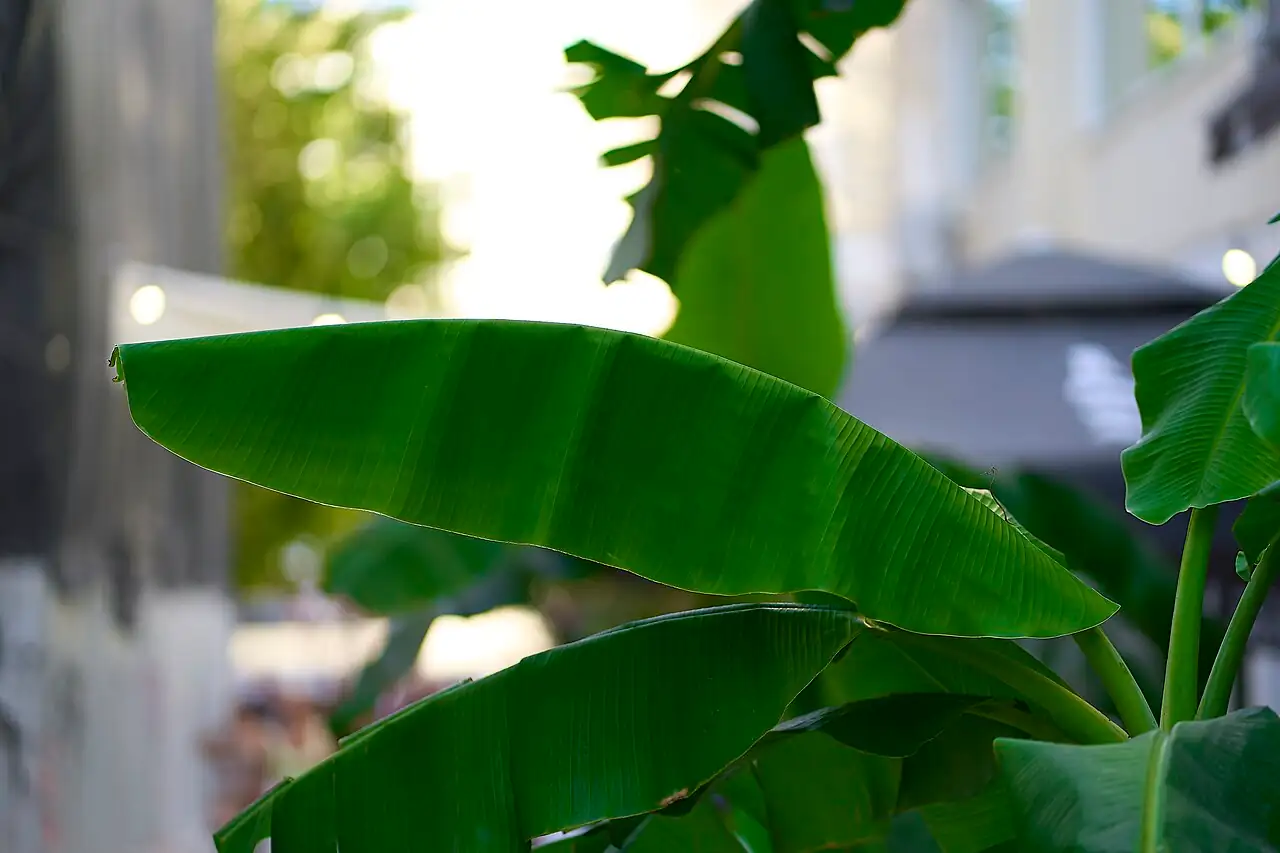
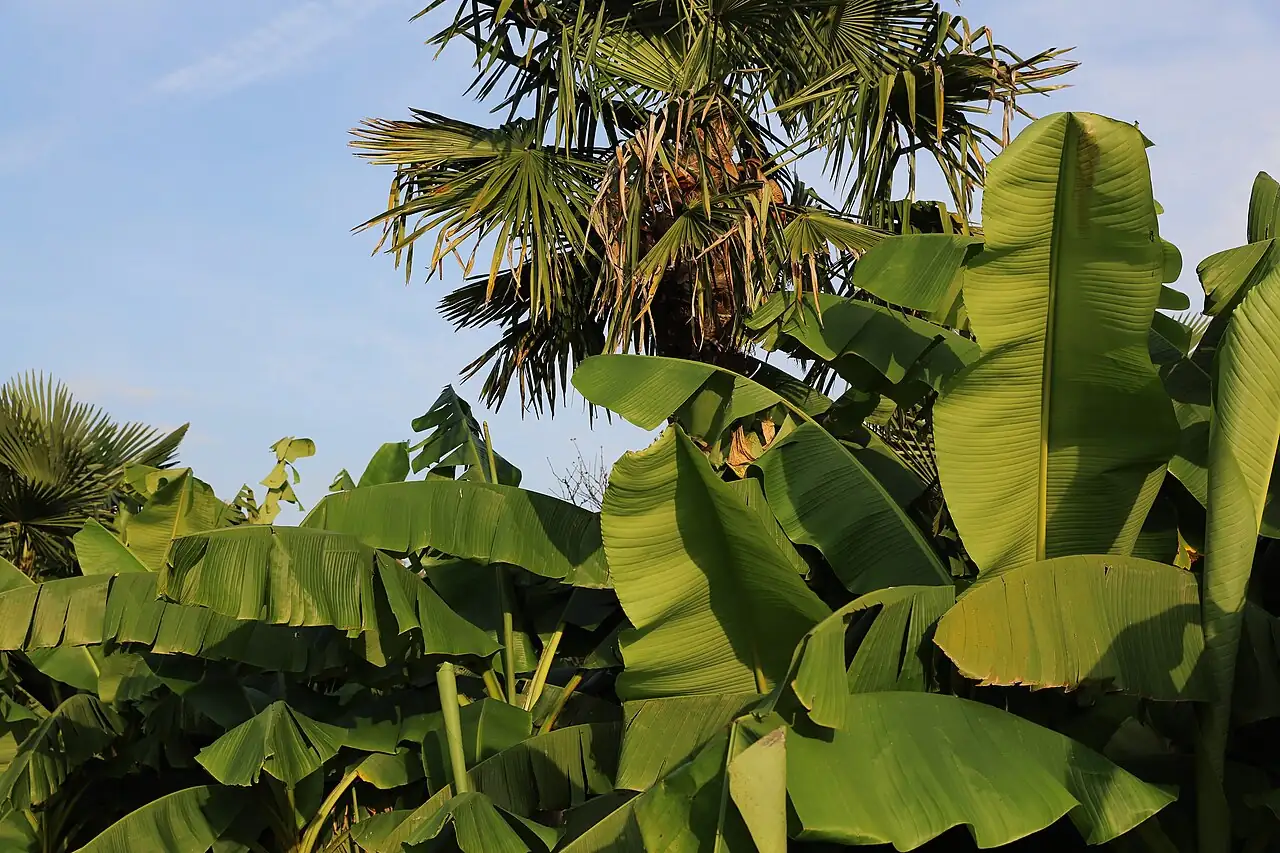
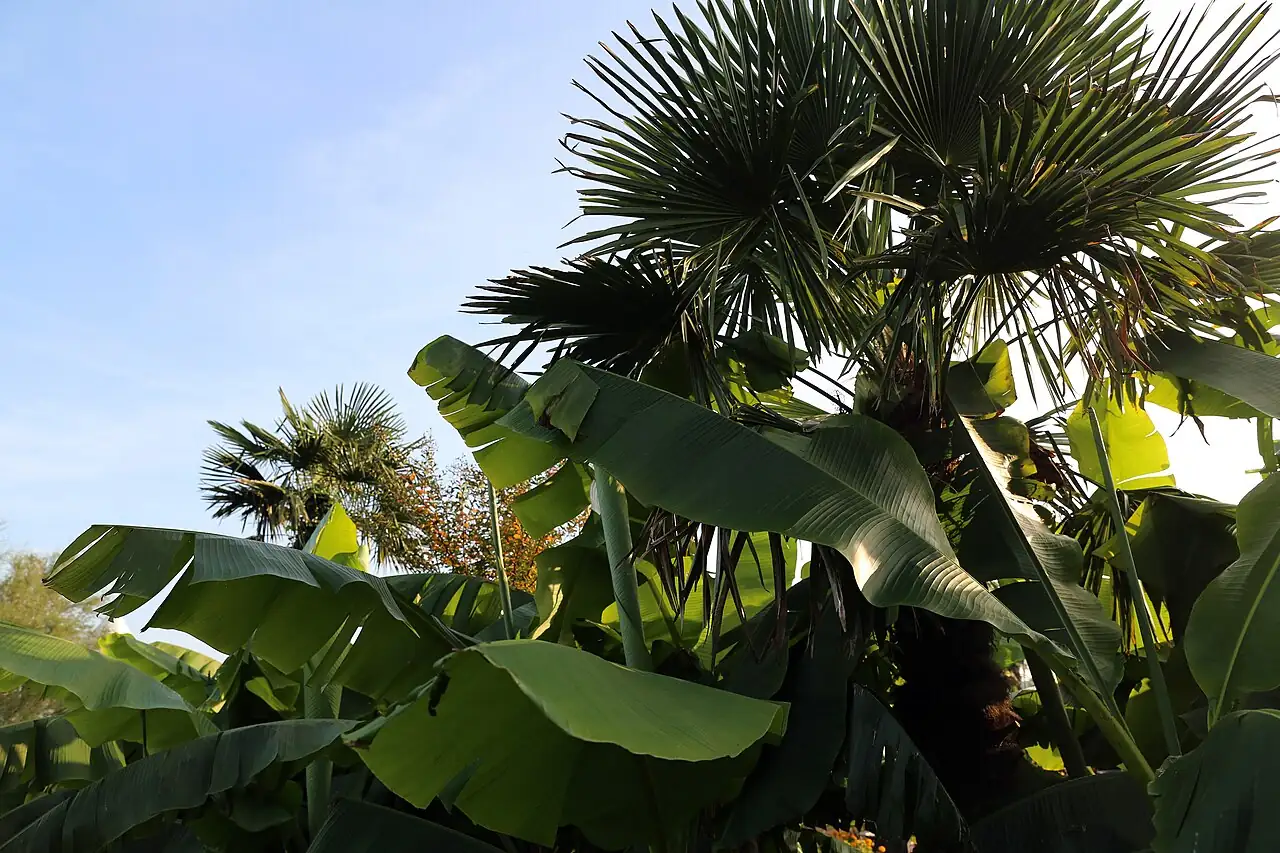
- Foliage: Leaves are huge, elongated-oval blades with a prominent raised midrib and parallel side veins. The apparent “trunk” is actually a pseudostem formed by spiraling, layered leaf sheaths; in wind, leaves often split naturally along the veins (a normal, helpful adaptation that reduces shredding).
- Flower: Produces terminal, spike-like inflorescences with large, grooved, reddish-brown bracts. The banana-like flowers may sit above the foliage or partly nestled within it depending on plant size and growing conditions.
- Flowering Season: June–July (early to mid-summer)
- Growth Habit: Fast-growing, clump-forming perennial herb arising from a rhizome; forms a trunk-like pseudostem and gradually makes offsets (pups) to expand into a clump.
Environment
Sunlight
Full sun to partial shade; brightest light gives the biggest leaves, but a spot sheltered from strong wind keeps the plant looking tidier.
Temperature
Prefers warm conditions for active growth, roughly 18–30°C (64–86°F). In winter, top growth is usually killed by frost, but with protection the underground rhizome can survive to about -10 to -15°C (14 to 5°F).
Humidity
Average to high humidity is ideal; appreciates extra moisture in hot, dry weather.
Soil
Deep, fertile, moisture-retentive yet well-drained soil. Enrich with compost; avoid waterlogged conditions to prevent root problems.
Placement
Best outdoors in gardens, courtyards, patios, or subtropical-style borders; choose a warm, sheltered position such as near a sunny wall or behind a windbreak.
Hardiness
Roughly USDA Zone 6–10 (often needs winter protection in the colder part of this range). Not frost-free—freezes damage leaves and can knock back stems.
Care Guide
Difficulty
Moderate. It’s straightforward in the warm season (water + feed = fast growth), but in colder climates overwintering success depends on protecting the pseudostem/rhizome with mulch and shelter.
Buying Guide
Pick plants with firm, unblemished pseudostems and fresh green leaves. Avoid pots with sour-smelling, soggy media (a warning sign of poor drainage/root issues). For cold-winter areas, a well-established clump generally rebounds better after winter.
Watering
Water regularly in spring and summer to keep soil evenly moist but never waterlogged. Reduce watering in cool weather and during winter dormancy. Container plants dry out faster and may need very frequent watering during heat.
Fertilization
Feed during active growth (spring through late summer) with a balanced fertilizer or higher-nitrogen feed to support leaf size. Compost or well-rotted manure is especially helpful. Stop feeding as temperatures cool and growth slows.
Pruning
Remove yellowing, torn, or wind-shredded leaves at the base. After frost, cut back damaged foliage; in cold regions, leaving some stem over winter can add protection—then tidy up more fully in spring.
Propagation
Divide offsets (pups) from the rhizome in spring or early summer. Each division should include roots; keep warm and evenly moist until it re-establishes.
Repotting
In containers, repot in spring every 1–2 years into a larger pot with a rich but free-draining mix. If not repotting, refresh the top layer of compost annually.
📅 Seasonal Care Calendar
Flowers typically appear June–July (early to mid-summer). Fruits may develop around September–October (early autumn) but are generally not edible.
Pests, Diseases & Safety
Common Pests & Diseases
May attract aphids, spider mites (especially in dry heat or indoors), mealybugs, and scale; slugs/snails may chew tender new growth. Root problems are most common in poorly drained soil. Improve airflow, avoid waterlogging, and treat outbreaks with horticultural soap or oil as needed.
Toxicity
Not known to be dangerously toxic to people or pets, but it isn’t an edible banana. Any fruit that forms is typically full of hard seeds and not considered edible—discourage tasting, especially by children or pets.
Culture & Symbolism
Symbolism: Often associated with refined beauty and a calm, poetic mood—especially the classic imagery of rain pattering on wide, arching leaves in East Asian gardens.
History & Legends: Celebrated for centuries in East Asian literature and garden design. Its architectural form—and the distinctive sound of rain on its leaves—made it a recurring motif in poems and paintings.
Uses: Primarily grown as an ornamental for a lush, tropical look in temperate gardens. Great as a focal point, for screening, or for building a subtropical border effect thanks to its fast summer growth.
FAQ
What is the scientific name of hardy banana?
Musa basjoo.
Which family and genus does it belong to?
Family Musaceae; genus Musa.
When does it flower and fruit?
It typically flowers in June–July (early to mid-summer) and may set fruit around September–October (early autumn).
How big does it get?
In good conditions it commonly reaches 2.5–4 m (8–13 ft) tall with a spread of about 1.5–3 m (5–10 ft).
Can you eat the fruit?
Usually no—this plant is grown for its foliage, and any fruit produced is typically seedy and not considered edible.
How can I help it survive winter in a cold climate?
After frost, cut back damaged leaves, then heavily mulch the base to protect the rhizome; in colder areas, adding extra insulation around the pseudostem (and keeping it drier) improves survival and spring regrowth.
Fun Facts
- That banana “trunk” is a pseudostem made from tightly wrapped leaf bases—there’s no true wood involved.
- In windy places, the leaves often split neatly along the veins; it looks ragged to beginners, but it’s a normal adaptation that reduces tearing.
- Although it can form banana-like fruit, it’s mainly a foliage plant—those fruits are usually full of hard seeds, not for snacking.
- Its dramatic silhouette and the sound of rain on its leaves helped make it a classic subject in East Asian poetry and painting.