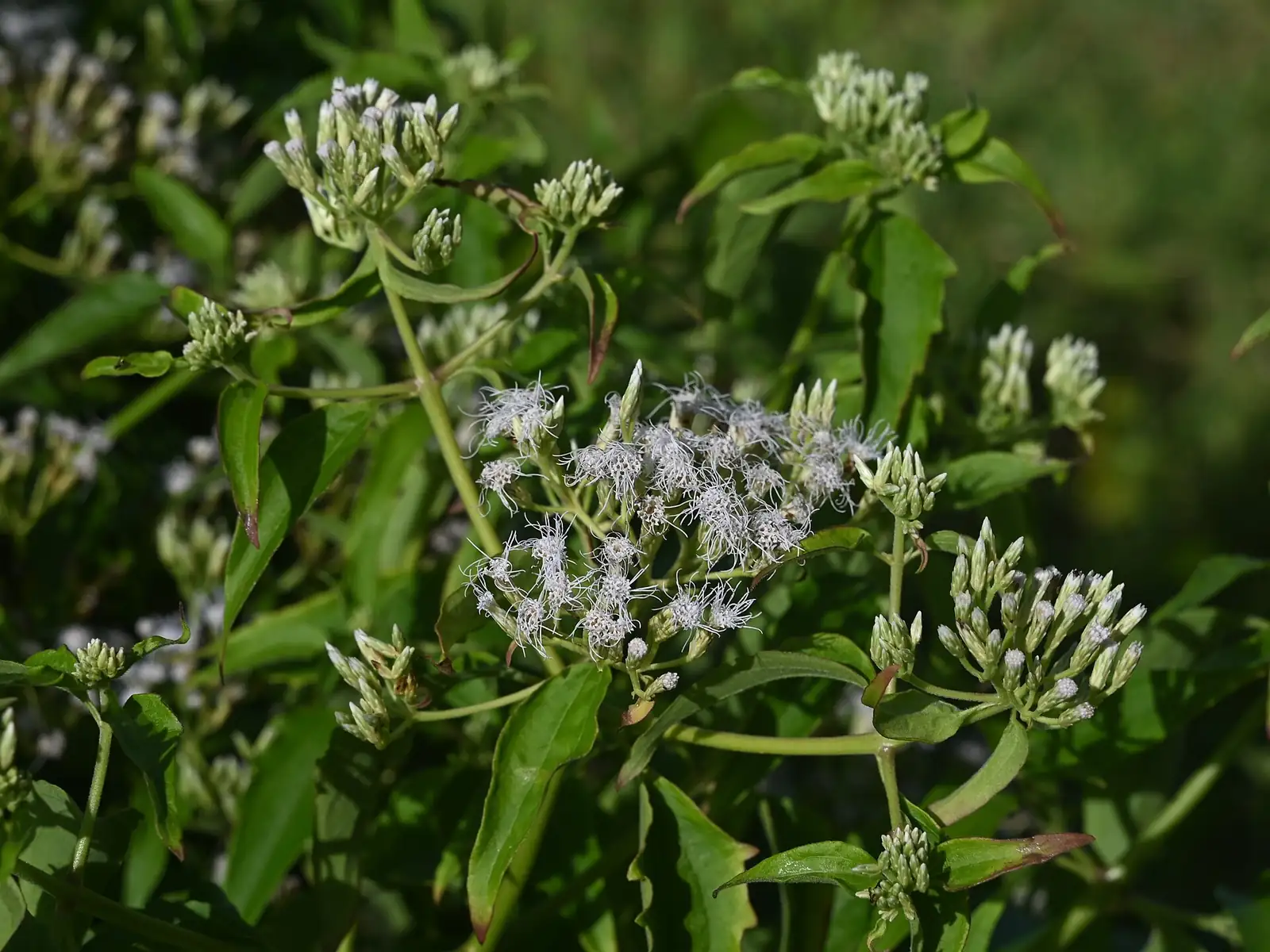
Plant Features
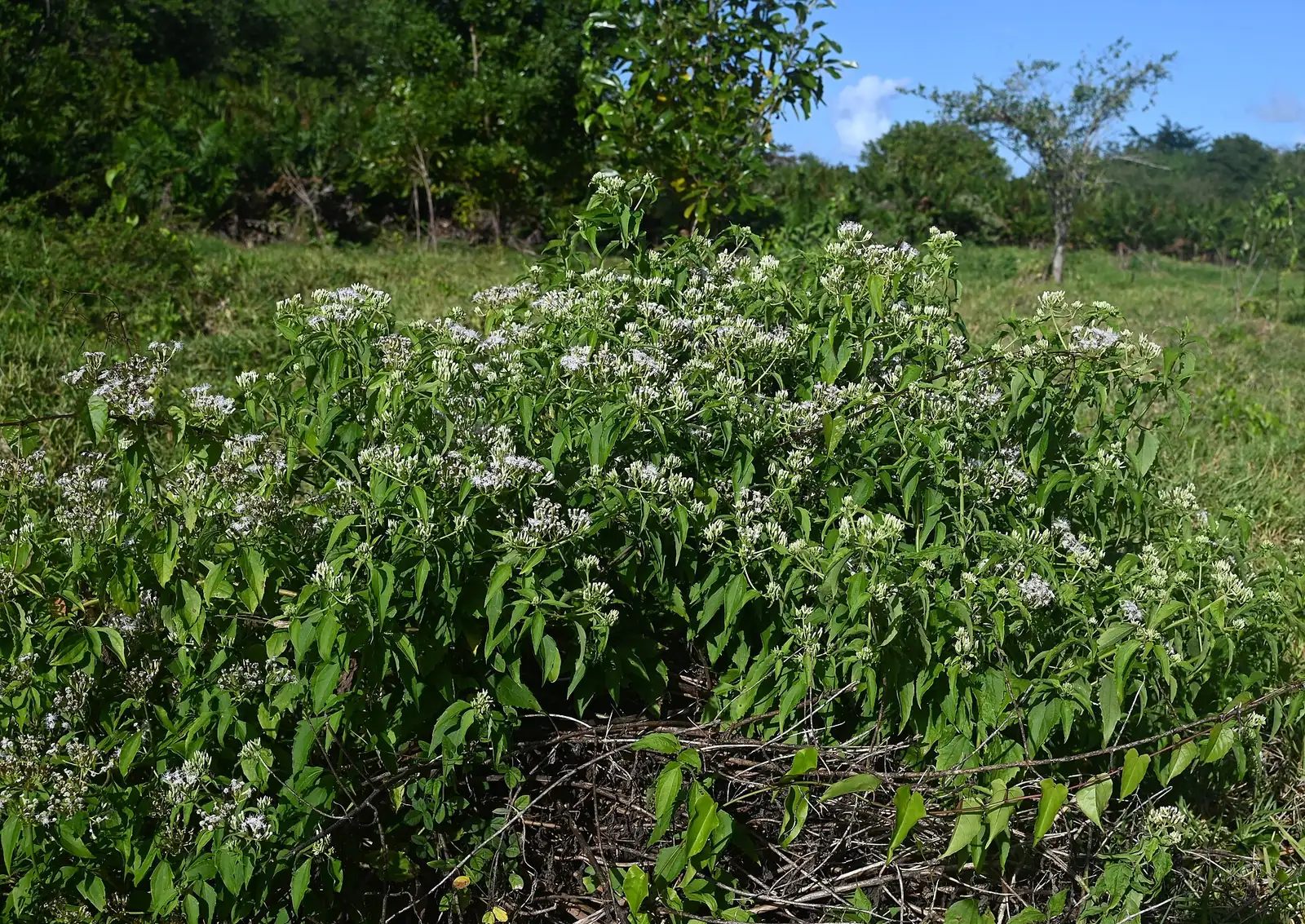
- Size: Typically 1–3 m (3.3–9.8 ft) tall; can form wide, dense stands.
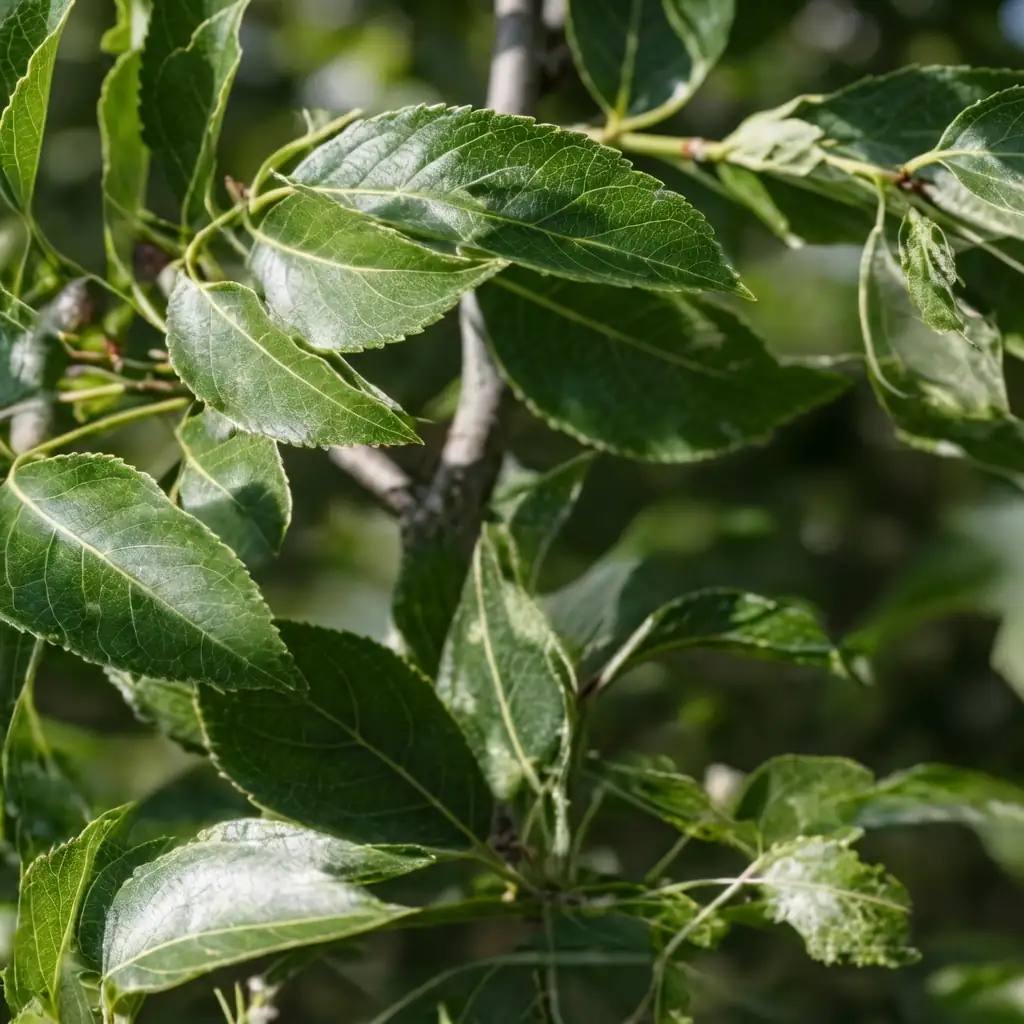
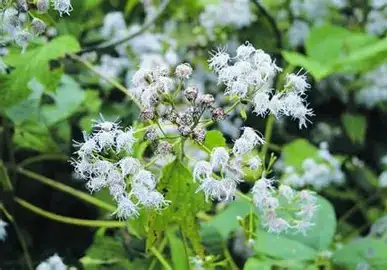
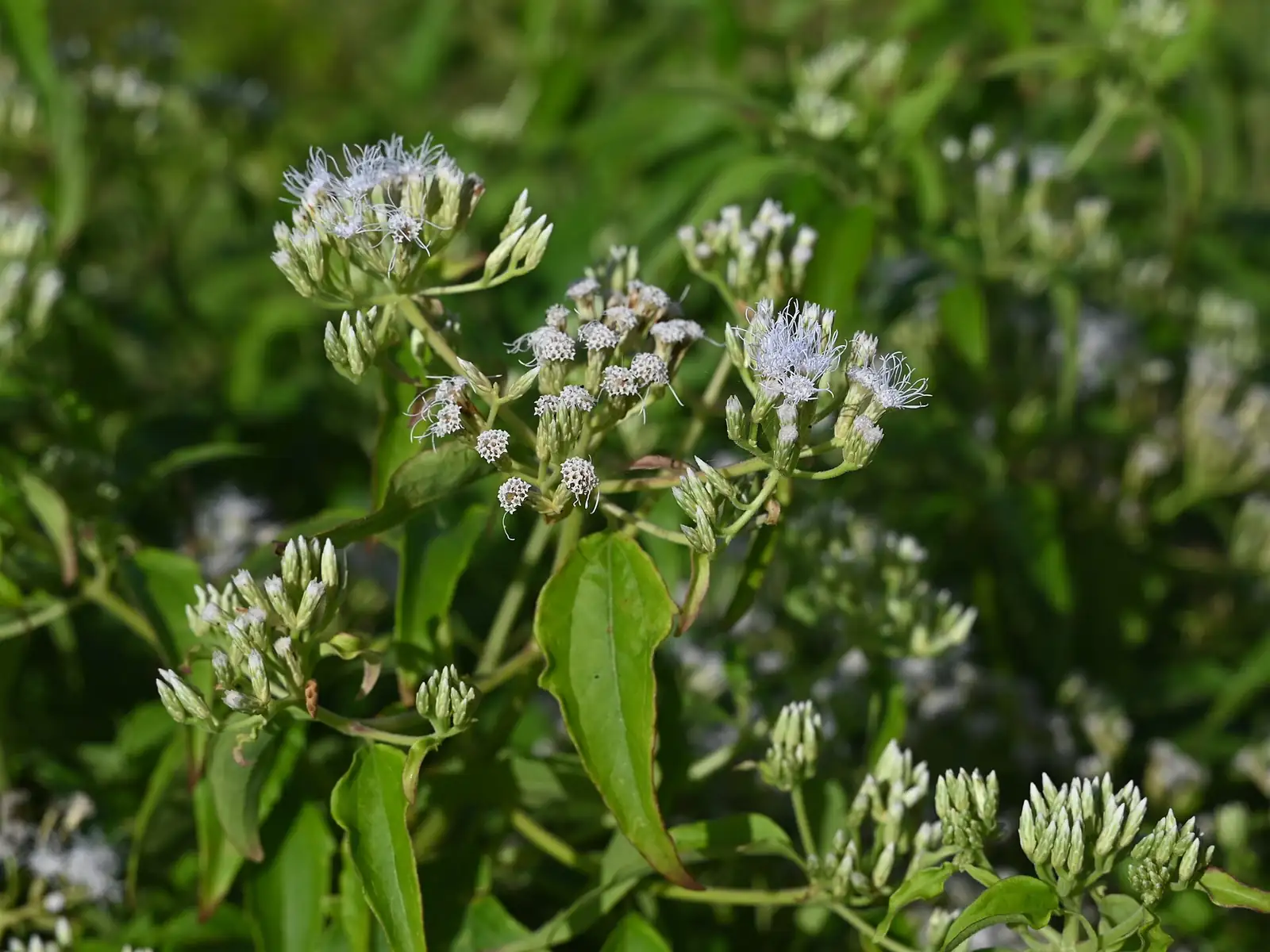
- Foliage: Leaves are opposite and broadly ovate to triangular (often ovate-triangular), frequently with a soft hairiness that gives a slightly fuzzy feel. Stems are upright and branching; as the plant matures, the lower portions can become more woody, supporting its thicket-forming habit.
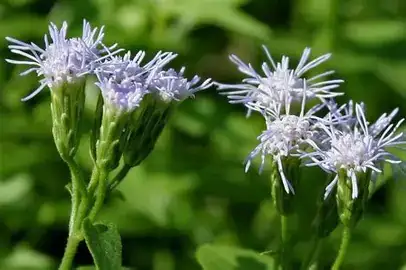
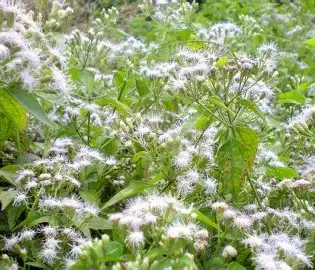
- Flower: Produces clusters of small, fluffy composite flower heads (typical of the daisy family), most often white to pale pink/lilac. After flowering it sets dark brown achenes with distinct ribs (often described as 5-angled), each topped with a pappus that helps the seed travel on wind.
- Flowering Season: April–December (varies by climate; often extended in the tropics).
- Growth Habit: An upright, branching perennial subshrub that spreads aggressively and forms dense thickets. It readily colonizes dry, nutrient-poor, disturbed ground such as roadsides, abandoned fields, forest edges, and even rock cracks and rooftops.
Environment
Sunlight
Full sun to partial shade; grows most vigorously in open, sunny, disturbed sites.
Temperature
Warm-growing; best around 20–30°C (68–86°F). Frost sensitive—top growth is damaged near 0°C (32°F).
Humidity
Adaptable from moderate to high humidity; tolerates seasonal dryness once established.
Soil
Highly adaptable. It can survive in poor, dry soils and rocky substrates, but grows fastest in well-drained soils.
Placement
Not recommended for home gardens due to its invasive nature. Where it occurs, it should be handled only in controlled, permitted research or weed-management/restoration contexts—avoid planting outdoors.
Hardiness
Not frost hardy; generally suited to USDA Zones 10–12 (typical minimums about 10–16°C / 50–60°F+).
Care Guide
Difficulty
Easy to grow, but very difficult to control; widely regarded as a high-risk invasive plant.
Buying Guide
Do not purchase or intentionally plant. It may be restricted or prohibited in many regions—check local regulations and invasive-weed lists before acquiring any look-alike species.
Watering
Once established it tolerates drought well. If kept under strict containment (e.g., permitted research), water sparingly and let the top layer of soil dry between waterings; avoid consistently wet soil in pots.
Fertilization
Usually unnecessary. Feeding often encourages even faster, weedier growth; avoid fertilizing unless required for controlled research purposes.
Pruning
Cut back before flowering and especially before seed set to reduce spread. Bag all cut material securely and dispose of it safely—do not compost if there’s any chance seeds are present.
Propagation
Spreads readily by seed and can resprout from cut stems and root crowns. The key to control is preventing flowering and seed dispersal and removing regrowth promptly.
Repotting
Not recommended for ornamental culture. If maintained in a pot under permitted containment, repot carefully to avoid spill and dispose of old potting media responsibly.
📅 Seasonal Care Calendar
Warm season: rapid growth—inspect often and remove developing flower buds early. Late season: prioritize preventing seed set by cutting and disposing securely. In tropical climates: growth and reproduction can be ongoing, so year-round monitoring and containment are essential.
Pests, Diseases & Safety
Common Pests & Diseases
Generally tough and trouble-free; it may occasionally host sap-sucking insects like aphids and whiteflies or develop leaf spots, but the primary “health” concern is its aggressive invasiveness and ability to overtake habitats.
Toxicity
Not widely documented as a classic household poisonous plant, but the foliage may irritate skin or trigger allergic reactions in some people. Avoid ingestion, keep away from children and pets, and wear gloves when handling large amounts.
Culture & Symbolism
Uses: Sometimes seen acting as a rough groundcover in unmanaged areas, but it is best understood as a serious invasive species. In most contexts, the responsible ‘use’ is prevention, containment, and control—especially near natural ecosystems and farmland.
FAQ
Why is Siam weed considered a serious problem plant?
It grows extremely fast, forms dense thickets, and produces large amounts of wind-dispersed seed. This allows it to outcompete native vegetation, reduce biodiversity, and rapidly dominate disturbed habitats.
Can it grow in very poor or dry places?
Yes. It can establish in nutrient-poor, dry, and disturbed sites—roadsides, rocky slopes, cracks in rocks, and other harsh spots—making it especially quick to spread after land disturbance.
Fun Facts
- Although native to tropical America (especially Central America), it has become invasive across many tropical and subtropical regions worldwide.
- In warm climates, flowering and fruiting can stretch across much of the year (often April–December).
- Its dark, ribbed achenes come with a pappus, making wind dispersal easy and long-distance spread more likely.
- It can establish in surprisingly tough microhabitats, including rock crevices and even rooftops.