

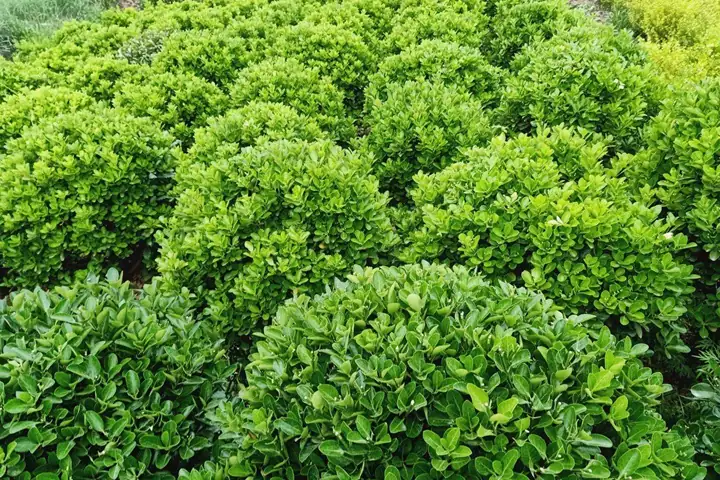
Plant Features
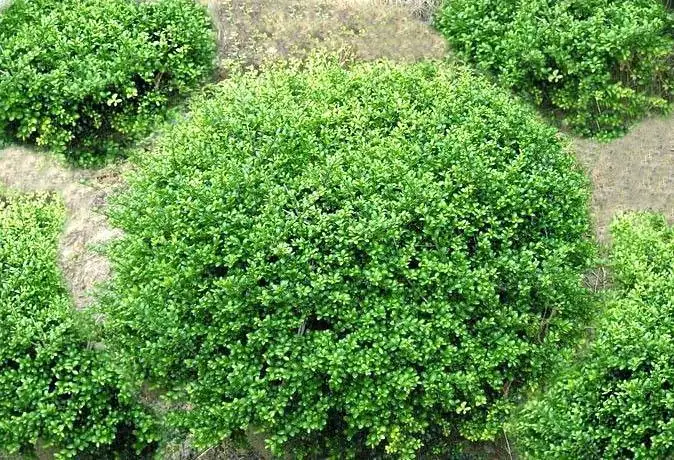
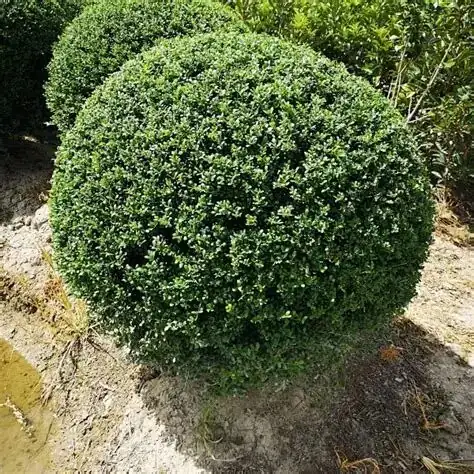
- Size: Typically 1–3 m (3–10 ft) as a clipped shrub; can reach up to about 5 m (16 ft) if grown unpruned in favorable conditions.
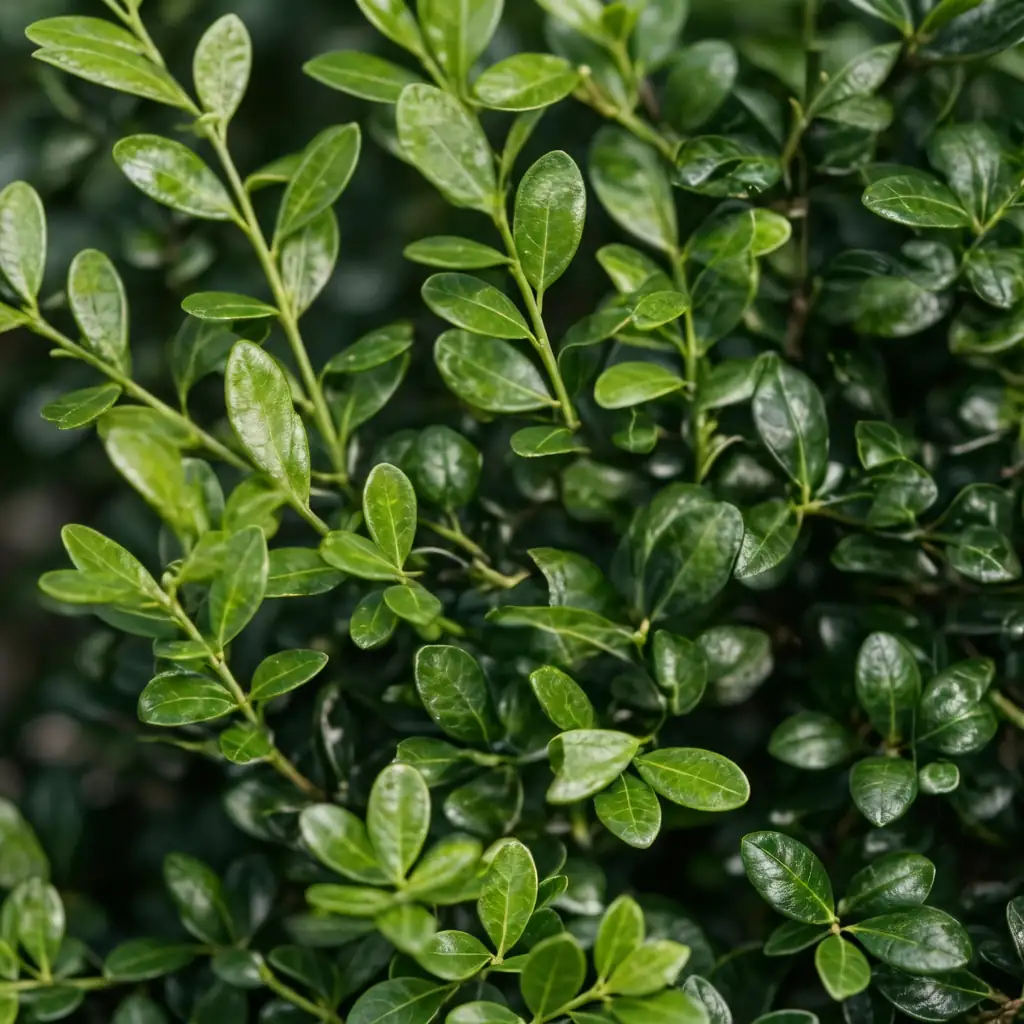
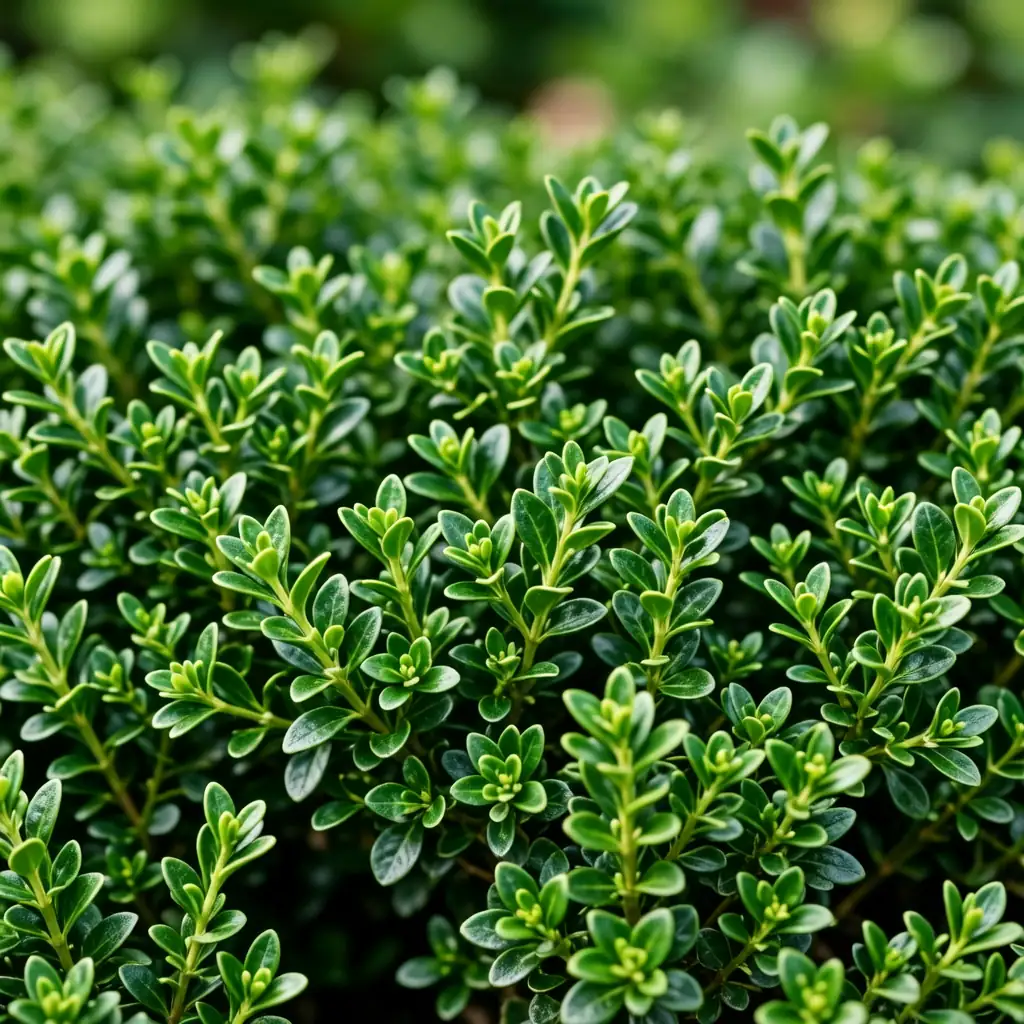
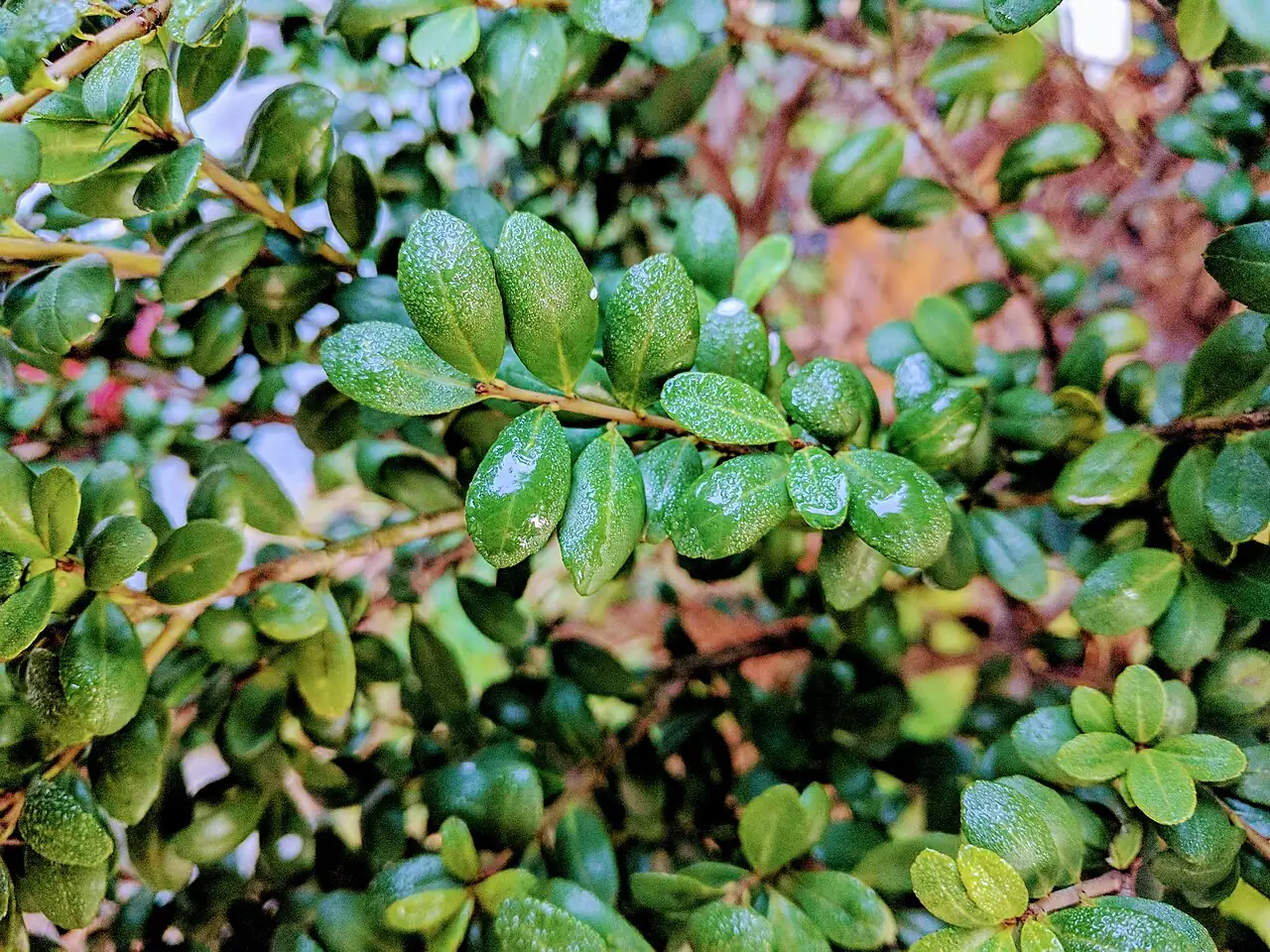
- Foliage: Leaves are alternate, small, and oval with a leathery, glossy finish. Fresh growth emerges light green, then deepens to a rich, dark green. The standout feature is the convex (domed) leaf surface with a faintly bumpy texture, creating the characteristic “tortoiseshell” look.
- Flower: Produces small, modest white flowers in late spring to early summer. After flowering, it can set small, round berries that ripen from late summer into autumn and are typically black when fully mature.
- Flowering Season: May–June (late spring to early summer).
- Growth Habit: Evergreen, naturally compact, dense shrub with fine texture; responds extremely well to clipping, shaping, and formal pruning.
Environment
Sunlight
Full sun to partial shade. Brighter light generally gives the best density and leaf color, but it tolerates light shade well.
Temperature
Prefers mild to warm conditions; a practical growing range is about 10–30°C (50–86°F). Once established, it can handle short cold snaps and summer heat if soil moisture is kept steady.
Humidity
Best with moist air or moderate humidity. Avoid long stretches of hot, dry air without supplemental watering, especially in exposed sites.
Soil
Fertile, loose, well-drained soil. Performs best in acidic soils; avoid strongly alkaline conditions and waterlogged ground.
Placement
Excellent for courtyards and city plantings: edging, foundation beds, massed low plantings/groundcover-style use, patterned “color-block” beds, tree pits, and path intersections. Also ideal for hedges and topiary-style shaping.
Hardiness
Relatively cold-hardy for a holly and reasonably heat-tolerant once established, but not strongly drought-tolerant; protect from prolonged drought and drying winds.
Care Guide
Difficulty
Easy to moderate. It’s very forgiving of pruning and shaping, but it appreciates consistent moisture—especially in hot weather—more than many evergreen shrubs do.
Buying Guide
Pick plants with dense, evenly colored foliage and no scorch or thinning. Avoid severely pot-bound specimens with circling roots; look for healthy, fibrous roots and check leaves and stems for early signs of scale insects or mite damage.
Watering
Keep evenly moist while establishing. It isn’t very drought-tolerant: water deeply when the top few centimeters of soil begin to dry (about 2–5 cm / 1–2 in). In hot spells, water more often and mulch to reduce evaporation. Good drainage matters—avoid leaving roots in soggy soil.
Fertilization
Feed in spring with a slow-release, acid-forming shrub fertilizer or add composted organic matter. If growth is weak, a light mid-summer feed can help. Avoid heavy nitrogen late in the season to prevent tender growth going into cooler weather.
Pruning
Very pruning-tolerant. Clip after the main flush of spring growth to keep a tidy outline; light touch-ups through summer are fine. Avoid hard pruning in late autumn so new growth isn’t exposed to winter damage.
Propagation
Most commonly propagated from semi-hardwood cuttings in summer. Use rooting hormone and maintain high humidity (e.g., under a dome/mist) until rooted.
Repotting
For container plants, repot every 2–3 years (or when roots fill the pot) into a slightly larger container using a well-draining, slightly acidic mix.
📅 Seasonal Care Calendar
Flowering: May–June. Fruiting: August–October. Spring: mulch and feed, then shape after the main growth flush. Summer: increase watering during heat and clip lightly as needed. Autumn: ease off nitrogen and avoid heavy late pruning; enjoy berries where present.
Pests, Diseases & Safety
Common Pests & Diseases
Can be troubled by scale insects, spider mites (especially in hot, dry conditions), and leaf spot when airflow is poor. Improve ventilation, avoid frequent late-day overhead watering, and treat early infestations promptly (e.g., horticultural oil for scale/mites where appropriate).
Toxicity
Like many hollies (Ilex spp.), the berries can cause mild stomach upset if eaten by people or pets. It’s best to discourage nibbling and keep fallen berries away from curious children and animals.
Culture & Symbolism
Symbolism: Often seen as a symbol of evergreen steadiness and resilience. In gardens, its clipped form also conveys a calm, orderly, “well-kept” feeling.
Uses: Primarily ornamental. Loved for its dense, dark-green structure and its ability to hold clean lines, making it a go-to plant for hedges, edging, foundation planting, massed low plantings, and shaped/topiary effects—especially in courtyards and urban landscapes.
FAQ
Why do the leaves look bumpy or “tortoiseshell-like”?
That texture is natural for this variety: the leaf surface is slightly convex and subtly uneven, creating the characteristic domed, tortoiseshell effect—an ornamental feature, not a disease.
Can it handle shade?
Yes. It does well in partial shade, but it typically stays denser and more compact with brighter light (full sun to light shade).
Is it drought-tolerant?
Not particularly. It performs best with consistent moisture; in dry spells, regular deep watering and a mulch layer make a big difference.
Fun Facts
- The leaf’s convex, textured surface is the reason for its distinctive “tortoiseshell” nickname.
- New leaves emerge light green before maturing to a deep, glossy green.
- Because it clips cleanly and holds its outline, it’s a staple in formal and geometric landscape designs.
- Flowers typically appear in May–June, and berries often ripen around August–October.
- It’s native to the Yangtze River basin and areas further south in China.


