Plant Features
- Size: Floating rosettes typically spread about 5–15 cm (2–6 in) across; can knit together into mats that expand widely in suitable conditions.
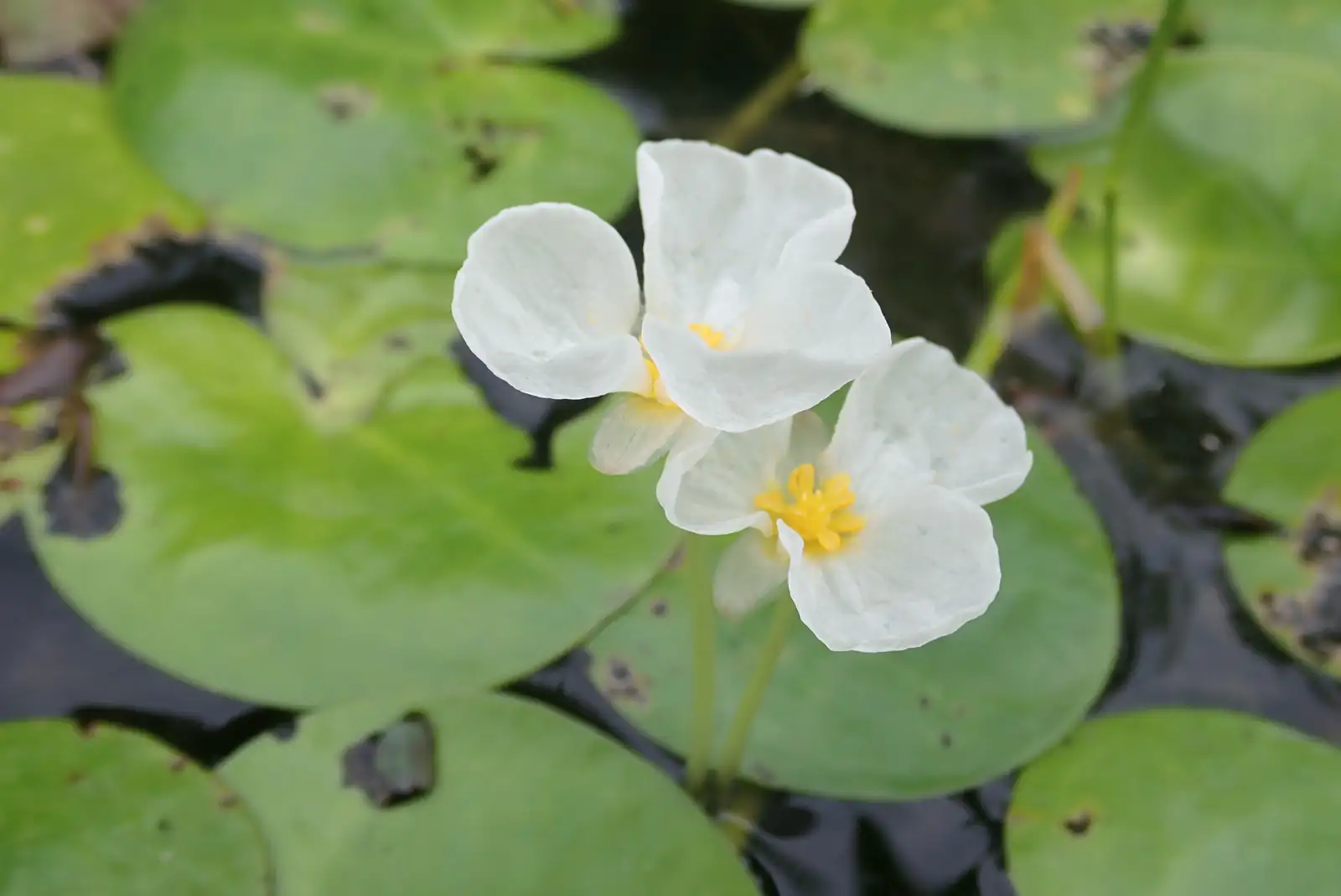
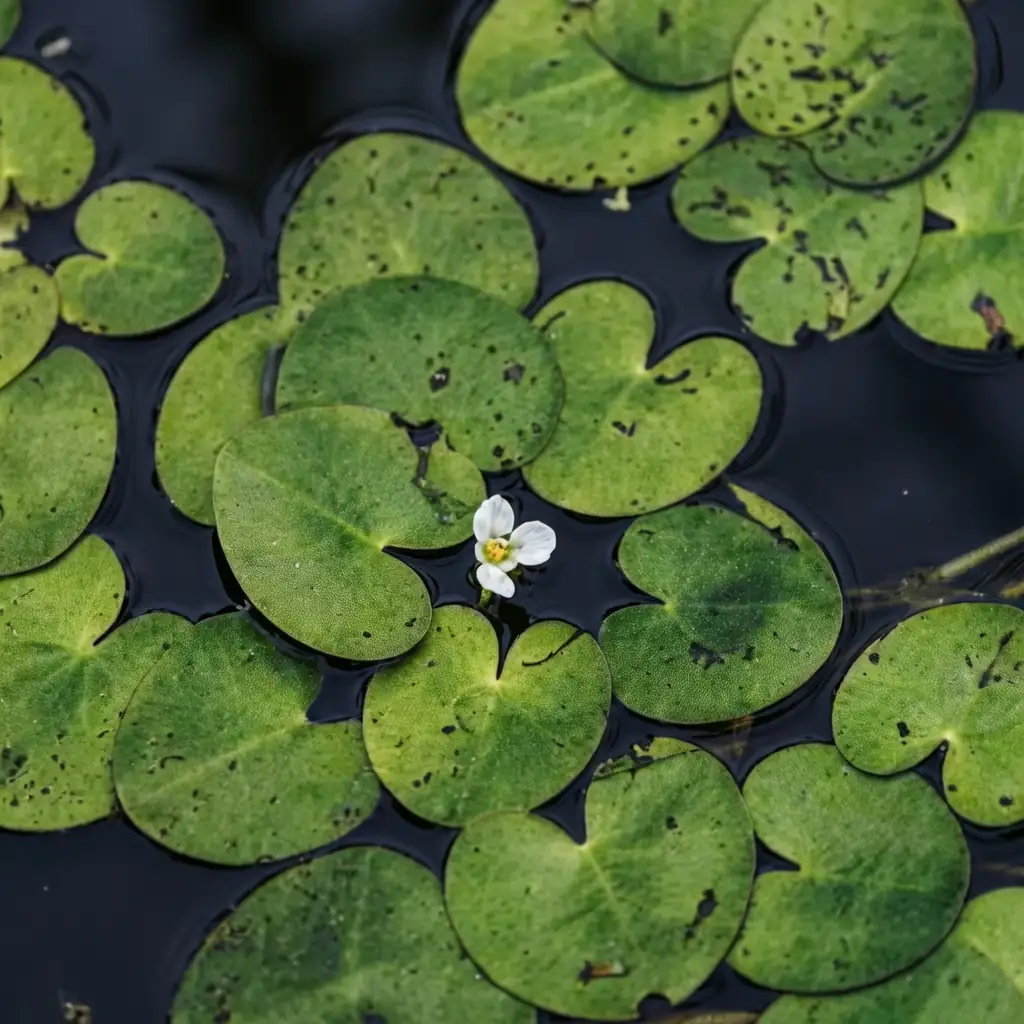
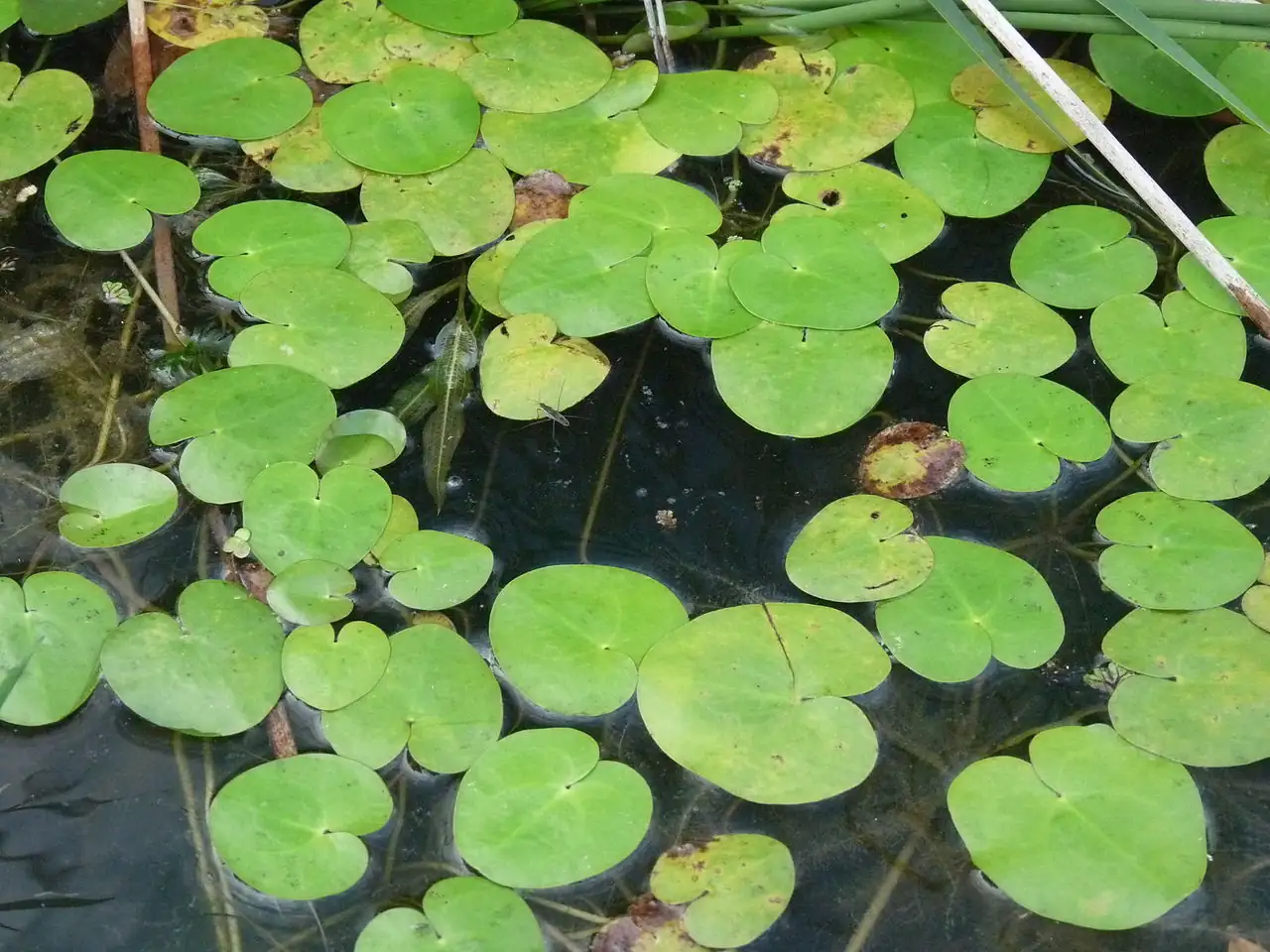
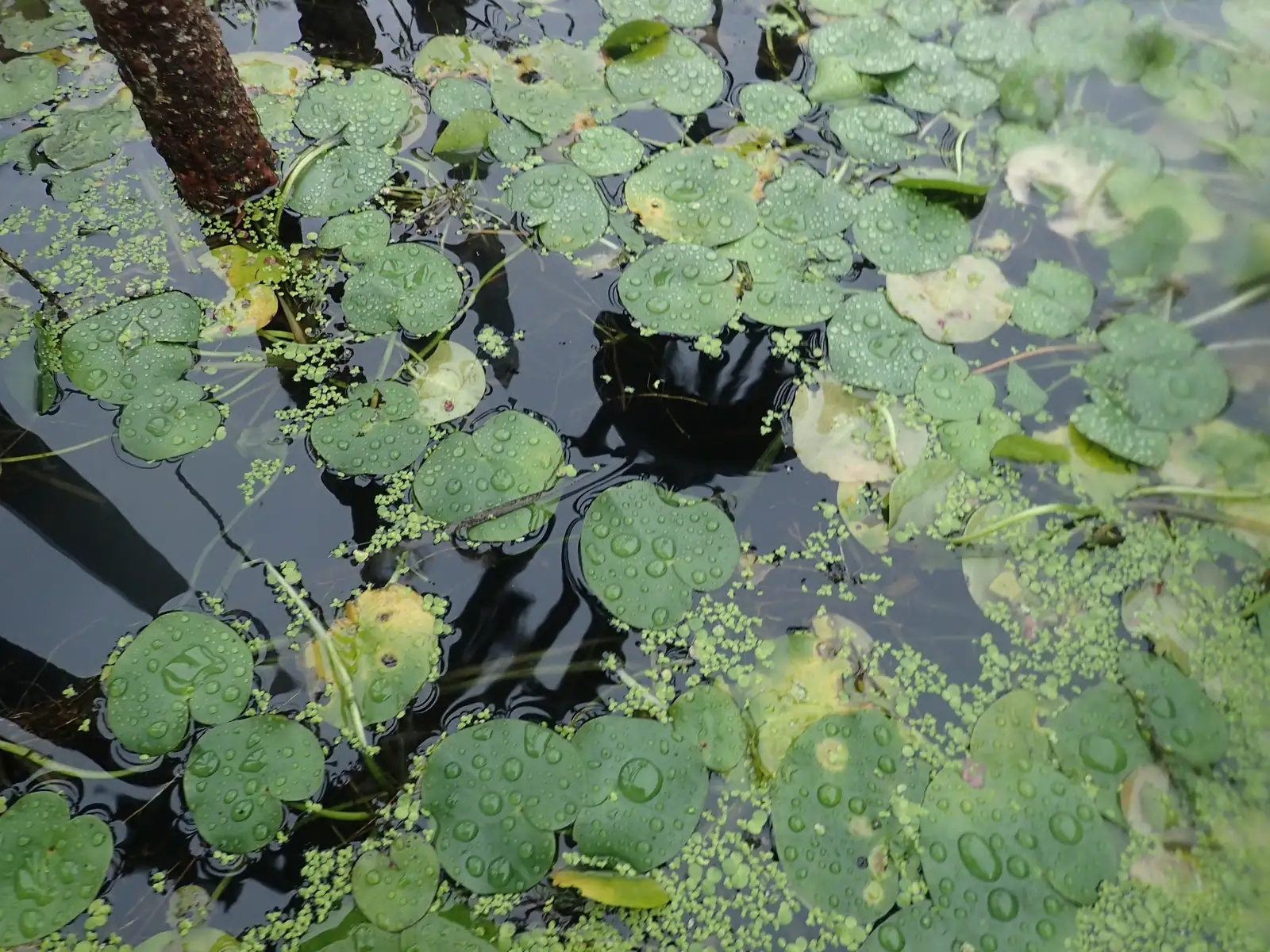
- Foliage: Leaves are held in clustered surface rosettes, mostly floating (sometimes slightly emergent). Blades are heart-shaped to round with smooth margins and a fresh, bright green color.
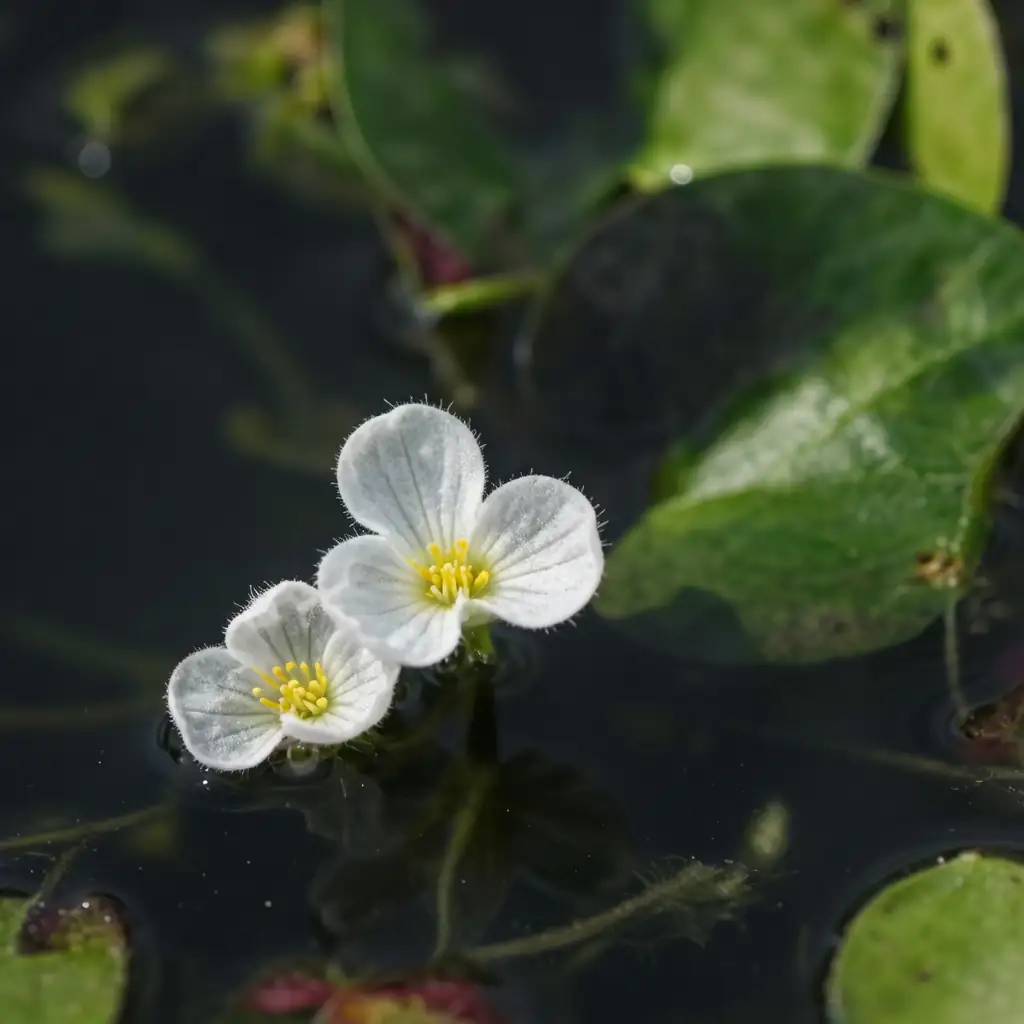
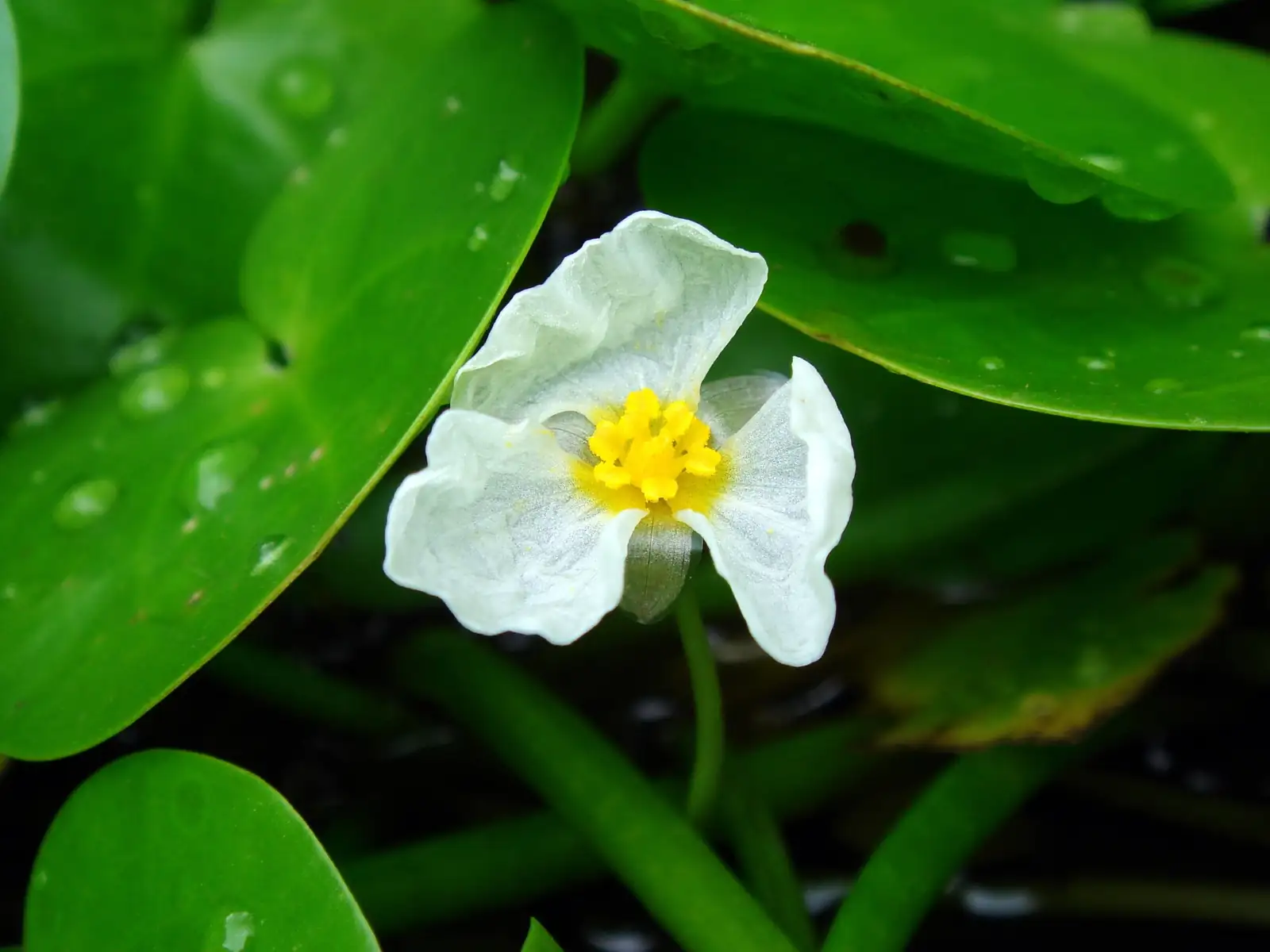
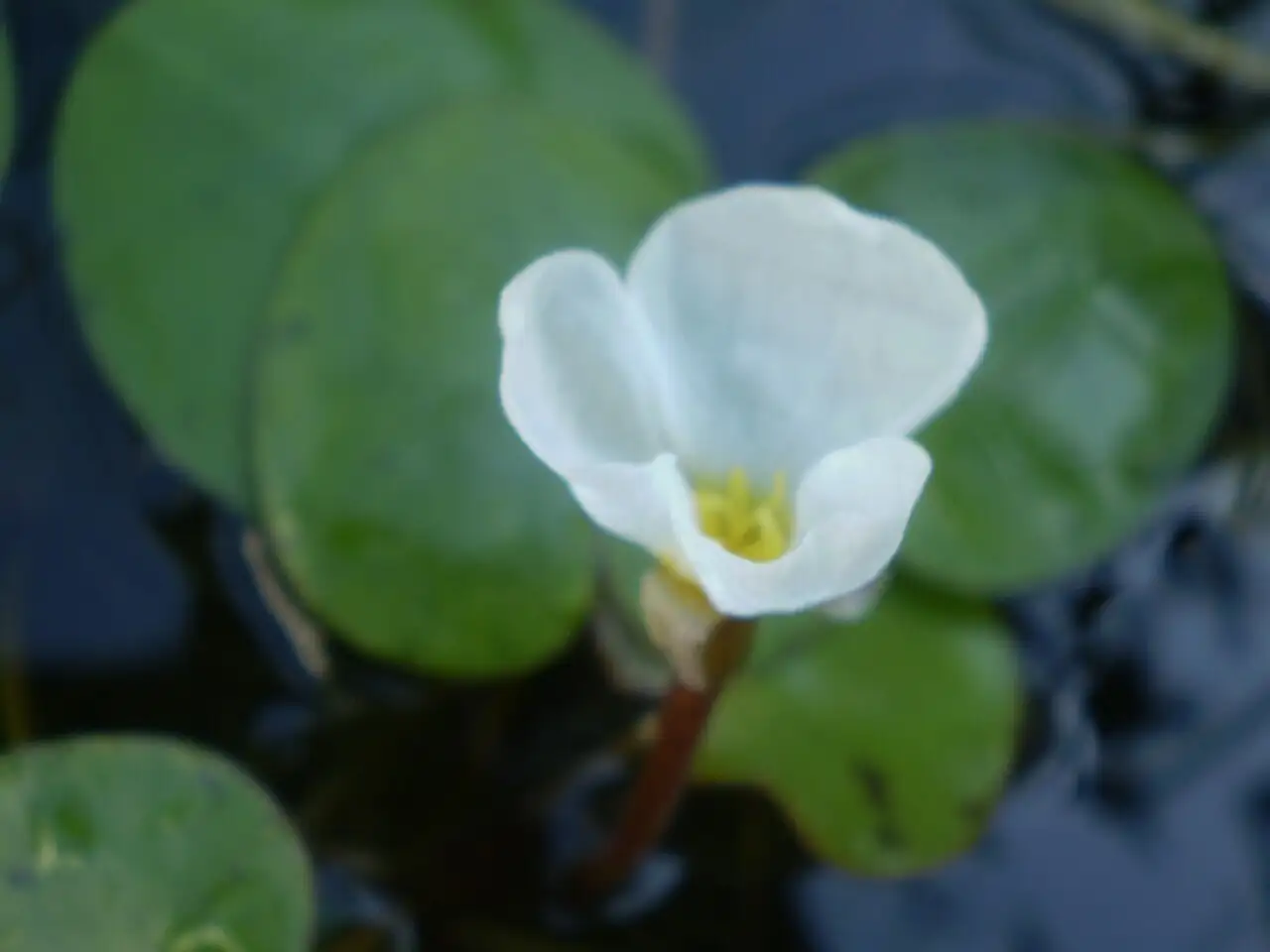
- Flower: Small, three-petaled flowers: white with a yellow base/center. Fruit is oval and berry-like.
- Flowering Season: August–October (late summer to autumn)
- Growth Habit: Free-floating aquatic herb that spreads across the surface by forming new daughter rosettes, creating floating patches or mats.
Environment
Sunlight
Full sun to bright light; flowering is best in full sun.
Temperature
Prefers warm conditions; roughly 18–30°C (64–86°F) for active growth.
Humidity
Aquatic plant; lives on the water surface in still freshwater.
Soil
Not soil-dependent; grown floating in calm freshwater. It may lightly root into soft mud in some natural settings, but it does not require potting soil.
Placement
Aquariums, patio tubs, and garden ponds; also suitable for constructed wetlands and large water features in parks.
Hardiness
Frost-tender; generally not winter-hardy where water freezes (often treated as a warm-season plant in temperate regions).
Care Guide
Difficulty
Easy—especially when kept in stable, still freshwater with good light and warmth.
Buying Guide
Pick plants with firm, bright green leaves and intact floating rosettes. Avoid yellowing, mushy tissue, or heavy algae growth. Also check local regulations before buying, since some floating aquatics can be restricted in certain areas.
Watering
Keep continuously in water. Provide a stable, still freshwater setup and never let the rosettes dry out.
Fertilization
Often unnecessary in stocked aquariums or nutrient-rich ponds. If growth is weak in very lean water, use an aquatic-safe fertilizer at a low dose and watch for algae blooms.
Pruning
Thin regularly by removing extra rosettes so the surface doesn’t become fully covered—this keeps light and oxygen exchange healthy for the whole system.
Propagation
Mostly vegetative: the plant produces daughter rosettes (natural division). Simply separate offsets and move them where you want new coverage.
Repotting
Not applicable for free-floating culture. If kept in a container/bog basket setup, refresh the water as needed and remove decaying material.
📅 Seasonal Care Calendar
Spring–summer: give strong light and warm water; thin as it multiplies. Late summer–autumn (Aug–Oct): typical flowering and fruiting window. Before cold weather: in climates with freezing water, move some plants indoors to a warm, bright setup if you want to overwinter it.
Pests, Diseases & Safety
Common Pests & Diseases
May get aphids on emergent leaves/flowers, snails grazing the foliage, and rot if water becomes stagnant or polluted. Prevent problems by thinning crowded mats, removing decaying leaves, and keeping water clean and oxygenated.
Toxicity
No well-documented toxicity to people or pets is widely cited for this species. Still, avoid ingestion, and manage responsibly to prevent excessive spread.
Culture & Symbolism
Symbolism: Often linked with calm water, freshness, and a sense of natural balance in water gardens.
Uses: Ornamental floating plant for aquariums and ponds; can help “polish” water by taking up dissolved nutrients while providing shade and habitat in wetland-style plantings.
FAQ
Why is my Indian frogbit turning yellow?
Most often it’s low light, chilly water, or a nutrient imbalance. Increase light, keep water warm (about 18–30°C / 64–86°F), remove dying leaves, and if your water is extremely nutrient-poor, try a very light dose of aquatic-safe fertilizer while monitoring algae.
Can it cover the whole pond surface?
Yes—given warmth, light, and steady water, it can multiply quickly and form dense mats. Thin it regularly to maintain open water for gas exchange and to avoid shading other plants.
Fun Facts
- It’s a true surface floater, most at home in calm ponds, marshes, and slow backwaters.
- The bright green, heart-to-round leaves form tidy rosettes that look naturally decorative.
- It produces small white flowers with a yellow center, commonly seen from August to October (late summer into autumn).
- Its fruit is oval and berry-like.
- When managed (not allowed to smother the surface), it can help reduce excess nutrients and support clearer-looking water.