Plant Features
- Size: Up to 25 m (82 ft) tall in favorable conditions; often maintained as a small-to-medium landscape tree with pruning.
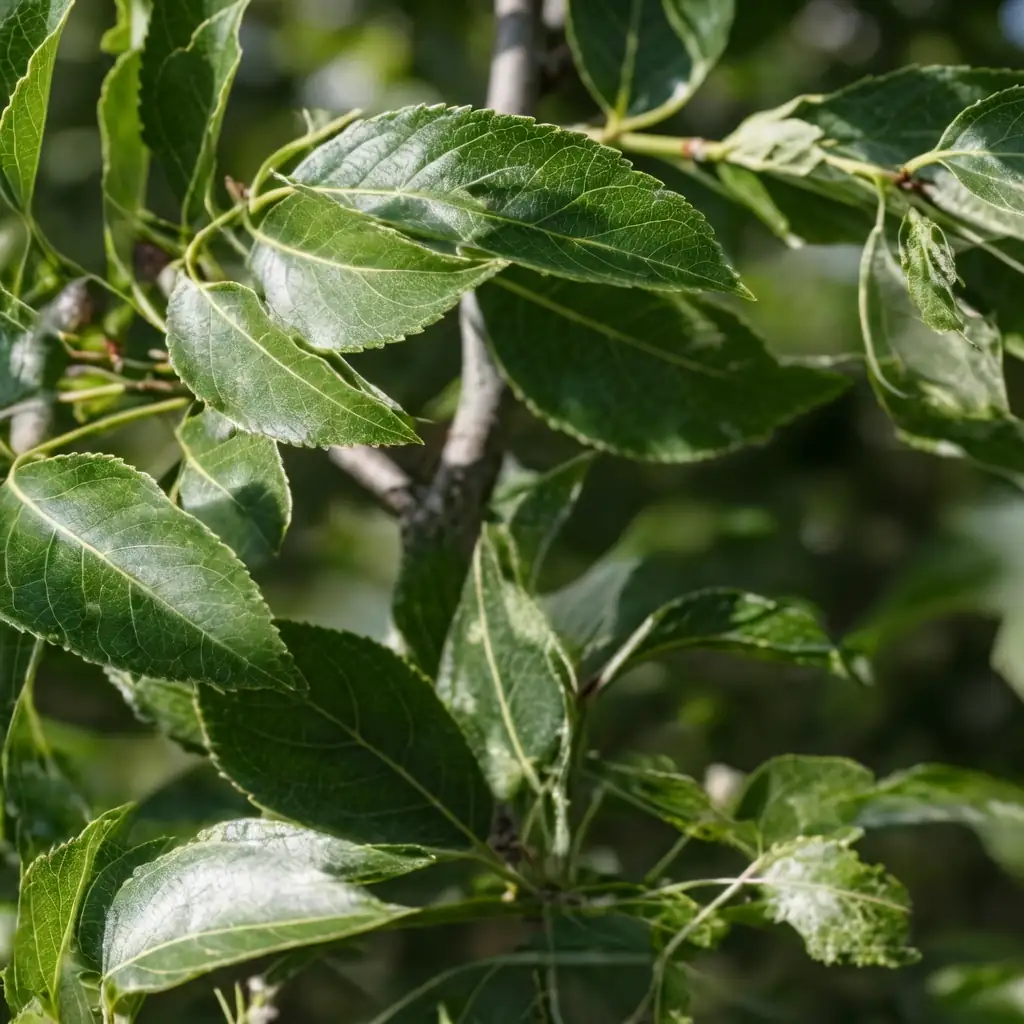
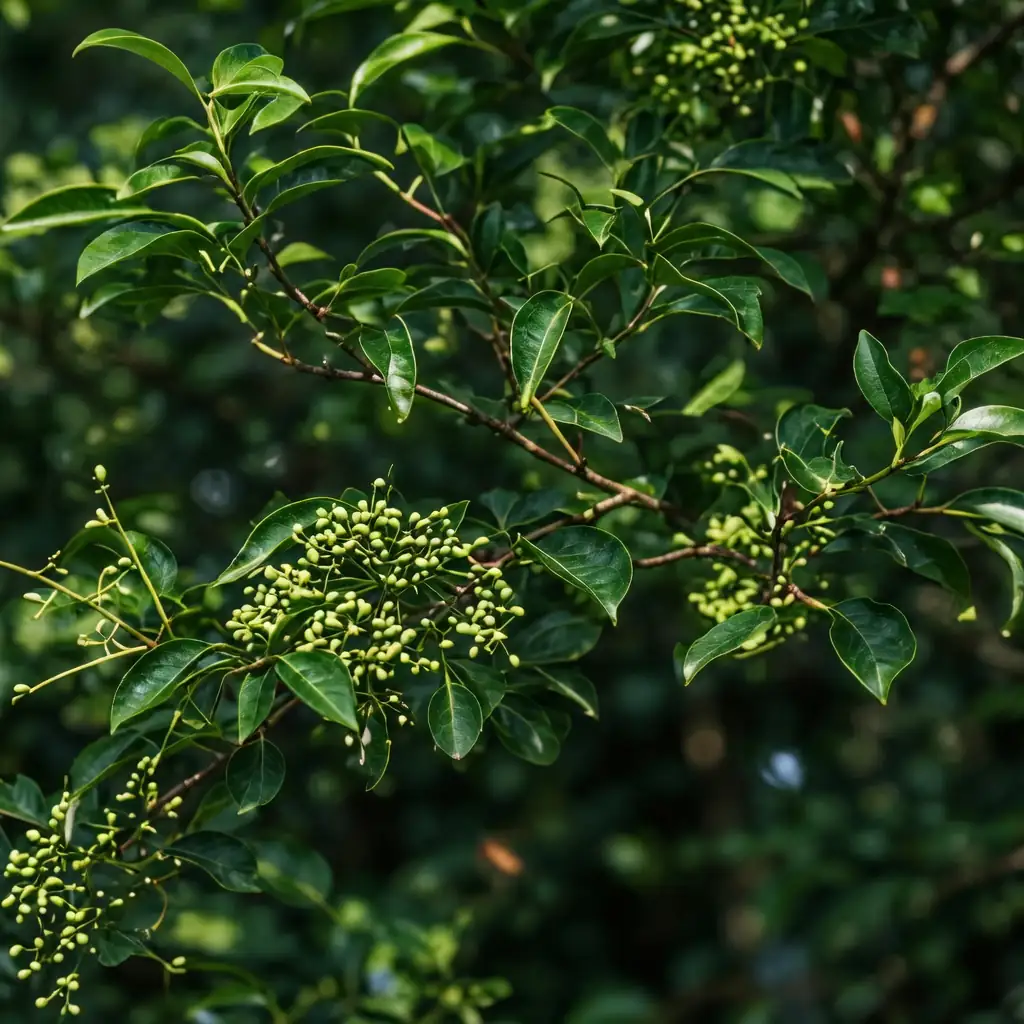
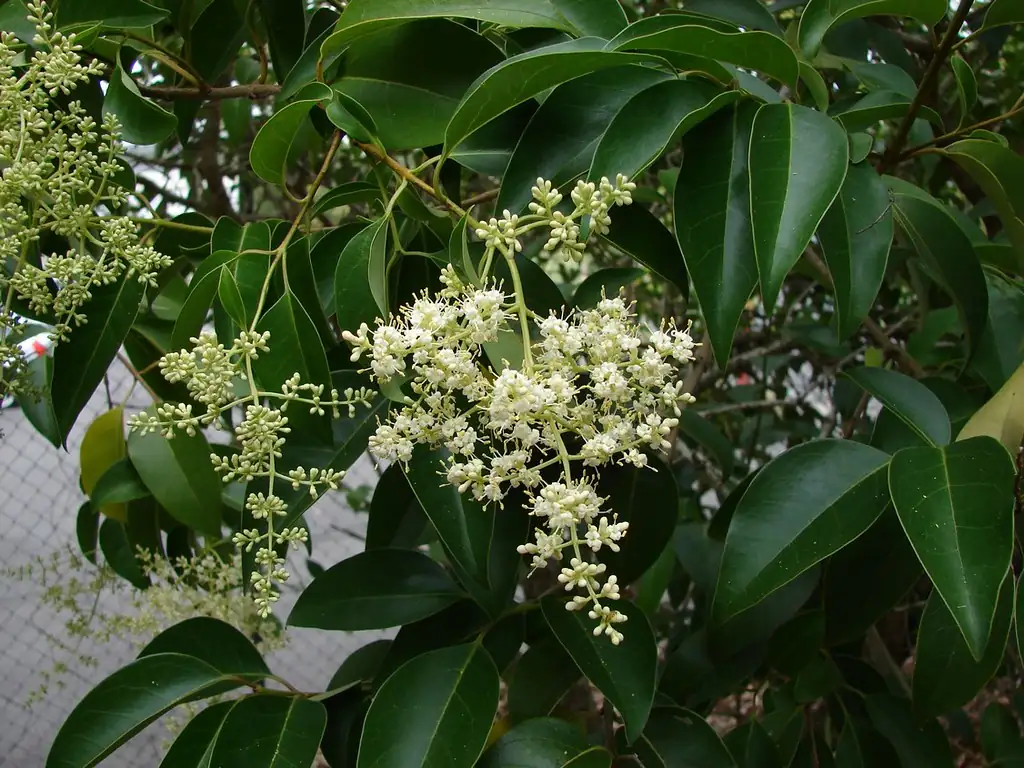
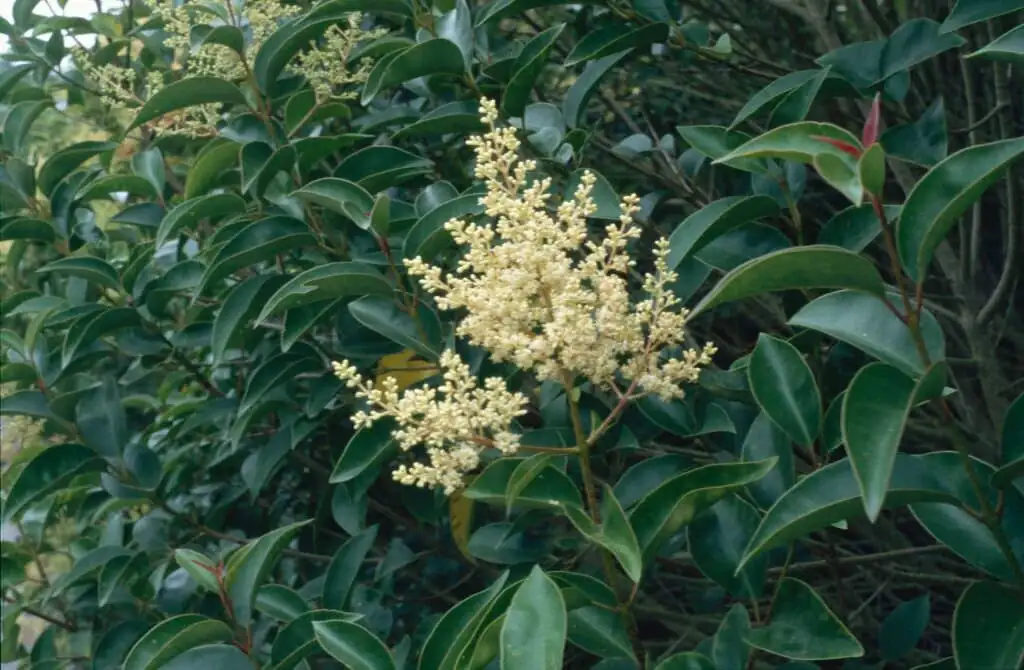
- Foliage: Leaves are broadly ovate to ovate-lanceolate, thick and leathery. The upper surface is deep green and very glossy, while the underside is paler green. Twigs and leaves are hairless, and the bark is typically smooth.
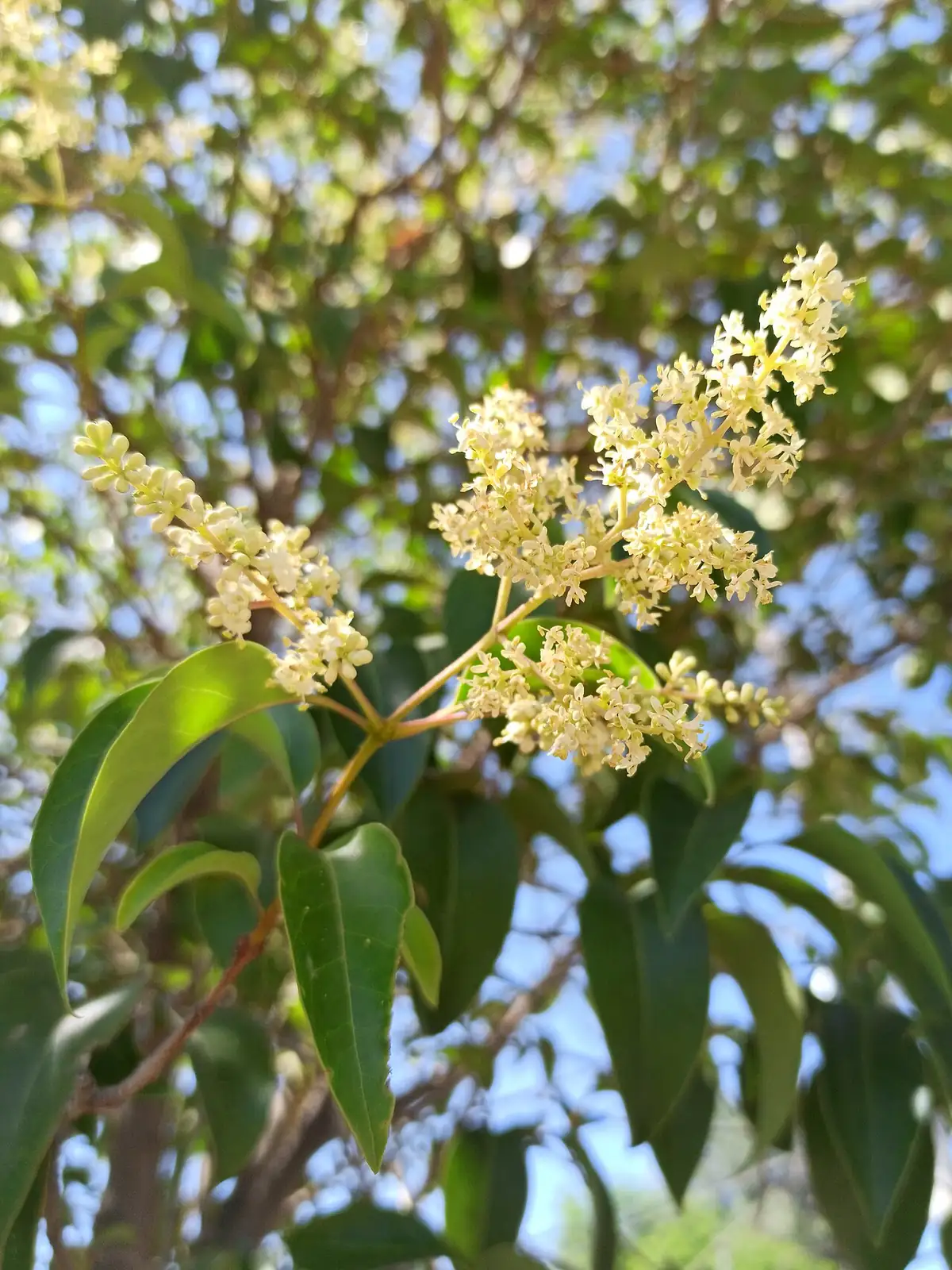
- Flower: Produces dense panicles of small, creamy-white, strongly fragrant flowers. Flower clusters are about 10–20 cm (4–8 in) long. The fruit is an oval berry about 1 cm (0.4 in) long, purple-black, usually with a whitish waxy coating.
- Flowering Season: May–July
- Growth Habit: Evergreen, vigorous, deep-rooting tree with many fibrous roots. Readily resprouts after cutting and tolerates heavy pruning; growth and appearance are best on reasonably fertile soils and can be poor on very thin, infertile sites.
Environment
Sunlight
Full sun to partial shade; brighter light generally gives denser growth and better flowering.
Temperature
Prefers warm, humid conditions; generally cold-tolerant once established. Active growth is often strongest around 15–30°C (59–86°F).
Humidity
Adaptable, but happiest with moderate to high humidity; tolerates damp conditions better than many ornamentals.
Soil
Adaptable, though best in fertile, well-drained loam. Avoid persistently stagnant, poorly aerated soils and very nutrient-poor, thin soils.
Placement
Outdoors in yards and courtyards, parks, and streetscapes; also suitable for clipped screens and hedging (where permitted/appropriate).
Hardiness
Often grown in USDA Zones 7–10 (approx.); generally frost-tolerant once established.
Care Guide
Difficulty
Easy to moderate outdoors: robust and forgiving once established. For best results, provide decent soil fertility and be mindful that it can become weedy/invasive in some regions.
Buying Guide
Pick plants with richly glossy, unblemished leaves and no dieback at shoot tips. Avoid pot-bound specimens with circling roots. Choose a straight central leader if you want a small tree, or multiple healthy stems if you’re buying for a hedge/screen.
Watering
Water regularly during the first growing season to help it establish. After that, water during prolonged dry spells. It tolerates occasional waterlogging better than many ornamentals, but avoid constantly saturated, stagnant soil.
Fertilization
If growth is weak or foliage pales, feed in spring with a balanced, slow-release fertilizer. In naturally fertile soils, extra feeding is often unnecessary.
Pruning
Prune in late winter to early spring to shape structure, or prune after flowering to control size. It tolerates hard cutting and rebounds strongly; remove suckers and crossing/rubbing branches as needed.
Propagation
Usually propagated by semi-hardwood cuttings in summer or hardwood cuttings in winter. Seed propagation is also possible where fruits mature (note that seedlings may spread where conditions suit).
Repotting
Most often grown in the ground. If kept in a container, repot every 1–2 years into a fresh, fertile mix and increase pot size gradually to reduce root binding.
📅 Seasonal Care Calendar
Flowers May–July. Fruits typically develop from July and may persist into the following spring (often July–May). Do major pruning in late winter/early spring; do lighter trimming after flowering.
Pests, Diseases & Safety
Common Pests & Diseases
Can be bothered by scale insects, aphids, and whiteflies; sticky honeydew from these pests often leads to sooty mold. Root problems may occur in poorly drained sites. Improve airflow, avoid excessive nitrogen, and manage sap-sucking pests to reduce honeydew and mold.
Toxicity
Berries and foliage may cause gastrointestinal upset if eaten; treat as potentially toxic if ingested and keep away from children and pets.
Culture & Symbolism
Symbolism: Not strongly standardized in English flower symbolism, but gardeners often associate it with resilience and endurance thanks to its evergreen nature and vigorous regrowth after pruning.
History & Legends: Long cultivated in China and widely used as an urban landscape tree. In some regions outside its native range it has escaped cultivation and is considered invasive, so local guidance is worth checking before planting.
Uses: Primarily ornamental—used as a specimen tree, in group plantings, for screens and hedges, and as a street/avenue tree. Appreciated for glossy evergreen foliage, fragrant summer flowers, and its willingness to be shaped.
FAQ
When does glossy privet flower?
Typically from May to July.
When does it fruit?
Fruits usually form from July and may persist into the following spring (often July–May).
How tall can it get?
It can reach up to about 25 m (82 ft) in ideal conditions, but it’s often kept much smaller with pruning.
What growing conditions does it like?
Full sun to partial shade, warm and humid conditions, and reasonably fertile soil. It tolerates damp spells and hard pruning well but performs poorly on very infertile soils.
Where is it native?
China—ranging from the Yangtze River region southward and into the southwest, extending northwest to Shaanxi and Gansu; commonly found in valleys, shrubland, and dense woodland.
Fun Facts
- In the right conditions it can grow into a sizeable tree—up to about 25 m (82 ft) tall.
- Its summer flower panicles are powerfully fragrant and typically 10–20 cm (4–8 in) long.
- The berries are about 1 cm (0.4 in) long and often look dusted with a pale waxy bloom.
- Hairless, highly glossy leaves are the signature feature behind the common name.
- It rebounds vigorously after cutting, which is exactly why it’s so popular for hedging and shaping.