

Plant Features
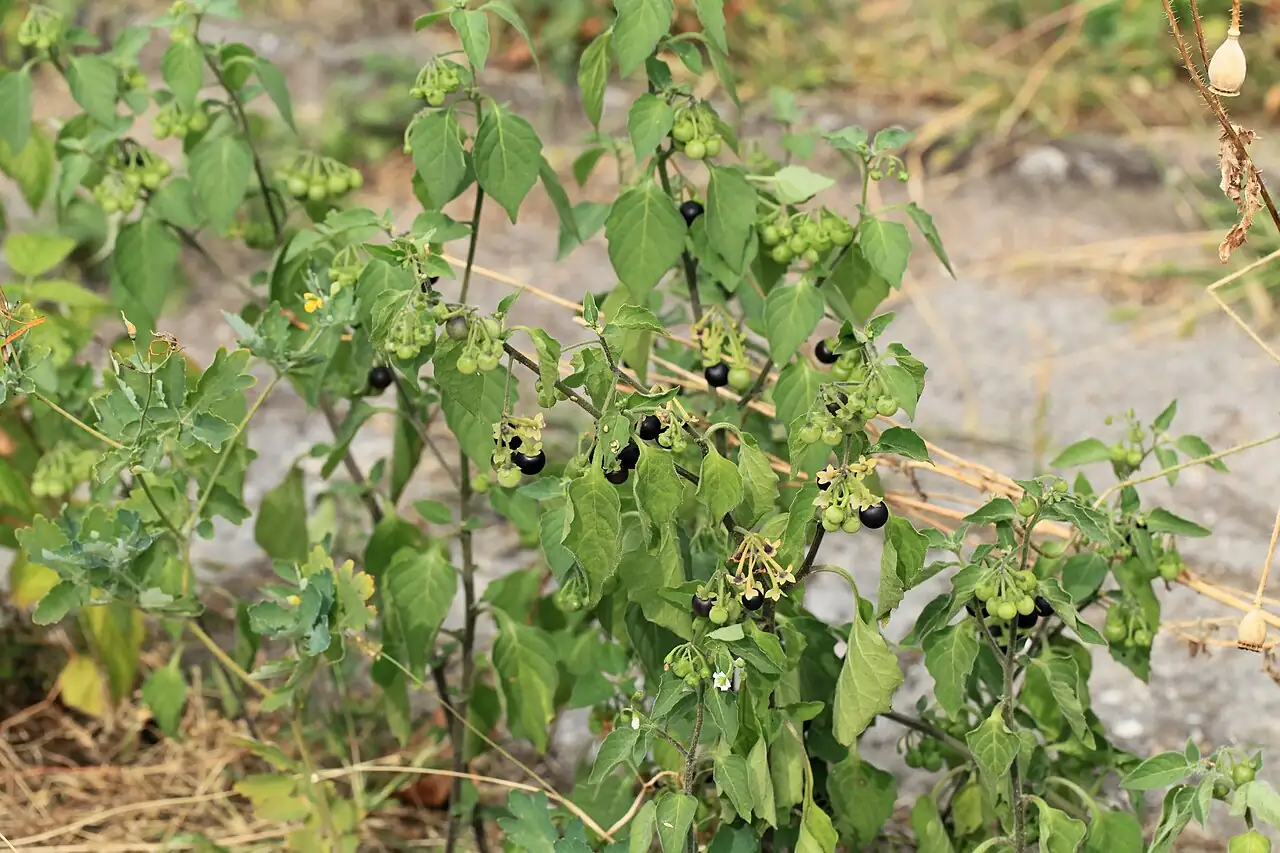
- Size: Typically 30–120 cm (12–47 in) tall; usually forms a bushy, branched clump rather than spreading widely.
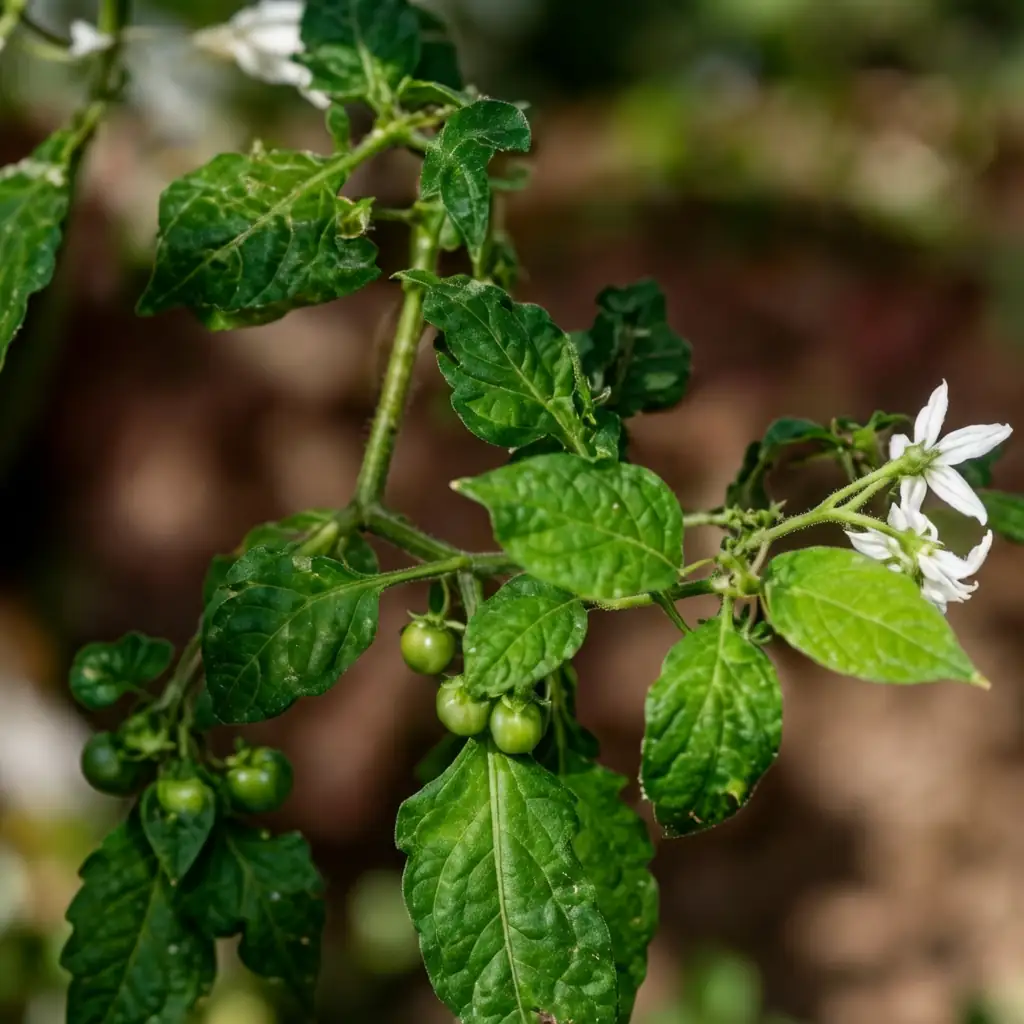
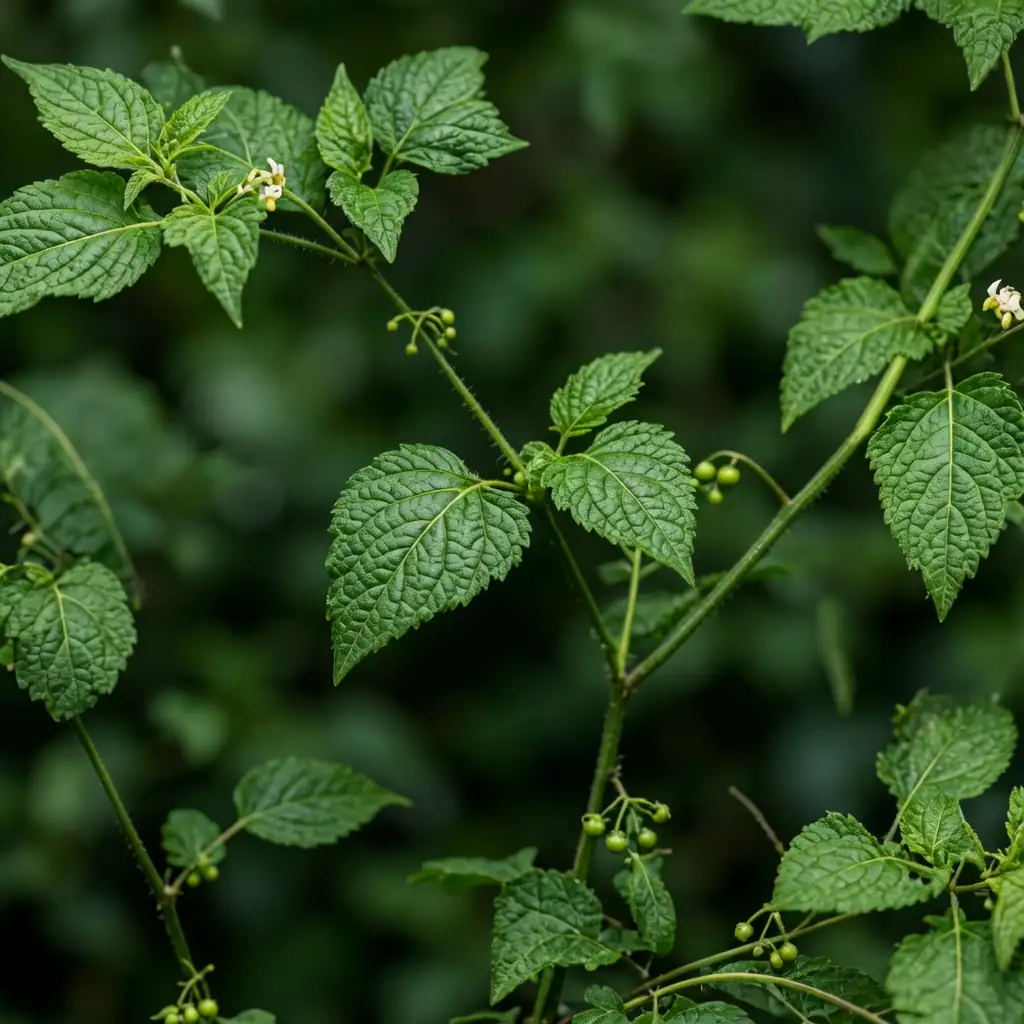
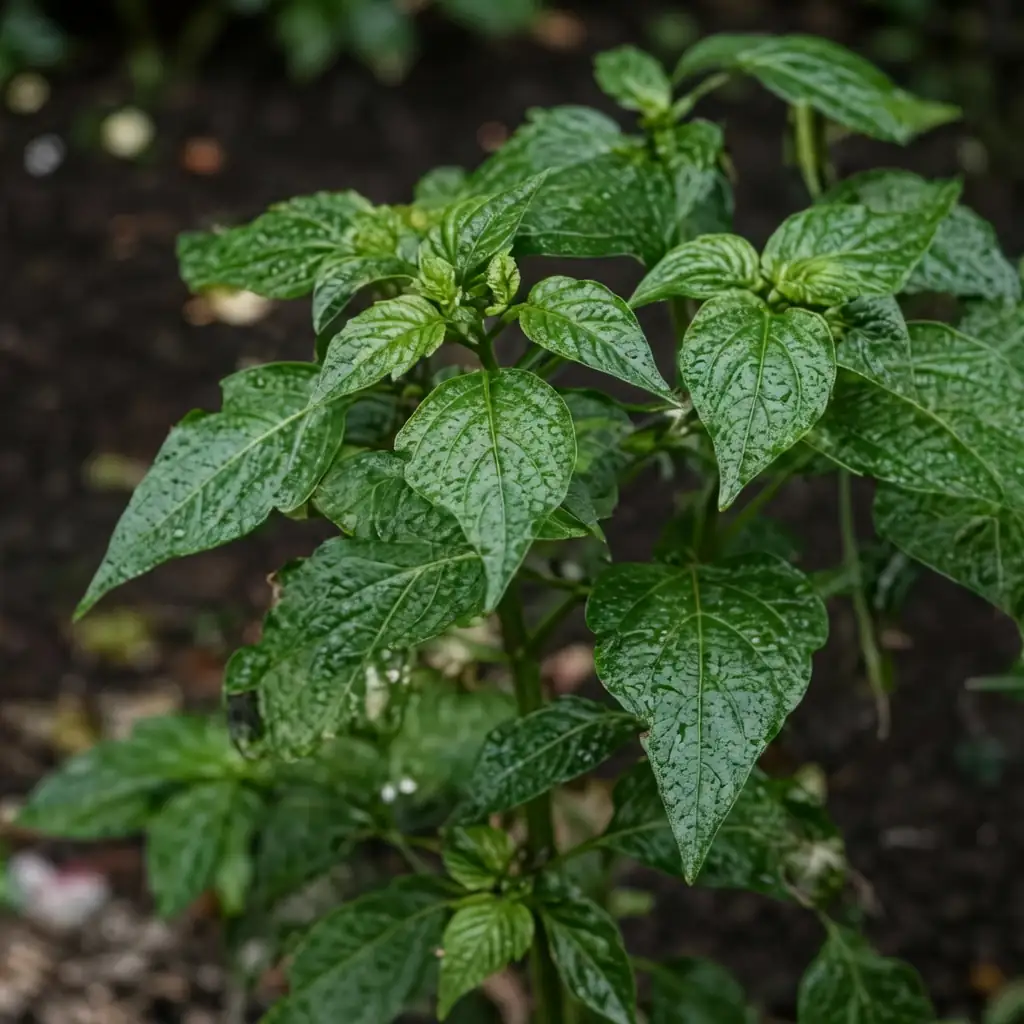
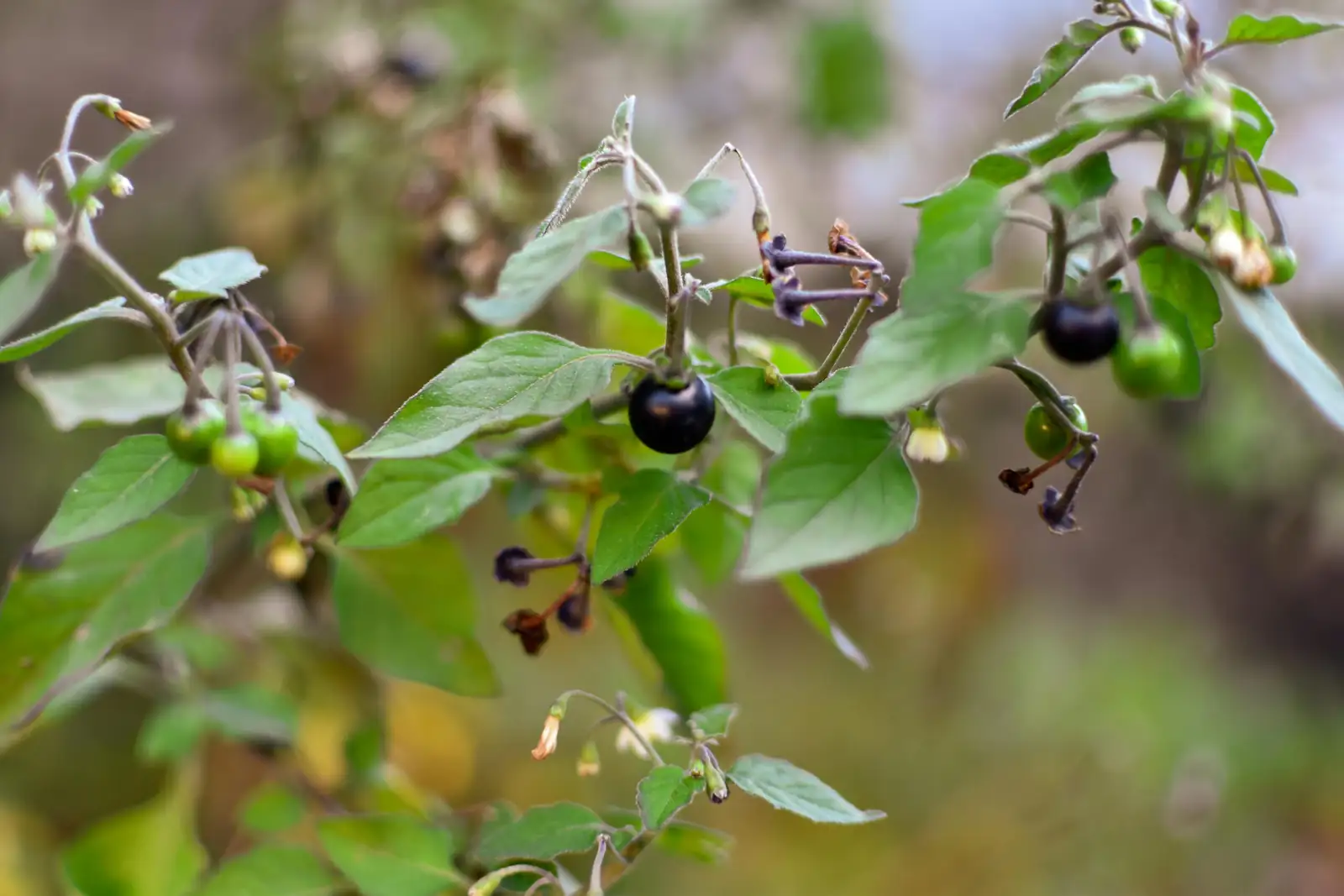
- Foliage: Leaves are alternate and usually ovate to heart-shaped, soft green, with margins that are mostly smooth (nearly entire) and a lightly textured, tender look.
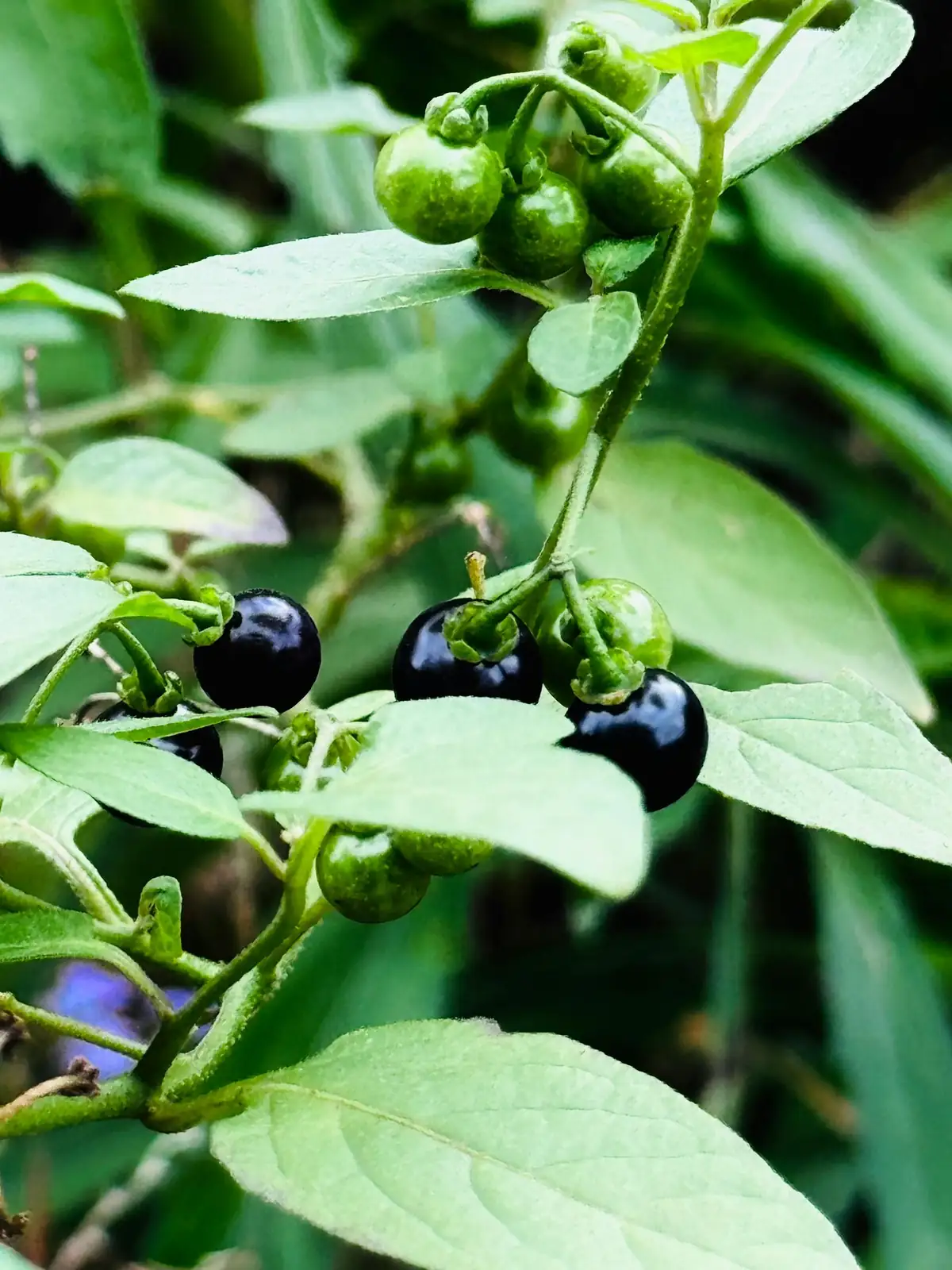
- Flower: Small, white, star-like flowers are borne in clusters (often about 4–10 per cluster). After flowering, it sets spherical berries that turn glossy deep purple-black when ripe.
- Flowering Season: May–August
- Growth Habit: Upright, many-branched annual herb.
Environment
Sunlight
Part shade to bright, filtered light. It naturally does well in lightly shaded slopes/valleys and along roadsides, so it’s happiest with protection from harsh all-day sun in hotter climates.
Temperature
Strongest leafy growth is usually at 22–30°C (72–86°F). Flowering and fruit set are often best around 15–20°C (59–68°F).
Humidity
Average outdoor humidity is fine. Avoid stagnant, overly damp conditions around the leaves for long periods, which can encourage leaf spot problems.
Soil
Not picky, but best in fertile, moisture-retentive loam with good drainage. Preferred soil pH is about 5.5–6.5.
Placement
A lightly shaded garden edge, balcony, patio, or container setting that mimics its natural habitat—bright shade with reasonably fertile, evenly moist (but well-drained) soil.
Hardiness
Frost-tender; typically grown as an annual where winters are cold. It may persist as a short-lived perennial only in mild, mostly frost-free areas.
Care Guide
Difficulty
Easy: vigorous, forgiving, and quick to establish in many conditions, especially if given moderate moisture and decent soil.
Buying Guide
Pick plants with sturdy, upright stems and clean, evenly green leaves. Avoid any with obvious aphids or whiteflies, or leaves that are badly spotted or yellowing. If you want it mainly for its ornamental berries, choose a plant already forming clusters of green fruit.
Watering
Water when the top 2–3 cm (0.8–1.2 in) of soil feels dry. Keep moisture steadier during flowering and fruiting, but never let a pot sit in water—good drainage is key.
Fertilization
In pots, use a balanced fertilizer at half strength every 2–4 weeks during active growth. In garden beds, compost-rich soil is often enough without frequent feeding.
Pruning
Pinch growing tips to encourage a fuller, bushier shape. Remove weak, damaged, or overcrowded stems to improve airflow and reduce pest/disease pressure.
Propagation
Mostly grown from seed. Sow in spring after frost danger has passed; lightly cover seeds and keep them warm and evenly moist until they germinate.
Repotting
For container plants, move up to a slightly larger pot once roots fill the container (often once per growing season). Use a fertile, loam-based mix that drains well.
📅 Seasonal Care Calendar
Spring: sow or transplant after frost; begin light feeding. Summer: water steadily; pinch for branching; enjoy flowers and developing berries. Autumn: berries ripen; ease off fertilizer. Winter: plants usually die back with frost—collect seed if you’d like to grow it again.
Pests, Diseases & Safety
Common Pests & Diseases
Common issues include aphids, whiteflies, spider mites, and flea beetles. Improve airflow, avoid excess nitrogen fertilizer (which can invite pests), and knock pests off with water or use insecticidal soap if needed. Prolonged wet foliage can lead to leaf spot—keep leaves drier and spacing airier.
Toxicity
Use caution: black nightshade can be toxic if ingested—especially unripe berries and foliage. Keep away from children and pets, and do not eat it unless you have expert, locally verified guidance about edible forms and safe preparation.
Culture & Symbolism
Symbolism: Often linked with resilience and adaptability, since it thrives in disturbed places where many plants struggle.
History & Legends: A very familiar Solanum with a long presence in folk plant lore—partly because it’s so common and partly because the dark berries are so distinctive and memorable.
Uses: Most often encountered as a wild volunteer in gardens and along paths; sometimes grown as an ornamental or curiosity plant in containers for its delicate flowers and decorative berries.
FAQ
What is the scientific name of black nightshade?
Solanum nigrum.
Which family and genus does it belong to?
It belongs to the nightshade family (Solanaceae) and the genus Solanum.
When does it flower and fruit?
It usually flowers from May to August. Fruits often develop from mid-summer into autumn; timing varies with climate.
How tall does it grow?
Typically about 30–120 cm (12–47 in) tall.
What habitat does it prefer?
It commonly grows in partly shaded, disturbed places like shaded slopes/valleys and roadsides, and adapts well as long as the soil is reasonably moist and fertile.
What temperatures are best for growth and fruit set?
Leafy growth is often strongest around 22–30°C (72–86°F), while flowering and fruit set are frequently best around 15–20°C (59–68°F).
What soil and pH are suitable?
A fertile, moisture-retentive loam with good drainage is ideal; pH around 5.5–6.5.
Fun Facts
- The berries are perfectly round and ripen to a glossy deep purple-black.
- The small, white, starry flowers look like miniature versions of other Solanum relatives.
- It often shows up uninvited in disturbed soil—one reason it’s so widely known as a volunteer ‘roadside’ plant.
- It tolerates poor soils, but becomes much more vigorous in compost-rich loam.
- It’s in the same genus as tomato and potato, and the family resemblance shows in its flower shape.


