

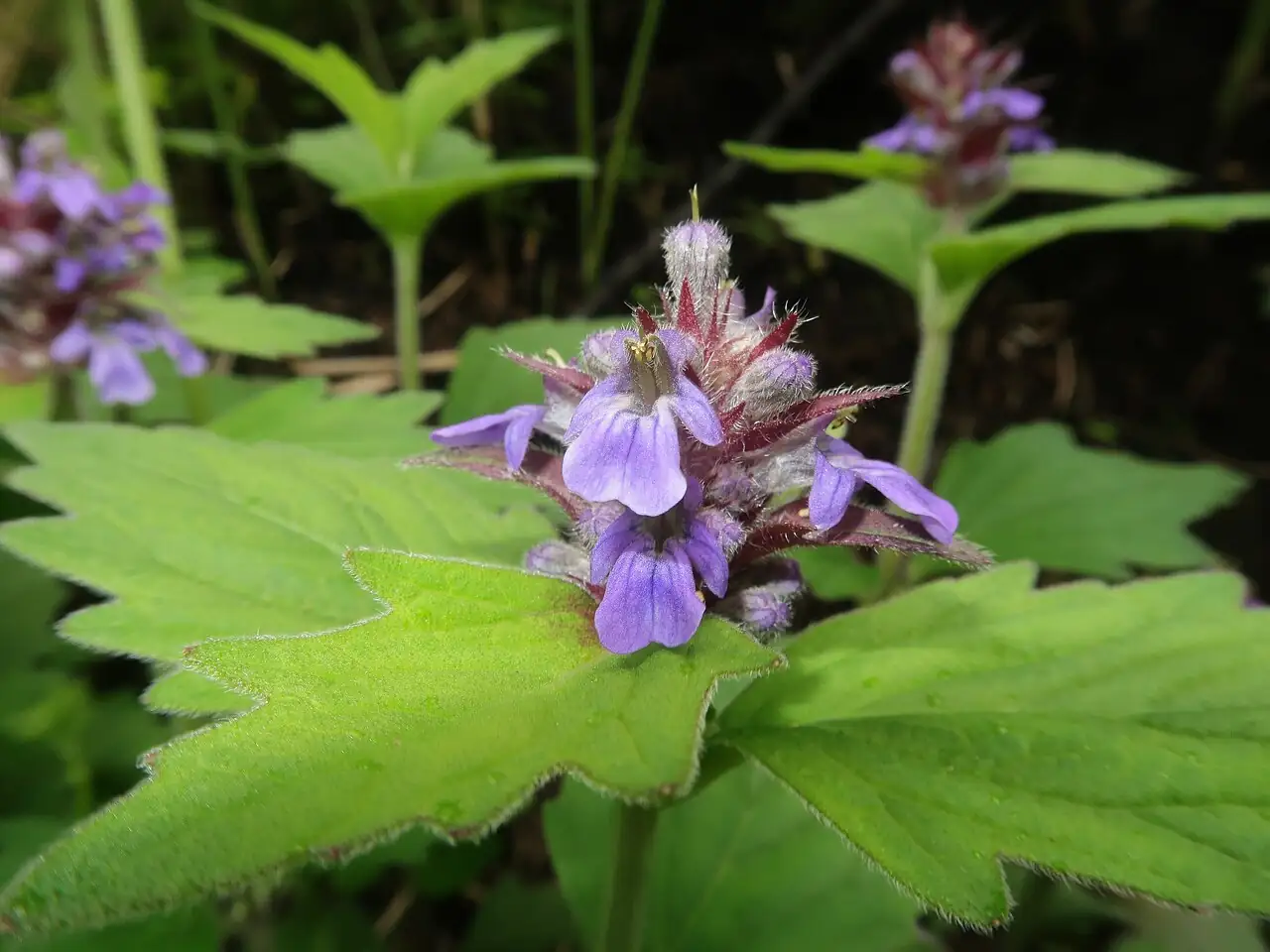
Plant Features
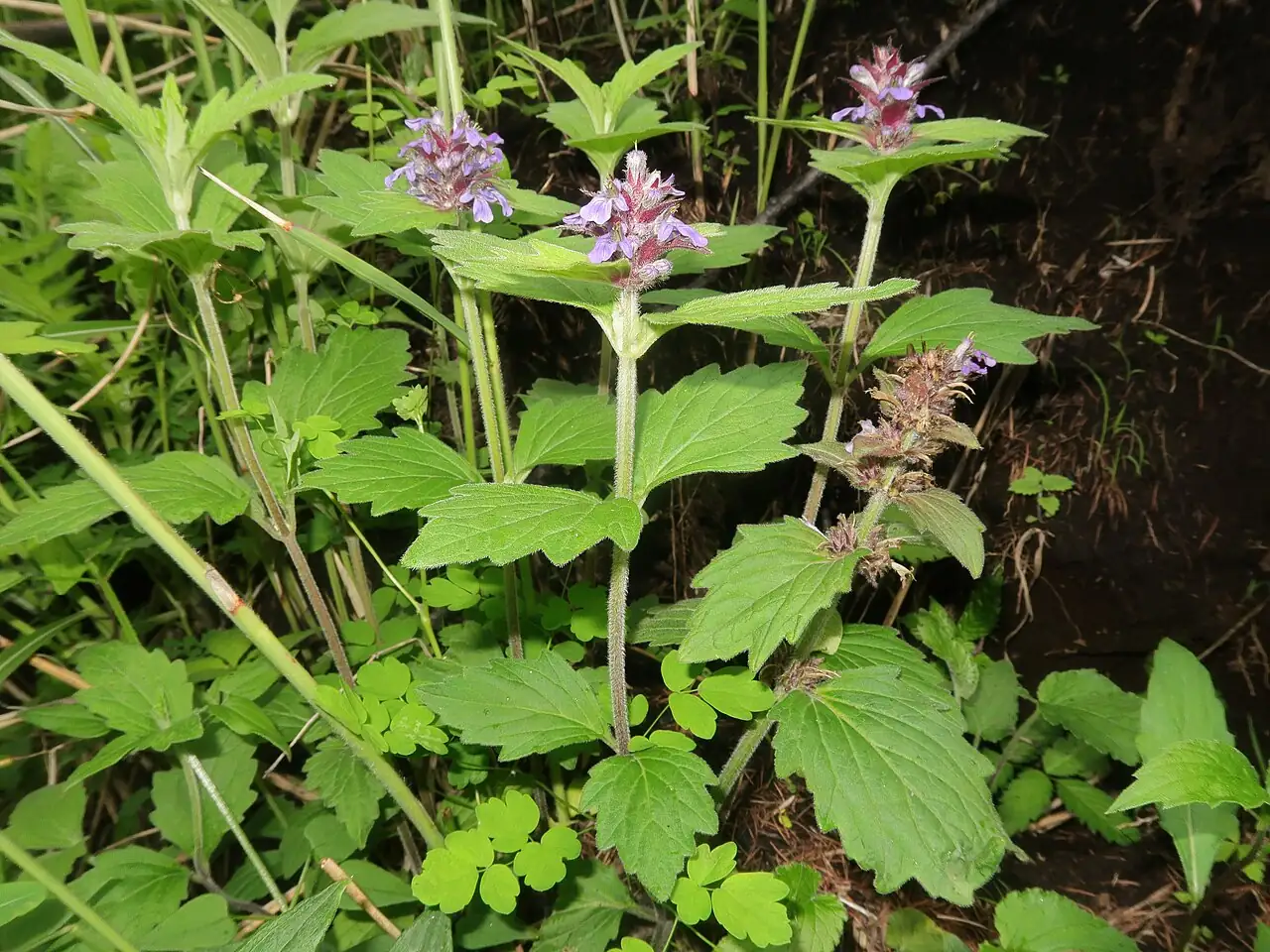
- Size: Typically 25–40 cm (10–16 in) tall; spreads by slender rhizomes to form patches.
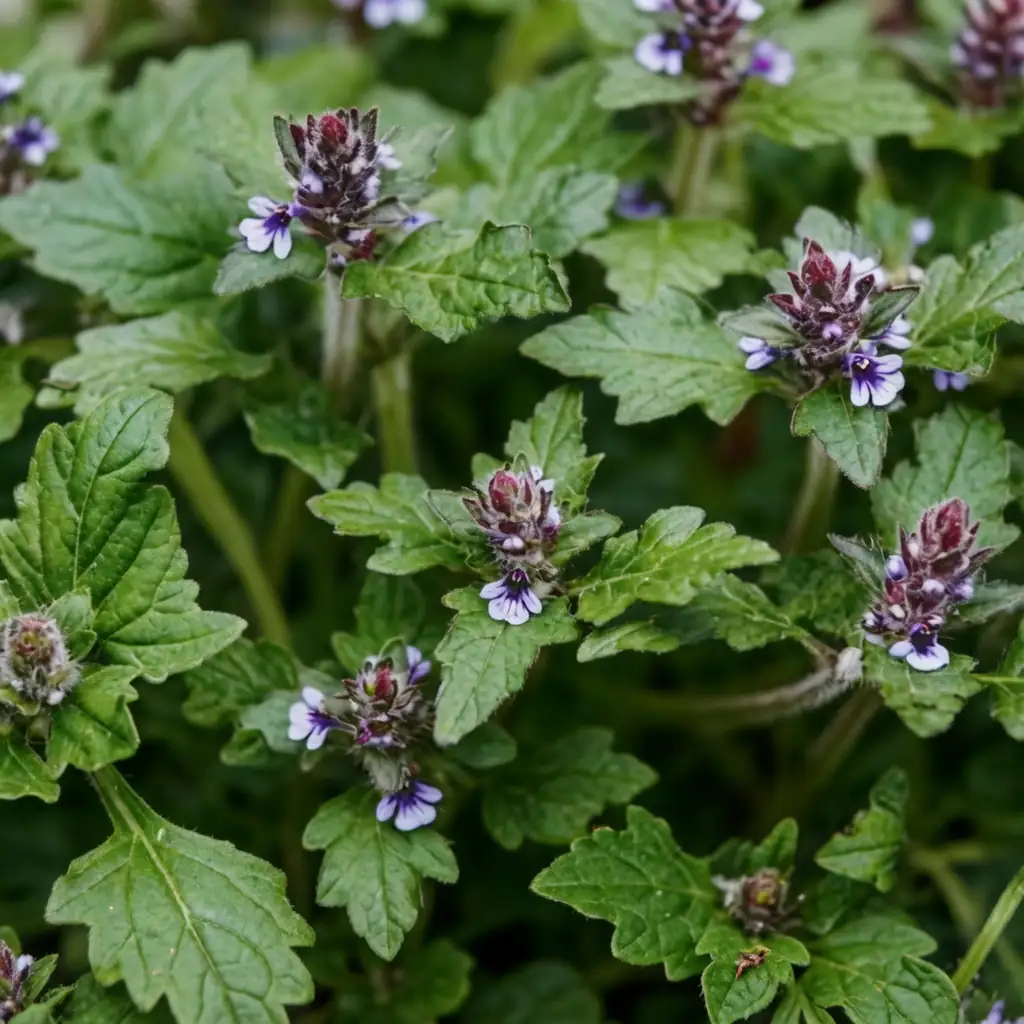
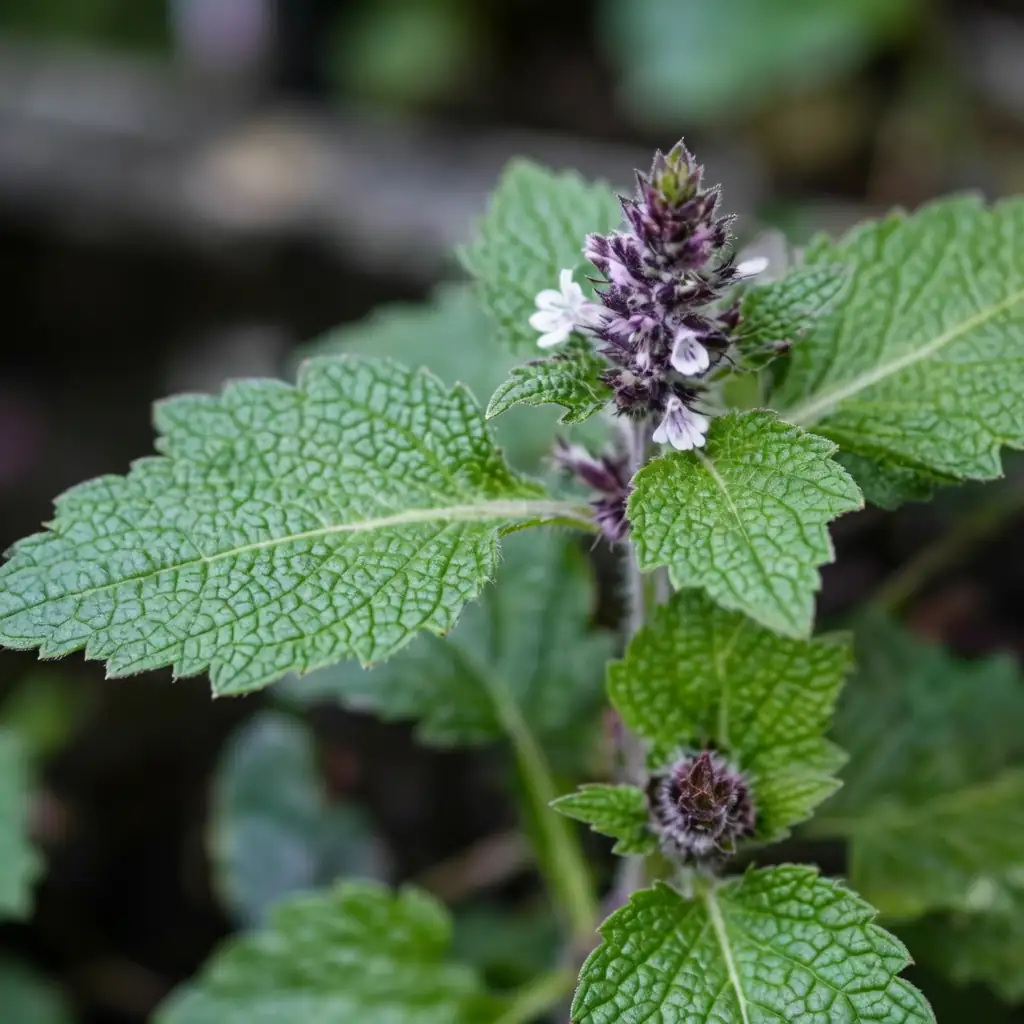
- Foliage: Leaves are herbaceous (not leathery), oval to triangular-oval, forming a tidy, low clump typical of Ajuga. Foliage stays attractive for much of the year in mild climates, supporting its use as an evergreen-ish groundcover.
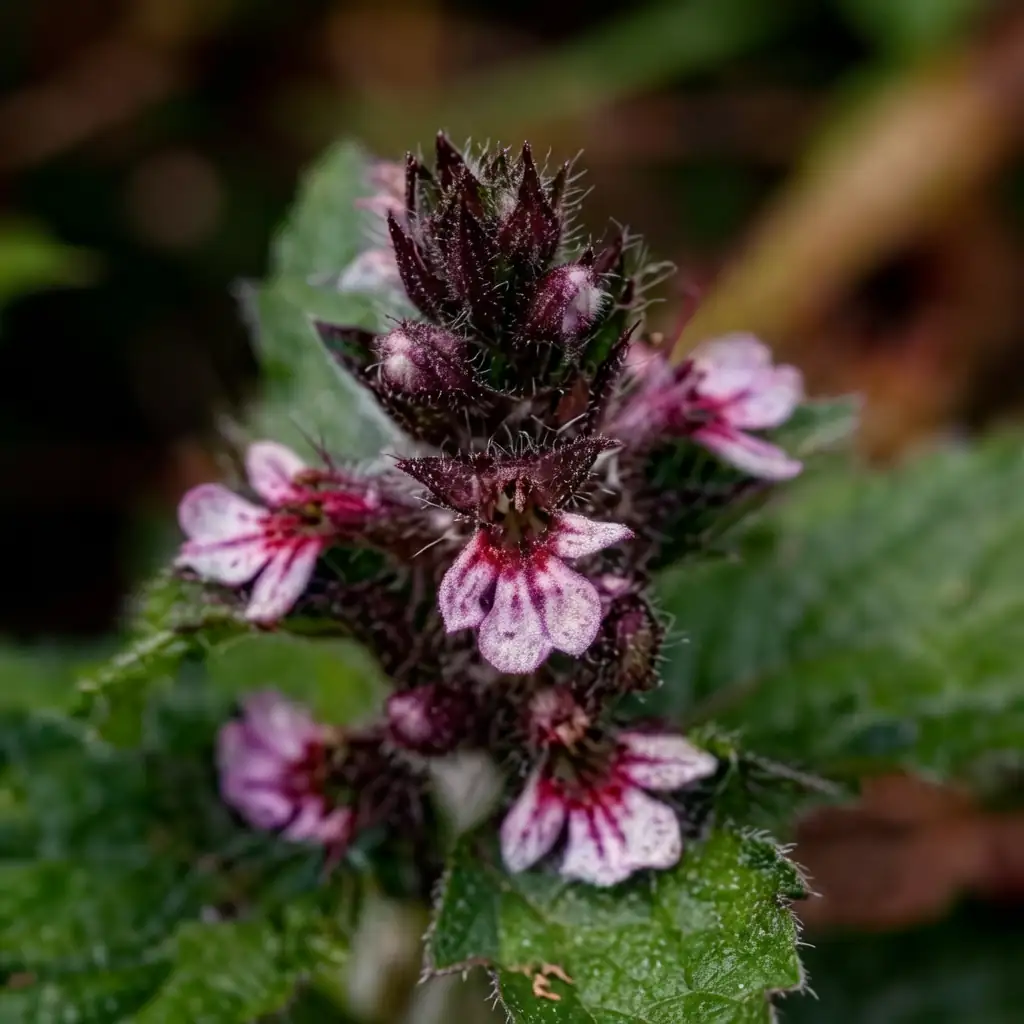
- Flower: In summer it produces dense flower spikes with small flowers arranged in opposite pairs along the stem. A key feature is the inflorescence axis, which is covered in fine, curved white hairs. After flowering, it sets small nutlet-type fruits that mature chestnut-brown to dark brown.
- Flowering Season: June–August
- Growth Habit: Evergreen perennial herb that forms spreading patches via slender rhizomes; stems are upright and characteristically four-angled (square in cross-section), a classic mint-family trait.
Environment
Sunlight
Part shade to dappled shade is ideal. It tolerates deeper shade better than many flowering groundcovers, and can also take full sun if the soil stays evenly moist (especially important in hot summers).
Temperature
Hardy perennial for temperate climates; grows best in cool to warm conditions around 10–25°C (50–77°F).
Humidity
Prefers consistently moist conditions, but adapts well—tolerating short-term waterlogging as well as brief dry spells once established.
Soil
Adaptable to many soil types. Best in loose, well-drained yet moisture-retentive soil; generally suited to acidic to neutral conditions.
Placement
Great under shrubs, in open woodland gardens, along paths, and in mixed borders where there’s light shade and moderately moist soil. Also works in containers if drainage is reliable.
Hardiness
Cold-hardy temperate perennial; generally frost tolerant. (Exact USDA hardiness zone can vary with local forms—confirm for your region.)
Care Guide
Difficulty
Easy. A vigorous, resilient plant once established, with notable tolerance of shade/sun and wet/dry swings (within reason).
Buying Guide
Pick plants with firm, clean leaves and a healthy crown (no mushiness or rot). Avoid pots that smell sour or stay constantly saturated. For quick groundcover results, choose multi-crown plants or small clumps rather than a single weak stem.
Watering
During establishment, water regularly to keep soil evenly moist. After it settles in, water when the top 2–3 cm (0.8–1.2 in) of soil dries. It can handle occasional drought, but it looks lusher and flowers better with steady moisture. In pots, avoid stagnant water and always use drainage holes.
Fertilization
Usually light feeding is enough. In spring, top-dress with compost or use a balanced slow-release fertilizer at label rates. Avoid heavy nitrogen, which can cause soft, floppy growth.
Pruning
Shear or deadhead spent flower spikes after blooming to keep it tidy and encourage fresh foliage. In early spring, remove winter-damaged leaves and do a general clean-up.
Propagation
Very easy by division: split clumps or separate rhizome pieces in spring or early autumn and replant promptly. You can also lift and replant rooted offsets from spreading patches; keep divisions evenly moist until well rooted.
Repotting
In containers, repot or divide every 1–2 years in spring. Use a mix that holds some moisture but drains freely, and choose pots with good drainage.
📅 Seasonal Care Calendar
Spring: clean up old foliage, divide if crowded, and lightly feed. Summer: keep evenly moist for best flowering; shear after bloom. Autumn: divide/transplant if needed; mulch in colder regions. Winter: low care; protect container plants from repeated freeze–thaw cycles.
Pests, Diseases & Safety
Common Pests & Diseases
Usually trouble-free. In poorly ventilated, overly wet sites it can develop crown or root rot—improve drainage and airflow. Slugs and snails may nibble young growth in damp shade; reduce hiding places and use barriers or targeted controls if needed.
Toxicity
No widely cited serious toxicity warnings for Ajuga ciliata in typical household settings. However, plant sap may irritate sensitive skin. As a general safety habit, discourage chewing by pets/children and seek medical/veterinary advice if ingestion causes symptoms.
Culture & Symbolism
Symbolism: Often linked with resilience and endurance—fitting for a plant that copes with both shade and sun, and both moisture and short dry spells.
History & Legends: In East Asia, plants called “jin gu cao” (筋骨草) are associated with traditional herbal use in some regions. Because common names can be applied to different species locally, medicinal use should only be considered with correct identification and professional guidance.
Uses: Primarily grown as an ornamental groundcover for lightly shaded beds, open woodland gardens, and borders. Useful for knitting together planting areas where moisture is moderate and weeds need gentle suppression.
FAQ
Can ciliate bugleweed grow in full sun?
Yes—if the soil stays consistently moist. In hotter climates or during summer heat, part shade usually gives prettier foliage and longer-lasting blooms.
Is it a good choice for damp areas?
Yes. It naturally occurs near wet meadows and waterways and tolerates wetter soil better than many groundcovers. It still performs best where water drains rather than sitting stagnant.
Fun Facts
- It’s native to several provinces across northern to eastern China and can be found from roadsides and grasslands to open woodland and wet habitats near water.
- It usually blooms June–August, and its nutlet fruits ripen later, often July–October.
- The flower stalk is notably fuzzy, with fine white hairs along the inflorescence axis—one of its easiest ID clues.
- Those square, four-angled stems are a classic mint-family feature; you can feel the edges by gently rolling the stem between your fingers.


