

Plant Features
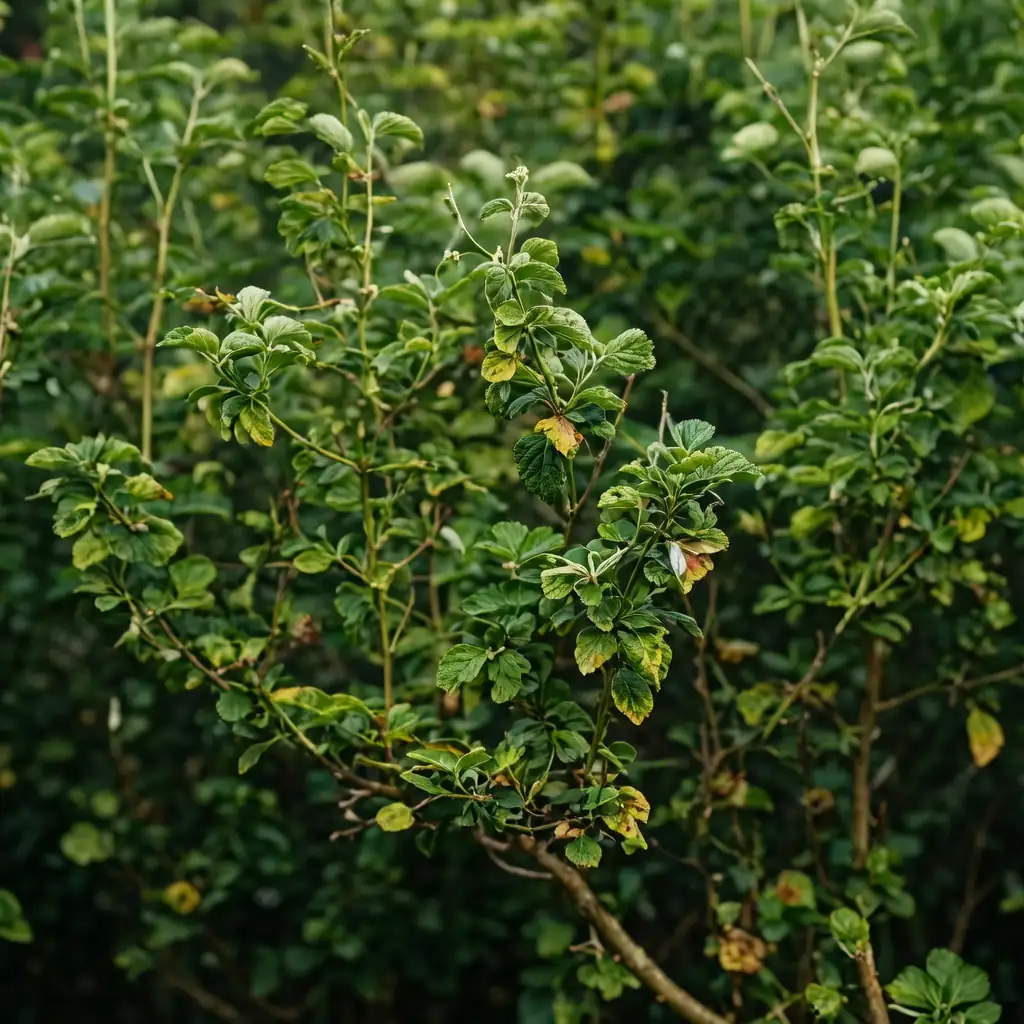
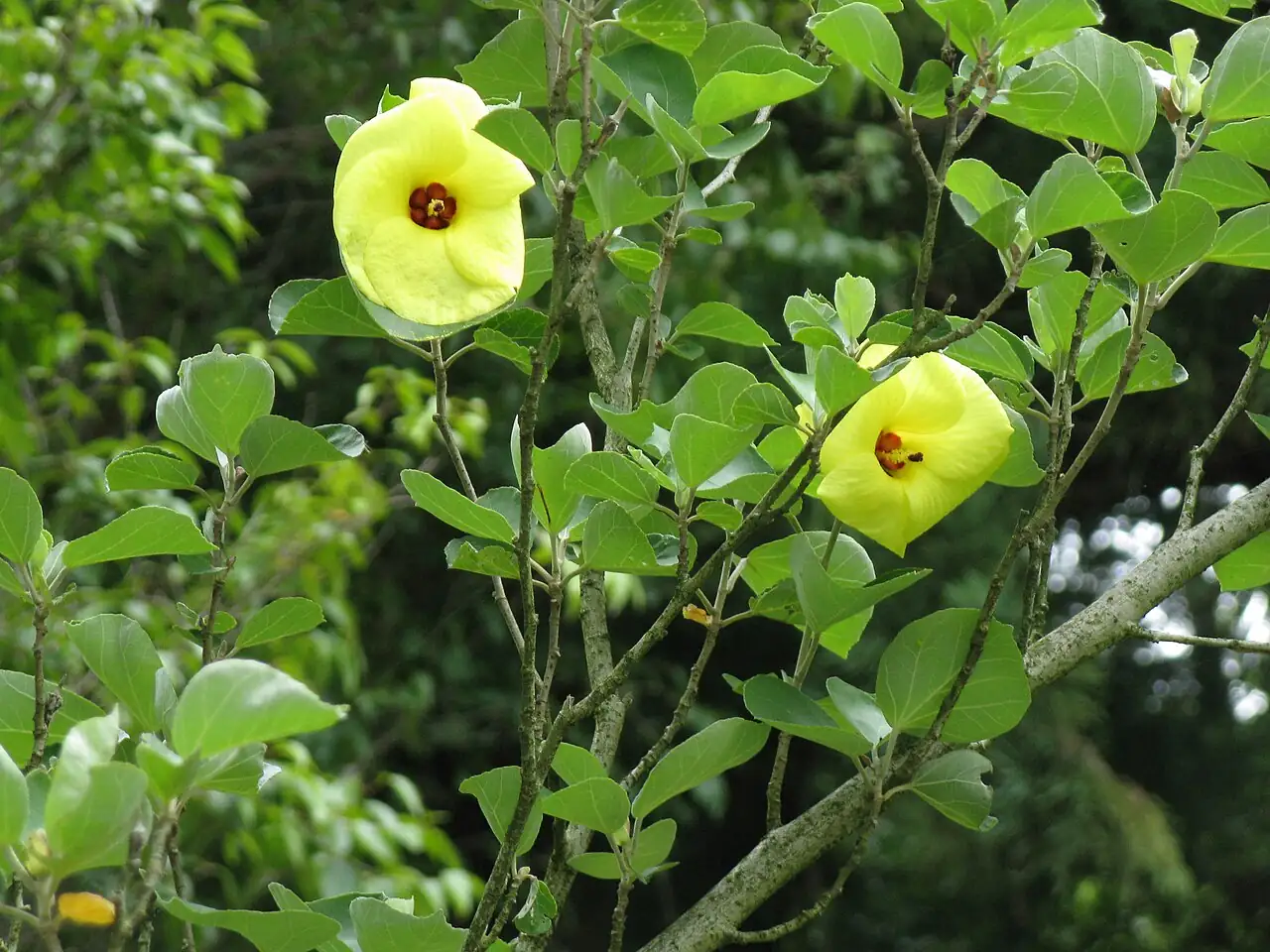
- Size: Typically 2–3 m (6.6–9.8 ft) tall with a flattened, rounded crown.
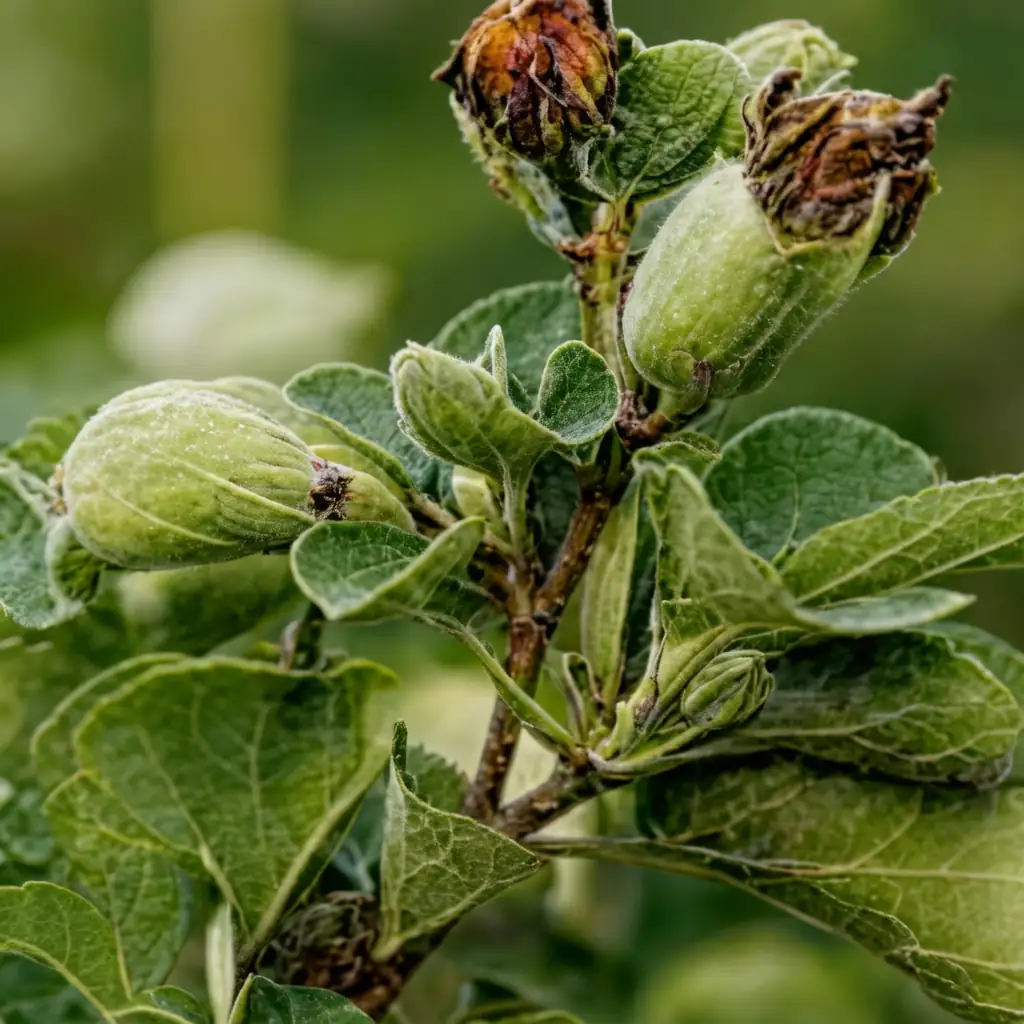
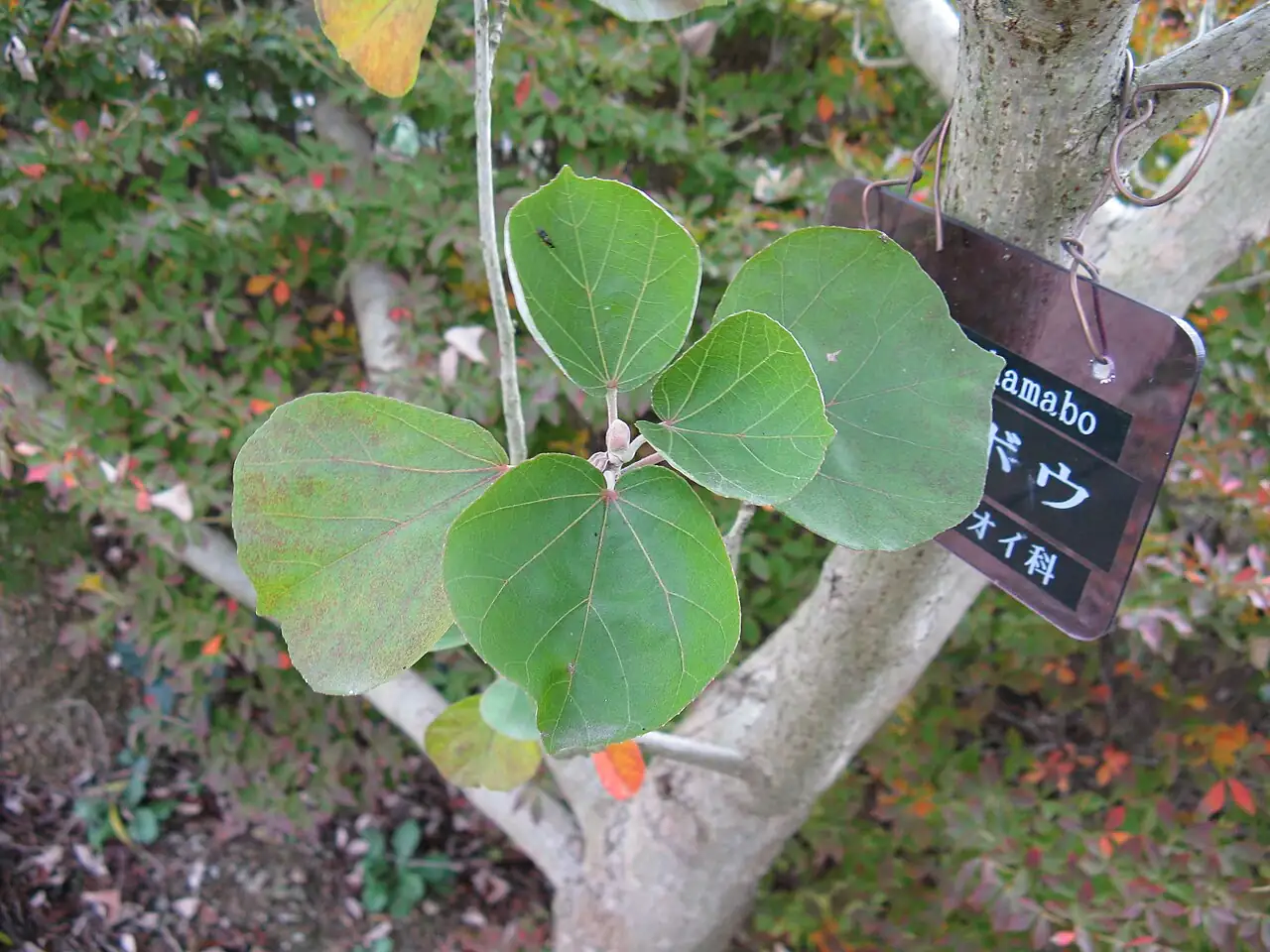
- Foliage: Leaves are alternate and slightly thick with a papery feel, showing fine rounded teeth toward the upper edges. The upper surface is smooth green with star-shaped hairs, while the underside is densely felted. Veins are palmate with 5–7 main veins. Petioles are about 0.8–2.5 cm (0.3–1.0 in). Stipules are about 1 cm (0.4 in) and drop early.
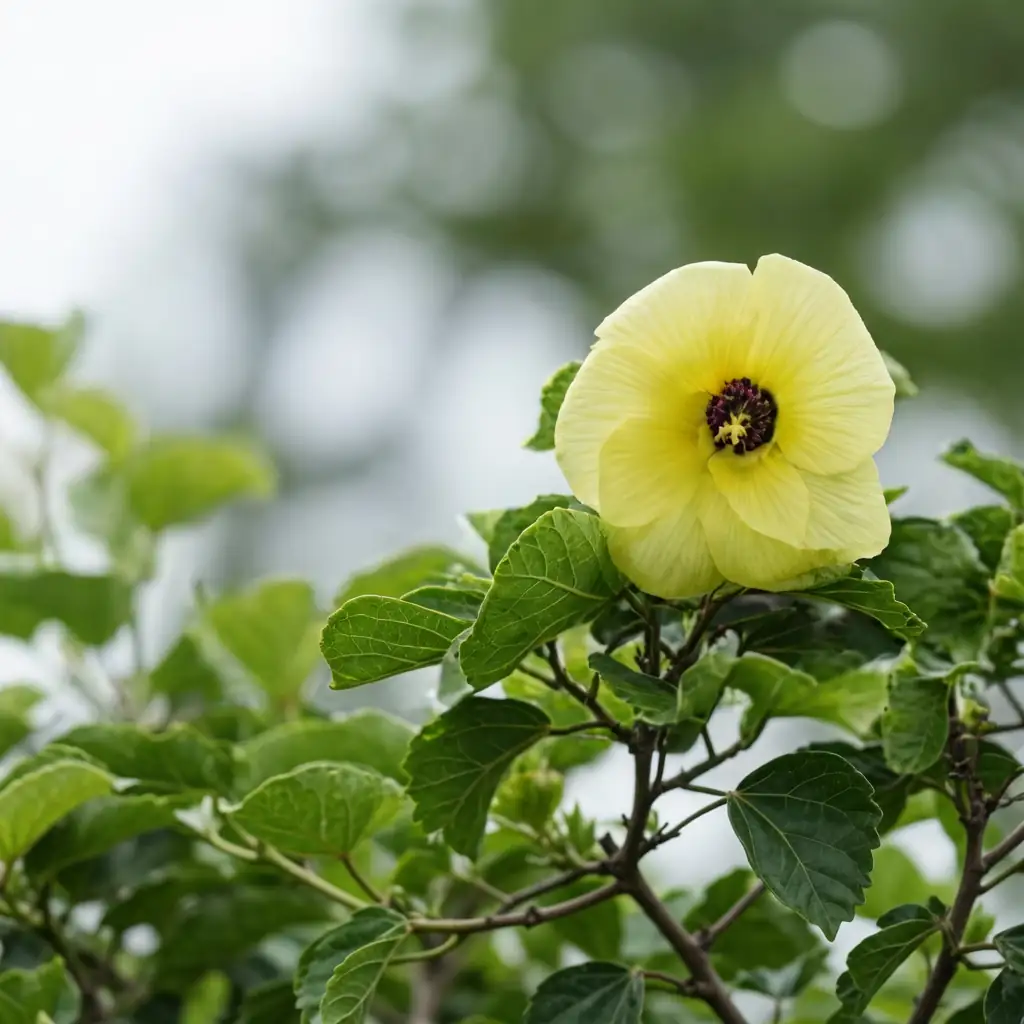
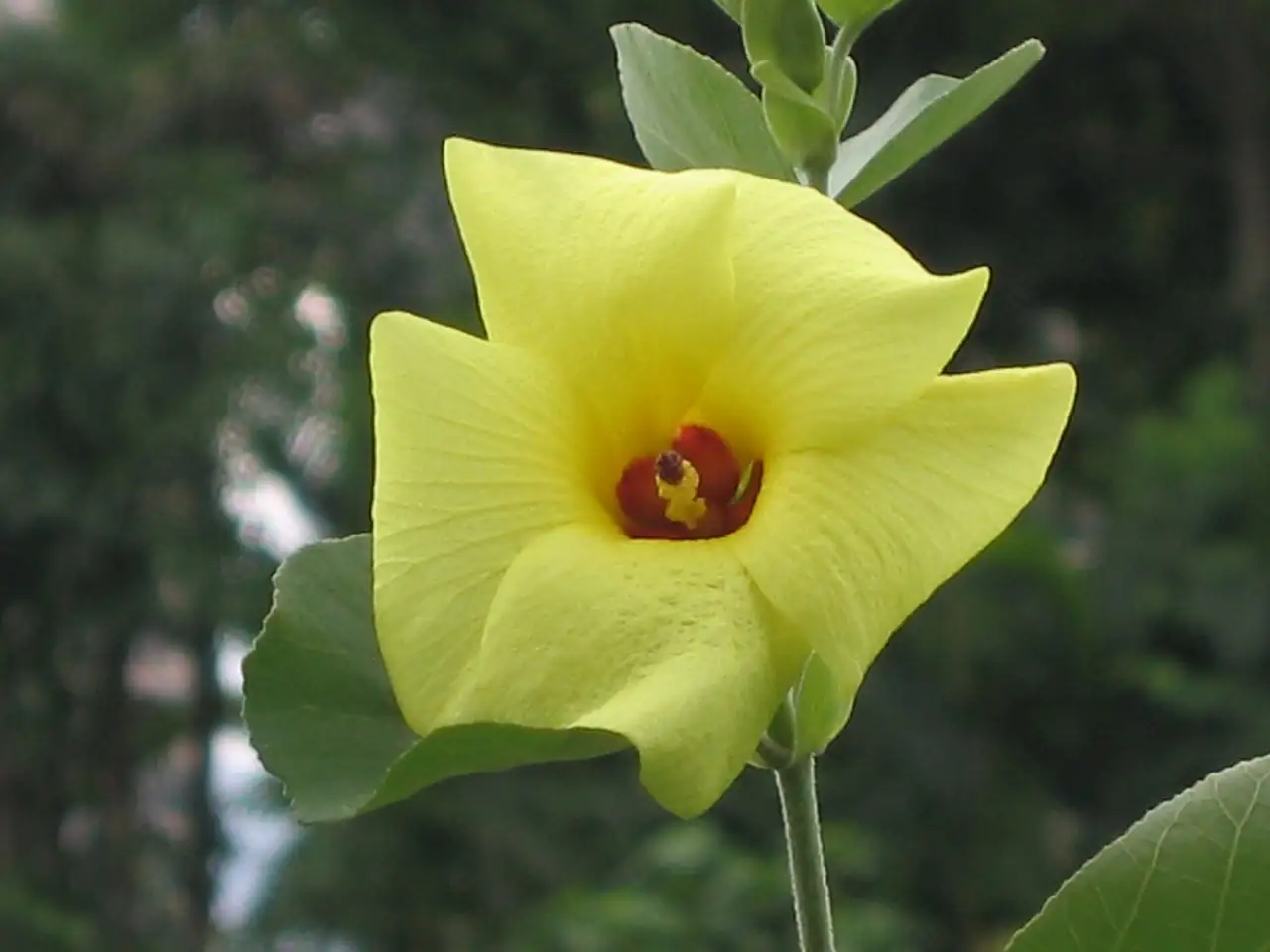
- Flower: Flowers are bisexual and usually appear singly in the leaf axils near shoot tips. Blooms are golden yellow and bell-shaped, with the calyx split into five lobes and showing a darker purplish tone near the inner base. The fruit is a triangular-ovoid capsule; seeds are brown, kidney-shaped, and finely gland-dotted.
- Flowering Season: June–October; fruiting August–November
- Growth Habit: A densely branched deciduous small tree or large shrub with a flattened, rounded canopy. Exceptionally adapted to coastal exposure and salt—able to tolerate saline/alkaline soils, salt spray, and periodic tidal flooding; reports note the lower trunk can withstand about 1 m (3.3 ft) of seawater inundation while still flowering and fruiting.
Environment
Sunlight
Full sun for the best flowering; tolerates light shade.
Temperature
Heat tolerant; cold tolerant to about -10°C (14°F) once established.
Humidity
Adaptable; happy in humid coastal air and, once established, tolerates drying winds.
Soil
Adaptable, but performs best in well-drained soil. Notably tolerant of saline and alkaline soils and can handle coastal spray and periodic brackish/seawater inundation.
Placement
Ideal for seaside gardens, coastal parks, salty roadside verges, and reclamation/greening of saline-alkaline sites. Works as a specimen, in mass planting, or clipped into flowering hedges/screens; also suitable for industrial and urban plantings thanks to good pollution tolerance.
Hardiness
Cold hardy to around -10°C (14°F), roughly USDA Zone 8 (8a) and warmer. Best in coastal or near-coastal climates; inland, choose a protected site.
Care Guide
Difficulty
Easy—especially once established. A resilient choice that tolerates pruning, salt, wind, and urban pollution.
Buying Guide
Choose plants with firm, unscarred stems and healthy buds. Avoid plants with blackened roots, sour-smelling potting mix, or major dieback. For coastal planting, pick stock that has been hardened off outdoors and is labeled/raised for salt-wind exposure.
Watering
Water regularly during the first growing season to keep soil evenly moist (not soggy). After establishment it’s relatively drought tolerant; water during prolonged dry spells, especially for container plants. In salty ground, occasional deep watering with fresh water (where practical) helps flush salts from the root zone.
Fertilization
Feed in spring with a balanced slow-release fertilizer. In very poor soils, add a second light feeding in early summer to support flowering. Avoid excessive nitrogen, which can push leafy growth at the expense of blooms.
Pruning
Prune in late winter to early spring before new growth. Remove dead, weak, or crossing branches and shape as desired. Takes clipping well, so it can be kept as a flowering hedge or screen.
Propagation
Propagate by semi-ripe cuttings in summer or hardwood cuttings in late winter. Seed propagation is also possible when viable seed is available.
Repotting
For container plants, repot every 1–2 years in spring into a slightly larger pot with a free-draining mix. If not repotting, refresh the top layer of potting mix annually.
📅 Seasonal Care Calendar
Spring: prune, apply slow-release fertilizer, and resume regular watering as growth starts. Summer: peak flowering—water during heat/drought and lightly trim hedges after bloom flushes. Autumn: stop heavy feeding and let shoots mature/harden. Winter: protect young plants from severe freezes and cold, drying winds, especially in pots.
Pests, Diseases & Safety
Common Pests & Diseases
Generally robust. Watch for aphids on tender new growth, scale insects, and spider mites in hot/dry weather. Leaf spots can appear in persistently wet, stagnant air. Improve airflow, avoid late-day overhead watering, and use horticultural soap/oil if needed.
Toxicity
Not commonly listed as toxic to people or pets. As with many ornamentals, chewing or swallowing plant parts may cause mild stomach upset—discourage pets that like to nibble.
Culture & Symbolism
Symbolism: Often linked with resilience and optimism—sunny flowers paired with the ability to thrive where salt, wind, and poor soils would defeat many plants.
History & Legends: A coastal hibiscus long valued in East Asia for shoreline planting and windbreak-style landscaping; today it’s widely used in coastal greening and restoration of salt-affected land.
Uses: A landscape ornamental grown for its dense foliage and long season of golden blooms. Especially useful for seaside parks, dunes and beaches, saline-alkaline land greening, roadsides, and tough industrial/urban sites. Can be used as a specimen plant, in groups, or clipped into flowering hedges and living screens.
FAQ
When does Seashore Hibiscus bloom?
Typically from June to October.
When does it produce fruit?
Usually from August to November.
How big does it get?
Most commonly about 2–3 m (6.6–9.8 ft) tall in landscape settings.
Is it really tolerant of salty soils and seawater?
Yes—it’s notably salt tolerant, handling saline-alkaline soils, salt spray, and periodic tidal flooding. Reports note the lower trunk can tolerate about 1 m (3.3 ft) of seawater inundation while the plant still flowers and fruits.
Where is it native, and where is it grown now?
It’s native to coastal islands of eastern and southeastern China (including Zhejiang’s Zhoushan Archipelago and coastal islands of Fujian) and has been introduced and cultivated in places like Zhejiang, Jiangsu, Shanghai, Beijing, and Tianjin.
Fun Facts
- It’s one of the more salt-tough ornamental hibiscus species, coping with salty wind, saline soils, and even periodic tidal flooding.
- Once established, it can tolerate winter lows around -10°C (14°F).
- Its flowers are a rich golden yellow, with a subtle darker tone near the base of the calyx that adds depth up close.
- Because it handles clipping well, it can be trained into flowering hedges and screens—rare for a plant that also loves the seaside.
- Although naturally coastal, it has been successfully grown in a range of cities when given a suitable, sunny site.


