


Plant Features
- Size: Spreading, mat-forming aquatic perennial; stems commonly extend about 1–3 m (3–10 ft) or more across the water surface under good conditions.
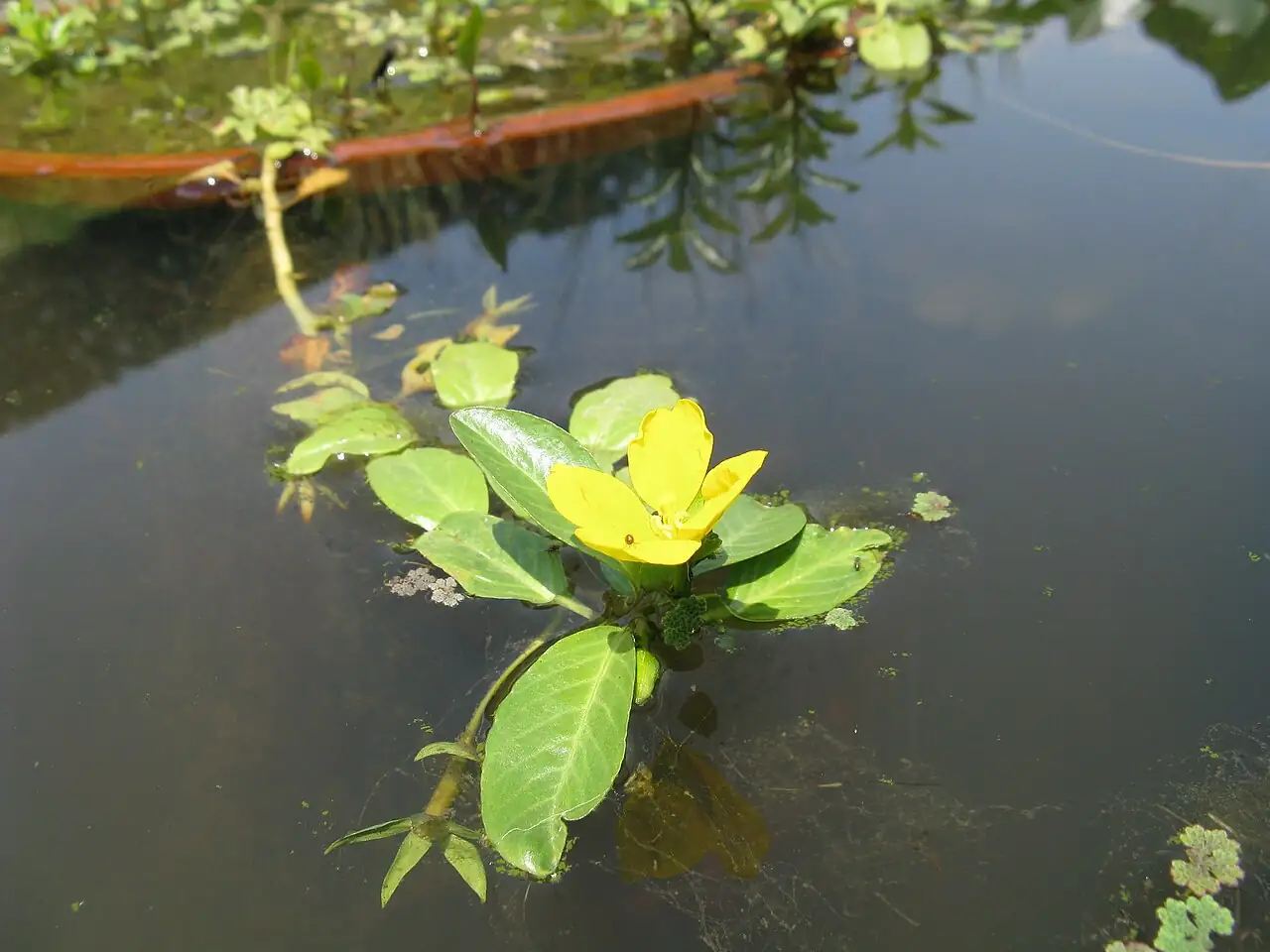
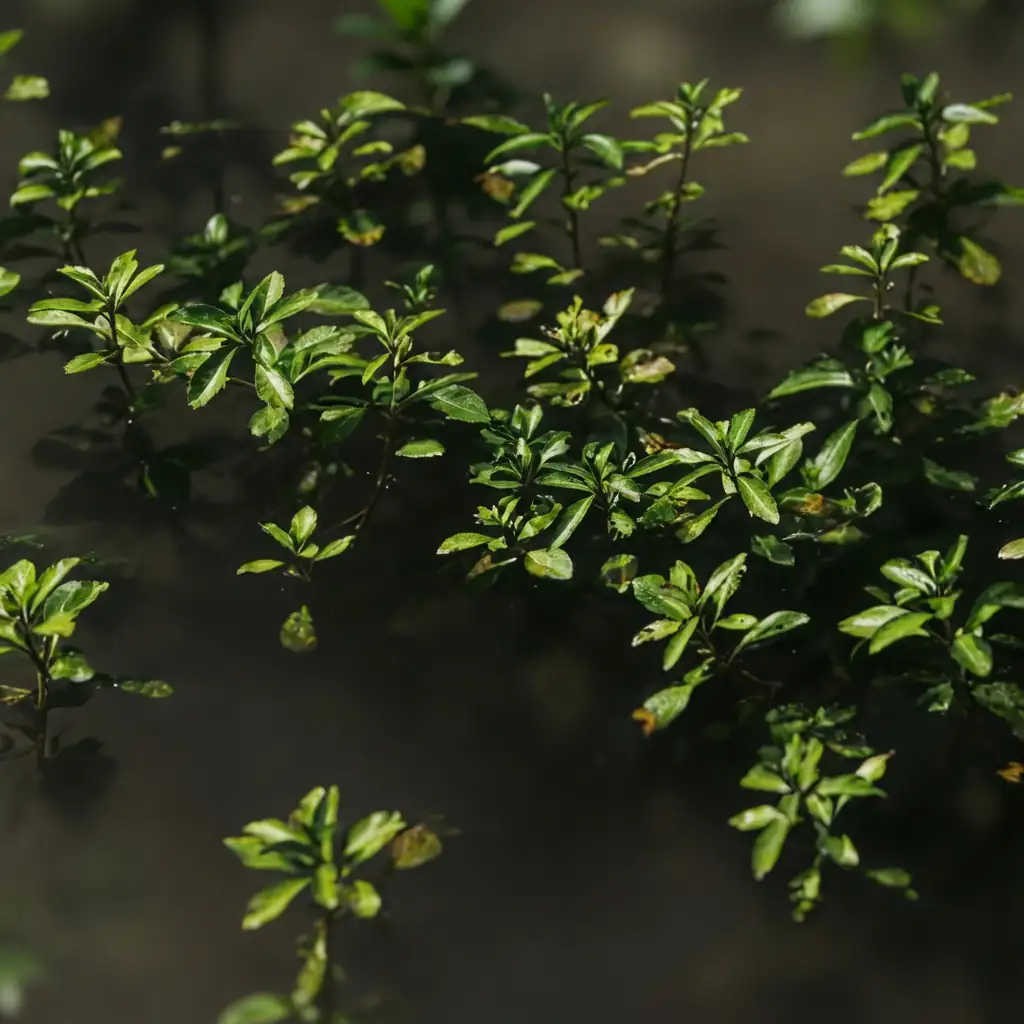
- Foliage: Leaves are medium green and held along creeping or floating stems; the blades are typically oblong to inversely egg-shaped (oblanceolate to obovate-oblong).
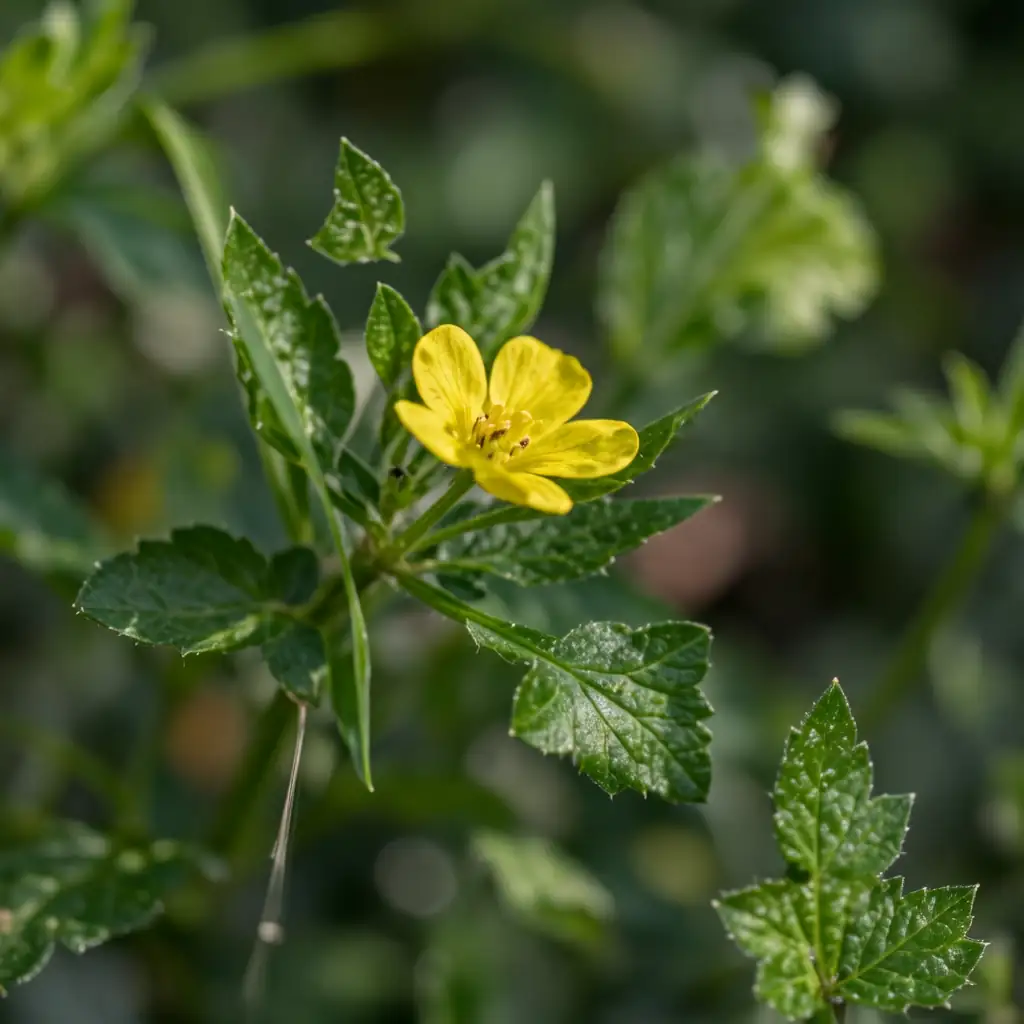
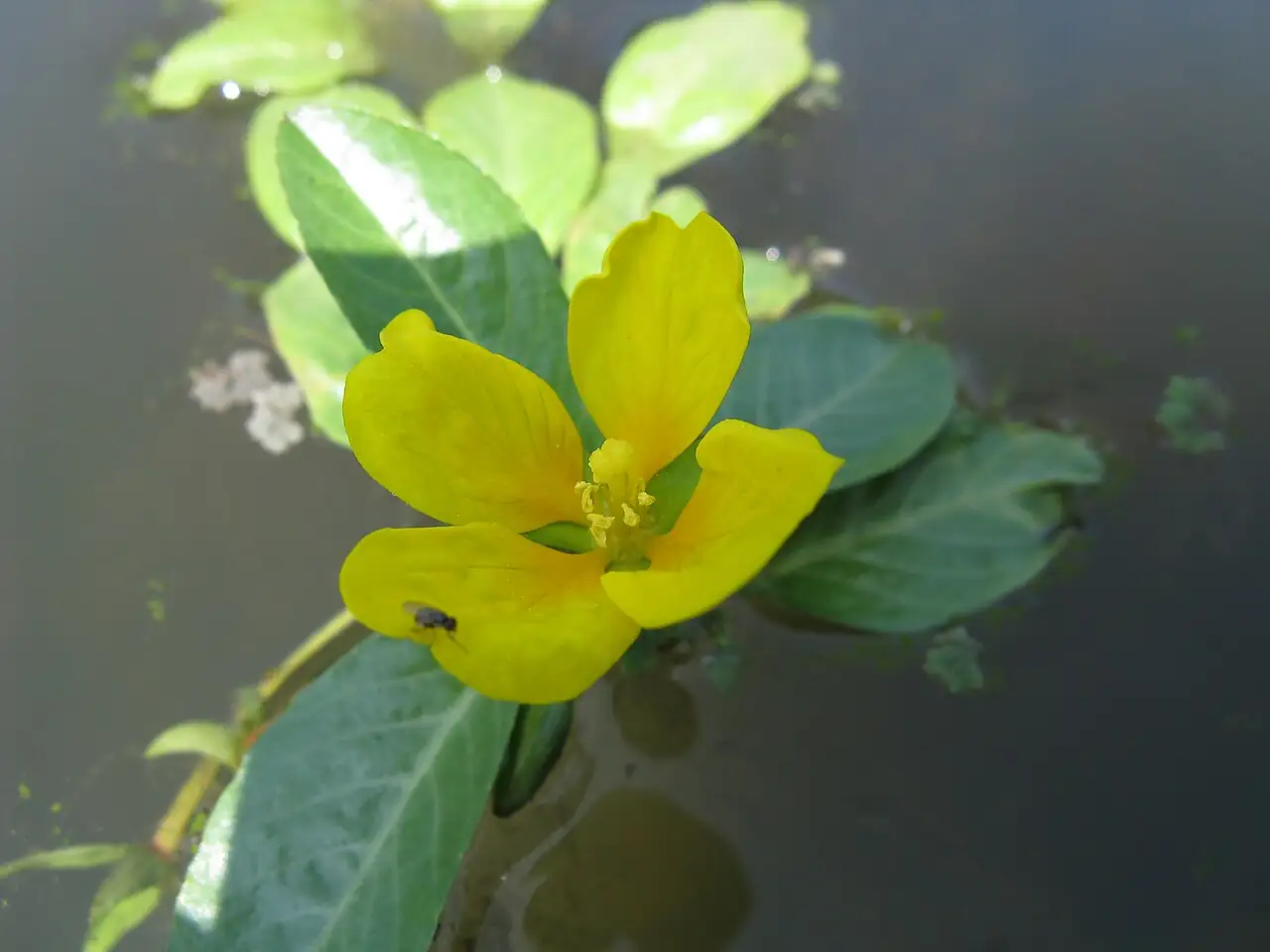
- Flower: Small solitary flowers appear from the upper leaf axils. The petals are bright golden yellow and often show a darker spot near the base. Stems commonly develop buoyant, spongy, cylindrical float-like structures at the nodes, helping the plant stay at the surface; nodes can also root wherever they touch suitable mud or substrate. Seeds are oval.
- Flowering Season: June–August
- Growth Habit: Perennial floating/creeping aquatic herb that forms surface mats; spreads by rooting at nodes and by fragments that re-root easily.
Environment
Sunlight
Full sun to partial shade; flowers best and grows densest in full sun (about 6+ hours/day).
Temperature
Prefers warmth; most active around 18–30°C (64–86°F). Slows down in cool weather and is not reliably frost-tolerant.
Humidity
Doesn’t rely on high air humidity, but it must stay consistently wet—ideal in shallow water or saturated wetland conditions.
Soil
Rich, soft pond mud/silt or fertile, consistently wet soil; also grows well in shallow water with heavy, nutrient-rich substrates.
Placement
Ponds and water gardens (especially calm, shallow margins), rain gardens, ditches/streamsides, wildlife ponds, and constructed wetlands; can be grown as a floating mat or in shallow containers/baskets.
Hardiness
Generally frost-tender; best outdoors in mild-winter regions (about USDA Zone 9–11). In colder zones, grow as a seasonal plant or overwinter indoors.
Care Guide
Difficulty
Easy if you can give it constant moisture and warmth. The main ‘hard part’ is simply managing its speed—without regular trimming it can take over surface space.
Buying Guide
Pick plants with firm, healthy green leaves and sturdy, non-blackened stems. Avoid pots that smell foul (a sign of anaerobic rot) or plants smothered by algae. If planting outdoors, check local rules—some Ludwigia are regulated or restricted due to invasive behavior in waterways.
Watering
Keep constantly wet. In ponds, let it float/creep with nodes in contact with water or position it in shallow water. In containers, never allow the substrate to dry; maintain standing water above the soil surface by about 2–10 cm (0.8–4 in), adjusting to plant size and vigor.
Fertilization
Often unnecessary in nutrient-rich ponds. In leaner water gardens, feed lightly during warm months with aquatic plant tablets or a controlled-release fertilizer tucked into the substrate; avoid overfeeding to reduce the risk of algae blooms.
Pruning
Trim regularly during the growing season to maintain open water and prevent it from shading other plants. Always remove cuttings from the pond—don’t leave fragments behind, because they can re-root and spread.
Propagation
Very easy from stem cuttings: take 10–20 cm (4–8 in) pieces with several nodes and pin/anchor them into mud or shallow water until rooted. It also spreads naturally by rooting at nodes and by fragmentation.
Repotting
If grown in baskets/containers, repot in spring as growth resumes. Use heavy loam/aquatic soil so the pot doesn’t float, and top-dress with gravel to help prevent soil clouding.
📅 Seasonal Care Calendar
Spring: growth restarts—repot/divide and begin light feeding if needed. Summer: peak growth and flowering—prune frequently and remove excess biomass. Autumn: reduce feeding, keep water level stable, and bring indoors before frost in cold climates. Winter: may persist in mild regions; in cold areas treat as annual or overwinter indoors in warm, bright conditions.
Pests, Diseases & Safety
Common Pests & Diseases
Usually trouble-free in ponds. Aphids may appear on emergent shoots, snails may chew leaves, and rot can occur in stagnant, oxygen-poor conditions. Improve water quality/movement and remove decaying plant material promptly.
Toxicity
No widely documented toxicity concerns for people or pets are specifically established for this taxon, but it’s still best to avoid ingestion and discourage pets from chewing aquatic plants. The bigger practical hazard is ecological: discarded fragments can spread and become invasive where conditions suit it.
Culture & Symbolism
Symbolism: Often linked with sunny summer energy and wetland vitality—thanks to its bright yellow blooms and vigorous, life-filled growth.
History & Legends: Primrose-willows (Ludwigia) are long-used in water gardens and wetland plantings. At the same time, the group has become famous worldwide for how quickly some types can spread in waterways—making responsible planting and cleanup especially important.
Uses: Ornamental for pond margins, water features, rain gardens, and wetland landscapes. In managed constructed wetlands or nutrient-rich ponds, it can help take up excess nitrogen and phosphorus, supporting improved water clarity and helping curb algae when kept under control.
FAQ
When does it flower?
Mostly in summer, typically June–August.
When does it set fruit?
Usually late summer into autumn, around August–October.
Where is it found in the wild?
Recorded as native to eastern China (including Zhejiang, Fujian, and eastern Guangdong), typically in ditches, ponds, slow waterways, and wet rice fields.
What growing conditions does it prefer?
Warm temperatures and constant moisture—shallow, calm water or saturated wet soil with a rich, soft substrate.
What is it used for?
Water-garden ornamentals and wetland plantings; also used in managed systems to help remove excess nutrients like nitrogen and phosphorus from enriched water.
Fun Facts
- In warm, nutrient-rich water it can expand fast enough to form broad floating mats across the surface.
- Many nodes develop spongy, buoyant structures that help keep stems afloat.
- The yellow flowers often have a darker spot near the petal base—like a tiny eye.
- Even small stem fragments can root and start new plants, so cleanup after pruning really matters.


