

Plant Features
- Size: Typically 2–8 m (6.6–26 ft) tall; spread varies with pruning and cultivar.
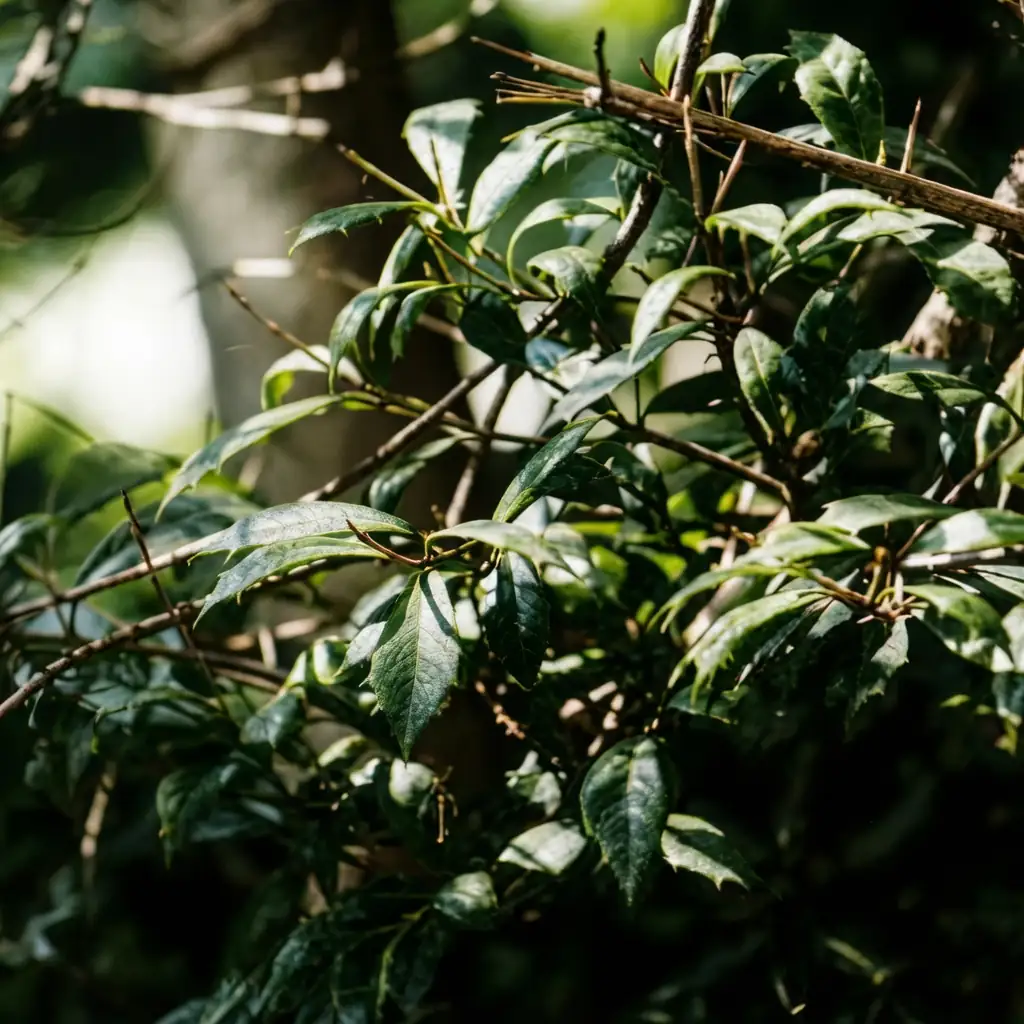
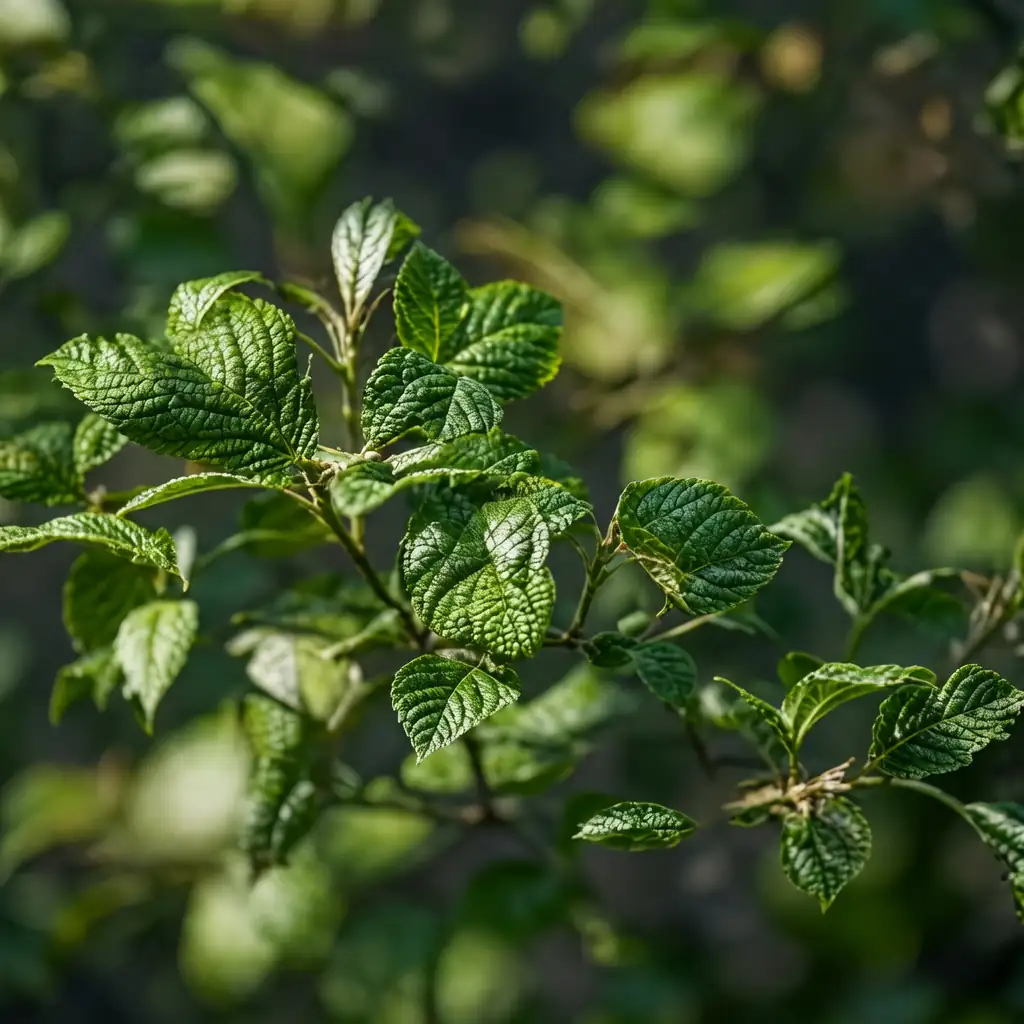
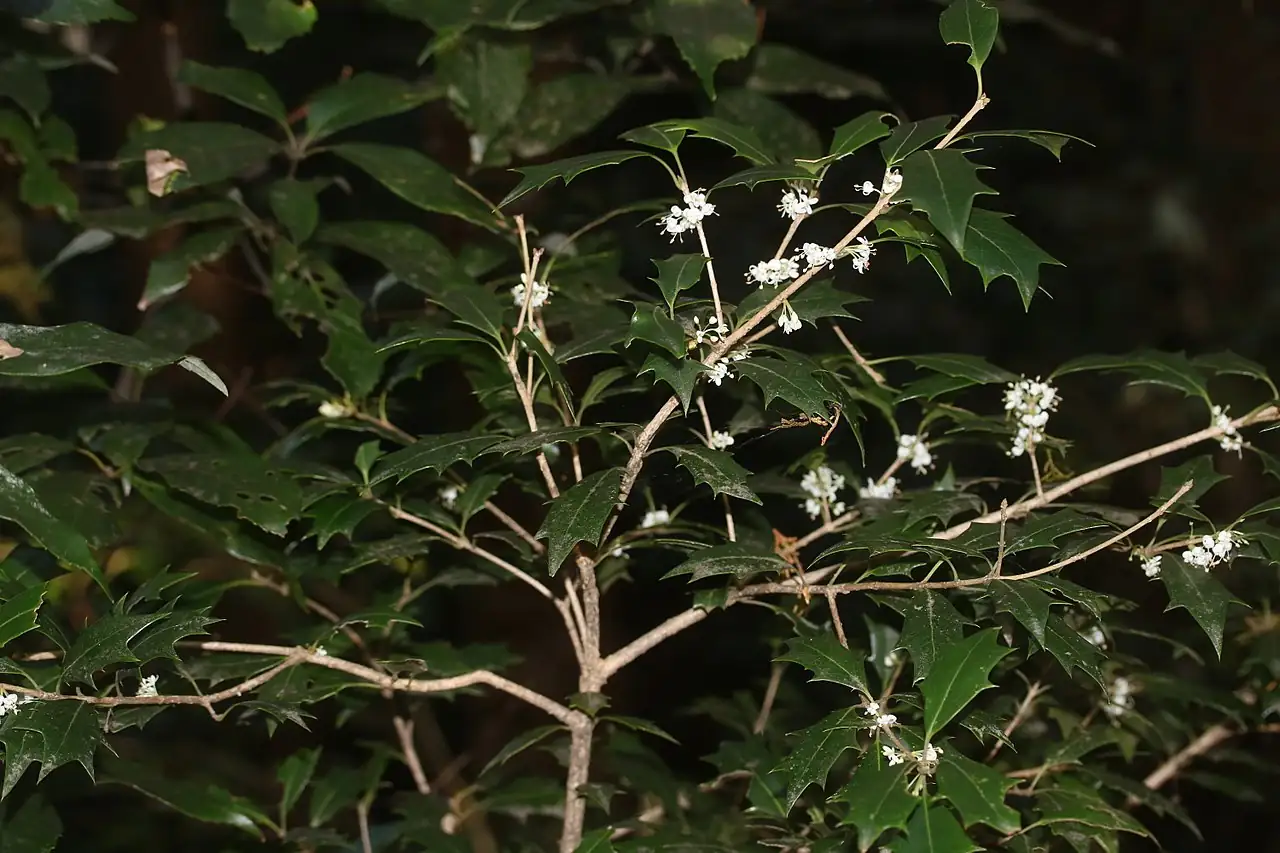
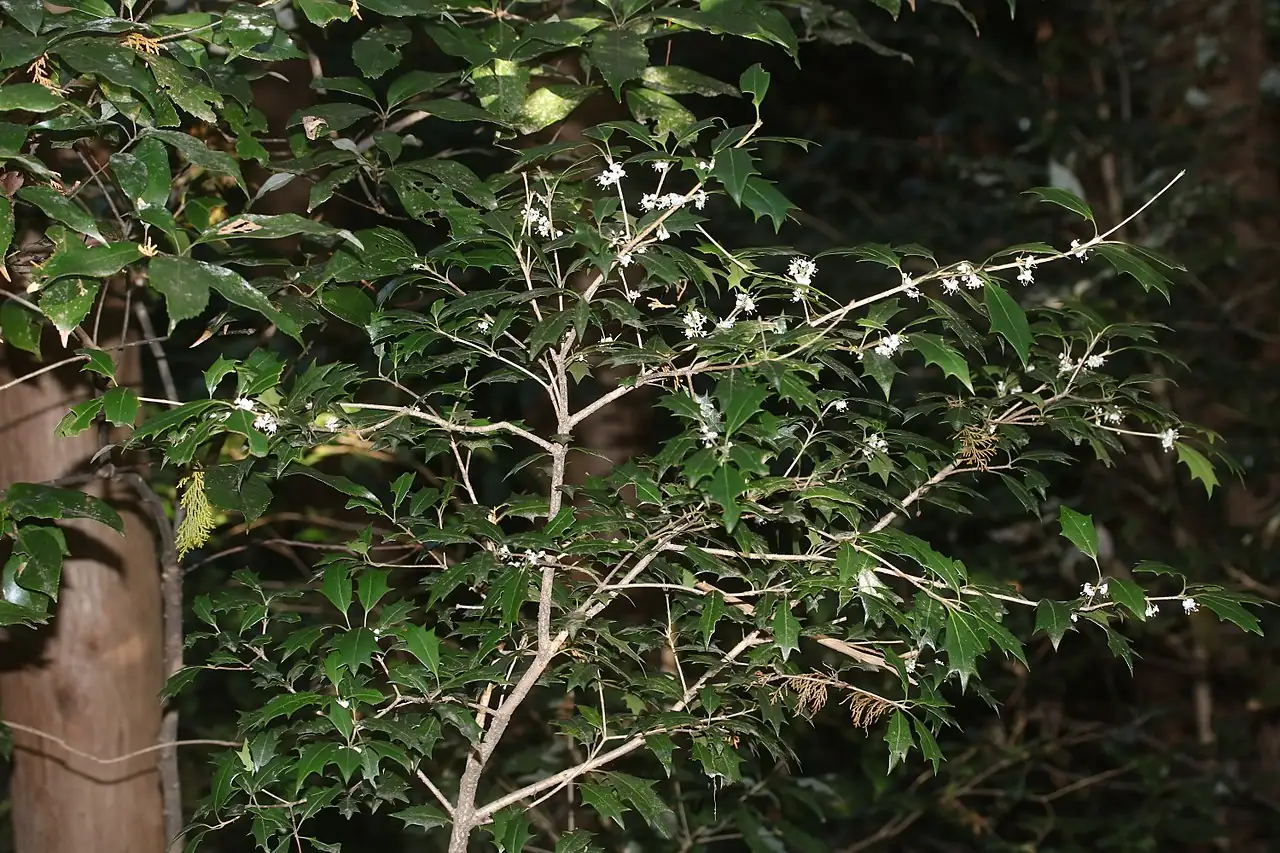
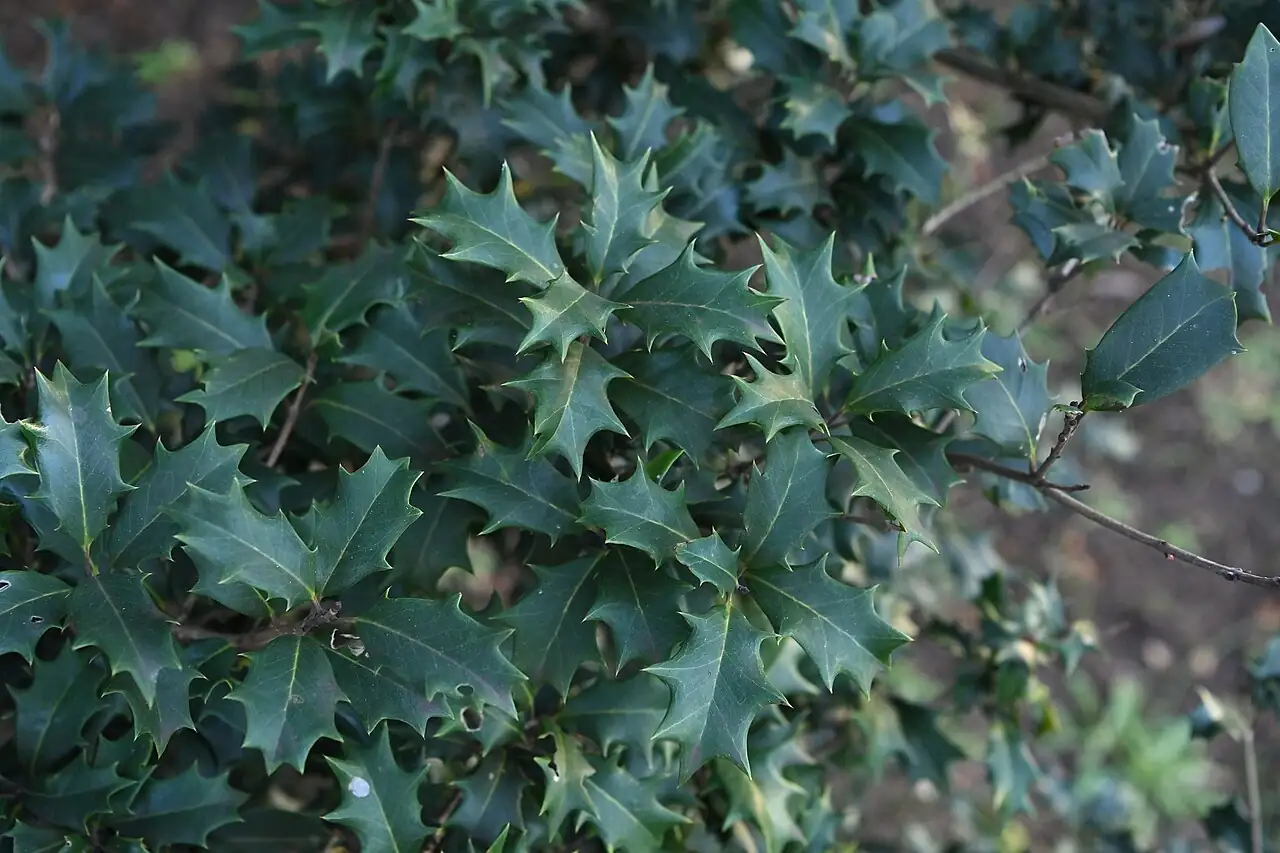
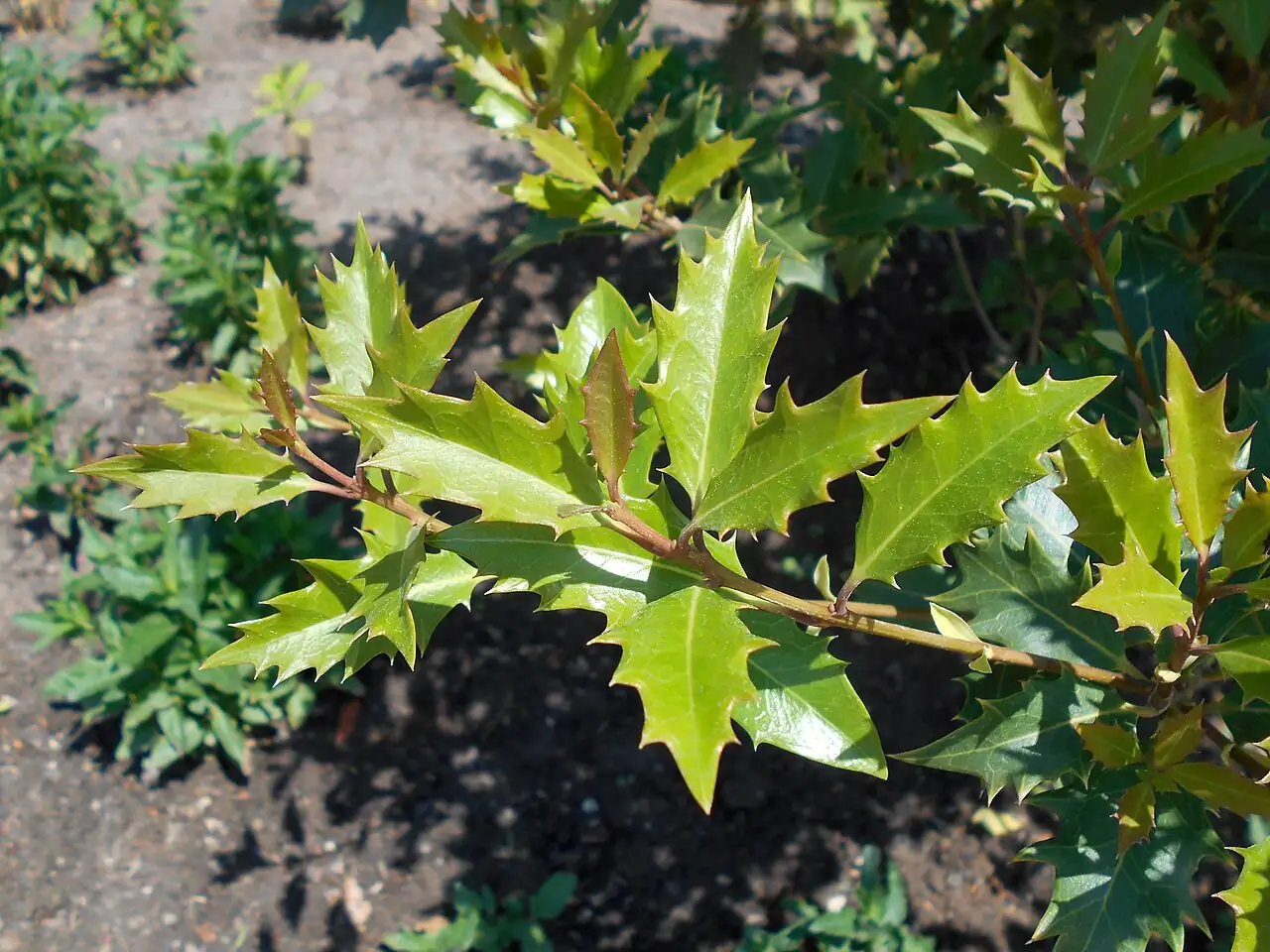
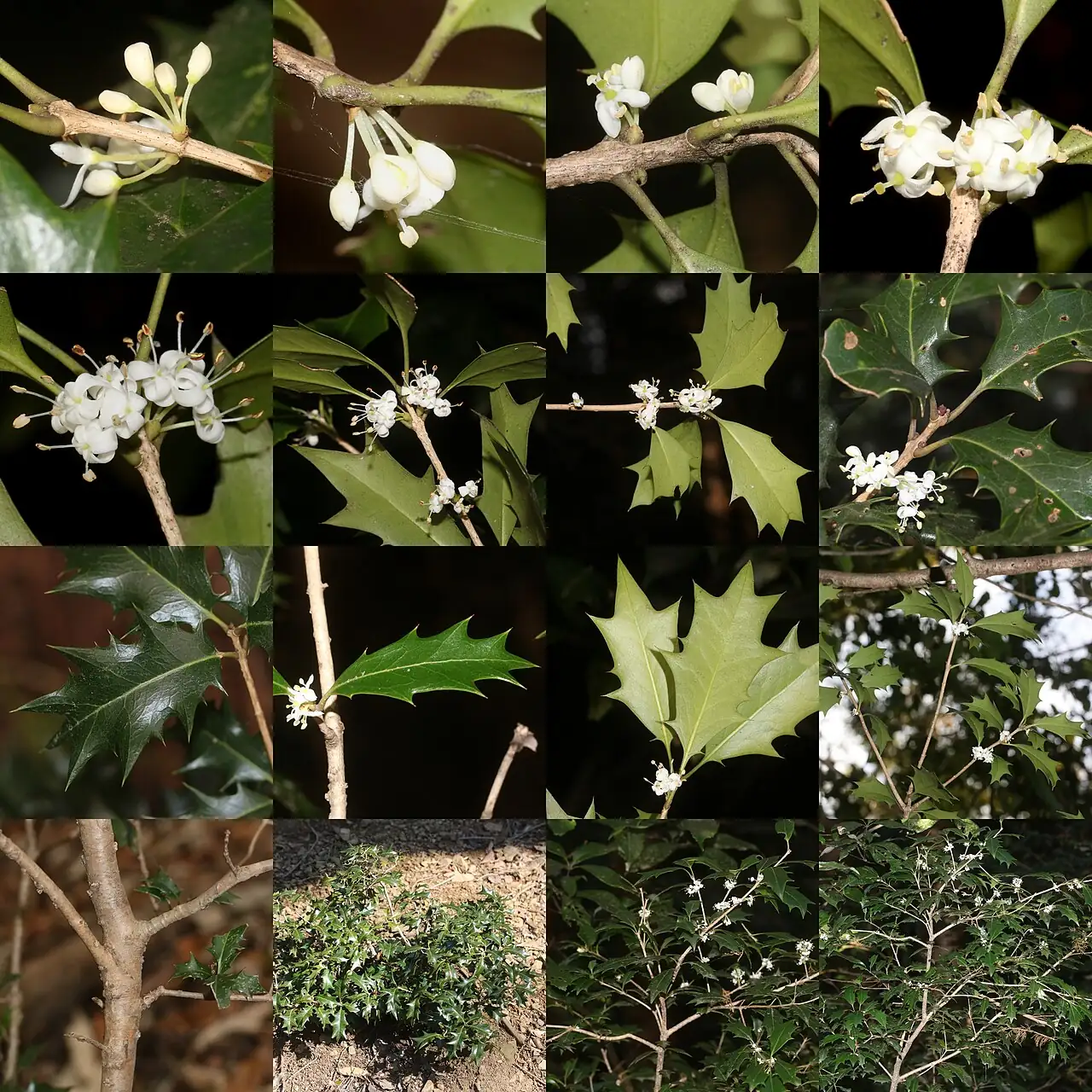
- Foliage: Leaves are opposite, thick, and leathery, with shape ranging from ovate to narrowly elliptic. Young shoots commonly show 3–4 pairs of sharp, spine-like teeth along the margins (the “holly” look), while older, established plants often carry smoother leaves with nearly entire margins.
- Flower: Tiny white flowers, strongly fragrant, appear in the leaf axils (often in short clusters) in late autumn to early winter. After flowering, the plant may form a small, round drupe that ripens to black.
- Flowering Season: November–December (late autumn to early winter)
- Growth Habit: Evergreen shrub to small tree with a dense habit; responds very well to pruning and clipping for hedges.
Environment
Sunlight
Full sun to partial shade; notably shade-tolerant and can perform well at woodland edges or under open canopy.
Temperature
Prefers mild to warm conditions; once established it tolerates cool winters. Best growth is roughly 10–25°C (50–77°F).
Humidity
Adaptable. Likes moderate humidity and even moisture, but becomes fairly drought-tolerant once established.
Soil
Fertile, moisture-retentive but well-drained loam or sandy loam. Avoid waterlogged or poorly drained soils to prevent root problems.
Placement
Shrub borders, hedges/screens, courtyard plantings, and woodland edges; also works well in containers and bonsai in a bright outdoor position.
Hardiness
USDA Zone 7–10 (about −17 to −1°C / 1 to 30°F depending on exposure and cultivar); not suited to prolonged, deep freezes.
Care Guide
Difficulty
Easy to moderate: forgiving of shade and pruning, and quite resilient once established—just give it good drainage and occasional deep watering during dry spells.
Buying Guide
Look for plants with dense, evenly green evergreen foliage. Avoid specimens with black spotting, sticky residue (often a sign of sap-sucking pests), or fine webbing. If planting a hedge, buy uniform plants of the same cultivar and similar size, and avoid severely pot-bound roots in container-grown stock.
Watering
Water regularly during the first growing season to establish a strong root system. After establishment, water deeply when the top 5–8 cm (2–3 in) of soil feels dry, and reduce watering in cooler months. In containers, keep the mix evenly moist but never soggy.
Fertilization
Feed in spring with a balanced slow-release fertilizer according to the label. If soil is poor, a light second feed in early summer can help. Avoid heavy nitrogen late in the season, which can encourage soft growth and reduce cold tolerance.
Pruning
Prune after flowering (winter) or in spring to shape. It tolerates clipping very well for hedges. Also remove dead, crossing, or congested branches to improve airflow and overall plant health.
Propagation
Most commonly propagated from semi-ripe cuttings in summer (often with bottom heat). Seed is possible but slower, and seedlings may not come true to the parent plant.
Repotting
For container plants and bonsai, repot every 2–3 years in spring, lightly trimming roots and refreshing with a free-draining mix.
📅 Seasonal Care Calendar
Spring: feed, repot containers/bonsai, and do light structural pruning. Summer: watch watering and take semi-ripe cuttings. Autumn: ease off feeding and enjoy bud development. Winter: prune after bloom and protect container plants during severe cold snaps.
Pests, Diseases & Safety
Common Pests & Diseases
Can attract scale insects, aphids, and spider mites (especially in hot, dry conditions). Sooty mold may appear as a secondary issue when sap-sucking pests leave honeydew. Root troubles are most likely in poorly drained or waterlogged soils. Improve airflow, avoid overwatering, and treat pests with horticultural oil or insecticidal soap when needed.
Toxicity
Generally considered non-toxic to people and pets, though chewing or swallowing plant material can still cause mild stomach upset in sensitive individuals.
Culture & Symbolism
Symbolism: A plant of evergreen resilience and winter cheer—offering structure all year and a wave of fragrance when many gardens are quiet.
History & Legends: Long valued in East Asian gardens for its holly-like foliage and cool-season perfume, it became a popular hedge and specimen shrub thanks to its dense, clip-friendly habit.
Uses: Primarily grown as an evergreen ornamental for year-round foliage and late-season fragrance. Excellent for hedging and screening, foundation planting, mixed shrub borders, courtyard specimens, light woodland gardens, and bonsai.
FAQ
Why do some leaves look very spiny while others are smooth?
That’s normal for False Holly. Young growth often has sharp, holly-like teeth (usually 3–4 pairs), while older, mature branches may produce leaves with smoother, nearly entire margins.
Can I grow False Holly in shade?
Yes. It’s quite shade-tolerant and can grow well in partial shade or open woodland conditions, though it will generally be denser and flower more with more light.
When should I prune it if I want flowers?
Prune after it finishes flowering (typically in winter) or do shaping in spring. Heavy pruning right before the late-autumn flowering season can reduce blooms.
Fun Facts
- It often flowers in November–December, bringing fragrance to the garden when many plants are dormant.
- Its small round fruit is a drupe that turns black when ripe, typically ripening the following late spring to early summer (about May–June).
- The “holly” look is strongest on young growth; older plants frequently develop smoother leaf margins.
- Native to Taiwan and Japan, it’s widely cultivated as a tough, elegant hedge and ornamental shrub.


