

Plant Features
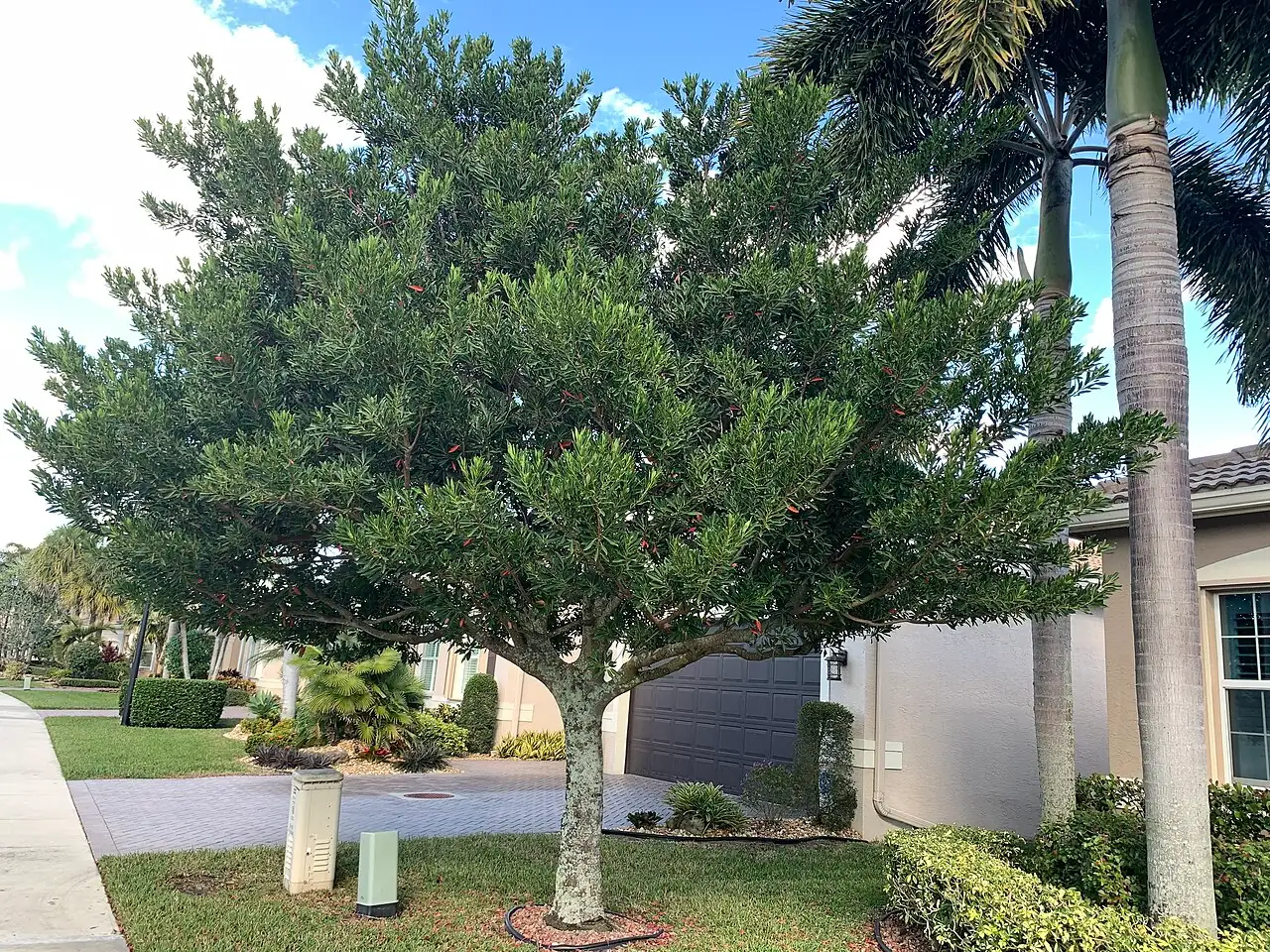
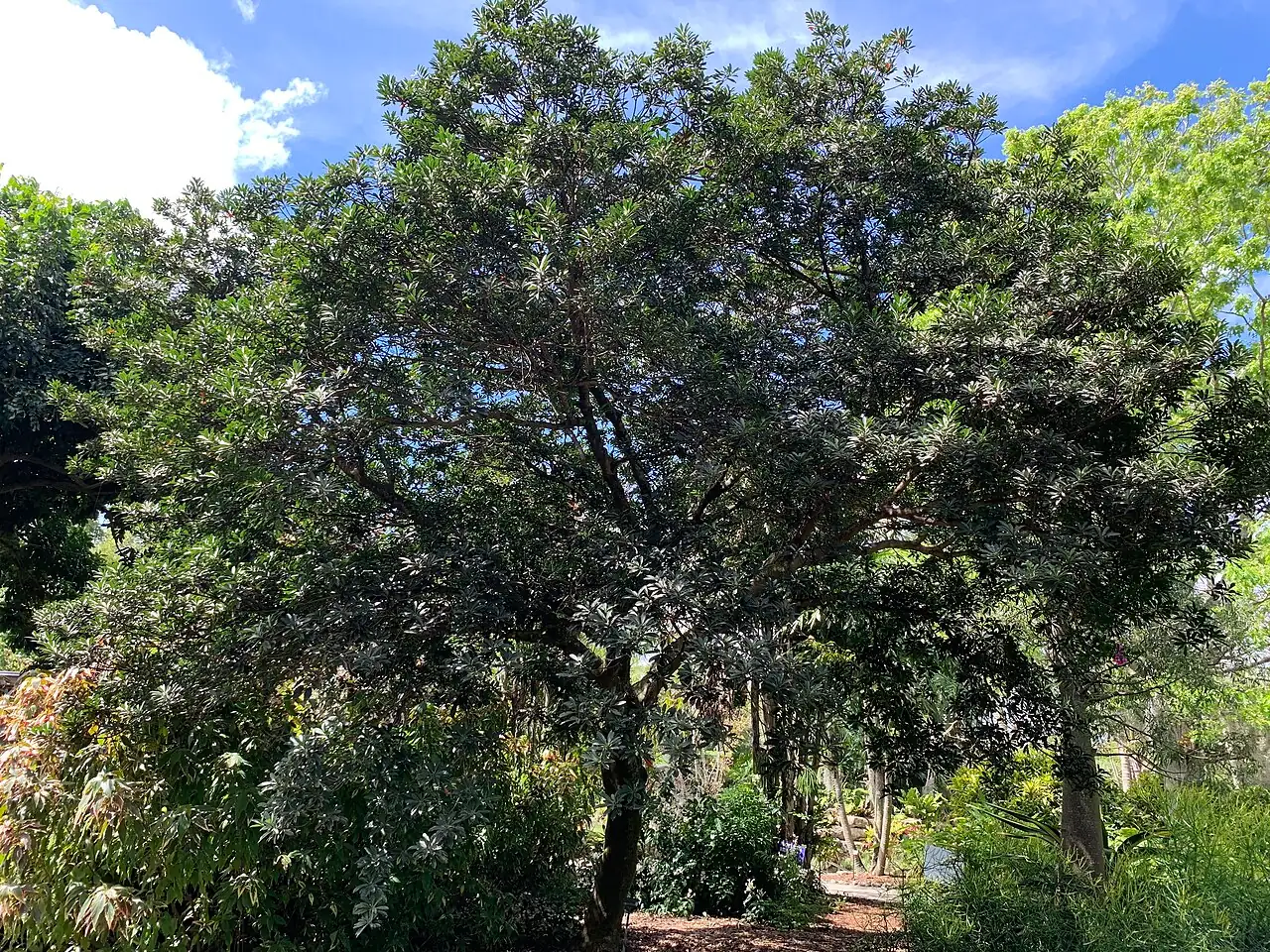
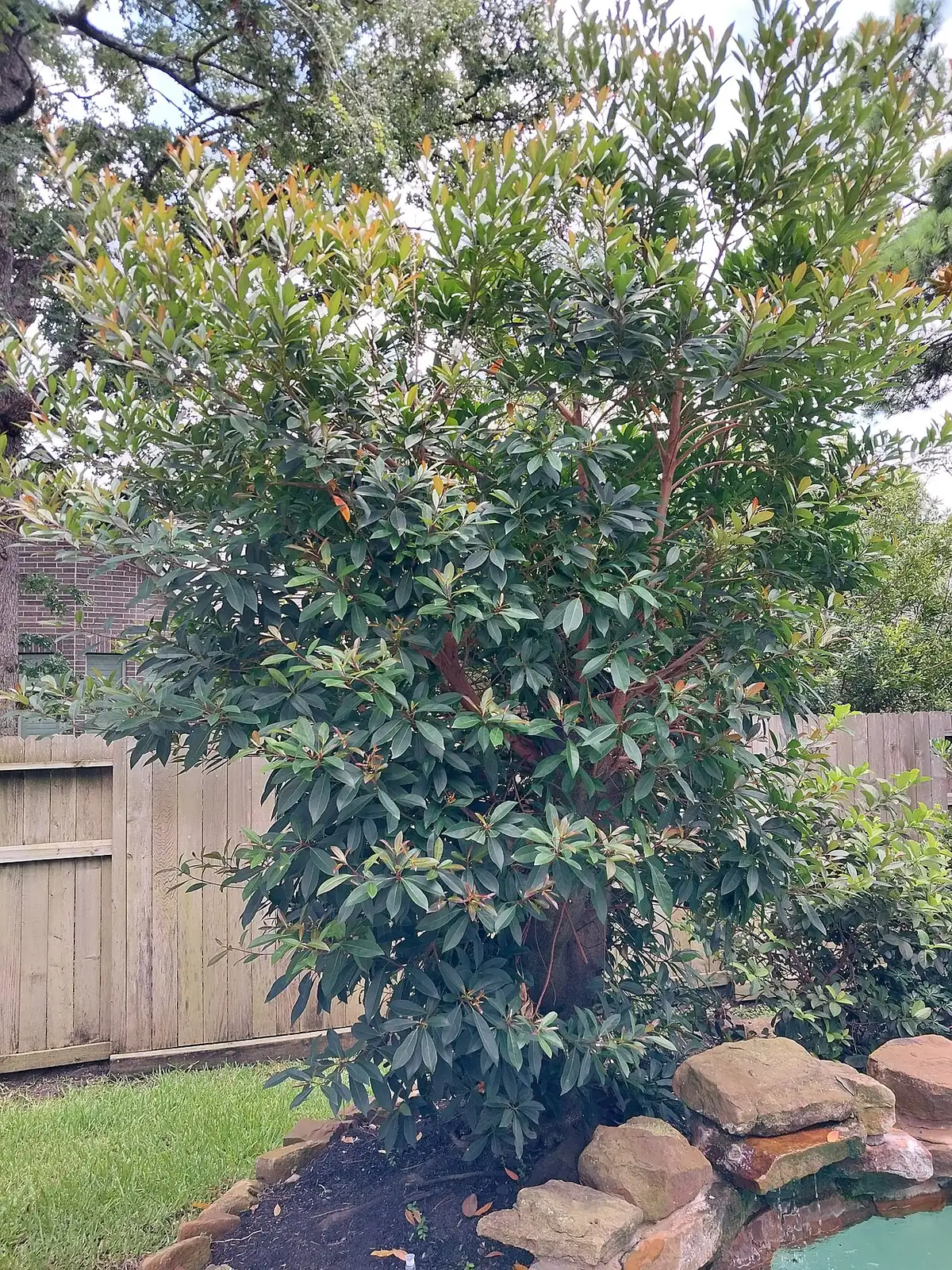
- Size: Up to about 15 m (49 ft) tall; typically grown as a medium-sized evergreen tree.
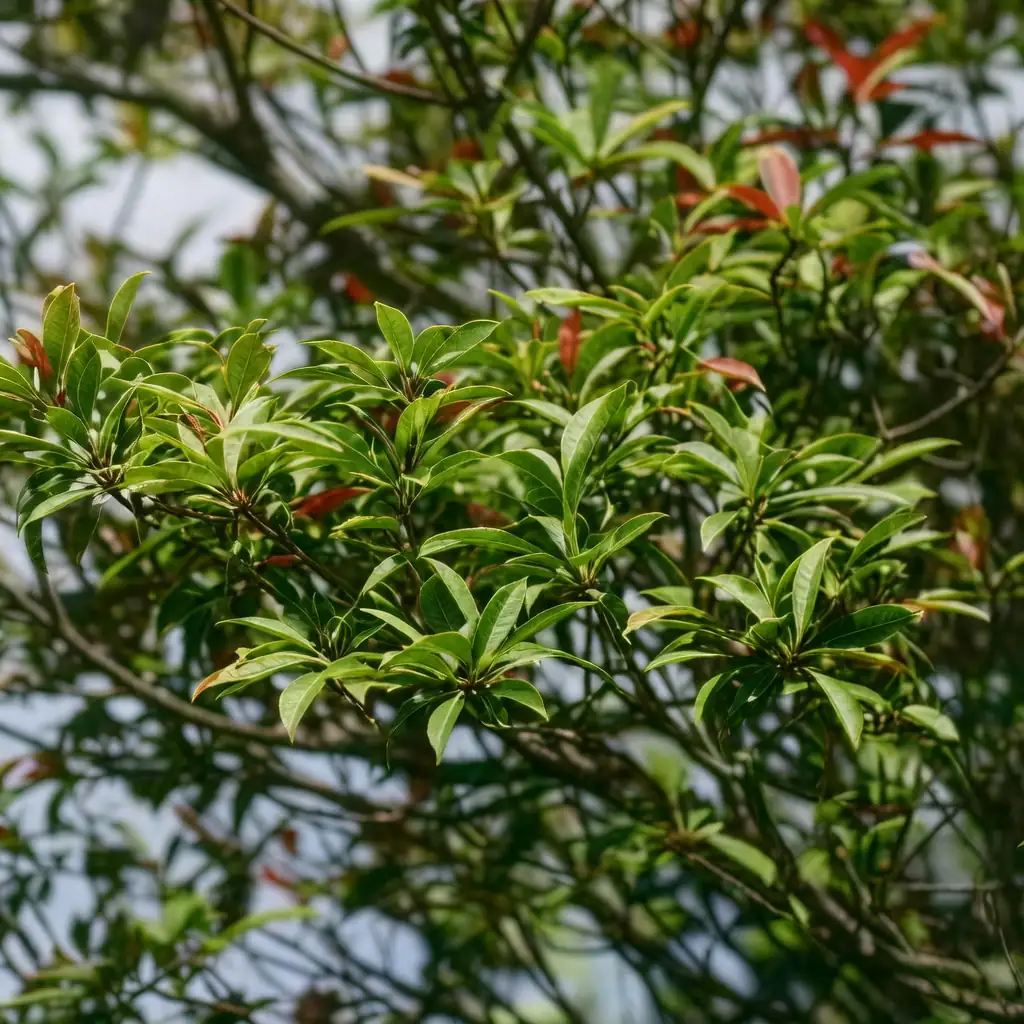
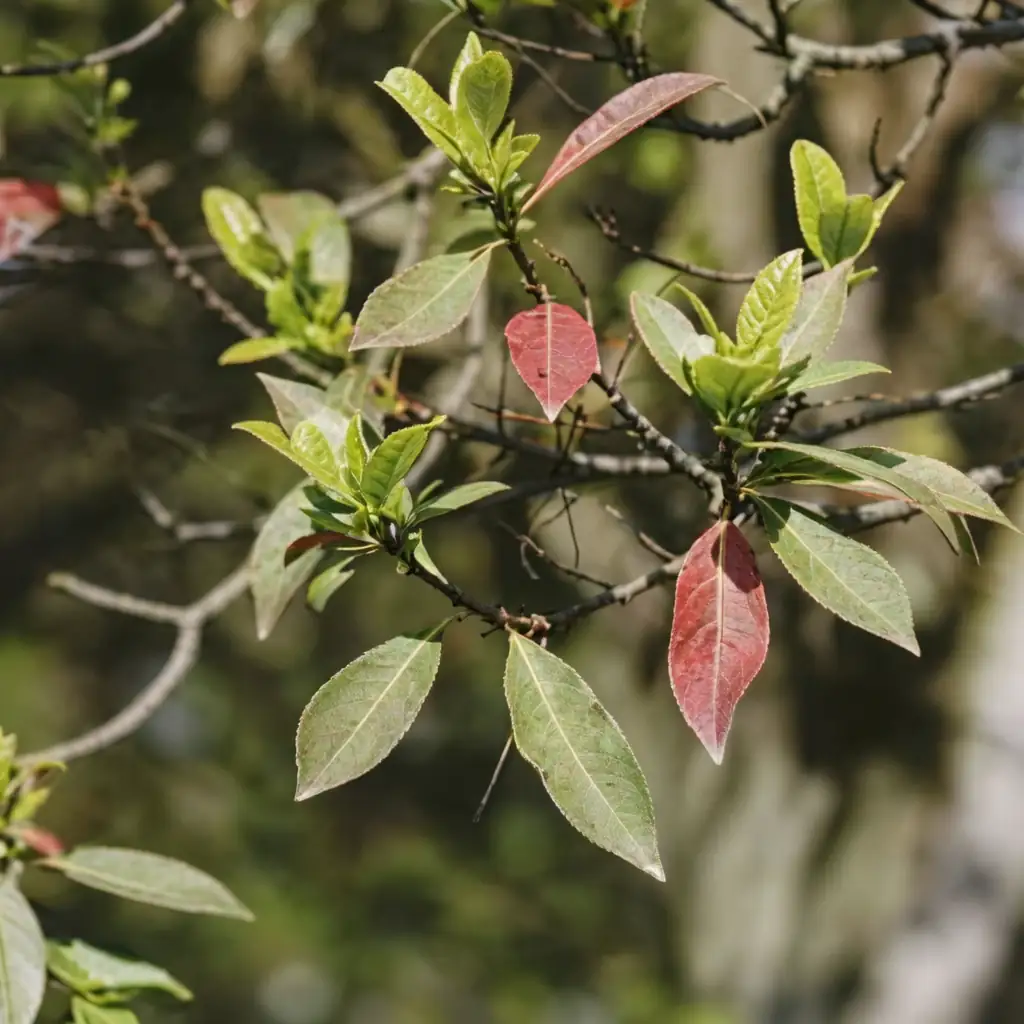
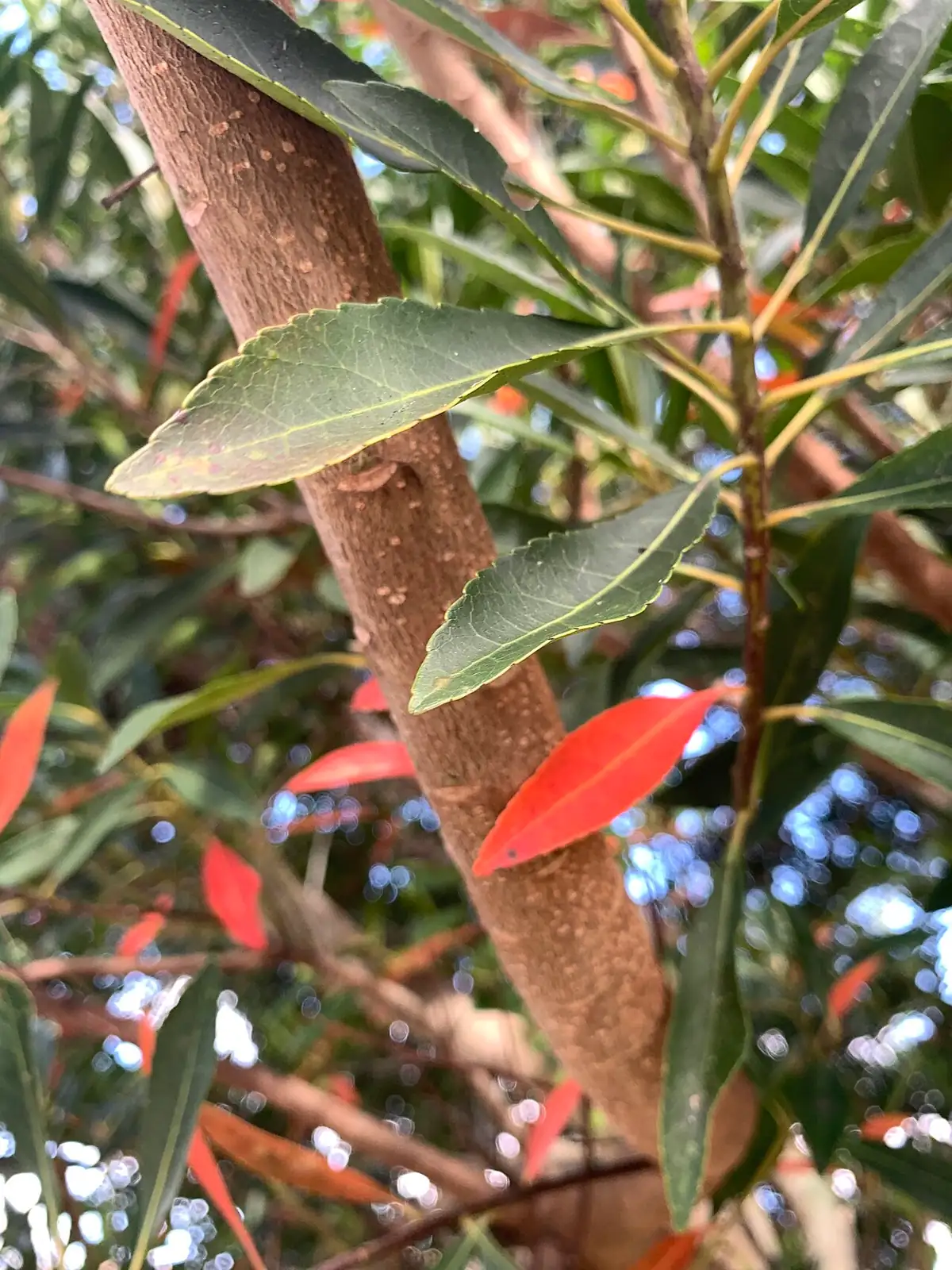
- Foliage: Leaves are alternate, leathery, and narrow (oblanceolate to lanceolate) with pointed tips and sharp serrations. New twigs may be slightly hairy. A signature feature is that some older leaves can turn vivid red and persist among the otherwise glossy green canopy.
- Flower: Small, drooping flowers borne in axillary racemes. The petal tips are finely divided into thread-like fringes, giving the blooms a delicate, lacy look.
- Flowering Season: June–July (6–7)
- Growth Habit: Evergreen, upright tree with a strong root system; responds very well to shaping and pruning and can resprout vigorously.
Environment
Sunlight
Full sun to partial shade; tolerates light shade.
Temperature
Prefers warm, humid conditions; cold tolerance is limited. Best where winter lows generally stay above about -3–0°C (27–32°F). Protect from hard frost and prolonged cold.
Humidity
Prefers moderate to high humidity; performs best in warm, moist air.
Soil
Moist but well-drained, fertile, acidic soil. Avoid waterlogged conditions and strongly alkaline soils, which can lead to stress and yellowing.
Placement
Excellent for urban streets, courtyards, and warm-climate gardens. Its dense evergreen canopy suits screening, shelterbelts, and noise-buffer plantings, and it’s noted for tolerance to air pollution (including sulfur dioxide), making it useful for industrial and city greening.
Hardiness
USDA Zone 9–11 (approx.); not reliably frost-hardy in colder regions.
Care Guide
Difficulty
Moderate. Generally resilient thanks to vigorous roots and strong resprouting, and it takes pruning well; the main challenge is protecting it from hard frost and keeping soil conditions acidic and well-drained.
Buying Guide
Pick plants with dense, glossy foliage and no dieback at shoot tips. Avoid specimens with widespread yellowing leaves (often linked to poor drainage or alkaline soil). Check that roots look healthy and aren’t tightly circling the pot.
Watering
Water deeply after planting and keep evenly moist while it establishes. Once established, water when the top 2–5 cm (1–2 in) of soil dries. Aim for “moist, not soggy”—persistent wetness can trigger root problems.
Fertilization
Fertilize in spring and early summer with a balanced, slow-release fertilizer suitable for acid-loving plants. Reduce or stop feeding in late summer to avoid tender new growth going into cool weather.
Pruning
Very tolerant of pruning. Shape in late winter to early spring, or do light touch-ups after flowering. Remove dead, crossing, or weak branches whenever noticed.
Propagation
Most commonly grown from seed after cleaning the fruit. Cuttings can also be used under controlled conditions; the species is known for strong resprouting.
Repotting
For container plants, repot every 1–2 years into a slightly larger pot using an acidic, well-drained mix; if not repotting, refresh the top layer of soil annually.
📅 Seasonal Care Calendar
Spring: feed, prune for shape, and keep moisture even. Summer: water during heat, mulch to conserve moisture; flowering typically occurs. Autumn: ease off fertilizer; fruits often develop around August–September (8–9). Winter: protect from frost and cold winds, especially in marginal climates.
Pests, Diseases & Safety
Common Pests & Diseases
Can attract common evergreen pests such as scale insects, mealybugs, and aphids. Root issues may occur in poorly drained soils. Support plant health with good airflow and sensible watering; treat pests with horticultural oil or appropriate controls when needed.
Toxicity
No widely recognized toxicity issues are commonly cited for typical garden use. Still, it’s best practice to discourage pets or children from chewing on leaves or ingesting fruits.
Culture & Symbolism
Uses: Primarily an ornamental foliage tree for landscapes and streets. Its dense evergreen crown makes it useful for screening, as well as a mid-story component in windbreaks and noise-reduction belts. Appreciated for strong tolerance of urban and industrial air pollution.
FAQ
What is the scientific name?
Elaeocarpus decipiens.
What family and genus does it belong to?
Family Elaeocarpaceae; genus Elaeocarpus.
What are some other common names?
It’s commonly sold as Japanese blueberry tree; you may also see blueberry tree or false bayberry.
When does it flower?
Typically June–July (6–7).
When does it fruit?
Fruits commonly develop around August–September (8–9).
How tall can it grow?
Up to about 15 m (49 ft) under good conditions.
Where is it native to?
Southern and southeastern China and Taiwan.
What growing conditions does it like?
Warm, humid conditions; full sun to partial shade; moist but well-drained, fertile, acidic soil. It’s not very cold-hardy, but it resprouts well and tolerates pruning.
Fun Facts
- A few older leaves often turn bright red and linger among the green foliage, creating a subtle two-tone effect.
- The drooping flowers have delicately fringed petal tips that look like fine threads.
- Its fruits are ellipsoid drupes rather than true berries.
- It is noted for tolerance of air pollution, including sulfur dioxide, and is used in industrial and urban greening.
- Because it holds dense evergreen foliage, it can function as a mid-layer tree in noise-buffer and screening plantings.


