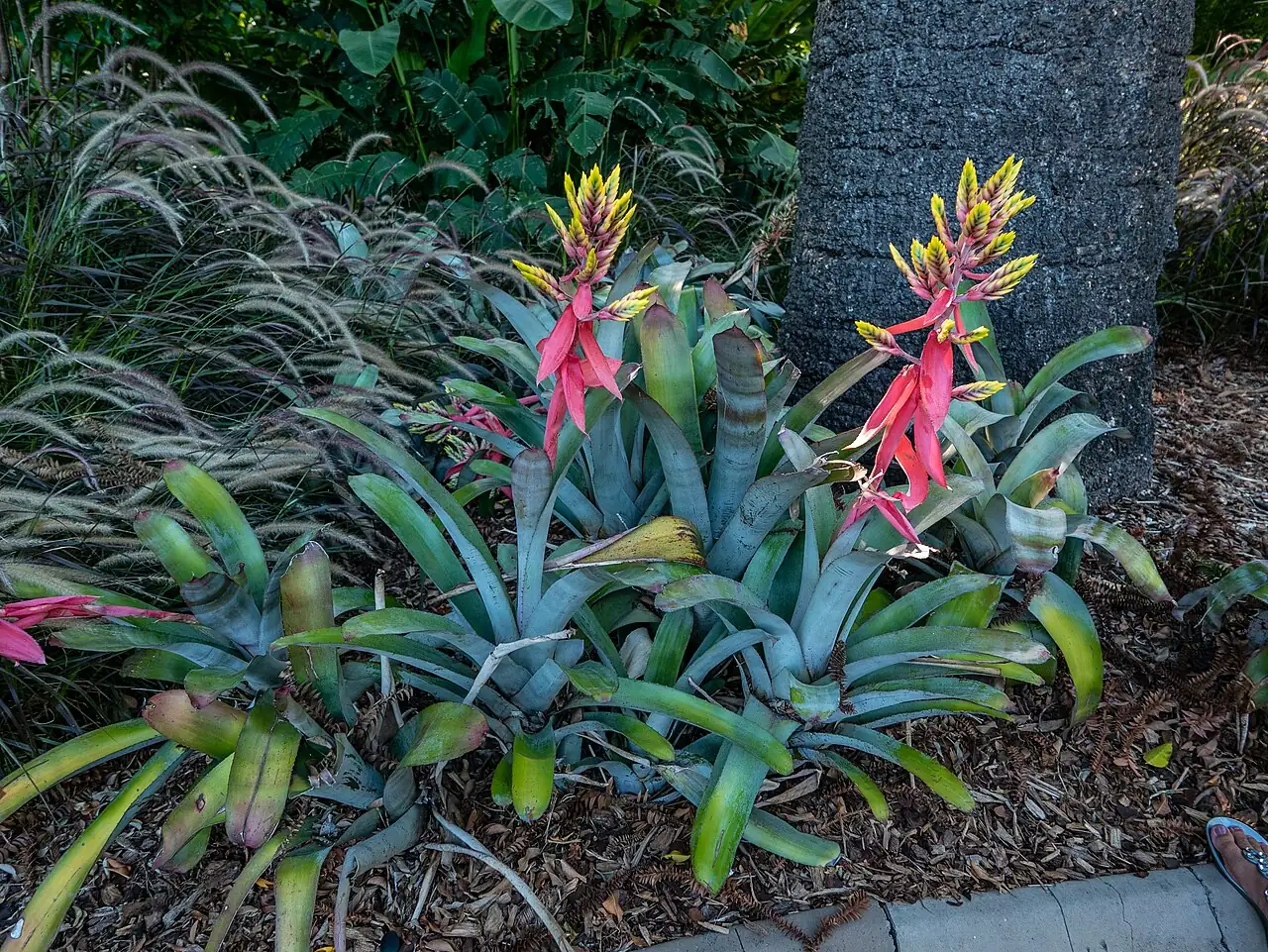
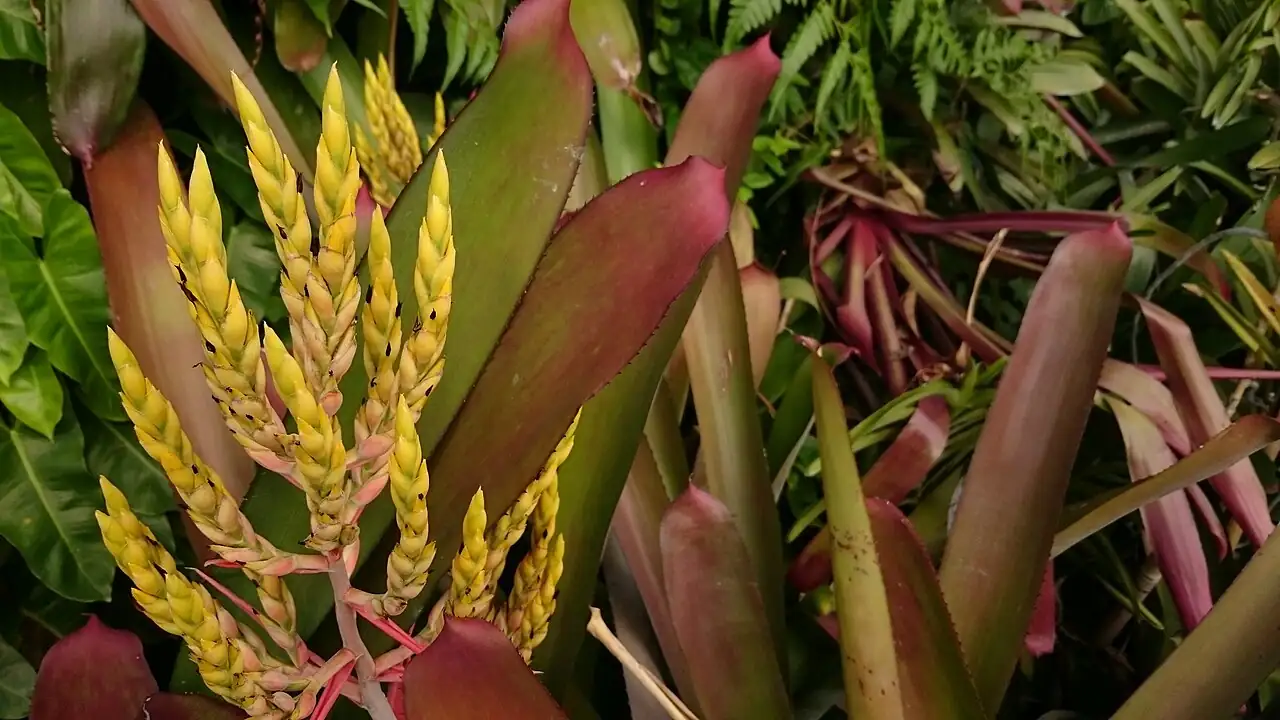
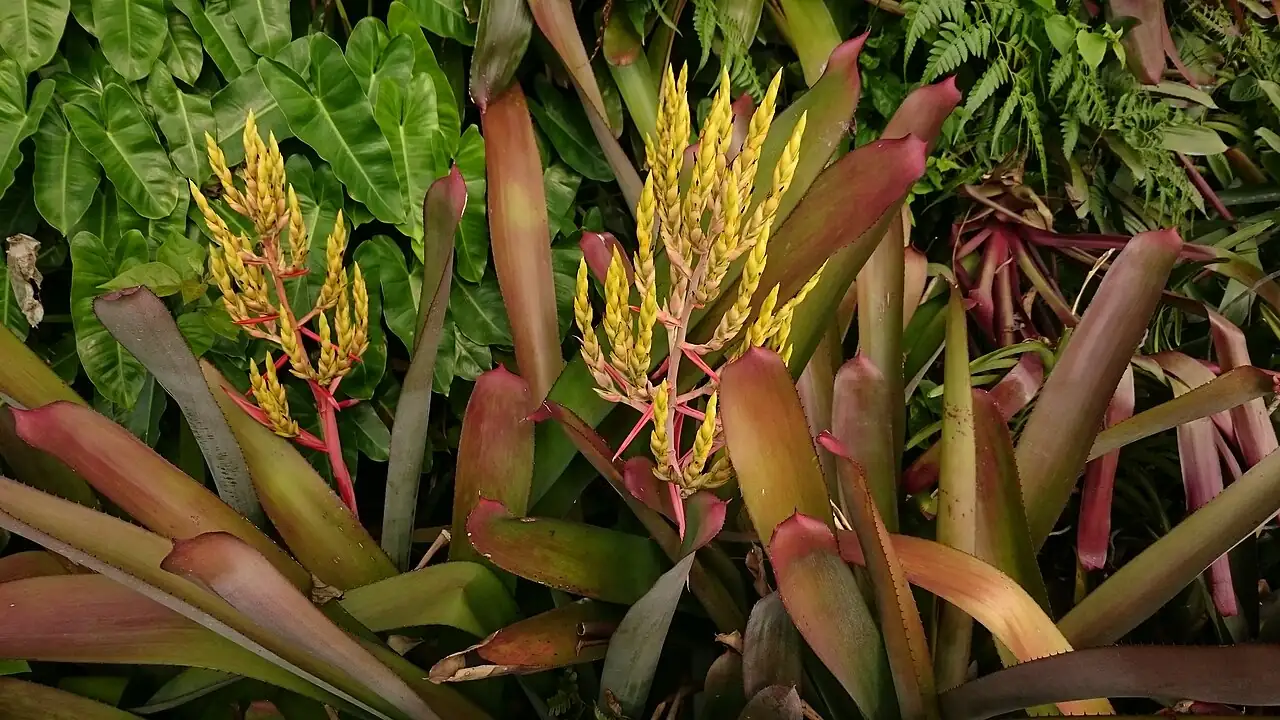
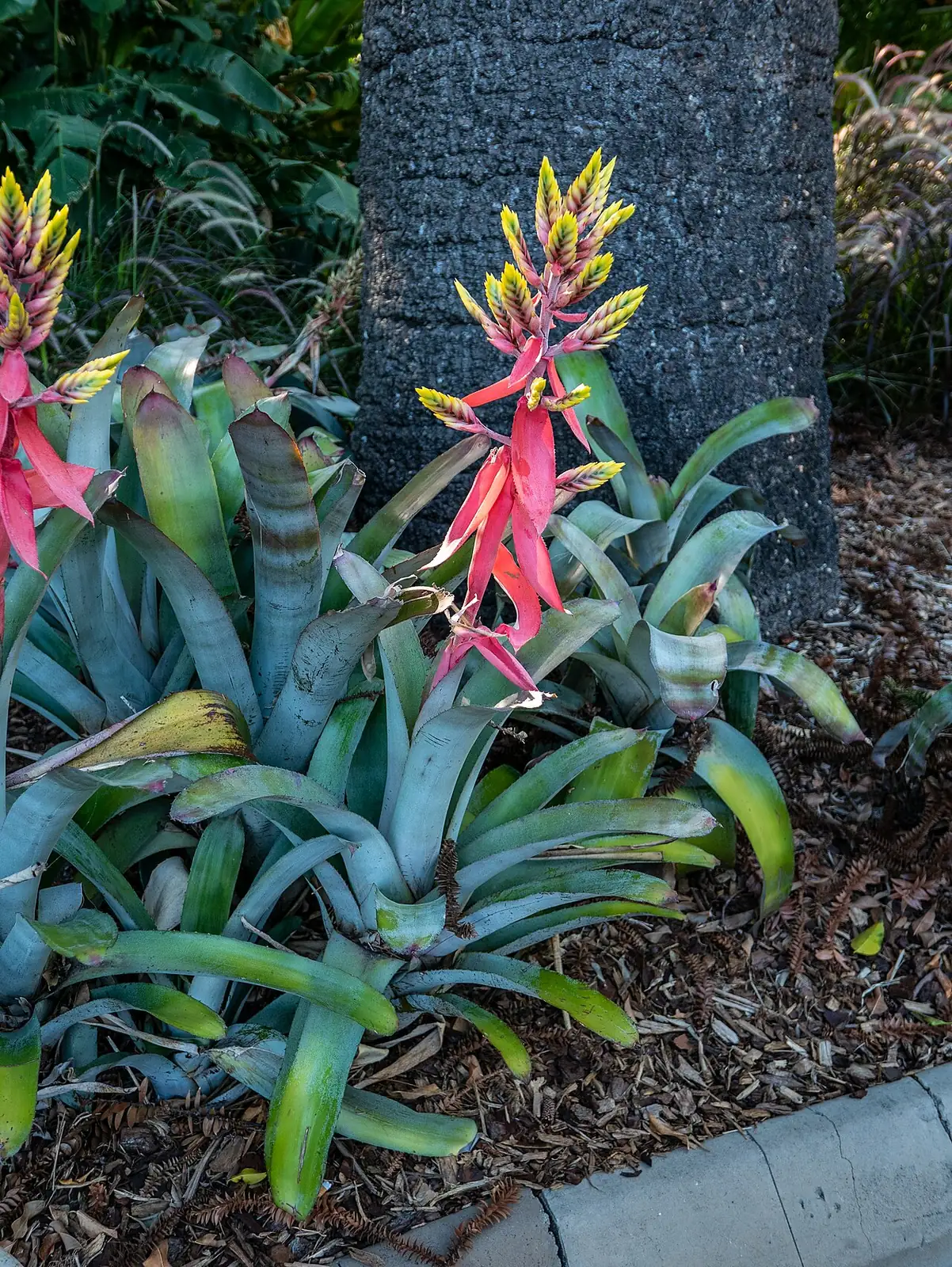
Plant Features
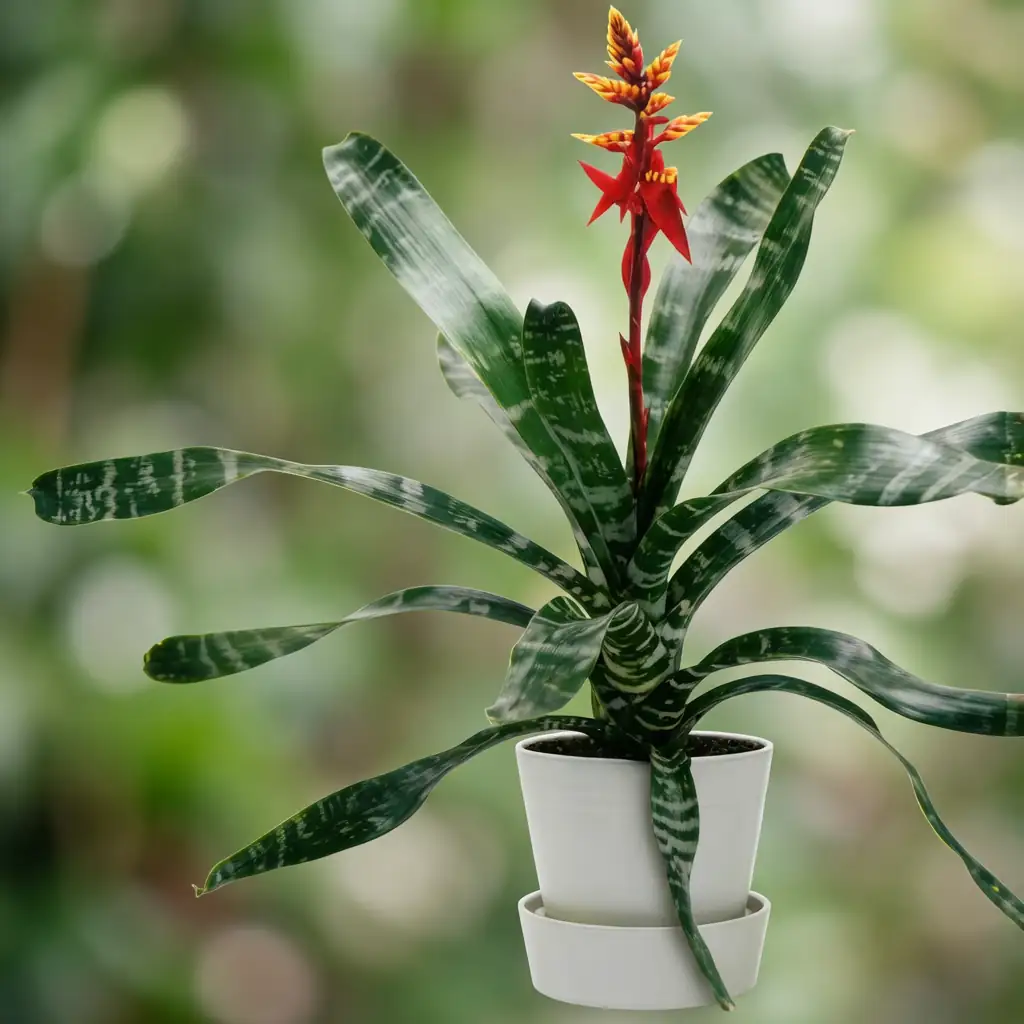
- Size: Typically about 60 × 60 cm (24 × 24 in) as a mature rosette in a pot.
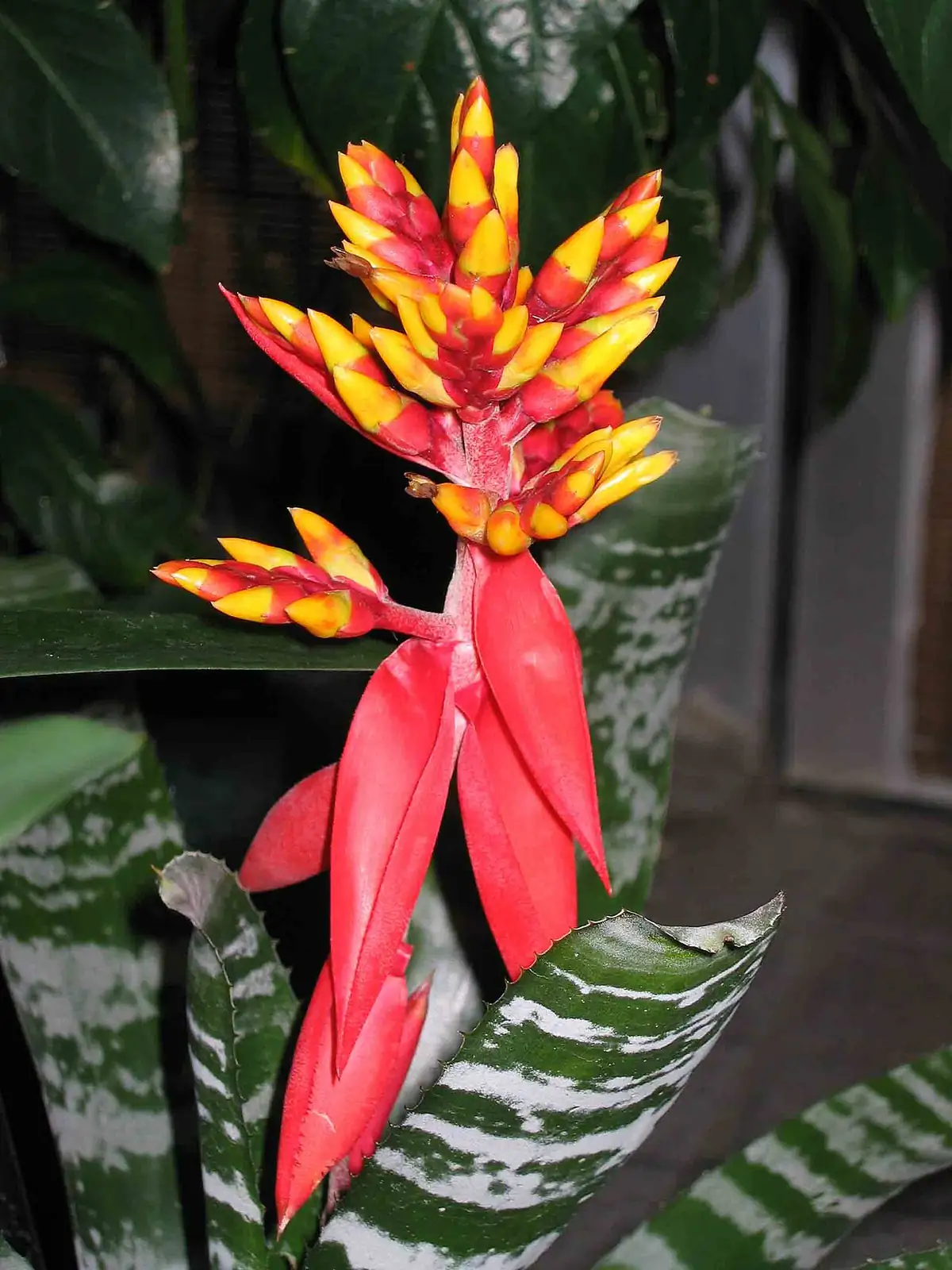
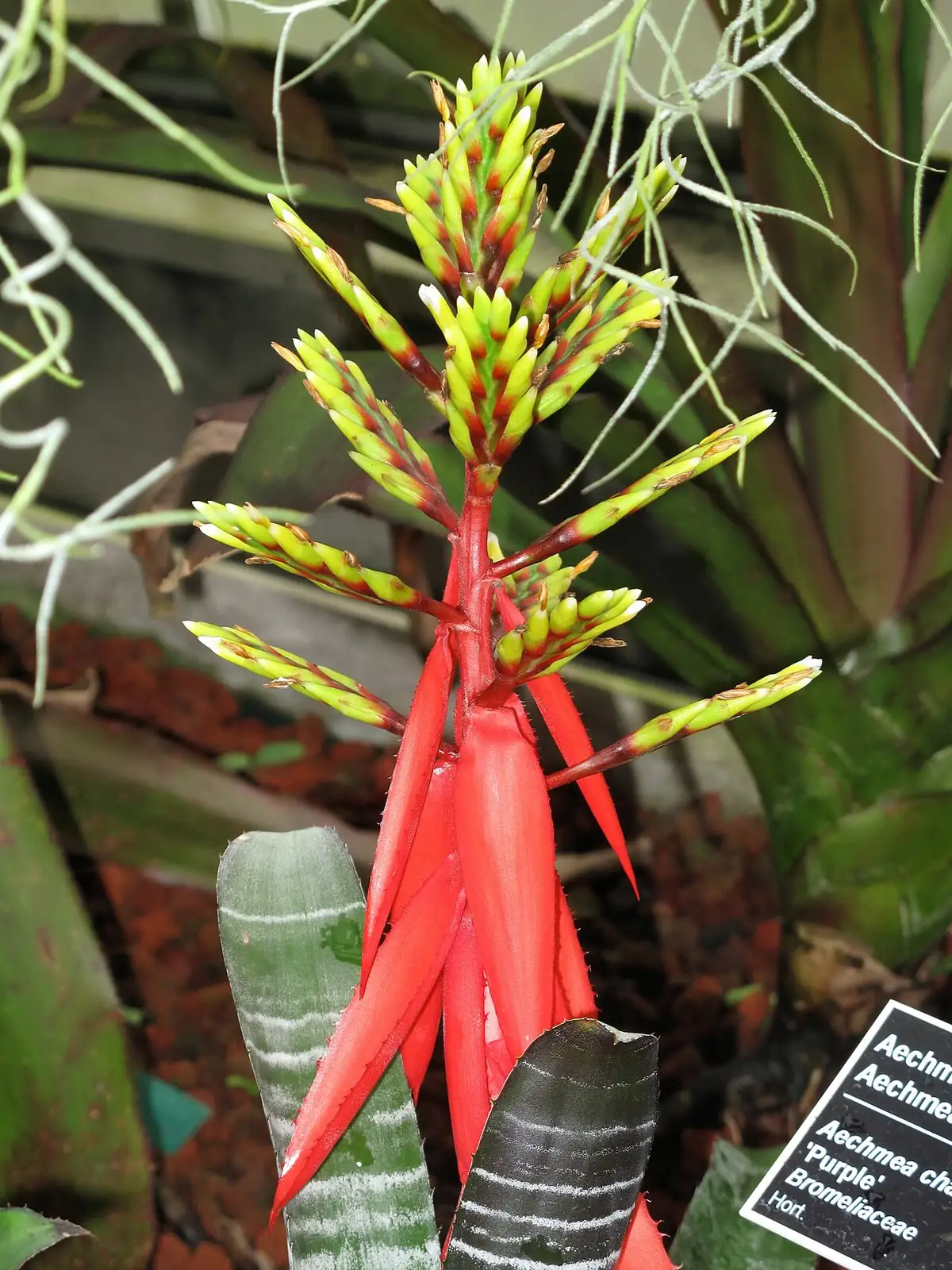
- Foliage: Deep green, strap-like leaves arranged in a rosette, marked with bold silvery horizontal bands (zebra striping). Leaves are upright-arching and form a central cup (tank) that can hold water.
- Flower: Produces an upright, tall spike-like inflorescence. The main display is the long-lasting bracts in red, orange, and yellow, with small red flowers emerging between them.
- Flowering Season: Late spring to autumn.
- Growth Habit: Evergreen, rosette-forming tank bromeliad; upright-arching foliage with a central water-holding cup.
Environment
Sunlight
Bright, filtered light (bright indirect light). Morning sun or partial shade is ideal; avoid harsh midday sun, which can scorch the leaves.
Temperature
15–27°C (59–81°F) is ideal. Keep above about 10°C (50°F) and protect from cold drafts.
Humidity
Moderate humidity is usually enough; about 40–60% is a good target (higher is fine with good airflow).
Soil
Very free-draining, airy mix—think bromeliad/orchid style. A practical blend is equal parts orchid bark, perlite, and coconut coir, or roughly 1:1 orchid mix and general-purpose potting mix.
Placement
Indoors: near an east-facing window, or a few feet back from a bright south/west window. Outdoors (warm climates): bright shade. Typically grown in a 12.5–15 cm (5–6 in) pot.
Hardiness
Not frost hardy. Best as a houseplant or outdoors only in warm climates; approximately USDA Zone 10–12 (minimums roughly 10 to -1°C / 50 to 30°F depending on microclimate and protection).
Care Guide
Difficulty
Easy—give it bright filtered light, warmth, and an airy mix, and it’s usually very cooperative.
Buying Guide
Look for firm, evenly striped leaves and a solid (not mushy) base. The central cup should smell fresh, not sour. Avoid plants with blackened leaf bases or obvious infestations (heavy scale or mealybugs).
Watering
Water like a tank bromeliad: keep a small amount of clean water in the central cup (use rainwater or distilled if possible). Top up as needed and refresh/flush the cup occasionally so it doesn’t stagnate (about every 4–8 weeks is a helpful routine). In the pot, keep the mix lightly moist during active growth, but never soggy. In winter, let the mix dry more between waterings. During hot, dry periods, mist daily or every other day—morning is best, with good airflow.
Fertilization
Spring to late summer: feed about every 2 weeks with a balanced liquid fertilizer at 1/2 strength. Many growers apply it into the rosette cup and/or as a light foliar feed.
Pruning
After the display fades, cut the spent flower spike off at the base. You can tidy fully brown leaf tips, but avoid cutting into green tissue.
Propagation
After flowering, the mother rosette slowly declines while producing offsets (“pups”). Separate pups when they’re about 1/3–1/2 the size of the parent and pot them into the same airy bromeliad mix.
Repotting
Use a snug, well-draining setup—typically a 12.5–15 cm (5–6 in) container and an airy bark/perlite/coir (or orchid-mix-based) blend. Up-pot young plants one size larger when roots fill the pot; avoid oversized pots that stay wet too long.
📅 Seasonal Care Calendar
Spring to late summer: keep the mix lightly moist, maintain clean water in the cup, and fertilize every 2 weeks at 1/2 strength. Refresh the cup water about every 4–8 weeks. Winter: water less and let the mix dry more between waterings; keep it warm and bright. Hot weather: mist daily or every other day with good airflow.
Pests, Diseases & Safety
Common Pests & Diseases
Common indoor pests include mealybugs, scale, and spider mites (especially when humidity is low). Root/crown rot can happen if the mix stays soggy or if cup water becomes stagnant—use an airy mix, provide airflow, and refresh/flush the cup water regularly.
Toxicity
Generally considered non-toxic to cats and dogs, though chewing may cause mild stomach upset. Leaf edges can be sharp, so handle carefully.
Culture & Symbolism
Symbolism: Often linked with boldness and tropical vitality—those zebra stripes and neon bracts are hard to ignore.
History & Legends: Aechmea chantinii is a well-loved ornamental bromeliad from tropical northern South America, long prized by collectors and houseplant growers for its zebra-banded foliage and long-lasting inflorescence.
Uses: Primarily grown as an ornamental houseplant or conservatory specimen; in frost-free regions it’s also used as a dramatic accent in bright-shade gardens.
FAQ
Do I water the soil or the cup in the middle?
Both, but with different goals: keep a little clean water in the central cup, and keep the potting mix lightly moist while it’s actively growing. In winter, reduce soil watering and don’t leave the mix wet for long stretches.
Why is my zebra bromeliad dying after it flowers?
That’s normal for many bromeliads. The mother rosette gradually declines after flowering, but it usually produces pups (offsets) first—those are the next generation to grow on.
Fun Facts
- The flashy “petals” are usually bracts—modified leaves. The true flowers are smaller and pop out from between the bracts.
- In the wild, the water-holding rosette cup can become a tiny ecosystem, collecting rainwater and leaf litter that support insects and other small organisms.