Plant Features
- Size: About 30 cm tall × 20 cm wide (12 in tall × 8 in wide).
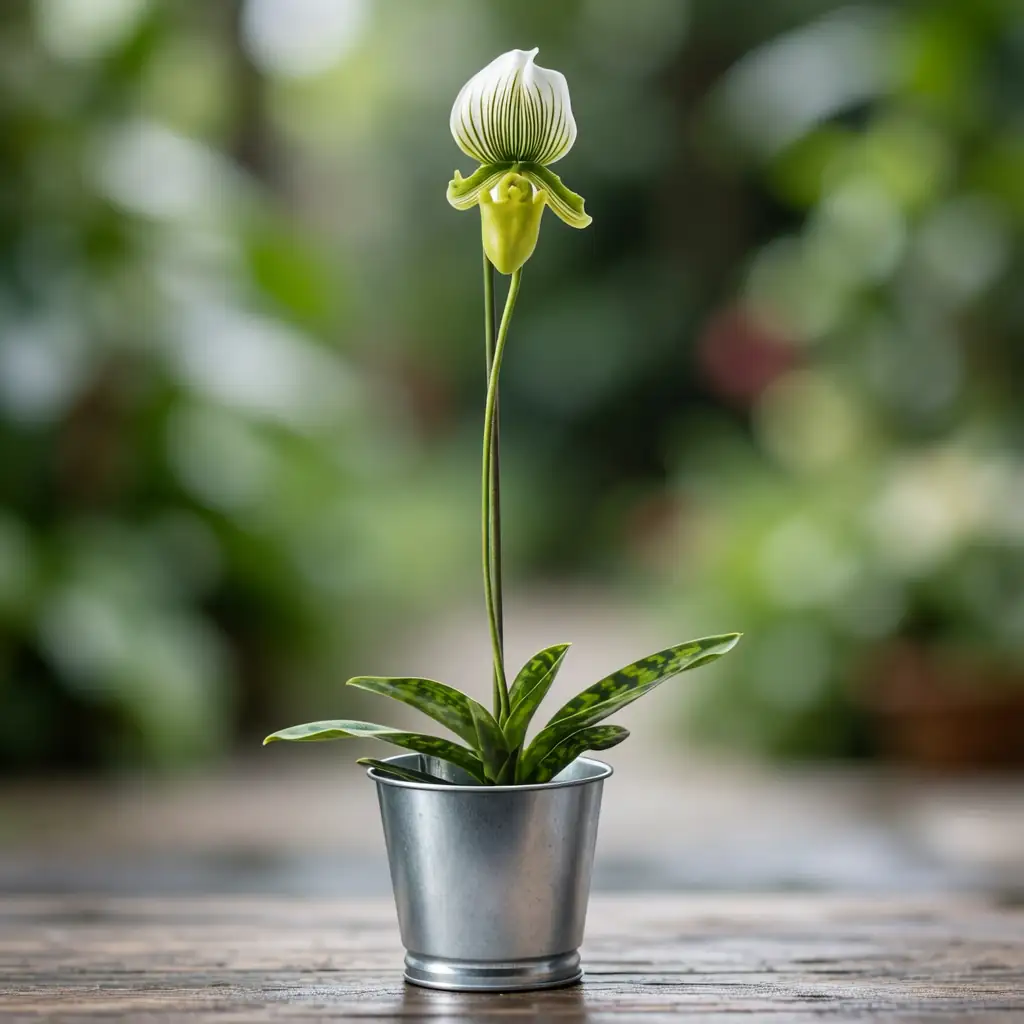
- Foliage: Leaves are long and strap-like, forming a neat, flat fan. Depending on the type, they may be solid green or attractively mottled. As a quick care clue: green-leaved types generally tolerate cooler conditions, while mottled-leaved types are typically warmer growers and should not be kept below about 17°C (63°F) at night.
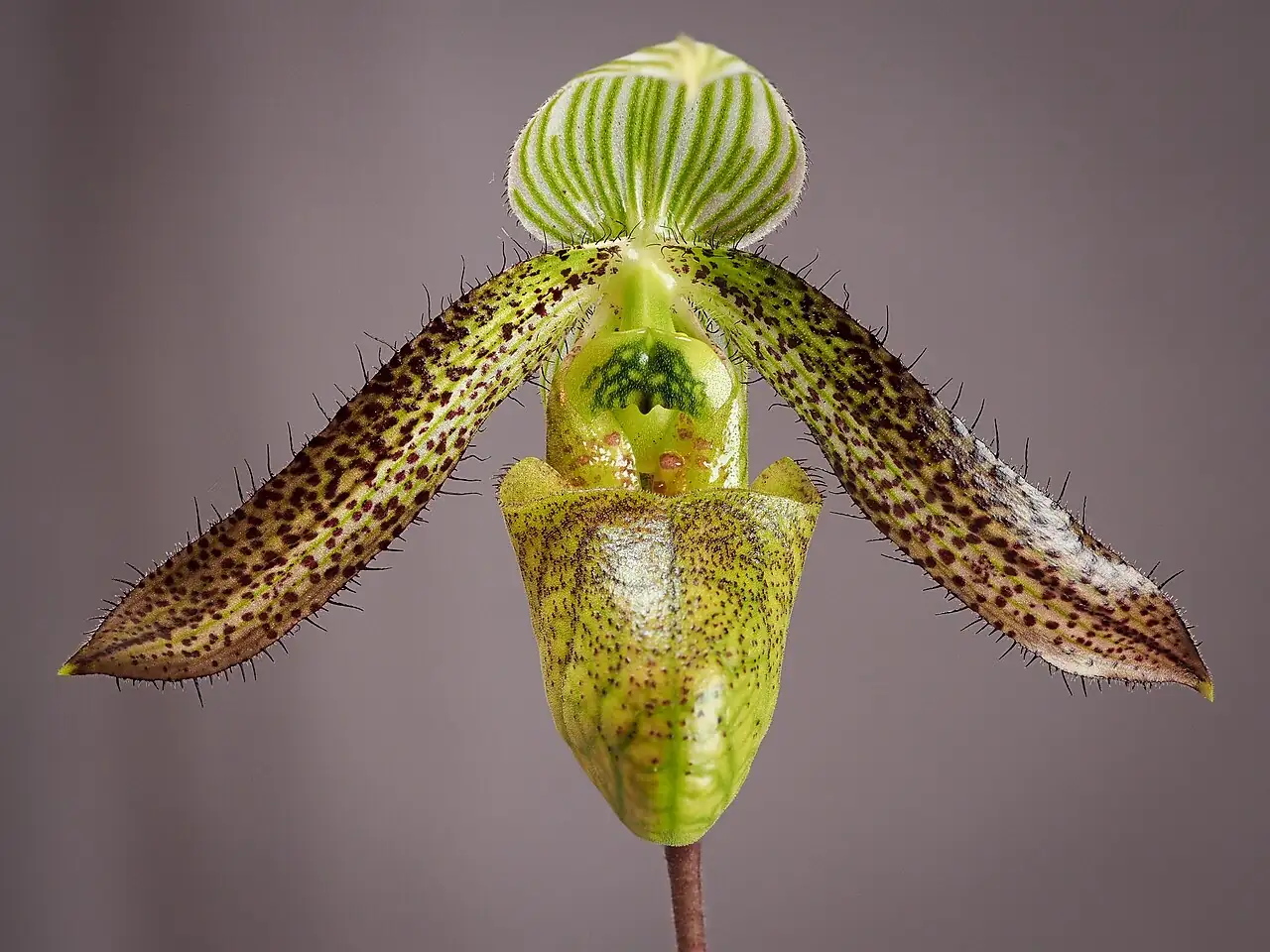
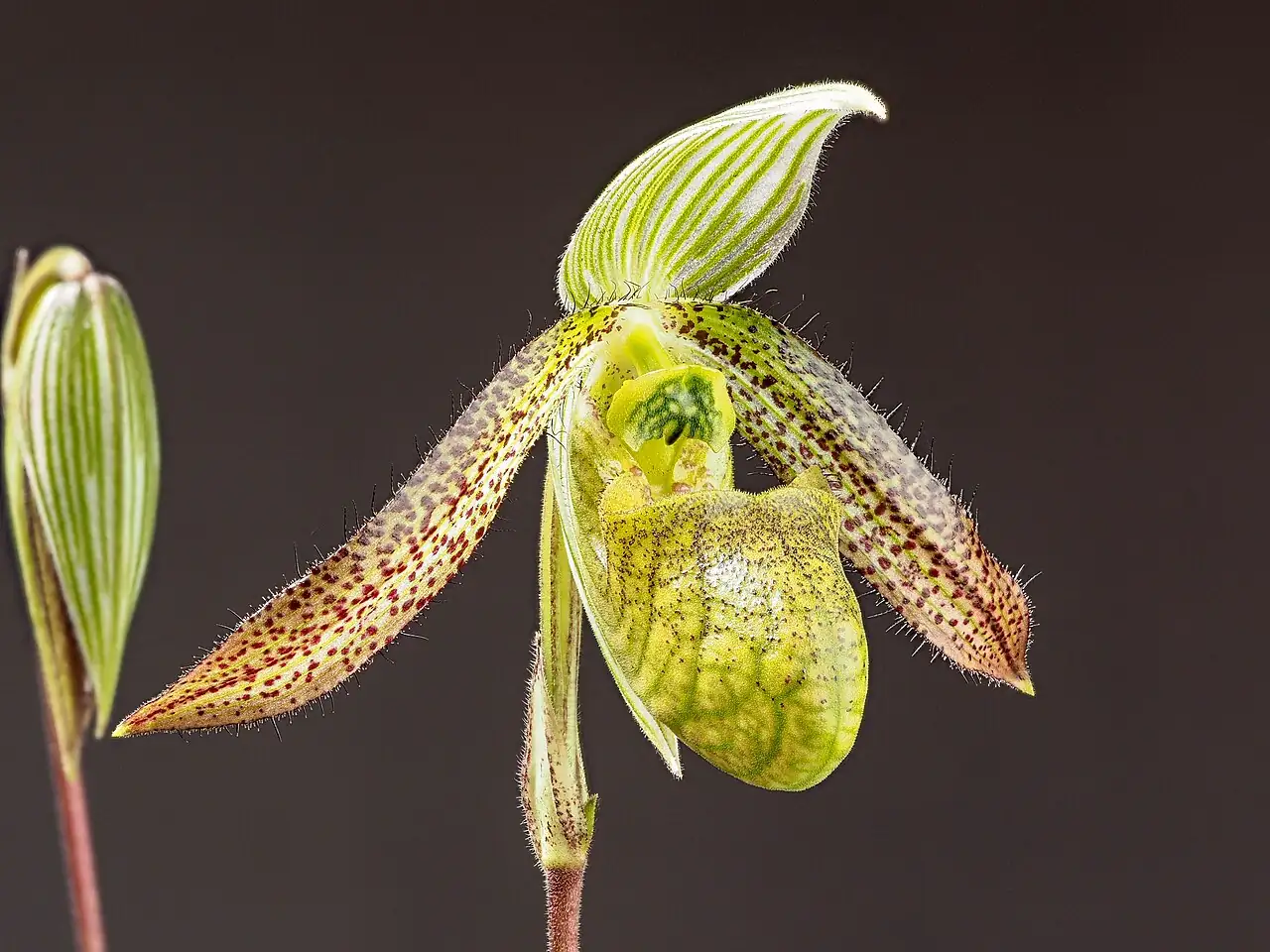
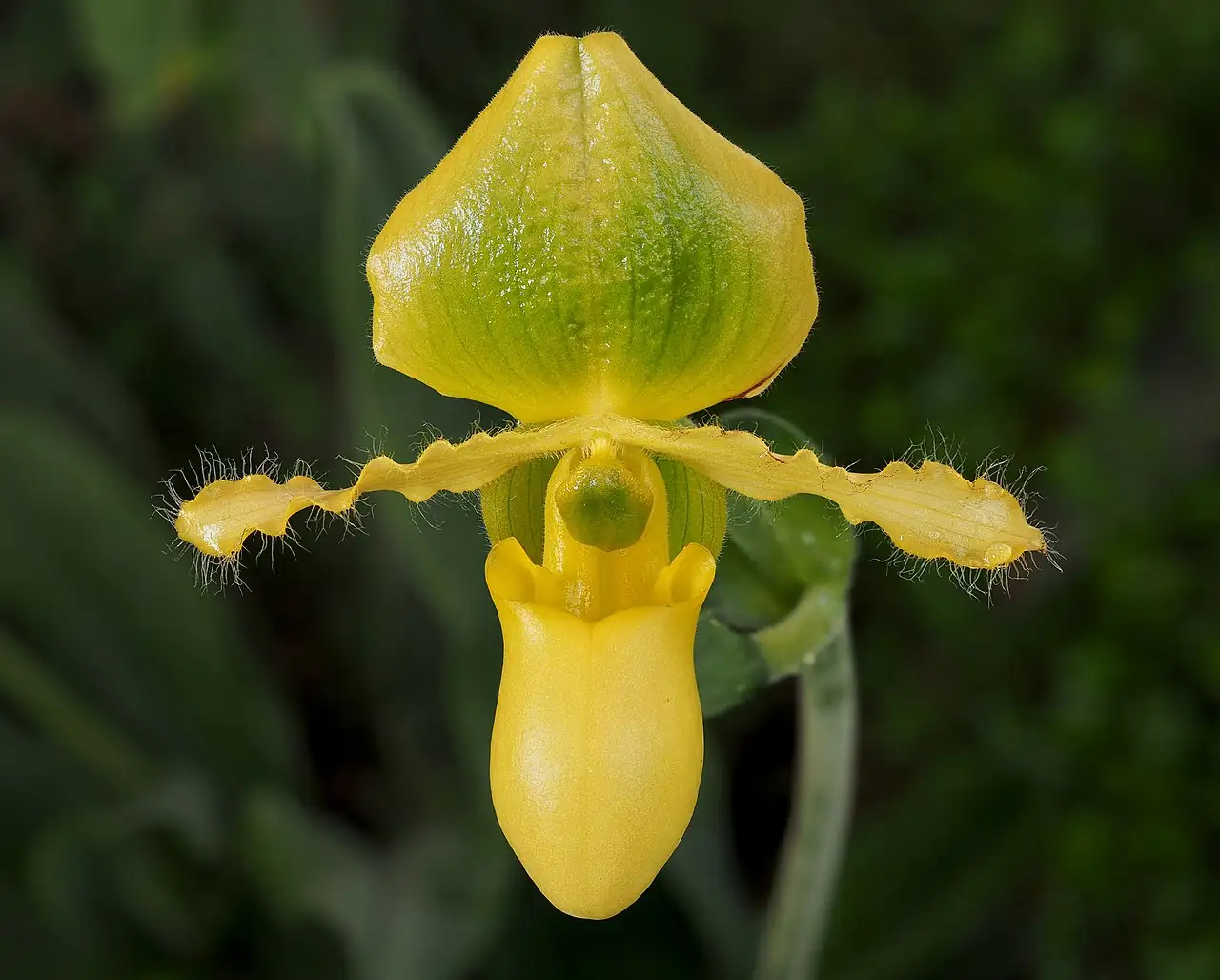
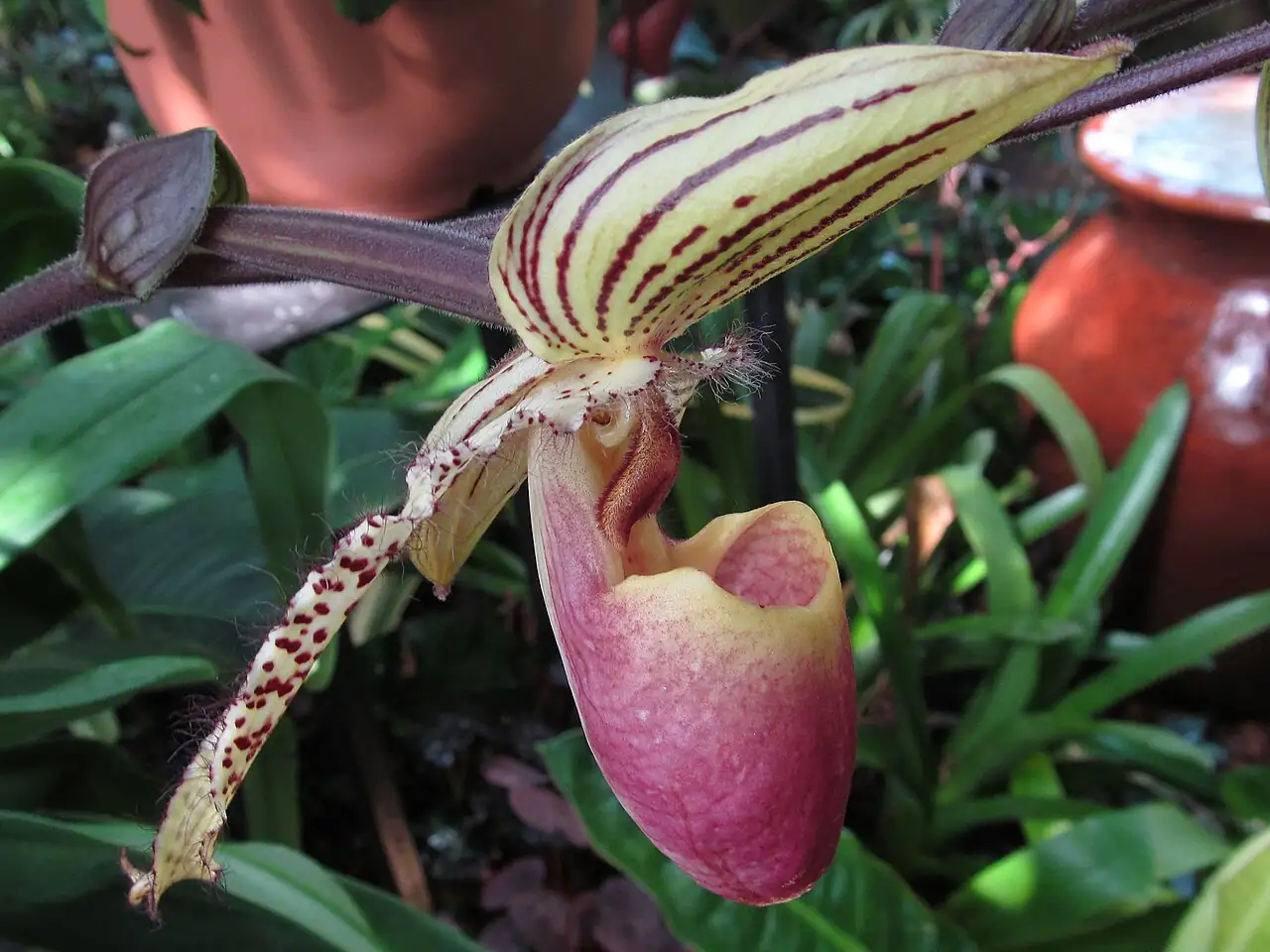
- Flower: Large, showy flowers in a wide range of colors and patterns. The defining feature is the inflated, pouch-like lip (the “slipper”), which gives the plant its famous nickname.
- Flowering Season: Most commonly blooms from winter into early summer (roughly December to June), with some hybrids flowering at other times.
- Growth Habit: A terrestrial orchid that grows from a central crown in a clumping habit over time. Its roots are adapted to airy potting media rather than exposed air, so it does not require a clear pot and does not produce typical aerial roots like many epiphytic orchids.
Environment
Sunlight
Bright, indirect light / partial shade. In summer, keep in bright shade and avoid direct sun; in winter, it can handle much brighter light, including gentle direct sun from a window.
Temperature
Best at 17–25°C (63–77°F). Green-leaved types tolerate cooler conditions; mottled-leaved types prefer warmth and should stay above 17°C (63°F) at night.
Humidity
Moderate humidity. A pebble tray with water (with the pot sitting above the waterline) can help. Avoid misting the leaves and crown, which can encourage rot.
Soil
Use an orchid potting mix. A suitable DIY mix is fine, composted bark with perlite at about 4:1. An opaque pot around 15–20 cm (6–8 in) in diameter is commonly recommended.
Placement
Summer: bright shade away from harsh direct sun. Winter: the brightest spot available (for example, a bright windowsill with mild sun).
Hardiness
Not frost hardy; best grown indoors or in a warm greenhouse. Warm-growing (often mottled-leaved) types are especially sensitive to cold nights and should be kept above 17°C (63°F).
Care Guide
Difficulty
Easy (especially named hybrids), as long as you avoid letting water sit in the crown and keep the mix consistently but lightly moist.
Buying Guide
Choose named hybrids for the easiest home success. Look for firm, healthy leaves and a solid crown with no soft, dark, or mushy spots (a common starting point for rot).
Watering
Spring to autumn: keep the mix evenly moist, watering about 1–2 times per week, ideally with rainwater or distilled water. Winter: reduce watering but do not allow the mix to dry out completely. Raise humidity with a pebble tray if needed, and avoid misting (especially into the crown) to reduce rot risk.
Fertilization
Spring to autumn: feed with an orchid fertilizer every 2–3 weeks. Winter: keep the same interval but use half strength.
Pruning
After flowering, remove the spent flower spike close to the base with clean scissors. Only remove leaves that are fully yellowed or dead; take care not to injure the crown.
Propagation
Best propagated by division of mature clumps at repotting time. For best recovery, keep several growths per division. Seed propagation is possible but typically requires specialist methods.
Repotting
Repot about once a year after flowering. Use an orchid mix (or composted fine bark + perlite at about 4:1) in an opaque pot around 15–20 cm (6–8 in). Position the plant so new growth isn’t buried by the mix, and avoid packing the medium too tightly—airflow around roots helps prevent rot.
📅 Seasonal Care Calendar
Spring–autumn: keep evenly moist; water 1–2× weekly; fertilize every 2–3 weeks. Winter: water less but never bone-dry; fertilize every 2–3 weeks at half strength; provide the brightest light. Repot once a year after flowering.
Pests, Diseases & Safety
Common Pests & Diseases
The biggest issue is rot (crown and root rot), usually from water sitting in the crown, soggy media, or frequent misting. Provide good airflow, keep the mix moist but not waterlogged, and avoid wetting the crown. Watch for common orchid pests such as mealybugs and scale.
Toxicity
Generally considered non-toxic to people and pets. However, sensitive individuals may get mild skin irritation from plant sap, and pets should be discouraged from chewing as a precaution.
Culture & Symbolism
Symbolism: Often linked with refined beauty, elegance, and rarity—an orchid people like to gift for special occasions because the blooms look exotic and last a long time.
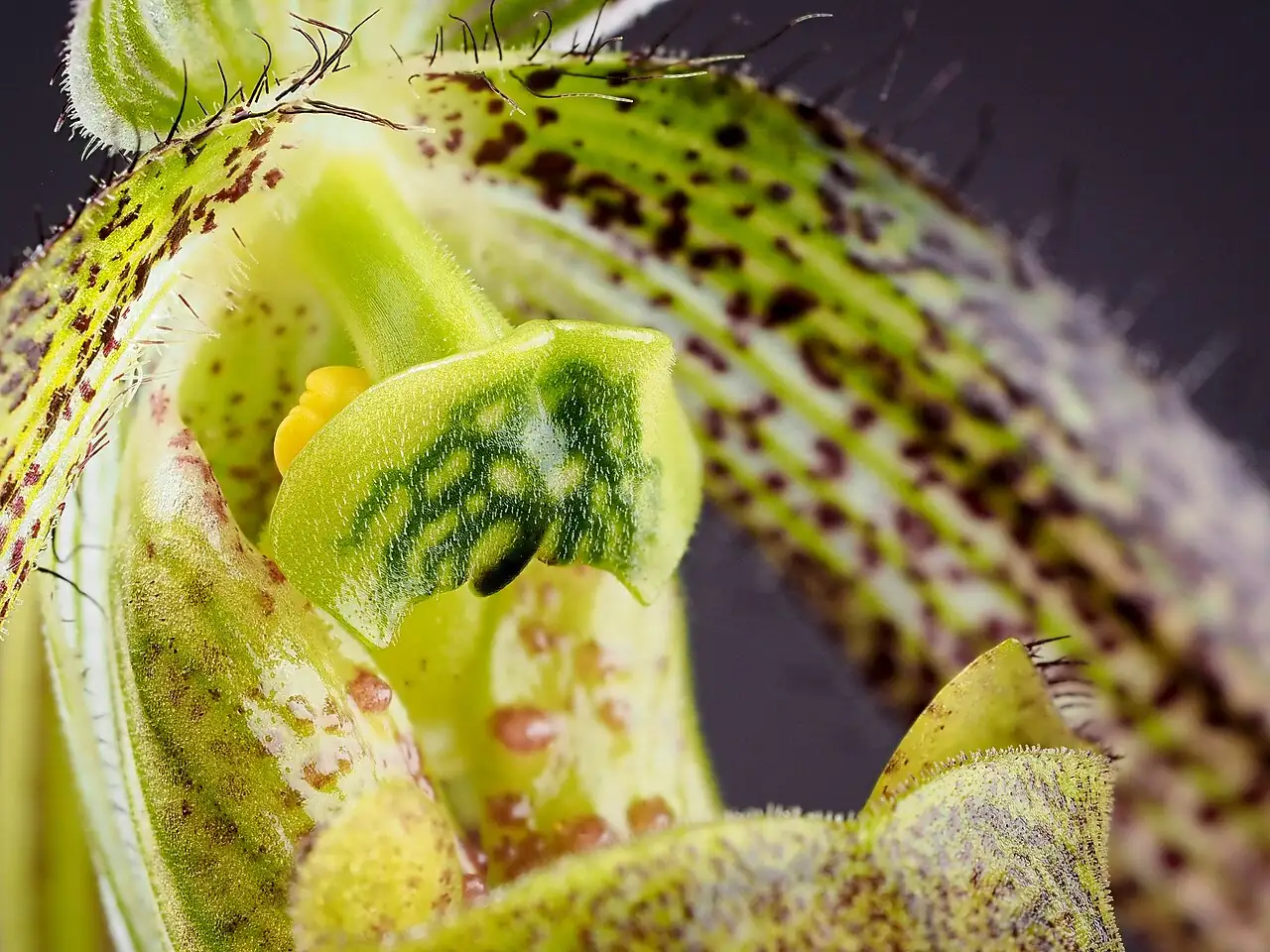
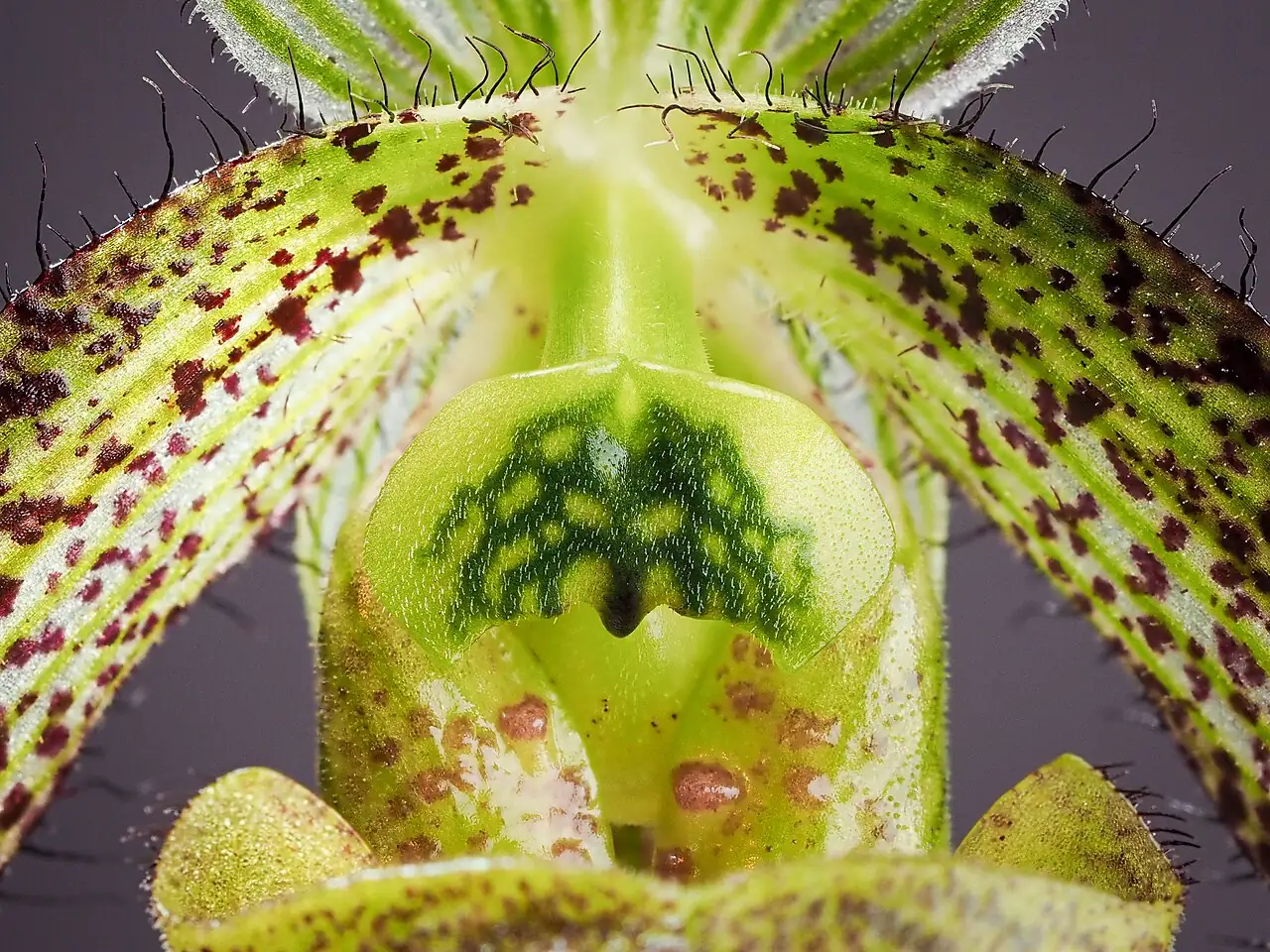
History & Legends: The “slipper” isn’t just for looks: it can temporarily trap visiting insects, guiding them along a specific route so they brush past the pollen structures on their way out. Paphiopedilum has long been prized by collectors, and many modern houseplant forms are hybrids selected for showier flowers and easier indoor care.
Uses: Primarily an ornamental houseplant and collector’s orchid, grown for long-lasting blooms and decorative leaves.
FAQ
When does a lady’s slipper orchid bloom?
Most commonly from winter into early summer (roughly December to June) for several weeks, though some hybrids can flower at other times.
How should I water it?
From spring to autumn, keep the mix evenly moist using rainwater or distilled water, watering about 1–2 times per week. In winter, water less but do not let the mix dry out completely. Use a pebble tray for humidity and avoid misting to reduce rot risk.
How do I fertilize it?
Feed with an orchid fertilizer every 2–3 weeks from spring to autumn. In winter, keep the same schedule but use half-strength fertilizer.
What pot and potting mix should I use?
Use an orchid mix, or a blend of composted fine bark and perlite at about 4:1. An opaque pot around 15–20 cm (6–8 in) in diameter works well.
Where should I place it in summer and winter?
In summer, keep it in bright shade away from direct sun. In winter, move it to the brightest spot available, including gentle direct sun from a window.
Do I need a clear pot?
No. Paphiopedilum is a terrestrial-type orchid and doesn’t rely on aerial roots, so a clear pot is not necessary.
Fun Facts
- The “slipper” is a real pollination tool: insects can enter easily but must exit past the pollen structures.
- Many popular houseplant Paphiopedilum are hybrids bred for larger flowers, longer-lasting blooms, and easier care than many wild species.
- Leaf pattern can hint at temperature preference: mottled leaves often indicate a warmer-growing plant, while solid green leaves often tolerate cooler conditions.