Plant Features
- Size: Up to about 25 cm (10 in) tall and 40 cm (16 in) across.
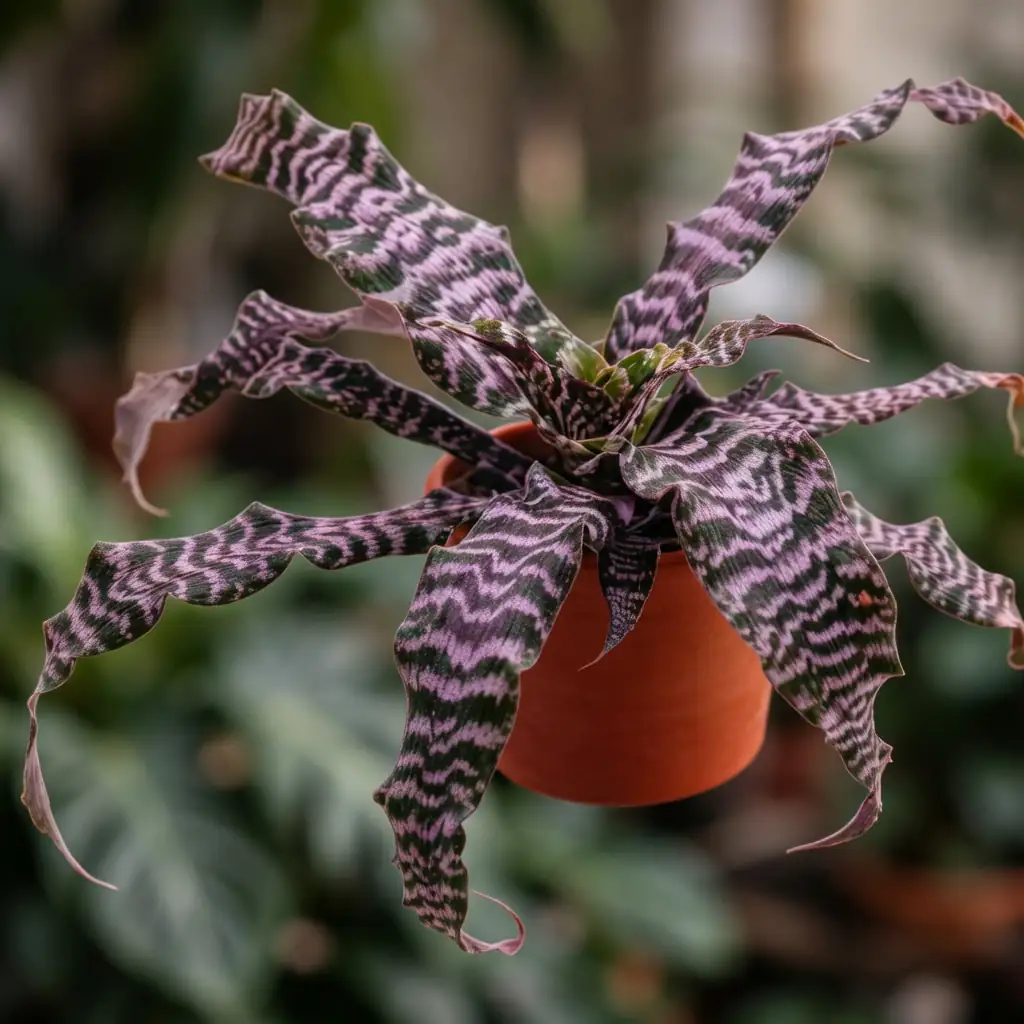
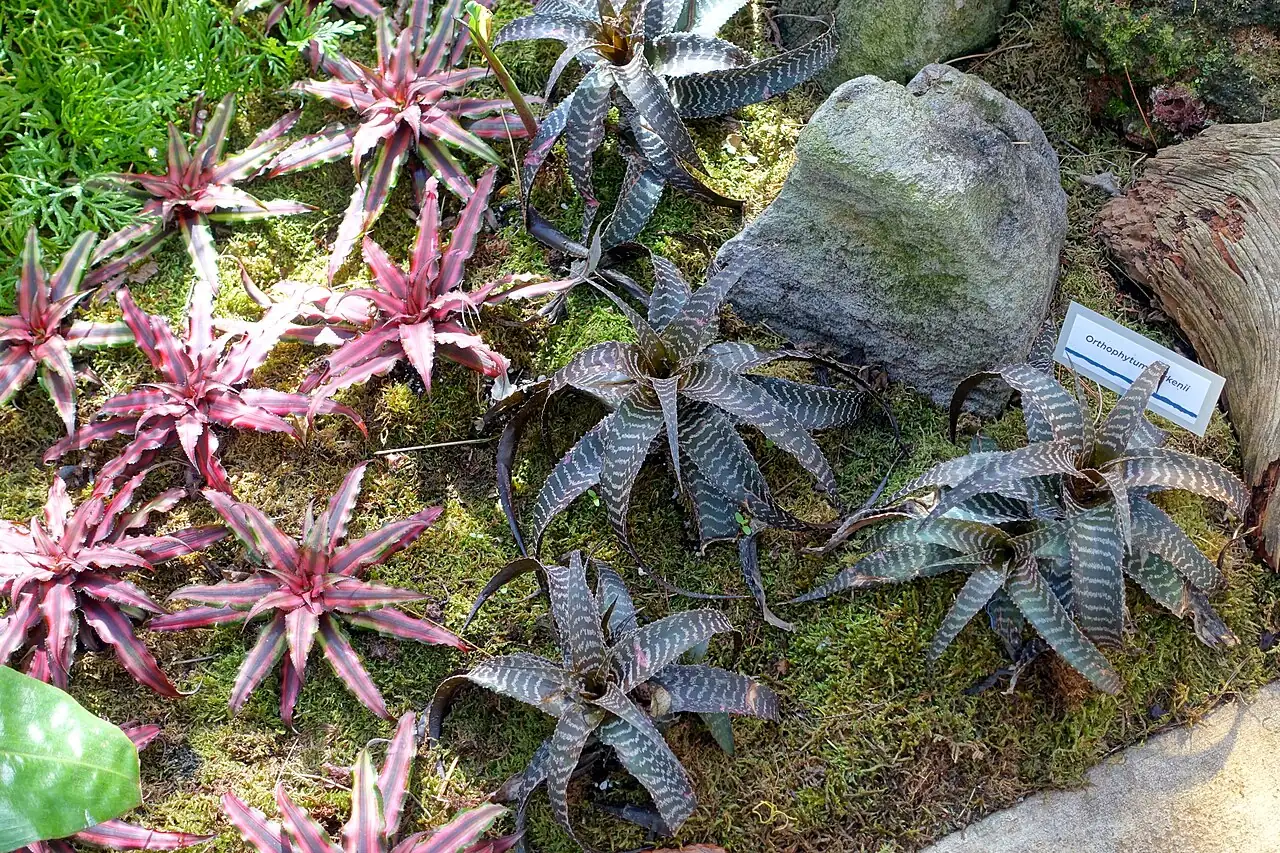
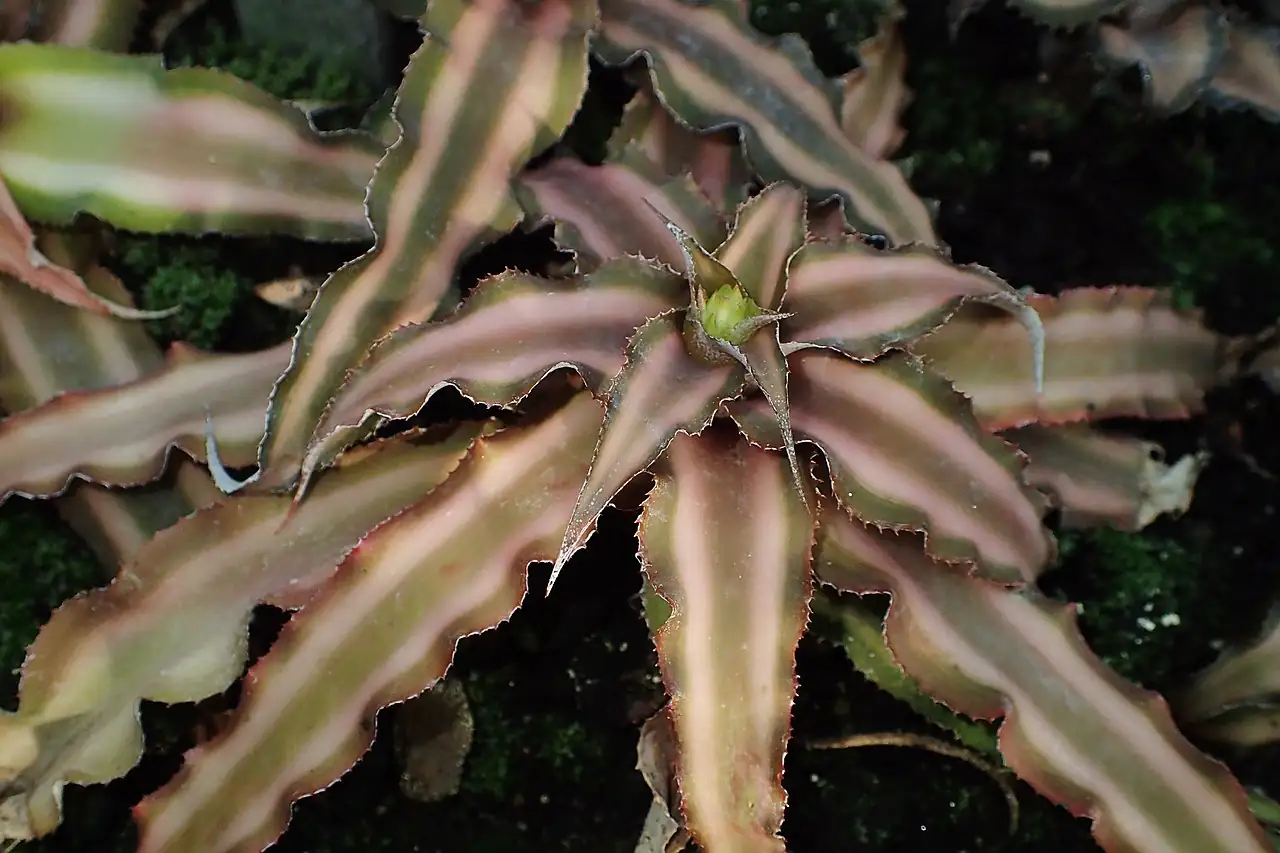
- Foliage: Narrow, arching, stiff leaves arranged in a star-like rosette; wavy margins with bold longitudinal striping in wine-red/burgundy and creamy white. Leaf color and striping are strongest in bright light and can fade toward greener tones in lower light.
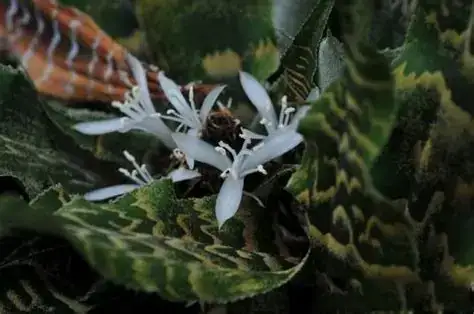
- Flower: Small, usually white flowers that sit close to the rosette center; they are short-lived and often partially hidden by the leaves.
- Flowering Season: Summer
- Growth Habit: Low-growing, star-shaped rosette; clump-forming over time as it produces offsets (pups). After flowering, the mother rosette may slowly decline while pups continue the plant.
Environment
Sunlight
Bright light is best; tolerates full sun to bright partial sun. In low light, the leaf striping and red tones commonly fade.
Temperature
Prefers 16–27°C (61–81°F). Protect from prolonged cold; avoid temperatures below about 10°C (50°F).
Humidity
Moderate humidity; appreciates occasional misting in dry indoor air (especially in heated rooms).
Soil
Very free-draining, airy mix. Good options include equal parts orchid bark mix, perlite, and coconut coir, or a 1:1 blend of orchid mix and an all-purpose potting mix.
Placement
A bright windowsill or sunroom indoors; outdoors in warm climates in containers or sheltered beds. Avoid deep shade if you want strong variegation and red coloration.
Hardiness
Not frost-hardy; best outdoors year-round only in USDA Zone 10–11 (approx.).
Care Guide
Difficulty
Easy, especially when given bright light and a fast-draining mix (the two biggest success factors).
Buying Guide
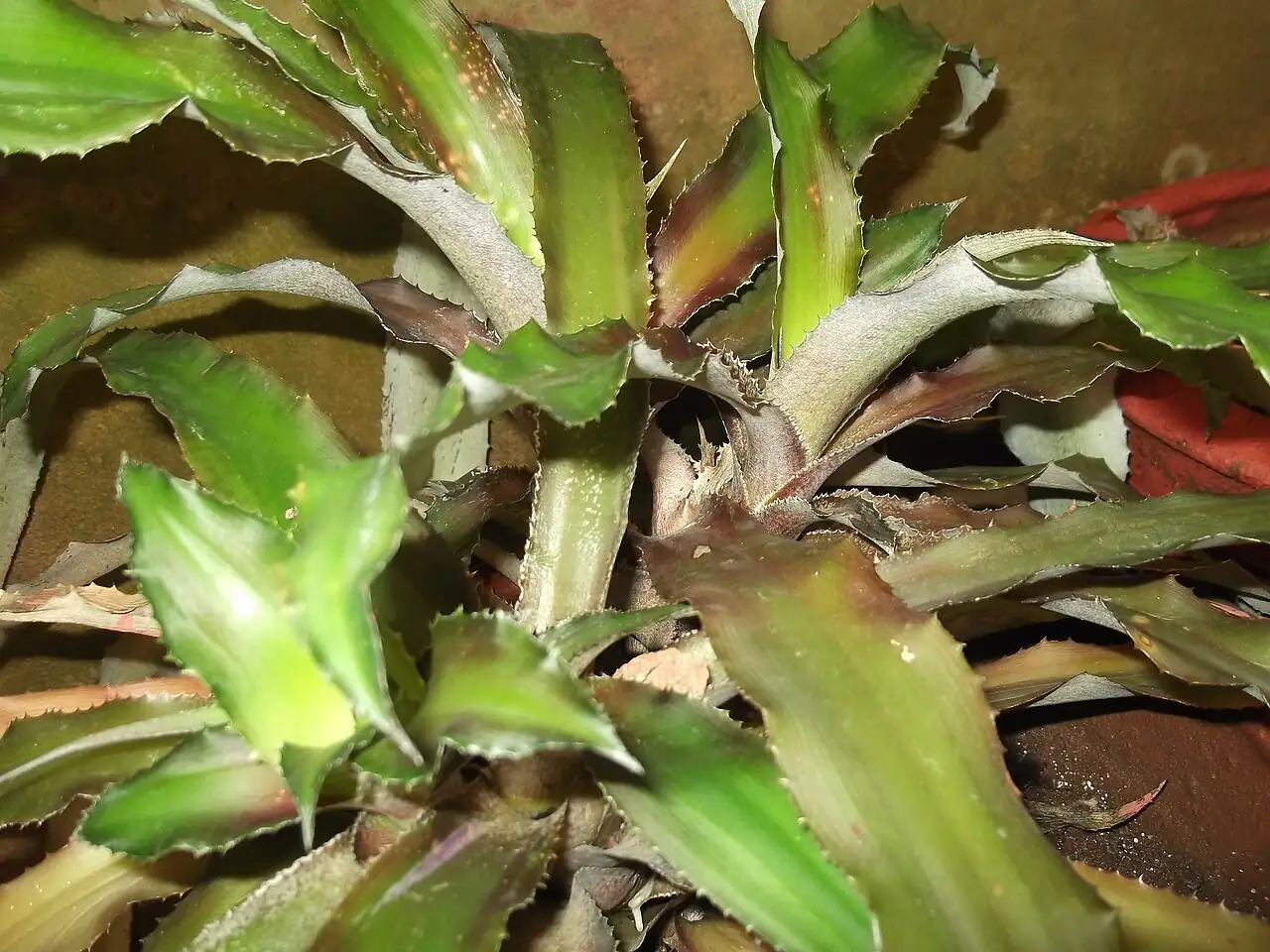
Look for firm, crisp leaves with strong striping and a solid, healthy center. Avoid plants with a soft/mushy rosette center or brown, collapsing bases (possible rot). Check leaf axils for mealybugs before bringing it home.
Watering
Spring to early fall: keep the potting mix evenly moist but never soggy; water quality matters—rainwater or distilled water is ideal. Winter: let the mix dry slightly between waterings and keep it just barely moist. If indoor air is very dry, mist lightly with lukewarm rain/distilled water every few days, but don’t keep the crown constantly wet.
Fertilization
Spring through late summer: feed every 2–3 months with a balanced liquid fertilizer diluted to 1/2 strength.
Pruning
Remove dried or damaged outer leaves by gently pulling or trimming close to the base. After flowering, the mother rosette may decline—leave and grow the offsets to replace it.
Propagation
By offsets (pups). When pups reach about 1/3–1/2 the size of the parent, separate with a clean blade and pot into the same airy mix. Keep warm and slightly humid until established.
Repotting
Use a small pot—about 10–12.5 cm (4–5 in) wide—filled with an airy bromeliad-style mix. Repot every 2–3 years in spring, or sooner if the mix has broken down and drains poorly.
📅 Seasonal Care Calendar
Spring: increase watering to keep evenly moist; start feeding (every 2–3 months at 1/2 strength); repot if needed. Summer: steady moisture; mature plants may bloom. Fall/Winter: reduce watering and keep only lightly moist; avoid cold, wet conditions.
Pests, Diseases & Safety
Common Pests & Diseases
Common issues include mealybugs and scale hiding at the leaf bases. Overwatering, a heavy mix, or poor airflow can lead to crown/root rot—use a fast-draining medium and avoid keeping the plant cold and wet.
Toxicity
Generally considered non-toxic to people and pets. However, sensitive individuals may find sap or leaf edges mildly irritating; it’s best to discourage chewing.
Culture & Symbolism
Symbolism: Often linked with vibrant energy and a “starburst” sense of beauty thanks to its radiating rosette.
History & Legends: A beloved bromeliad grown primarily for its colorful foliage, with many cultivated forms featuring striped and red-toned leaves.
Uses: Ornamental foliage plant for bright indoor spots, dish gardens, warm-climate outdoor containers, and terrarium-style displays as long as there’s good airflow.
FAQ
Why is my earth star losing its red color and stripes?
Light is usually the reason. Move it to brighter light (some direct sun can be fine indoors if you acclimate it gradually). Low light often causes greener leaves and softer, less distinct striping.
Should I water into the center “cup” like other bromeliads?
Not usually. Earth stars (Cryptanthus) are more terrestrial and don’t form a deep water-holding cup. Water the potting mix instead, and avoid keeping the center constantly wet to reduce rot risk.
When should I repot it?
Repot in spring every 2–3 years, or sooner if the mix has decomposed and drains poorly. Keep the pot on the smaller side and use an airy, fast-draining mix.
Fun Facts
- Unlike many bromeliads, earth stars are usually grown as terrestrial potted plants rather than mounted.
- The flowers can be easy to miss because they’re small and tucked into the rosette—foliage is the main attraction.
- Brighter light can dramatically deepen the red tones, so the same plant may look very different in shade versus sun.