

Plant Features
- Size: Typically up to about 2 m x 2 m (6.6 ft x 6.6 ft) in ideal conditions; often smaller indoors with pruning.
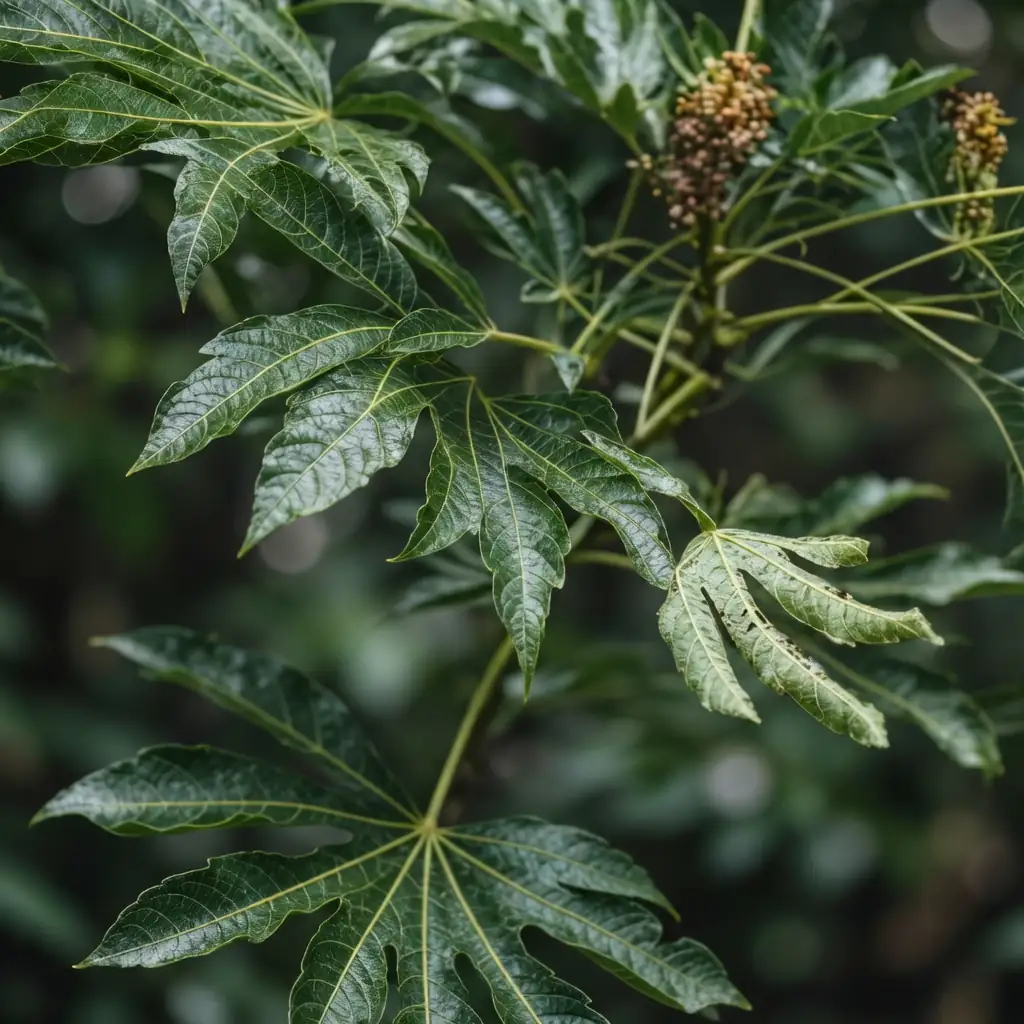
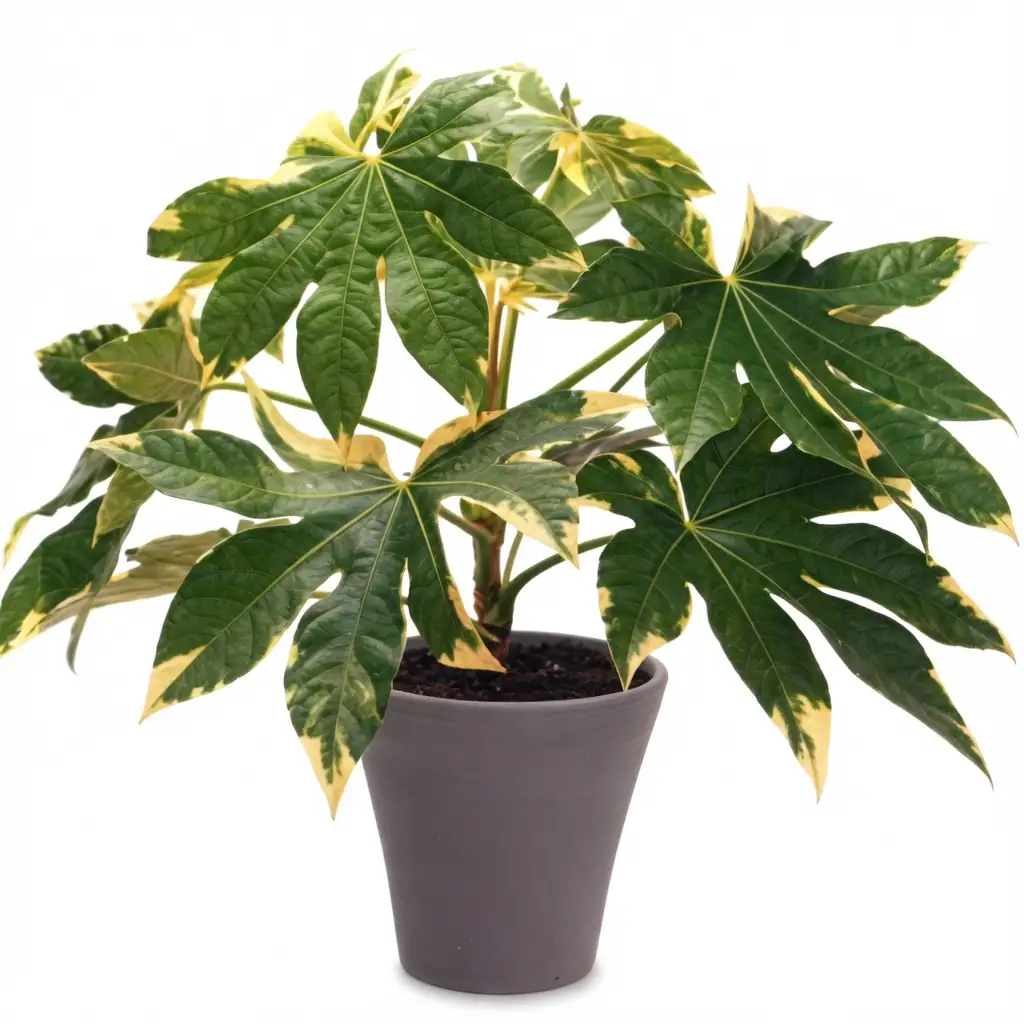
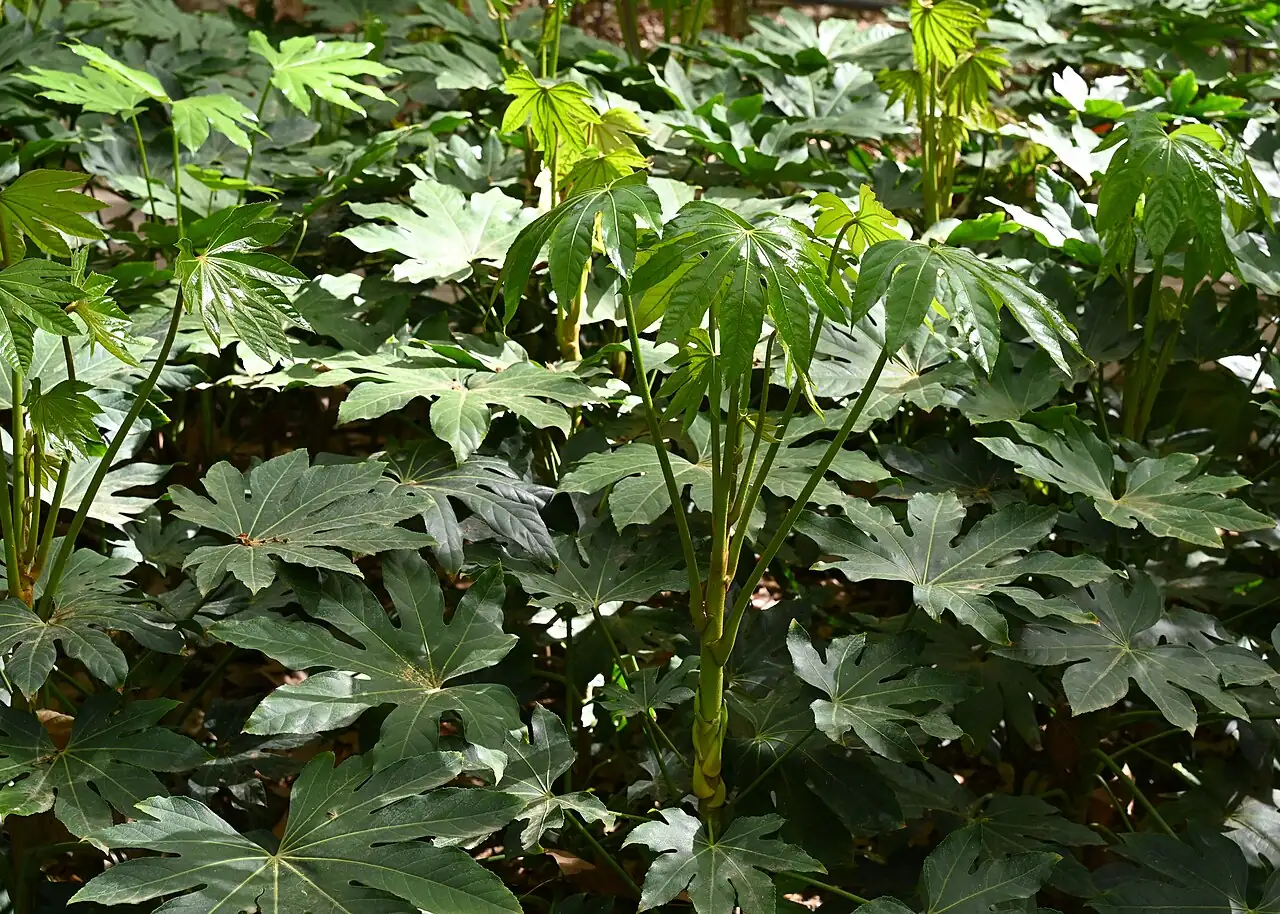
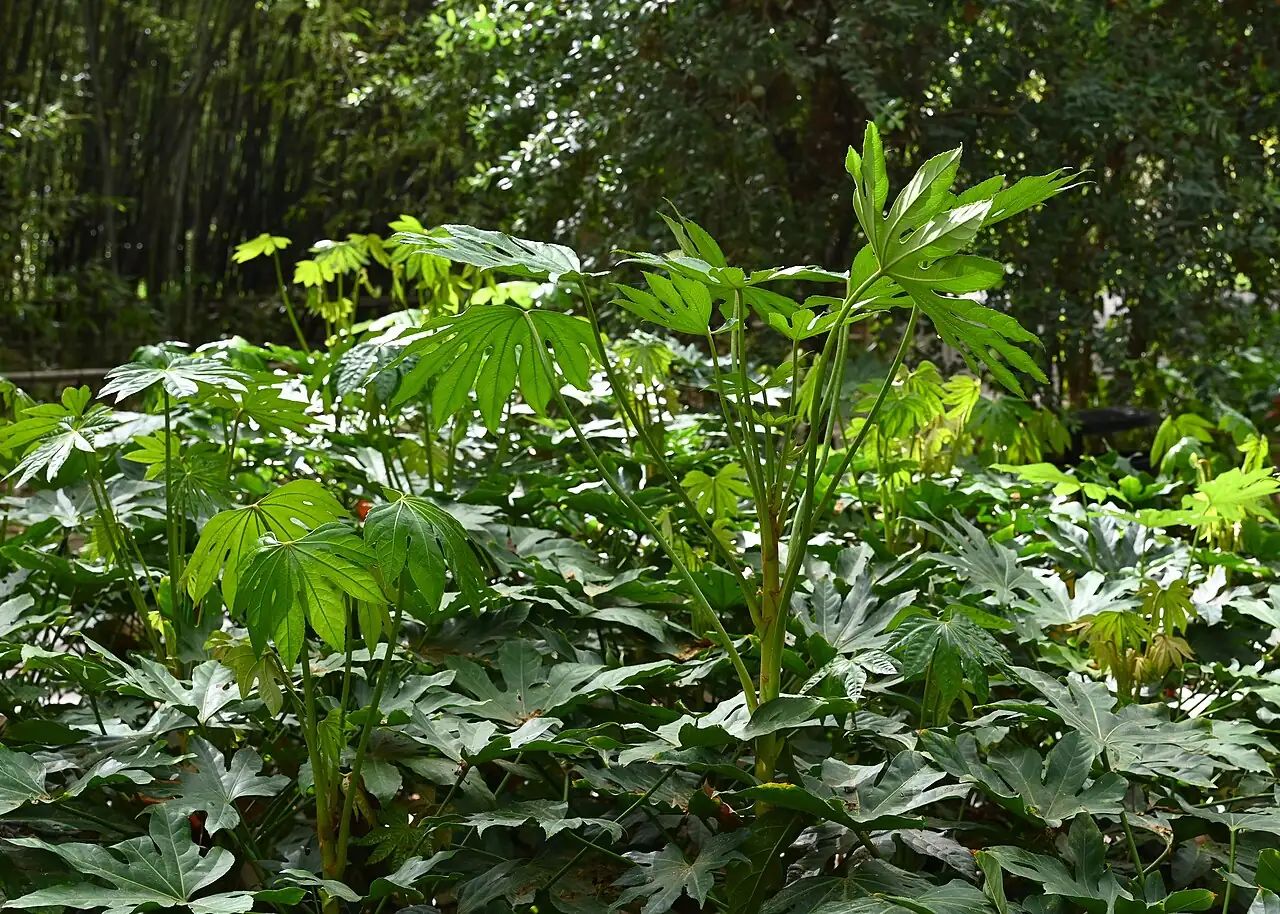
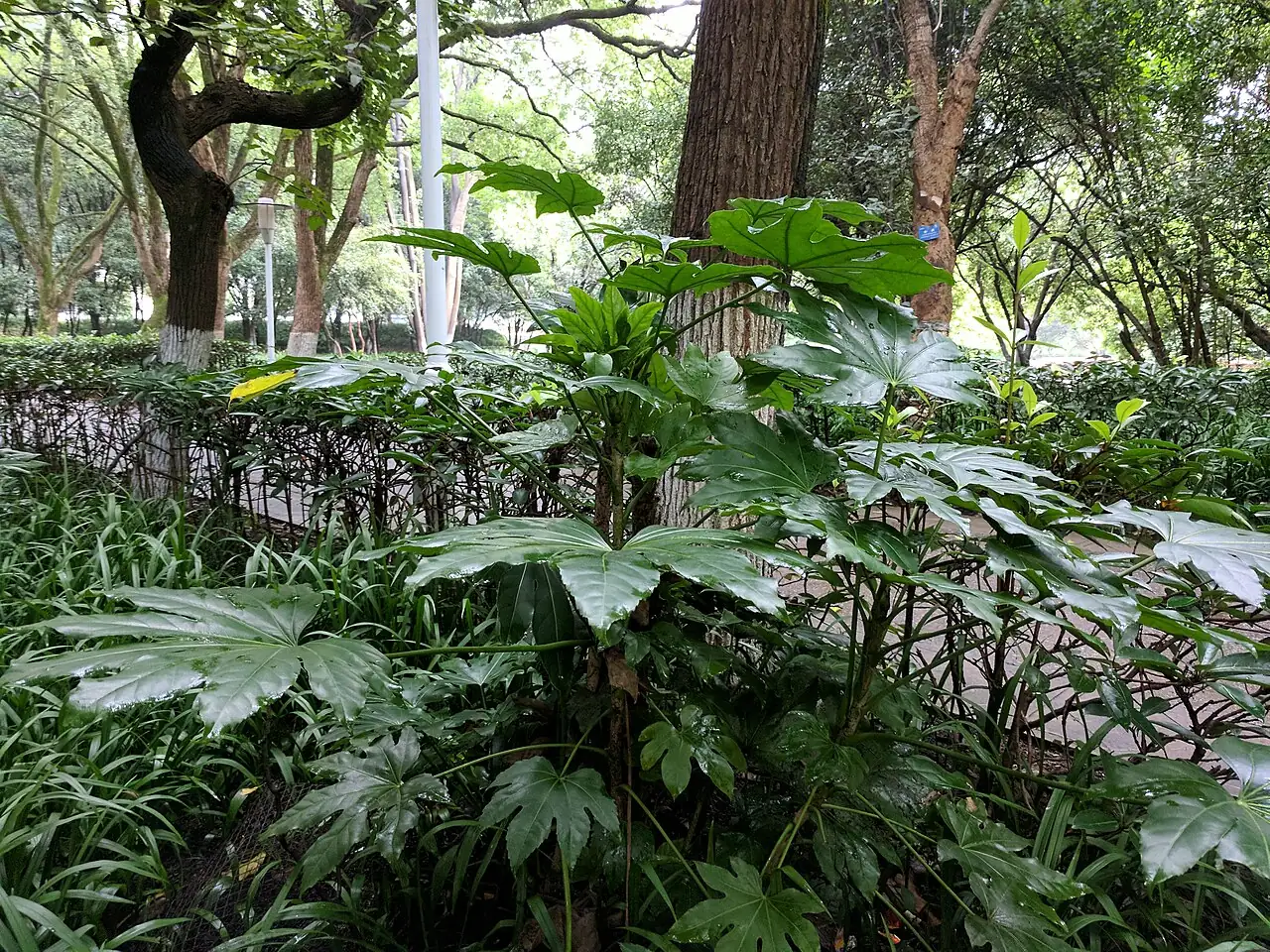
- Foliage: Large, glossy, palmate (hand-shaped) leaves that create a bold, tropical look. Forms include solid deep green as well as variegated cultivars; variegated plants need brighter indirect light to maintain strong coloration.
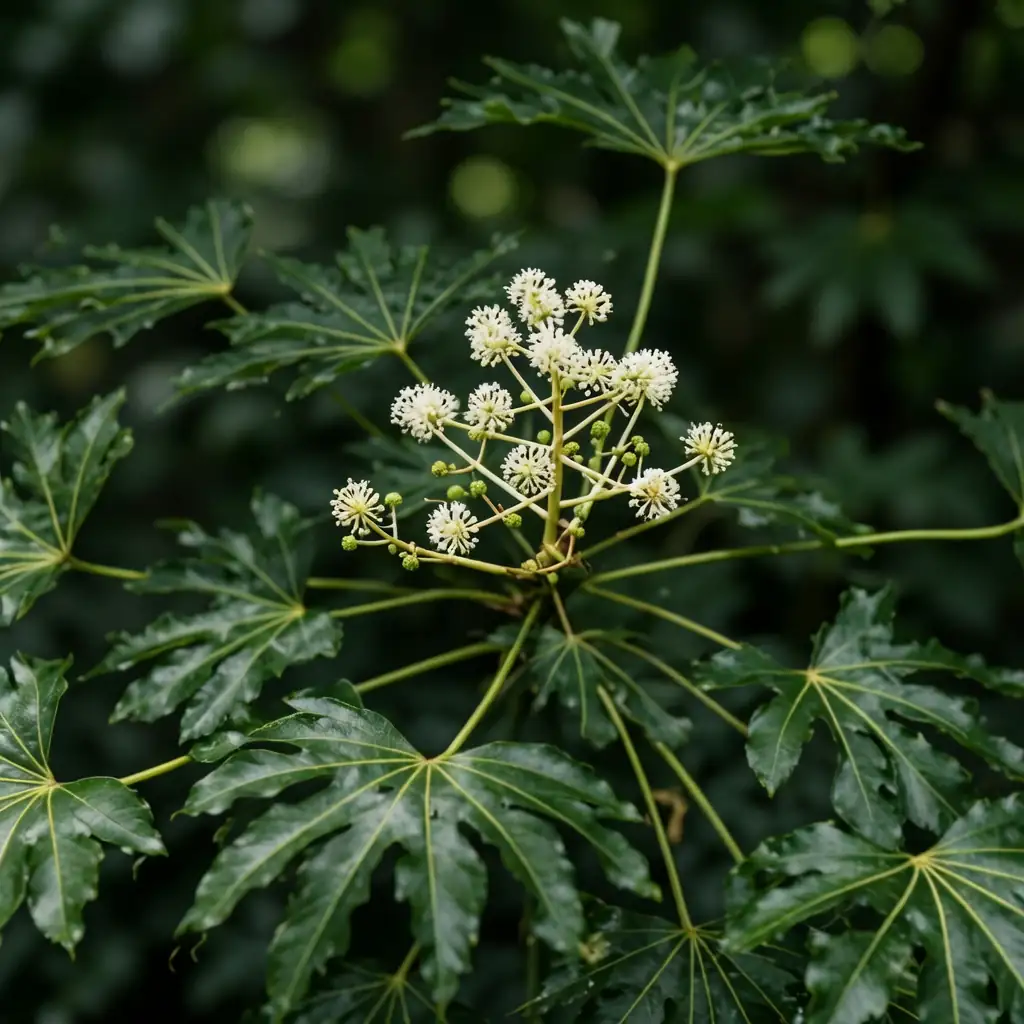
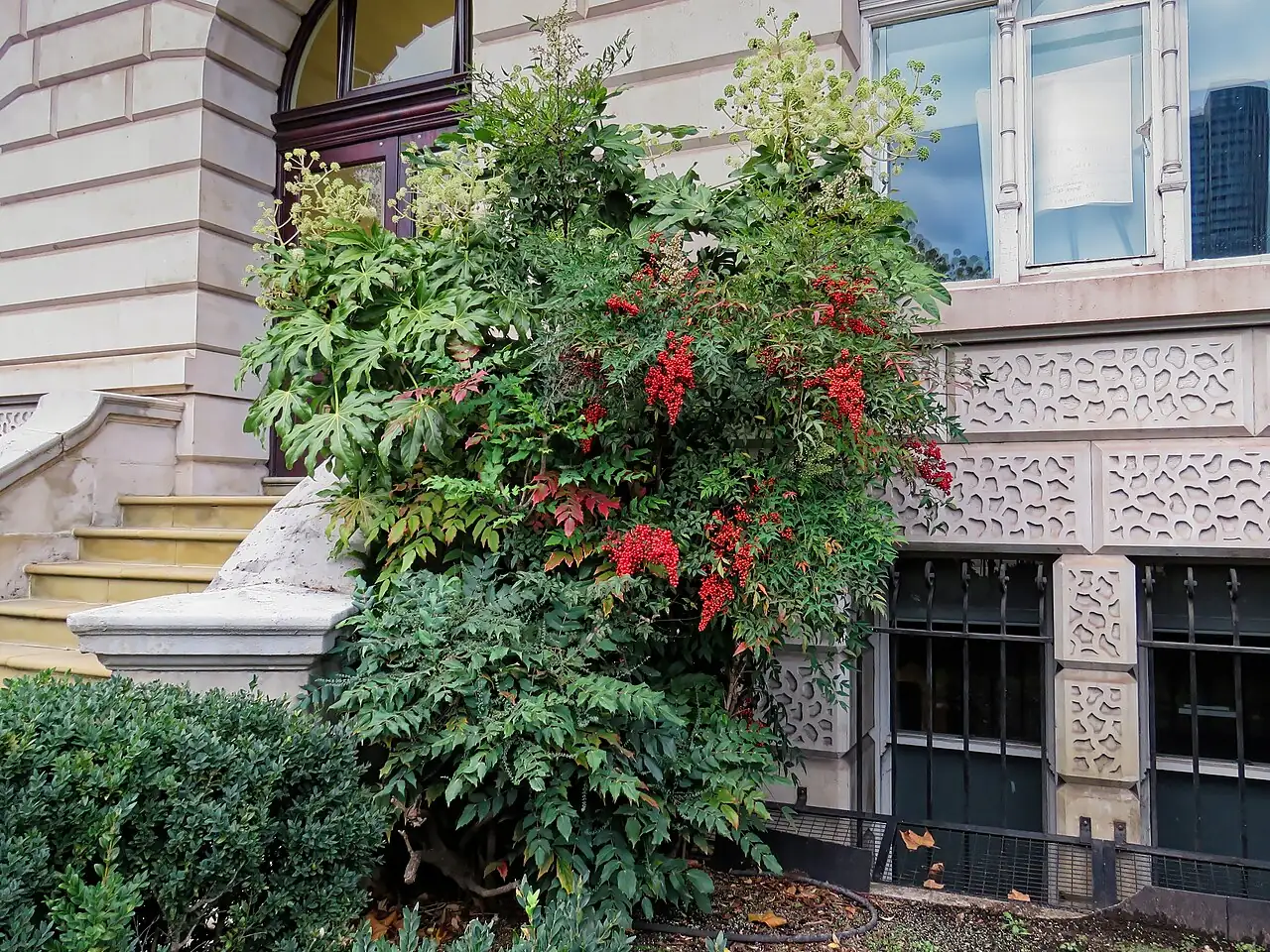
- Flower: In autumn, mature plants may produce rounded clusters of small creamy-white flowers; these can be followed by dark berries.
- Flowering Season: Autumn (fall)
- Growth Habit: Evergreen shrub with an upright, bushy habit; can be kept compact by pruning.
Environment
Sunlight
Part shade to bright indirect light; notably tolerant of low light. Avoid harsh direct midday sun, which can scorch leaves (variegated types are especially sensitive).
Temperature
10–25°C (50–77°F). Prefers a cooler winter rest if possible, ideally around 5–10°C (41–50°F).
Humidity
Low to moderate humidity; generally adaptable indoors, though steadier moderate humidity helps keep foliage looking its best. Dry air can encourage spider mites.
Soil
Fertile, well-draining, soil-based (loam-style) potting mix. In containers, improve drainage and structure with additions like bark and/or perlite; avoid waterlogged mixes that can lead to root rot.
Placement
Indoors: bright shade/bright indirect light away from hot sun and drying heat vents. Outdoors: sheltered part shade (courtyards, under trees, north/east-facing exposures). In winter, move container plants to a cool, bright room if frost is expected.
Hardiness
USDA Zone 7–10 (about -17 to -1°C / 1 to 30°F). Protect from hard freezes and cold, drying winds—especially in exposed sites or containers.
Care Guide
Difficulty
Easy; very forgiving in lower light and tolerant of minor watering mistakes once established, as long as drainage is good.
Buying Guide
Pick a plant with firm, glossy leaves and compact, sturdy growth. Avoid limp stems, widespread yellowing, or blackened leaf spots. Check leaf undersides and stems carefully for scale insects and spider mites (common on indoor plants).
Watering
Spring through autumn: keep the mix evenly moist, watering when the top 2–3 cm (1 in) feels dry. Winter: reduce watering and keep the mix only lightly moist—never let the pot sit in water.
Fertilization
Spring to late summer: feed every 2 weeks with a balanced liquid fertilizer at half strength (about 1/2 the label rate). Stop feeding in autumn and winter.
Pruning
Prune to control size and encourage bushier growth. Remove leggy shoots and damaged leaves; spring is the best time for shaping.
Propagation
Semi-hardwood cuttings in summer are the most reliable home method. Seed is possible but slower, and cultivars may not come true from seed.
Repotting
Repot every 2–3 years (or when rootbound), ideally in spring. Move up one pot size and refresh with a fresh, well-draining mix.
📅 Seasonal Care Calendar
Spring–summer: provide brighter indirect light, water regularly, and feed every 2 weeks. Autumn: taper off feeding; mature plants may flower. Winter: keep cooler at about 5–10°C (41–50°F) if possible, water sparingly, and keep away from frost and hot indoor heaters. Prune in spring as needed; repot every 2–3 years.
Pests, Diseases & Safety
Common Pests & Diseases
Watch for scale insects, spider mites (more likely in dry indoor air), mealybugs, and aphids. Root rot is the main disease issue and typically comes from poor drainage or overwatering. Improve airflow, avoid soggy soil, and treat pests early with appropriate horticultural soap or oil.
Toxicity
Generally considered low toxicity, but the sap may irritate sensitive skin. If chewed, it may cause mild stomach upset—keep out of reach of pets and small children.
Culture & Symbolism
Symbolism: Often linked with boldness and a sense of protection—those big, hand-shaped leaves give it a strong, sheltering presence.
History & Legends: A classic ornamental shrub from Japan that became popular in European gardens and later as a reliable indoor foliage plant thanks to its shade tolerance and dramatic, architectural leaves.
Uses: Grown mainly as an ornamental foliage plant: a statement houseplant, a patio/container feature, and a structural evergreen for sheltered, shady garden borders in mild climates.
FAQ
Why is my Japanese aralia getting leggy?
It’s usually from too little light or from being kept warm all winter. Move it to brighter indirect light and, if you can, give it a cooler winter spot around 5–10°C (41–50°F). Prune in spring to encourage branching.
Can it survive low light indoors?
Yes. It’s one of the better big-leaf plants for low light, though growth will slow. Variegated forms need brighter indirect light to keep their pattern.
How do I avoid root rot?
Use a well-draining, soil-based mix in a pot with drainage holes, and let the top 2–3 cm (1 in) dry slightly between waterings—especially in winter.
Fun Facts
- Despite the common name, Japanese aralia isn’t a true Aralia—it’s Fatsia, in the ginseng family (Araliaceae).
- Those dramatic palmate leaves are why it’s so often used as a bold “statement” plant in shade.
- Healthy, mature plants can flower in autumn even when grown in fairly modest indoor light.


