Plant Features
- Size: Typically forms low clumps up to about 20 × 30 cm (8 × 12 in) overall, depending on species/cultivar and the age of the clump.
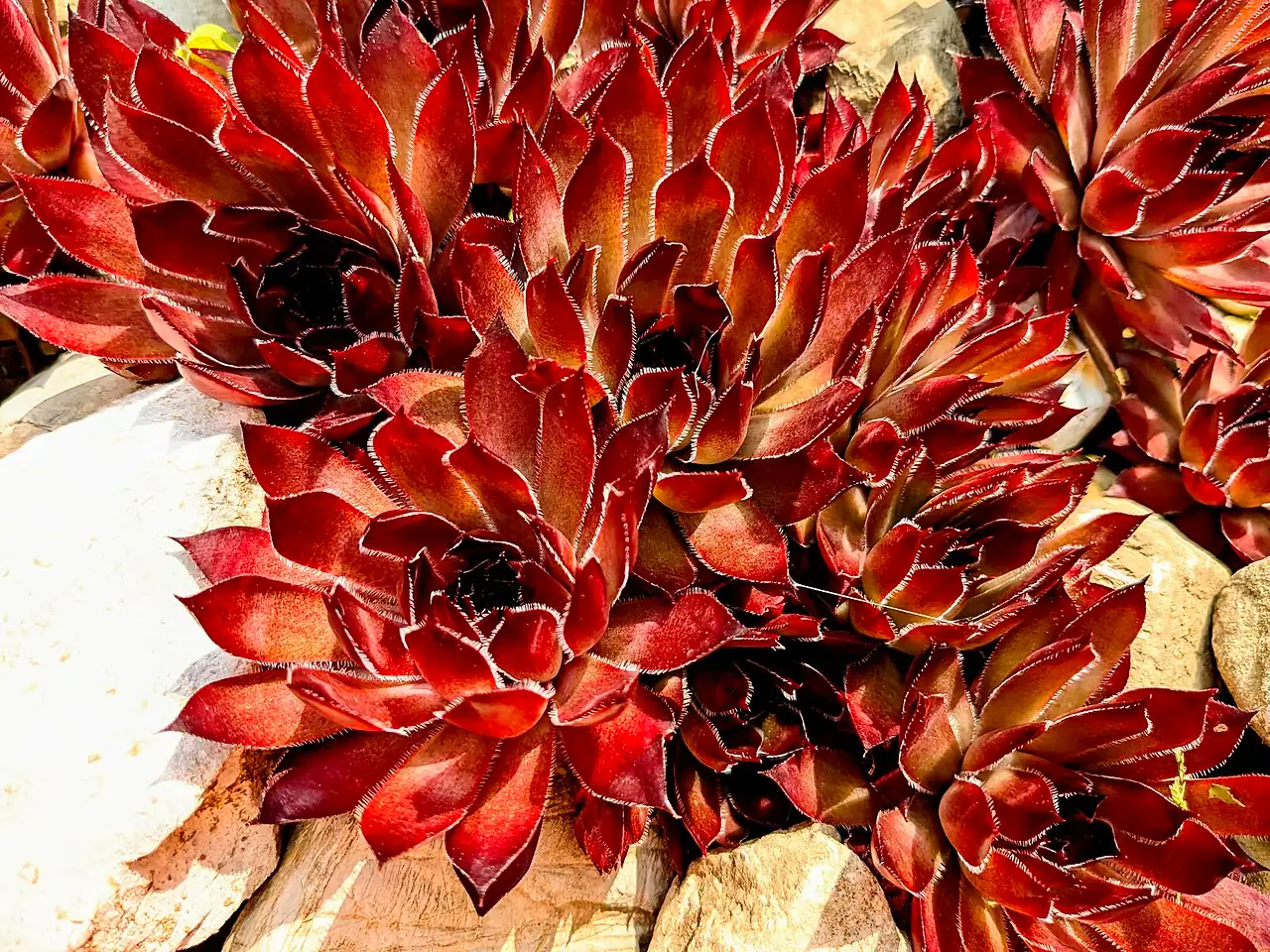
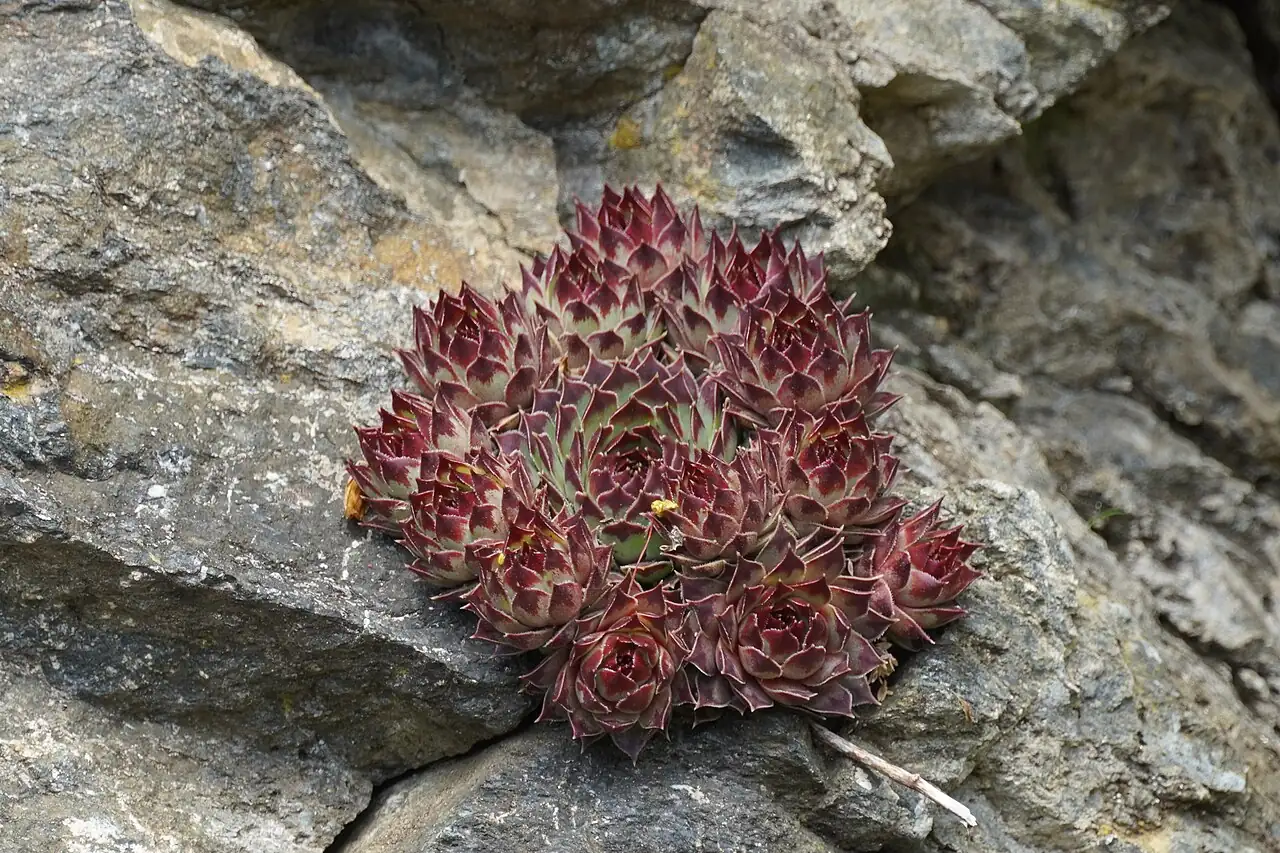
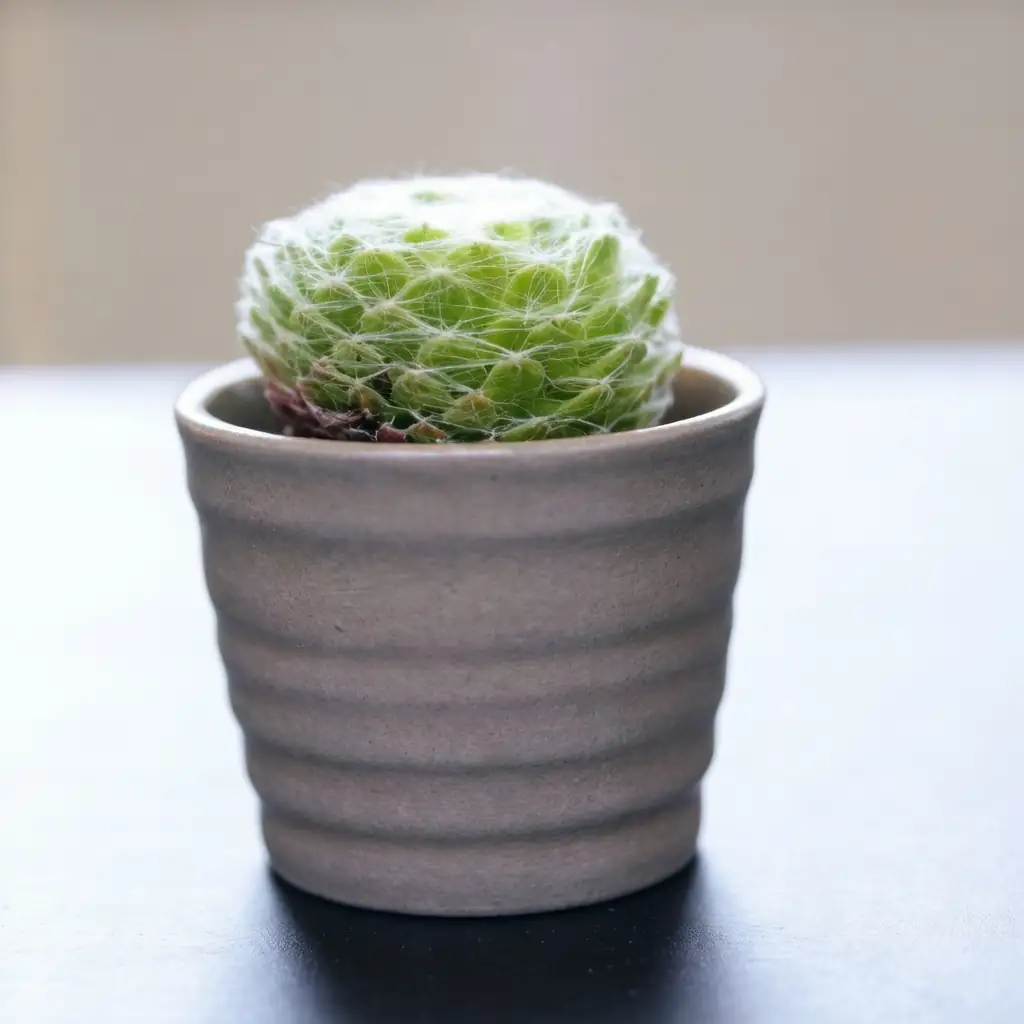
- Foliage: Compact, spiral-arranged rosettes of thick, water-storing leaves. Colors range from green to red and burgundy, often with gray tones; some selections are variegated or softly hairy/velvety. After a rosette flowers, it slowly fades and dies back, while offsets around it continue the plant.
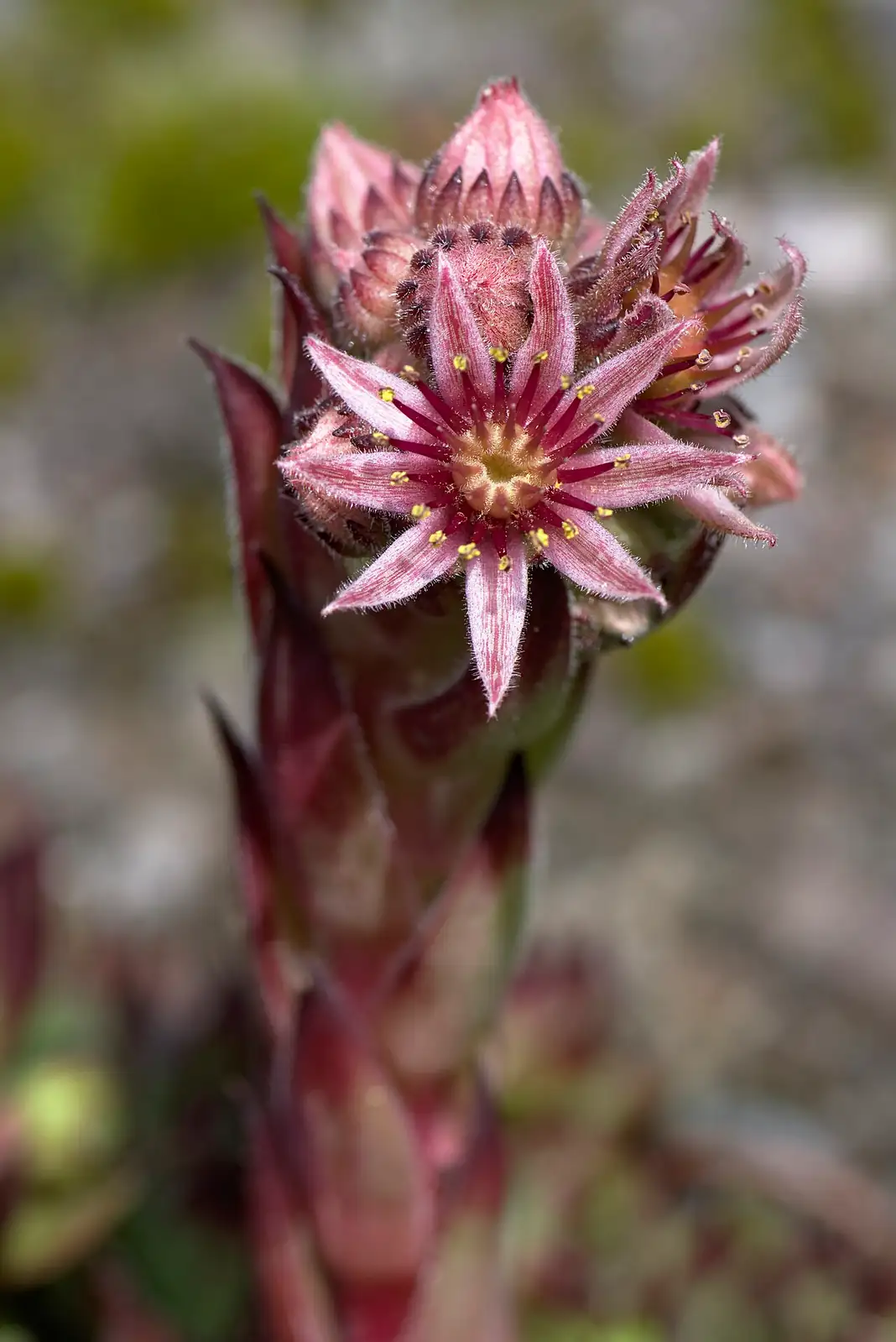
- Flower: Clusters of star-shaped flowers held on thick, upright stems rising above the rosettes.
- Flowering Season: Summer
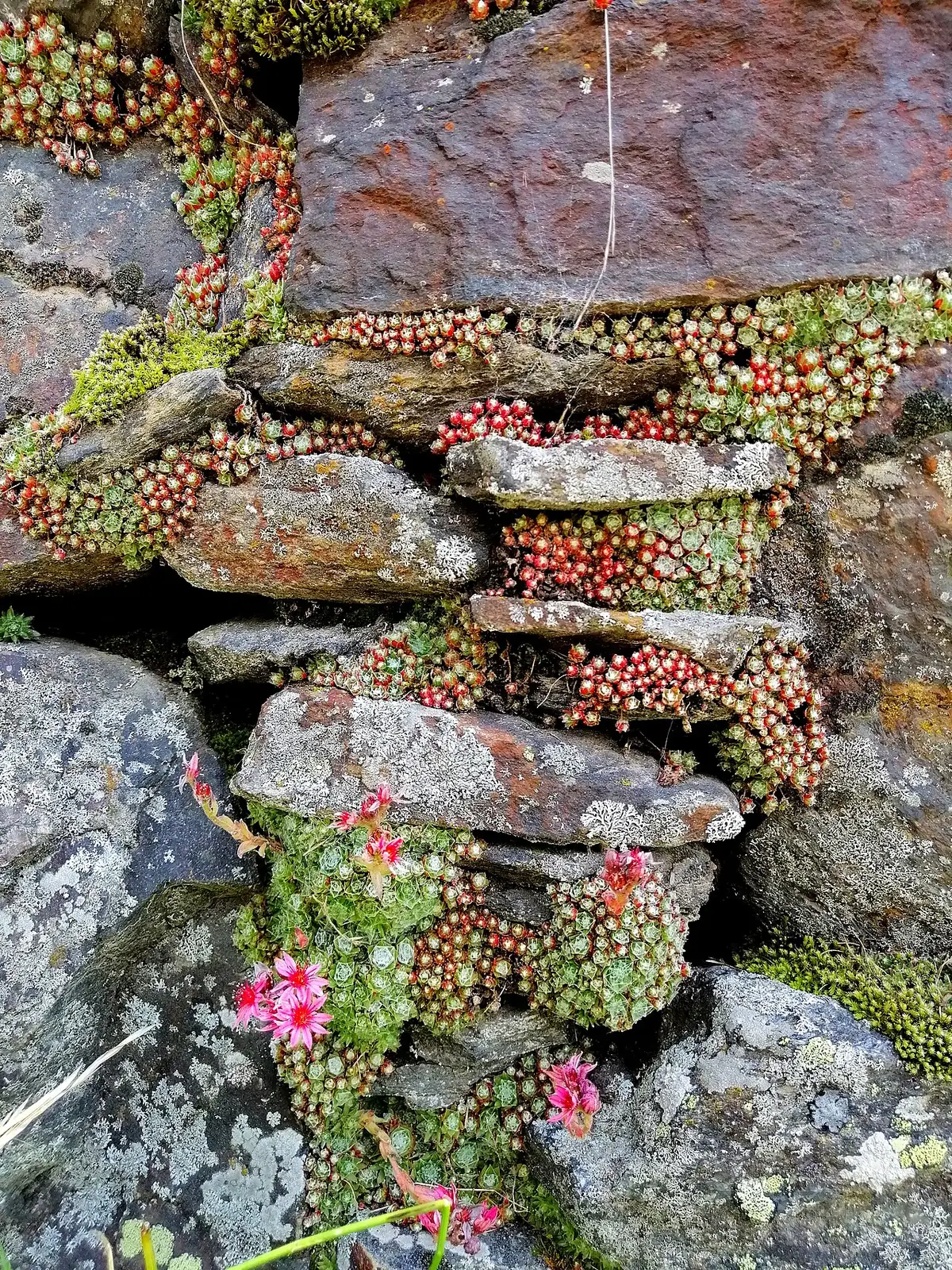
- Growth Habit: Rosette-forming and clump-forming through plentiful offsets (“chicks”).
Environment
Sunlight
Full sun to part sun; stronger light produces tighter rosettes and richer leaf color.
Temperature
Active growth is happiest around 10–27°C (50–81°F). Many Sempervivum are frost-hardy outdoors if planted in very well-drained conditions; winter wet is more dangerous than cold.
Humidity
Prefers low humidity and good airflow; avoid persistently damp conditions and stagnant air.
Soil
Very free-draining, gritty soil. Use a cactus/succulent mix amended with grit, or mix potting substrate with horticultural sand at about 2:1 to prevent waterlogging.
Placement
Best outdoors in a sunny, well-ventilated spot (rock garden, trough, green roof, or balcony). Indoors, place in the brightest/sunniest window you have.
Hardiness
Generally hardy in USDA Zones 4–9 (varies by species/cultivar); sensitive to winter wet and poor drainage.
Care Guide
Difficulty
Easy—so long as it gets strong light and fast drainage. The main way to lose it is keeping it wet for extended periods.
Buying Guide
Pick plants with tight, firm rosettes and clean leaves. Avoid any that look mushy, translucent, or blackened in the center (classic rot signs). Check between leaves for pests, and choose pots where the mix is dry to slightly dry rather than soggy.
Watering
Spring through autumn: water thoroughly only after the surface has dried, then let excess drain completely. Winter: water very sparingly—about once a month—and keep the mix mostly dry.
Fertilization
Spring through autumn: feed once a month with a balanced liquid fertilizer at 1/2 strength. Avoid heavy feeding, which can cause soft, stretched growth.
Pruning
After flowering, remove the spent flower stalk and the dead/dying rosette to tidy the clump and improve airflow for the offsets.
Propagation
Mostly by offsets (“chicks”). Once an offset has its own roots, gently separate and pot it up. Seed is possible for species, but named cultivars may not come true from seed.
Repotting
Use a small pot around 7.5–10 cm (3–4 in) with drainage holes and a gritty mix (e.g., potting substrate : horticultural sand ≈ 2:1). Repot every 2–3 years, ideally in spring, or when crowded/root-bound.
📅 Seasonal Care Calendar
Spring–autumn: water when the surface dries; feed monthly at half strength. Summer: mature rosettes may flower; remove spent stalks after bloom. Winter: keep cool and bright; water about monthly and avoid wet soil.
Pests, Diseases & Safety
Common Pests & Diseases
The most common problem is rot caused by overwatering or poor drainage. Pests can include mealybugs and aphids (often on flower stalks). Improve airflow, keep foliage dry, and treat pests with insecticidal soap or an appropriate systemic if needed.
Toxicity
Generally considered non-toxic to people and pets, though chewing/ingestion may cause mild stomach upset in sensitive animals.
Culture & Symbolism
Symbolism: Often linked with endurance, protection, and the idea of “living forever,” thanks to its toughness and its habit of constantly renewing itself through offsets.
History & Legends: Houseleeks have a long folk history in Europe, where they were traditionally grown on rooftops as a protective plant and admired for thriving in harsh, exposed places. The name Sempervivum literally points to its reputation for lasting—“always living.”
Uses: A favorite ornamental for rock gardens, alpine displays, troughs, green roofs, and sunny containers—grown for its color shifts, texture, and drought tolerance.
FAQ
Why did my rosette die after it flowered?
That’s normal. Each rosette is monocarpic, meaning it flowers once and then dies. The plant lives on through the offsets (“chicks”) around the original rosette.
Can I grow houseleeks indoors?
Yes, but they need very bright light (a sunny south- or west-facing window is ideal) and a fast-draining mix. Indoors, low light is the most common reason they struggle.
What’s the most common mistake with Sempervivum?
Keeping the soil wet for too long—especially in winter. Use gritty soil, a pot with drainage, and let the mix dry between waterings.
Fun Facts
- Sempervivum means “always living,” a nod to their resilience and their nonstop production of offsets.
- Many cultivars change color with the seasons, often turning redder in strong sun or cooler weather.
- They’re among the best succulents for colder climates—provided the soil drains fast and doesn’t stay wet in winter.