

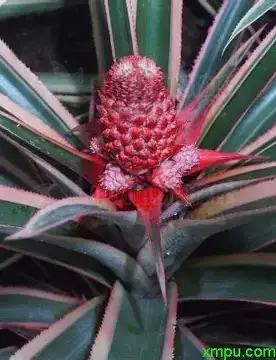
Plant Features
- Size: Typically 20–60 cm (8–24 in) tall with a spread of 20–60 cm (8–24 in), depending on the species/cultivar.
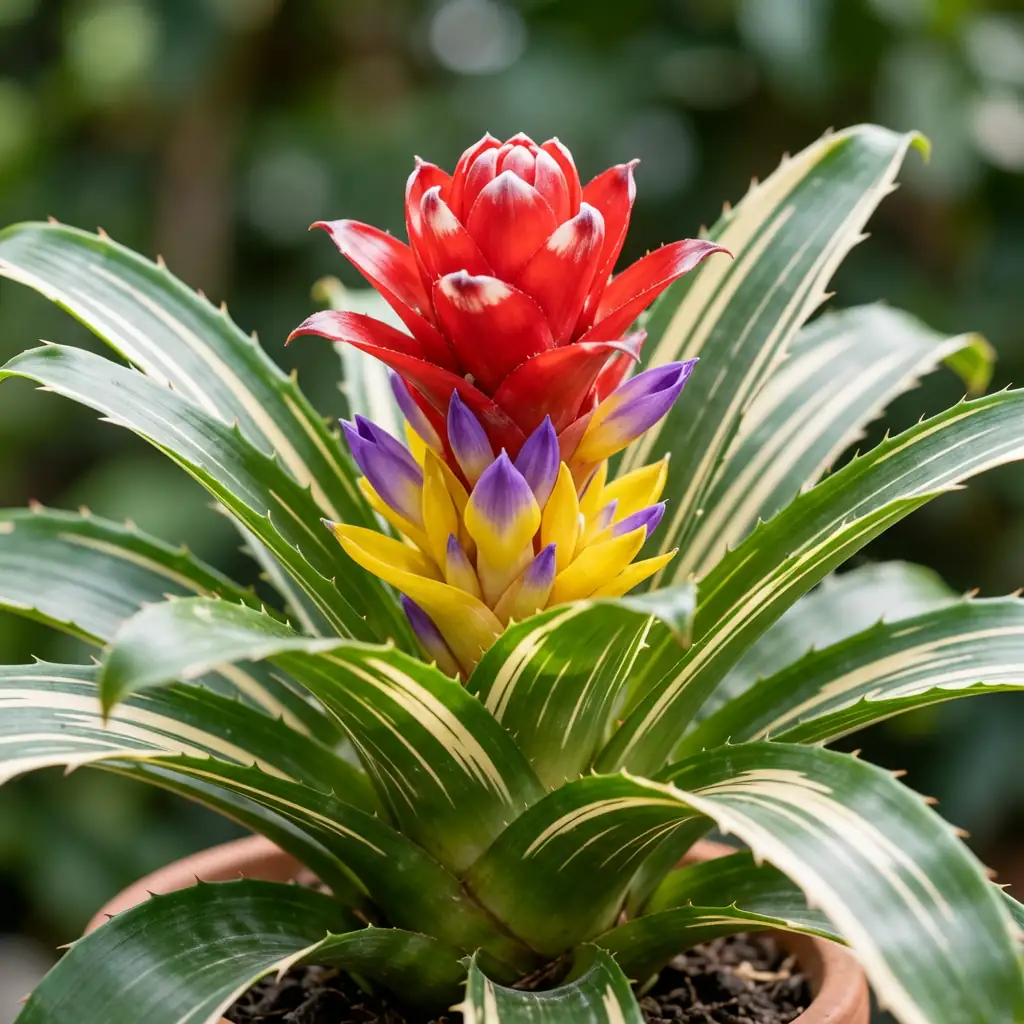
- Foliage: Leaves grow in a tight, vase-like rosette. Depending on the type, leaf margins may be smooth, toothed, or mildly spiny; the foliage is often glossy and architectural, sometimes subtly banded in certain Aechmea varieties.
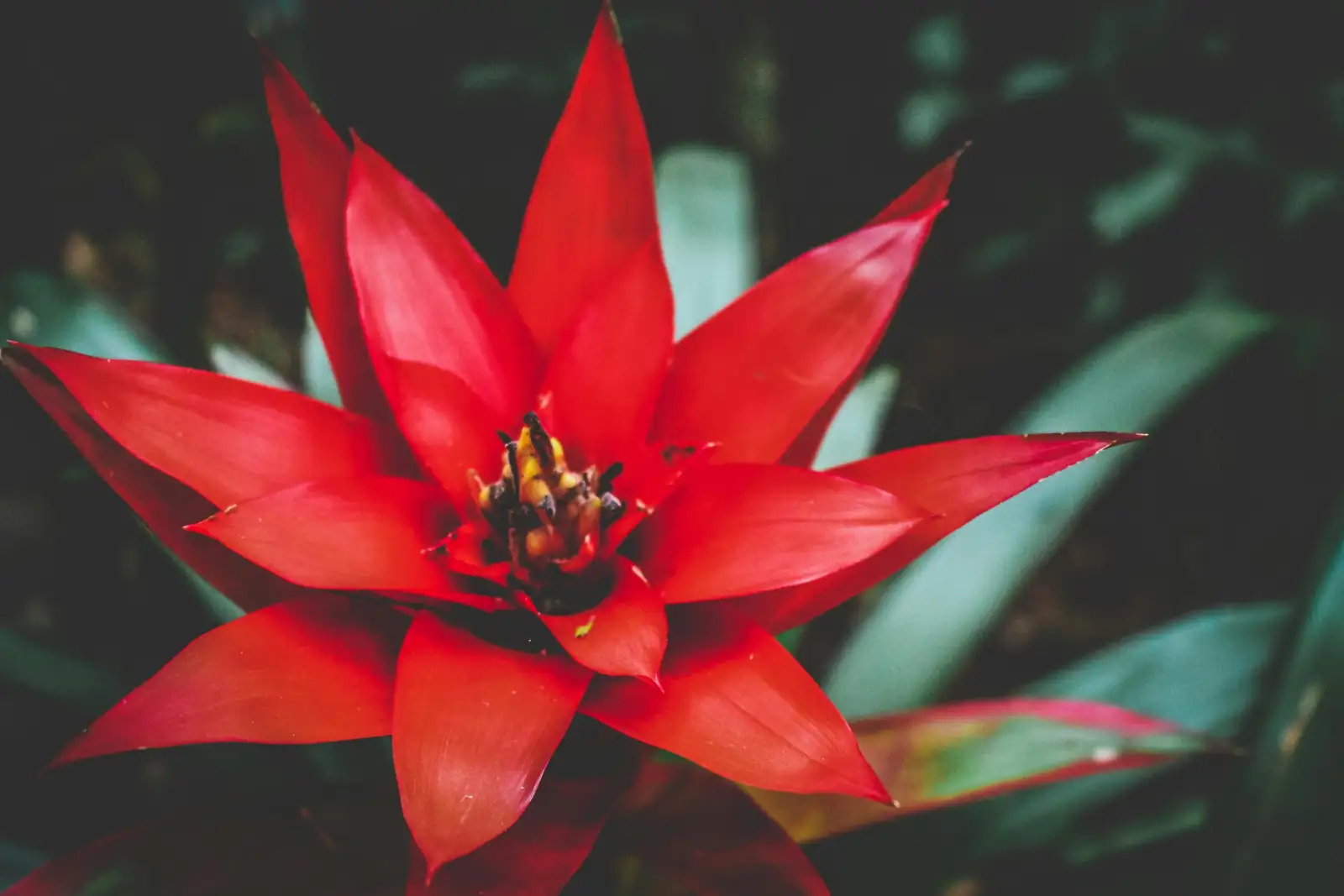
- Flower: The main show is the colorful bracts (commonly red, orange, pink, or yellow) that can last for weeks to months. The true flowers are smaller and short-lived, emerging from within or alongside the bracts.
- Flowering Season: Indoors: any time of year (often triggered by plant maturity and growing conditions rather than a fixed season).
- Growth Habit: Rosette-forming; often clumping over time as it produces pups (offsets). Many commonly grown bromeliads are epiphytic by nature.
Environment
Sunlight
Bright, indirect light (filtered/speckled light). A little gentle morning sun is usually fine, but avoid harsh midday sun, which can scorch the leaves and fade bract color.
Temperature
18–28°C (64–82°F) is ideal; protect from temperatures below 10°C (50°F) and keep away from cold drafts.
Humidity
Moderate to high humidity is best, roughly 50–70%. In drier homes, grouping plants together or using a humidifier can help reduce brown tips.
Soil
Very free-draining, airy mix—often orchid-bark based with perlite or similar. Avoid heavy, water-retentive potting soils that stay soggy.
Placement
Near an east- or north-facing window, or set back from a bright south/west window with a sheer curtain. Bright bathrooms or kitchens can work well if light is adequate.
Hardiness
Not frost tolerant; generally only suitable outdoors year-round in warm climates (roughly USDA Zone 10–12, depending on species).
Care Guide
Difficulty
Easy. Low-maintenance when kept warm, given bright filtered light, and grown in an airy, fast-draining medium.
Buying Guide
Pick a plant with firm, upright leaves and strong, clean color in the central bracts. Avoid plants with a soft or wobbly base, a blackened center, or any sour smell—these often point to rot. Slight browning at leaf tips can be normal, but skip plants with heavy spotting, sticky residue, webbing, or visible pests.
Watering
Water lightly in the potting mix and let excess drain—never leave the pot sitting in water. For “tank” (cup-forming) bromeliads, keep a small amount of clean water in the central cup and refresh it regularly (about weekly) so it doesn’t stagnate; in cooler, dimmer periods, reduce or empty the cup to lower rot risk.
Fertilization
Feed sparingly during active growth: a balanced fertilizer diluted to about 1/4 strength every 4–6 weeks is plenty. Overfeeding can dull bract color and may damage sensitive roots.
Pruning
Once the display fades, remove the spent bracts/flower spike. Trim brown tips or damaged leaves as needed. If your plant has spiny margins, gloves make cleanup much more comfortable.
Propagation
By pups (offsets). Separate pups when they’re about 1/3–1/2 the size of the mother rosette, then pot into a very free-draining mix. Keep warm and slightly humid until established.
Repotting
Repot only when the plant is crowded or unstable—often every 1–2 years. Use a relatively small pot and an airy mix; bromeliads typically prefer being slightly snug in their containers.
📅 Seasonal Care Calendar
Spring–summer: brighter light, a bit more frequent watering, and light feeding. Autumn–winter: keep temperatures ideally above 18°C (64°F), water less, avoid cold drafts, and be cautious with water left in the central cup.
Pests, Diseases & Safety
Common Pests & Diseases
Watch for mealybugs, scale insects, and spider mites (especially when indoor air is dry). Rot can develop from overwatering, poor drainage, or stagnant water in the central cup. Use an airy mix, keep good airflow, avoid waterlogging the base, and refresh cup water regularly.
Toxicity
Generally considered non-toxic to people and pets. The main hazard is mechanical: leaf edges can be sharp or spiny and may cause minor scratches or skin irritation.
Culture & Symbolism
Symbolism: Often linked with vibrant energy, hospitality, and tropical cheer—perfect for adding a “vacation vibe” to a room.
History & Legends: Bromeliads are signature plants of the Americas, with many species adapted to life in tree canopies where their rosettes catch water and debris. A handful of genera—especially Guzmania, Vriesea, and Aechmea—became global favorites because their colorful bracts stay showy for such a long time indoors.
Uses: Mainly grown as ornamental houseplants for their long-lasting color and architectural shape; commonly used in indoor displays and bright, humid rooms.
FAQ
Why is my bromeliad’s “flower” lasting so long?
Because the showy part is usually colored bracts rather than the true flowers. Bracts can look great for weeks to months, even after the small true flowers have finished.
Do bromeliads die after flowering?
Many popular bromeliads are monocarpic: the original (mother) rosette slowly declines after flowering. The good news is it usually produces pups (offsets) that take over and keep the plant going.
Can I keep water in the center cup?
If your bromeliad forms a central cup (“tank”), you can keep a small amount of clean water there and refresh it about weekly. In cooler or low-light conditions, reduce or empty the cup to help prevent rot.
Fun Facts
- Many bromeliads live as epiphytes in nature, growing on trees without being parasites.
- Some bromeliads form miniature “tanks” that can shelter tiny insects and other small wildlife in the wild.
- Pineapple (Ananas comosus) is a bromeliad—part of the same family as many popular ornamental houseplant types.


