Plant Features
- Size: Very small. Individual heads are typically about 1–4 cm (0.4–1.6 in) across (often 1–3 cm / 0.4–1.2 in). Plants may slowly form clumps with multiple heads over time. Common containers: a 10–12 cm (4–4.7 in) pot often holds about 3–5 plants; shallow pots are preferred because roots are relatively sparse and shallow. (Note: some sources overstate height; Lithops are generally low-growing rather than 15 cm / 6 in tall.)
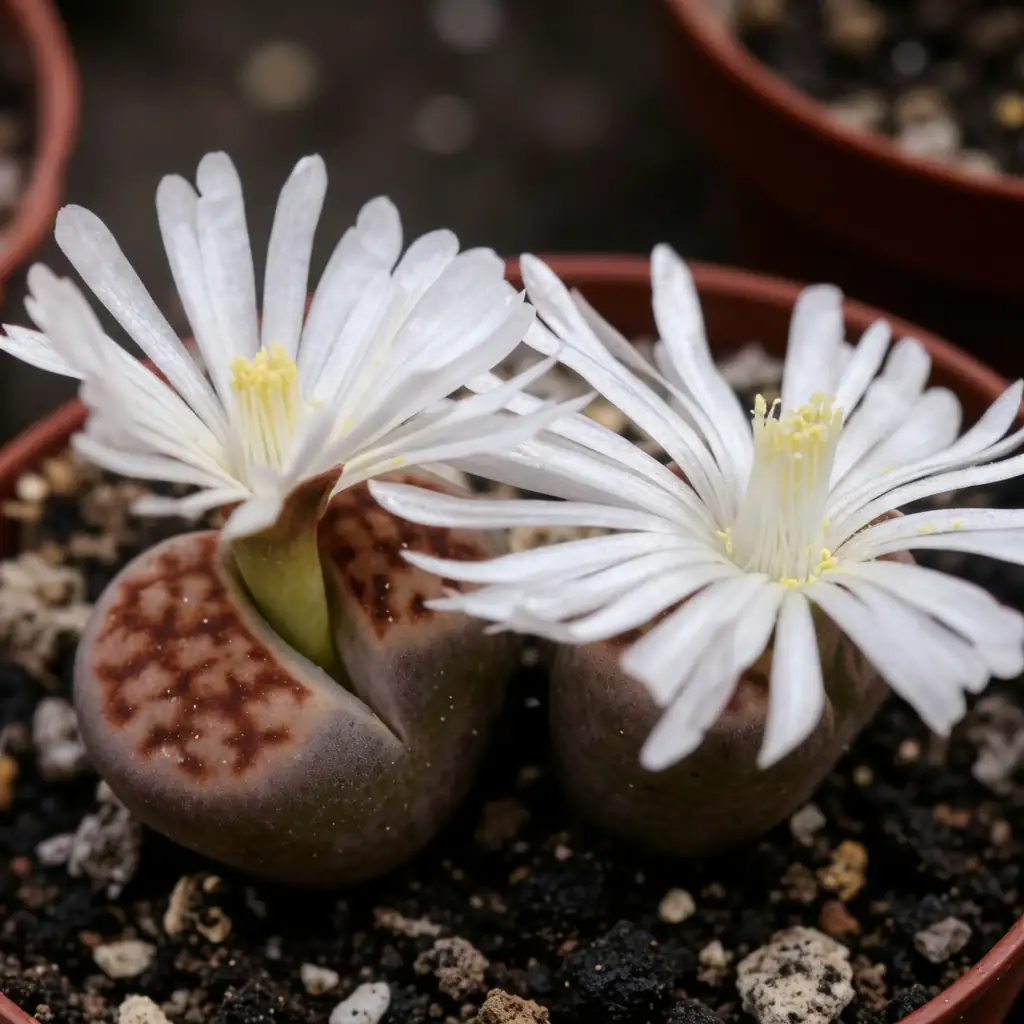
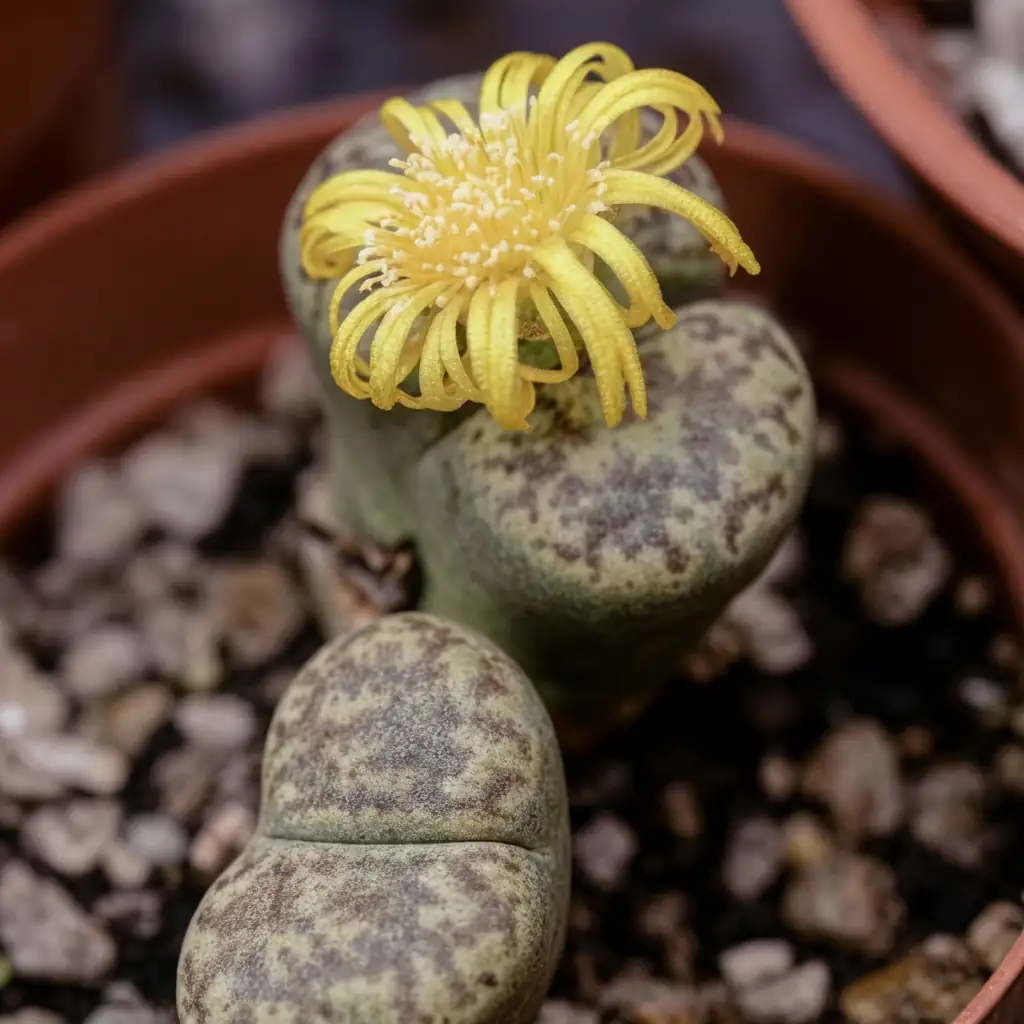
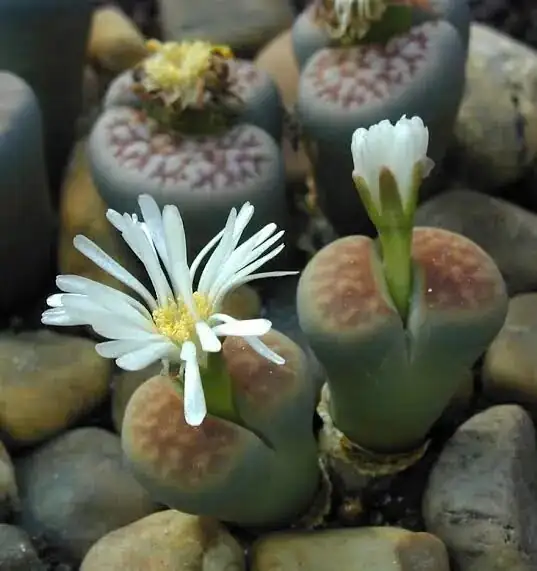
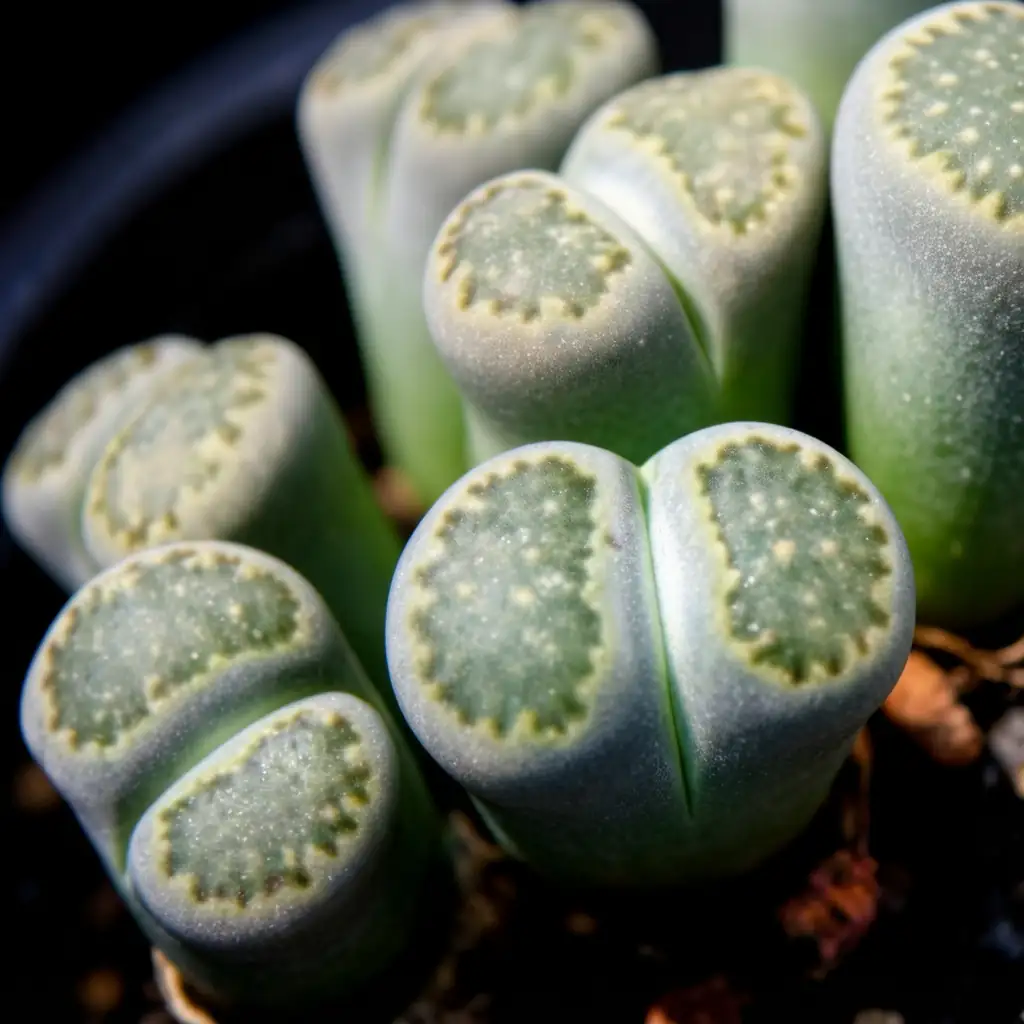
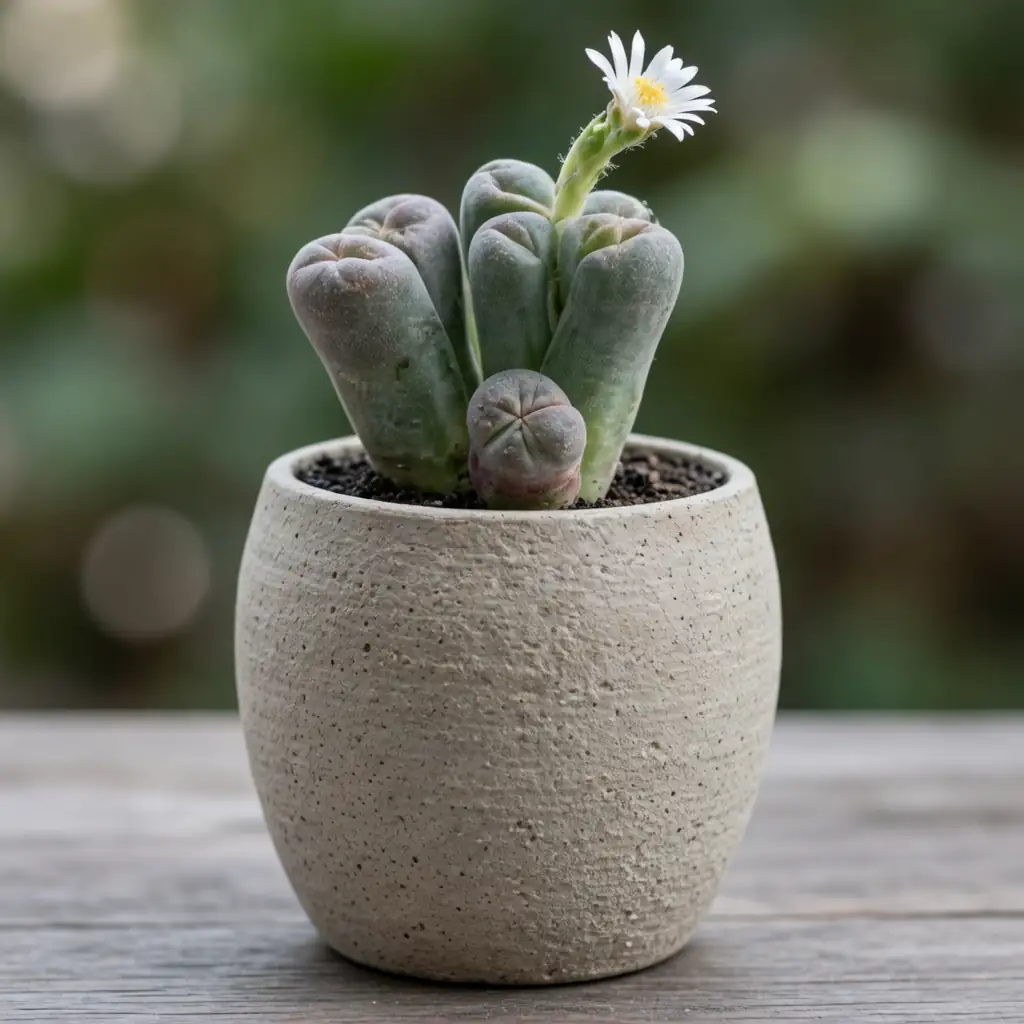
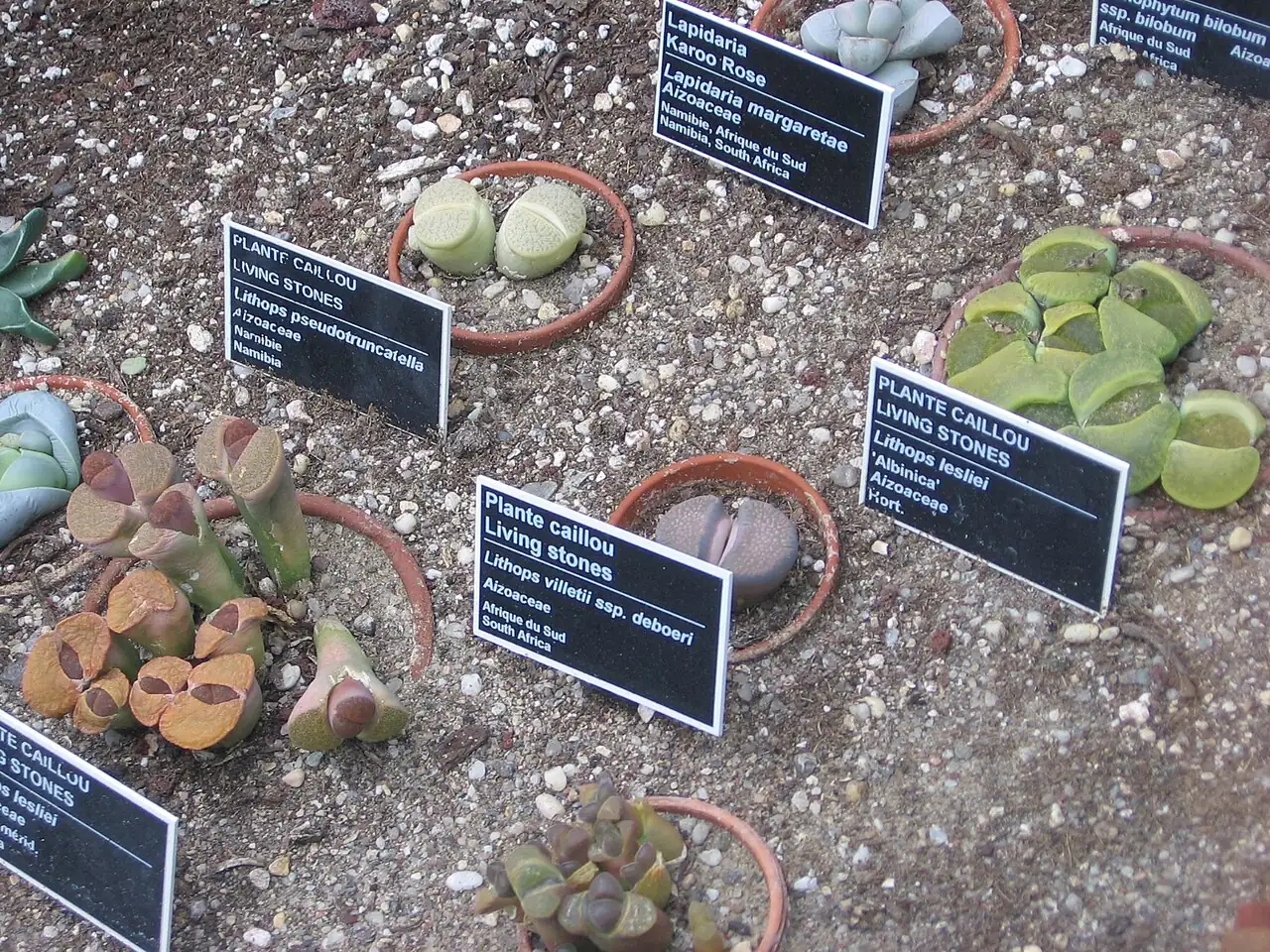
- Foliage: No obvious stems. Each head is a single body made of two thick, fused succulent leaves with a flat to slightly domed top and a clear central slit. Colors range from grey-green to tan and brown, often with speckles, mottling, marbling, and translucent “windows” that mimic surrounding stones.
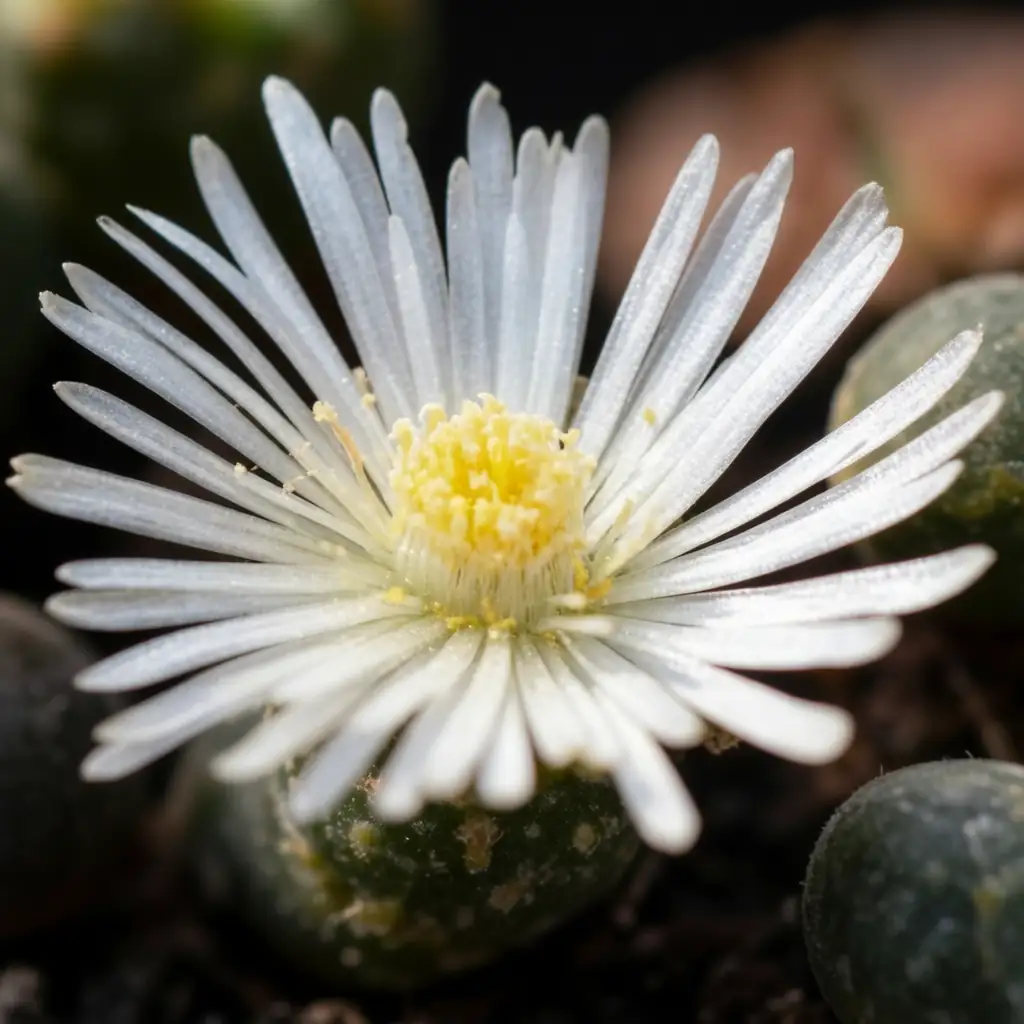
- Flower: A single, often surprisingly large daisy-like flower emerges from the central fissure, typically in late summer through autumn. Flowers are commonly white; some species/cultivars bloom yellow. Seed-grown plants usually need about 2–3 years to reach flowering size.
- Flowering Season: Late summer to autumn (fall)
- Growth Habit: Extremely compact, very low-growing succulent; slow-growing and may gradually form small clumps (multiple heads) over time.
Environment
Sunlight
Bright light to full sun. Ideally provide 6+ hours of direct sun daily; indoors, a bright south- or west-facing window is excellent (east can work too). In very hot summers or intense midday sun behind glass, give light midday shade and good airflow to prevent scorching. Newly purchased plants benefit from gradual acclimation to stronger sun.
Temperature
Best growth around 15–26°C (59–79°F). Keep warm and bright in winter; protect from frost. Many growers aim to keep it above about 12°C (54°F) in winter; prolonged cold below about 5°C (41°F) is risky.
Humidity
Prefers low humidity and excellent ventilation. Avoid persistently damp, stagnant air—especially when the soil stays wet, which encourages rot and fungus gnats.
Soil
A very fast-draining, gritty cactus/succulent mix with high mineral content (coarse sand, grit, pumice, etc.) and only a small organic component. Excellent drainage is essential. A practical DIY approach is potting soil mixed with coarse grit/sand at about 2:1 (by volume), then increasing mineral content if drying is still slow.
Placement
Brightest windowsill or sunroom; or an airy balcony/patio under cover from heavy rain. Avoid dark corners and persistently humid rooms. Prioritize airflow, especially during warm weather.
Hardiness
Tender, not frost-hardy. Roughly USDA Zone 10–11 outdoors only in mild, frost-free climates (and ideally kept on the dry side).
Care Guide
Difficulty
Moderate overall: it can be very easy once established if kept bright and dry, but it’s unforgiving of overwatering and poorly draining soil. Growing from seed is more challenging because seedlings are slow and need careful moisture control.
Buying Guide
Choose plants that are firm, plump, and not collapsing, ideally at least about 1 cm (0.4 in) across per head for beginners. Look for clean, crisp patterns and an intact paired body with a clear central slit. Avoid soft spots, mushy bases, blackened tissue, persistent wet soil, major scars/sunburn marks, or obvious pests.
Watering
Water sparingly and only when the mix is fully dry. A good beginner cue is the body starting to wrinkle/shrivel slightly—then water lightly and let it dry quickly again. In hot summer periods many Lithops slow down or rest: reduce watering sharply and provide light shade/airflow. As temperatures cool (late summer to autumn) you can water a bit more cautiously to support growth and flowering, but never keep it wet. In winter, keep mostly dry and bright. Important: during leaf replacement (when a new pair forms and the old pair dries away), avoid watering until the old leaves are largely dried—watering then can cause splitting and rot. Never leave water sitting in a saucer.
Fertilization
Feed very lightly. Options used by growers include: (1) a single feeding in autumn with a balanced liquid fertilizer at 1/4 strength, or (2) during active growth only, a very dilute low-nitrogen cactus fertilizer about every 2 weeks—then stop during summer rest and in winter. Whichever approach you choose, keep it weak and infrequent, and avoid splashing fertilizer solution onto the plant body.
Pruning
No routine pruning. During repotting you can remove fully dried, papery old leaves and dead tissue, but don’t pull off anything still fleshy.
Propagation
Most commonly by seed (often sown in spring to early summer). Seeds are tiny; typical germination temperatures are about 19–24°C (66–75°F), and sprouts may appear in 7–10 days, but seedlings grow very slowly and often take about 2–3 years to flower. Division is possible for multi-headed clumps when large enough. Leaf cuttings are generally unreliable for Lithops and are not the standard method.
Repotting
Use a small, shallow pot with a very gritty mix. A 7.5–10 cm (3–4 in) pot suits a single plant; a 10–20 cm (4–8 in) pot can hold small groups (often 3–5 plants). Repot infrequently—about every 2 years, or even less often if the mix remains open and fast-draining. Many growers repot in late winter to early spring (around the start of active growth). Decorative pebble top-dressing can improve stability and looks, but don’t let it trap moisture.
📅 Seasonal Care Calendar
Year-round: strong light, fast drainage, and airflow. Spring: light watering only after full dry-down; watch for leaf replacement and keep water minimal until old leaves dry. Summer: in heat, many plants rest—shade lightly, ventilate well, and water much less. Late summer to autumn: cautious watering may increase slightly if actively growing/flowering; flowers often appear now. Winter: keep bright, warmer than about 12°C (54°F) for typical indoor culture, and keep mostly dry.
Pests, Diseases & Safety
Common Pests & Diseases
The biggest enemy is rot from overwatering or slow-draining soil. Also watch for mealybugs (including root mealybugs), aphids, fungus gnats in overly moist mixes, and occasional leaf spot when airflow is poor. Prevention is mostly cultural: gritty mix, thorough dry-down, bright light, and ventilation. Quarantine new plants and consider repotting into clean substrate if pests are suspected. Outdoors/near open windows, birds or rodents may peck at plants.
Toxicity
Generally regarded as non-toxic to humans and pets, but it’s not food. Ingestion may cause mild stomach upset, and the small, firm bodies can be a choking hazard for small children or curious pets—best kept out of reach.
Culture & Symbolism
Symbolism: Often linked with resilience, toughness, and “beauty in disguise,” because it survives harsh deserts while looking like an ordinary pebble.
History & Legends: Lithops are one of nature’s best camouflage artists. In the deserts of southern Africa, their stone-like patterns help them blend into gravel—reducing grazing pressure and limiting sun stress. It’s a classic example of plant mimicry that fascinates collectors worldwide.
Uses: Primarily an ornamental novelty succulent for small pots, windowsills, desks, and bright display shelves. It’s also a fun “teaching plant” for kids and adults alike—perfect for showing off adaptation and camouflage in plants.
FAQ
What light do Living Stones need?
Bright light to full sun. Indoors, give the brightest window you have—often south or west—and aim for around 6+ hours of direct sun if possible (with light midday shade in extreme summer heat).
How do I water Living Stones without killing them?
Wait until the potting mix is completely dry, and ideally until the body shows slight wrinkling. Then water lightly and let it dry quickly again. Keep mostly dry in winter, and avoid watering during leaf replacement until the old leaves have largely dried.
What temperature is best for Living Stones?
They’re happiest around 15–26°C (59–79°F). Protect from frost; for indoor winter care, many growers keep them above about 12°C (54°F), and prolonged cold below about 5°C (41°F) is risky.
What pot and soil should I use?
Use a shallow pot and a very gritty, fast-draining cactus/succulent mix with lots of mineral material (grit/pumice/coarse sand). A 7.5–10 cm (3–4 in) pot works for one plant; 10–12 cm (4–4.7 in) can hold about 3–5 plants.
How can I tell Lithops from Conophytum when buying?
Lithops usually looks like two fused lobes with a clear central slit dividing the top into two halves. Conophytum often has more of a single, rounded body with a small opening or “mouth” at the top, and can come in many different shapes.
Fun Facts
- They can be so convincingly stone-like that if you top-dress the pot with pebbles, you may genuinely “lose” the plant in plain sight.
- The flower emerges from the central slit and can look oversized compared with the tiny plant body.
- Although seeds may germinate in about 7–10 days, Lithops are famously slow growers—often taking 2–3 years from seed to first bloom.
- Each year, a new pair of leaves forms and replaces the old pair, which gradually shrivels into a papery shell.