Plant Features
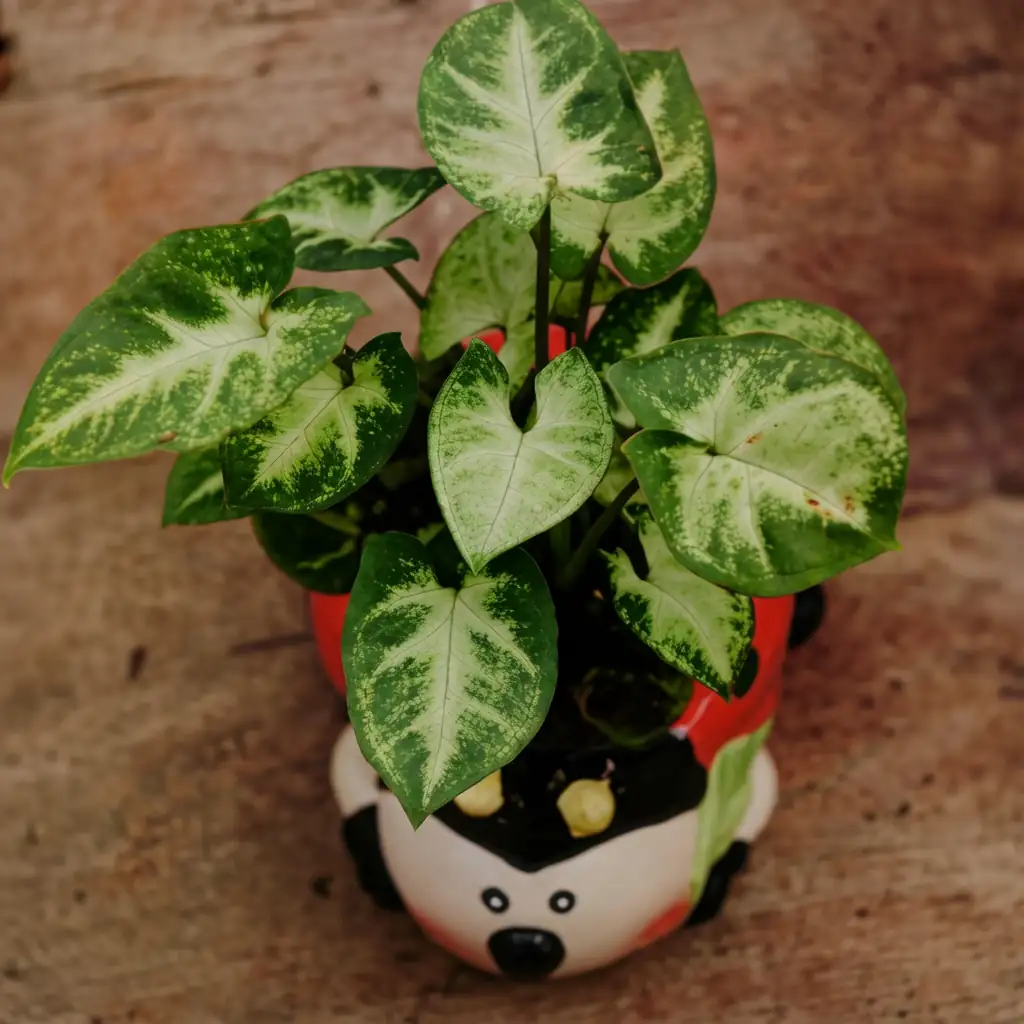
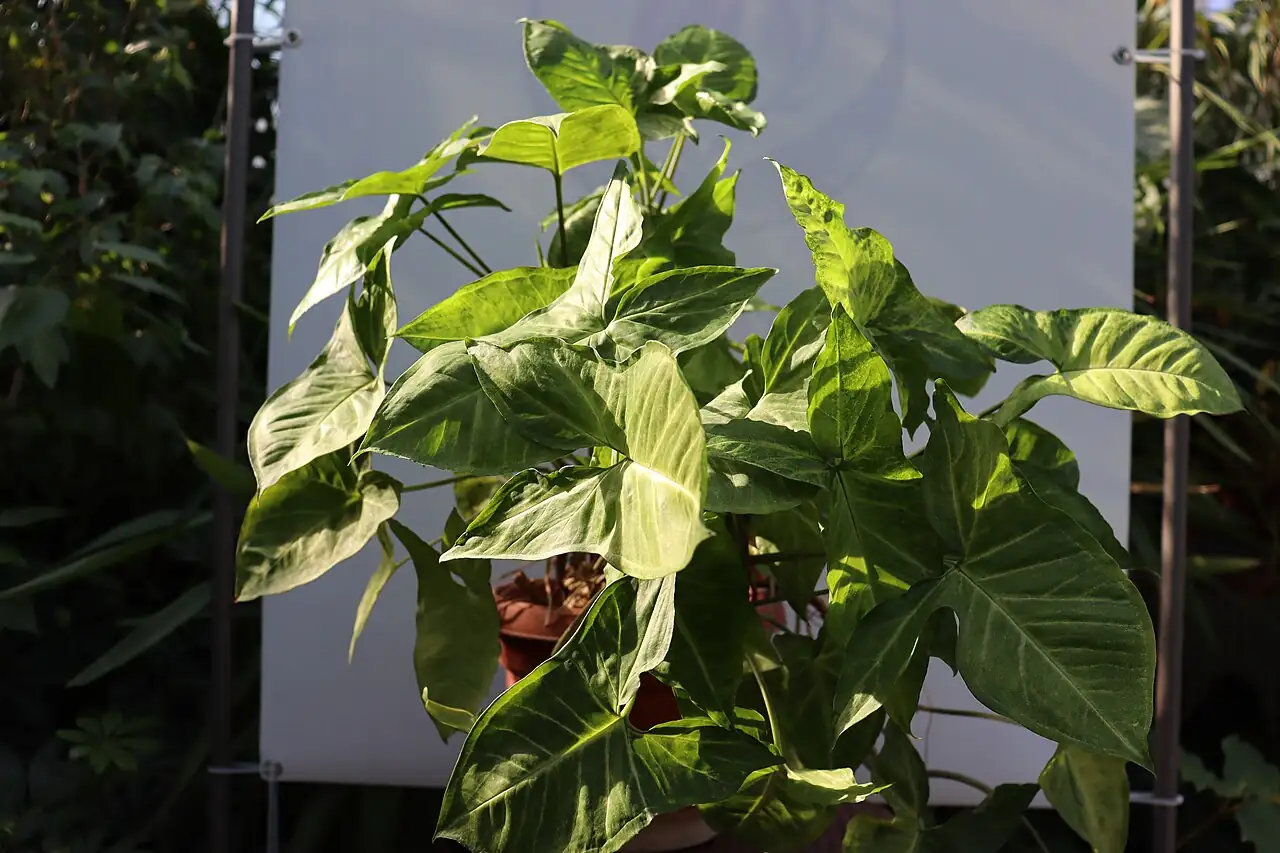
- Size: Indoors it’s often kept compact by pinching at about 15–20 cm (6–8 in) tall, but if allowed to mature and climb or trail it can reach around 90 × 60 cm (35 × 24 in). Typical pot sizes are 10–15 cm (4–6 in) in diameter for small plants, or 15–20 cm (6–8 in) for fuller specimens; hanging baskets are commonly 15–18 cm (6–7 in) wide. Stems elongate with age and will trail or climb when given support.
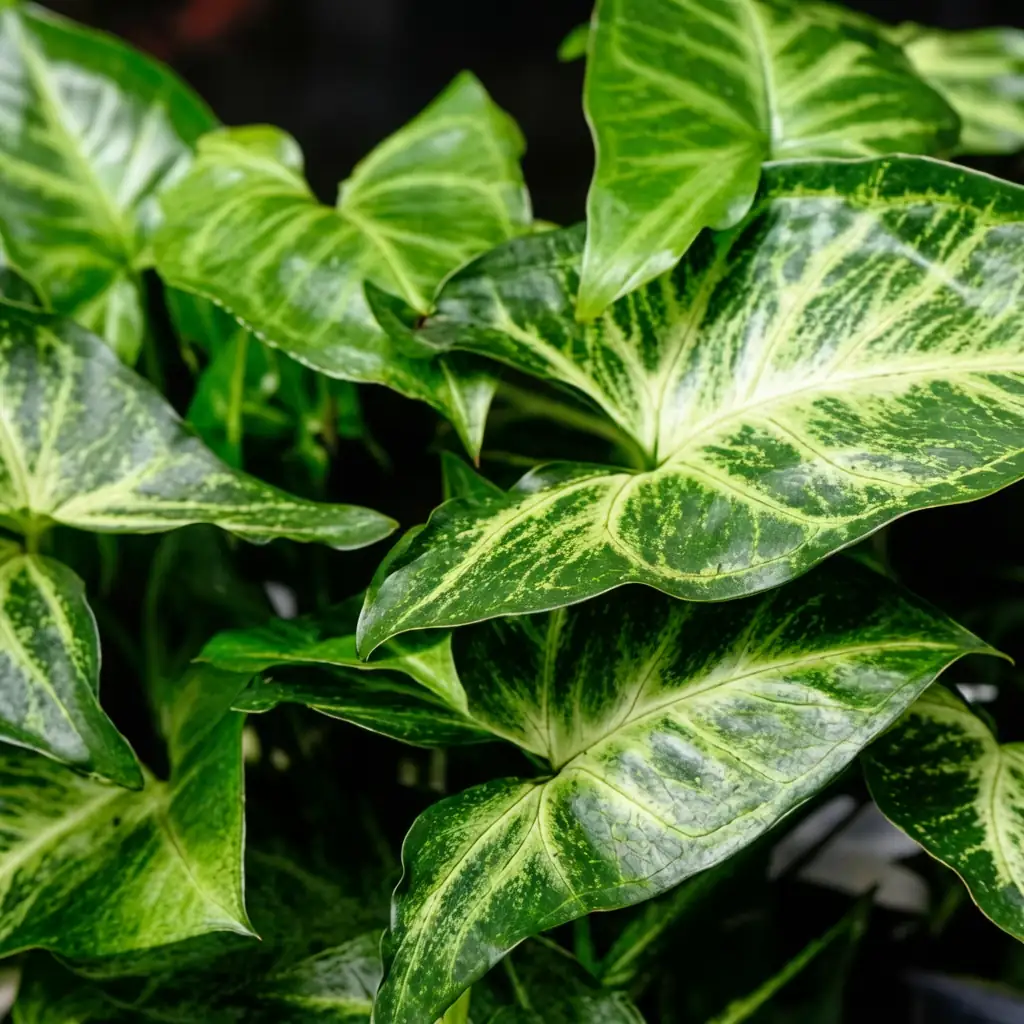
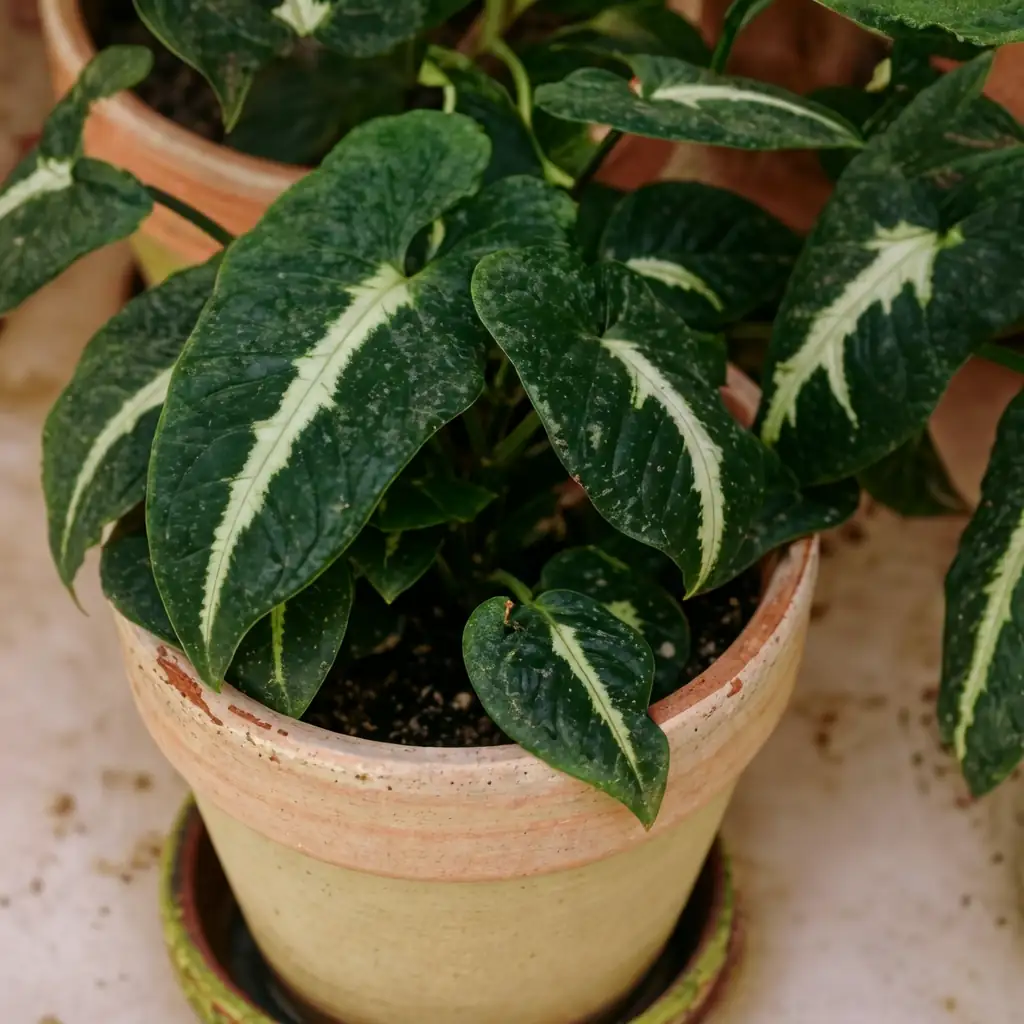
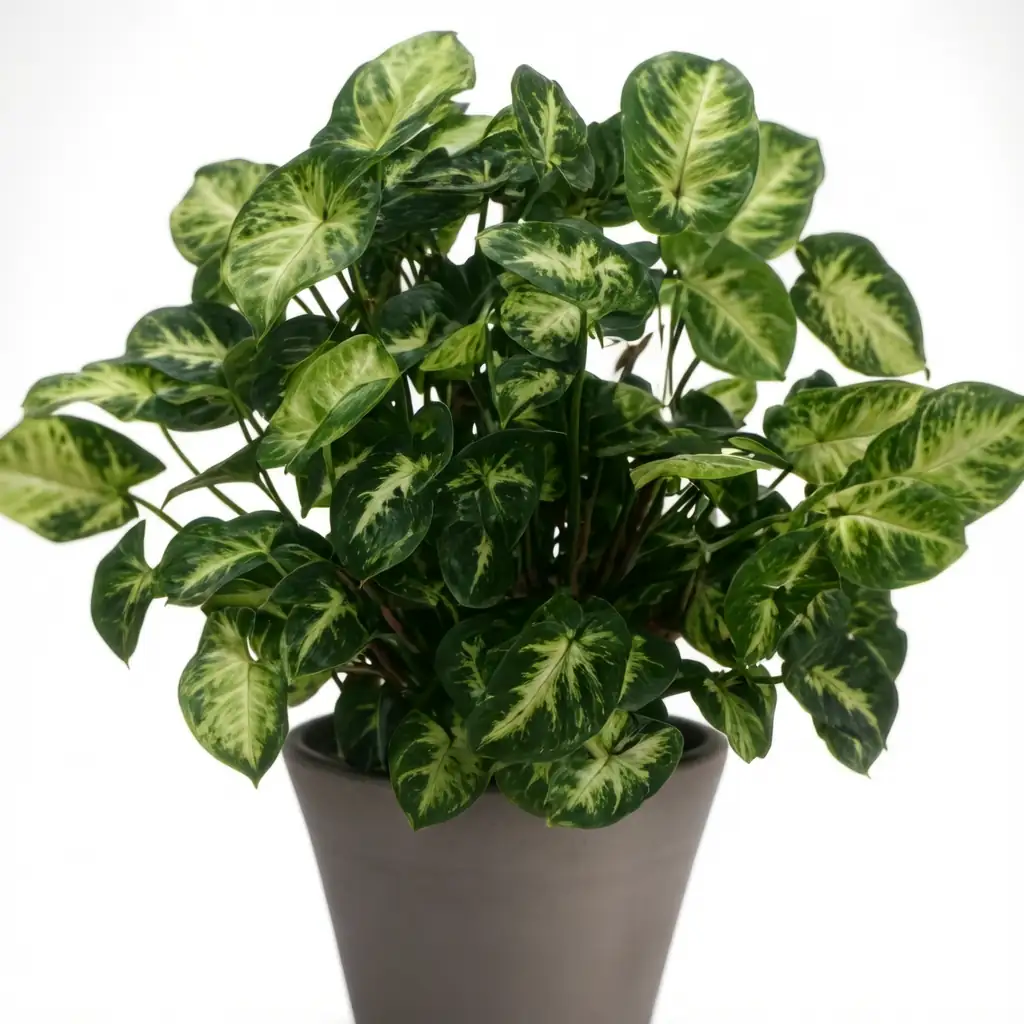
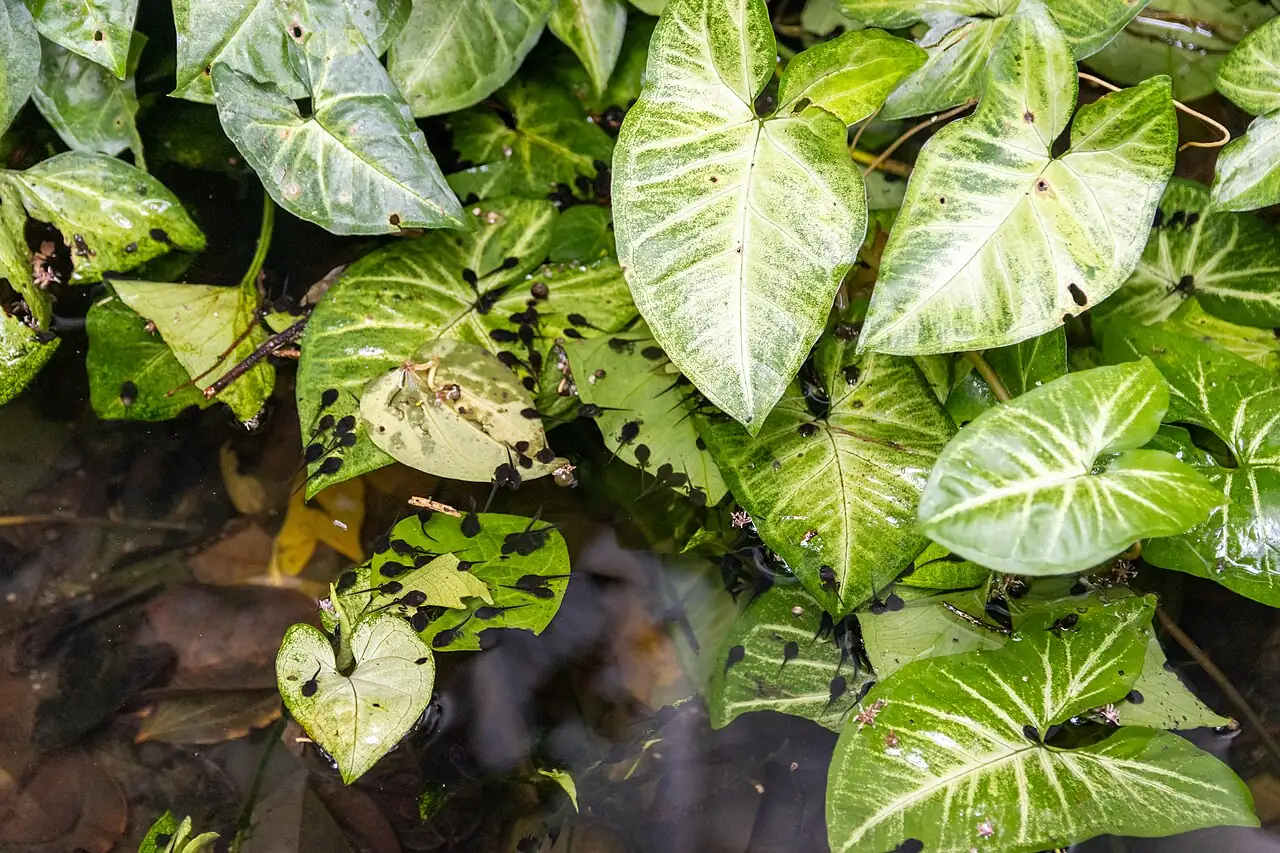
- Foliage: Leaves are glossy and fresh-looking, starting as thick, arrow-shaped blades with clear veining; many popular cultivars show creamy-white and green variegation or mottling (solid-green forms are common too). Variegated plants generally want brighter indirect light to keep their pattern. Stress signs are pretty readable: chilly conditions (especially below about 5°C/41°F) can trigger yellowing and leaf drop, while prolonged dryness may lead to smaller, rougher-textured leaves.
- Flower: Mature plants can produce typical aroid flowers: a pale spathe surrounding a spadix. Indoors this is rare and the blooms are small and not especially showy—this plant is grown for its foliage.
- Flowering Season: Sporadic indoors; if it flowers, it’s most often in summer (sometimes extending into early autumn in warm conditions).
- Growth Habit: Evergreen tropical aroid vine that starts compact and becomes climbing or trailing with age. It can sprawl, trail from shelves and baskets, or climb when tied to a stake or moss pole; it naturally enjoys warm, humid, lightly shaded conditions.
Environment
Sunlight
Bright, indirect light is ideal; it tolerates partial shade. Avoid harsh direct sun, which can scorch leaves. A great placement is near an east window, near a north window, or set back from a bright south/west window with a sheer curtain or other filtered light. Variegated forms typically need brighter indirect light than solid-green plants.
Temperature
Grows best around 15–23°C (59–73°F) but can tolerate roughly 15–29°C (59–84°F). New growth usually starts once temperatures rise above about 10°C (50°F). Keep it above about 12°C (54°F) to avoid chilling damage; below about 5°C (41°F), yellowing and leaf drop become likely. Growth may slow when temperatures climb above about 30°C (86°F).
Humidity
Prefers moderate to high humidity. It’s happiest in naturally humid rooms (kitchens/bathrooms) or with help from a humidifier, pebble tray, or occasional misting (aim for earlier in the day so leaves dry by evening).
Soil
Use a loose, fertile, well-draining aroid mix—think peat/coco-based potting mix blended with perlite and/or bark, plus optional leaf mold/compost for richness. Slightly acidic and airy is the goal: evenly moist but never waterlogged.
Placement
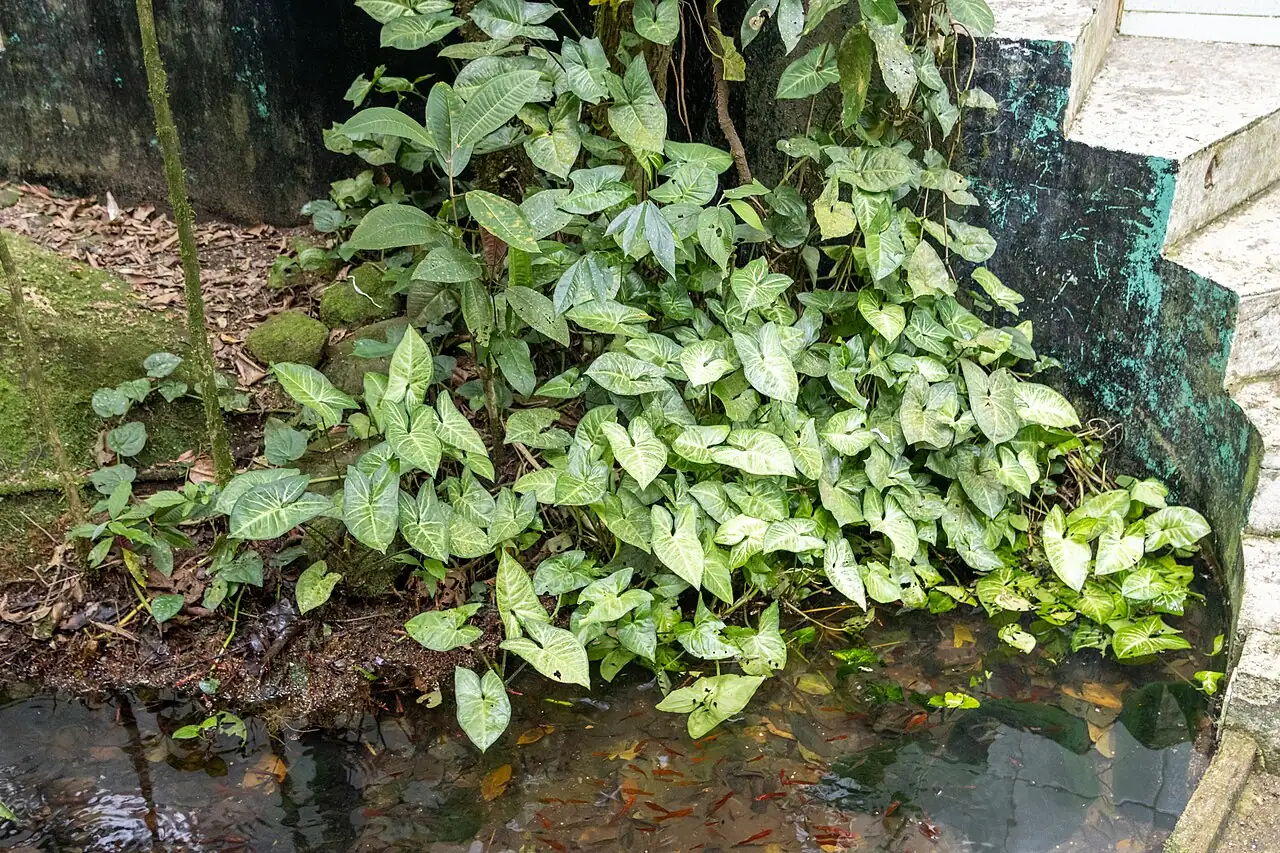
Bright indoor rooms such as living rooms and offices; especially good near a bright window with filtered light. Also well-suited to hanging baskets or trained on a support pole. In frost-free climates, it can decorate sheltered, humid, shaded outdoor corners (courtyards, stair corners, near walls or pond edges).
Hardiness
Not frost-hardy; best treated as a houseplant in most climates. Outdoors year-round only in frost-free regions, roughly USDA Zone 10–12.
Care Guide
Difficulty
Easy overall (easy to moderate if your home is very dry or cold). It’s forgiving as long as it’s kept out of strong sun, not allowed to sit in soggy soil, and protected from cold drafts.
Buying Guide
Choose a plant with a balanced shape, firm stems, and clean, glossy leaves. Avoid yellowing, broken stems, soft spots, or any sour/waterlogged pot smell (possible root issues). Check leaf undersides for pests (whiteflies, aphids, mites, mealybugs, scale). If you want an upright look, pick a fuller specimen and plan to provide a moss pole or prune regularly; protect leaves and nodes from snapping during transport.
Watering
Aim for lightly, evenly moist soil during active growth, with good drainage. A practical rhythm: spring through autumn, water when the top layer of mix dries (often about weekly in warm weather). Never let the pot sit in water, and avoid constantly wet soil, which can cause stem/root rot. In winter, reduce watering (often about every 2 weeks), letting the top of the mix dry slightly between waterings—especially in cooler rooms. Yellowing and leaf drop are commonly linked to low light, overwatering/root damage, temperature stress, or disease; adjust conditions and check roots if problems persist.
Fertilization
During the main growing season (spring through summer—often May–August), feed every 2 weeks with a balanced liquid fertilizer (e.g., 20-20-20) diluted to half strength. Reduce or pause feeding in winter. Don’t overdo nitrogen, which can make growth leggy with weak stems.
Pruning
Pinch the growing tips when the plant reaches about 15–20 cm (6–8 in) to encourage branching and a bushier shape. In spring, cut back leggy stems to tidy and thicken the plant. Remove yellow leaves anytime. After 2–3 years, a harder cut-back can rejuvenate an old, congested plant and spark fresh shoots.
Propagation
Very easy from stem cuttings, best from May–October when temperatures are above 15°C (59°F). Take tip cuttings with 2–3 nodes, or cut longer stems into sections with 2–3 nodes. Root in water or in moist sand/vermiculite/peat-based mix; under warm conditions, roots often form in about 10–15 days. Pieces that already show aerial roots can often be potted straight into mix. For quick bulk plants, cut long summer stems into short sections and root them, then train the new plant onto a support.
Repotting
Repot in spring annually or whenever roots crowd the pot. Typical sizes are 10–15 cm (4–6 in) for small pots, 15–20 cm (6–8 in) for fuller plants, and 15–18 cm (6–7 in) baskets. If it has reached the size you want, you can avoid upsizing and instead refresh the top 2–3 cm (1–1.2 in) of potting mix each spring. When repotting mature plants, it’s fine to trim back some older roots and shorten overly long trailing stems for balance.
📅 Seasonal Care Calendar
Spring: prune for shape, repot or refresh topsoil, restart feeding, and water as growth picks up. Summer: keep in bright filtered light and steady moisture; boost humidity; propagate from cuttings (best results in warmth). Autumn: move to a slightly brighter spot as light levels drop; water a bit less. Winter: keep warm (above 12°C/54°F), water sparingly, and pause/reduce fertilizer; protect from drafts and dry heat.
Pests, Diseases & Safety
Common Pests & Diseases
Pests: spider mites (especially in dry air), mealybugs, scale, whiteflies, and aphids. Prevention helps—wipe leaves, raise humidity, and keep airflow gentle but consistent. Treat early with insecticidal soap or horticultural oil and repeat as needed. Diseases: leaf spot and gray mold (Botrytis) can show up with poor airflow and wet foliage; remove affected tissue, improve ventilation, and avoid wet leaves late in the day. Yellowing often points to overwatering/root stress; crispy edges may suggest low humidity or underwatering.
Toxicity
Toxic if chewed or ingested by people or pets because it contains insoluble calcium oxalate crystals. Sap can irritate skin and eyes. Keep out of reach of children and animals, and consider gloves if you’re sensitive.
Culture & Symbolism
Symbolism: Commonly linked with growth, adaptability, and fresh beginnings—fitting for a plant that quickly changes form as it climbs or trails. In some home-plant traditions it’s also casually described as a “good luck” greenery for the home.
History & Legends: A long-time staple of indoor plant culture and widely grown in many cultivars, especially variegated forms. It’s prized for dependable performance in homes and its ability to be styled in multiple ways (compact, trailing, or climbing).
Uses: Primarily an ornamental foliage plant for indoor spaces—great on tabletops and shelves, in hanging baskets, or trained up a moss pole. In frost-free climates it can also be used in sheltered, humid shaded outdoor niches. It’s also popular in bottle gardens/terrariums and miniature plant arrangements because it adapts well and propagates easily.
FAQ
Why are my arrowhead vine leaves turning yellow and dropping?
The usual culprits are low light for long periods, overwatering (or poor drainage leading to root damage), temperature stress (too cold or too hot), or disease. Move it to brighter indirect light, let the top of the mix dry slightly before watering again, keep it away from drafts/heat blasts, and check roots if the pot stays wet.
Is this plant toxic?
Yes. All parts are toxic if chewed or ingested, and the sap can irritate skin and eyes. Keep it away from pets and children.
What light does arrowhead vine need?
Bright, indirect light is best, and it tolerates partial shade. Avoid strong direct sun. Variegated types usually need a brighter spot than solid-green plants.
How should I water it?
Water when the top layer of potting mix dries during spring through autumn (often about weekly), keeping soil evenly moist but never soggy. In winter, water less (often about every 2 weeks). Don’t let the pot sit in water.
When should I prune or repot?
Prune in spring and pinch tips anytime to keep it compact and bushy. Repot in spring when rootbound; if you like the current size, refresh the top 2–3 cm (1–1.2 in) of soil each spring instead of moving up a pot size.
Fun Facts
- Its leaf shape often changes with age—mature leaves can look more lobed than the classic “arrowhead” juvenile leaves.
- It can be trained to climb a moss pole for a taller, tidier look and often larger leaves, or allowed to trail for a cascading effect.
- Stem cuttings can root quickly in warm conditions—often in about 10–15 days.
- It can be propagated in water, or directly potted from stems that already have aerial roots.
- Indoor flowers are uncommon and usually not very showy; it’s a foliage star.