Plant Features
- Size: Typically 20–45 cm (8–18 in) tall in pots/bowls; occasionally up to about 76 cm (30 in) depending on Narcissus type and growing conditions. Clump spread is usually about 10–20 cm (4–8 in), but may reach 15–30 cm (6–12 in) with larger plantings.
- Foliage: Narrow, strap-shaped leaves in deep green to blue-green, emerging in a dense tuft from the bulb. Leaves are linear and slightly fleshy; after flowering they gradually yellow and die back as the bulb recharges. In traditional display training (including carving/shaping), leaves and stems may be guided into curved or fan-like sculptural forms.
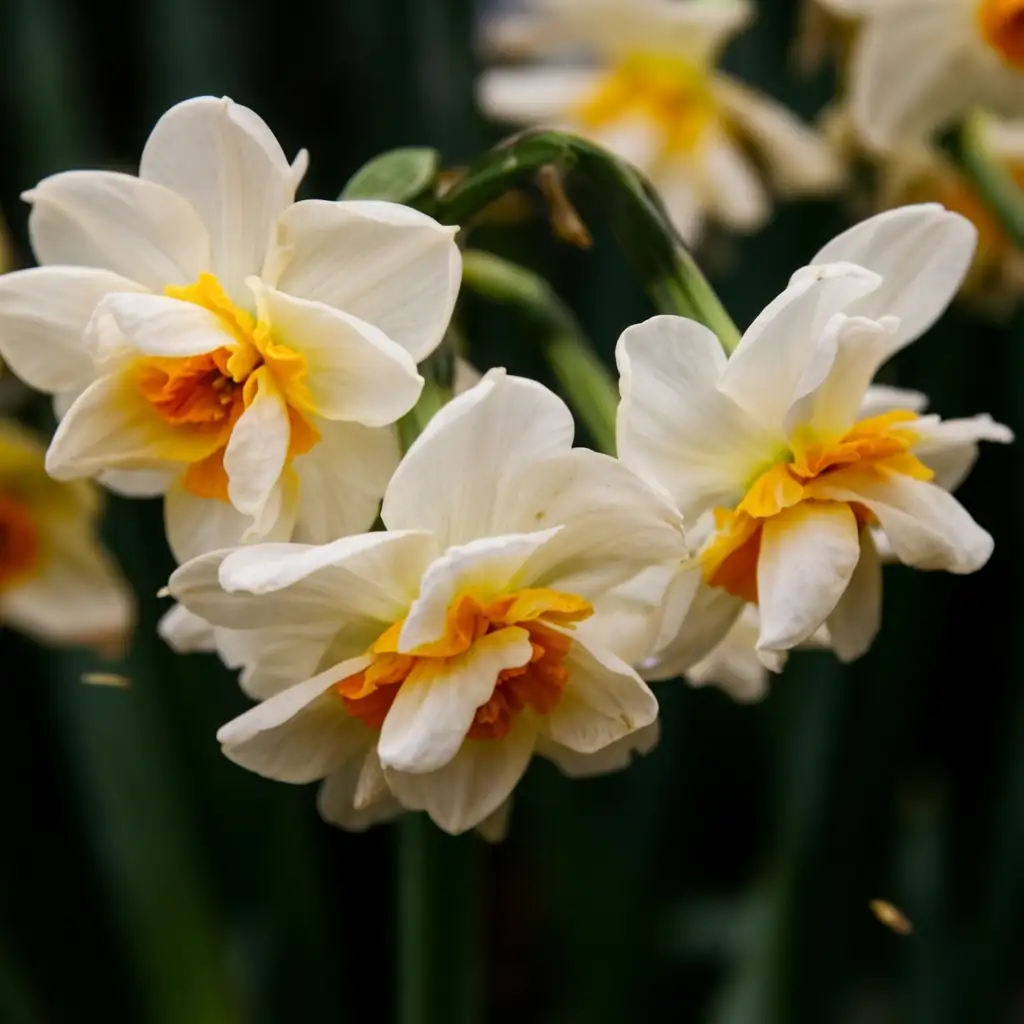
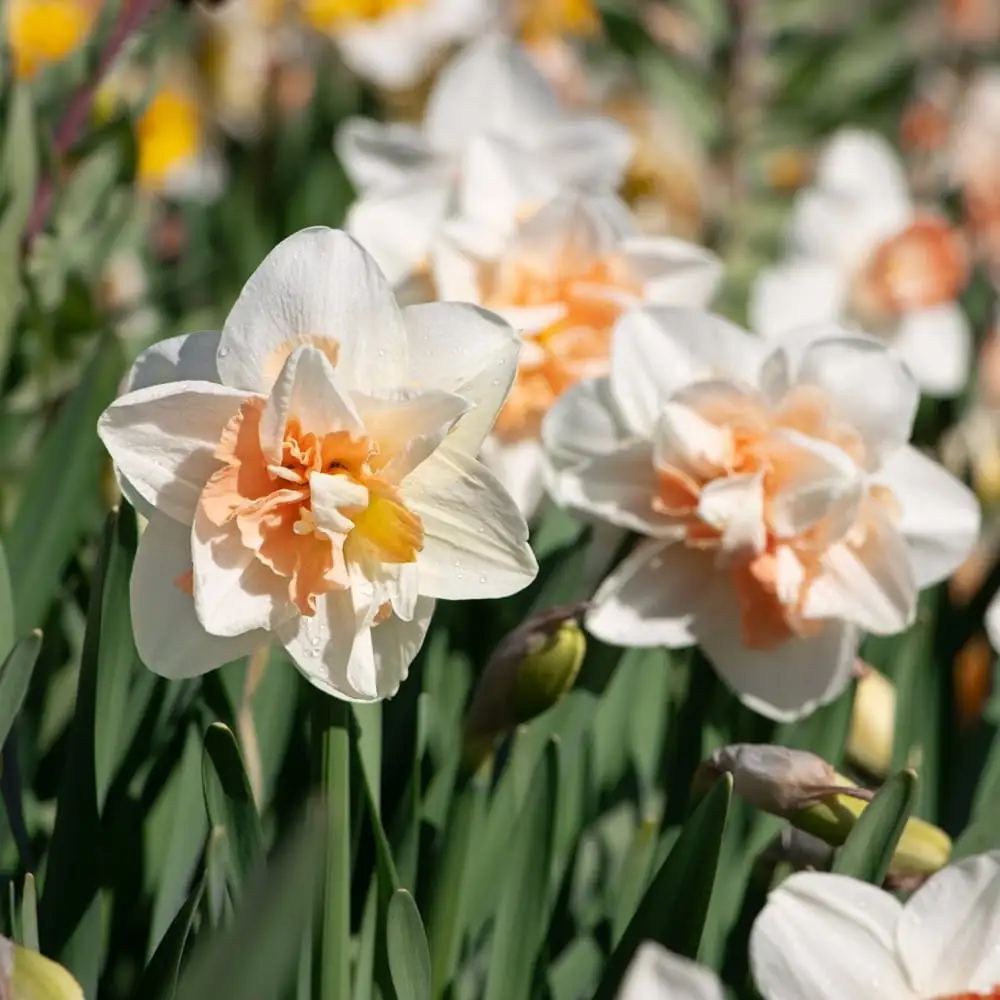
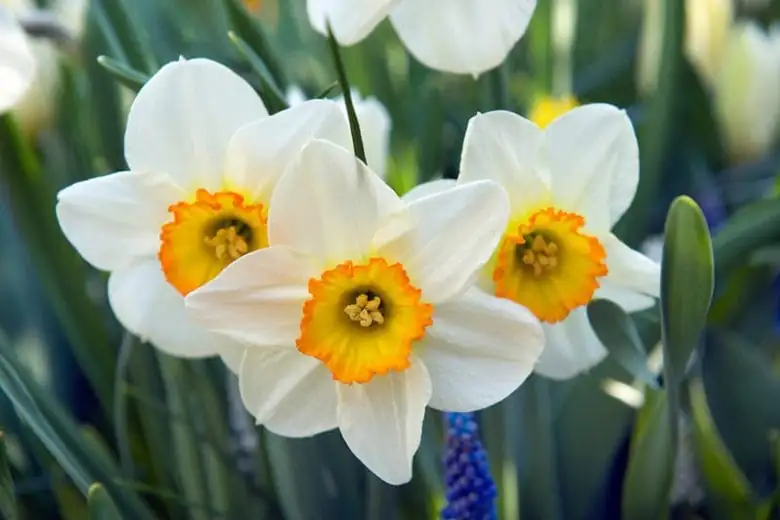
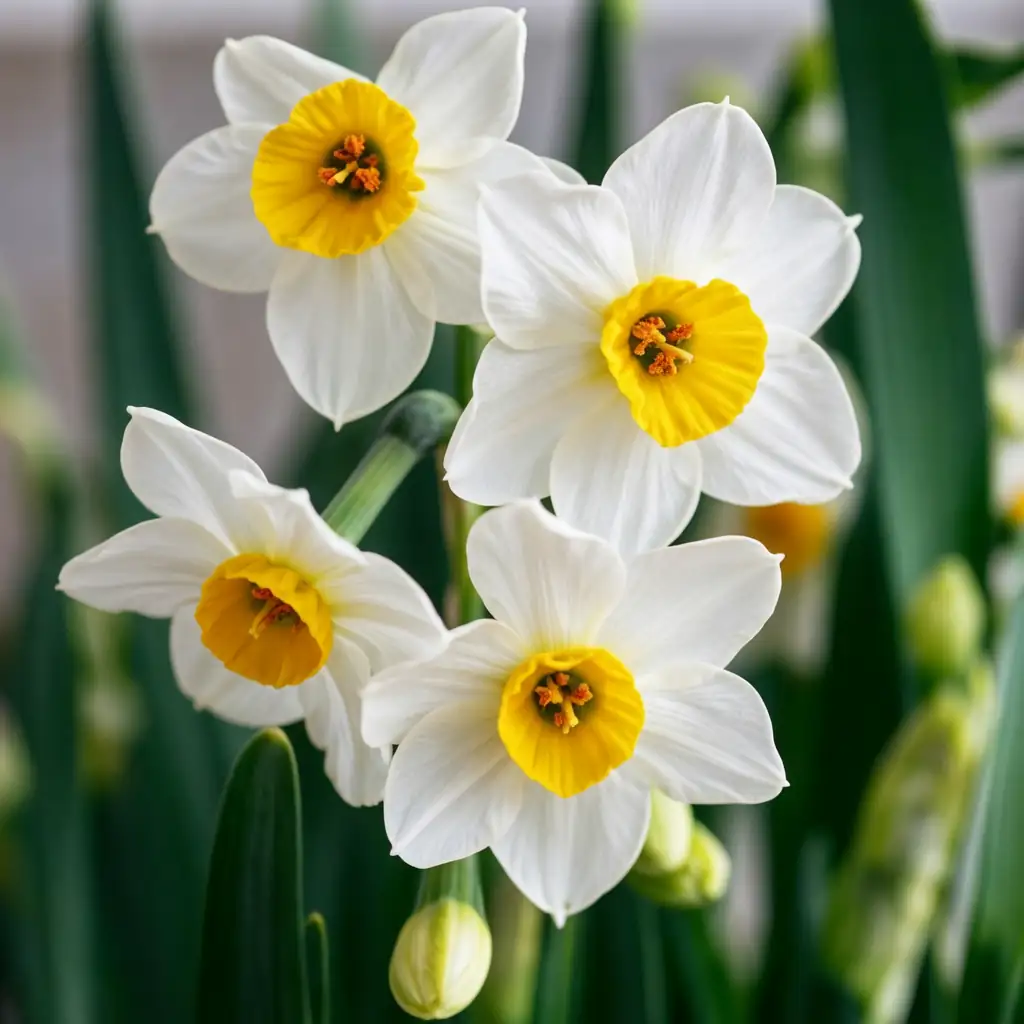
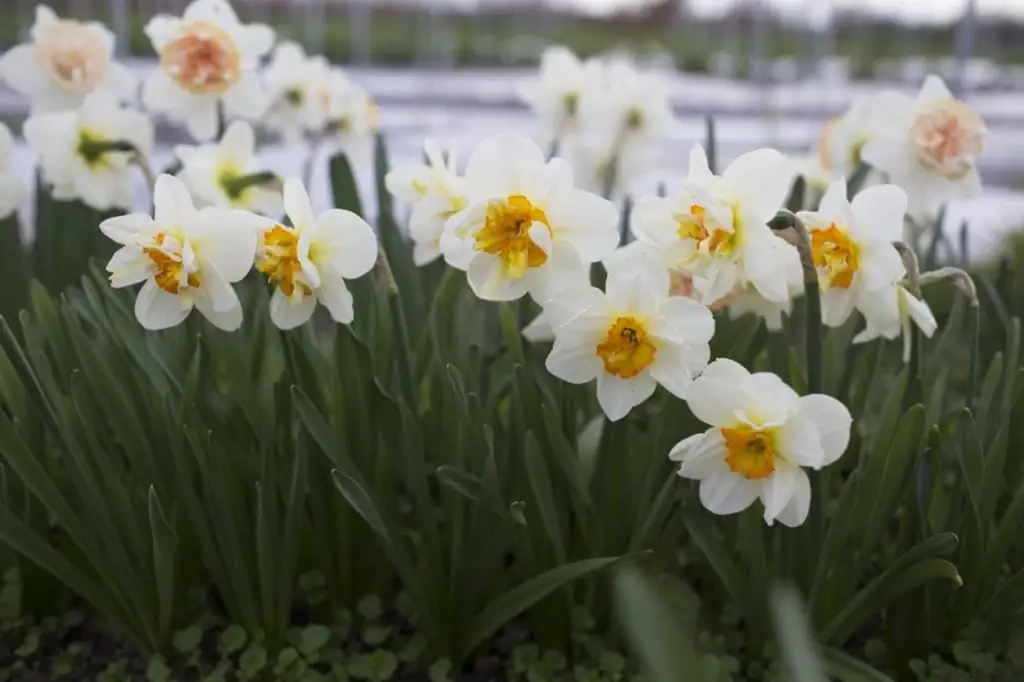
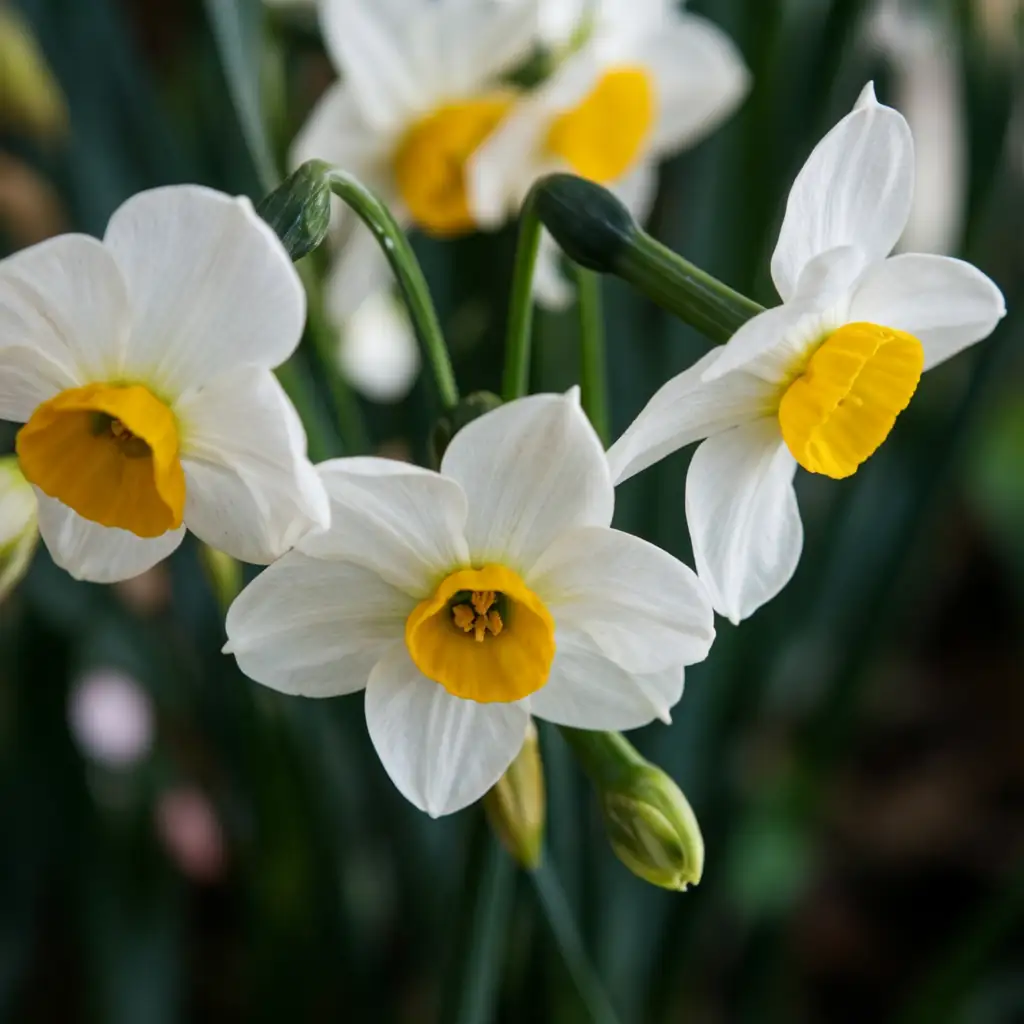
- Flower: Flower stems carry clusters of small, waxy, star-shaped blooms with a central cup (corona). Paperwhite/tazetta forms are typically white and strongly, sweetly fragrant; other Narcissus varieties can be yellow, orange, pink, or bicolored and may bear one to several blooms per stem. Individual flowers are commonly about 2.5–10 cm (1–4 in) across depending on type; for best cut-flower performance, stems are often harvested when buds show color but haven’t fully opened.
- Flowering Season: Winter to spring (often December–March indoors; late winter to early spring outdoors).
- Growth Habit: Bulbous herbaceous perennial: active growth in cool seasons, flowering in winter–spring (especially when forced), then summer dormancy. Clump-forming and capable of producing offsets that slowly increase the planting over time.
Environment
Sunlight
Bright light to full sun. Indoors, a bright east- or south-facing window is ideal; at least ~6 hours of strong light helps keep stems sturdy. Partial shade is tolerated outdoors, but low light tends to cause tall, floppy growth.
Temperature
Prefers cool-to-mild conditions: about 10–20°C (50–68°F) during growth and bloom. For compact indoor plants, cooler rooms around 5–15°C (41–59°F) are excellent; avoid sustained heat above 25°C (77°F), which shortens bloom life and encourages weak stems. Protect from hard freezes; many forms are damaged below about -5°C (23°F), and water-grown bowls should be kept above 0°C (32°F).
Humidity
Moderate humidity is ideal. Low to average indoor humidity is usually fine; if air is very dry, you can lightly mist leaves (not flowers). Avoid damp, stagnant air to reduce mold and rot.
Soil
In pots: use a free-draining bulb mix (e.g., about 2 parts potting mix to 1 part grit/gravel), kept evenly moist but never waterlogged; neutral to slightly acidic soil is fine. In water culture: set bulbs on clean pebbles/gravel with water kept shallow—roots in water, but the bulb itself kept mostly dry (water just at or slightly below the basal plate). Keep water fresh and containers clean to prevent rot.
Placement
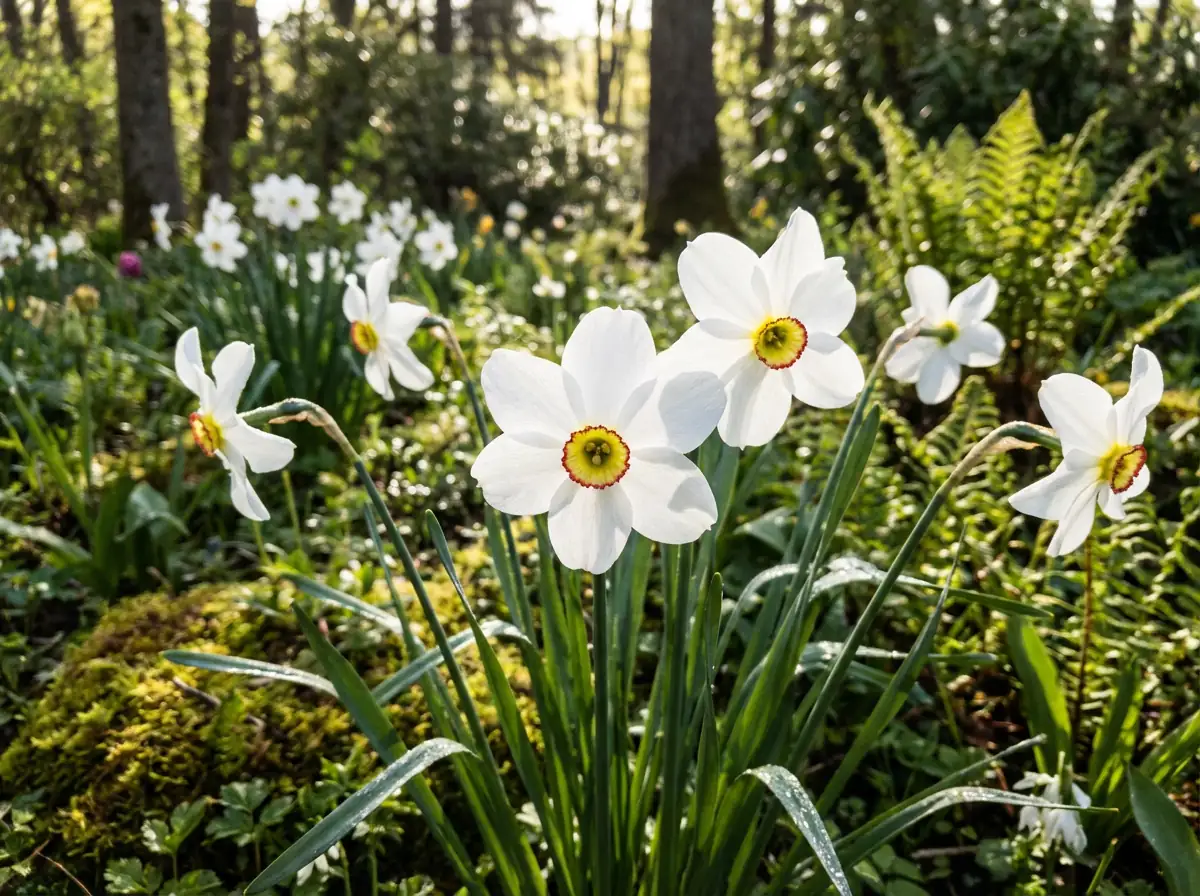
Indoors: a bright, airy windowsill, table centerpiece, or well-lit desk—ideally in a cool room away from radiators and hot air vents. Outdoors (mild climates): borders, rock gardens, woodland edges with spring sun, and naturalized patches where drainage is good.
Hardiness
Most reliably outdoors in mild climates, roughly USDA Zone 8–10/11 (varies by form and local winter wet). In colder regions, treat as a tender/seasonal bulb for indoor forcing or provide significant protection from freezing.
Care Guide
Difficulty
Easy to moderate. Extremely beginner-friendly when kept cool, bright, and hygienic; most problems come from warmth + low light (floppy stems) or stale water/overwatering (rot).
Buying Guide
Choose firm, heavy bulbs with intact papery skins and no soft spots, mold, black marks, or pest damage. Larger bulbs generally flower more reliably; as a practical rule, bulbs around 20 mm (0.8 in) diameter or larger tend to perform better. If buying sprouted plants, look for compact, deep-green leaves and stout, upright buds/stems. Handle gently—flower stalks can snap if bumped.
Watering
Pots: water after planting, then keep the mix just barely moist in cool winter conditions; once growth is active, water when the surface dries slightly, and never leave the pot standing in water. Water culture: keep water shallow and very clean (roots wet, bulb dry). Many growers refresh water frequently—daily early on is common—then about weekly once buds are well formed. Rinse away any sticky sap from cuts (especially after carving). Stop or sharply reduce watering as foliage yellows and dormancy begins; bulbs prefer a drier rest.
Fertilization
For short-term indoor display (especially water culture), fertilizing is usually unnecessary. If you want to keep bulbs for the long term, a light balanced feed during active growth can help; some growers feed every 2 weeks at half strength in pots. After flowering, light feeding while leaves are still green helps the bulb recharge; avoid high-nitrogen fertilizers that encourage leaves at the expense of future blooms.
Pruning
Remove spent flowers (deadhead) to keep things tidy and prevent seed formation. Keep the foliage until it turns fully yellow and dies back naturally (often 6–8 weeks after flowering) so the bulb can recharge—don’t braid, tie, or cut green leaves. After decorative carving/shaping, let cut surfaces dry (callus) in a ventilated, lightly shaded spot before returning to brighter light. Avoid spraying water onto open flowers to reduce spotting and petal drop.
Propagation
Most commonly by offsets (bulb division). When clumps become crowded or flowering declines, lift and divide during dormancy; smaller offsets may take 2–3 years to reach flowering size. Advanced methods include scale/basal-plate propagation: chill bulbs at 4–10°C (39–50°F) for 4–8 weeks, then cut basal plate sections with scales, and incubate at 20–28°C (68–82°F) in darkness; bulblets may form in about 2–3 months. Growing from seed is possible but slow (often 5–6 years to bloom).
Repotting
For bowls: use a shallow, stable container and pebbles; keep the bulb base above the waterline and provide bright light and airflow. For pots: repot after dormancy using fresh, free-draining bulb mix and good drainage holes; a pot about 20 cm (8 in) across commonly holds ~3 bulbs (varies by bulb size). If keeping plants long term, move bulbs to the garden (mild climates) or store dry and cool during dormancy.
📅 Seasonal Care Calendar
Autumn: plant bulbs (or begin indoor forcing). Winter: keep cool and bright; water sparingly until growth starts. Winter–spring: once leaves/stems elongate, water more regularly; for water culture, maintain shallow, clean water. Bloom often occurs ~30–40 days / 4–6 weeks after starting in good conditions. After flowering: deadhead, keep leaves growing in bright light, and (if keeping bulbs) feed lightly every ~2 weeks. Late spring–summer: reduce watering as leaves yellow; allow dormancy in dry, airy conditions. Every 4–5 years (or when crowded): divide offsets during dormancy.
Pests, Diseases & Safety
Common Pests & Diseases
Generally fairly tough, but bulbs can rot if kept too wet or warm. Common issues include bulb/crown rot (often fungal), blue mold (Penicillium) on stored bulbs, leaf spots, and occasional aphids indoors. Bulb mites and narcissus pests (e.g., bulb fly, nematodes in some regions) can occur—start with clean bulbs, keep storage dry, provide good airflow, and avoid stale water. Good drainage and water hygiene prevent most problems; promptly remove decaying tissue.
Toxicity
Toxic to humans and pets—especially the bulbs. Contains irritating/toxic compounds (including lycorine and calcium oxalate) that can cause nausea, vomiting, diarrhea, drooling, and abdominal pain; severe ingestion can be dangerous. Sap may irritate sensitive skin, so wear gloves if you react easily and wash hands after handling. Keep bulbs away from children, dogs, and cats.
Culture & Symbolism
Symbolism: A classic symbol of renewal and new beginnings—like spring showing up early on your windowsill. In East Asian winter and Lunar New Year traditions, 水仙 is strongly linked with good fortune, prosperity, and a thriving home; it’s also a popular “best wishes” gift for the season. In broader flower language, narcissus/daffodils can also hint at self-love (thanks to the Narcissus myth), while yellow types are often tied to joy and friendship and white to purity.
History & Legends: The name Narcissus comes from Greek mythology: the youth Narcissus fell in love with his reflection and, in the story’s aftermath, a narcissus flower grew where he died—linking the plant with themes of reflection and vanity. Separately, in China and parts of East Asia, 水仙 has a long history as a winter festival plant, often grown in shallow bowls and artistically carved or trained so leaves and flower stalks form elegant, sculptural shapes for New Year displays.
Uses: Primarily ornamental: fragrant indoor winter-to-spring displays in bowls or pots, brightening windowsills, desks, and table centerpieces. In mild climates it can be planted outdoors in borders and rock gardens and sometimes naturalized. Also used as a cut flower (tip: daffodil sap can shorten the life of other flowers—condition stems separately in water before mixing in a vase). Some narcissus compounds (e.g., galantamine in certain Narcissus) have been studied medically, but home use is not recommended due to toxicity.
FAQ
Why are my paperwhites tall and floppy?
It’s almost always warmth + low light. Move them to the brightest window you have and keep them cooler—around 5–15°C (41–59°F) if possible. Rotate the pot for even light, and avoid placing it near heaters.
Can I cut the leaves off after flowering?
Not if you want to keep the bulb. Leave the foliage until it yellows completely (often 6–8 weeks). Those green leaves are “recharging” the bulb for next season.
How do I grow 水仙 in a bowl of water and stones without rotting it?
Keep the water level low: roots in water, but the bulb itself mostly dry (water just at or slightly below the basal plate). Refresh the water frequently, keep the container clean, and give bright light with good airflow—stale water and warmth are what trigger rot.
Why do I get leaves but no flowers?
Common causes include bulbs that were too small/young, bulbs weakened by cutting foliage too early last season, overcrowded clumps needing division, or not enough light. For many daffodils, missing a cold period can matter—but paperwhites/tazettas are famous for flowering with little to no chilling.
Is paperwhite narcissus safe around pets?
No—keep it out of reach. All parts are toxic, and the bulb is especially dangerous if chewed or eaten.
Fun Facts
- Paperwhites are famous because they can bloom indoors without a long cold-chilling period—one reason they’re such a popular winter gift bulb.
- Keeping paperwhites cool and very bright is the simplest “secret” to sturdy stems and longer-lasting flowers.
- Traditional 水仙 bulb carving and training can turn the leaves and flower stalks into dramatic, living sculptures.
- Narcissus is a huge group: there are 40+ species and tens of thousands of registered cultivars across the daffodil world.