

Plant Features
- Size: As a potted houseplant: about 30–90 cm (12–36 in) tall, commonly 30–90 cm (1–3 ft). Outdoors in frost-free climates/native habitat: typically 2–4.5 m (6.5–15 ft) tall as a shrubby perennial.
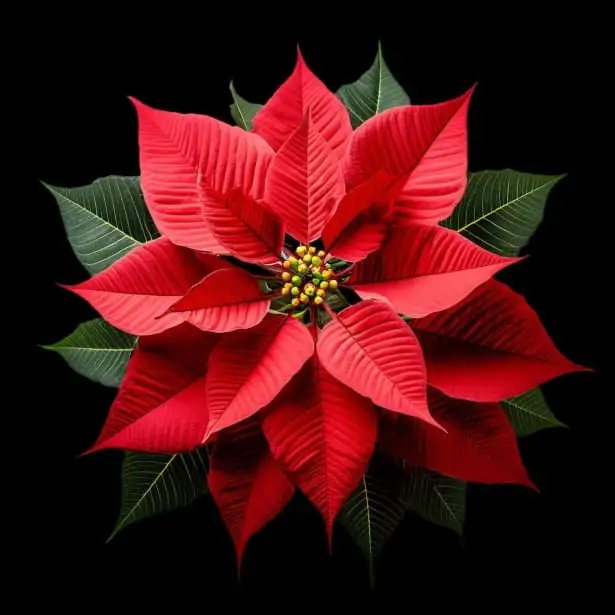
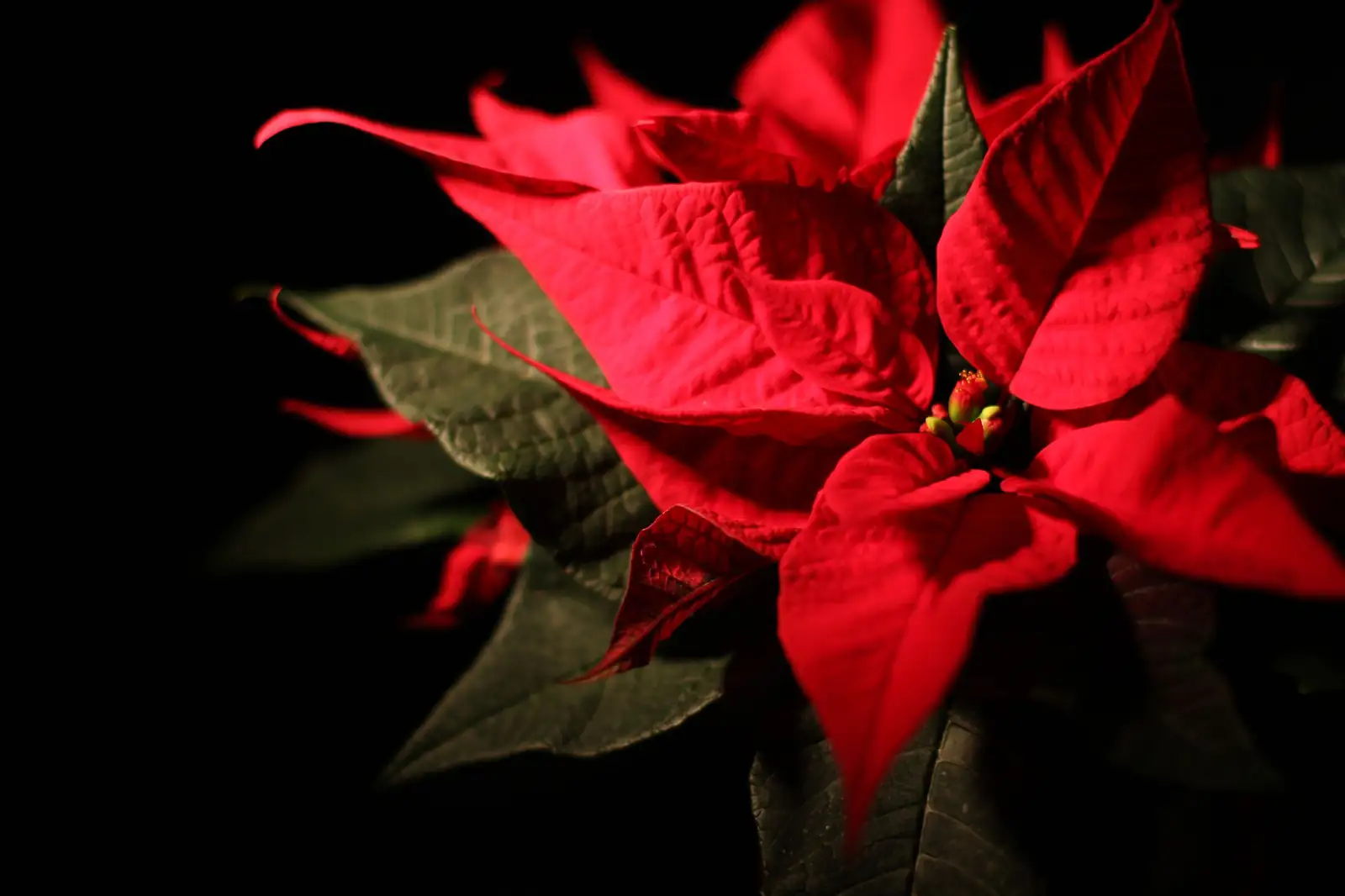
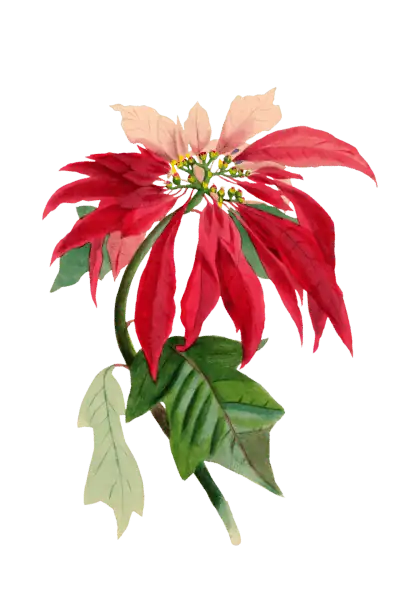
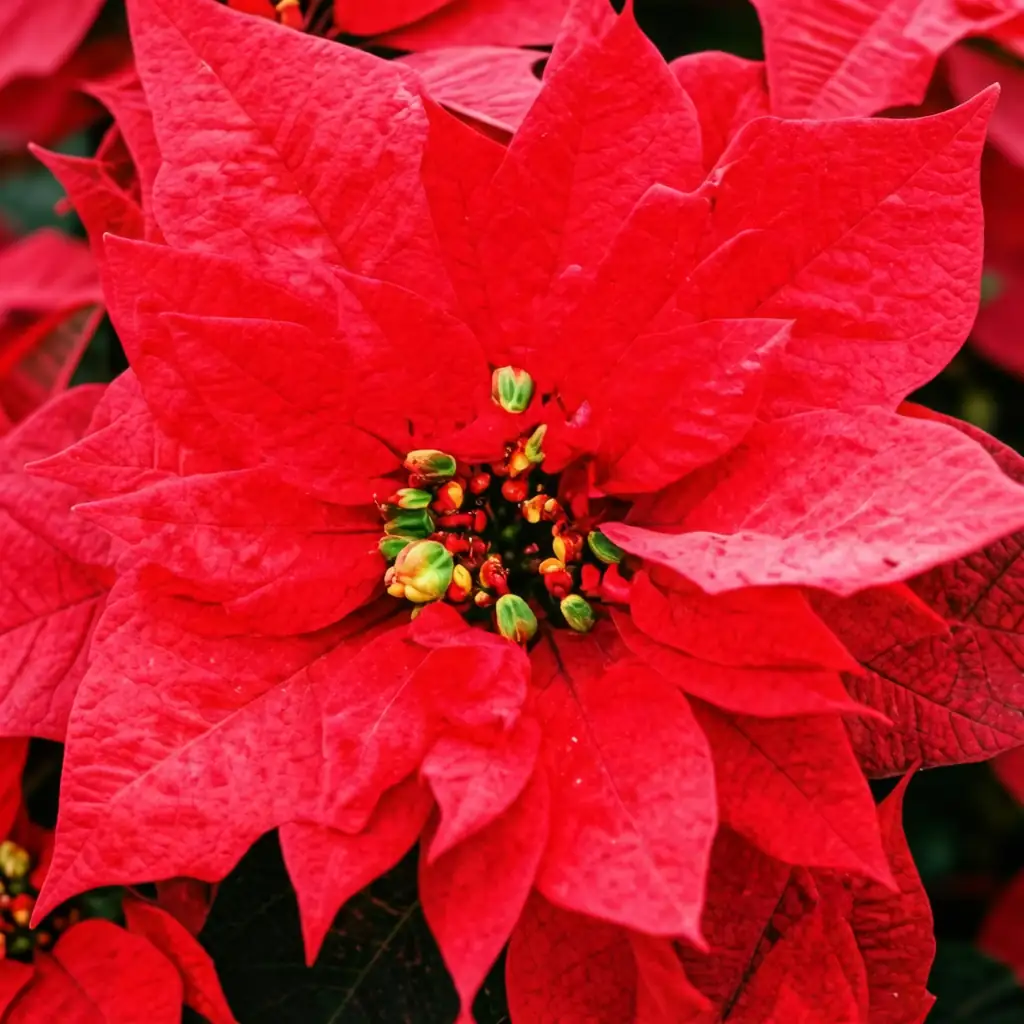
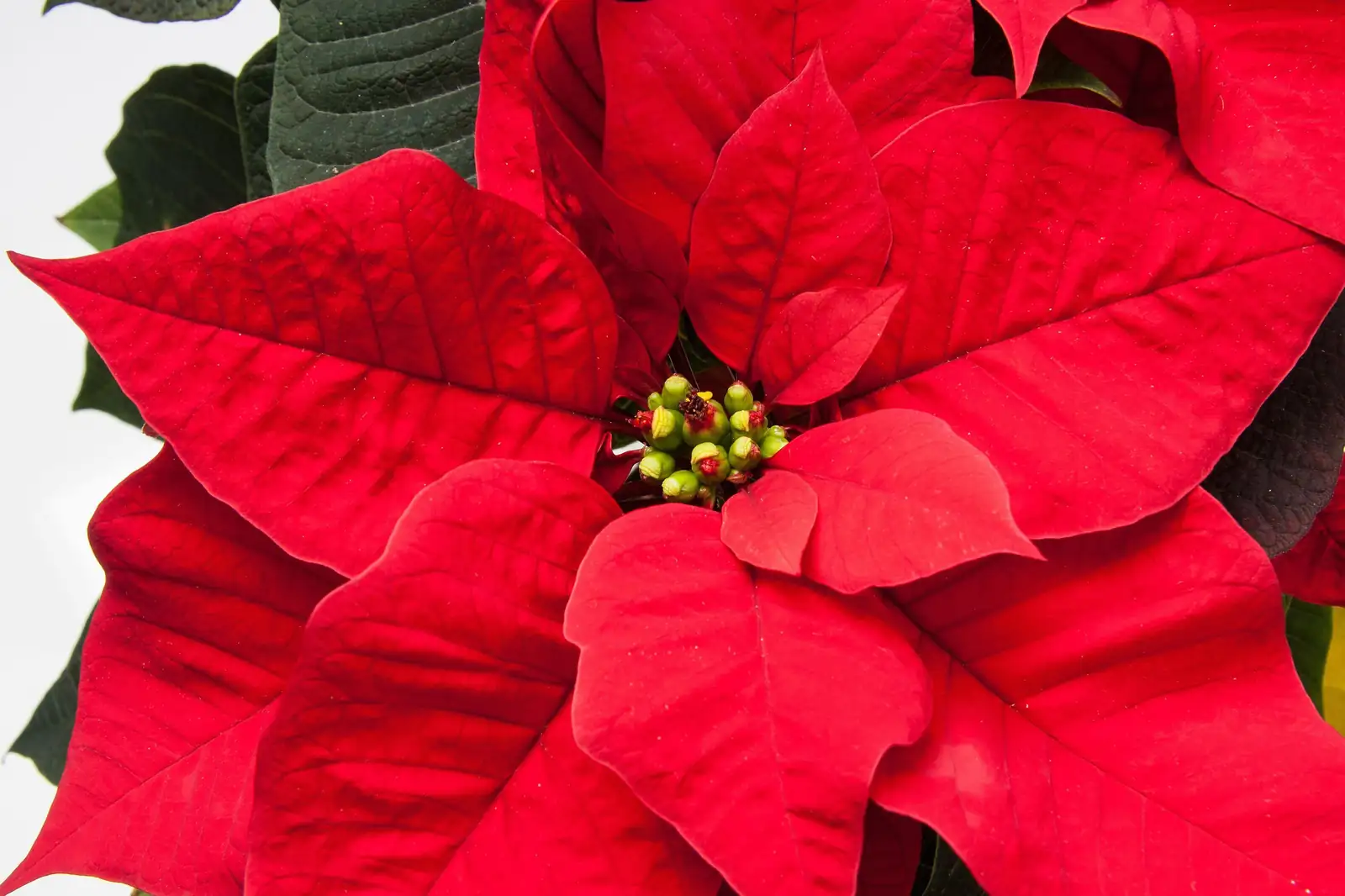
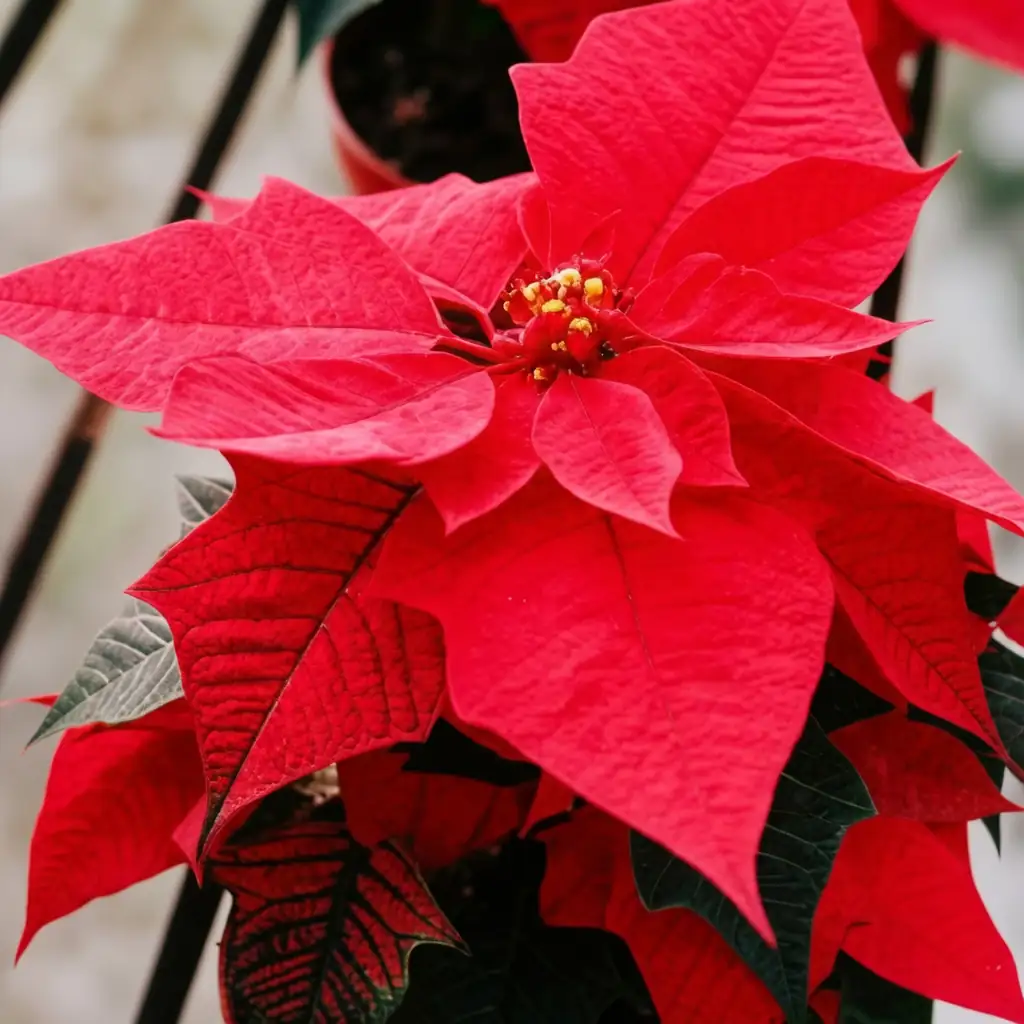
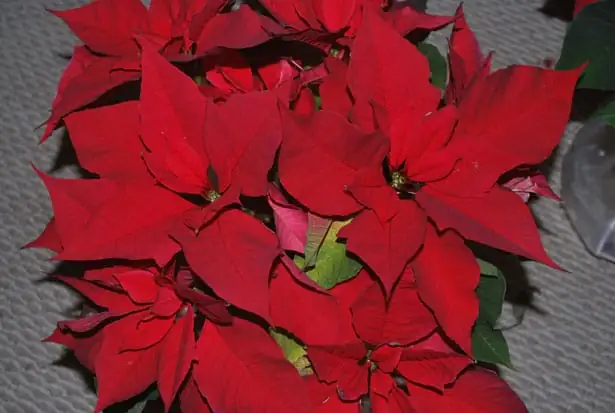
- Foliage: Leaves are deep/dark green, ovate to elliptic-lanceolate, typically about 10–25 cm (4–10 in) long. The upper “flowering” display is made of brightly colored bracts (most often red, but also pink, white, yellowish tones in some cultivars, or variegated/marbled patterns), commonly around 5–8 cm (2–3 in) across.
- Flower: The true flowers are small, yellow-green Euphorbia-style structures (cyathia) clustered in the center of the bracts. What most people call the ‘flowers’ are actually the colorful bracts; the cyathia may show pollen as they mature.
- Flowering Season: Winter to early spring (often late November through March, peaking around Christmas)
- Growth Habit: Upright, branching shrub or shrubby perennial with straight stems and milky white latex sap; can be kept compact and bushy with pinching/pruning.
Environment
Sunlight
Bright light is best—ideally bright indirect light with a little gentle direct sun (especially in autumn). Avoid harsh midday summer sun indoors behind hot glass. For re-coloring, it must have long, uninterrupted nights (about 12–16 hours of true darkness) for 8–10 weeks; even household lamps/TV light at night can delay bract coloring.
Temperature
Warm-loving. Ideal about 18–25°C (64–77°F) by day; many plants do well with slightly cooler nights around 15–18°C (59–65°F). Keep above 10°C (50°F) at all times; many growers recommend a winter minimum above 15°C (59°F). Protect from frost, cold windows, and drafts.
Humidity
Prefers moderate to moderately high humidity; tolerates average homes but struggles in very dry air from heating/AC. Better humidity helps reduce stress and leaf drop.
Soil
Loose, well-aerated, well-draining potting mix. A peat/coir-based mix amended with perlite/vermiculite (and optionally a little compost/leaf mold) works well; avoid heavy, water-holding soils. Slightly acidic to near-neutral pH around 5.8–6.5 is often ideal.
Placement
Indoors: a bright windowsill or very bright room (living room, office, lobby), away from cold drafts, cold glass, and heating/AC vents. Outdoors (seasonal): a sheltered porch or patio in warm weather, but bring inside before temperatures drop below 15°C (59°F). Keep out of reach of children and pets due to irritating sap.
Hardiness
Frost tender. Best outdoors year-round in USDA Zones 9–11 (often cited), with many sources placing reliable landscape performance in warmer Zone 10–12 conditions depending on microclimate. Not frost-hardy.
Care Guide
Difficulty
Moderate. Keeping it attractive for weeks is fairly easy, but getting a compact plant that re-colors reliably takes careful watering, steady temperatures, and strict light/dark timing.
Buying Guide
Pick a plant with sturdy stems, lush dark green leaves down to the base, and bracts that are well colored (or just beginning to color, depending on how long you want the display to last). The tiny yellow center flowers (cyathia) should be closed or just opening for best longevity; avoid plants that look wilted, are shedding leaves, have damaged bracts, or are sitting in standing water.
Watering
Aim for evenly moist soil, never soggy. Water when the top 2.5–5 cm (1–2 in) feels dry, then water thoroughly until excess drains; empty the saucer so roots don’t sit in water (a common cause of root rot). Seasonal rhythm many growers use: spring about once a week; summer possibly twice a week in warmth (always based on drying); autumn reduce slightly while avoiding repeated drought-then-drench swings that trigger yellowing/leaf drop; winter about once a week on a bright morning, keeping the plant just gently moist.
Fertilization
During active growth (spring through early autumn), feed with a balanced houseplant fertilizer—either every 2 weeks at a lighter dose or every 3–4 weeks at half strength. Pause or reduce fertilizer while the plant is in peak bract display, then resume after pruning when new growth begins.
Pruning
After the bracts fade (late winter to early spring), cut back to encourage a bushy shape. Common approaches include cutting stems back to about 10–15 cm (4–6 in) above the soil, or leaving a framework about 20–25 cm (8–10 in) tall with 2–3 nodes per stem. Pinch back soft new growth in summer to increase branching and keep the plant compact; some growers also gently bend/tie stems for shaping.
Propagation
Best from stem cuttings. Take cuttings in spring to early summer: tips about 7.5–10 cm (3–4 in) or around 10 cm (4 in) long. Because it bleeds milky sap, make a clean cut and rinse or let sap stop flowing before sticking. Root in perlite/vermiculite/clean sand in warm, humid conditions—about 25–28°C (77–82°F). Rooting commonly takes roughly 2–4 weeks (often reported as ~10–18 days under ideal warmth and humidity).
Repotting
Repot in spring after the display finishes, moving up one size (about 5–10 cm / 2–4 in wider) if the plant is rootbound. Use fresh, well-draining mix. Many people prune at the same time; let cut surfaces dry slightly and keep conditions airy to reduce rot risk.
📅 Seasonal Care Calendar
Jan–Mar: Enjoy bracts; keep warm, bright, and evenly moist; reduce watering a bit as the display ends. Apr–May: Prune back and repot; restart feeding once new growth begins. May–Sep: Strong light (avoid scorch), warmth, regular watering and feeding; pinch to keep it bushy. Late Sep–Nov: Start long-night/short-day treatment—give 14–16 hours of uninterrupted darkness nightly for about 8–10 weeks; avoid any night lighting. Nov–Dec: Bracts color up; keep stable warmth and bright days for the best holiday show.
Pests, Diseases & Safety
Common Pests & Diseases
Common pests include whiteflies, spider mites, thrips, fungus gnats, and sometimes scale insects. Diseases/problems include Botrytis (gray mold), leaf spots, powdery mildew, and stem/root rot—usually linked to overwatering, poor drainage, or stagnant air. Prevention: bright light, good airflow, careful watering, and quick removal of fallen leaves. Treatment: rinse pests off, isolate the plant, and use insecticidal soap or horticultural oil as appropriate; improve culture (especially drainage and airflow) to prevent rot and mold.
Toxicity
Mildly toxic/irritating. The milky latex sap can irritate skin and eyes, and may trigger stronger reactions in people with latex sensitivity. If chewed or eaten, it can cause mild stomach upset (nausea/vomiting/diarrhea) in pets and people, but it is not considered deadly poisonous. Wear gloves when pruning, wash hands afterward, and keep it away from curious children and pets.
Culture & Symbolism
Symbolism: A symbol of Christmas, celebration, and good cheer—often gifted as a wish for joy and fresh beginnings. White forms are commonly linked with purity. In Christian tradition, the star-like bracts are associated with the Star of Bethlehem, and red bracts are sometimes said to echo themes of love and sacrifice.
History & Legends: Native to Mexico, poinsettia has deep cultural roots: the Aztecs knew it as “cuetlaxochitl,” using it for dye and traditional remedies. A beloved Christmas legend tells of a poor girl (often called Pepita) who placed humble weeds at a church altar; they miraculously transformed into brilliant red poinsettias. The plant entered U.S. horticulture after Joel Roberts Poinsett, the first U.S. ambassador to Mexico, sent cuttings home in 1828—eventually lending the plant its English name. In the U.S., December 12 is recognized as National Poinsettia Day.
Uses: Primarily ornamental—especially as a potted holiday plant for homes, offices, churches, and public displays, and sometimes used as a cut stem in arrangements. In frost-free climates it can be grown outdoors as a landscape shrub. Historically in Mexico it also has had traditional medicinal and dye uses (handled with care due to the latex sap).
FAQ
Are poinsettias poisonous?
They’re not deadly poisonous, but the sap is irritating and the plant can cause mild stomach upset if chewed—especially for pets and small children. Wear gloves if you’re sensitive, avoid getting sap in your eyes, and keep the plant out of reach.
How do I get my poinsettia to turn red again?
Starting in late September, give it bright days and long, uninterrupted nights: about 14–16 hours of complete darkness every night for 8–10 weeks. Even small amounts of light at night (lamps, hallway light, TV glow) can delay coloring.
Why is my poinsettia dropping leaves?
Leaf drop usually means stress—cold drafts, cold windows, blasts from heating/AC vents, low light, or watering problems (especially soggy soil). Move it to a warm, bright spot with stable temperatures and water only when the top layer dries slightly.
Can I plant my poinsettia outdoors?
Yes, but only where there’s no frost risk. It can live outdoors year-round in warm zones (roughly USDA 9–11, often safest in 10–12). In cooler regions, you can summer it outside, then bring it indoors well before nights turn cold.
Fun Facts
- Those ‘petals’ are bracts—modified leaves. The real flowers are the tiny yellow centers.
- Poinsettia is a classic photoperiod plant: long, uninterrupted nights trigger bract coloring.
- In its native habitat it’s a perennial shrub that can reach around 2–4.5 m (6.5–15 ft) tall.
- It belongs to the spurge family (Euphorbiaceae), famous for its milky latex sap.
- Modern breeding has produced well over 100 cultivars in reds, pinks, whites, burgundies, yellows, and marbled patterns.


