Plant Features
- Size: Typically 30–60 cm (12–24 in) tall; spreads much wider as a trailing ground cover or spiller
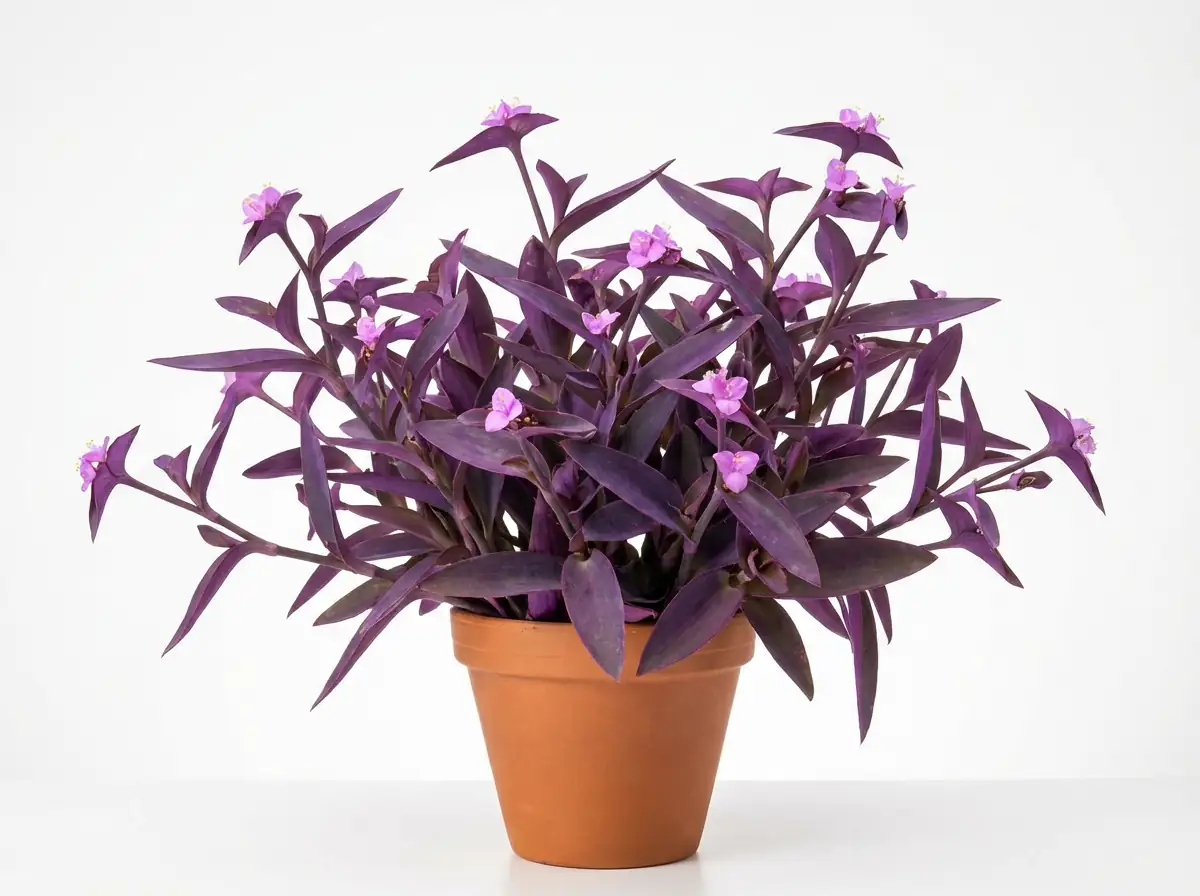
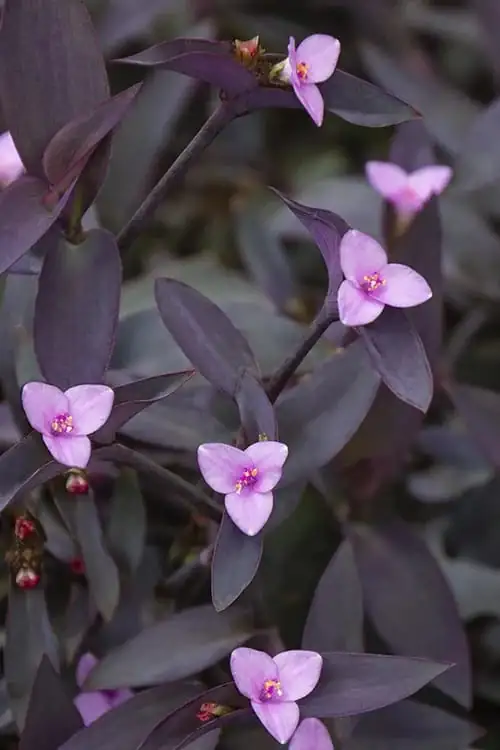
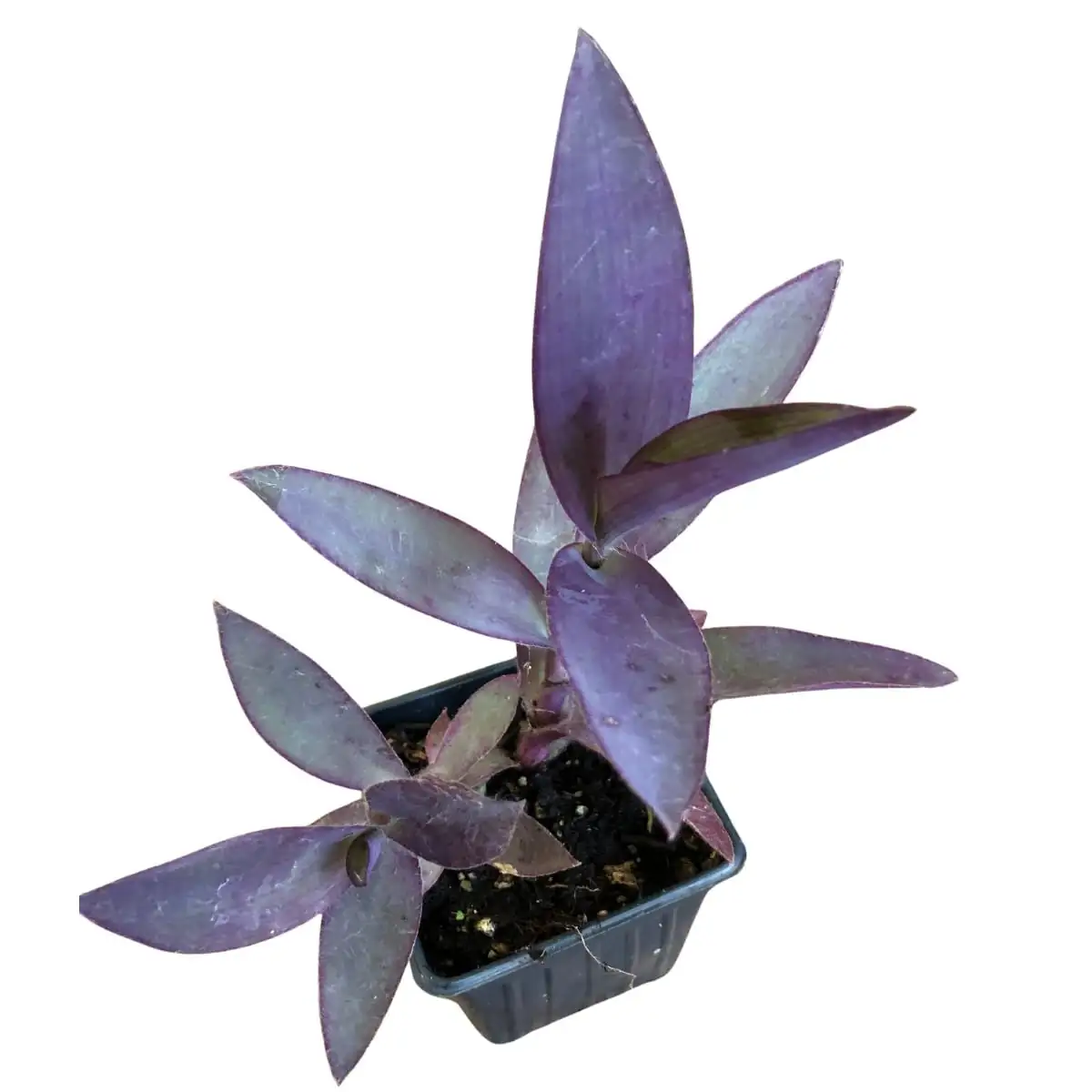
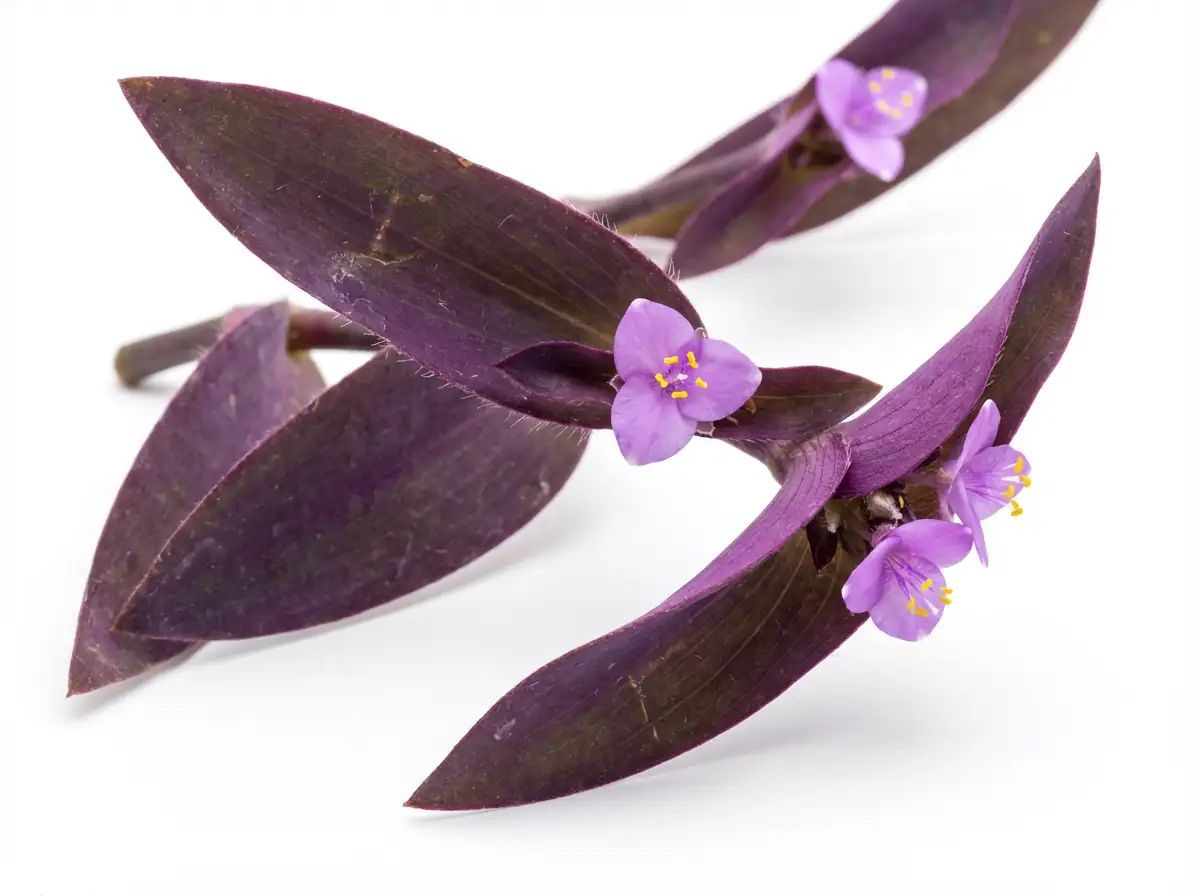
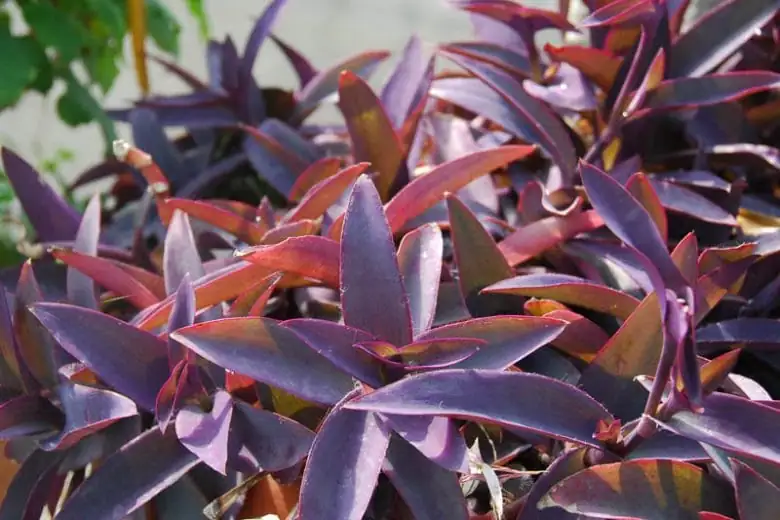
- Foliage: Deep purple, lance-shaped leaves up to about 18 cm (7 in) long; slightly fleshy with a soft, pale hairiness; alternately arranged and forming sheaths around the stems. Color shifts toward green in lower light.
- Flower: Small, three-petaled flowers in pink to pale purple, about 1.3 cm (0.5 in) wide, with bright yellow stamens; often open in the morning and fade by midday.
- Flowering Season: Midsummer through fall (June–October), with occasional blooms at other times
- Growth Habit: Low-growing, trailing/rambling perennial with fragile stems; roots readily at nodes where stems contact soil, forming a spreading mat
Environment
Sunlight
Full sun for best purple color; tolerates partial shade/bright indirect light but foliage becomes greener and growth may get leggier
Temperature
Best growth around 18–30°C (64–86°F). Not reliably hardy below about 4°C (40°F); in mild winters it may die back and resprout from the base after light frosts.
Humidity
Comfortable in average to higher humidity; tolerates drier indoor air, but looks fresher with a bit more moisture (especially indoors).
Soil
Loose, well-draining potting mix or garden soil; prefers evenly moist but not soggy conditions. Adaptable to pH roughly 6.0–8.0; add perlite/grit to improve drainage.
Placement
Sunny balcony/patio, borders and ground cover in warm climates, containers and hanging baskets; indoors, place near a bright window with strong light for best color
Hardiness
USDA Zones 7–11 (most reliably perennial outdoors in warmer zones; grown as an annual or overwintered indoors in colder areas)
Care Guide
Difficulty
Easy—fast-growing, forgiving, and fairly drought-tolerant once established; ideal for beginners
Buying Guide
Pick plants with rich purple color, dense growth, and firm, healthy stems. Avoid pale green, leggy, or sparsely leafed plants, and check leaf undersides for pests.
Watering
Water deeply, then let the top layer of soil dry before watering again. Outdoors, established plants often do well with about weekly watering (more in extreme heat). Indoors, water when the top few centimeters are dry and reduce significantly in winter. Avoid constantly wet soil to prevent root rot.
Fertilization
Feed during active growth (spring through fall) with a diluted balanced liquid fertilizer about every 2–4 weeks. Ease off if growth is lush but weak, and stop feeding in winter.
Pruning
Pinch tips regularly to keep it bushy and compact. Cut back after flowering or whenever it becomes leggy. Remove yellowing leaves and trim weak/damaged stems. Wear gloves if you’re sensitive—sap can irritate skin.
Propagation
Very easy from stem cuttings year-round: take 7.5–15 cm (3–6 in) pieces below a node and root in water or directly in moist mix (roots often form in 1–2 weeks). Can also be divided in spring when repotting.
Repotting
Repot about every 2–3 years (or sooner if crowded), ideally in spring. Refresh with well-draining mix and consider trimming back long stems to restart a fuller plant.
📅 Seasonal Care Calendar
Spring: Repot/divide, start feeding, pinch for bushiness. Summer: Water more during heat, provide airflow; full sun deepens color. Fall: Enjoy peak flowering; taper feeding as growth slows. Winter: Reduce watering, stop fertilizer, protect from cold or bring indoors if temperatures drop near 4°C (40°F).
Pests, Diseases & Safety
Common Pests & Diseases
Usually trouble-free, but can attract aphids, spider mites, scale, and mealybugs (especially indoors). Rinse foliage and treat with insecticidal soap if needed. Slugs/snails may chew outdoor plants. Root rot is the main disease issue—almost always from poor drainage or overwatering; improve drainage and remove affected parts.
Toxicity
Mildly toxic/irritating to people and pets. Sap may cause skin redness or dermatitis (notably in some dogs), and chewing can irritate the mouth and stomach. Keep out of reach of pets and small children and wash hands after handling.
Culture & Symbolism
Symbolism: Often associated with admiration, devotion, and enduring love—plus a bit of “live in the moment” energy, since each little flower lasts only a short time. Its purple color is also linked with wisdom and richness in Feng Shui-inspired décor.
History & Legends: Described as Setcreasea pallida in 1911 (J.N. Rose) and later moved into Tradescantia in 1975 (D.R. Hunt, Kew). Native to eastern Mexico and now widely cultivated worldwide; in some regions it has naturalized outside gardens.
Uses: Primarily ornamental as a vivid purple foliage plant for ground cover, borders, containers, and hanging baskets, and it’s also popular as a bright-window houseplant. Tradescantia species are used in scientific testing (the Tradescantia micronucleus assay) because they can be sensitive to mutagens. It’s also frequently mentioned in indoor-air discussions for VOC reduction in plant screening studies, though real-world results depend heavily on plant quantity, airflow, and room conditions.
FAQ
Why are my purple heart leaves turning green?
That’s almost always a light issue. Move it to a brighter spot—ideally several hours of sun outdoors, or the sunniest window you have indoors—to bring back the deep purple tones.
Why are the leaves turning yellow?
Most commonly: too much water and not enough drainage. Let the soil dry a bit between waterings and ensure the pot has drainage holes. Also note that older leaves can yellow naturally as stems age.
Can Purple Heart be grown indoors?
Yes. It does best indoors in very bright light (near a sunny window). Rotate the pot for even growth, pinch tips to prevent legginess, and water less in winter.
Is Purple Heart toxic to cats and dogs?
It can irritate pets if chewed, and the sap may cause skin irritation (especially in some dogs). It’s best placed out of reach of curious pets.
How do I make it bushier?
Pinch the growing tips often and don’t be afraid to trim it back. More light also helps keep the internodes short so the plant fills in instead of stretching.
Does it come back every year?
In warm climates it’s perennial and evergreen. In cooler areas it may die back with cold and regrow from the base after light frosts, but hard freezes can kill it—many people overwinter it indoors.
Fun Facts
- The stems snap easily, but those broken pieces often root wherever they land—one reason it spreads so quickly.
- Its flowers are fleeting, commonly opening in the morning and fading by midday, yet the plant can keep producing them over a long season.
- Tradescantia species are used in the famous “micronucleus assay” in environmental science because they can be sensitive to DNA-damaging agents.
- Light changes its wardrobe: strong sun brings out deep purple, while shade pushes it toward green.