

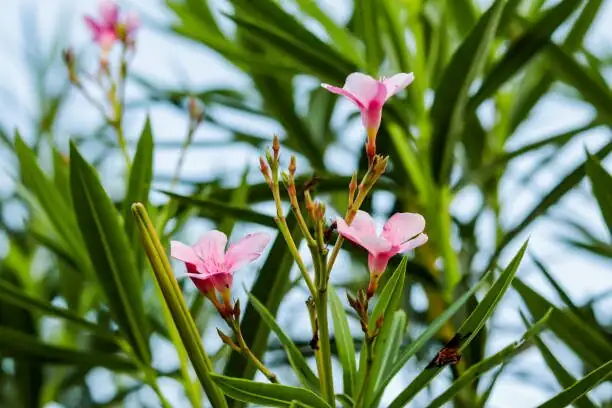
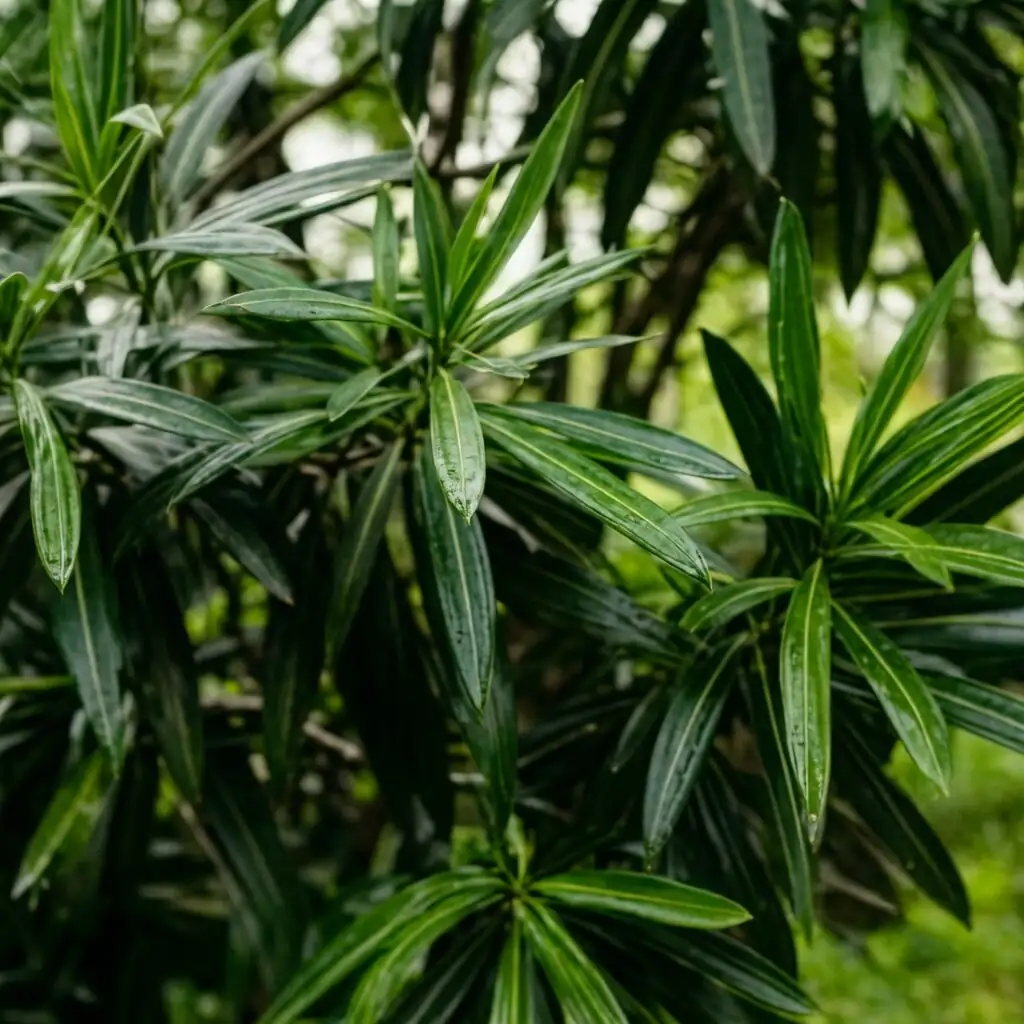
Plant Features
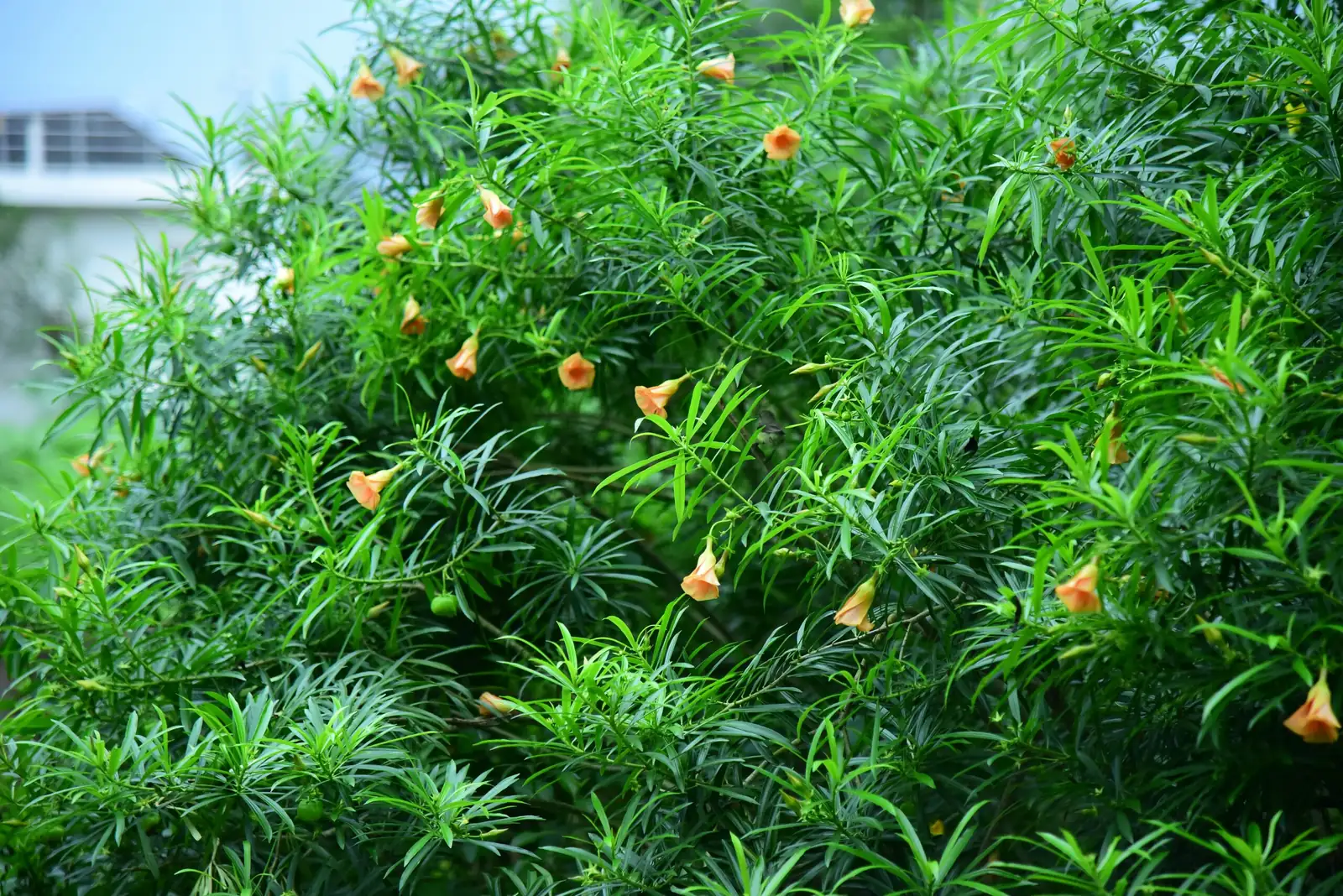
- Size: Typically 2–6 m (7–20 ft) tall, forming a rounded, mounding shrub; can also be trained as a single- or multi-trunked small tree.
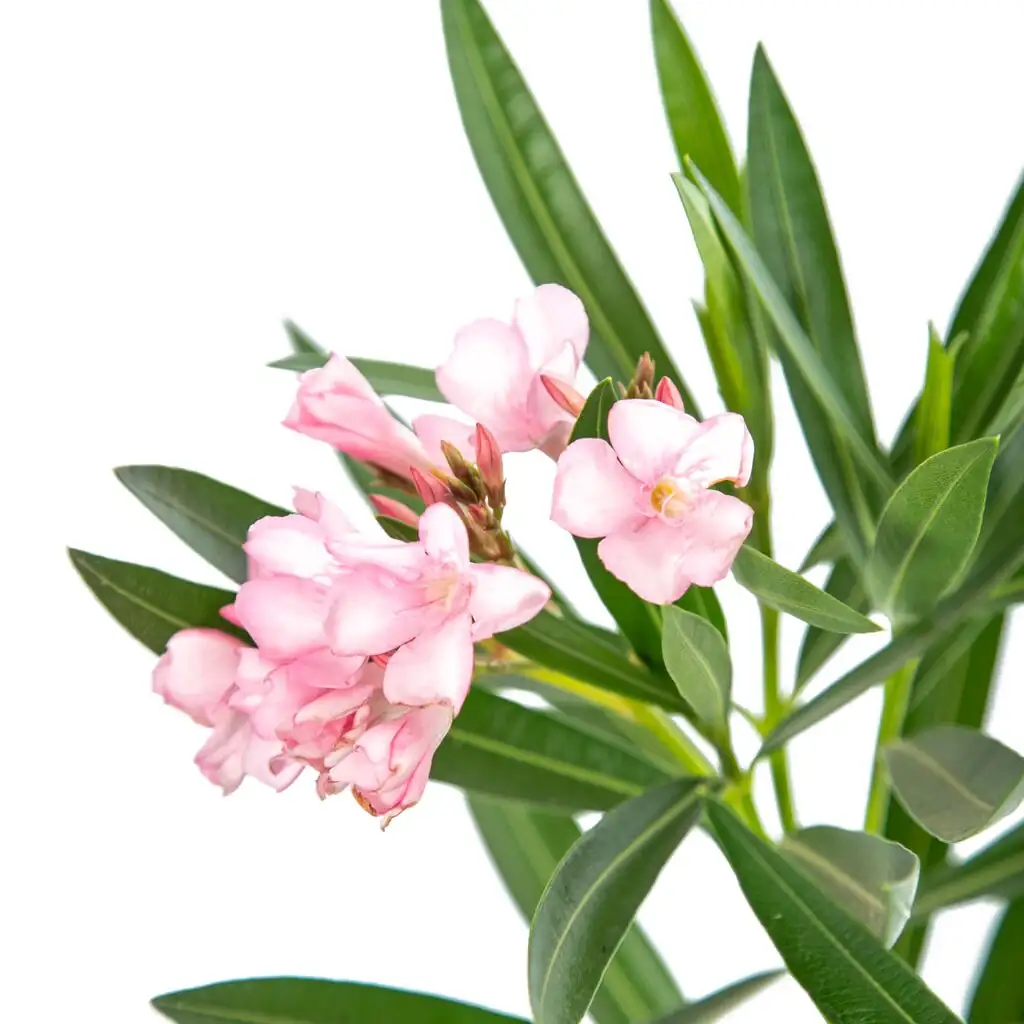
- Foliage: Leaves are thick and leathery, dark green, and narrow lance-shaped, about 5–21 cm (2–8.3 in) long and 1–3.5 cm (0.4–1.4 in) wide. They’re usually arranged in opposite pairs or in whorls of three. New leaves can look glossy, maturing to a deeper, duller green with a prominent midrib.
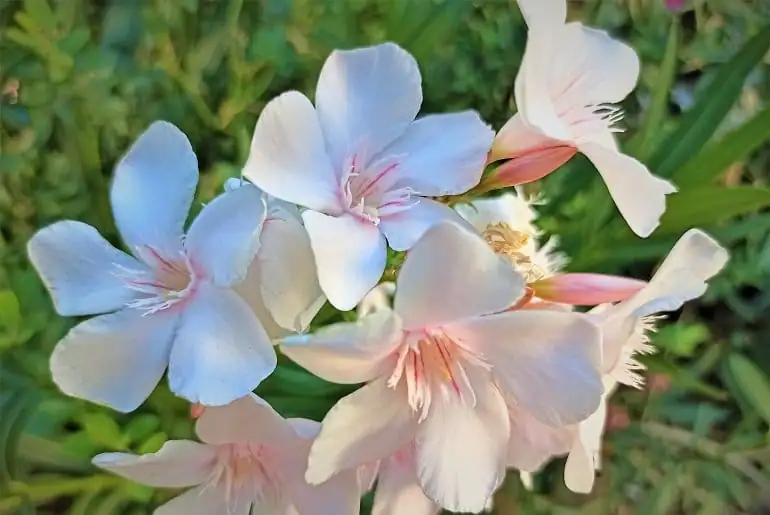
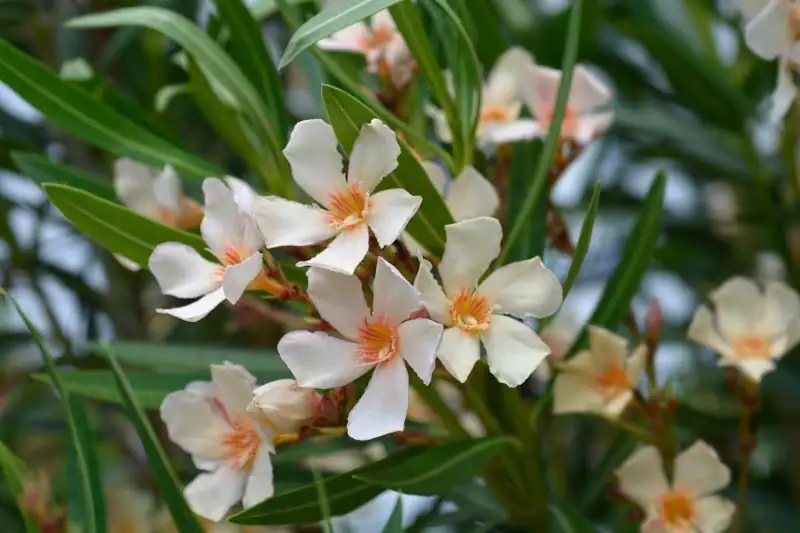
- Flower: Flowers appear in terminal clusters (cymes) and are funnel-shaped with five deeply lobed, sometimes slightly fringed petals. Blooms are commonly 2.5–5 cm (1–2 in) across and may be fragrant. Colors include white, pink, red, and many cultivated shades such as peach, salmon, orange, yellow, and candy-striped forms.
- Flowering Season: Spring through fall (often April–September), with peak bloom commonly in May–June; in frost-free warm climates it may flower nearly year-round.
- Growth Habit: Fast-growing, upright stems that splay outward with age; responds very well to pruning and can be shaped into hedges, screens, or small tree forms.
Environment
Sunlight
Full sun is best for dense growth and abundant flowers; tolerates partial shade but may bloom less and look looser.
Temperature
Prefers warmth; tolerates brief light frosts down to about -10°C (14°F), though foliage can be damaged. Best performance in warm-summer climates.
Humidity
Adaptable—enjoys evenly moist conditions but is notably drought-tolerant once established.
Soil
Very adaptable, including poorer or sandy soils, as long as drainage is good. Prefers well-drained, reasonably fertile soil; tolerates a wide pH range (about 5.0–8.3) and often performs well in slightly alkaline conditions.
Placement
Great for sunny balconies, patios, and courtyards (especially in containers in colder regions), and widely used outdoors for hedges, privacy screens, specimen shrubs/small trees, roadsides, median strips, parks, coastal plantings, and tough urban/industrial sites.
Hardiness
USDA Zones 8–10; notably tolerant of heat, drought, wind, coastal exposure, and urban/industrial pollution.
Care Guide
Difficulty
Easy to moderate: very forgiving once established and often thrives on “benign neglect,” but looks best with sun, occasional deep watering, and annual pruning.
Buying Guide
Look for 1–2 year old plants with a sturdy main stem (or multiple strong stems if you want a bushy hedge), dense healthy foliage, and no obvious scale insects or sticky honeydew. Avoid plants with severe leaf yellowing, dieback, or scorched/browned leaf margins that could hint at stress or disease.
Watering
Water deeply, then allow the top ~2.5 cm (1 in) of soil to dry before watering again. In pots and during hot, active growth periods, it will need more frequent watering. Once established in the ground it’s drought-tolerant, but it flowers best with regular moisture rather than prolonged dryness.
Fertilization
Light feeding is usually enough. Feed lightly in spring, then once a year as needed; established in-ground plants are not heavy feeders. Container plants benefit from monthly feeding during the growing season for stronger growth and bloom.
Pruning
Prune in late winter (about February–March) before new growth to shape the plant, remove damaged/diseased wood, and encourage branching. Deadhead spent flower clusters to prolong flowering. Container plants can be cut back hard (up to about two-thirds) before winter if size control is needed—always wear gloves and avoid getting sap on skin or eyes.
Propagation
Very easy from stem cuttings year-round. Take 15–20 cm (6–8 in) cuttings from 1–2 year old stems, strip lower leaves, and root in water or a moist, airy medium. Roots often form in about 4–6 weeks.
Repotting
Repot container plants about every 2 years in spring. Use a sturdy pot roughly 36–61 cm (14–24 in) wide (as appropriate to plant size) with excellent drainage; don’t let plants stay severely root-bound if you want vigorous growth and flowering.
📅 Seasonal Care Calendar
Spring: Repot (if needed), give a light feed, prune for shape, and take cuttings. Summer: Peak bloom—keep in full sun and water more consistently, especially in containers. Fall: Deadhead, taper off fertilizer, and gradually reduce watering as growth slows. Winter: In cold climates, provide indoor protection and bright light, keep watering minimal, and do any major shaping late winter before spring growth.
Pests, Diseases & Safety
Common Pests & Diseases
Common pests include oleander caterpillars (polka-dot wasp moth larvae), aphids, scale, mealybugs, whiteflies, and spider mites. A major disease is oleander leaf scorch (caused by Xylella fastidiosa), which is typically fatal and has no cure; management focuses on removal/replacement and limiting spread by insect vectors. The plant’s toxic sap makes it relatively resistant overall, but outbreaks still happen—especially on stressed plants.
Toxicity
Extremely toxic to people and pets. All parts contain cardiac glycosides (notably oleandrin). Ingestion can cause severe gastrointestinal upset (nausea, vomiting, abdominal pain, diarrhea), dangerous heart rhythm disturbances, neurological symptoms (drowsiness, tremors, seizures), and can be fatal. Sap can irritate skin and eyes, and the plant remains toxic even when dried; smoke from burning oleander is also dangerous. Keep away from children and animals, wear gloves when pruning, and seek immediate medical/veterinary help if ingestion is suspected.
Culture & Symbolism
Symbolism: A classic “beautiful but dangerous” plant: it’s often associated with caution and warning because of its toxicity, yet also with grace and enduring beauty. Color associations are sometimes given as: red for warning/beware, yellow for deep friendship, and white for pure, lasting friendship.
History & Legends: Oleander has been cultivated for thousands of years around the Mediterranean. Ancient Greeks knew it by names such as “rhododaphne” and “nerion,” and Romans planted it widely—its presence even shows up in Pompeii-era art and archaeological finds. Folklore and old medicinal texts sometimes credited it with remedies (even snakebite cures), but those claims are risky and not recommended given the plant’s potent poisons. Some stories even connect oleander to trance or ritual practices—part of its long reputation as a plant that commands respect.
Uses: Primarily grown as an ornamental for hedging, screening, specimen planting, and tough public landscapes (roadsides, coastal sites, industrial areas) because it tolerates drought and pollution exceptionally well. Historically it has appeared in traditional medicine and in insecticidal preparations, and its compounds continue to be researched under strict medical controls—but it is not a safe DIY medicinal plant.
FAQ
Is oleander really that dangerous?
Yes—every part of the plant is poisonous, and even dried clippings remain toxic. The good news is it’s safe to enjoy visually; problems arise from chewing/ingesting plant parts or getting sap into eyes or open cuts. Keep it away from children and pets, wear gloves when pruning, and never burn the trimmings.
Why do people plant oleander if it’s toxic?
Because it’s incredibly reliable: long blooming, evergreen, and able to thrive in heat, drought, wind, and polluted urban conditions where many shrubs struggle. In the right place (away from curious kids and pets), it’s a hard-to-beat landscape performer.
Is oleander easy to grow?
Very. Give it sun and decent drainage, water it while establishing, then it becomes notably low-maintenance. Occasional pruning helps keep it tidy and flowering well.
How long does oleander bloom?
In many climates it flowers from spring into fall (often April–September), and in warm, frost-free areas it may bloom almost continuously.
Can oleander grow in cold climates?
It tolerates light frost to about -10°C (14°F) but isn’t truly cold-hardy. In colder regions, grow it in a container and overwinter it indoors in bright light, or plant only in very protected microclimates.
Fun Facts
- Oleander is the only species in the genus Nerium.
- There are hundreds of cultivated varieties, including striped and unusual color forms not typical of wild plants.
- Specialist insects such as polka-dot wasp moth caterpillars can feed on oleander and retain its toxins, helping protect them from predators.
- Oleander is famously used in hot-climate roadway plantings—California alone has millions along highways.
- Despite their showiness, oleander flowers can offer little to no nectar and may attract pollinators partly by visual “promise” rather than reward.
- The Sanskrit name “ashvamaara” translates roughly to “horse killer,” reflecting its notorious toxicity to livestock.


