Plant Features
- Size: As a houseplant, vines commonly reach about 1–3 m (3–10 ft) long, and can be guided to spread a similar width if allowed to trail. Many indoor specimens are kept around 2 m (6.6 ft) for easy management. In the wild it can climb 6–12 m+ (20–40+ ft) or more. Common pot sizes include 10–15 cm (4–6 in) diameter for tabletop pots and 15–18 cm (6–7 in) for hanging baskets; pinching tips when stems are about 15–20 cm (6–8 in) long encourages branching and a fuller plant.
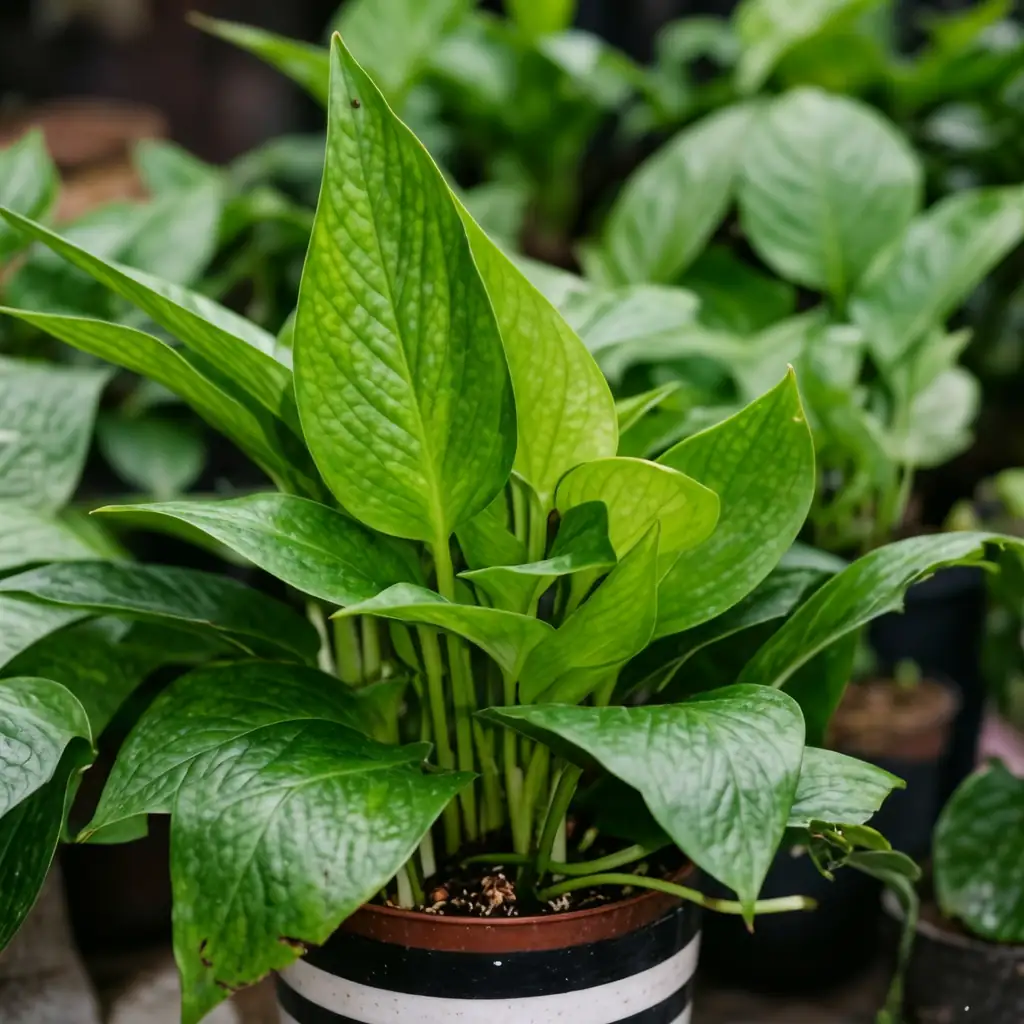
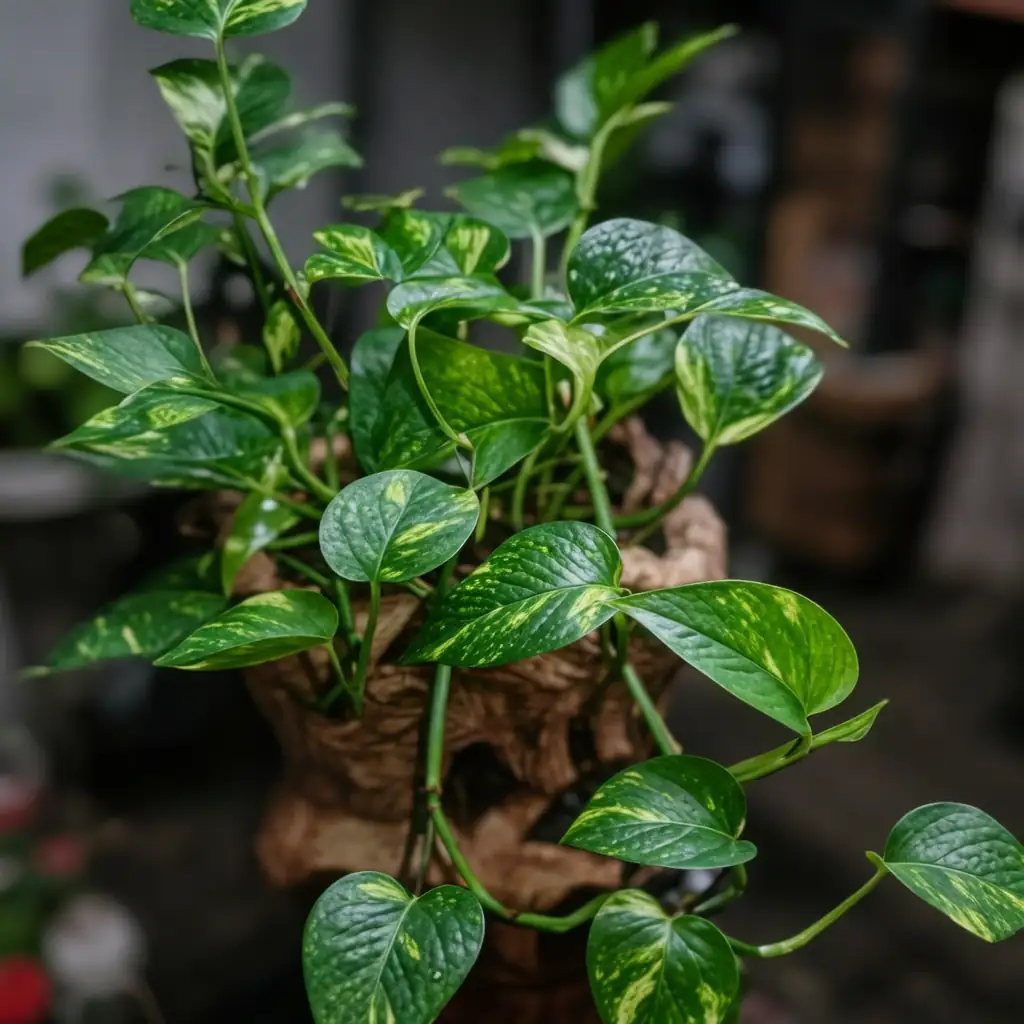
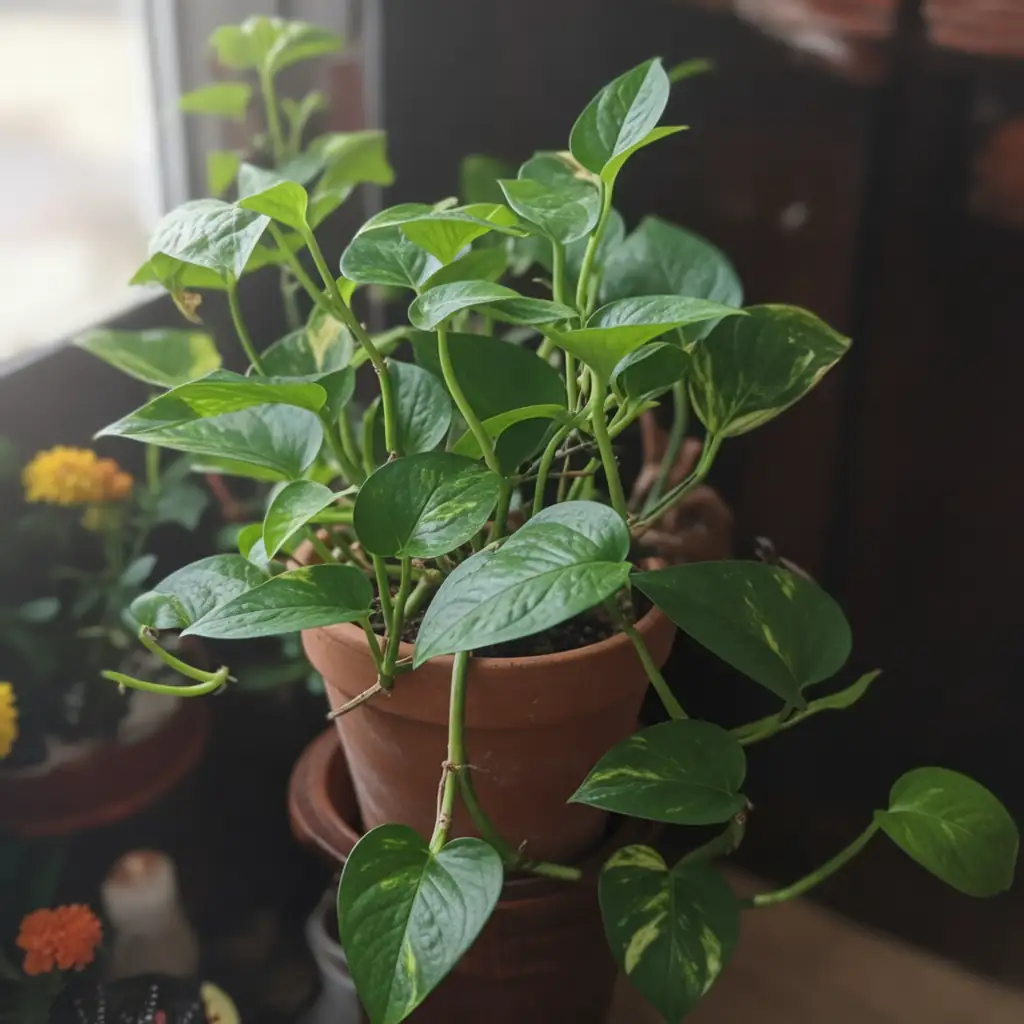
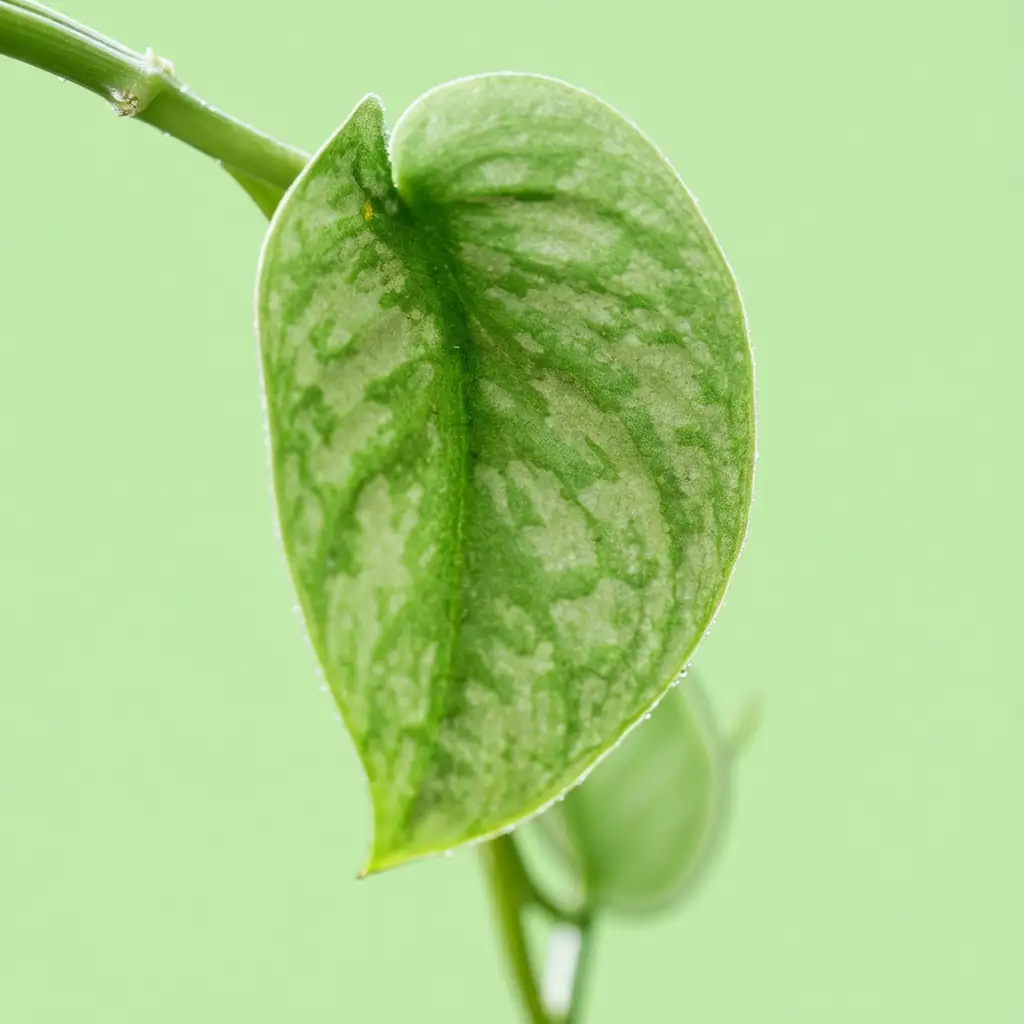
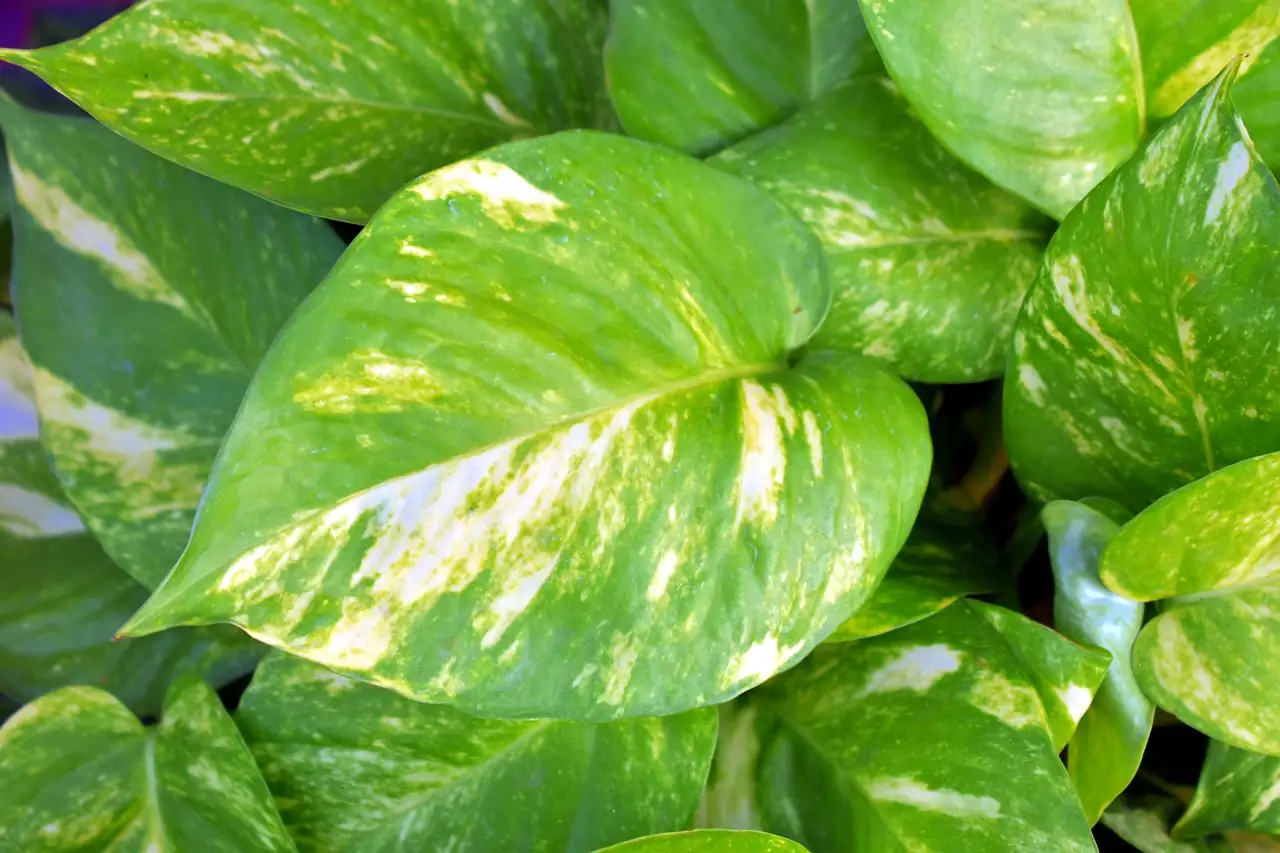
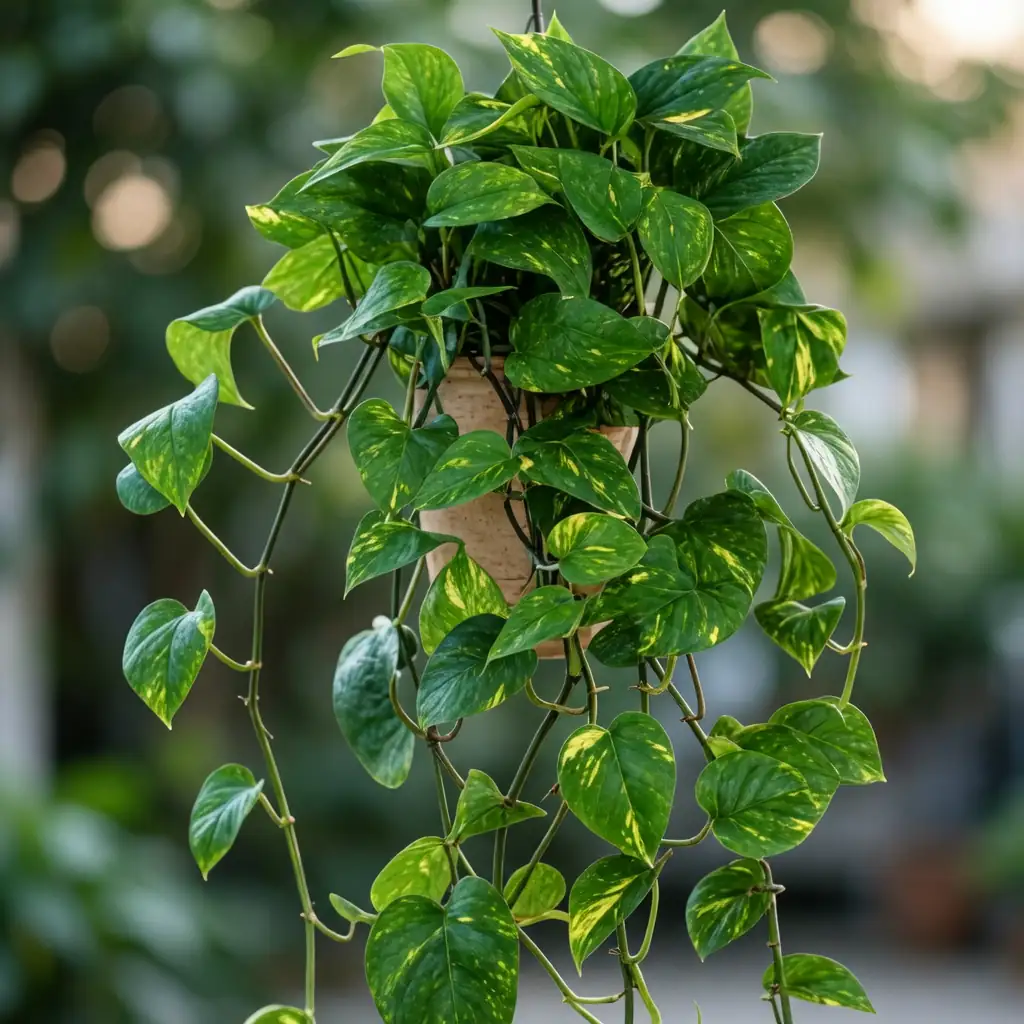
- Foliage: Leaves are smooth, glossy, heart-shaped, and slightly leathery. Color ranges from solid green to green with irregular golden-yellow (or, in some cultivars, creamy white) variegation; variegation typically fades in deep shade. Stems are relatively soft and can snap if handled roughly, so gentle training and occasional trimming keeps the plant neat and balanced.
- Flower: Like many aroids, it can produce a spadix-and-spathe bloom, but flowering is extremely rare indoors and uncommon in cultivation overall. When it does occur, the bloom is small and pale compared with its foliage display.
- Flowering Season: Rare/irregular indoors (sometimes reported in spring or summer, but most houseplants never bloom).
- Growth Habit: Evergreen climbing or trailing vine with aerial roots at the nodes; cascades from pots or climbs readily when given a pole, trellis, or other support.
Environment
Sunlight
Bright, indirect light is ideal; tolerates medium to low light (including fluorescent office light), though low light can reduce variegation and slow growth. Avoid harsh direct sun, which can scorch leaves. A practical placement is near an east window or set back from a south window with filtered light; hanging baskets often do well about 1 m (3.3 ft) from a bright window.
Temperature
Best growth around 18–29°C (65–85°F). Generally happy at 15–25°C (59–77°F). Avoid prolonged chilling; keep above about 10°C (50°F), and ideally at or above 15°C (59°F) in winter. Growth often slows above ~30°C (86°F) or when kept too cool.
Humidity
Adapts to average indoor humidity, but looks best with moderate humidity around 40–60% (or higher). In very dry air, occasional misting/rinsing of foliage and keeping it away from heating vents helps; bathrooms with good light can be excellent.
Soil
A loose, well-draining potting mix in a pot with drainage holes—e.g., quality houseplant mix amended with perlite and/or orchid bark. Slightly acidic to neutral pH is fine (about pH 6.1–6.8). Avoid dense, constantly wet soil.
Placement
Hanging baskets, high shelves, plant stands, or trained up a moss pole/trellis for larger leaves. Great for homes and offices; choose brighter spots for stronger variegation and faster growth, and keep it out of intense direct sun.
Hardiness
Not frost-hardy. Best treated as a houseplant in temperate climates; outdoors year-round only in warm regions (typically USDA Zone 11–12; sometimes listed as 10–12 in very mild areas).
Care Guide
Difficulty
Easy and very forgiving—one of the best “starter plants.” It performs best with steady warmth, a draining mix, and consistent (not excessive) watering.
Buying Guide
Choose a plant with multiple healthy stems for a fuller look, firm (not mushy) nodes, and clean, unblemished leaves. Avoid plants with widespread yellowing/blackening, pests, or a sour smell from the potting mix (often a sign of waterlogging/root problems). Protect it during transport—stems and petioles can bruise or snap.
Watering
Water thoroughly, then let excess drain away. From spring through autumn, water when the top 2–5 cm (1–2 in) of mix feels dry; this is often every 1–2 weeks depending on light and temperature. In winter, water more sparingly and keep the mix just lightly moist (commonly about every 2 weeks), never soggy. It tolerates slight underwatering better than overwatering; a mild droop can be a cue it’s thirsty.
Fertilization
During active growth (spring to early autumn), feed with a balanced liquid houseplant fertilizer about monthly, or every 2 weeks at a more diluted rate (for example, a balanced formula like 20-20-20). Avoid overfeeding—especially excess nitrogen, which can make long, weak growth. For water-grown plants, add a diluted nutrient solution about every 2–4 weeks during growth and refresh the water regularly.
Pruning
Pinch or prune to shape and encourage branching—especially in spring and summer. Cut just above or below a node (depending on whether you want to keep the cutting for propagation). Trim leggy vines, remove yellow leaves, and periodically “reset” older, sparse plants by cutting back and re-rooting healthy sections.
Propagation
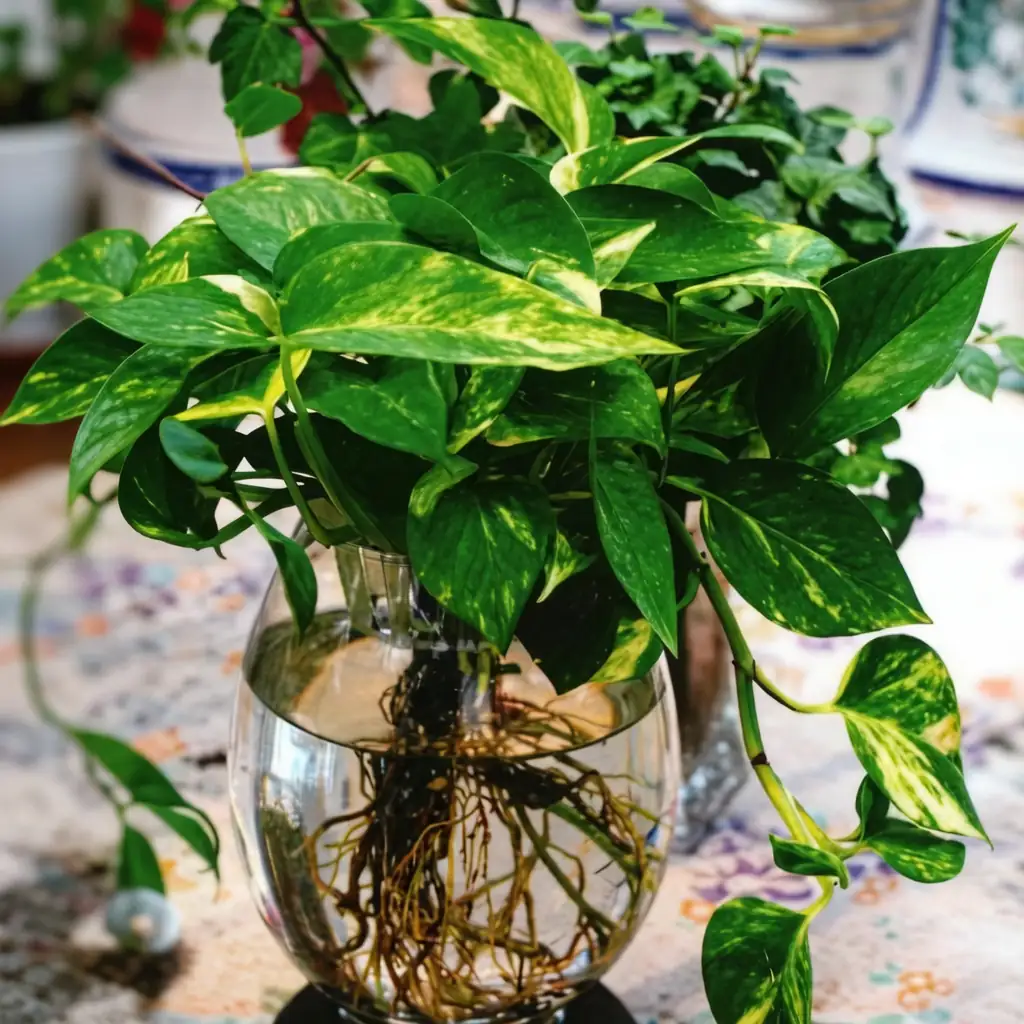
Very easy from stem cuttings. Take a cutting with at least 1–2 nodes (often 10–20 cm / 4–8 in long), remove the lowest leaf, and root in water or moist potting mix. Keep warm and in bright, indirect light; change water regularly if rooting in water. Roots often appear within 1–4 weeks; once roots are about 5–10 cm (2–4 in) long, pot up (or continue growing in water). Best timing is spring through early autumn.
Repotting
Repot about every 2 years (or sooner if root-bound, with roots exiting drainage holes or frequent wilting). Move up 1–2 pot sizes and use fresh, airy mix. Spring is ideal. For mature plants, refreshing the top few centimeters/inches of potting mix each spring can help if you don’t want to upsize the pot.
📅 Seasonal Care Calendar
Spring–Summer: strongest growth—water when the top layer dries, fertilize regularly, prune for shape, and propagate/repot now. Fall: slow down feeding and reduce watering as growth eases. Winter: keep warm (ideally ≥15°C/59°F), water sparingly, and pause fertilizer unless the plant is actively growing; rotate the pot occasionally for even growth.
Pests, Diseases & Safety
Common Pests & Diseases
Most issues come from waterlogged soil (root rot) or stale conditions (leaf spots). Use a draining mix, let the surface dry between waterings, and improve airflow/light if spotting appears—remove damaged leaves. Common indoor pests include spider mites (often in dry air), mealybugs, scale, thrips, and occasionally whitefly. Treat early by rinsing/wiping leaves and using insecticidal soap or horticultural oil; repeat as needed.
Toxicity
Toxic if chewed or ingested by people and pets (cats/dogs) due to insoluble calcium oxalate crystals. Can cause mouth and throat irritation, drooling, vomiting, and difficulty swallowing; sap may irritate skin in sensitive people. Keep out of reach of children and pets.
Culture & Symbolism
Symbolism: Often linked with perseverance, resilience, and steady growth—widely gifted as a “good luck” greenery that just keeps going. Its easy rooting in water also gives it a reputation as a “life plant.”
History & Legends: Golden pothos has been grown as a houseplant for generations and became globally popular because it’s so adaptable indoors. It was long sold under an older name (Scindapsus aureus), but is now correctly placed in the genus Epipremnum as Epipremnum aureum. The nickname “Devil’s Ivy” comes from its near-indestructible reputation and its ability to stay green even in dim conditions (though it won’t truly thrive in darkness).
Uses: Primarily an ornamental indoor foliage plant for shelves, hanging baskets, and training up supports. It’s also widely used for simple water-grown displays and for sharing—cuttings are easy to root and gift. It’s frequently mentioned as an “air-purifying” plant in popular culture; while real-world impact depends on room size and airflow, it can still be a great morale-boosting, greenery-rich houseplant.
FAQ
Why are my golden pothos leaves turning yellow?
The most common cause is overwatering (roots stay too wet and begin to rot). Other causes include long-term low light, sudden cold or heat stress, poor airflow, pests, or an old vine shedding lower leaves. Check the soil moisture and drainage first, inspect roots if the pot stays wet, increase light to bright-indirect, and water only when the top layer dries.
What temperature is best?
Aim for about 18–29°C (65–85°F), and try to keep it above 15°C (59°F) for best growth. Avoid prolonged exposure below about 10°C (50°F).
How much light does it need?
Bright, indirect light is ideal. It tolerates medium to low light, but growth slows and variegation may fade. Avoid harsh direct sun to prevent leaf scorch.
How should I water it?
Water thoroughly when the top 2–5 cm (1–2 in) of soil is dry, then drain excess. In winter, water less—keep it lightly moist, not wet.
How often should I fertilize?
Feed during spring through early autumn about monthly (or every 2 weeks at a diluted rate). Reduce or stop feeding in winter if growth slows.
When should I prune it?
Prune mainly in spring and summer to control length and encourage a bushier plant. Pinch tips, trim leggy vines, and remove yellow leaves as needed.
How often should I repot or refresh the soil?
Repot about every 2 years, or sooner if it’s root-bound. For large, mature plants, refreshing the top layer of potting mix in spring can help.
Can pothos grow in water permanently?
Yes. It can live long-term in water if you change/refresh the water regularly and provide diluted nutrients occasionally. Keep leaves above the waterline and rinse the container now and then to reduce buildup.
How do I make my pothos bushier?
Prune to encourage branching, and replant rooted cuttings back into the same pot to thicken it up. Brighter indirect light also helps it grow fuller and less leggy.
Should pothos climb or trail?
Either works. Trailing gives a classic cascading look, while climbing a moss pole often produces larger leaves and a more dramatic, tropical feel.
Is it toxic?
Yes—keep it away from pets and small children, as chewing can cause painful mouth irritation and stomach upset.
Fun Facts
- If you let it climb (instead of trail), it can develop noticeably larger leaves—closer to how it grows in nature.
- A single node cutting in water is often enough to start a whole new plant.
- Golden pothos rarely flowers; research has linked this to a hormonal/gibberellin-related limitation in many cultivated plants.
- It can become invasive in some tropical regions where it escapes cultivation, thanks to its fast, vigorous growth.
- Water-grown pothos can make impressively long, decorative root systems in clear vases.