

The Bird’s Nest Fern: Nature’s Quirkiest Interior Designer
Imagine strolling through a tropical rainforest, where the air is thick with humidity and the canopy above filters sunlight into a soft, verdant glow. There, nestled comfortably in the crook of a tree, you might spot the Bird’s Nest Fern—nature’s version of a stylish, self-sustaining apartment. With its broad, glossy fronds unfurling like green ribbons from a tight central rosette, the Asplenium nidus is a plant with a penchant for drama and adaptability.
In the Wild: A Master of Adaptation
Native to the lush rainforests of tropical Asia, Australia, and the Pacific islands, the Bird’s Nest Fern is an epiphyte, which means it prefers to grow upon other plants, particularly trees. But don’t mistake it for a freeloading parasite—it’s more like a polite houseguest, using its host tree as a convenient perch while it gathers water and nutrients from rain and decaying matter caught in its rosette “nest.”
This clever plant can also set up shop on rocks or in soil, proving its adaptability. In the wild, its fronds can unfurl to impressive lengths of 3 to 5 feet, making it a true giant in its natural habitat. Indoors, it typically maintains a more modest size, reaching about 24 to 48 inches in height and width, depending on the cultivar and care.
The Quirky Characteristics
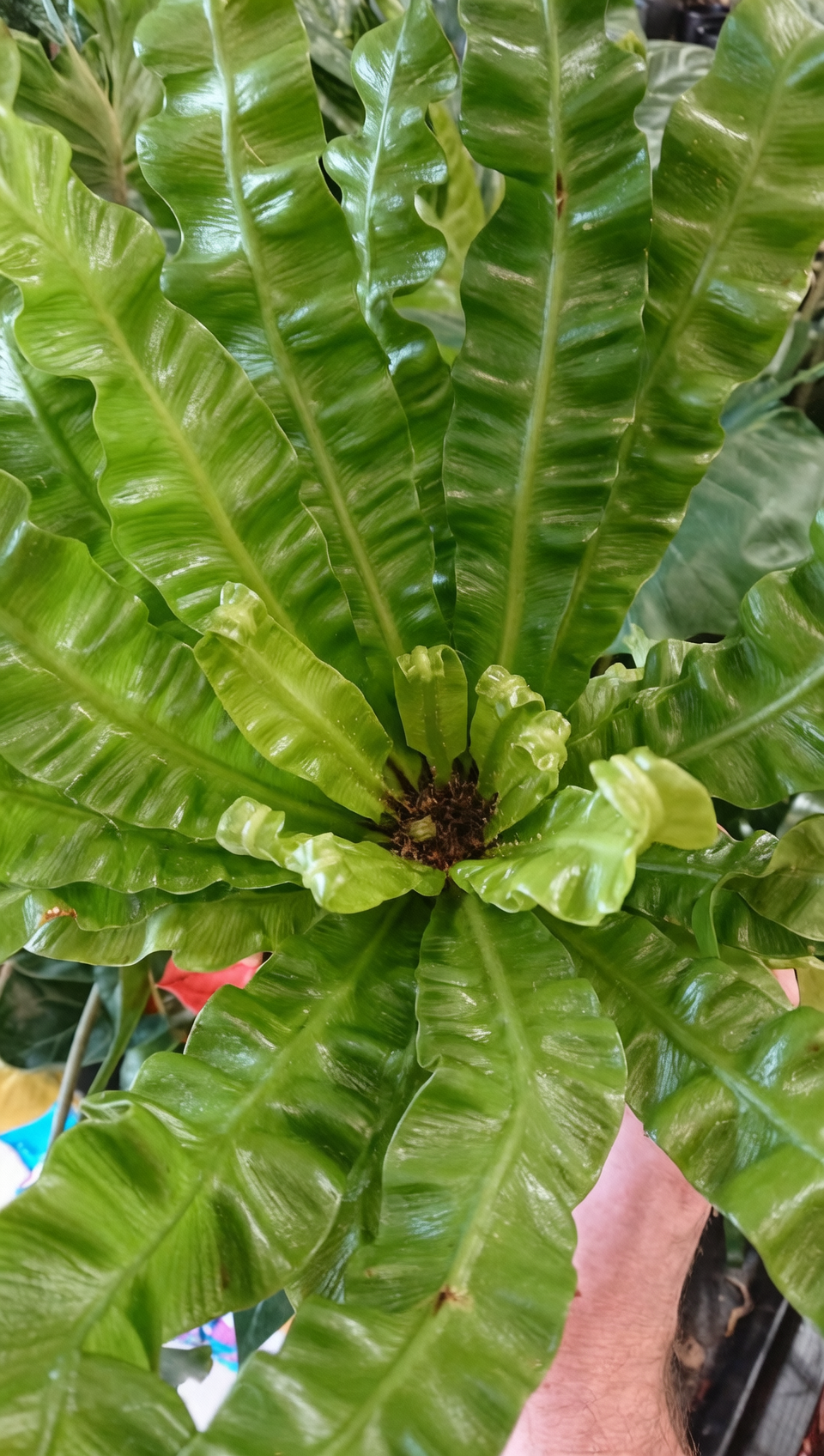
The Bird’s Nest Fern is a visual delight. Its fronds, which range from bright apple-green to a deeper forest hue, have a distinctive dark midrib running down the center. This feature, combined with the plant’s vase-like shape, allows it to capture water and organic debris, essentially creating its own little compost pile. It’s like having a tiny gardener on your windowsill, quietly sustaining itself with minimal fuss.
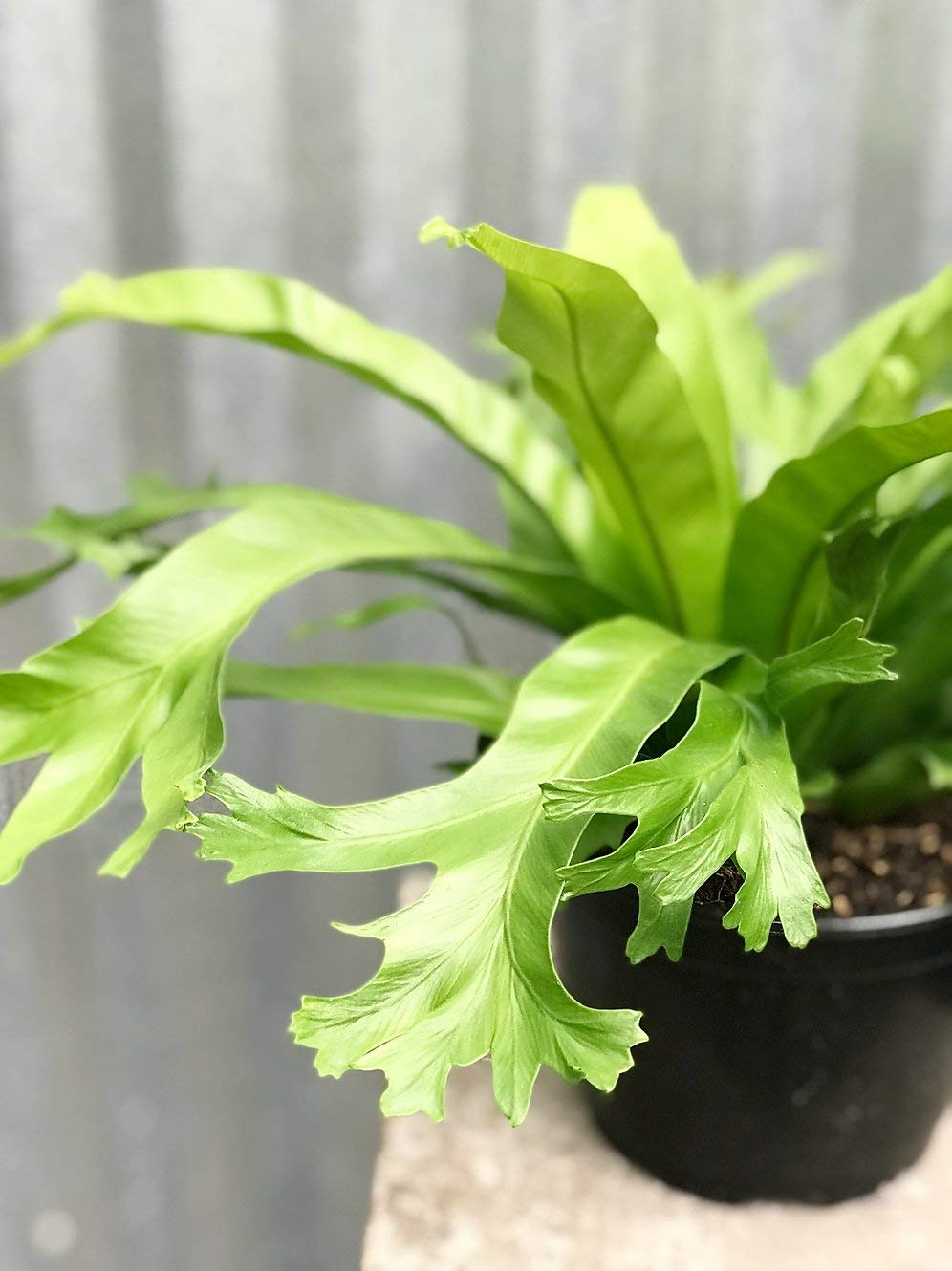
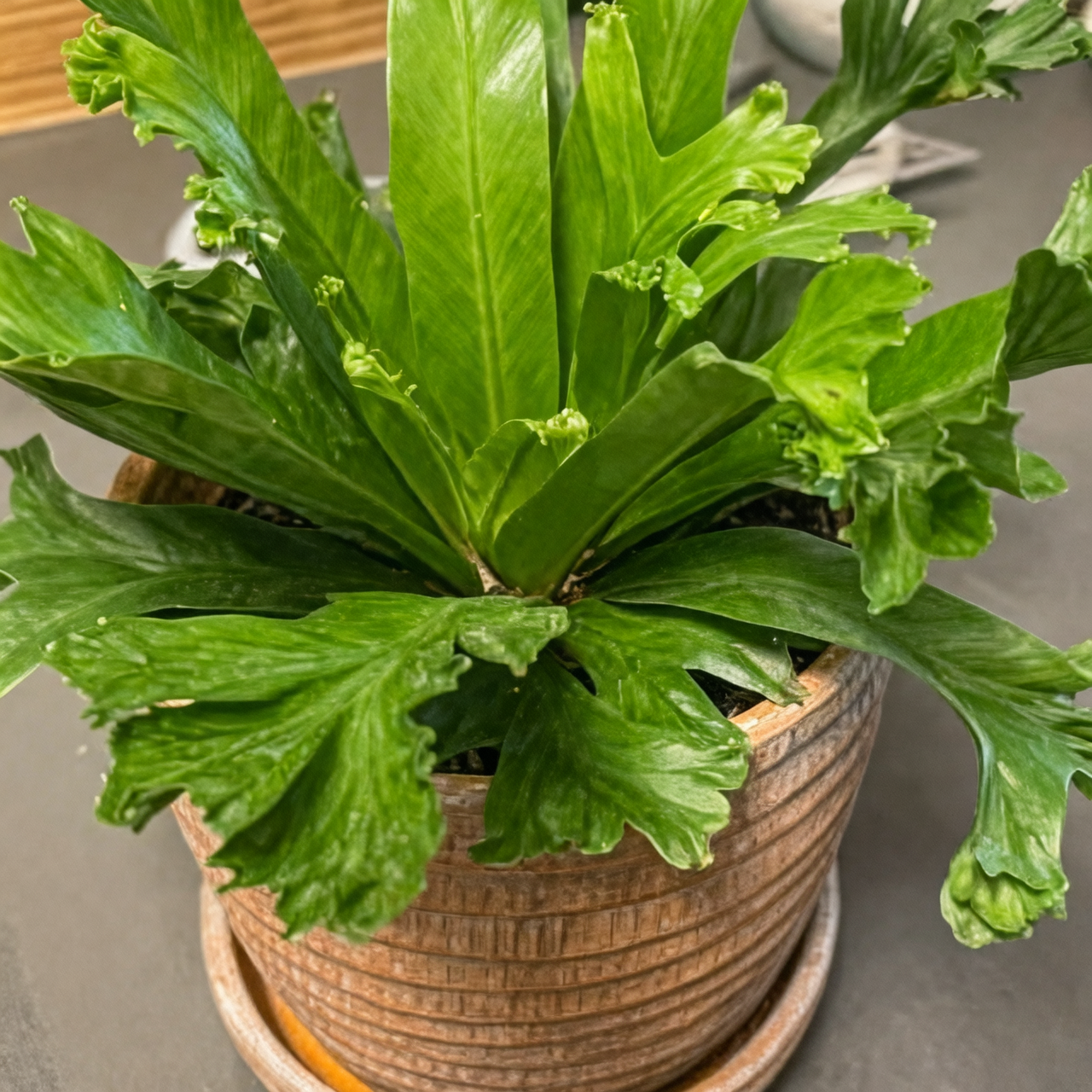
The plant also has its fair share of aliases, including Birdnest Fern, Crispy Wave, and Nest Fern. These names often nod to the playful, ruffled forms of its fronds, which add a sculptural touch to any indoor space. Whether you choose a classic variety or a crinkled cultivar like the “Crispy Wave,” you’re in for a treat.
Bringing the Tropics Indoors
If you’re thinking of adding this quirky fern to your home, consider its love for bright, indirect light and a humid environment. Bathrooms and kitchens can be ideal spots, as long as the light is adequate. Just steer clear of direct sunlight, which can leave its delicate fronds scorched and unhappy.
The Bird’s Nest Fern is surprisingly easy to care for, especially compared to its fussier fern cousins. It prefers its potting mix to be consistently moist but well-draining, avoiding the soggy conditions that might lead to root rot. And while it thrives in warm temperatures ranging from 60 to 80°F, it’s best kept away from chilly drafts.
The Art of Fern Maintenance
Despite its easy-going nature, the Bird’s Nest Fern does have a few quirks. Avoid pouring water directly into its center rosette, as this can lead to crown rot. Instead, water the soil around the plant. And while it doesn’t require much pruning, any yellow or brown fronds can be trimmed at the base with sterilized scissors.
As for propagation, it’s a task best left to patient plant enthusiasts. The fern reproduces via spores, which can be collected and sown, though it’s a slow and meticulous process. For the less patient, dividing a multi-crown clump during spring repotting is a practical alternative.
Fun Facts and Folklore
In feng shui and modern décor, the Bird’s Nest Fern is often associated with harmony and renewal, thanks to its fresh, verdant appearance and nest-like structure. Some even say it brings good luck and protection to a home, making it a thoughtful gift for plant-loving friends.
Historically, the fern has been linked with the idea of home and shelter, a fitting metaphor given its architectural rosette and habit of creating small ecosystems within its fronds. In Southeast Asia, it’s even been associated with nurturing energy.
Ready for Your Own Green Companion?
If you’re ready to welcome a Bird’s Nest Fern into your home, look for a plant with a symmetrical rosette and healthy, green fronds. Avoid those with a blackened center or crispy edges, which might indicate stress.
Whether perched on a shelf or hanging in a basket, the Bird’s Nest Fern brings a touch of the tropics indoors, offering both a visual treat and a reminder of nature’s whimsical adaptability. So, why not give this quirky plant a try? It might just make your space feel a little more like a rainforest retreat.