🌱 Plant Features
- Size:Typically 30–60 cm (12–24 in) tall and about 30–50 cm (12–20 in) wide, though many pot-grown plants stay around 30 cm (12 in). In containers it’s often around 40 × 25 cm (16 × 10 in) depending on cultivar. Common pot size: 12–15 cm (4.7–5.9 in) diameter; some grow well in 12.5–20 cm (5–8 in) pots.
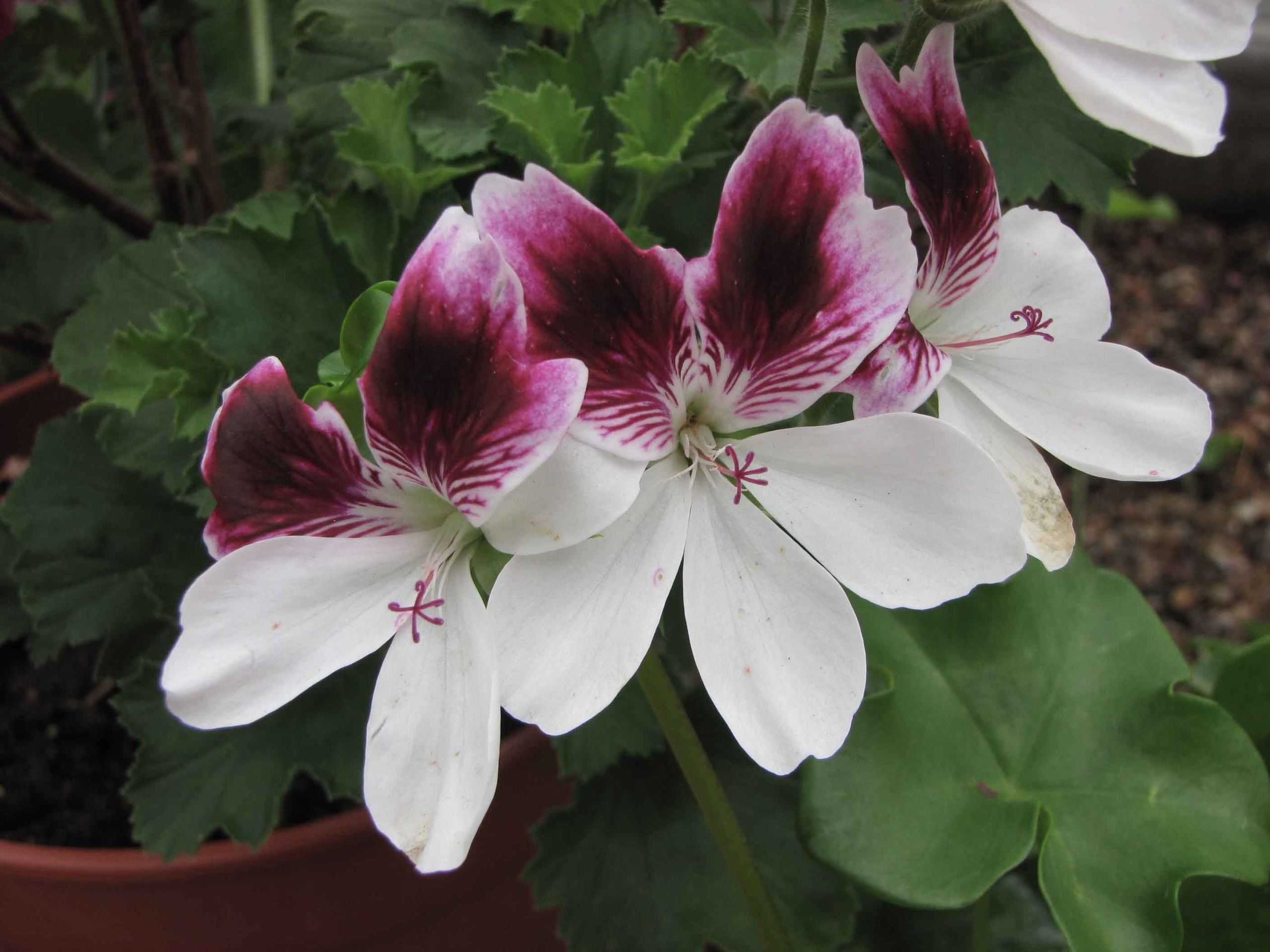
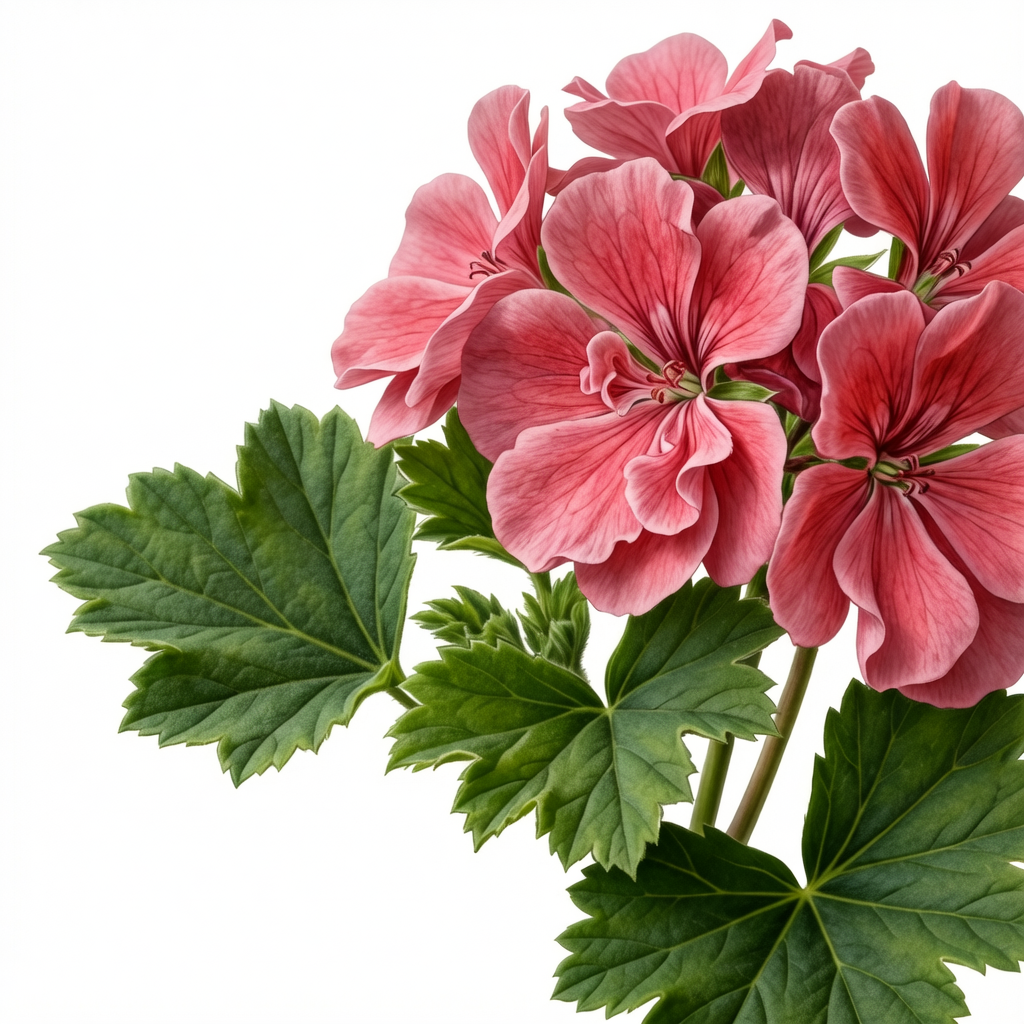
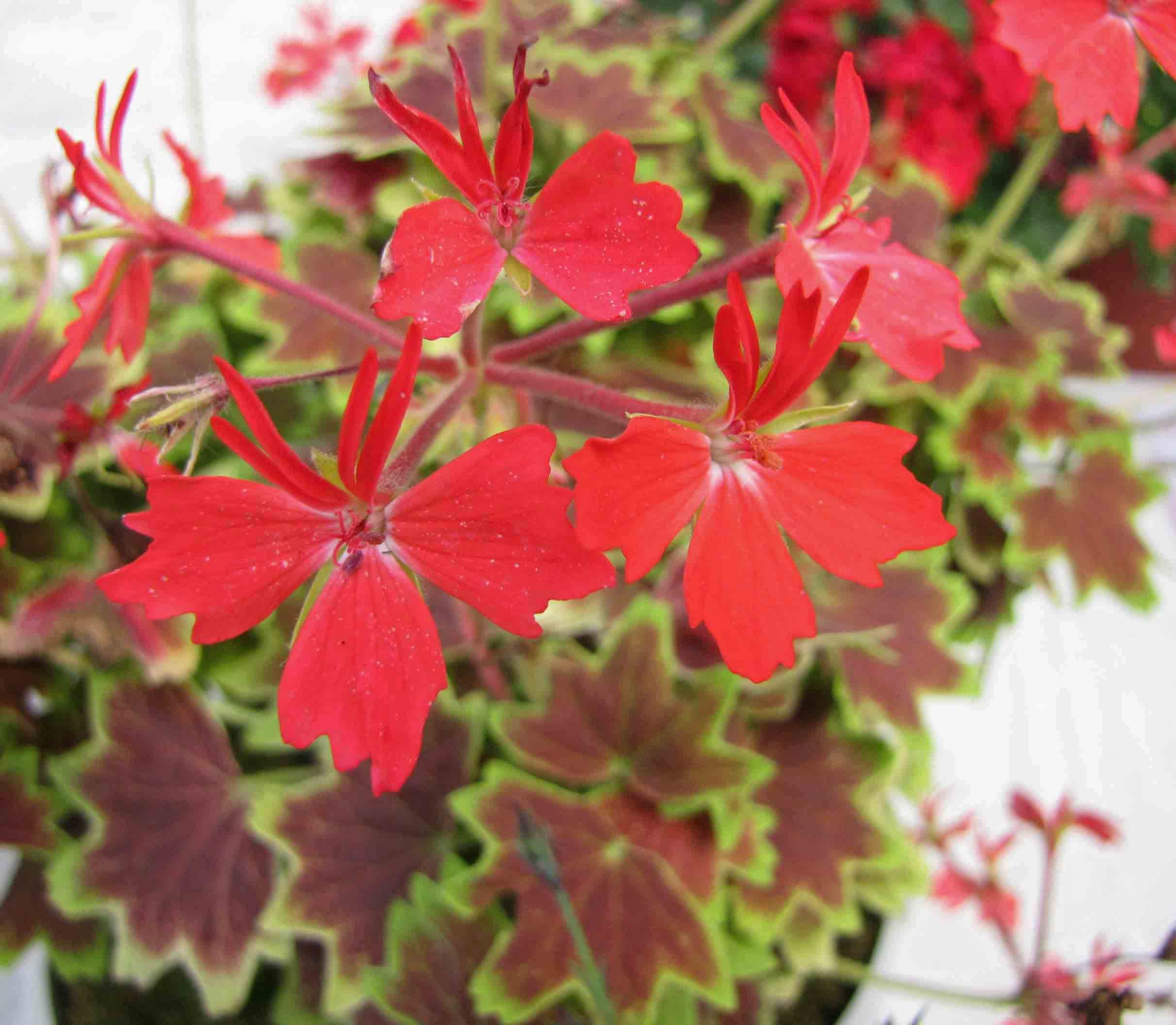
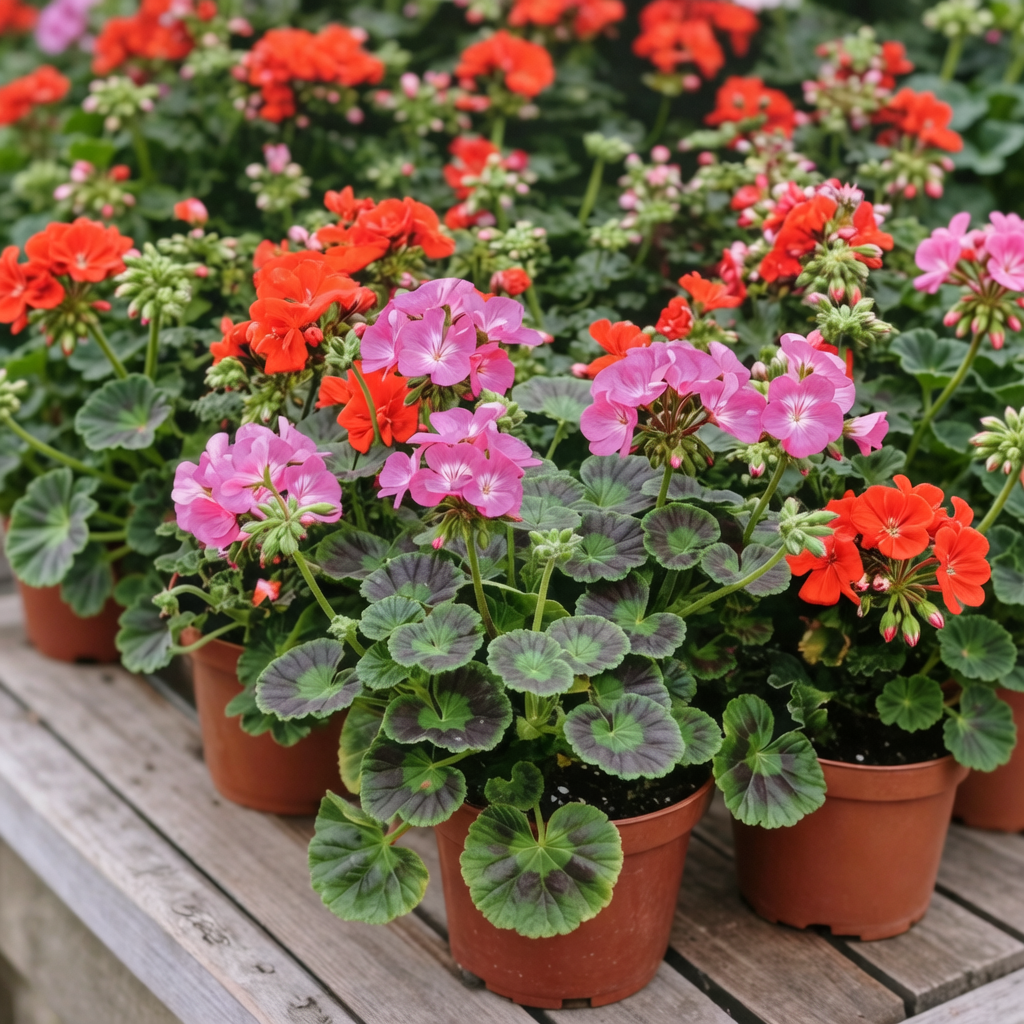
- Foliage:Leaves are usually rounded to kidney-shaped with softly scalloped edges, often showing a darker circular or horseshoe-like “zone” typical of zonal types. Many cultivars have fine hairs, and some pelargoniums release a noticeable scent (lemon, mint, rose, apple-like) when brushed. Dense green foliage is a good sign; yellowing lower leaves often hints at tired, compacted mix, poor drainage, or low fertility.
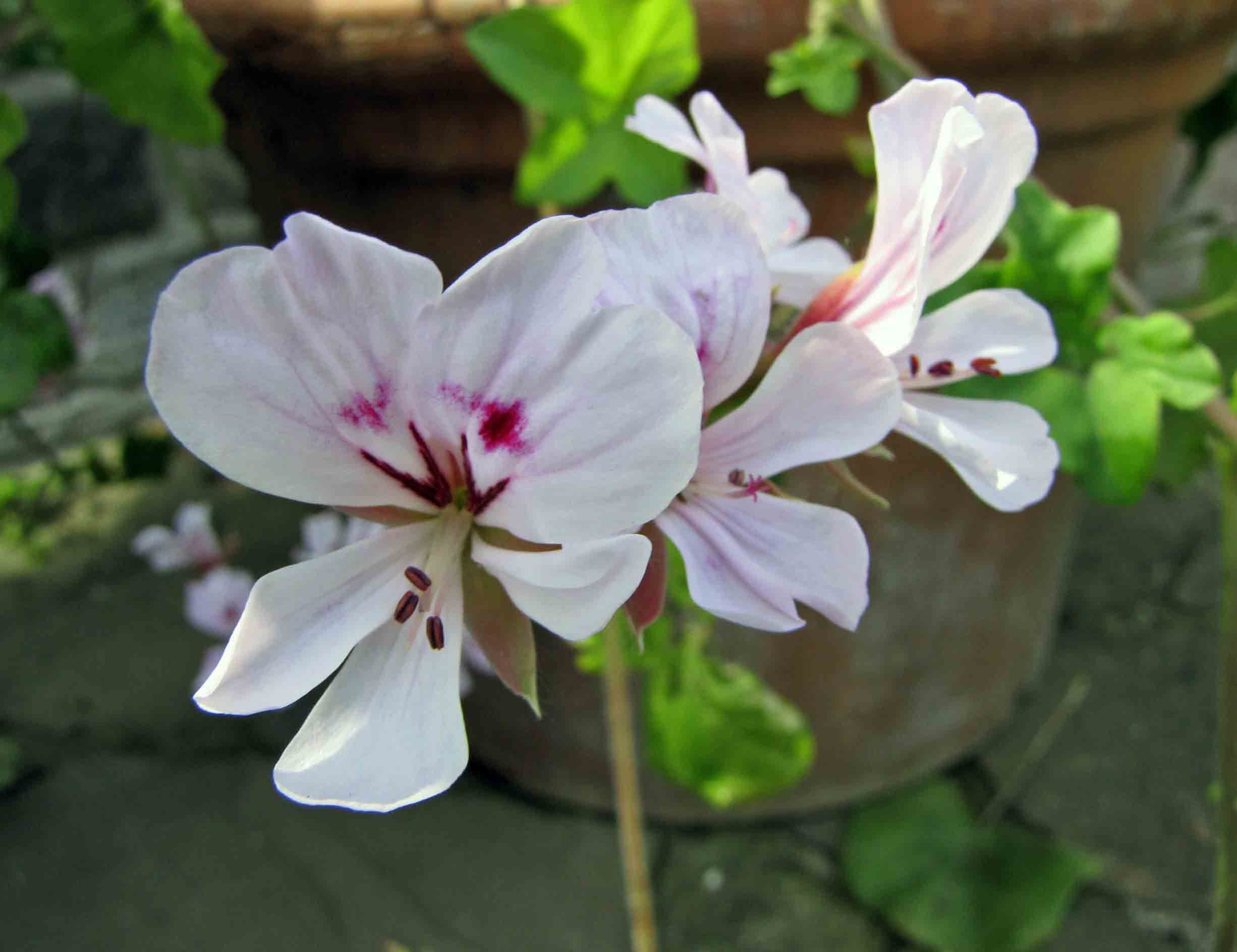
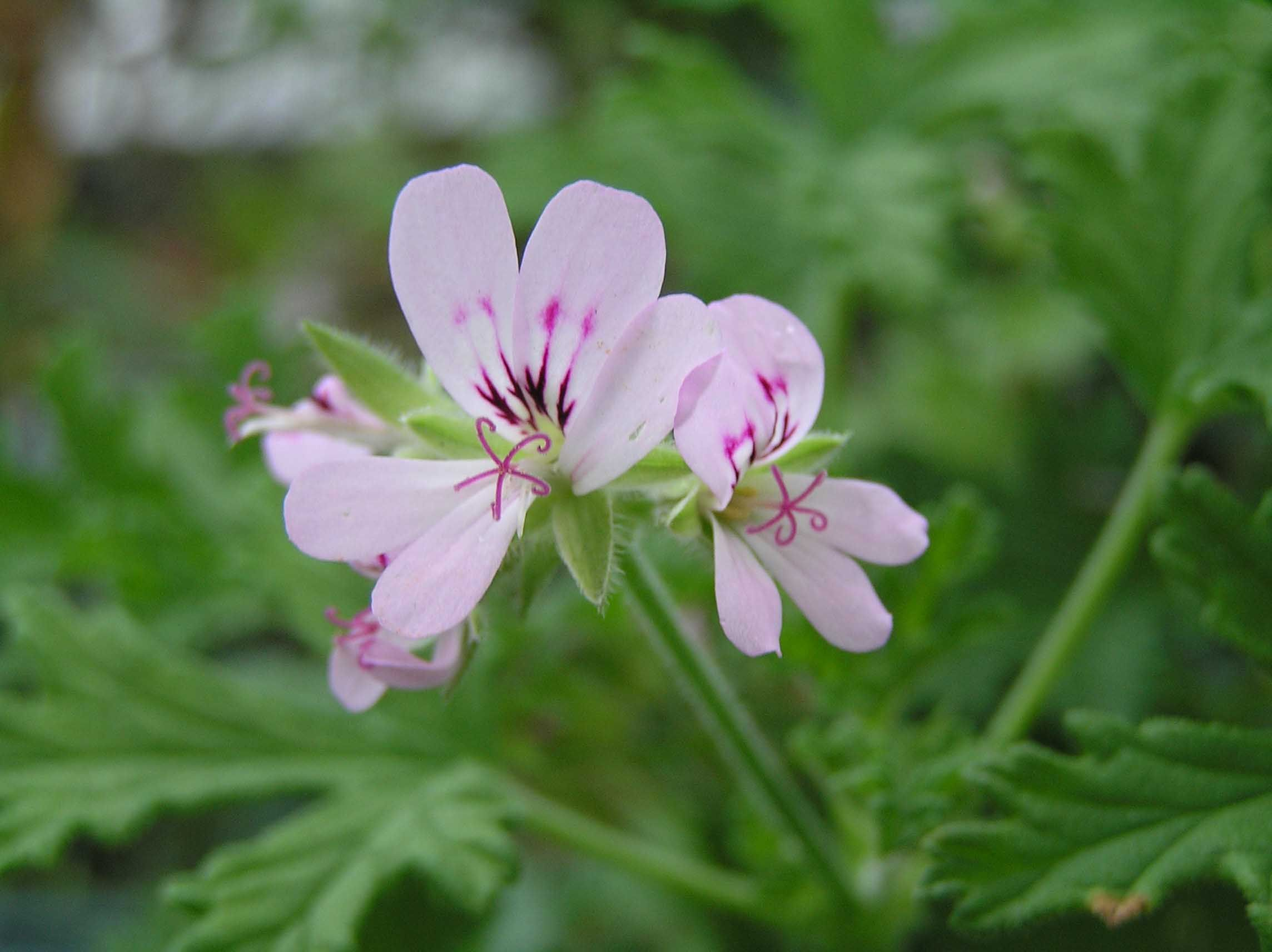
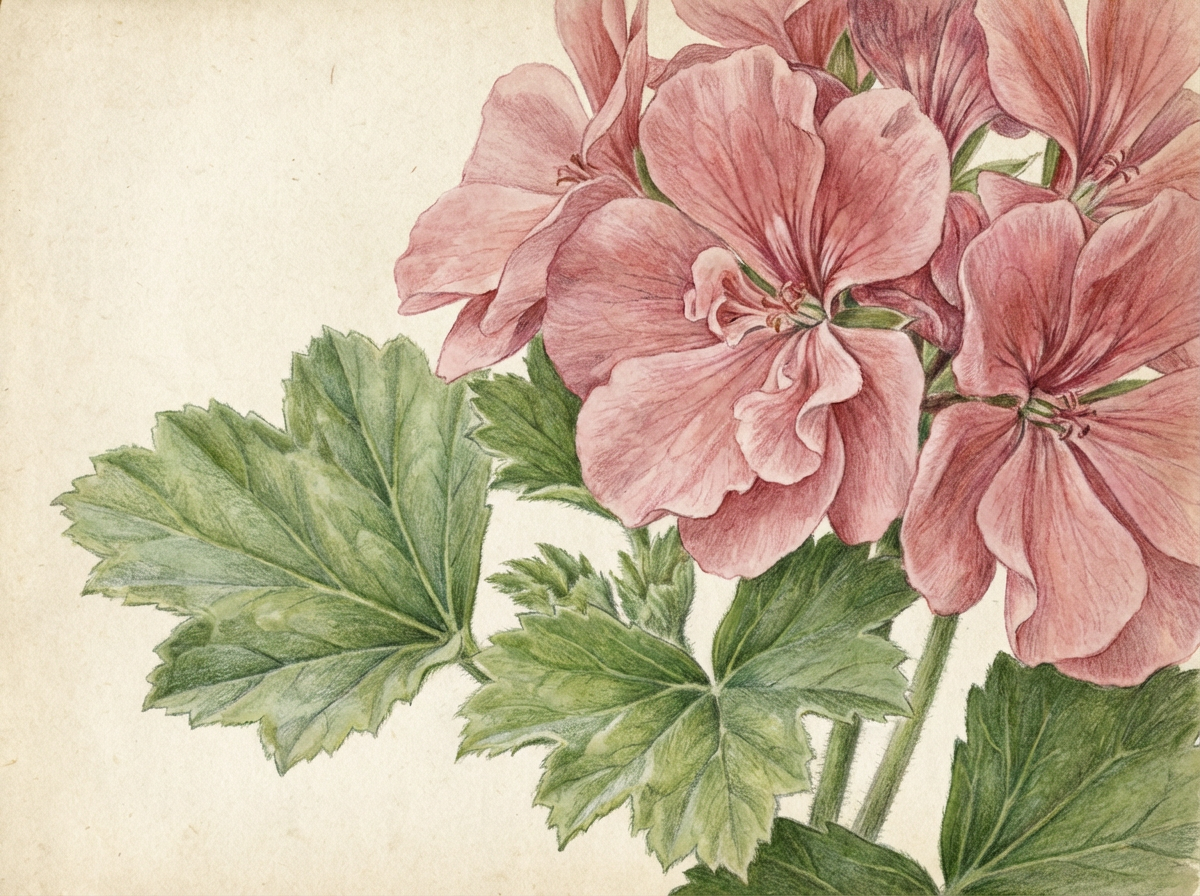
- Flower:Flowers are held in showy, rounded clusters (umbel-like heads). Individual blooms commonly have five petals and come in vivid red, orange-red, pink, and white, with many bicolored and double-flowered varieties available. Regal pelargoniums tend to have larger, showier blooms, while scented-leaf types may flower more simply—zonal geraniums are prized for the best balance of strong leaf display and abundant flower heads.
- Flowering Season:Spring through autumn outdoors, with main flushes in spring and fall; may bloom for much of the year indoors in very bright light. Many sources cite May–July as a strong peak in temperate climates.
- Growth Habit:Compact, bushy, upright-to-mounding tender perennial/subshrub. Stems start fleshy and green, becoming semi-woody at the base with age; branching increases with pinching and pruning.
🌤️ Environment
Sunlight
Bright light to full sun. Aim for at least 4–6 hours of direct sun for best flowering; it tolerates some shade but becomes leggy and blooms less. In hot climates or during heatwaves, protect from harsh midday sun (especially through glass) and prioritize ventilation.
Temperature
Best around 10–25°C (50–77°F), with many growers finding 15–20°C (59–68°F) ideal for steady growth. Bud initiation is often strongest around 16°C (61°F). Keep above 5°C (41°F) in winter; protect from frost. Prolonged heat (above ~25°C / 77°F), especially with wet soil, can cause a semi-dormant slowdown.
Humidity
Low to moderate humidity with good airflow. It dislikes stagnant, damp conditions; good ventilation helps prevent gray mold and leaf spot.
Soil
Free-draining, airy, fertile mix. A good approach is all-purpose potting mix amended with coarse sand/grit/perlite, plus some composted bark/leaf mold for structure. Drainage is non-negotiable—heavy, waterlogged media invites root rot.
Placement
Sunny balcony, patio containers, and bright windowsills (east or south exposure is excellent). Indoors: a very bright, airy spot with good air circulation. Outdoors in midsummer: shelter from harsh midday sun and heavy, soaking rain where possible.
Hardiness
Tender; generally grown outdoors year-round only in USDA Zones 10–11 (often also workable in warm Zone 9 with protection). In colder zones, treat as a seasonal plant or overwinter indoors before frost.
🪴 Care Guide
Difficulty
Easy to moderate—very beginner-friendly once you master two basics: give it strong light and avoid constantly wet soil. Good airflow is the third secret weapon for keeping leaves clean and flowers coming.
Buying Guide
Choose a compact, well-shaped plant (often under about 30 cm / 12 in for typical retail pots) with dense green leaves, lots of buds, and a few open blooms. Avoid yellowing foliage, leggy stems, soggy pots, or visible pests (whiteflies, mites) and moldy flowers. After purchase, place in strong light (east/south is ideal), keep cool-to-mild if possible (around 10–12°C / 50–54°F is often recommended for settling in), and water only as the mix begins to dry—don’t let it sit in a water-filled saucer.
Watering
Water thoroughly, then let the potting mix dry slightly before watering again. A practical rule: water when the top 2–3 cm (about 1 in) feels dry. During active growth this is often about once a week, but in hot weather it may be 2–3 times weekly depending on pot size and sun; in winter, reduce to sparing watering (often every 7–10 days or when nearly dry). Always empty excess water from saucers, water at the base (not over the leaves/flowers), and remember: overwatering is the fastest way to yellow leaves, botrytis, and root rot.
Fertilization
Feed regularly during active growth. Common schedules are every 2 weeks (or every 2–4 weeks for lighter feeding) using a balanced liquid fertilizer in spring. As buds form and flowering ramps up, shift toward a bloom-leaning/high-potassium feed (e.g., tomato fertilizer or a formulation such as 15-15-30) to encourage flowers over leaves. Avoid excessive nitrogen (lush foliage, fewer blooms). Use half-strength if the plant seems sensitive, and avoid splashing fertilizer solution onto tender new growth. Pause or greatly reduce feeding in late fall/winter when growth slows.
Pruning
Pinch young plants when they reach about 12–15 cm (4.7–5.9 in) to encourage branching and a fuller shape. Deadhead promptly by removing spent flower clusters/stems to keep new bloom stalks coming. If plants get leggy, cut back by about 1/3–1/2 and keep conditions bright, airy, and slightly cooler while they regrow. A main structural prune is often done in early spring before strong new growth, rather than heavy winter pruning.
Propagation
Very easy from cuttings. Take 10–15 cm (4–6 in) non-flowering tip cuttings in late spring through early fall. Remove lower leaves, let the cut end dry briefly to reduce rot risk, then insert into a free-draining mix (peat/coco + perlite/sand). Keep in bright indirect light at about 13–18°C (55–64°F); many cuttings root in roughly 2–3 weeks (sometimes 14–21 days). Rooting hormone (IBA) is optional but can improve speed and root mass. Seeds are also possible: sow in spring or fall, cover lightly, and keep warm; germination commonly takes 1–3 weeks, and plants may flower about 16–18 weeks after sowing (timing varies by cultivar and conditions).
Repotting
Repot every 1–2 years (often yearly for best vigor) using fresh, gritty, free-draining mix. Typical pot sizes range from 12.5–20 cm (5–8 in); many common plants do well around 12–15 cm (4.7–5.9 in). Repot after a flowering flush—commonly in March–April or September–October—moving only one pot size up. Ensure drainage holes and don’t bury stems deeper than before.
📅 Seasonal Care Calendar
Spring: Increase light, watering, and feeding; prune back before strong growth; repot in March–April; start seeds if desired.
Summer: Protect from harsh midday sun in very hot weather; keep airflow high; let mix dry slightly between waterings; switch to higher-potassium feeding during strong flowering; take cuttings late spring to late summer.
Fall: Prime bloom season in many climates; repot in September–October if needed; continue bloom fertilizer while actively flowering; take cuttings late summer–early fall to overwinter young plants.
Winter: Bring indoors before frost; keep above 5°C (41°F) and ideally around 10–15°C (50–59°F); give maximum light; water sparingly (mix almost dry but not bone-dry for long); minimal feeding.
🔬 Pests, Diseases & Safety
Common Pests & Diseases
Most troubles come from still air + wet mix. Diseases: botrytis/gray mold (papery browning flowers, gray fuzz), rust (yellow spots above, brown pustules below), bacterial leaf spot/blight, and root rot (especially Pythium) from overwatering. Prevention: strong light, good airflow, remove spent blooms and infected leaves, avoid overhead watering, and let the mix dry slightly between waterings. Pests: aphids, whiteflies, spider mites (especially indoors), mealybugs, and sometimes budworms/caterpillars that chew buds and flowers. Manage early with isolation, rinsing, sticky traps, insecticidal soap/horticultural oil, and targeted treatments when necessary.
Toxicity
Low to mild toxicity overall. Pelargonium foliage and sap can irritate sensitive skin, and chewing larger amounts may cause mild gastrointestinal upset (vomiting, drooling, reduced appetite) in pets such as cats and dogs; some sources note broader sensitivity in animals including horses. Keep plants out of reach of pets that like to nibble and wash hands after handling if you’re prone to dermatitis.
🎋 Culture & Symbolism
Symbolism:Often associated with happiness, friendship, good wishes, and a sense of “good things ahead.” In flower-language traditions, red can signal “you’re on my mind,” pink suggests warmth and companionship, and white leans toward purity and sincerity.
History & Legends:Although commonly called “geraniums,” most balcony and bedding “geraniums” are actually Pelargonium, a group largely native to southern Africa. They became European favorites from the 1600s onward as plant collectors introduced South African species to botanical gardens and home collections, eventually leading to a huge wave of hybridizing for color, form, and scent. Folklore in some places credits geraniums with protective qualities—plants for the sunny windowsill that keep a home feeling bright in more ways than one.
Uses:Primarily ornamental—perfect for patio pots, window boxes, hanging baskets, and sunny borders during frost-free months, and also excellent as a bright-window houseplant. Scented-leaf pelargoniums are grown for aromatic foliage, and pelargonium essential oils (notably from rose-scented types such as Pelargonium graveolens) are widely used in perfumery and aromatherapy-style products as a rose-like note.
❓ FAQ
Why isn’t my zonal geranium blooming well?
The usual causes are not enough sun (aim for 4–6+ hours of direct light), too much nitrogen fertilizer (lots of leaves, few flowers), and soil kept too wet (roots sulk and buds drop). Move it brighter, let the mix dry slightly between waterings, deadhead regularly, and switch to a higher-potassium “bloom” feed during active flowering.
How often should I water it?
Water thoroughly when the top 2–3 cm (about 1 in) is dry. In active growth that’s often about once a week, but sunny, hot conditions can push it to 2–3 times weekly. In winter indoors, water sparingly—often every 7–10 days—keeping the mix almost dry but not left soggy.
Can I overwinter it indoors?
Yes. Bring it inside before frost, place it in the brightest spot you have, keep it above 5°C (41°F) (ideally 10–15°C / 50–59°F), and water lightly. Many people also take cuttings in late summer/early fall as an easy “backup plan.”
My lower leaves are turning yellow—what does that mean?
Most commonly it’s overwatering or a tired, compacted potting mix that drains poorly. It can also be hunger (low fertility) or low light indoors. Check drainage, let the mix dry a bit more between waterings, repot into fresh airy mix if it’s been in the same pot a long time, and resume steady feeding during growth.
Is it safe around pets?
It’s generally considered low-to-mildly toxic, but pets that chew it can get stomach upset, and the sap may irritate skin. If your pet is a habitual plant-nibbler, keep it out of reach or choose a pet-safe alternative.
💡 Fun Facts
- Most plants sold as “geraniums” for balconies are actually Pelargonium; “true geraniums” are hardy cranesbills in the genus Geranium.
- Zonal geraniums get their name from the darker band (“zone”) often visible on the leaf blade.
- Many pelargoniums are grown as much for scent as for flowers—some leaves smell like rose, lemon, mint, or even apple when rubbed.
- Cuttings root quickly (often in about 2–3 weeks), which is why sharing geranium starts is such a long-standing gardening tradition.