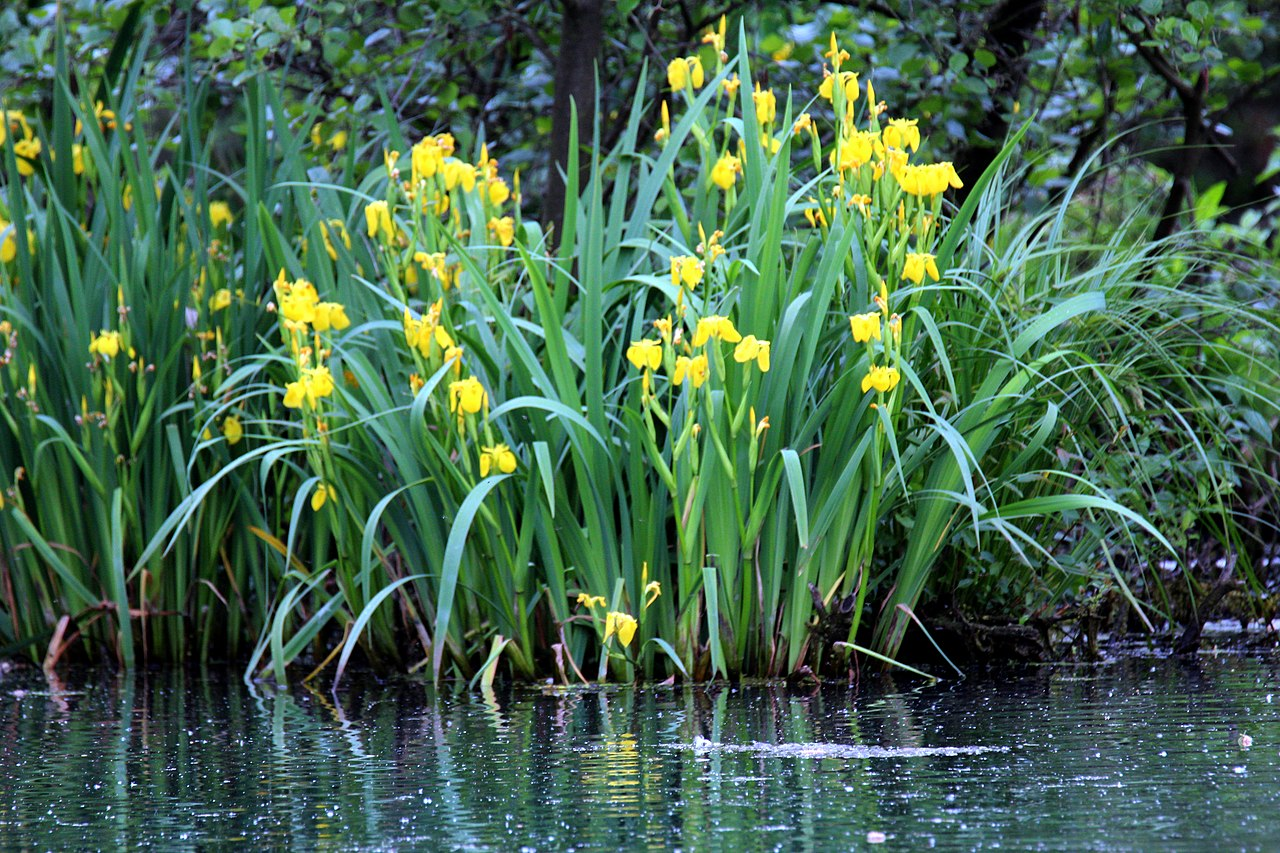
🌱 Plant Features
- Size:Typically 60–120 cm (24–48 in) tall; clumps can spread 60–100 cm (24–39 in) wide over time.
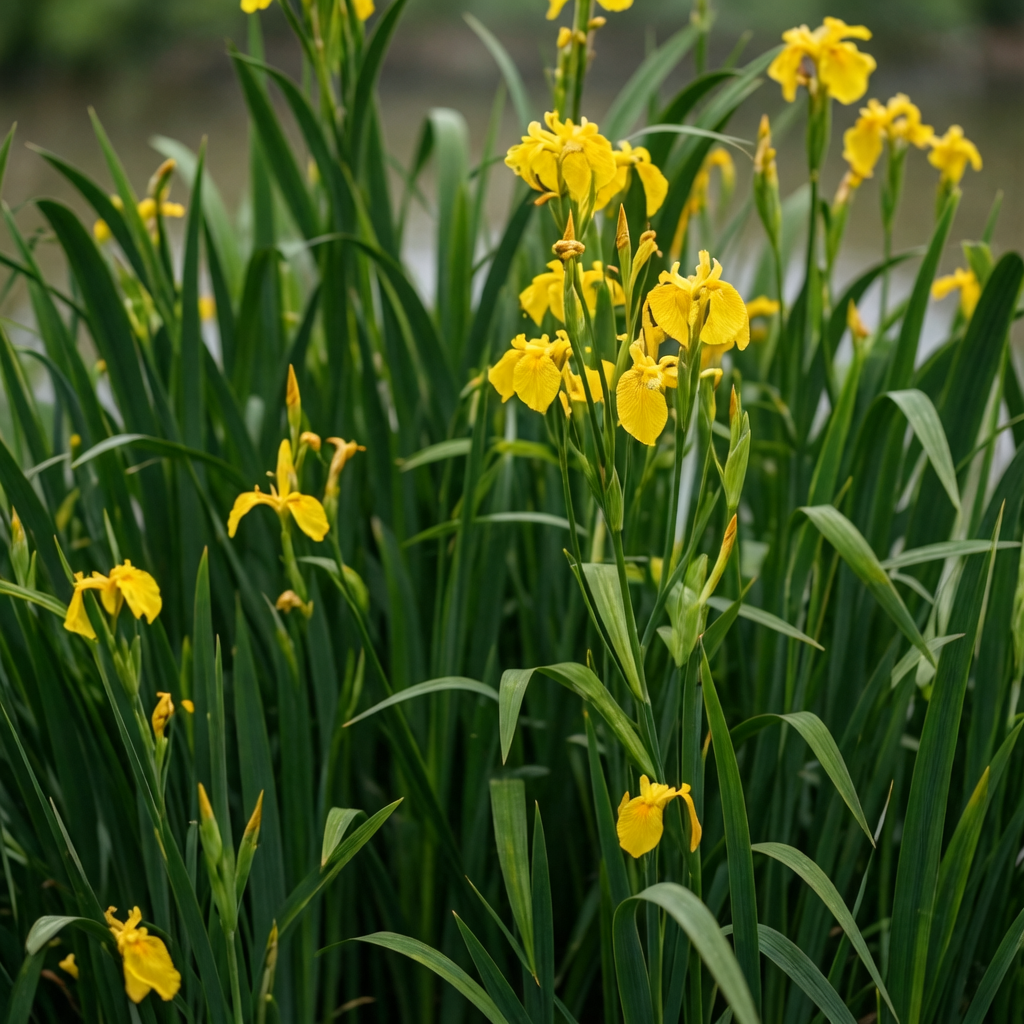
- Foliage:Broad, strap- to sword-shaped leaves with pointed tips, light to mid-green. The leaves show a prominent midrib with fine netted side veins and arise from short, thick rhizomes, creating dense, upright fans.
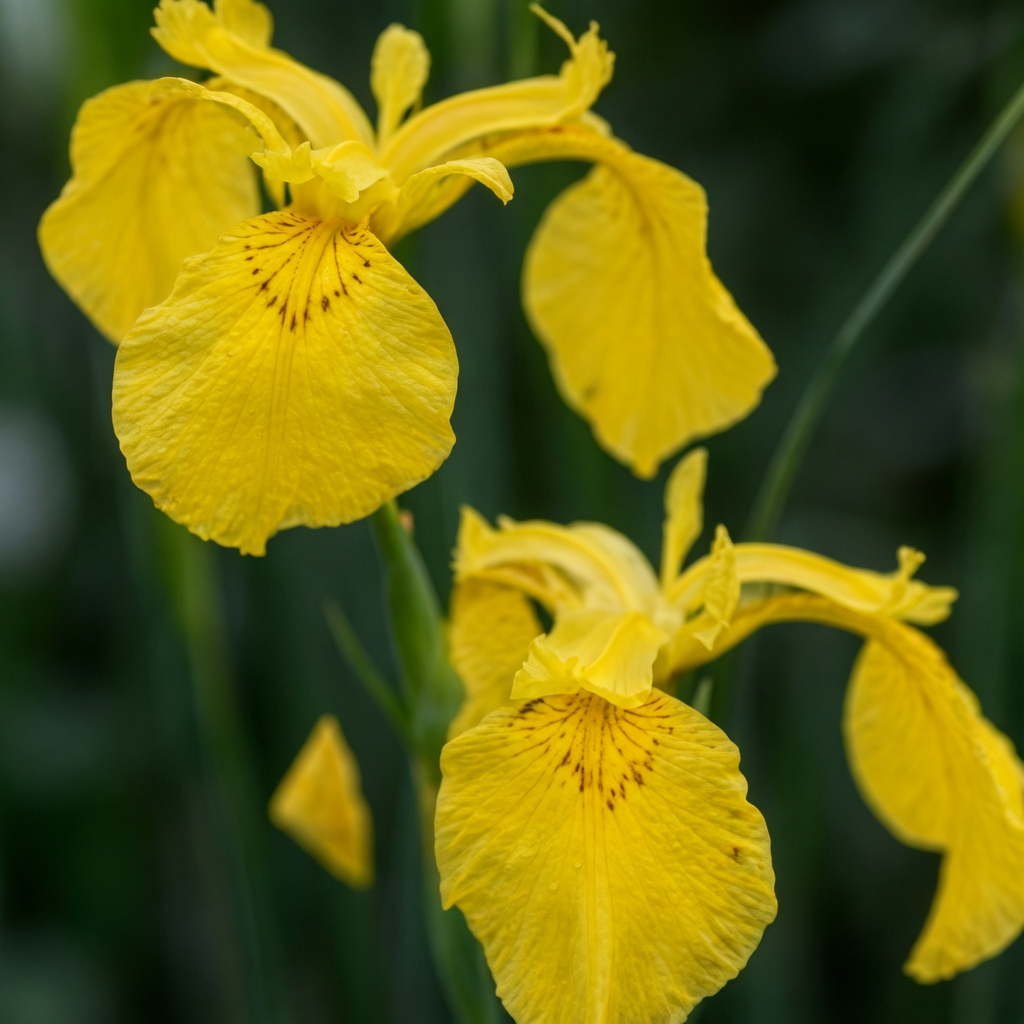
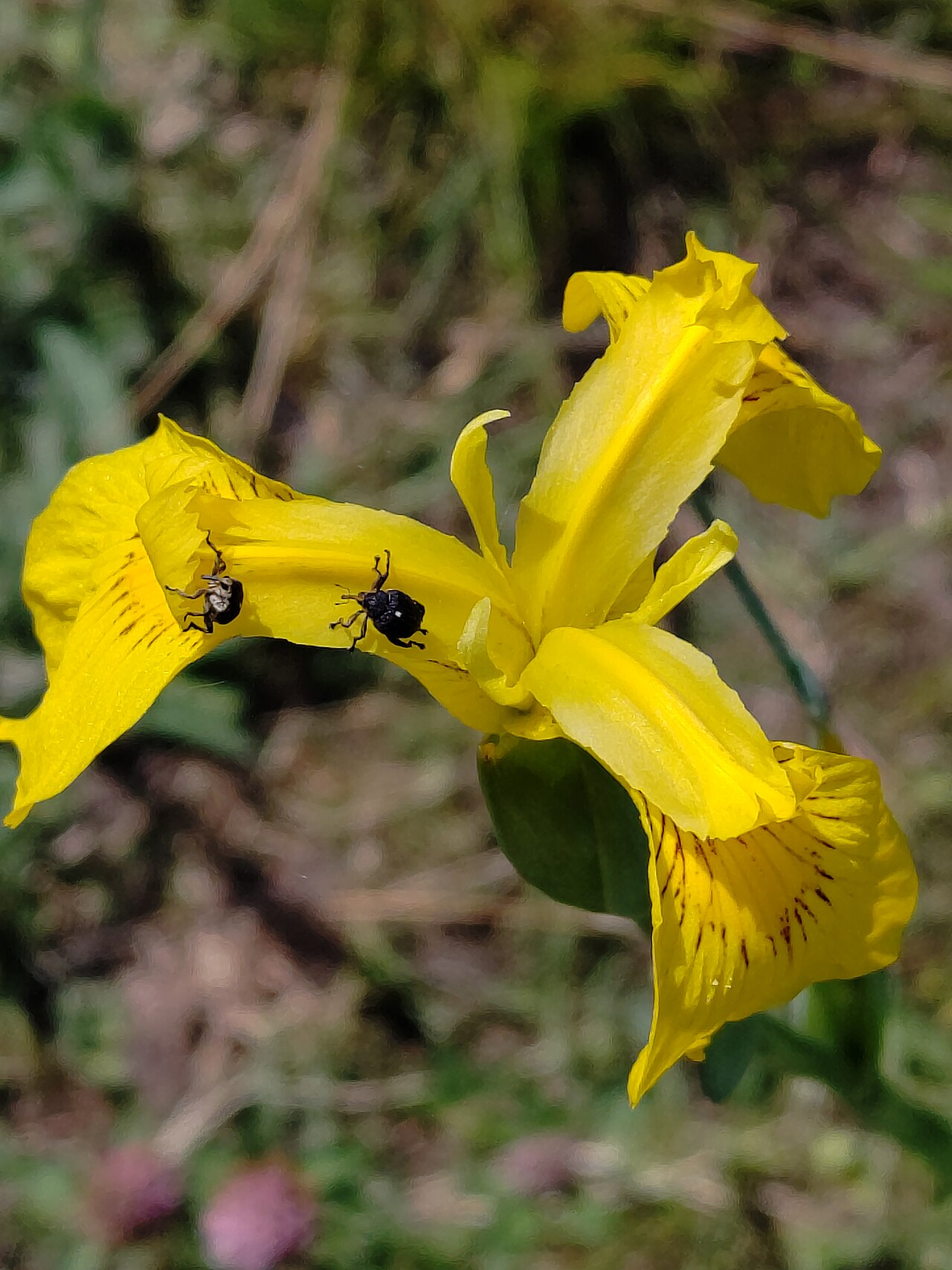
- Flower:Flower stems rise to about the height of the foliage and may branch, carrying several large iris blooms. Flowers are usually rich yellow, sometimes a paler creamy-yellow, with drooping falls that can show subtle markings. Garden cultivars may offer deeper yellow tones, occasional white forms, variegated foliage, or even double flowers.
- Flowering Season:Late spring (often May); seed capsules typically mature in summer (June–August).
- Growth Habit:Robust, rhizomatous, clump-forming herbaceous perennial that spreads gradually and can form dense stands.
🌤️ Environment
Sunlight
Full sun to partial shade (flowers best in full sun).
Temperature
Prefers cool to mild conditions; very winter-hardy and can tolerate freezing. A typical active growth range is about 5–25°C (41–77°F).
Humidity
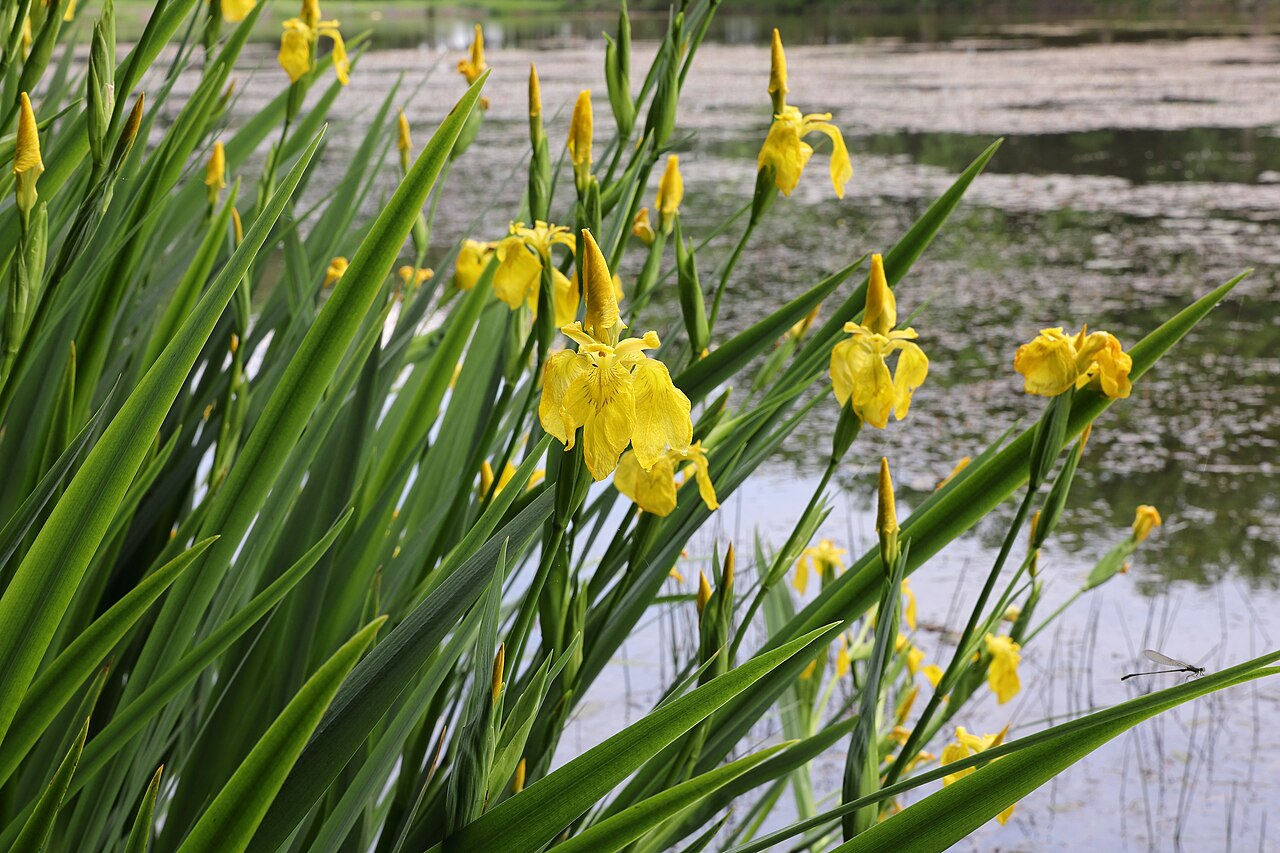
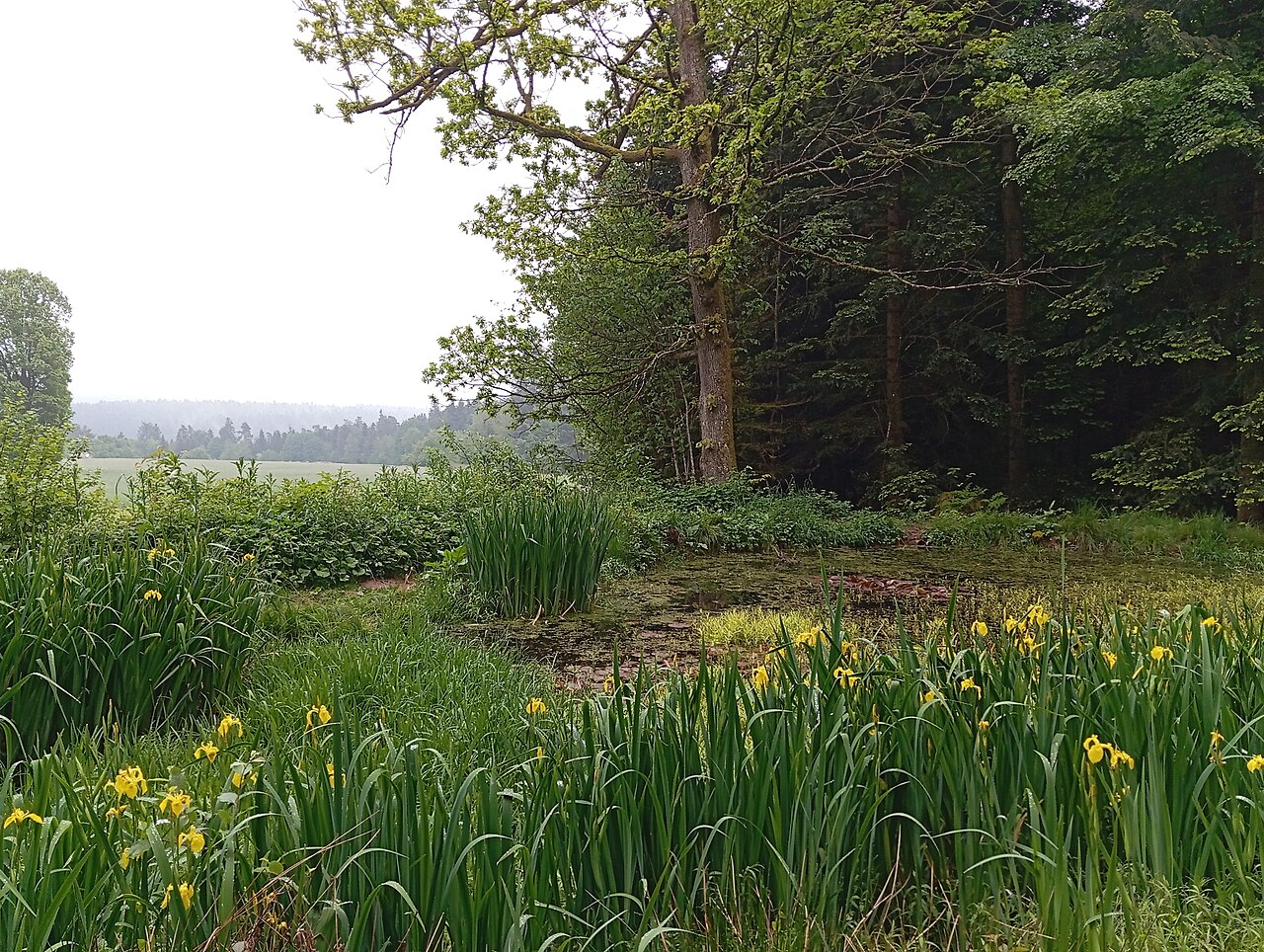
Likes consistently moist to wet conditions; well-suited to marshy ground and pond edges.
Soil
Moist, fertile soil; adaptable to many soil types including slightly acidic soils. Can grow in shallow water about 10–20 cm (4–8 in) over the crown.
Placement
Pond margins, water features, bog gardens, rain gardens, and moist borders; also suitable for cutting gardens.
Hardiness
USDA Zone 4–9.
🪴 Care Guide
Difficulty
Easy—especially outdoors in the right location. It’s forgiving of cold and varied soils, but it looks and grows best with steady moisture.
Buying Guide
Pick plants with firm, healthy rhizomes and upright green leaves. Avoid pots that smell sour or have mushy, soft rhizomes. For pond plantings, stronger multi-fan clumps establish faster than weak single fans.
Watering
Aim for consistently moist soil. In garden beds, water when the top 2–3 cm (0.8–1.2 in) begins to dry; during hot spells this can mean frequent watering. For water gardens, plant at the pond edge or set the pot so the crown sits in shallow water.
Fertilization
In spring, feed lightly with a balanced slow-release fertilizer according to label directions, or top-dress with compost. If growing in nutrient-rich pond water, avoid heavy fertilizing to prevent lots of leaf growth at the expense of flowers.
Pruning
After flowering, remove spent flower stalks. Trim yellowing or damaged leaves back to the base as needed; do a general tidy in late fall or early spring by removing tired foliage.
Propagation
Divide rhizomes in early spring or just after flowering. Replant with the rhizome at or slightly below the soil surface in wet ground, spacing divisions about 30–45 cm (12–18 in) apart.
Repotting
In containers, refresh the mix and divide every 2–3 years, or whenever the pot becomes crowded. Use a heavy loam-based mix and a wide, stable pot or aquatic basket to prevent tipping.
📅 Seasonal Care Calendar
Spring: divide if needed, feed lightly, keep evenly wet. Late spring: enjoy blooms; deadhead after flowering. Summer: don’t let it dry out; remove seed heads if you want to limit self-seeding. Fall/Winter: cut back tired foliage and make sure crowns don’t dry out.
🔬 Pests, Diseases & Safety
Common Pests & Diseases
Usually trouble-free. Watch for iris borer (in some regions), aphids, slugs/snails, and occasional leaf spot. Reduce issues by clearing away old foliage, keeping airflow around clumps, and dividing overcrowded plantings.
Toxicity
Toxic if eaten (especially the rhizomes); the sap can irritate skin. Keep away from children and pets, and wear gloves when dividing or handling.
🎋 Culture & Symbolism
Symbolism:Often associated with waterside beauty, resilience, and bright, cheerful energy—yellow irises in particular are linked with vitality and optimism in garden symbolism.
History & Legends:Long grown in Europe as a dramatic waterside ornamental. Because it’s so tough and spreads readily by rhizomes (and can self-seed), it has naturalized widely beyond its native range.
Uses:Ornamental planting for pond margins, water gardens, bog gardens, rain gardens, and moist borders; also used as a cut flower.
❓ FAQ
Can yellow flag iris grow in standing water?
Yes. It thrives at pond edges and in shallow water, typically about 10–20 cm (4–8 in) above the crown, and it also performs well in consistently moist soil.
Is it invasive?
It can be. In many areas outside its native range, it may spread aggressively by rhizomes and seed. Check local guidance, consider removing seed heads, and use containers or defined planting zones if you need to keep it contained.
💡 Fun Facts
- In the wild, it naturally grows along rivers and lakes in marshy, wet ground.
- It spreads by thick rhizomes, forming bold, upright clumps over time.
- While the classic flower is rich yellow, forms and cultivars can be paler, deeper yellow, occasionally white, or even double-flowered.
- It tolerates some drying once established, but looks its best with steady moisture or shallow water.
- It typically blooms in late spring (often May), with seed capsules ripening through summer (June–August).