🌱 Plant Features
- Size:Typically 3–10 m (10–33 ft) tall, sometimes taller in ideal conditions.
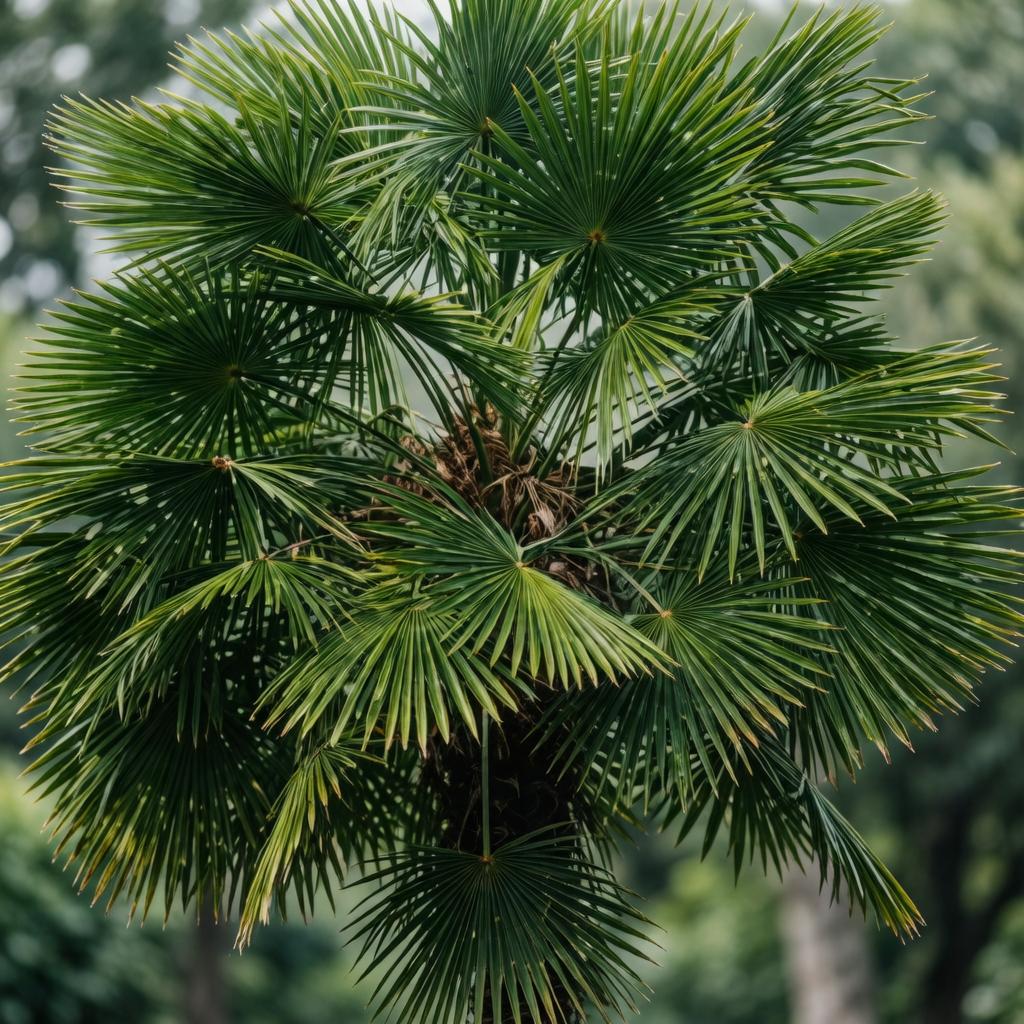
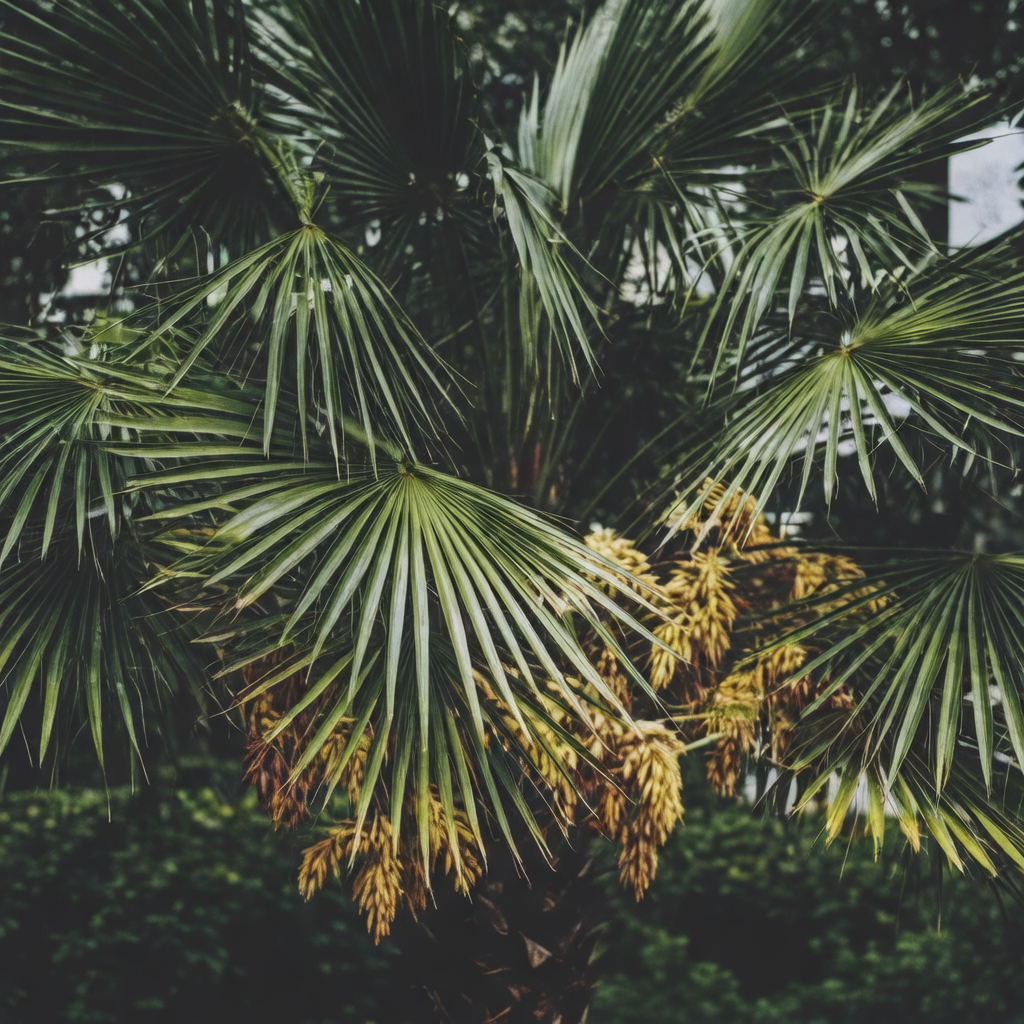
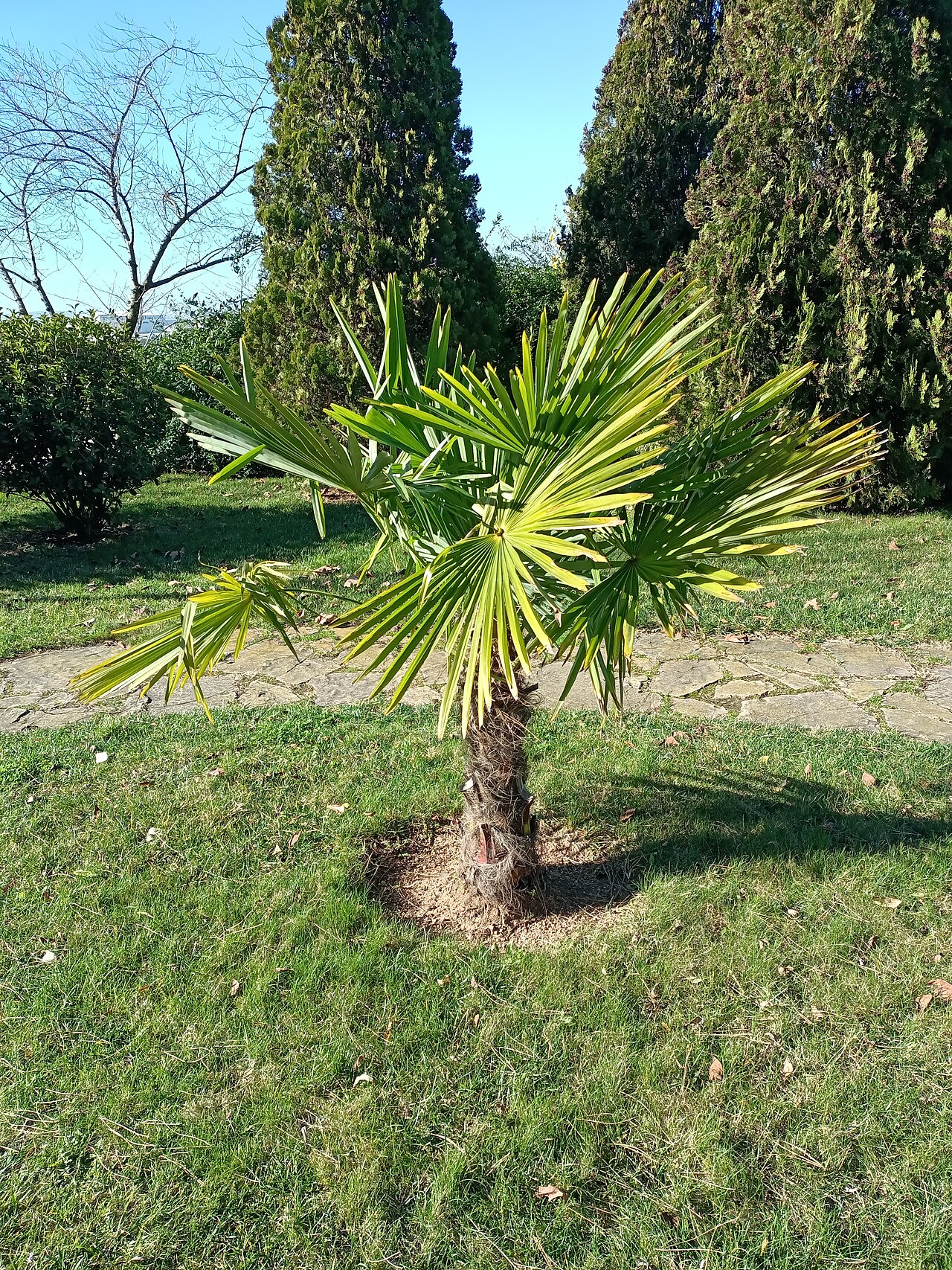
- Foliage:Evergreen, single-trunk palm with a trunk that commonly retains persistent leaf bases and a net-like mass of fibers, often showing old petiole stubs and dark brown leaf sheaths. Leaves are stiff and fan-shaped with many narrow segments; the segment tips often split slightly. Petioles are about 0.5–1 m (20–39 in) long and have fine teeth along the edges (handle with care when pruning).
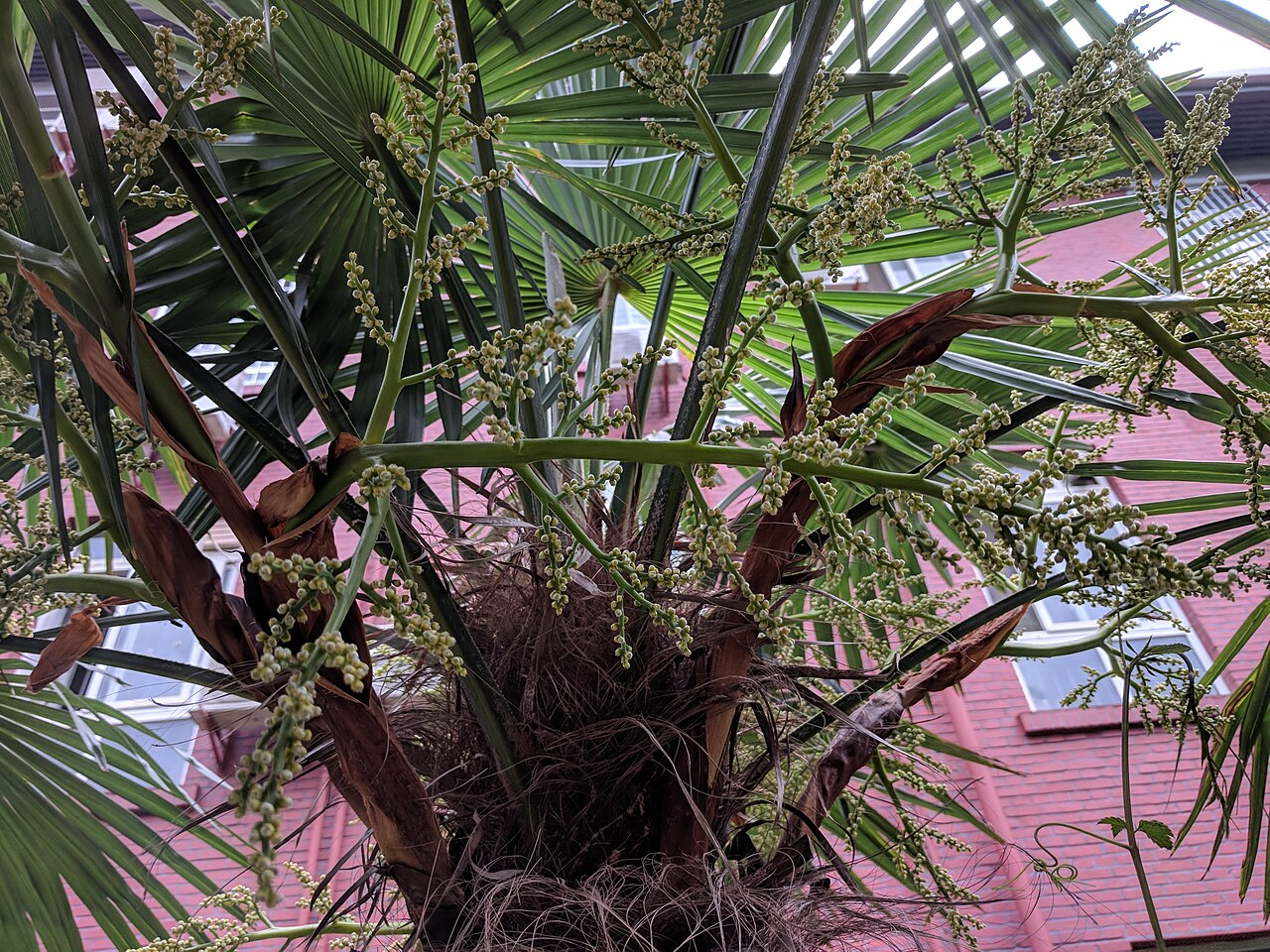
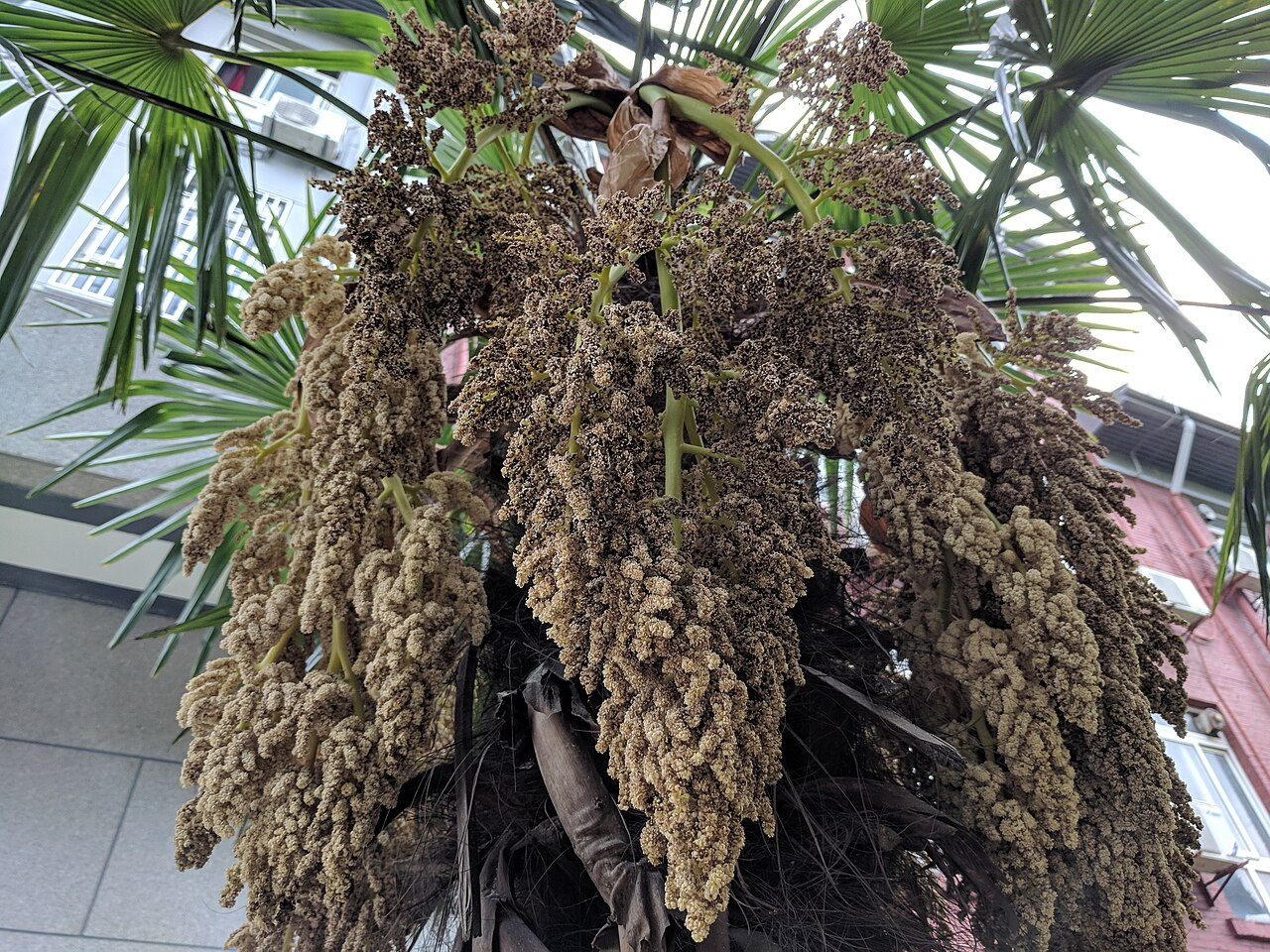
- Flower:Produces pale yellow flowers. Fruits are flattened, about 11–12 mm (0.43–0.47 in) wide, and ripen to a distinctive blue-black with a light whitish bloom.
- Flowering Season:April
- Growth Habit:Evergreen, upright, single-stemmed palm. Shallow-rooted (no strong taproot), so larger plants can be vulnerable to wind-throw in exposed places unless sheltered or staked. Mature plants prefer full sun; younger plants tolerate partial shade.
🌤️ Environment
Sunlight
Full sun for established plants; partial shade is tolerated, especially when young.
Temperature
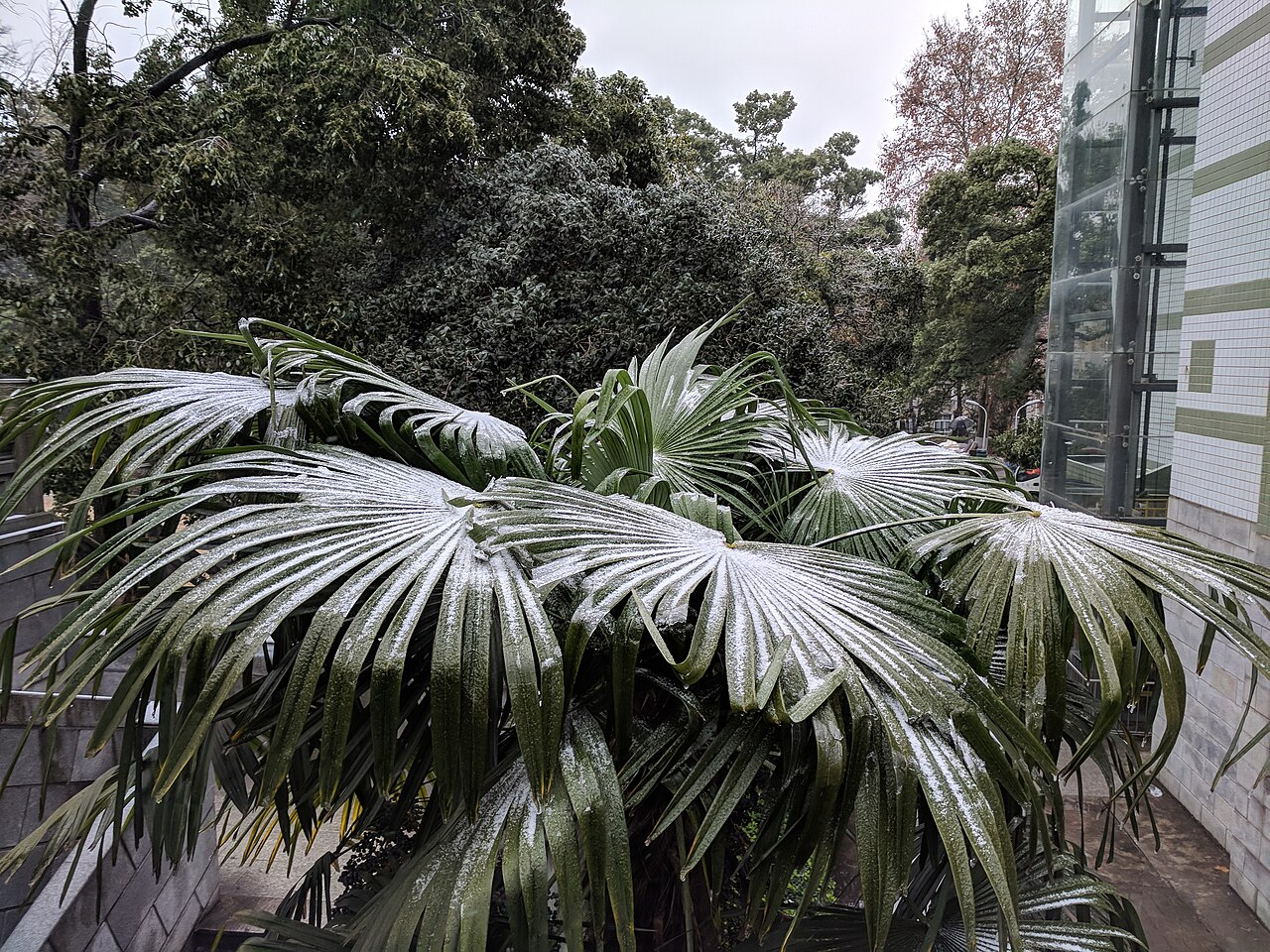
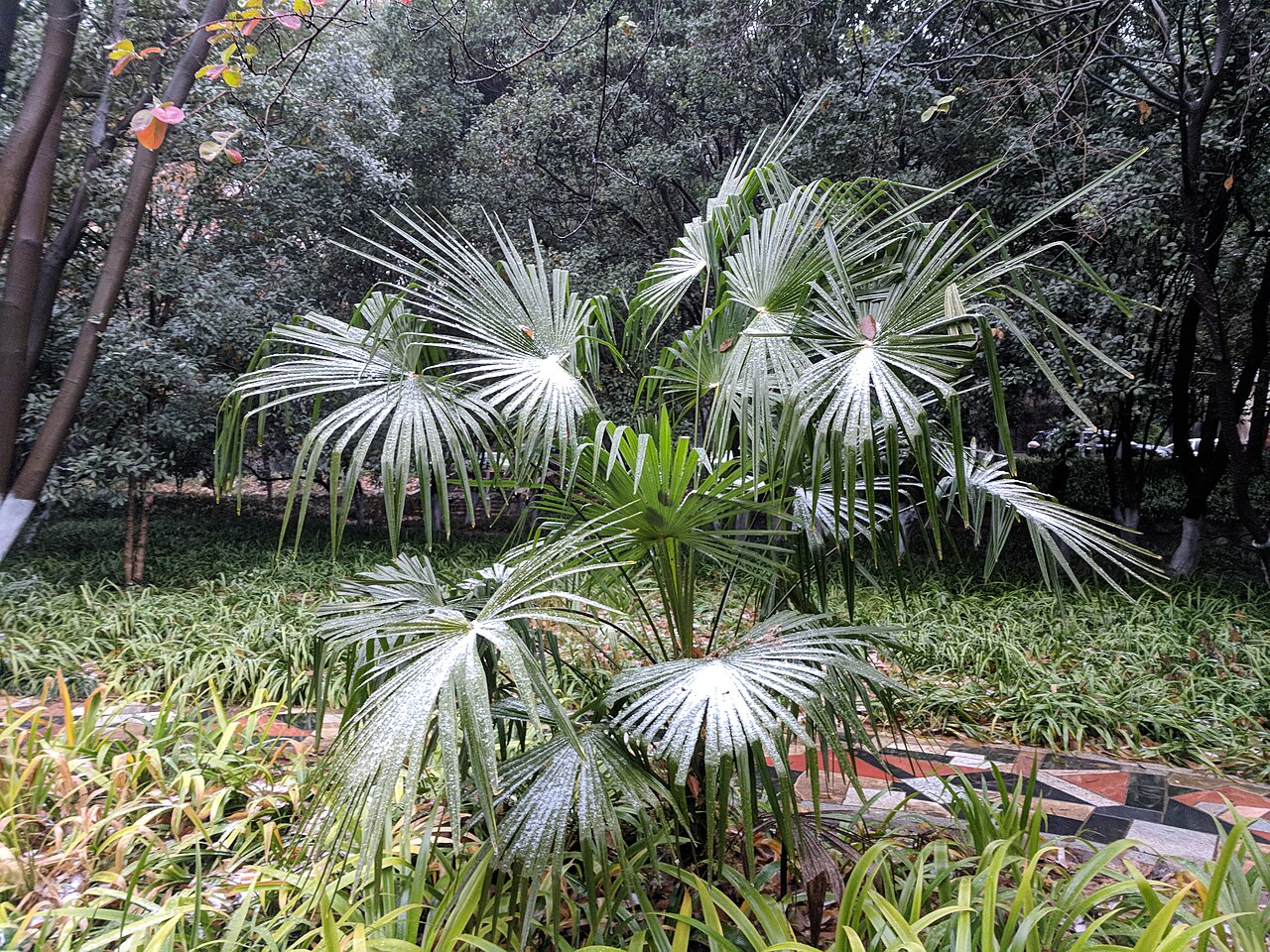
Prefers warm, humid conditions but is notably cold-tolerant for a palm. Best growth around 15–30°C (59–86°F). Established plants can tolerate brief freezes when planted in a suitable, sheltered site with good drainage.
Humidity
Moderate to high humidity preferred; adaptable if watering is managed well.
Soil
Fertile, well-drained soil. Tolerates limestone/chalky soils and does well in neutral to slightly acidic conditions (about pH 6.0–7.5). Avoid waterlogging, especially in winter.
Placement
Great as an avenue/street tree, a statement plant at entrances, or a specimen near ponds, lawns, woodland edges, or bright windows. Also excellent in large containers for patios and event displays. Tolerant of urban conditions and air pollution, so it’s commonly used in roadside and industrial landscaping.
Hardiness
USDA Zone 7–11 (approx.), depending on exposure and local conditions. Protect from strong winds due to shallow rooting; container plants need extra winter protection in colder areas.
🪴 Care Guide
Difficulty
Easy to moderate. It’s tough and adaptable once established; the main watch-outs are drainage (avoid soggy soil) and stability in windy spots.
Buying Guide
Pick a plant with a firm, upright central spear (the newest leaf), evenly green fans, and no looseness at the base. Avoid any palm with a soft or collapsing crown, bad odor, or heavy leaf-spotting. If you’re planting in a windy area, choose well-rooted stock and plan for staking or a sheltered position.
Watering
After planting, water deeply and keep evenly moist while it establishes. Once established, water when the top 5–8 cm (2–3 in) of soil dries. In containers, water thoroughly until excess drains, then let the mix partially dry—never leave the pot sitting in water.
Fertilization
Feed in spring and summer with a slow-release palm fertilizer that includes magnesium and micronutrients. A common rhythm is every 8–12 weeks during active growth; reduce or stop feeding in cooler seasons.
Pruning
Remove only fully brown, dead fronds—keeping green fronds helps the palm stay vigorous and more cold-resilient. You can trim old leaf bases for a cleaner trunk if desired, but do so carefully to avoid trunk damage. Wear gloves because the petiole edges can be sharp.
Propagation
Primarily grown from seed. Sow fresh seed in warm conditions and keep the medium lightly moist; germination is often slow and irregular.
Repotting
Repot container palms every 2–3 years or when rootbound, stepping up one pot size. Use a heavy, free-draining mix and a stable container to reduce tipping in wind.
📅 Seasonal Care Calendar
Spring: resume feeding, check for winter damage, plant or repot. Summer: water during hot spells and watch for nutrient deficiencies. Autumn: ease off feeding and prepare wind protection in exposed sites. Winter: keep slightly drier and protect containers from hard freezes and drying winds.
🔬 Pests, Diseases & Safety
Common Pests & Diseases
Can be bothered by scale insects, mealybugs, and spider mites (more common indoors), plus fungal leaf spots if conditions stay wet. In some regions, palms can also suffer from weevils or borers—watch for holes, oozing, or a weakening/collapsing crown. Improve airflow, avoid repeatedly wetting the crown, and treat early with horticultural oils or appropriate targeted controls.
Toxicity
Generally considered non-toxic to people and pets. The main hazard is mechanical: petiole edges can be sharp and may cause scratches, especially during pruning.
🎋 Culture & Symbolism
Symbolism:Often seen as a symbol of resilience and endurance—one of the few palms that can keep its tropical charm in cooler climates.
History & Legends:Long valued and widely planted across temperate regions. In East Asia, it has also been appreciated for its tough fibers, traditionally used in practical household items.
Uses:Primarily an ornamental palm for streetscapes, courtyards, entrances, and waterside plantings; also popular as a large potted specimen for patios and displays. Noted for its ability to cope with urban pollution, making it useful for roadside and industrial landscapes.
❓ FAQ
Can Windmill Palm grow in cold climates?
Yes. It’s one of the most cold-hardy palms and can grow outdoors in many mild-to-cool temperate regions (often around USDA Zone 7 and warmer) if given good drainage and a sheltered spot.
Why does it topple in strong wind?
Its roots are relatively shallow and it lacks a strong taproot. In exposed sites, stake young palms, avoid waterlogged soil (which weakens anchorage), and consider windbreaks or a more sheltered planting location.
Do I need to cut off green fronds?
No—keep healthy green fronds. Remove only fully brown, dead leaves. Over-pruning can weaken the palm and may reduce its cold tolerance.
💡 Fun Facts
- It’s widely regarded as one of the most cold-tolerant palms used in landscaping.
- Its ripe fruits turn a distinctive blue-black with a light whitish bloom.
- The trunk often stays shaggy with persistent old leaf bases and dark fibers—part of its signature look.
- Because it’s shallow-rooted, wind protection can be just as important as winter protection.
- It’s relatively tolerant of urban air pollution, which is why it’s commonly used along roads and in industrial areas.