🌱 Plant Features
- Size:Up to about 30 × 45 cm (12 × 18 in) for compact, commonly sold forms; mature size varies widely by species and hybrid.
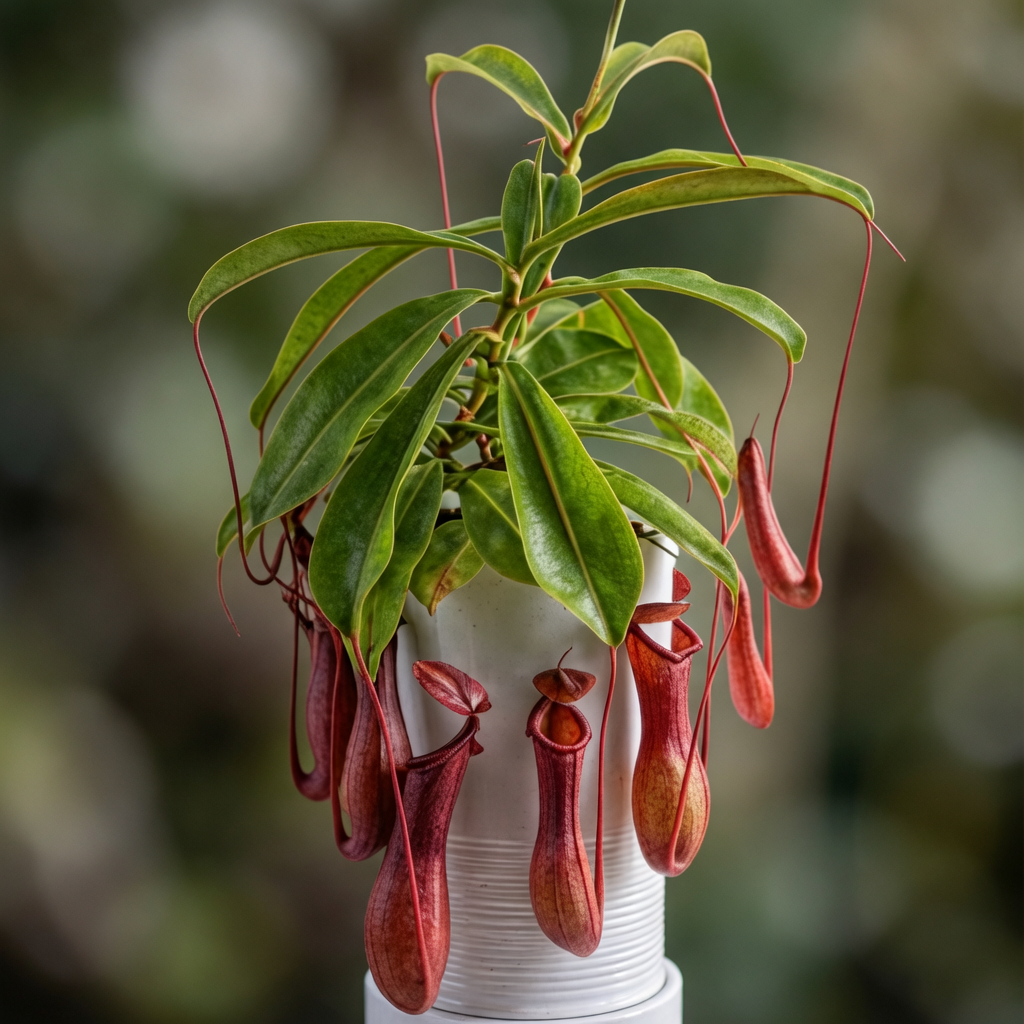
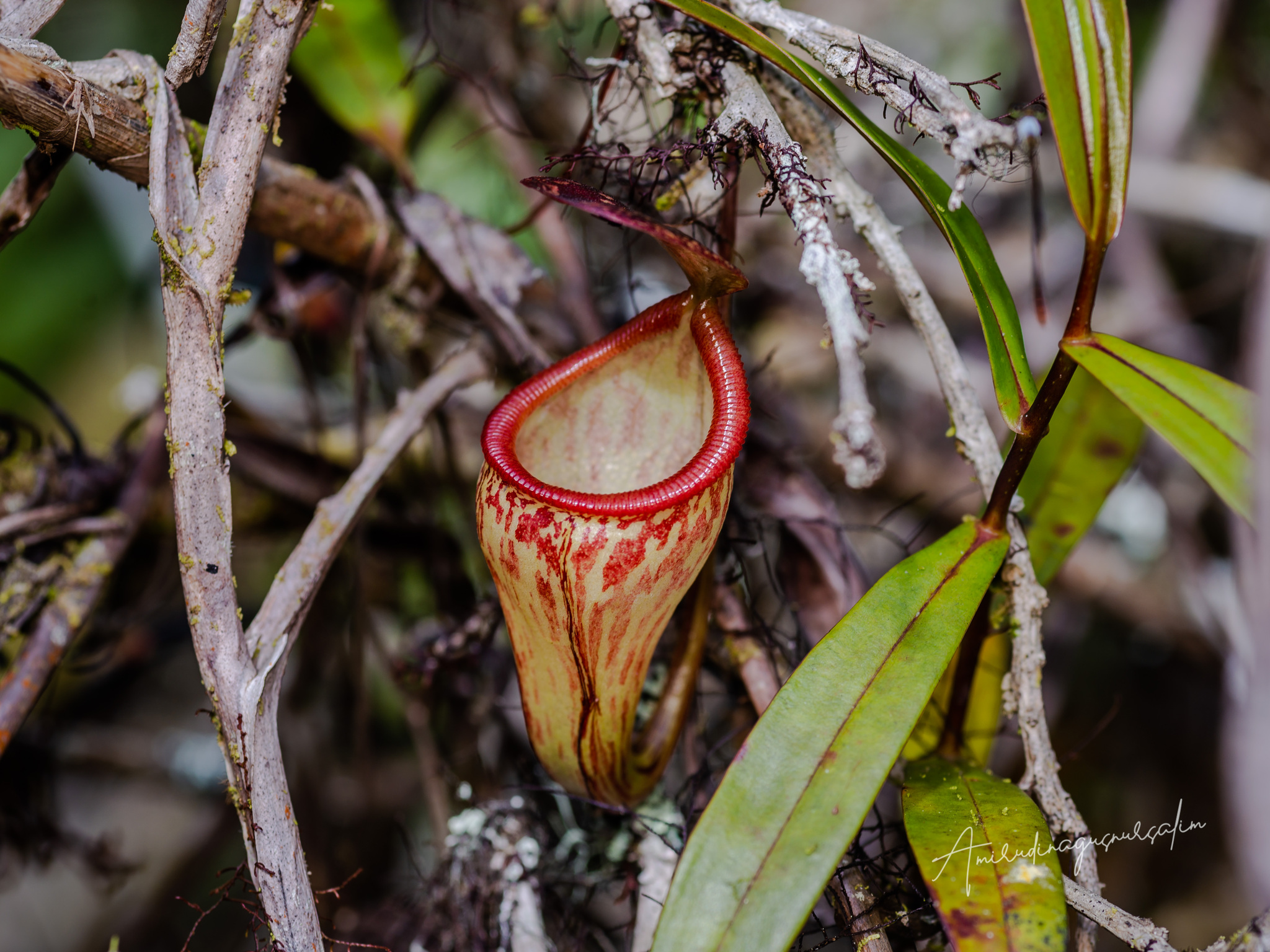
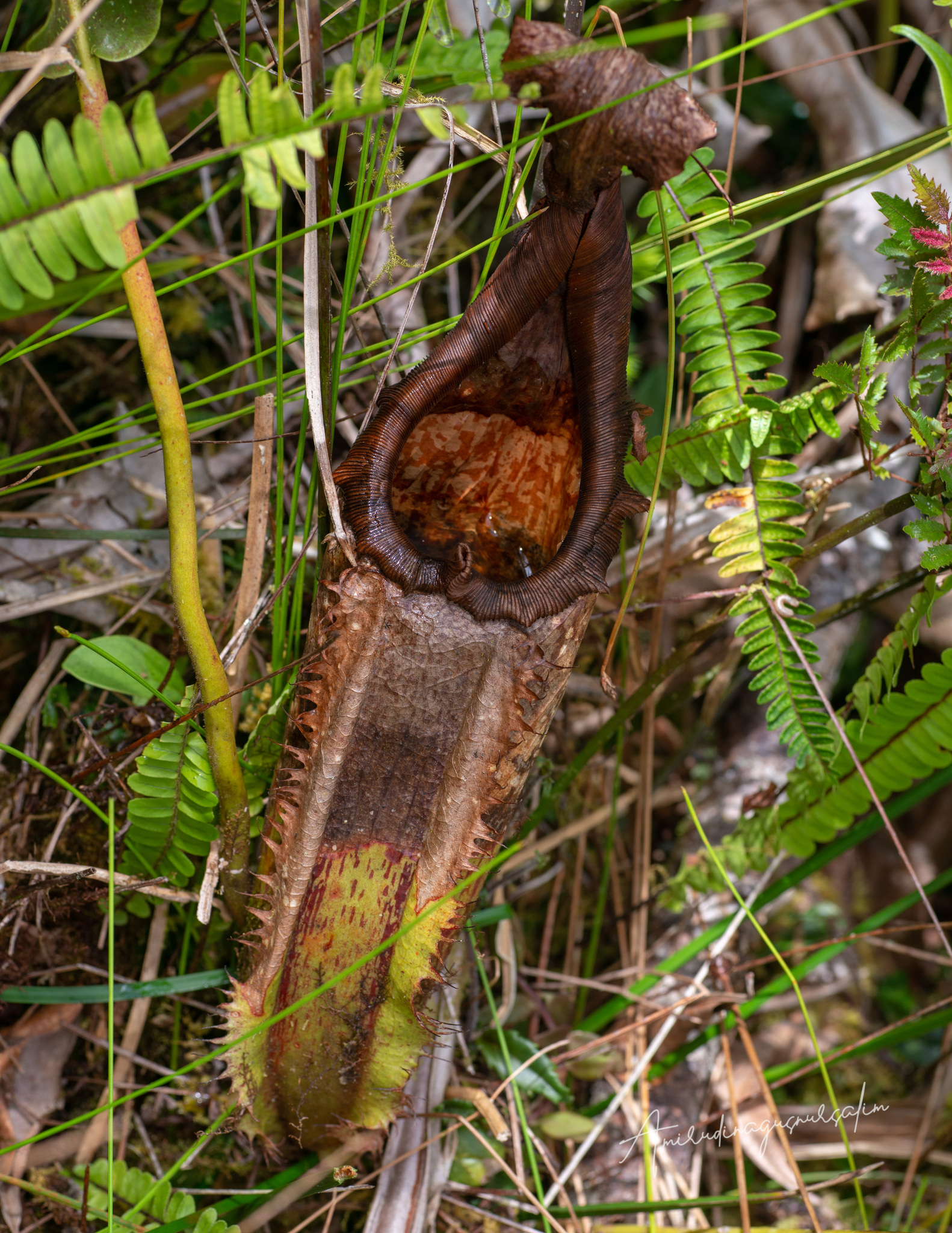
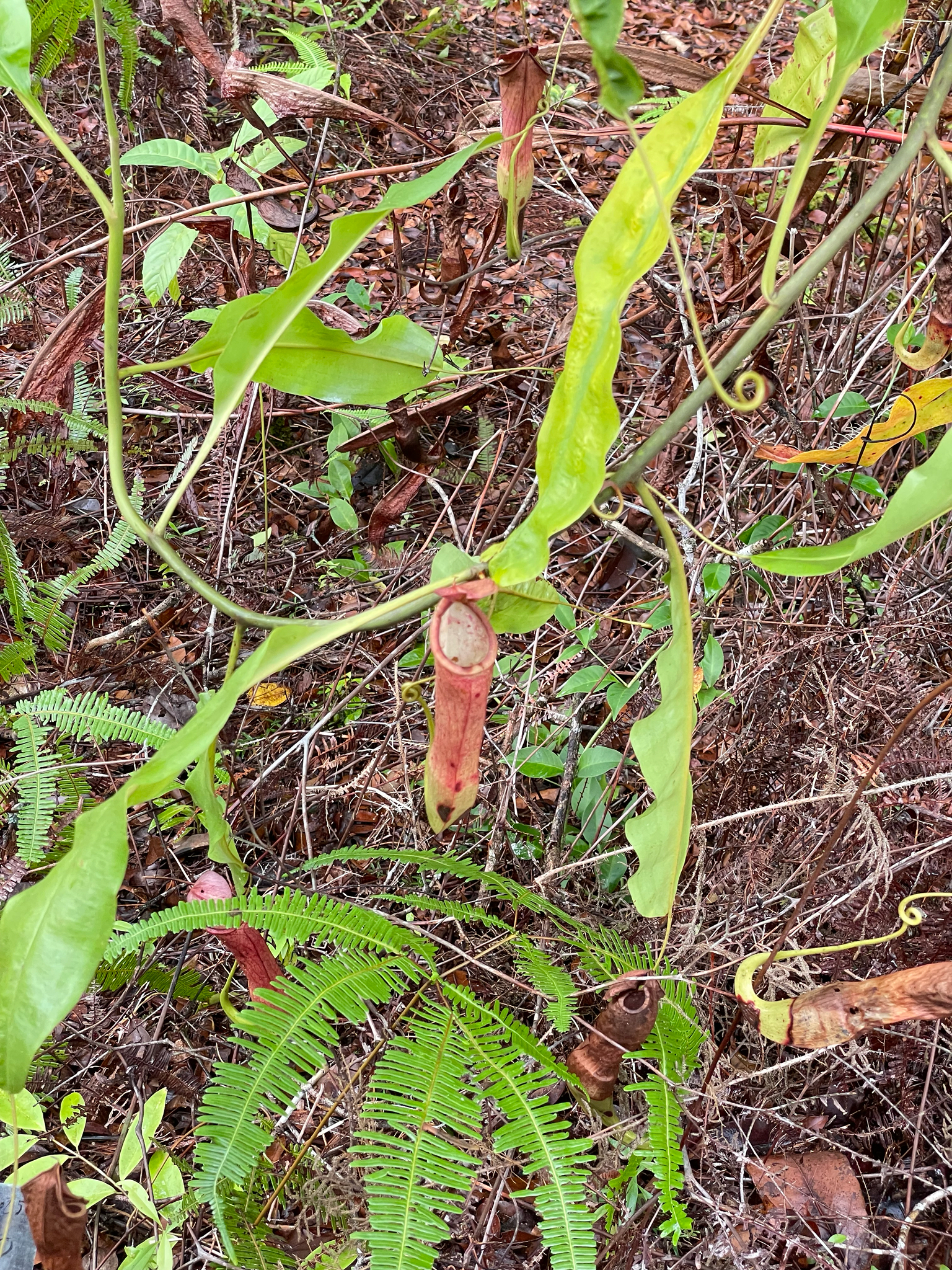
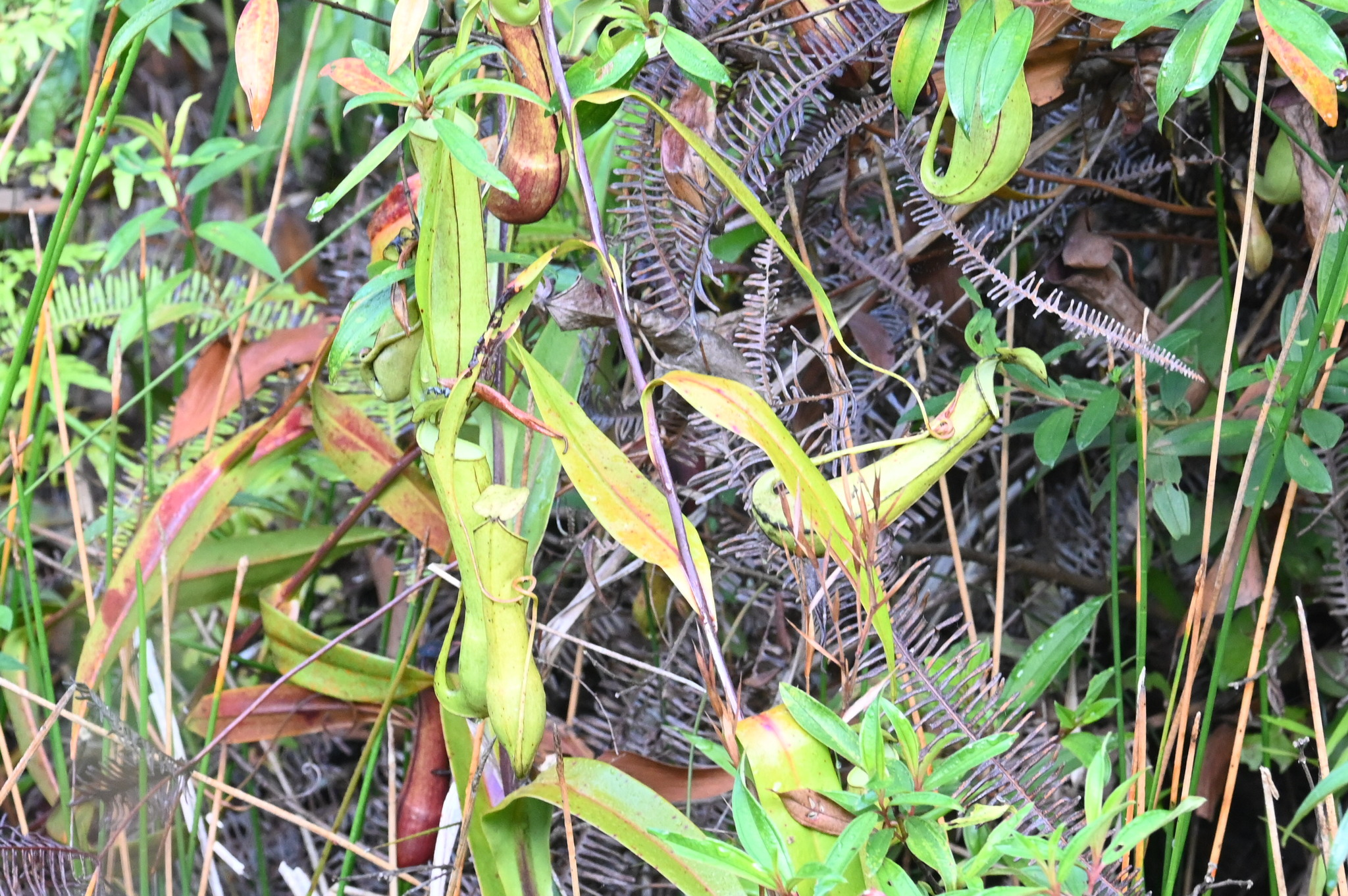
- Foliage:Lance-shaped leaves form long tendrils from the tips; these tendrils develop into hanging pitchers (often deep red/burgundy) carried on slender stalks.
- Flower:Small, fairly inconspicuous flowers appear in elongated clusters on mature plants; Nepenthes are mainly grown for pitchers, not blooms.
- Flowering Season:Irregular/variable indoors; more likely on mature plants in warm conditions with strong light.
- Growth Habit:A carnivorous rosette that can climb or scramble into a vine with age; commonly grown in pots or hanging baskets.
🌤️ Environment
Sunlight
Bright, filtered light is ideal. Avoid harsh midday sun; a few hours of gentle morning sun is often tolerated.
Temperature
13–25°C (55–77°F). Many hybrids like warm days and cooler nights; needs vary by species group (lowland vs. highland).
Humidity
Medium to high humidity, ideally 60–80%+ for reliable pitcher production.
Soil
An airy, acidic carnivorous-plant/Nepenthes mix (commonly chopped orchid bark + sphagnum moss/peat + perlite). Regular potting soil is unsuitable and may kill the plant.
Placement
Indoors near a bright window with good airflow but out of scorching sun; also suited to a warm humid greenhouse or terrarium setup. Excellent in a hanging basket to show off pitchers.
Hardiness
Not frost-hardy; roughly USDA Zone 11–12 if kept outdoors year-round, and generally should be kept above 10°C (50°F).
🪴 Care Guide
Difficulty
Easy to moderate: it becomes quite manageable once you dial in bright filtered light, steady moisture, and (most importantly) low-mineral water. Sensitive to tap-water salts and to standard potting soil.
Buying Guide
Pick plants with firm, clean leaves and at least a few healthy pitchers (or visible new pitcher buds). Avoid plants with black, mushy crowns or sour-smelling media. If possible, find out whether it’s a lowland, highland, or common hybrid—temperature preferences can differ.
Watering
Keep the medium evenly moist but not waterlogged—never let it go bone-dry. Water from above using rainwater, distilled water, or reverse-osmosis water. Do not sit the pot in a saucer of water. To boost humidity, mist daily and/or use a pebble tray (with the pot above the waterline, not standing in it).
Fertilization
Use a very dilute foliar fertilizer about every 2 weeks (lightly sprayed on leaves). Occasional feeding with a small, freshly killed insect (like a fly) can help, but frequent feeding isn’t necessary and overdoing it can rot pitchers.
Pruning
Snip off fully brown pitchers and dead leaves with clean scissors. If the vine grows long and leggy, cut back during active growth to encourage new basal shoots.
Propagation
Most commonly by stem cuttings: take a piece with 1–3 nodes and root it warm and humid in sphagnum/perlite. Seeds are possible but slow and variable, and you’ll need both male and female plants (and pollination) to produce them.
Repotting
Repot every 2–3 years (or when root-bound) into fresh, airy carnivorous-plant medium. Be gentle—disturb roots as little as possible.
📅 Seasonal Care Calendar
Spring–summer: peak growth—keep bright filtered light, high humidity, and consistent moisture; foliar feed lightly. Autumn–winter: growth often slows indoors—reduce feeding, keep evenly moist (not soggy), and stay within 13–25°C (55–77°F).
🔬 Pests, Diseases & Safety
Common Pests & Diseases
Can attract aphids, mealybugs, scale, and spider mites (especially if air is too dry). Treat with insecticidal soap or carnivorous-plant-safe products and improve airflow/humidity balance. Root rot can occur if the mix is dense or stays waterlogged—use an airy medium and avoid standing water.
Toxicity
Generally considered low-toxicity to people and pets, but it’s not edible and the pitcher fluid should not be consumed. Keep out of reach of children and pets to prevent chewing and potential stomach upset.
🎋 Culture & Symbolism
Symbolism:Often linked with mystery, resilience, and clever adaptation—making the most of tough conditions.
History & Legends:A classic celebrity of Victorian-era plant collecting: Nepenthes pitchers were prized as exotic greenhouse marvels and helped spark a broader fascination with carnivorous plants.
Uses:Mainly ornamental. In nature, it attracts and traps insects (and sometimes other nutrient sources) to supplement nutrition in poor soils.
❓ FAQ
Why are there no pitchers on my plant?
Low humidity and/or low light are the usual culprits. Move it to brighter filtered light, aim for 60–80%+ humidity, and keep the medium evenly moist using rain/RO/distilled water.
Can I use tap water?
Best avoided. Tap water minerals and salts can build up and damage Nepenthes over time. Use rainwater, distilled water, or reverse-osmosis water.
Should I feed it insects?
Optional. In good conditions many plants catch enough on their own. If you feed, keep it occasional and small—overfeeding or using large prey can cause pitchers to rot.
💡 Fun Facts
- “Monkey cup” comes from reports of monkeys drinking rainwater collected inside the pitchers.
- Many species have a slick, waxy inner surface and downward-pointing hairs that make escape almost impossible for insects.
- Not all Nepenthes rely only on insects—some species also gain nutrients from leaf litter or even animal droppings that fall into their pitchers.