🌱 Plant Features
- Size:About 30 cm tall × 60 cm wide (12 in tall × 24 in wide).
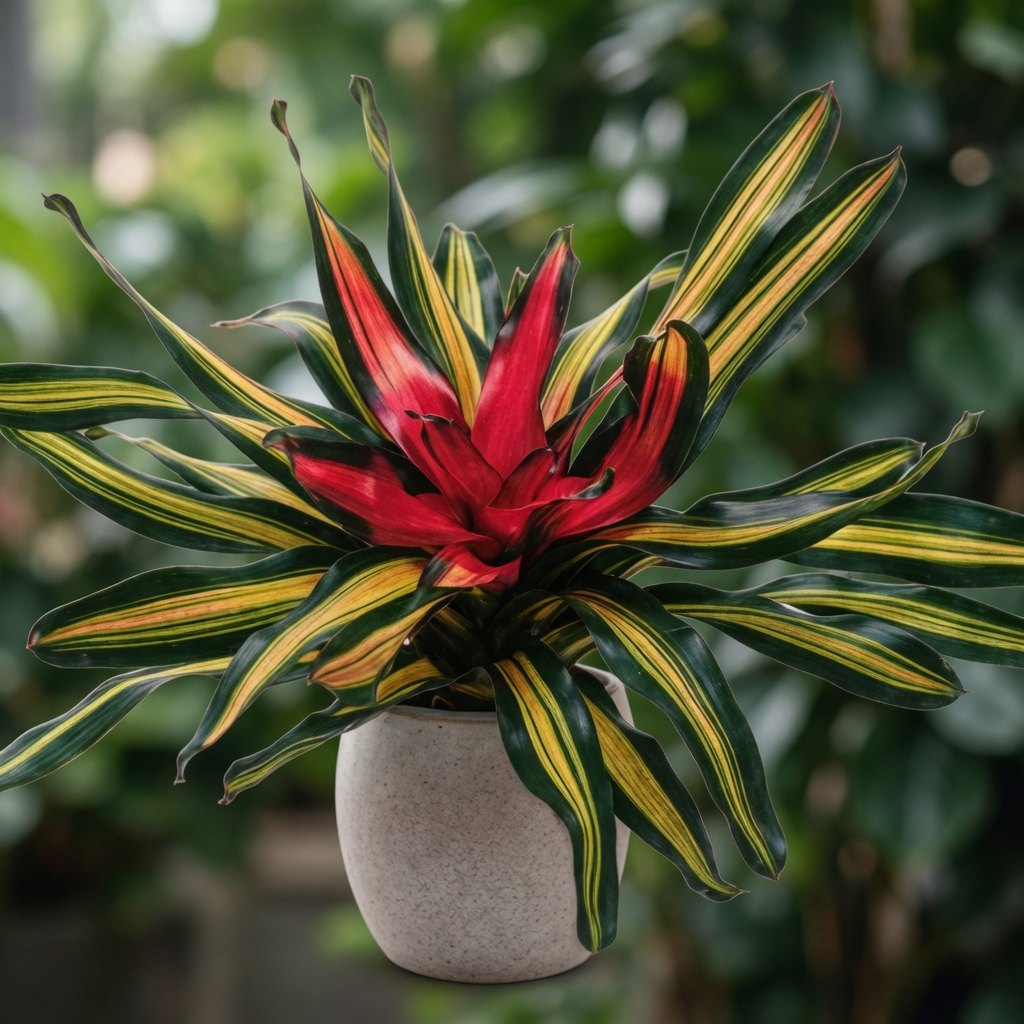
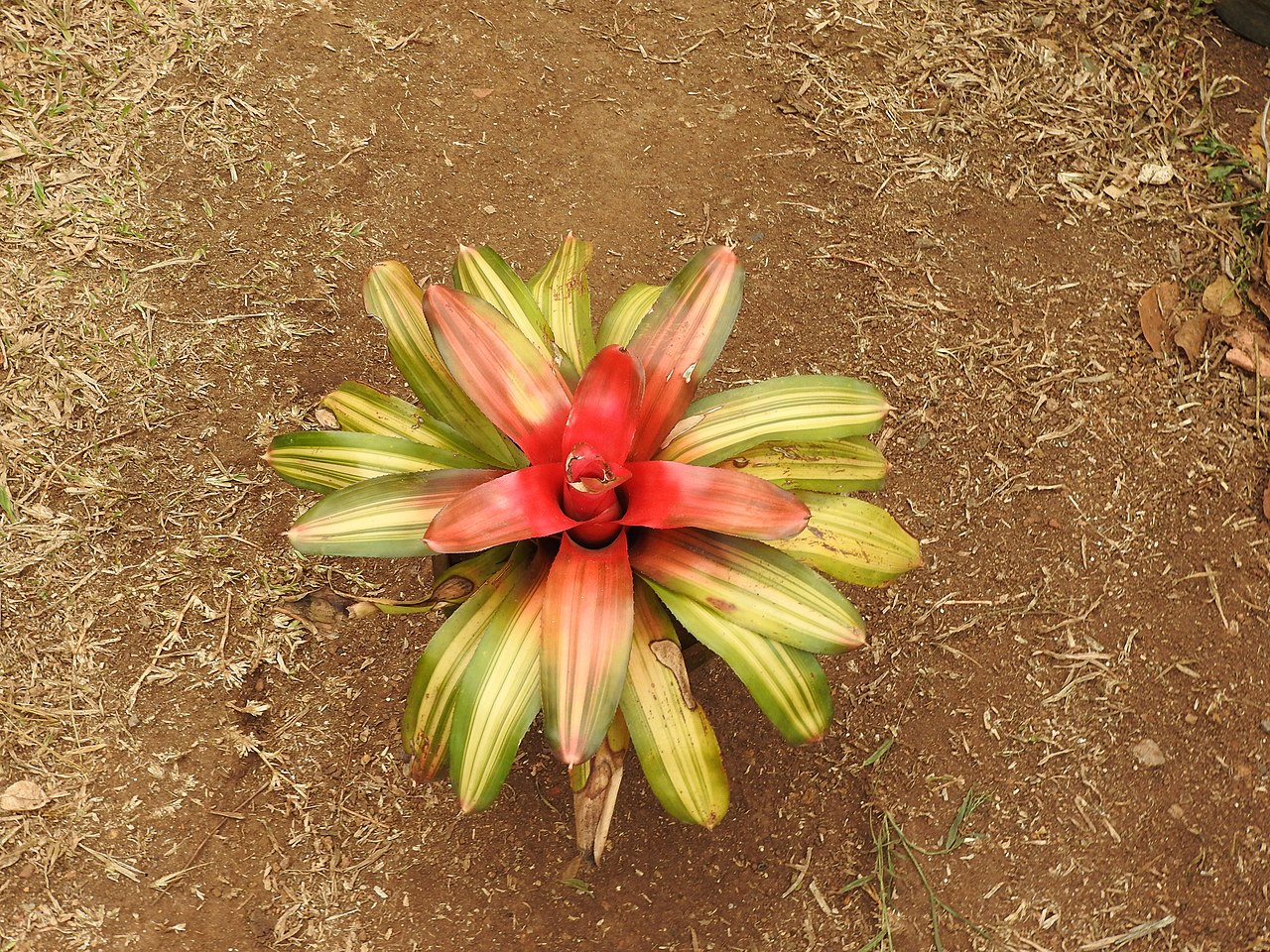
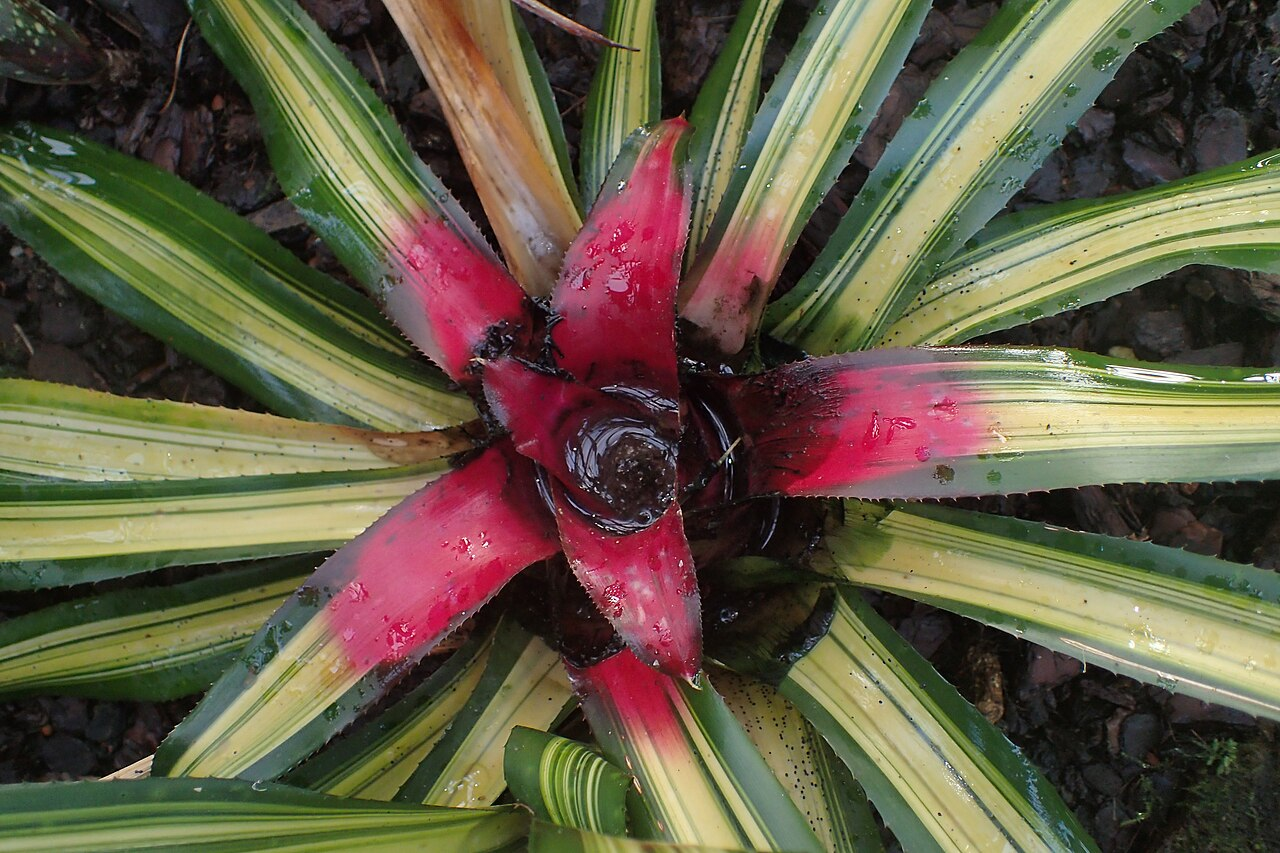
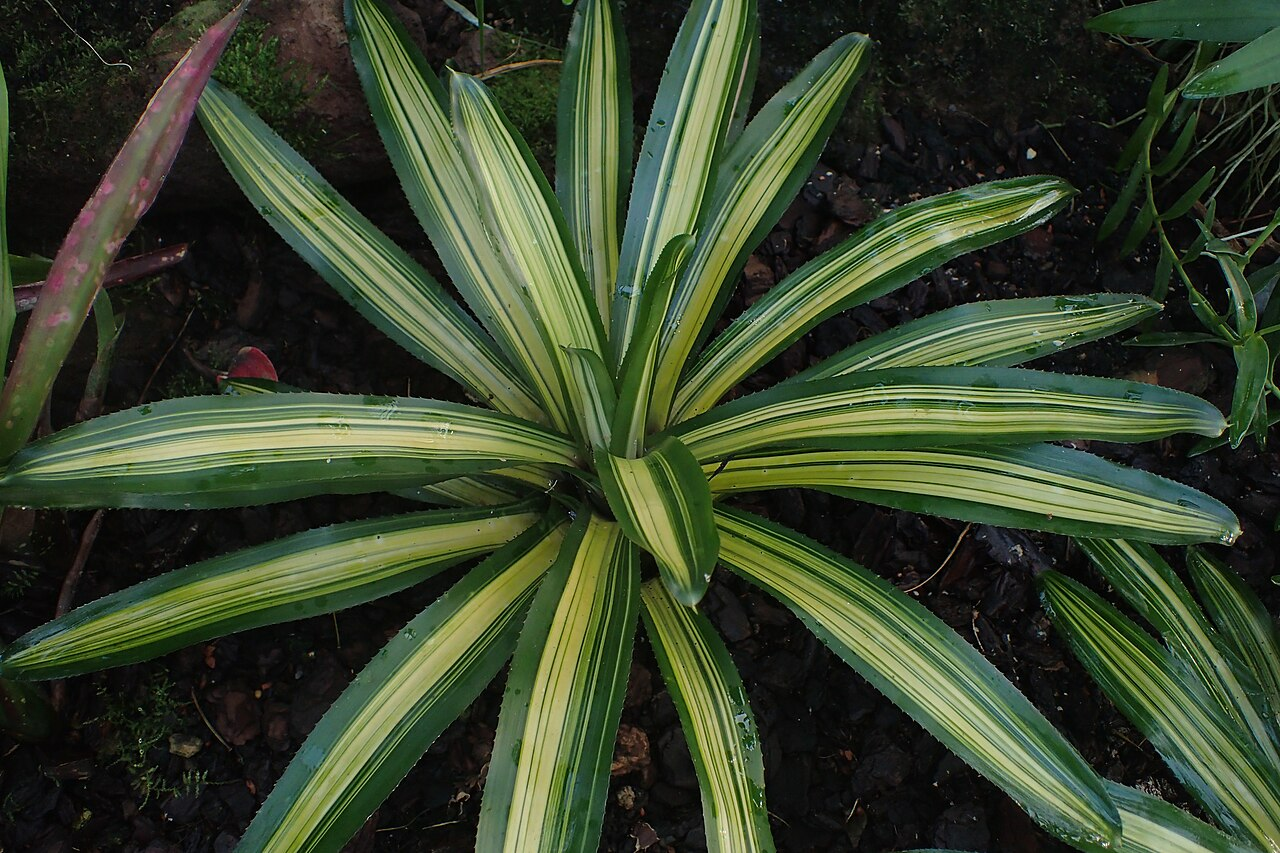
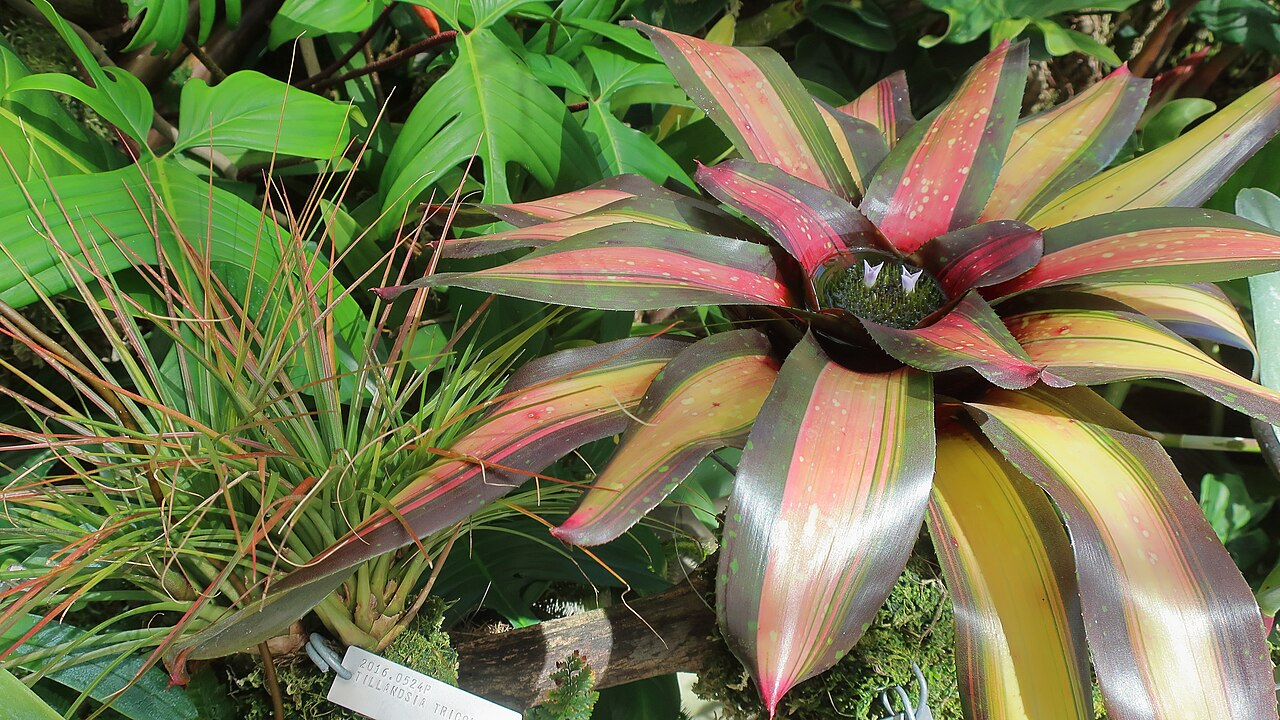
- Foliage:Forms a dense, symmetrical rosette of arching, strap-like leaves with green and yellow variegation. Under brighter (non-scorching) light, the central leaves/cup commonly turn red.
- Flower:Small purple flowers appear nestled in the center and are framed by bright red bracts; the bracts tend to be more dramatic and longer-lasting than the flowers themselves.
- Flowering Season:Summer
- Growth Habit:Rosette-forming tank bromeliad; the leaf rosette holds water in a central cup.
🌤️ Environment
Sunlight
Bright, filtered light to partial sun. Indoors, avoid harsh midday sun; an east window or a lightly shaded south/west exposure is ideal.
Temperature
18–27°C (64–81°F). Avoid prolonged drops below about 10°C (50°F), which increases the risk of rot.
Humidity
Moderate to high humidity, ideally around 50–70%. In dry homes, use a humidifier, pebble tray, or occasional misting (with good airflow).
Soil
Very airy, fast-draining medium. Good options include equal parts orchid bark, perlite, and coconut coir/fiber, or a 1:1 blend of orchid bark and quality all-purpose potting mix.
Placement
A small pot around 10–12.5 cm (4–5 in) wide suits it well. Place in a bright spot with gentle airflow—living room, bright bathroom, or kitchen.
Hardiness
Not frost-tolerant; best outdoors year-round only in warm climates, roughly USDA Zone 10–11.
🪴 Care Guide
Difficulty
Very easy, as long as it gets bright light, warmth, and clean water in its central cup.
Buying Guide
Pick a plant with firm, crisp leaves and strong, clear variegation. Check the central cup: it should be clean (no sour smell, blackening, or slime). The base should feel solid, never mushy.
Watering
Use rainwater or distilled water to fill the central leaf cup (“tank”). Refresh/top up about every 4–6 weeks, and occasionally flush the cup to prevent stagnant water and rot. Keep the potting mix lightly moist but never soggy. If humidity is low, mist the leaves every few days (and keep airflow decent).
Fertilization
About once a month during active growth, mist the foliage with a balanced liquid fertilizer at 1/2 strength. Overfeeding can dull variegation and reduce the red blush.
Pruning
Trim browned leaf tips for a tidier look, and remove spent bracts/flowers. After flowering, the mother rosette will slowly decline—leave it in place until the pups are established.
Propagation
By offsets (pups). When pups reach about 1/3–1/2 the mother plant’s size, separate them with a clean knife and pot into the same airy mix. Keep warm and humid until rooted.
Repotting
Repot about once a year into fresh, airy medium. Keep the pot small (around 10–12.5 cm / 4–5 in); oversized pots stay wet too long and invite rot.
📅 Seasonal Care Calendar
Summer: flowering (purple flowers with red bracts). Every 4–6 weeks: refresh/flush and refill the central cup. Monthly: foliar feed at 1/2 strength. Yearly: repot into fresh, fast-draining mix.
🔬 Pests, Diseases & Safety
Common Pests & Diseases
Can attract mealybugs, scale, and spider mites (especially in dry indoor air). Prevent crown/cup rot by keeping temperatures warm, using an airy mix, avoiding soggy soil, and flushing stale water from the tank periodically.
Toxicity
Generally low-toxicity. Sap and leaf edges may irritate sensitive skin. If pets chew it, mild stomach upset is possible—best kept out of reach of habitual nibblers.
🎋 Culture & Symbolism
Symbolism:Often linked with warmth, welcome, and vibrant energy—its red “blushing” center is commonly associated with affection and celebration.
History & Legends:Neoregelia species come from tropical South America. In the wild, their water-holding rosettes act like tiny reservoirs, creating micro-habitats for small creatures—one reason bromeliads are celebrated as miniature ecosystems.
Uses:Mainly ornamental, prized for colorful foliage and long-lasting bracts. Great as a compact houseplant and in tropical-style container arrangements.
❓ FAQ
Why isn’t the center turning red?
The blush usually intensifies with brighter light. Move it to brighter filtered light (not scorching sun), keep it warm, and avoid heavy feeding—too much fertilizer can reduce the color.
Do I water the soil or the cup?
Both, but differently: keep fresh water in the central cup (refresh/flush every 4–6 weeks) and keep the potting mix only lightly moist—never wet and heavy.
What happens after it flowers?
The mother rosette slowly declines (that’s normal) and produces pups. Keep caring for it while the pups grow; the offsets become the next generation.
💡 Fun Facts
- It’s a classic “tank bromeliad”—its leaf rosette forms a natural cup that stores water.
- The red center often becomes more intense with brighter light, as long as leaves don’t scorch.
- After flowering, it doesn’t ‘die’ outright—it shifts energy into producing pups that carry on the plant.