🌱 Plant Features
- Size:Indoors: about 0.9–2.4 m (3–8 ft) tall when trained upward, with vines that may extend 3–4.6 m (10–15 ft). Outdoors in suitable climates: up to about 4 m (13 ft) or more with support.
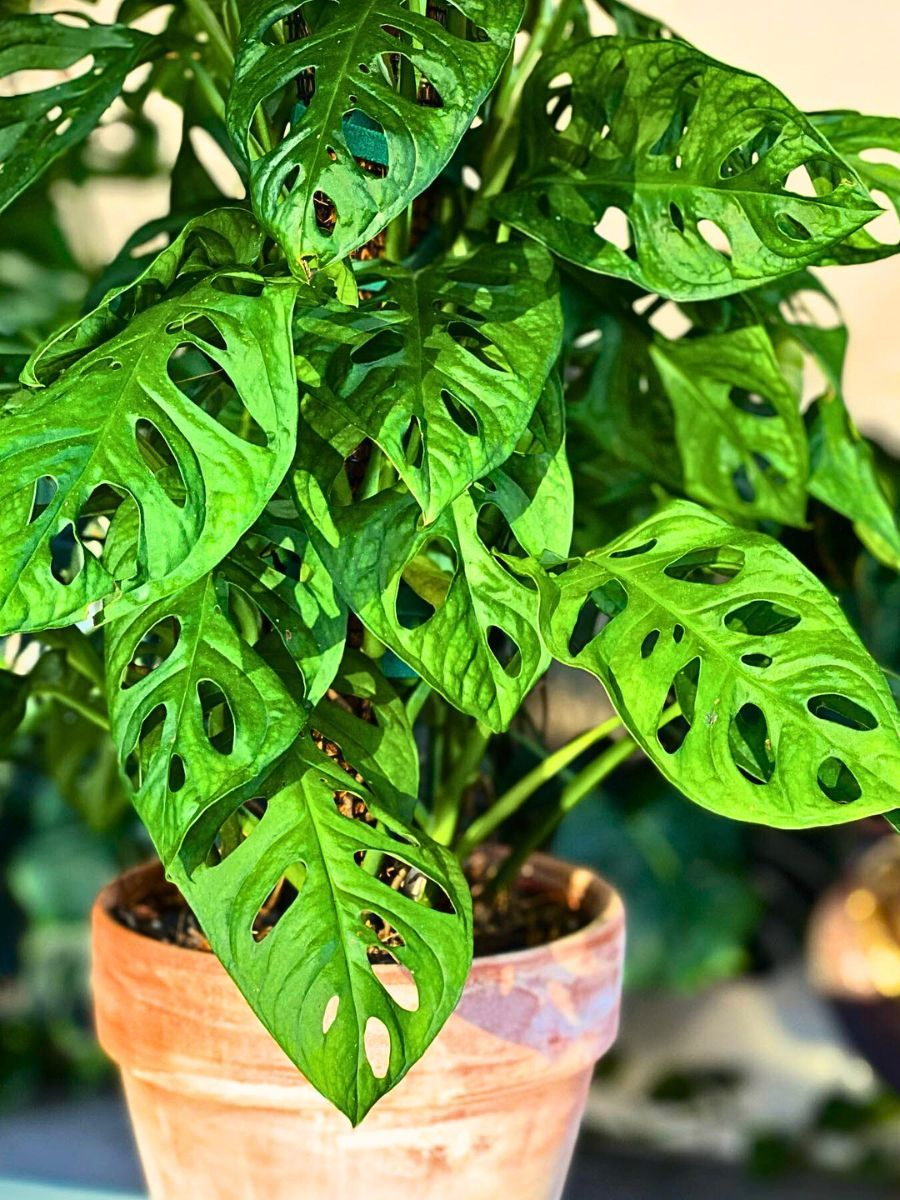
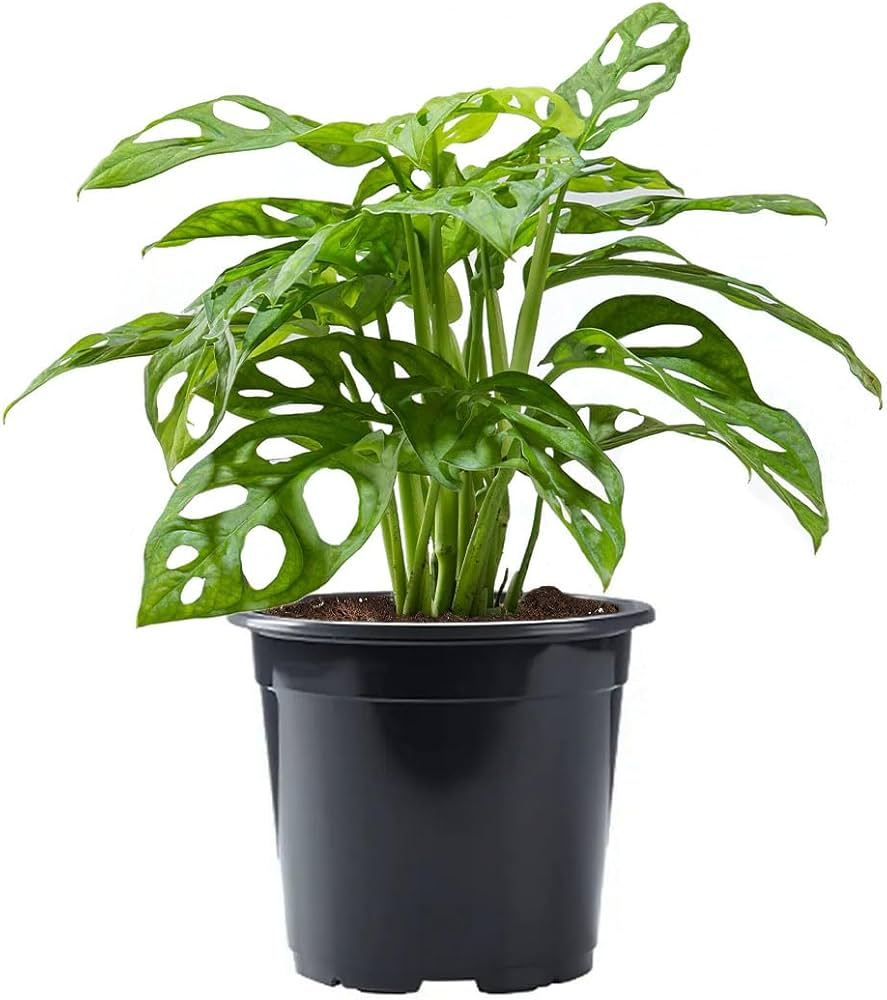
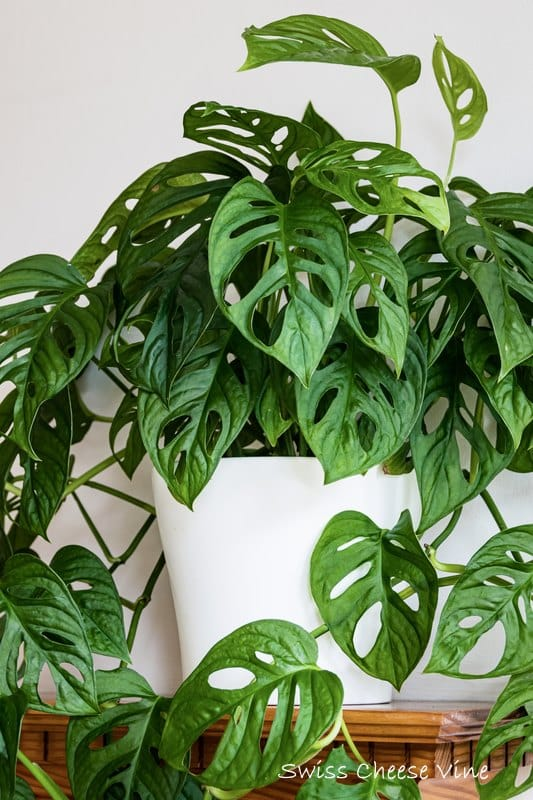
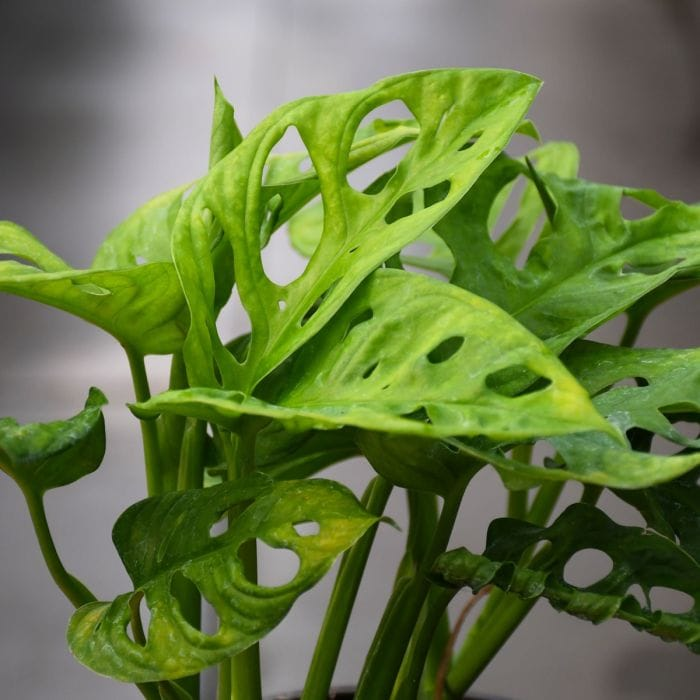
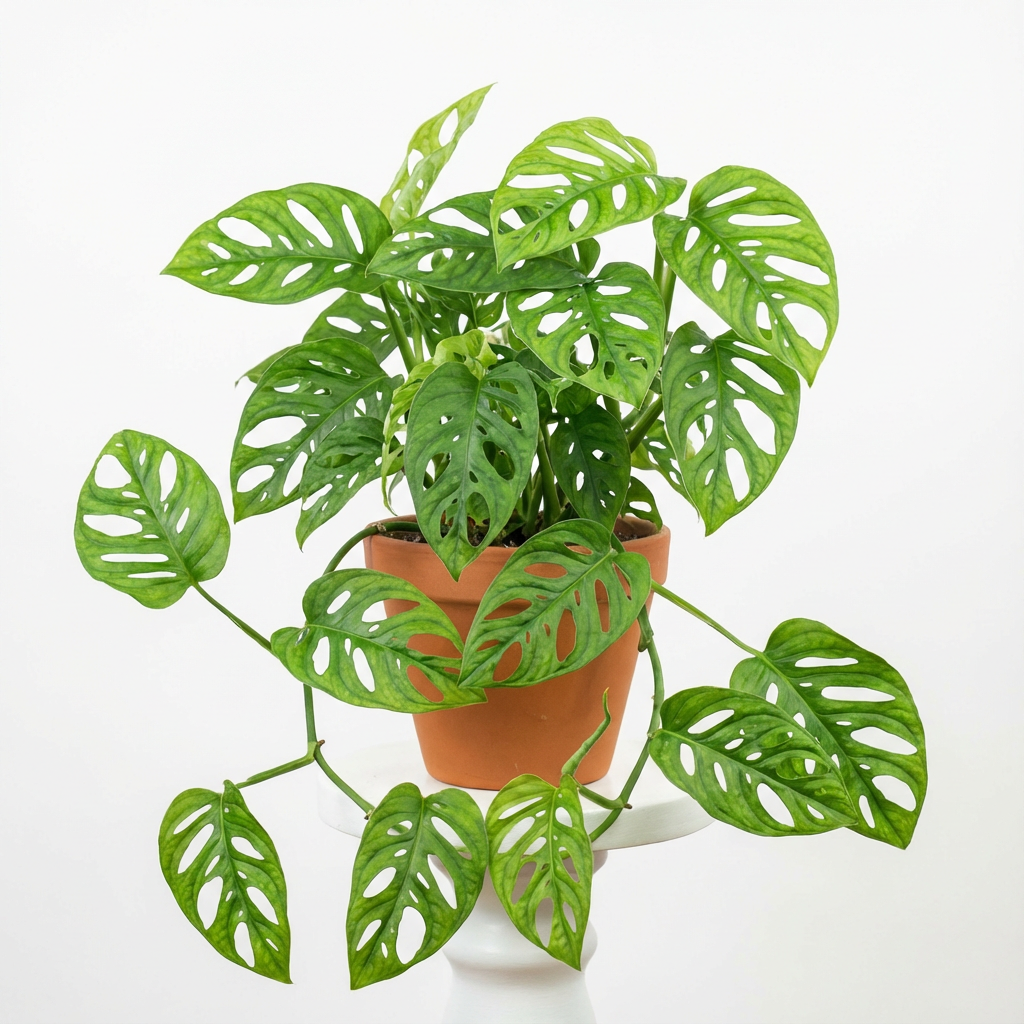
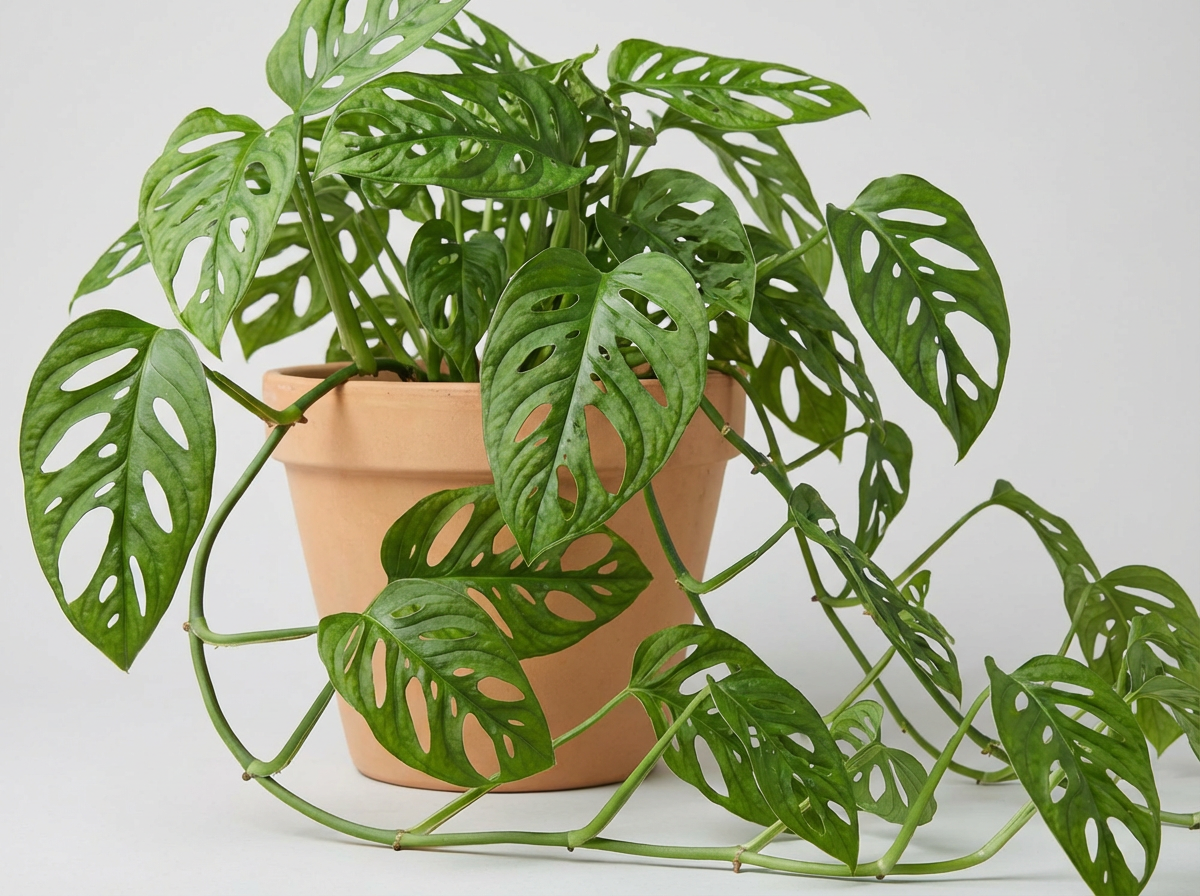
- Foliage:Leaves are thin yet resilient, deep green, and glossy, with prominent veins. Shape ranges from heart-like to oval. Juvenile leaves often emerge without holes; as the plant gains size and climbs, new leaves typically develop increasing numbers of perforations. Mature leaves are often around “adult-hand” sized, with the most attractive fenestrations appearing on vigorous, well-lit growth.
- Flower:Like many members of the Araceae, it can produce an inflorescence made of a spadix wrapped by a white, hood-like spathe. Flowering is uncommon indoors and the blooms are subtle rather than showy, but they can persist for weeks when they do appear.
- Flowering Season:Spring (rare indoors)
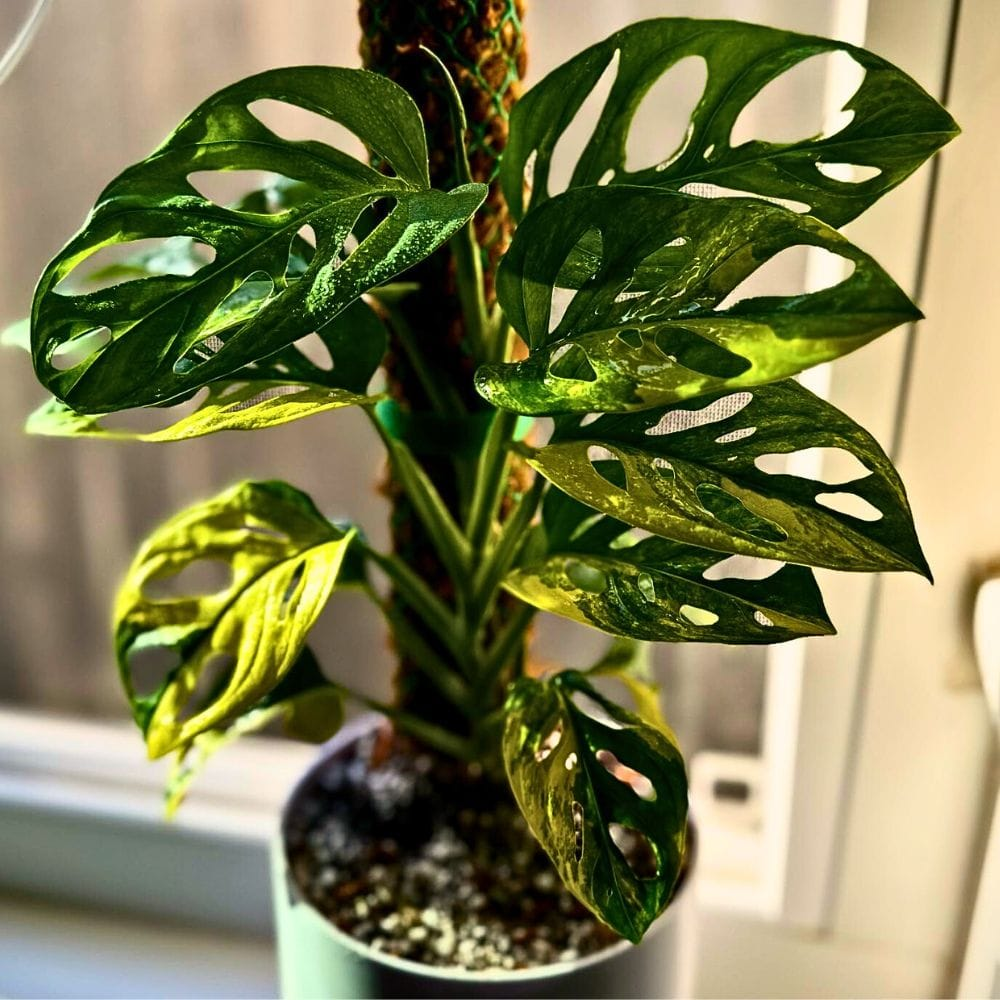
- Growth Habit:A vining plant that happily climbs or trails. It produces aerial roots along the stems that latch onto bark, moss poles, or trellises. Growth is moderate to fast, often adding about 30–60 cm (12–24 in) per year in good conditions, with new leaves appearing frequently during the growing season.
🌤️ Environment
Sunlight
Bright, indirect light is best for strong growth and good leaf fenestration. It tolerates partial shade (but may get leggy with smaller, less-perforated leaves). Avoid harsh direct sun, which can scorch foliage. A spot near a north window, or set back from an east/west window, works well.
Temperature
Prefers warm indoor temperatures of 18–27°C (65–80°F). It can tolerate down to about 15°C (60°F), but avoid prolonged chills; protect from drafts and keep it above 10°C (50°F).
Humidity
Enjoys higher humidity (ideally 50%+), but adapts to average homes around ~40%. In dry air, brown tips can develop—boost humidity with a humidifier, pebble tray, grouping plants, or occasional misting with good airflow.
Soil
Use a loose, airy, fast-draining aroid mix: coco coir or peat plus perlite, with orchid bark and a bit of charcoal for structure and freshness. Aim for slightly acidic to neutral pH, about 5.5–7.0.
Placement
Great for living rooms, bedrooms, offices, and brighter bathrooms. Grow in hanging baskets for a trailing look, or train up a moss pole/trellis for larger, more mature leaves. Keep away from heating/cooling vents and cold drafts.
Hardiness
USDA Zones 10–12; not frost tolerant.
🪴 Care Guide
Difficulty
Easy and beginner-friendly overall. The main skill is watering wisely—too much water and heavy soil are the quickest routes to root/stem rot.
Buying Guide
Choose a plant with firm stems and vibrant green leaves (some fenestration is a nice sign, but young plants may have fewer holes). Check leaf undersides and nodes for pests like mealybugs or scale. Avoid plants with widespread yellowing, mushy stems, or a constantly soggy pot. Roots poking from drainage holes can mean it’s ready for a size-up soon, but slight pot-bound is usually fine.
Watering
Water when the top 2.5–5 cm (1–2 in) of soil feels dry. In spring/summer, this is often about once a week; in fall/winter, typically every 2–3 weeks. Water thoroughly until excess drains, and never let the pot sit in water. It handles mild drying better than staying soggy.
Fertilization
Feed during active growth (spring through early fall) with a balanced liquid fertilizer at half strength about monthly (some growers go every 2–3 weeks if the plant is pushing lots of growth). A slow-release fertilizer in spring also works. Reduce or stop feeding in late fall and winter to avoid salt buildup and weak growth.
Pruning
Prune in spring to shape the plant and encourage branching. Snip stems just above a node using clean scissors or pruners. Remove yellowing or damaged leaves as needed, but avoid removing more than about 25% of the plant at once to prevent stress.
Propagation
Very easy from stem cuttings. Take a 10–15 cm (4–6 in) cutting just below a node (ideally including an aerial root). Root in water (often starts in about 7–10 days) or place directly into lightly moist mix. Spring and summer are the easiest seasons. You can also propagate by division if the pot contains multiple rooted stems.
Repotting
Repot every 2–3 years, or sooner if roots are circling tightly or emerging from drainage holes. Spring is ideal. Move up only one pot size and use a fresh, airy mix. It generally doesn’t mind being slightly snug in its pot.
📅 Seasonal Care Calendar
Spring: ramp up watering, start feeding, prune for shape, and repot if needed. Summer: keep evenly moist (not wet), maintain humidity, protect from intense sun, fertilize regularly. Fall: slow down watering and feeding as growth eases. Winter: water sparingly, pause fertilizer, keep warm, and avoid drafts.
🔬 Pests, Diseases & Safety
Common Pests & Diseases
Watch for mealybugs, scale, spider mites, and thrips—especially on the undersides of leaves and around nodes. Treat early: wipe mealybugs with alcohol, rinse foliage, and consider neem or insecticidal soap for repeat issues. Fungal leaf spots and rot can occur with poor airflow or overwatering; prevent by using a chunky mix, letting the top layer dry between waterings, and avoiding constantly wet leaves/soil.
Toxicity
Toxic if eaten by humans or pets (cats/dogs). Like many aroids, it contains insoluble calcium oxalate crystals that can cause mouth irritation, drooling, vomiting, and trouble swallowing. It’s generally safe to keep as a houseplant as long as it isn’t chewed.
🎋 Culture & Symbolism
Symbolism:Often associated with openness and “making space” because of its naturally holey foliage. In feng shui–style interpretations, those leaf windows are said to help energy flow, tying the plant to abundance and an easy, welcoming home atmosphere.
History & Legends:The species name honors the French botanist Michel Adanson. In the wild, Monstera adansonii lives in tropical forests of Central and South America, commonly scrambling up trees as an epiphyte or hemiepiphyte. In recent years it’s become a modern houseplant icon, especially popular in interiors and social media for its playful leaf pattern.
Uses:Mostly grown as an ornamental indoor plant—perfect for shelves, hanging baskets, or training up a moss pole. It’s also used as greenery in floral styling. Like many leafy houseplants, it can contribute modestly to indoor air quality in well-ventilated spaces.
❓ FAQ
Why are my Monstera adansonii leaves turning yellow?
One older leaf yellowing now and then is normal. If several leaves yellow at once, overwatering is the most common cause—let the potting mix dry more between waterings and confirm the pot drains well. Low light, too much fertilizer, or compacted soil can also contribute.
How do I make my Swiss Cheese Vine fuller?
Pinch or prune the tips to encourage branching, and keep it in bright, indirect light. Feeding during the growing season helps too. For the quickest “full pot” look, root a few cuttings and plant multiple stems together.
Does it need a moss pole?
Not strictly—it grows happily trailing. But if you give it a moss pole or trellis, it often produces larger leaves with more mature-looking fenestrations, because climbing mimics its natural habit.
Why aren’t the new leaves developing holes?
Usually it’s a light issue (too dim) or the plant is still juvenile. Move it to brighter indirect light and consider offering a support to climb; as it matures, new leaves should fenestrate more.
What are the water droplets on the leaves?
That’s guttation—extra water being released through the leaf tips. It often happens after heavy watering or when the soil stays too wet. Let the mix dry a bit more between waterings.
💡 Fun Facts
- Those leaf holes aren’t just for looks—fenestrations can help light reach lower leaves and let wind pass through without shredding the foliage.
- In rainforest habitats, aerial roots help it cling to trunks and climb toward brighter canopy light—potentially many meters high.
- Compared with Monstera deliciosa, Monstera adansonii usually has smaller, thinner leaves with lots of neat, oval perforations.
- Young plants often have solid leaves; the “Swiss cheese” effect usually increases with age, climbing, and better light.