🌱 Plant Features
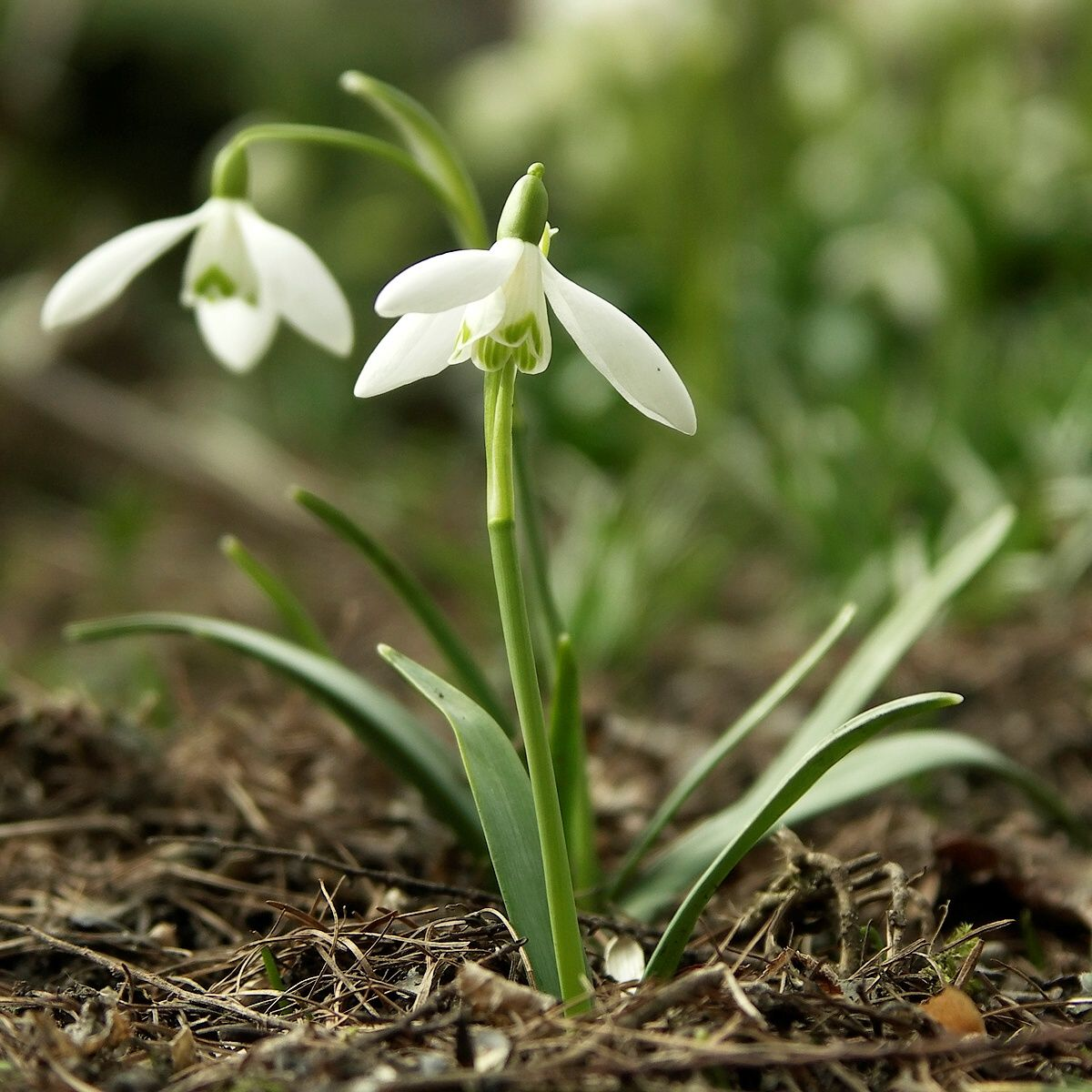
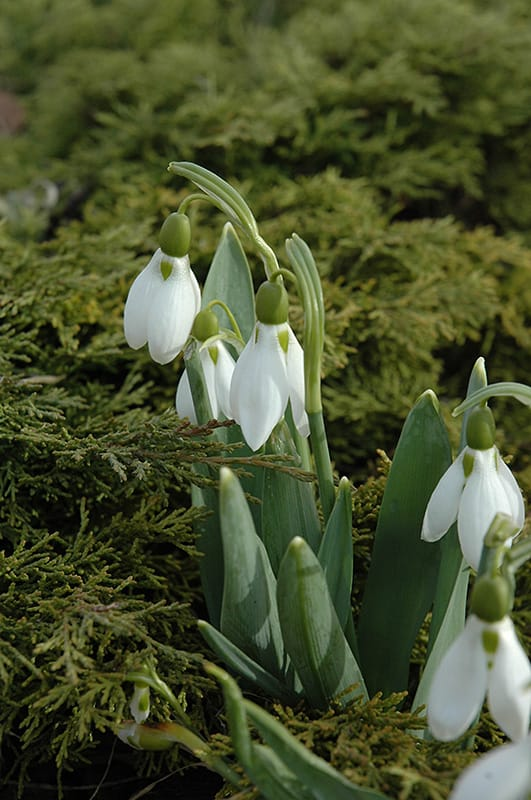
- Size:Typically 7–15 cm (3–6 in) tall for common snowdrop; some larger snowdrop species (e.g., giant snowdrop, Galanthus elwesii) may reach 15–30 cm (6–12 in).
- Foliage:Produces 2–3 basal leaves that are linear to strap-shaped, glaucous gray-green, and lightly waxy. The leaf tips are notably tough—adapted to help the shoots punch up through cold, compacted soil (and even snow).
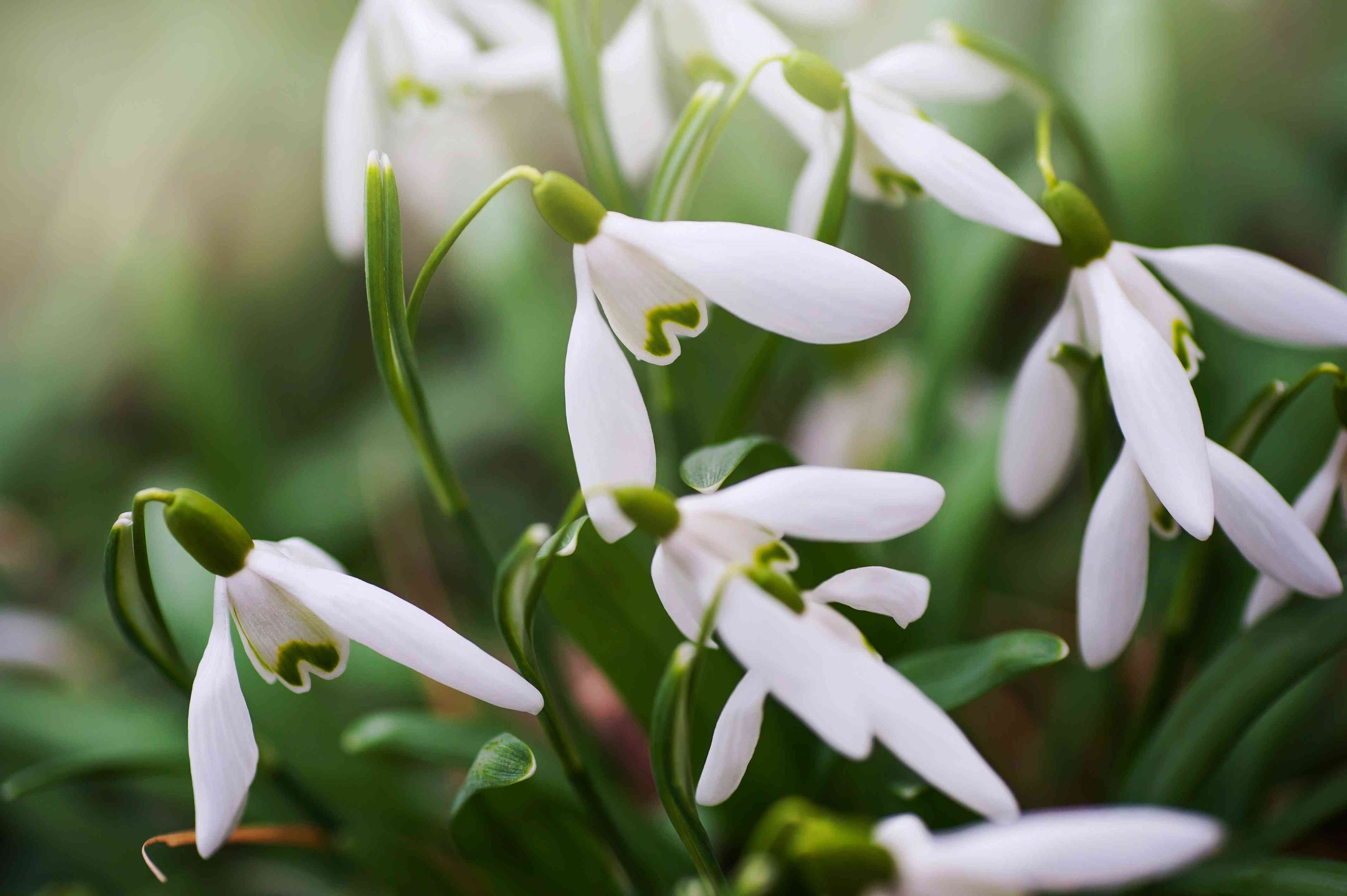
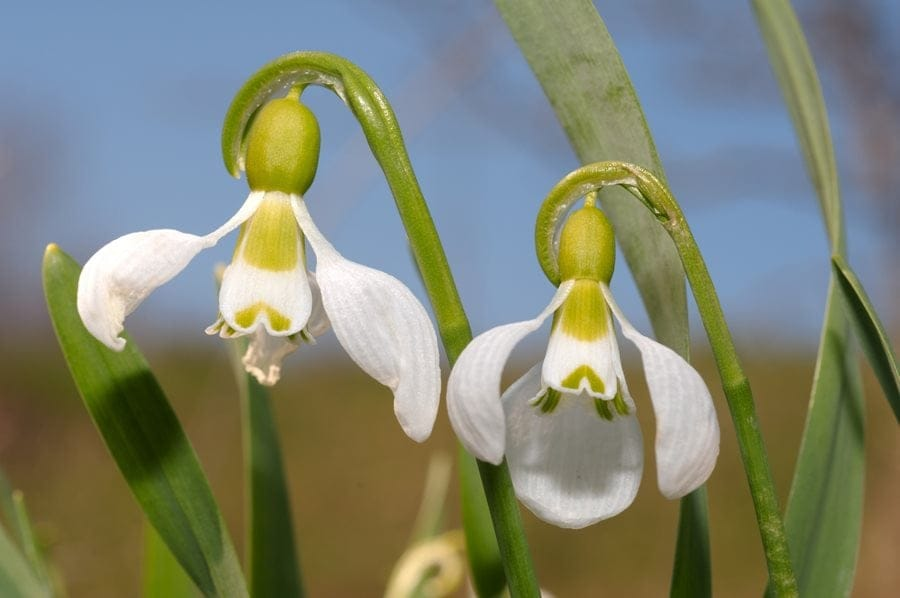
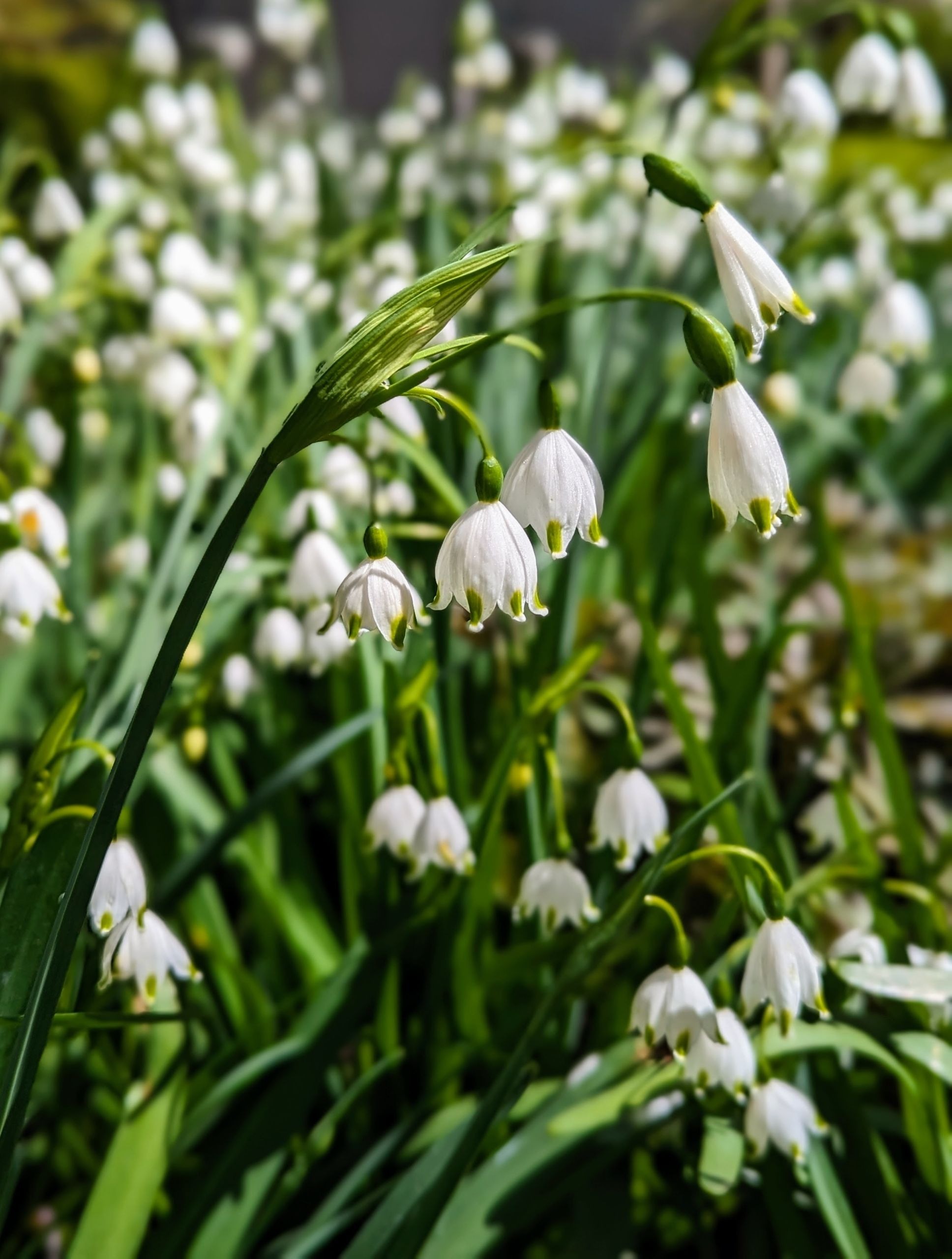
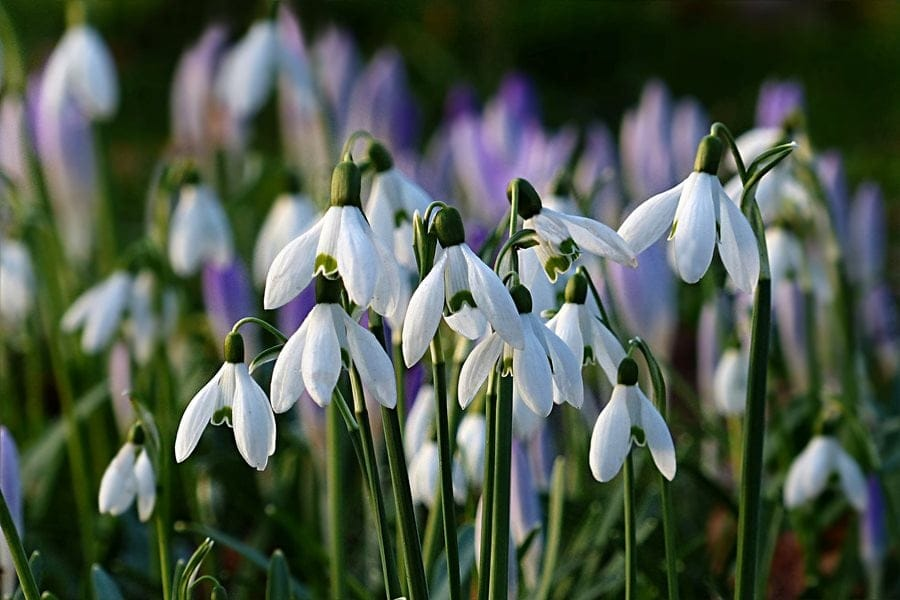
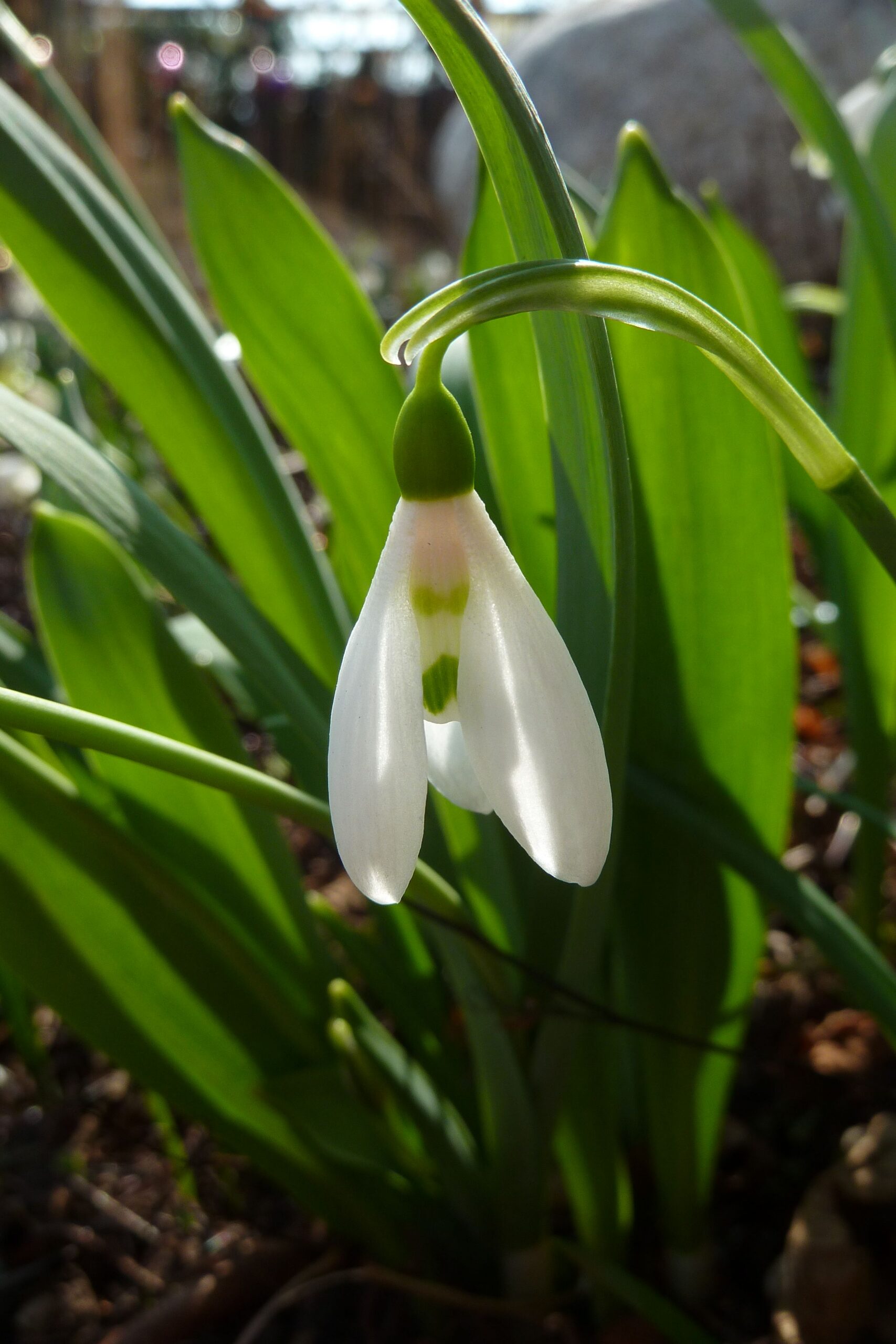
- Flower:Usually one nodding, bell-shaped white flower per stem. The bloom has six “petals” (tepals) arranged in two whorls: three larger, pure white outer segments and three shorter inner segments typically marked with green spots or small green stripes near the tip.
- Flowering Season:Late winter to early spring (commonly January–March, depending on climate).
- Growth Habit:Perennial, bulb-forming plant with an upright habit; forms clumps over time via offsets and can naturalize and self-seed in suitable sites.
🌤️ Environment
Sunlight
Full sun in spring is ideal; also does well in part shade. Especially happy under deciduous trees/shrubs—bright spring light, then summer shade after leaf-out.
Temperature
Very cold hardy; commonly tolerates about -26°C to -29°C (-15°F to -20°F). Prefers cool conditions and benefits from winter chill for best flowering.
Humidity
Likes evenly moist conditions during growth, but dislikes waterlogging.
Soil
Humus-rich, fertile, well-drained soil. Often performs well in limestone/alkaline soils, especially when organic matter is abundant.
Placement
Great for naturalizing in woodland gardens, under deciduous shrubs/trees, along paths, in rock gardens, at the front of borders, in lawns/grass (where mowing is delayed), and in containers.
Hardiness
USDA Zones 3–7 (some species/cultivars may manage into Zone 8), generally best in cooler climates.
🪴 Care Guide
Difficulty
Easy—once established, snowdrops are low-fuss and reliably return each year with minimal intervention.
Buying Guide
For best results, buy and plant “in the green” (freshly lifted plants with leaves and roots intact) in late winter/early spring (about February–March). Dry bulbs sold in fall can work, but they dehydrate easily and may establish more slowly. Choose bulbs/plants that look firm and healthy, avoiding soft, shriveled, or damaged bulbs.
Watering
Water during active growth and flowering if spring is dry, keeping soil lightly moist. After flowering, continue modest moisture until foliage yellows. During summer dormancy, keep the soil on the drier side and avoid soggy conditions.
Fertilization
Not a heavy feeder. A light bulb fertilizer (or balanced, low-dose feed) in early spring as shoots emerge, after flowering, or in fall at planting time can support strong bulbs and better bloom.
Pruning
Deadheading spent flowers is optional but can tidy the plant. The key rule: don’t cut the leaves early—let foliage die back naturally until yellow and withered so it can recharge the bulb for next year’s flowers.
Propagation
Propagate by dividing bulb offsets or by seed. Division is usually easiest and fastest: split clumps right after flowering while still “in the green” (often March–April), replanting immediately with roots kept intact. Seed-grown plants may take about 2–3 years (or longer in cool climates) to flower; snowdrops may also self-seed and gradually naturalize.
Repotting
In gardens or pots, leave clumps undisturbed as much as possible—snowdrops don’t love frequent disruption. If clumps become crowded and flowering weakens, divide after flowering every few years to restore vigor.
📅 Seasonal Care Calendar
Fall (Oct–Nov): Plant dry bulbs about 7–8 cm (3 in) deep. Winter (Jan–Mar): Peak flowering in many climates—enjoy the blooms. Late winter to spring (Feb–Apr): Best time to plant/divide “in the green.” After flowering: Feed lightly if desired and let foliage die back naturally. Summer: Dormant—avoid heavy watering and waterlogged soil.
🔬 Pests, Diseases & Safety
Common Pests & Diseases
Generally very trouble-free. Toxic alkaloids help deter many pests; often resistant to deer, rabbits, and rodents. Occasionally, squirrels or moles may dig bulbs (usually more nuisance than appetite), and birds may peck at flowers. Problems are uncommon when soil drainage is good.
Toxicity
Toxic to humans and pets (including cats and dogs). All parts contain alkaloids such as lycorine; ingestion can cause nausea, vomiting, diarrhea, and abdominal pain. Handle sensibly and keep away from children and pets. Note: the compound galantamine, associated with snowdrops, is used pharmaceutically for treating symptoms of Alzheimer’s disease.
🎋 Culture & Symbolism
Symbolism:Hope, renewal, purity, consolation, and new beginnings—often seen as a gentle promise that winter won’t last forever.
History & Legends:Snowdrops have long carried cultural weight: in Christian tradition they’re associated with the Virgin Mary and sometimes referred to as “St. Agnes’ flower.” Victorian folklore could be strangely split—some considered a lone snowdrop unlucky, while broad drifts of them symbolized comfort and hope. The common name reflects the flower’s droplet-like white form and its habit of appearing in snowy weather; snowdrops have been grown in gardens for centuries (recorded cultivation at least by 1597).
Uses:Mainly ornamental—perfect for naturalized woodland-style plantings, borders, rock gardens, and containers. Snowdrops are also associated with galantamine, a compound used in modern medicine for cognitive symptoms in Alzheimer’s disease.
❓ FAQ
When is the best time to plant snowdrops?
The easiest, most reliable method is planting “in the green” (actively growing plants) in late winter/early spring, often February–March, just after flowering. Dry bulbs are typically planted in fall (October–November), but they can dry out and be slower to establish.
Do snowdrops come back every year?
Yes. They’re hardy perennial bulbs that return annually and often multiply into bigger clumps over time when given cool winters and moist, well-drained soil.
Why are my snowdrops not flowering?
Common causes include insufficient winter chill, bulbs drying out before planting, planting at an incorrect depth (aim for about 7–8 cm / 3 in for dry bulbs), overcrowded clumps (divide after flowering), or a site that’s too warm for consistent bloom.
💡 Fun Facts
- Snowdrop leaves contain compounds that help protect their tissues from freezing damage—one reason they can bloom so early.
- Their tough, pointed leaf tips help them “drill” through cold soil and even snow crust.
- They’re an important early-season food source for pollinators when few other flowers are available.
- Snowdrop enthusiasts are called galanthophiles, and rare cultivars can sell for remarkably high prices.
- The genus name Galanthus comes from Greek—gala (milk) + anthos (flower), meaning “milk flower.”