🌱 Plant Features
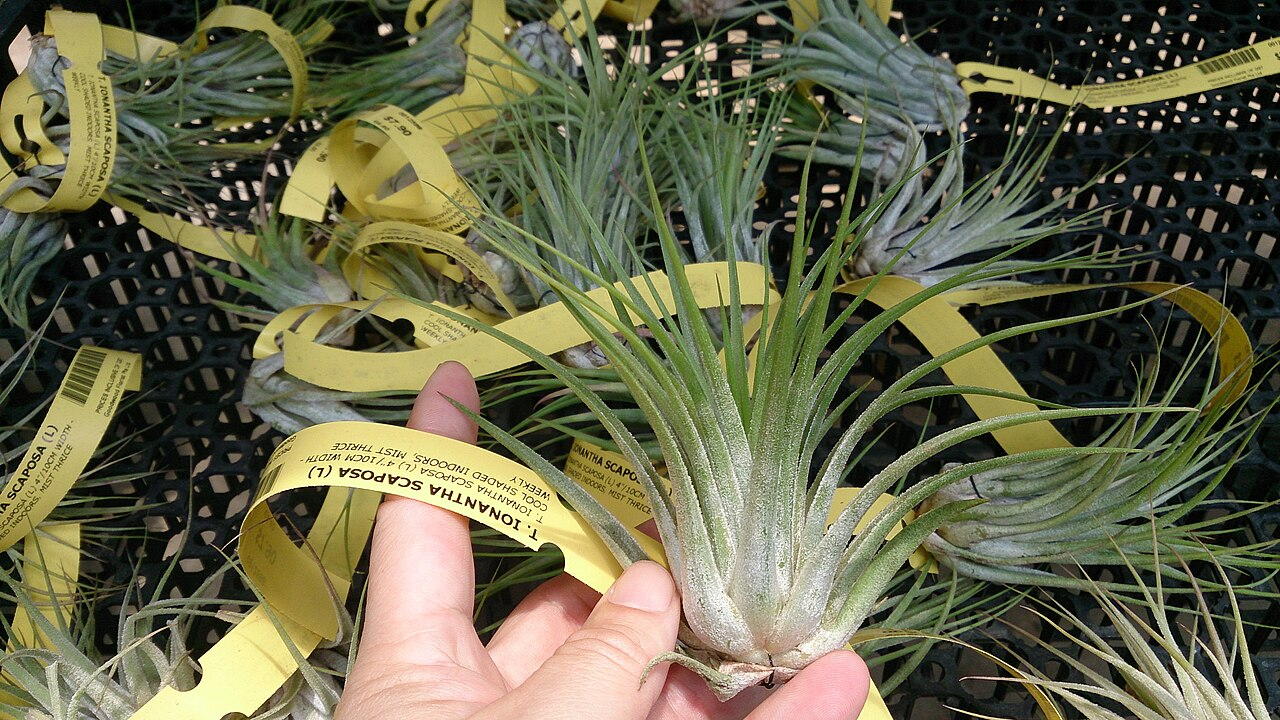
- Size:Small: typically 5–10 cm (2–4 in) tall and about 5–10 cm (2–4 in) across; larger clumps can form over time.
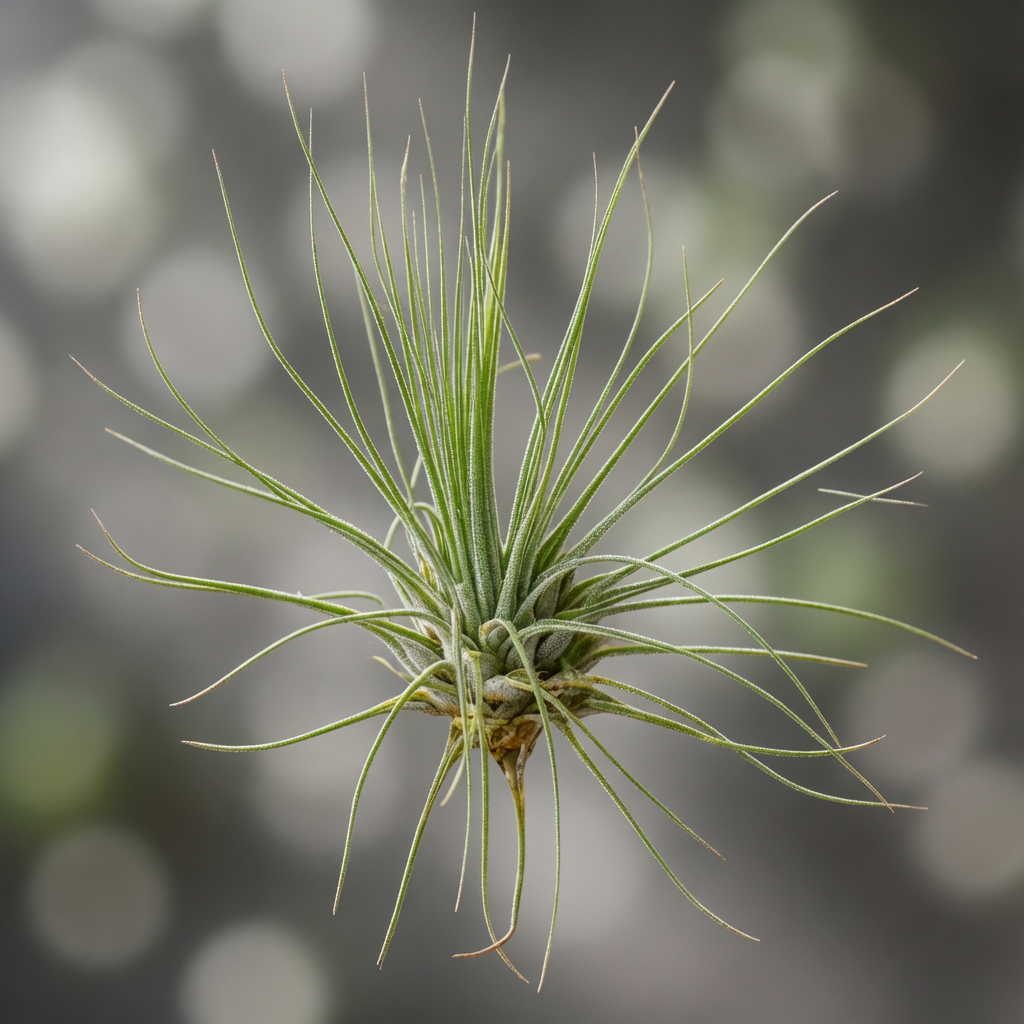
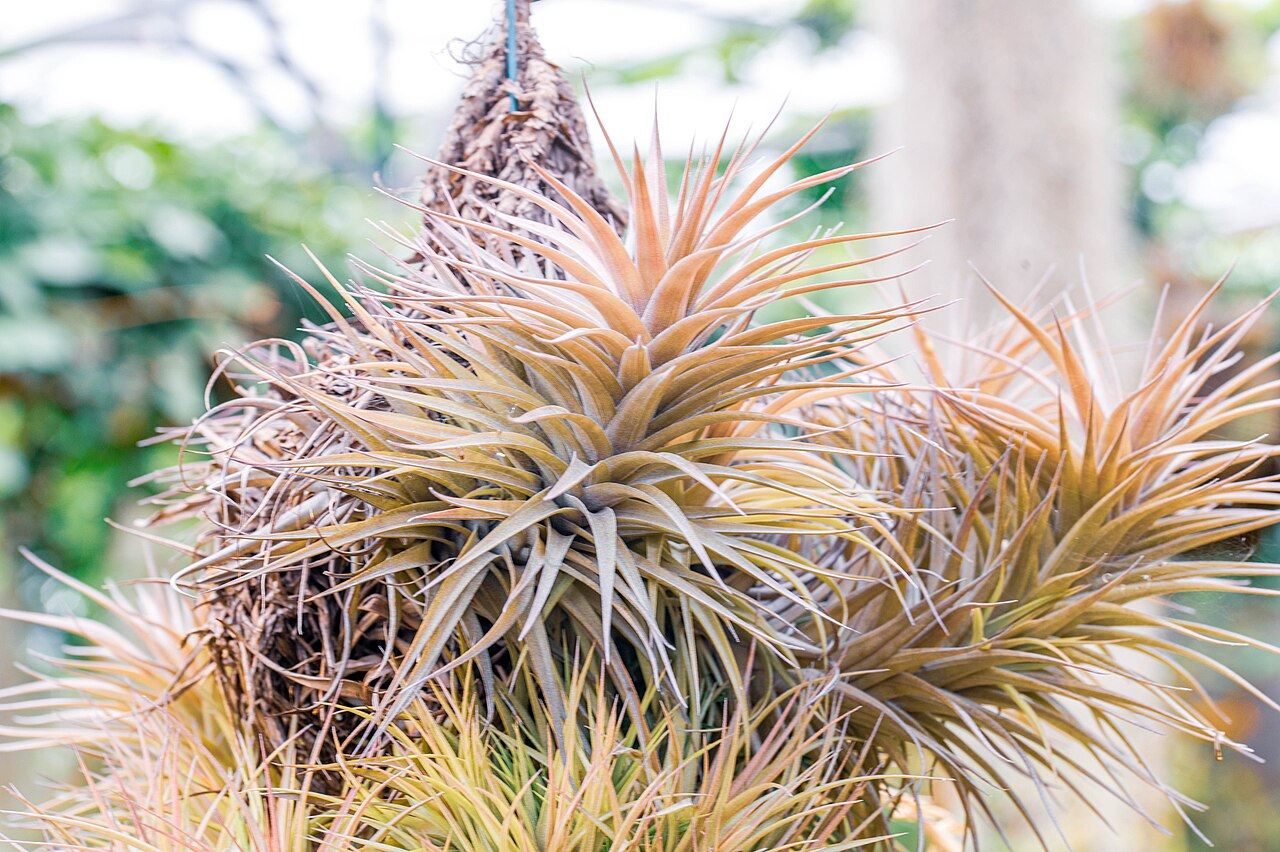
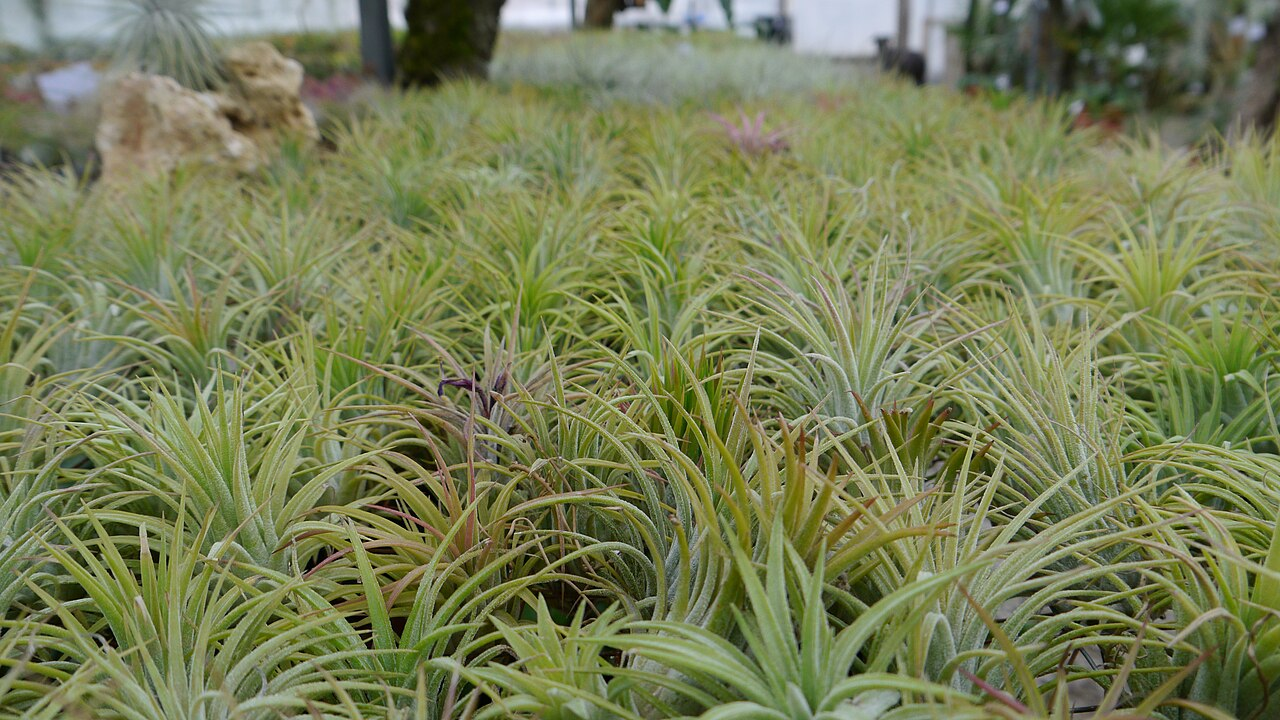
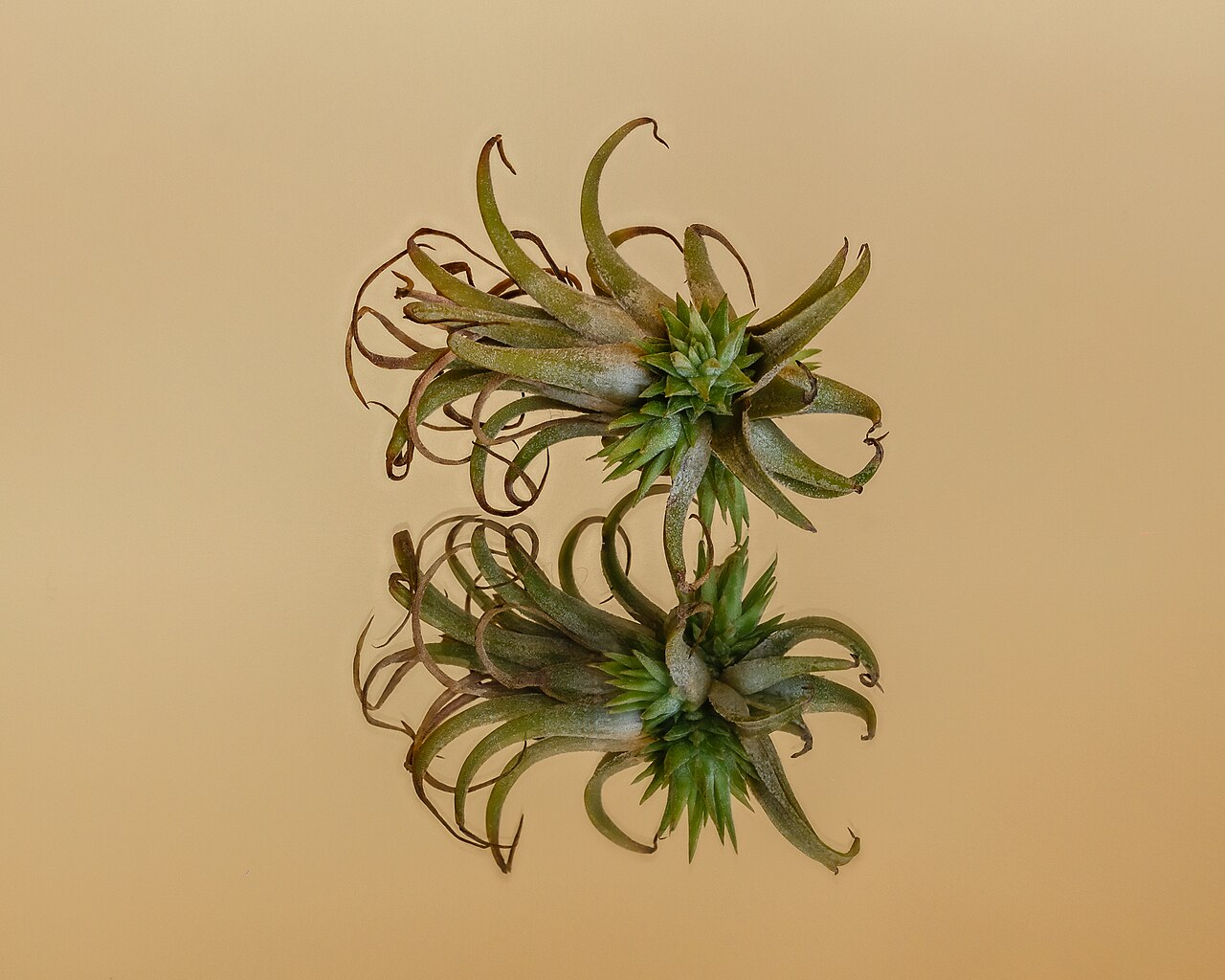
- Foliage:Slender, pointed leaves radiate outward in a dense rosette. The leaves often appear silvery because they’re covered in fine trichomes (tiny scales) that help the plant absorb water and nutrients from humidity, rain, and mist.
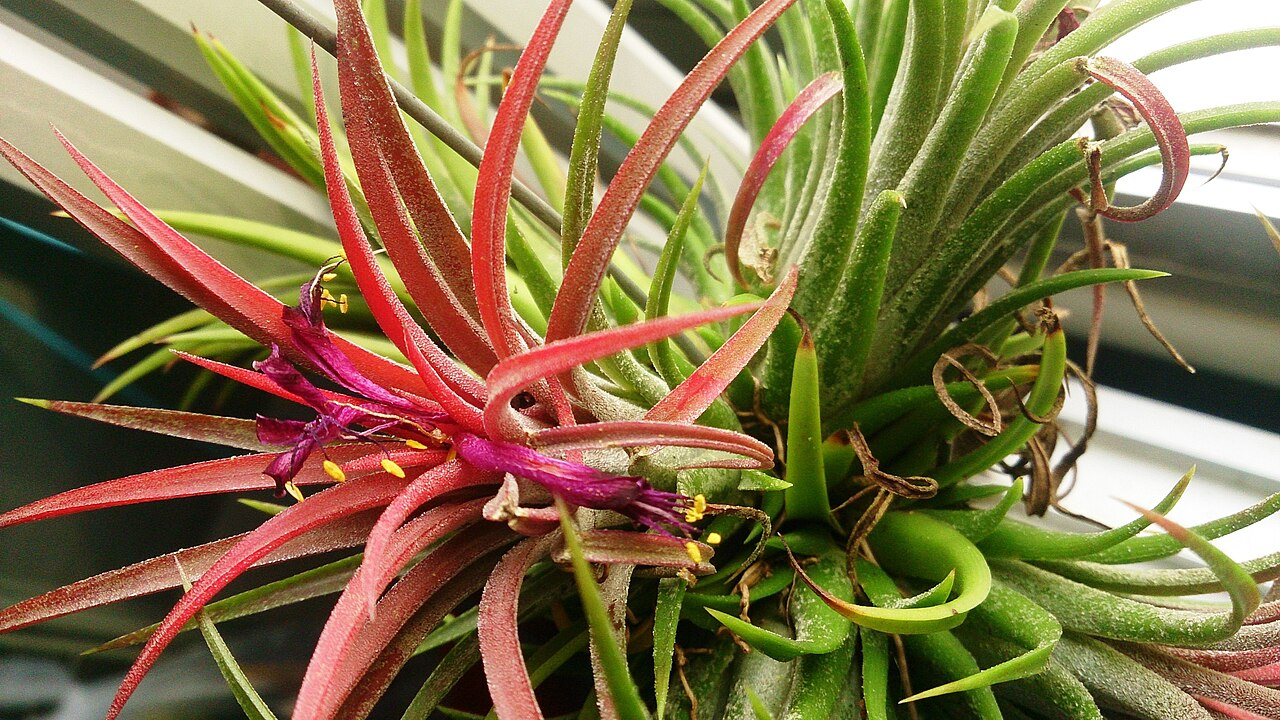
- Flower:Produces a narrow, bright red to pinkish bracted spike; small purple tubular flowers emerge from the bracts. Individual blooms are short-lived, but the overall display is very showy, and the plant may blush red around bloom time.
- Flowering Season:Most often winter to spring indoors; timing varies with growing conditions.
- Growth Habit:Evergreen epiphyte; forms a tight rosette and gradually offsets to make clusters.
🌤️ Environment
Sunlight
Bright, indirect light is ideal; can take gentle morning sun. Avoid harsh midday sun behind glass, which can scorch the leaves.
Temperature
Ideal 15–27°C (59–81°F). Protect from chills; avoid sustained temperatures below about 10°C (50°F).
Humidity
Moderate to high humidity (about 40–60%+), paired with good air circulation so the plant dries quickly after watering—this is key to preventing rot.
Soil
No soil required. Best mounted on cork/wood/driftwood or set in a very airy, fast-drying material (e.g., coarse bark) where the base never stays wet.
Placement
Near a bright window (east is great; south/west works with filtering), on a shelf with strong ambient light, or in a well-ventilated bathroom with natural light. Prioritize airflow wherever it’s displayed.
Hardiness
USDA Zone 10–11 outdoors; not frost-tolerant.
🪴 Care Guide
Difficulty
Easy to moderate: straightforward once you get the rhythm right—bright light, thorough watering, and fast drying.
Buying Guide
Pick plants with firm leaves and a clean, solid base (no black, mushy, or sour-smelling tissue). Silvery foliage is normal and healthy. If the plant is attached to décor with glue, make sure the base isn’t sealed so water can drain and the plant can dry.
Watering
Soak in clean water for 15–30 minutes about 1–2 times per week during warm/bright periods. In cooler or dimmer conditions, reduce to every 7–14 days. After soaking, shake off excess water thoroughly and dry the plant upside down or on its side so water doesn’t sit in the crown. If humidity is low, mist lightly between soakings (but still ensure it dries quickly).
Fertilization
Feed lightly during active growth: use 1/4-strength bromeliad/air-plant fertilizer every 2–4 weeks. Rinse with plain water occasionally to prevent fertilizer salts from building up on the leaves.
Pruning
Only remove fully brown, crispy leaves by gently pulling or trimming. After flowering, the mother plant naturally declines over time while producing pups—don’t remove it too early, since it continues supporting the offsets.
Propagation
Offsets (pups). Separate when pups are about 1/3–1/2 the size of the mother, or leave them attached to form a fuller clump.
Repotting
No repotting needed. If displayed in a dish or airy medium, refresh mounts/materials when they break down and keep the base well-ventilated.
📅 Seasonal Care Calendar
Spring–summer: brighter light, more frequent soaking, light feeding. Autumn–winter: reduce watering, keep nights warmer, maximize light, and make sure the plant dries quickly after any soak.
🔬 Pests, Diseases & Safety
Common Pests & Diseases
Most problems come from rot caused by poor airflow or water trapped in the crown. Occasional pests include mealybugs and scale—remove with a cotton swab dipped in isopropyl alcohol, and improve ventilation and drying speed.
Toxicity
Generally considered non-toxic to people and pets, though chewing may cause mild stomach upset. Keep away from pets that like to nibble plants.
🎋 Culture & Symbolism
Symbolism:Often linked with independence and resilience—an eye-catching plant that thrives without soil.
History & Legends:As a bromeliad adapted to living on trees and rocks, this air plant relies on trichomes—special leaf scales—to capture moisture and nutrients from rain, mist, and airborne dust. It’s a classic example of epiphytic survival: it doesn’t parasitize its host, it simply uses it for support.
Uses:Ornamental: popular for open terrariums, mounted displays on cork or driftwood, minimalist desk décor, and grouped “air plant gardens.”
❓ FAQ
Do air plants really live on air alone?
Not quite. They don’t need soil, but they still need bright light, regular watering, and fresh air movement. They absorb water and nutrients through their leaves.
Why are the leaf tips turning brown?
Common causes include underwatering, very low humidity, or fertilizer salt buildup. Increase soaking slightly, boost humidity, and rinse/flush with clean water occasionally.
How do I prevent rot?
Drying is everything: after soaking, shake out water and place the plant where it will dry within about 4 hours in a warm, airy spot. Avoid water pooling in the center.
💡 Fun Facts
- That frosty, silvery look comes from trichomes—tiny scales that soak up moisture like miniature sponges and also help reflect intense sun.
- After it blooms, the plant usually produces pups, so one small rosette can gradually become a long-lived cluster.