🌱 Plant Features
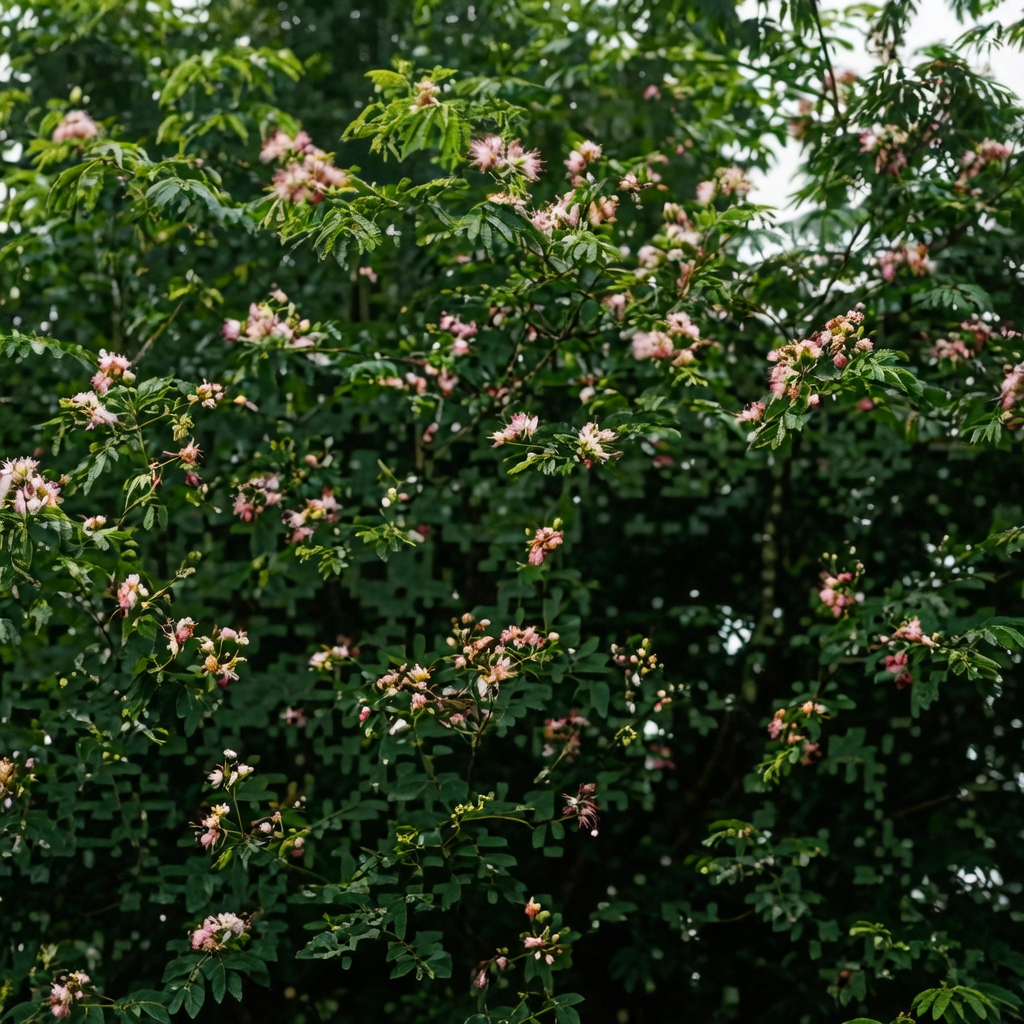
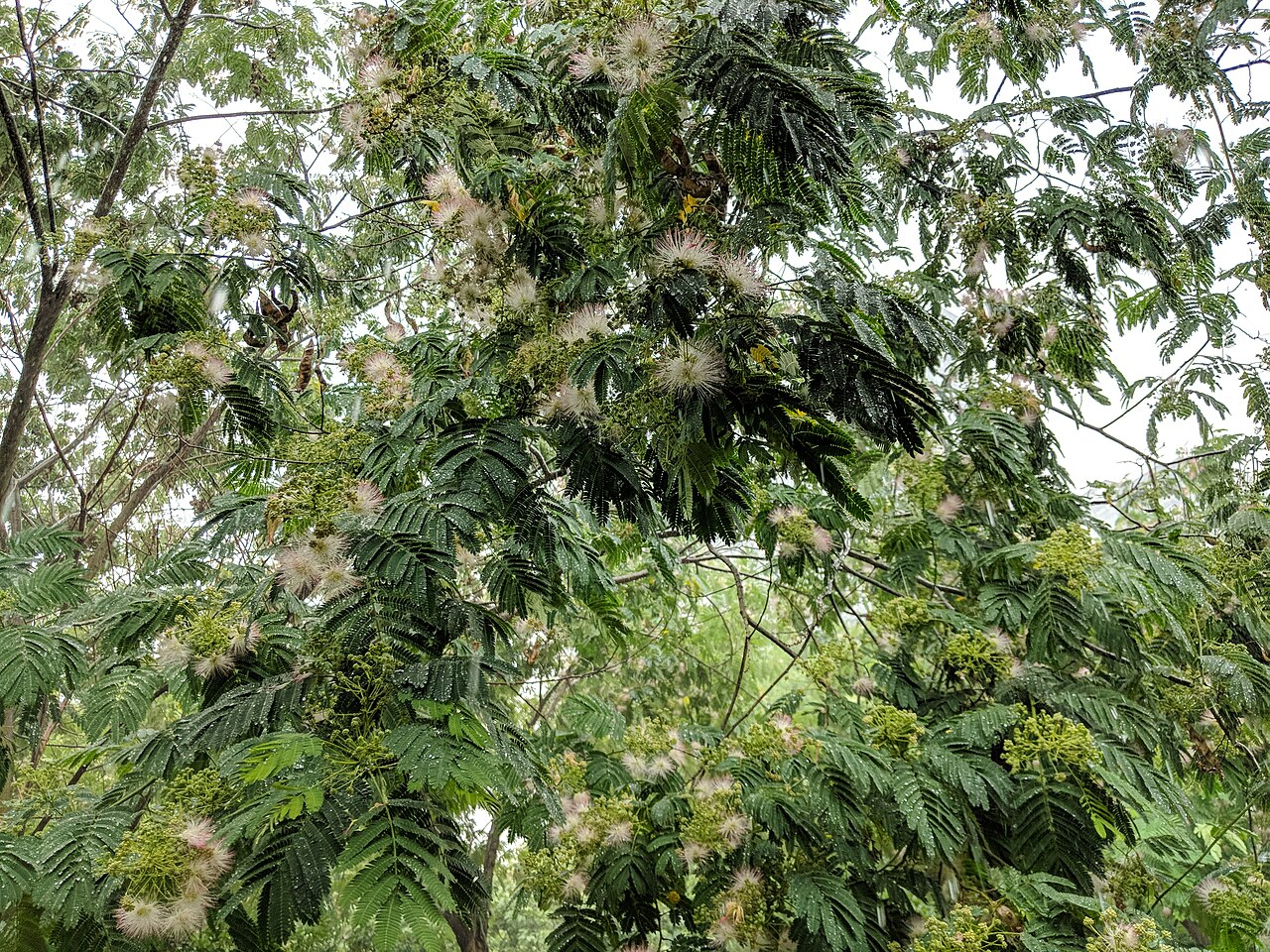
- Size:Typically 4–15 m (13–49 ft) tall with a broad, spreading crown; often wider than tall when mature.
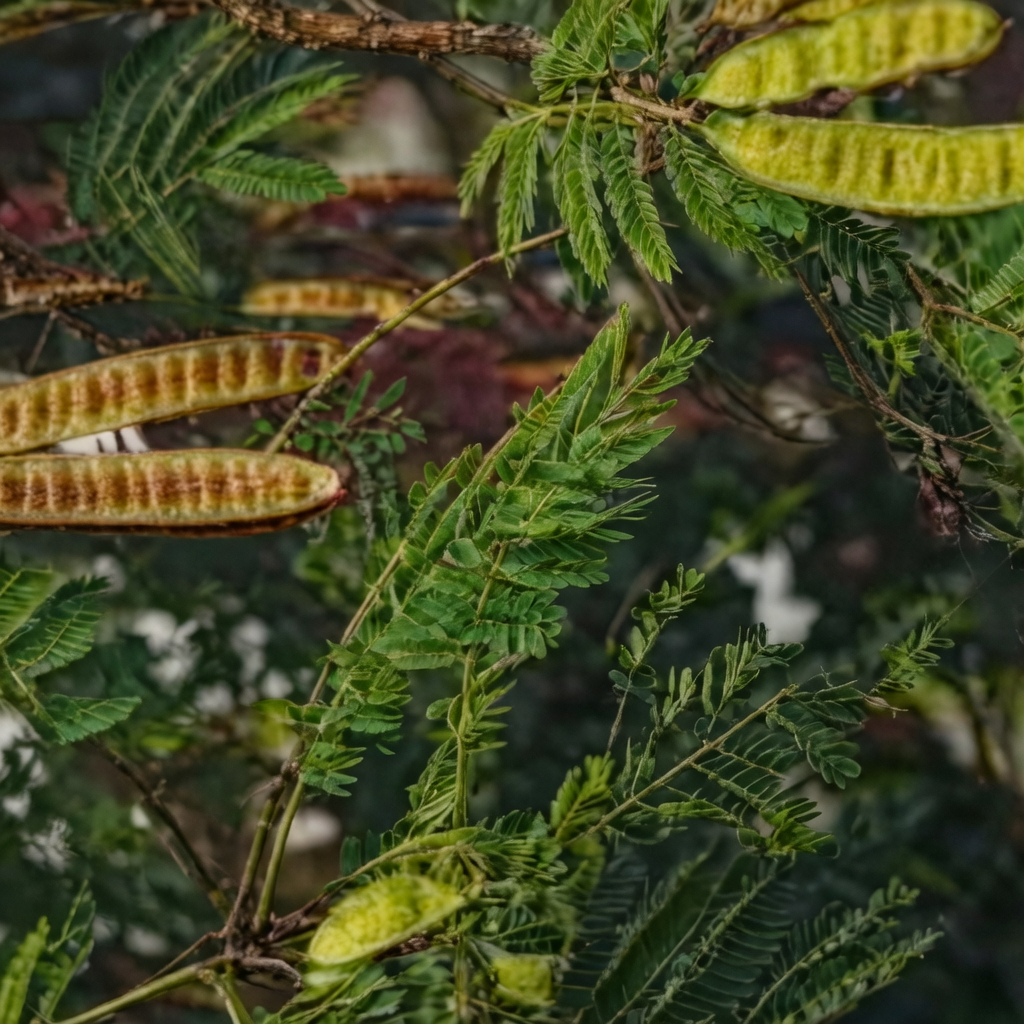
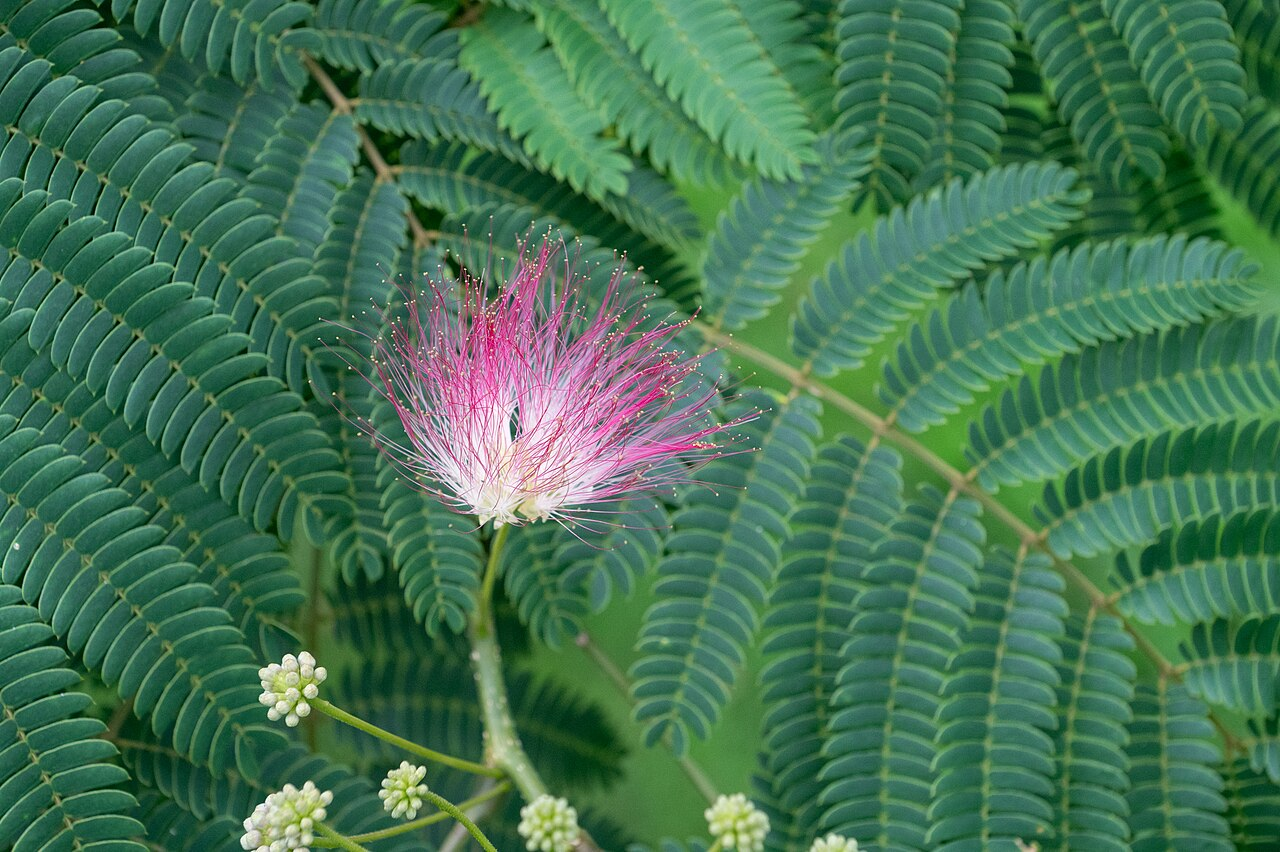
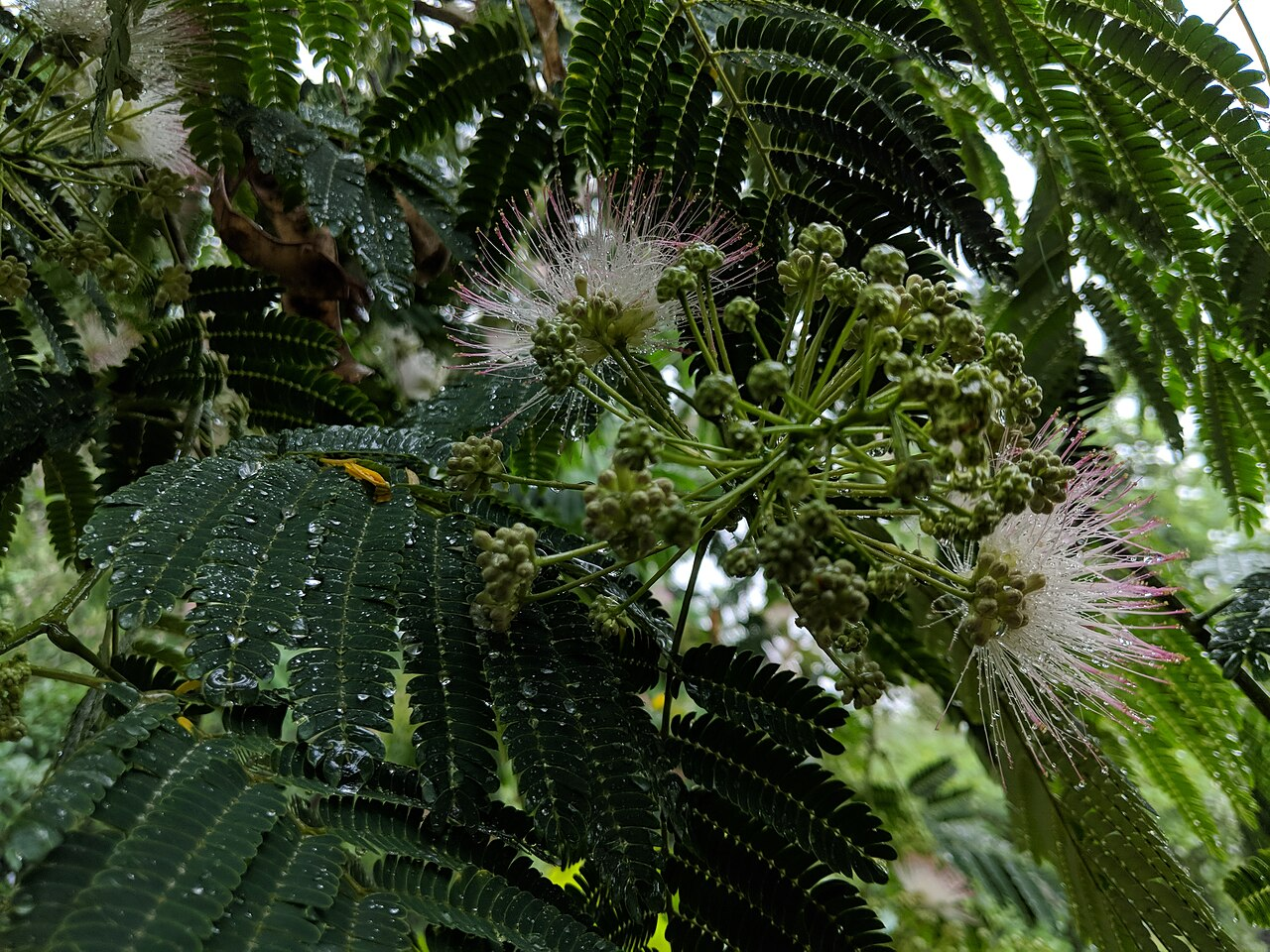
- Foliage:Leaves are finely divided and fern-like (bipinnate), giving the canopy a soft, feathery texture. Young shoots and leaf stalks may be softly hairy, and slender twigs can look slightly angled.
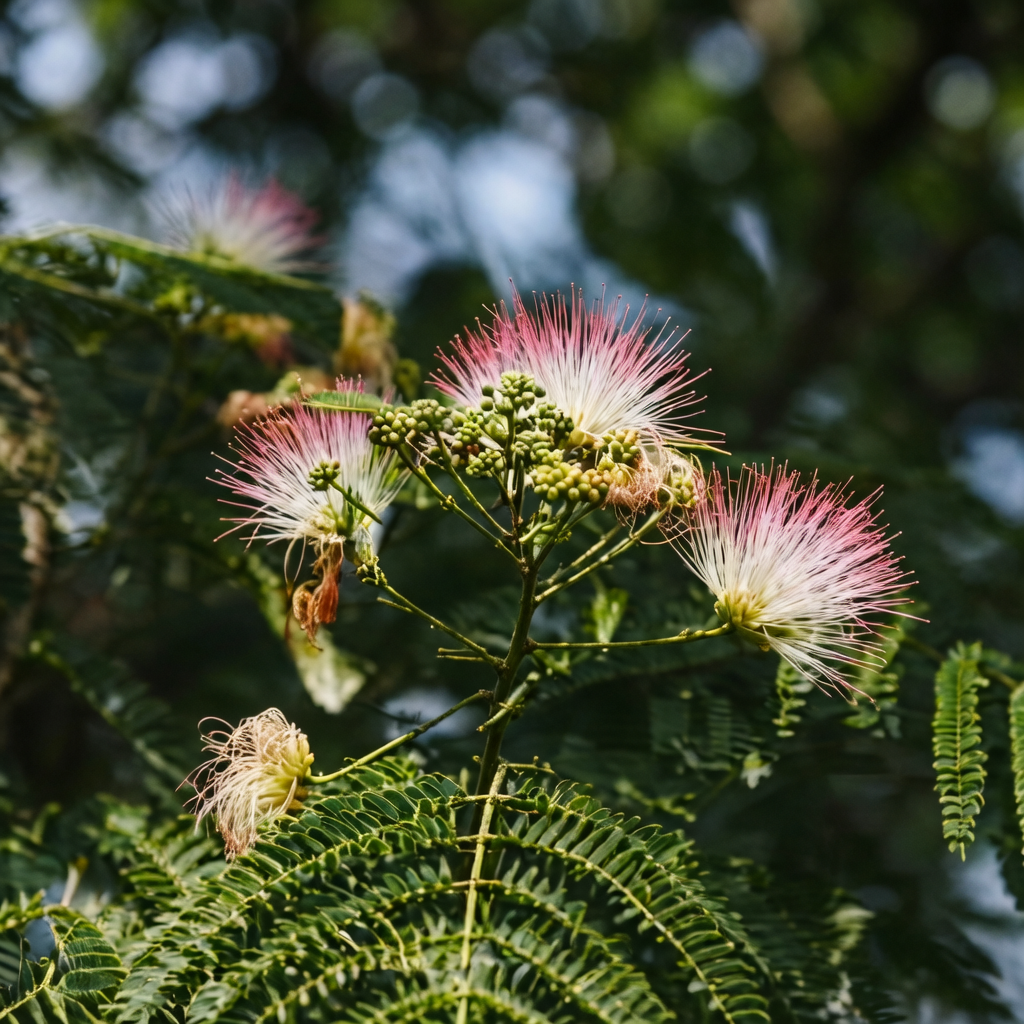
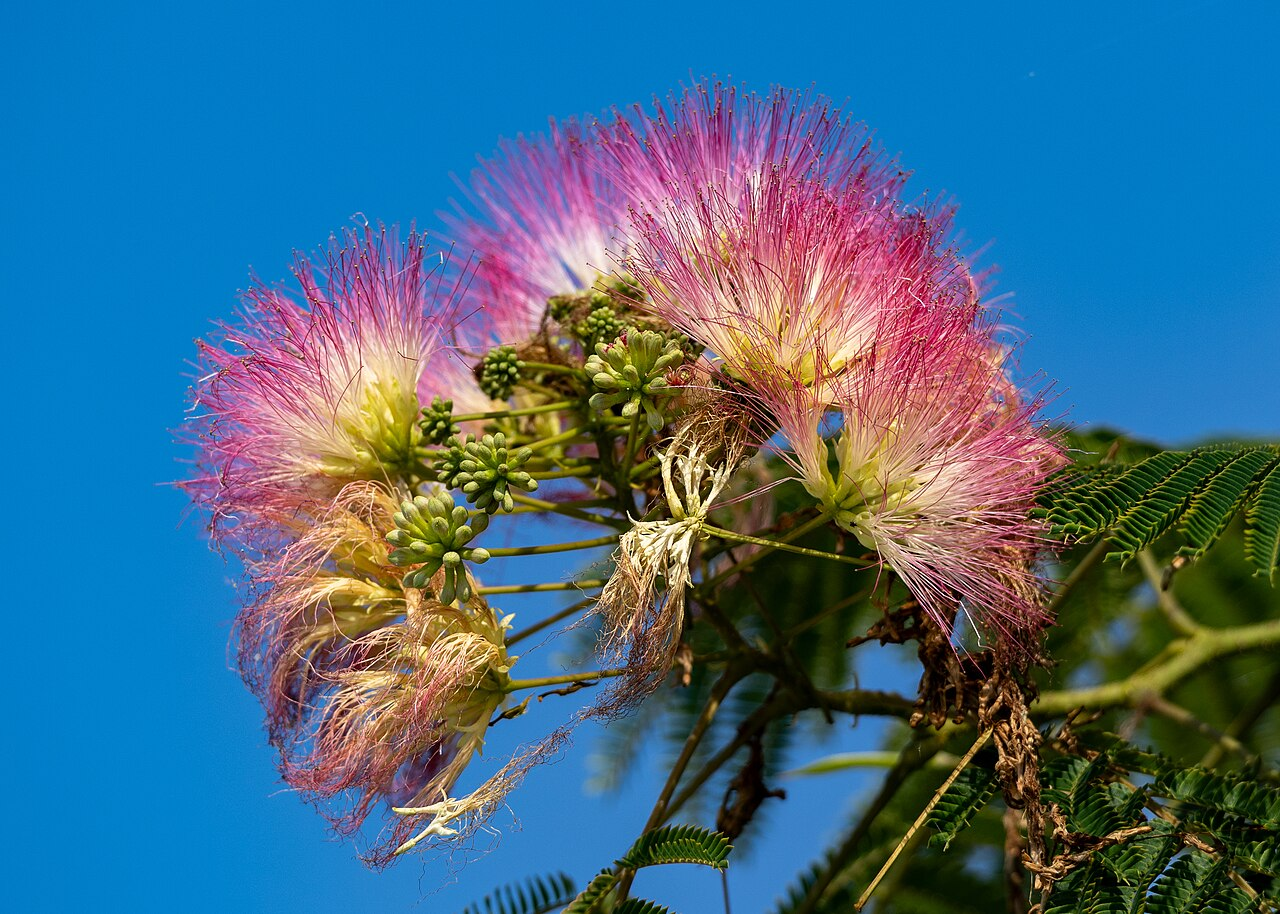
- Flower:In early to mid-summer it produces clusters of silky, pink flowers. Each bloom looks like a soft puff because it’s packed with long, threadlike stamens. After flowering, flat, strap-like seed pods develop and later dry to a papery rattle.
- Flowering Season:June–July (early to mid-summer)
- Growth Habit:Deciduous, spreading-canopy tree; may be multi-stemmed unless trained to a single trunk.
🌤️ Environment
Sunlight
Full sun for best flowering; tolerates light shade but typically blooms less.
Temperature
Prefers warm summers. Once established, it is generally hardy to about -20 to -15°C (-4 to 5°F); young plants are more sensitive to frost and benefit from protection in colder winters.
Humidity
Comfortable in average outdoor humidity. Drought tolerant once established; prolonged soggy conditions are more problematic than dry air.
Soil
Adaptable to many soils as long as drainage is good. Tolerates poor soils, mildly alkaline conditions, and light salinity; avoid waterlogged sites to reduce root problems.
Placement
Best outdoors as a landscape or street tree—parks, roadsides, waterfront plantings, and large gardens. Also used in industrial greening and ecological restoration where appropriate.
Hardiness
USDA Zone 6–9 (varies by provenance and local conditions). Noted for relatively good tolerance of urban air pollution.
🪴 Care Guide
Difficulty
Easy in suitable outdoor climates; generally low-maintenance once established.
Buying Guide
Pick a healthy plant with an undamaged trunk and a strong branch framework (choose a single leader if you want a classic tree form). Check that the roots look healthy and not severely pot-bound. For bare-root or field-dug plants, look for plump buds and roots that haven’t dried out.
Watering
Water regularly through the first growing season to help the root system establish. After that, water deeply only during extended dry spells. Avoid constantly wet soil, which can invite root and vascular problems.
Fertilization
Often needs little to no feeding. If growth is weak, apply a balanced slow-release fertilizer in spring. Avoid heavy nitrogen feeding, which can push lush, weak growth and reduce flowering.
Pruning
Prune in late winter to early spring while dormant: remove dead, weak, crossing, or rubbing branches and shape the canopy. Avoid heavy mid-summer pruning if you want the best flower display.
Propagation
Most commonly grown from seed. Scarify seeds to improve germination (nick the seed coat or pour hot water over seeds and soak), then sow warm. Semi-ripe cuttings in summer are also possible, typically in more controlled/professional setups.
Repotting
Mainly grown in the ground. If kept in a container while young, pot up in spring into a free-draining mix, then plant out once roots fill the pot and the site is suitable.
📅 Seasonal Care Calendar
Spring: plant, lightly feed if needed, and start training the main structure. Summer: enjoy flowering; deep-water during drought only. Autumn: pods mature; gradually reduce watering. Winter: prune for structure while dormant.
🔬 Pests, Diseases & Safety
Common Pests & Diseases
Can attract webworms/caterpillars, scale insects, and spider mites (especially in hot, dry weather). Waterlogged soils may lead to root issues and, in some areas, vascular wilts. Support plant health with good airflow, proper spacing, and well-drained soil; use integrated pest management if infestations develop.
Toxicity
Not commonly listed as highly toxic, but it’s not a food plant—don’t eat the seeds, pods, or foliage. Sap or fine plant hairs may irritate sensitive skin, and pets should be discouraged from chewing plant parts.
🎋 Culture & Symbolism
Symbolism:Often linked with harmony, reunion, and soothing away worries—fitting for a tree with such a soft, restful look.
History & Legends:Long cultivated across Asia as a shade and ornamental tree. It has also been widely introduced elsewhere because its summer bloom is showy and it tolerates many city stresses.
Uses:Grown mainly as an ornamental for streetscapes, parks, scenic areas, and waterfront or industrial greening. The wood is reddish-brown with straight grain and a fine texture; it has been used for furniture and railway ties, though it can crack if dried too quickly.
❓ FAQ
When does it flower?
Most commonly June–July (early to mid-summer), though timing shifts a bit with local climate.
When does it set fruit (pods)?
Seed pods typically mature from August–October (late summer through autumn).
How tall does it grow?
Usually about 4–15 m (13–49 ft), with a broad crown that can be wider than the tree is tall.
What growing conditions does it prefer?
Full sun and warm summers, plus well-drained soil. Once established, it tolerates drought and a range of soils (including mildly alkaline or lightly saline sites) and generally performs well in urban conditions.
💡 Fun Facts
- The famous “silk” effect comes from dozens of long, threadlike stamens that turn each flower cluster into a pink powder puff.
- Its flat, strap-like pods can persist into autumn and may rattle pleasantly when they dry.
- It’s popular as a city tree because it copes with heat, drought (once established), and air pollution better than many ornamentals.
- Although the wood has a fine texture and attractive color, it can split if dried too fast.