🌱 Plant Features
- Size:Usually kept as a compact potted plant: about 20–60 cm (8–24 in) tall and 20–60 cm (8–24 in) wide with regular pinching/pruning, but can reach roughly 30–100 cm (12–39 in) tall and 30–90 cm (12–35 in) wide in containers depending on cultivar, pot size, and how hard it’s pruned.
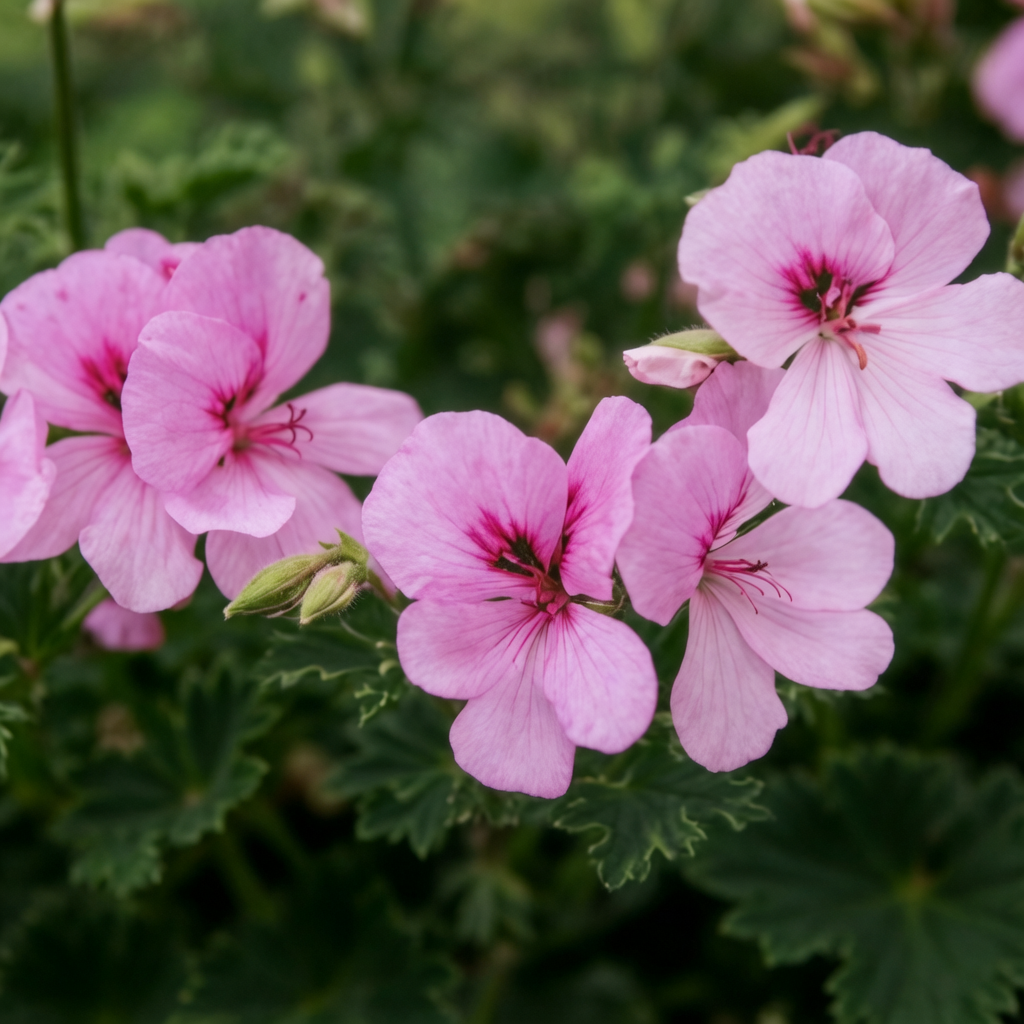
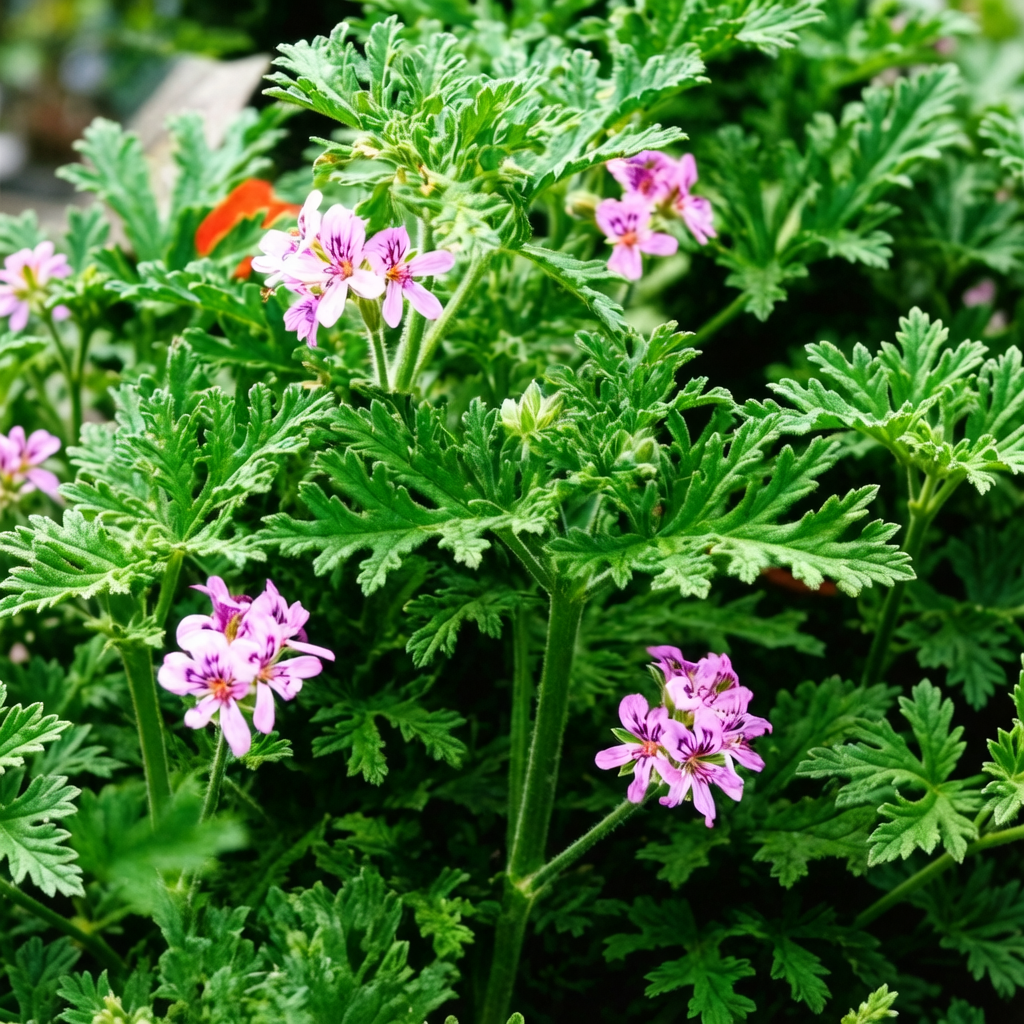
- Foliage:Soft green, lobed leaves held densely on branching stems; foliage is famously aromatic and releases fragrance quickly when touched or brushed. Leaves may yellow or drop if light is too low, the potting mix stays too wet, the plant is root-bound in tired mix, or during prolonged heat stress.
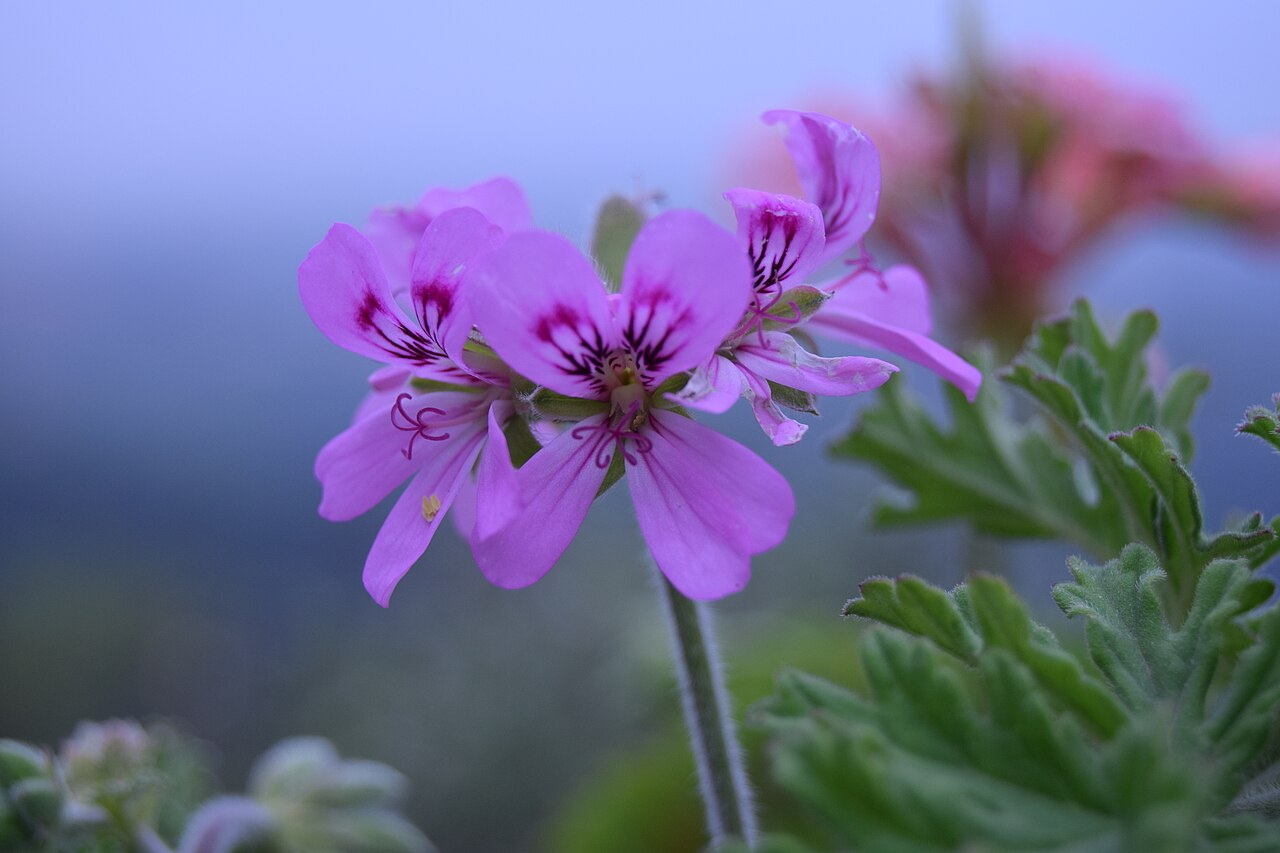
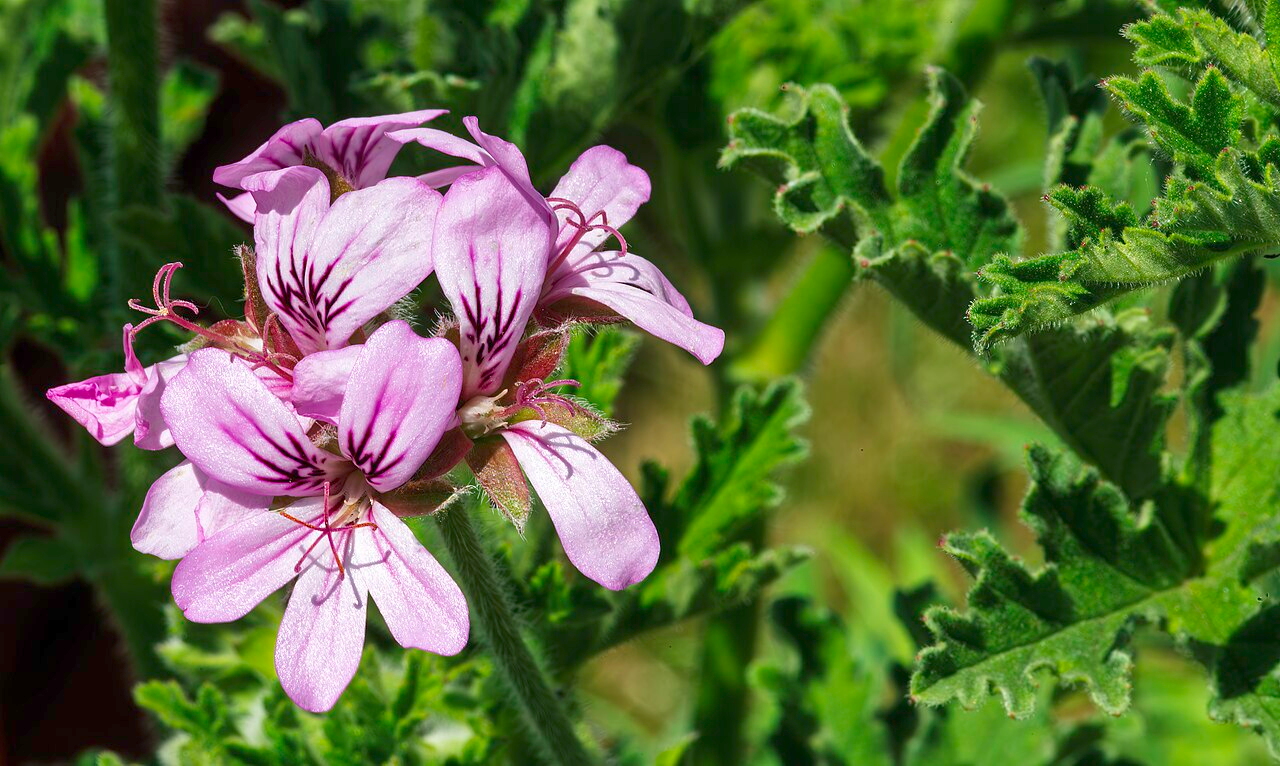
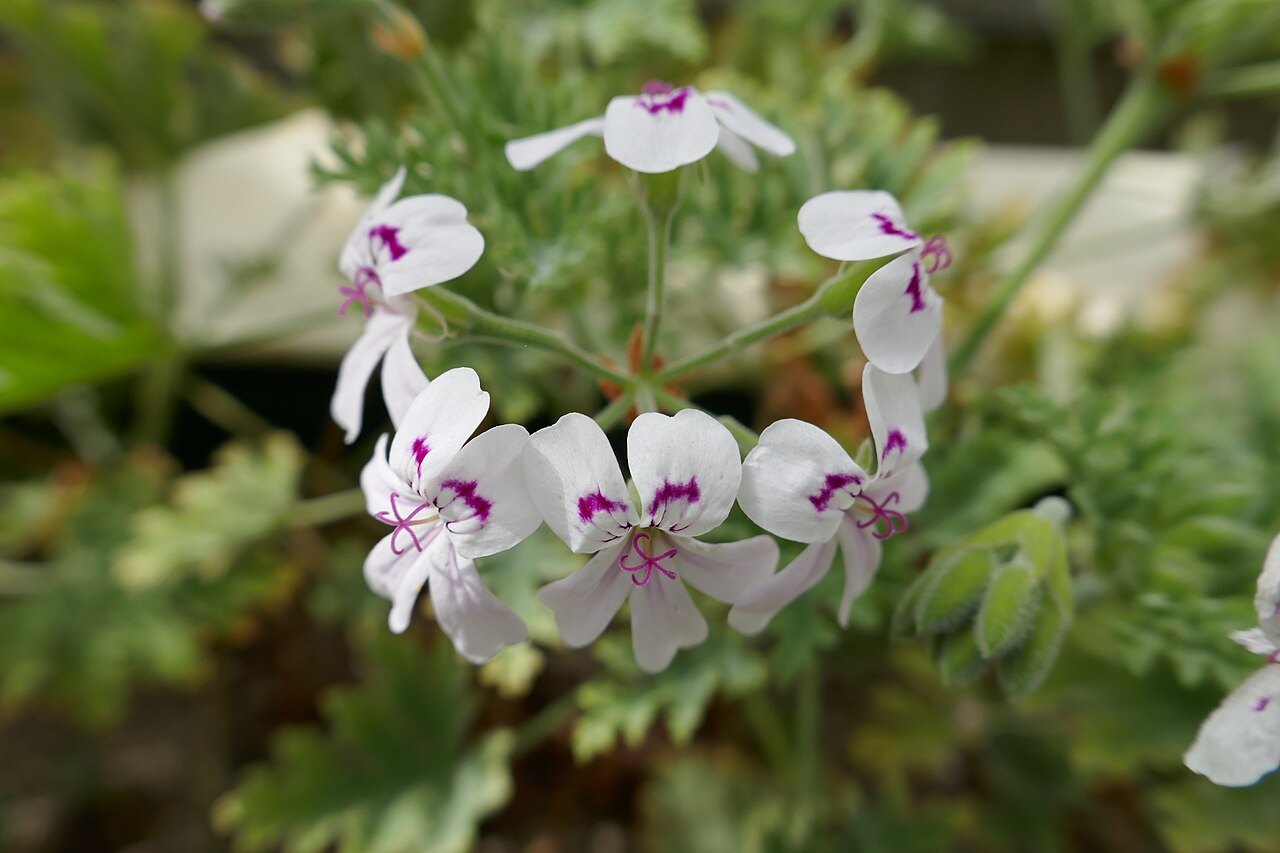
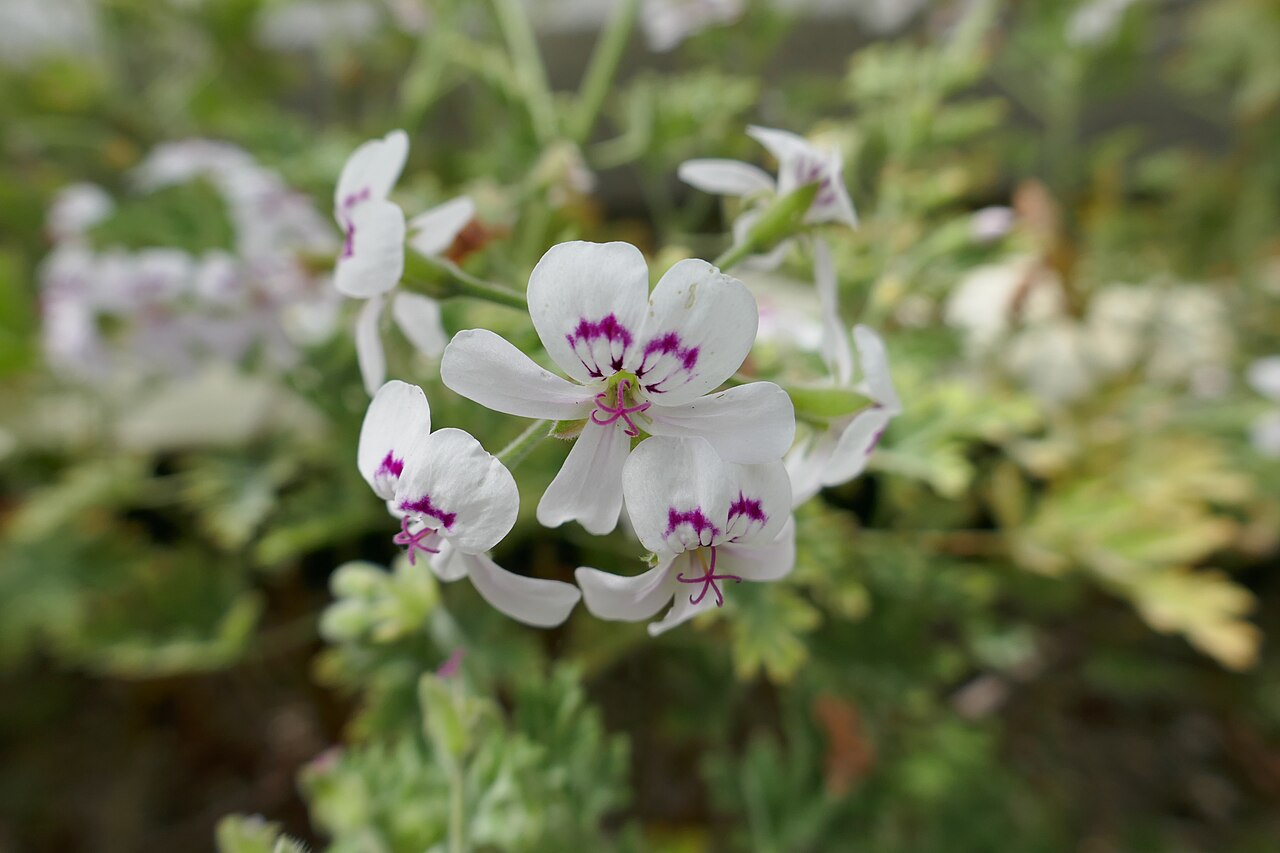
- Flower:Small, five-petaled Pelargonium flowers borne in clusters, usually pale pink to deeper pink with darker markings. Blooms are charming but secondary to the foliage for most growers; both flowers and leaves are associated with the plant’s essential-oil appeal (the fragrance industry’s “geranium oil” commonly comes from Pelargonium species).
- Flowering Season:Spring through autumn (often in flushes).
- Growth Habit:Bushy, branching, semi-woody subshrub/perennial—upright to rounded. Often grown as a tender patio/container plant; can pause growth in very hot midsummer conditions (semi-dormancy).
🌤️ Environment
Sunlight
Full sun to very bright light; tolerates light shade. Indoors, place at the brightest window you have. In extreme summer heat, temporary bright shade/partial shade helps prevent stress and leaf drop.
Temperature
Grows best around 10–20°C (50–68°F). Keep above about 7°C (45°F) in winter; it is frost tender. Prolonged extreme heat can trigger a growth slowdown—pair warm temperatures with excellent airflow and conservative watering.
Humidity
Average indoor humidity is usually fine. Prefers moderate humidity with good ventilation; avoid persistently humid, stagnant air and avoid keeping foliage constantly wet (helps prevent Botrytis and leaf spot).
Soil
Very free-draining mix is essential. Suitable options include a light potting soil amended with coarse sand or perlite, or a loam-based blend such as 2 parts garden loam : 1 part leaf mold/compost : 2 parts coarse sand (by volume). Avoid heavy, water-retentive mixes.
Placement
Sunny balcony/patio/terrace in warm months; brightest windowsill indoors in cool months. Great near kitchens or living spaces where you can enjoy the scent—just give it sun and airflow.
Hardiness
Frost tender; typically suitable outdoors year-round only in mild climates (about USDA Zone 10–11). In cooler regions, grow as a seasonal patio plant and overwinter indoors above 7°C (45°F).
🪴 Care Guide
Difficulty
Easy to moderate: very rewarding in strong sun and fast-draining soil, but the big “gotcha” is overwatering (especially during hot-weather semi-dormancy) and exposure to cold/frost.
Buying Guide
Pick a compact, well-shaped plant with dense green, strongly fragrant foliage and signs of active growth (buds or a few open flowers are a bonus). Avoid yellowing, stretched/weak plants, and any pot with sour-smelling, soggy mix—those are classic overwatering/root issues.
Watering
Water thoroughly, then let the top of the mix dry before watering again; never leave the pot standing in water.
– Spring: about 2–3 times per week (adjust for sun, pot size, and airflow).
– Summer: in high heat the plant may go semi-dormant—reduce watering and water early in the morning; keeping it wet at this time is a fast route to root problems and leaf drop.
– Autumn: about 1–2 times per week.
– Winter: about once per week or less indoors; water around midday on bright days, avoid cold water, and avoid wetting leaves/stems.
Fertilization
Feed during active growth (roughly April to September): every 10–14 days with a balanced liquid fertilizer or a Pelargonium-specific feed at label strength. Pause or reduce feeding in winter and during heat-induced growth slowdown; also pause if cool conditions cause yellowing.
Pruning
Pinch growing tips once plants reach about 12–15 cm (5–6 in) tall to encourage branching. Deadhead (remove spent flower stems) and remove yellow leaves as needed. For leggy or woody plants, hard-prune by about 1/3 to 1/2; many growers do the main shaping prune in late winter. After heavy pruning and/or repotting, keep in bright shade/partial shade until it resumes strong growth.
Propagation
By seed or cuttings.
– Seed: sow indoors in a sterilized, free-draining mix (peat/coir-based seed mix plus sand works well). Cover lightly. Best germination at about 13–18°C (55–64°F); seedlings typically appear in 1–3 weeks.
– Cuttings: take non-flowering shoots about 7–8 cm (2.8–3.1 in) long with 3–4 nodes, keep 1–2 small leaves at the top, let the cut end dry/callus in bright shade, then insert into sand or a very free-draining medium. Roots often form in ~3 weeks; rooting hormone can speed things up. Single-node (leaf-bud) cuttings can also work.
Repotting
Repot about once a year, commonly in late summer (August–September) or after the main prune (often late winter), depending on your climate and routine. When repotting, it helps to cut back top growth (up to about 1/2), remove roughly 1/2 of the old mix, trim long fibrous roots, and replant into fresh, fast-draining medium. Water once, then let it recover in bright shade/partial shade before returning to full sun. A pot around 12–15 cm (5–6 in) wide suits small plants; scale up gradually.
📅 Seasonal Care Calendar
Spring: resume regular watering (often 2–3× weekly) and start feeding from April; pinch tips for a bushier shape.
Summer: expect possible semi-dormancy in extreme heat—reduce watering, water early morning, provide airflow, and use bright shade during heat spikes; watch for yellowing/leaf drop as a stress signal.
Autumn: water about 1–2× weekly; many growers repot in August–September; taper watering as temperatures fall.
Winter: keep above 7°C (45°F), water sparingly (often weekly or less) on sunny mid-days, stop feeding, and avoid wet foliage/cold water.
Late winter: major prune (and often repot); keep in partial shade while recovering.
🔬 Pests, Diseases & Safety
Common Pests & Diseases
Main issues are tied to damp conditions and poor airflow. Leaf spot and gray mold (Botrytis) can appear if foliage stays wet or air is stagnant—remove affected leaves, improve ventilation, and avoid overhead watering (especially late in the day). Common pests include aphids, spider mites, whiteflies, and mealybugs; manage early with rinsing, insecticidal soap, or horticultural oil, and isolate heavily infested plants. Always follow local regulations and label directions for any pesticide use.
Toxicity
Generally low-toxicity, but the essential oils/fragrant foliage can irritate sensitive skin. If pets chew large amounts, mild gastrointestinal upset is possible. Best to keep out of reach of enthusiastic nibblers (pets or small children).
🎋 Culture & Symbolism
Symbolism:Often linked with admiration, love, comfort, happiness, and the hope of reunion; some traditions associate red-flowered forms with happiness and consolation.
Uses:A favorite for fragrance and ornamental container culture. Leaves are dried for sachets and potpourri, and Pelargonium graveolens is an important source plant for “geranium” essential oil used in perfumery and aromatherapy. In the kitchen, the clean leaves can be rinsed and lightly crushed or chopped to infuse syrups, teas, jams, butter, dairy (like ice cream), and baked goods—then removed after infusing if you want a smoother texture. It’s also often marketed as a “mosquito plant,” though real-world repellency varies a lot by cultivar and conditions.
❓ FAQ
Why are the leaves turning yellow?
The usual culprits are not enough sun, overwatering (or poor drainage), heat stress, being root-bound in old exhausted mix, or swings between very dry and very wet soil. Move it to brighter light, let the mix dry a bit between waterings, check that the pot drains freely, and repot yearly into fresh, airy soil—especially if the mix looks compacted or stays wet for days.
Where is the best place to keep a potted scented geranium at home?
Give it your sunniest spot. In cooler months, a bright south- or west-facing window (or enclosed bright balcony) is ideal. In warm months, it loves outdoor sun on a patio or balcony—just shift to bright shade during extreme heat waves.
How can I use the leaves in cooking?
Rinse the leaves, then lightly crush or chop to release aroma. Infuse them into sugar, syrups, tea, milk/cream, butter, or jams for a floral-citrus/rose note. For a clean finish, remove the larger leaves after infusion.
Why does it seem to stop growing in summer?
In intense heat, scented geraniums often go semi-dormant. That’s normal—reduce watering, avoid heavy feeding, improve airflow, and offer bright shade at the hottest part of the season. When temperatures ease, growth usually resumes.
💡 Fun Facts
- The “rose” smell comes from aromatic oils in the leaves—brushing the plant is the fastest way to enjoy it.
- What perfumers often call “geranium oil” is commonly produced from Pelargonium species like Pelargonium graveolens, not true Geranium.
- Plants sold as “Mosquito Plant” are often citrus-scented selections of scented geranium, but scent strength (and any repellency) varies widely by cultivar and growing conditions.