🌱 Plant Features
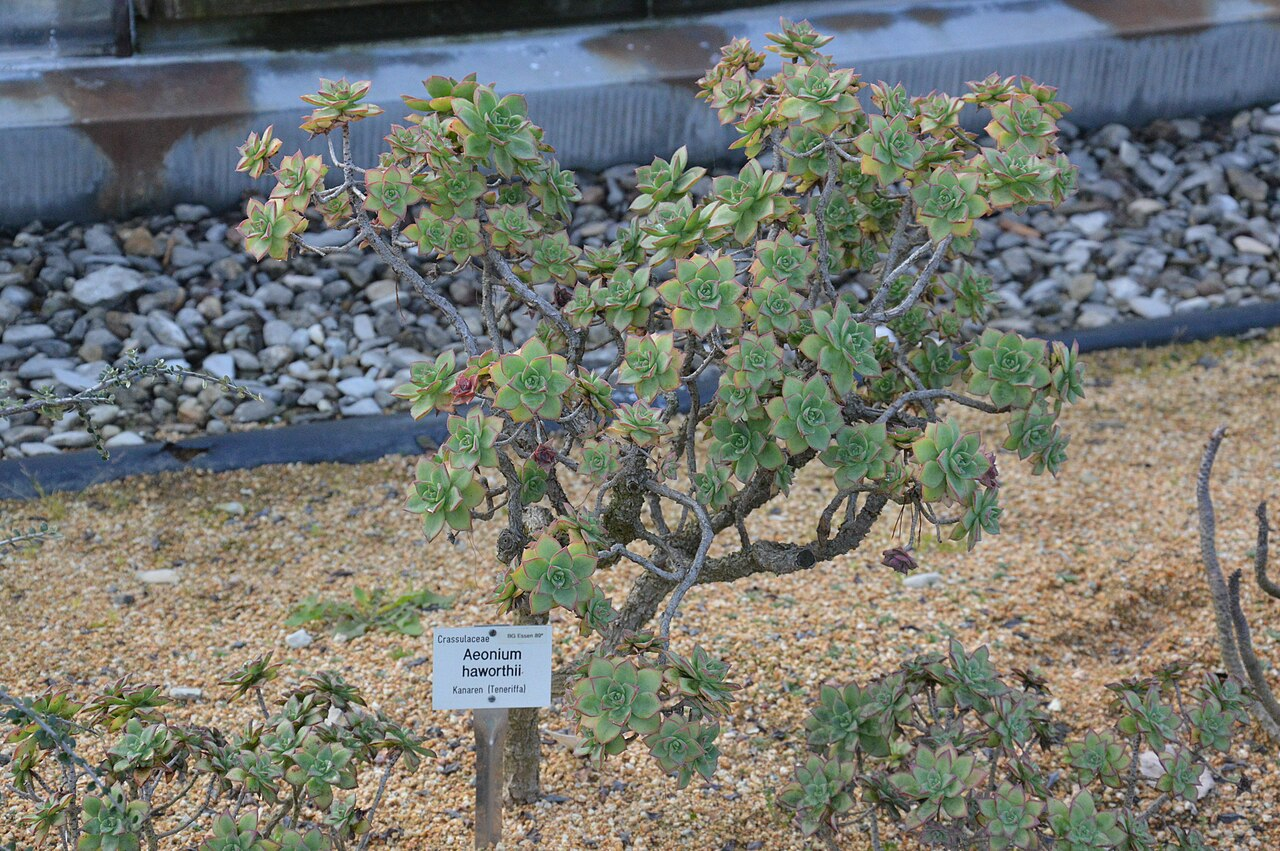
- Size:Up to about 60 × 45 cm (24 × 18 in).
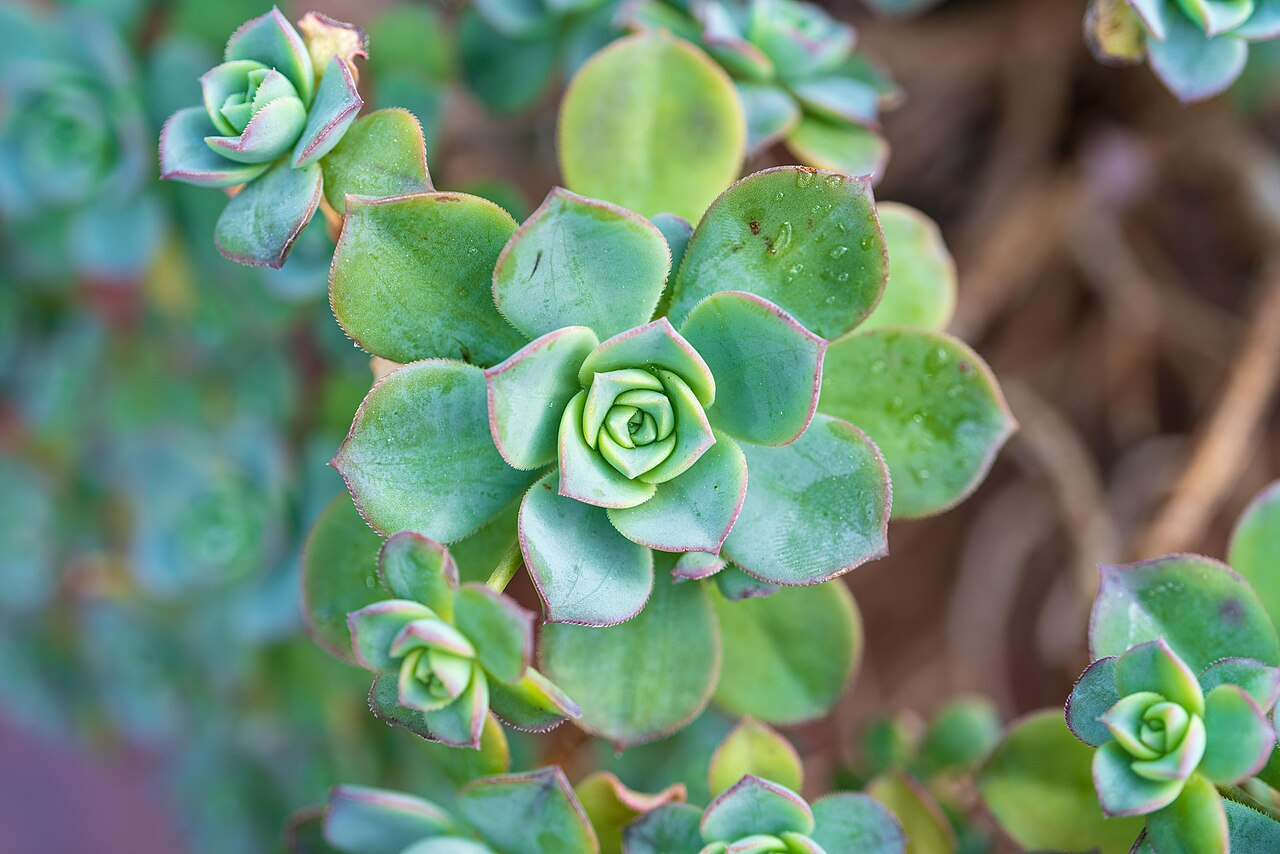
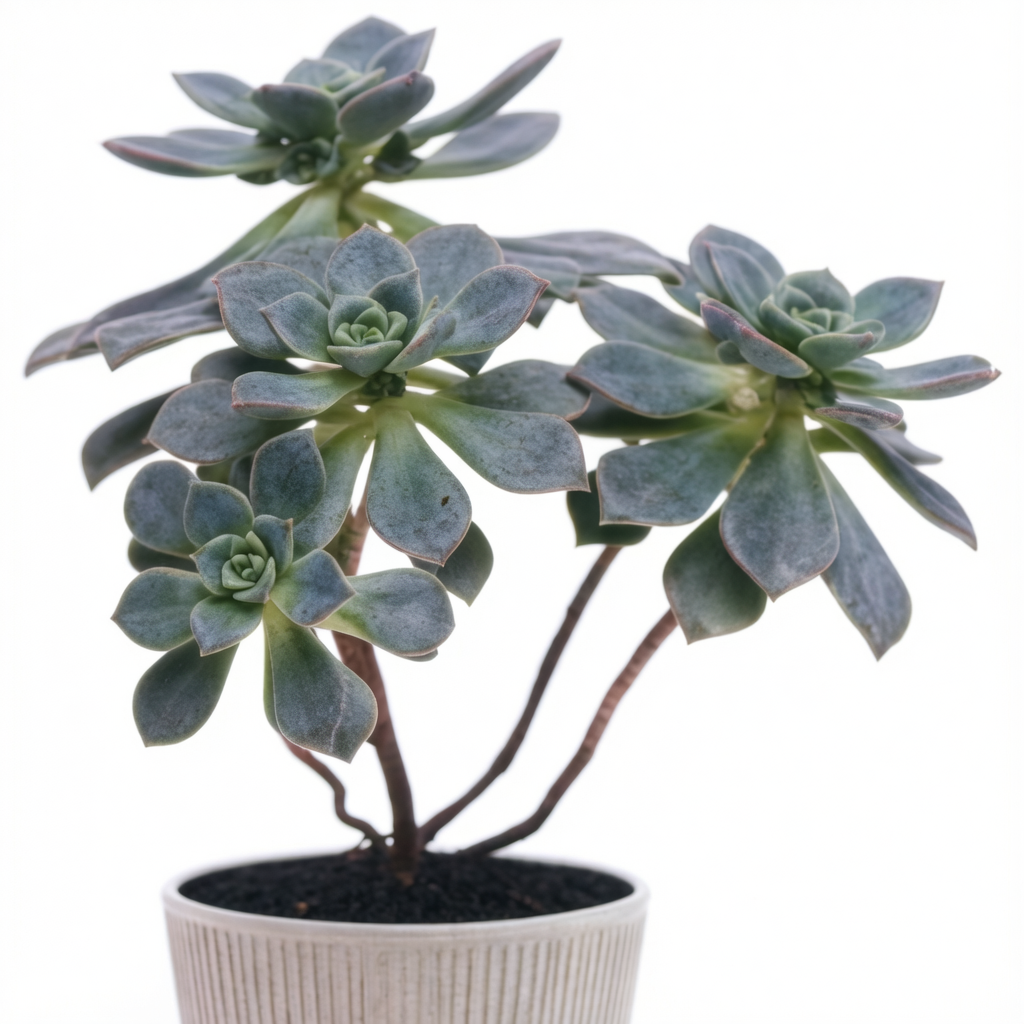
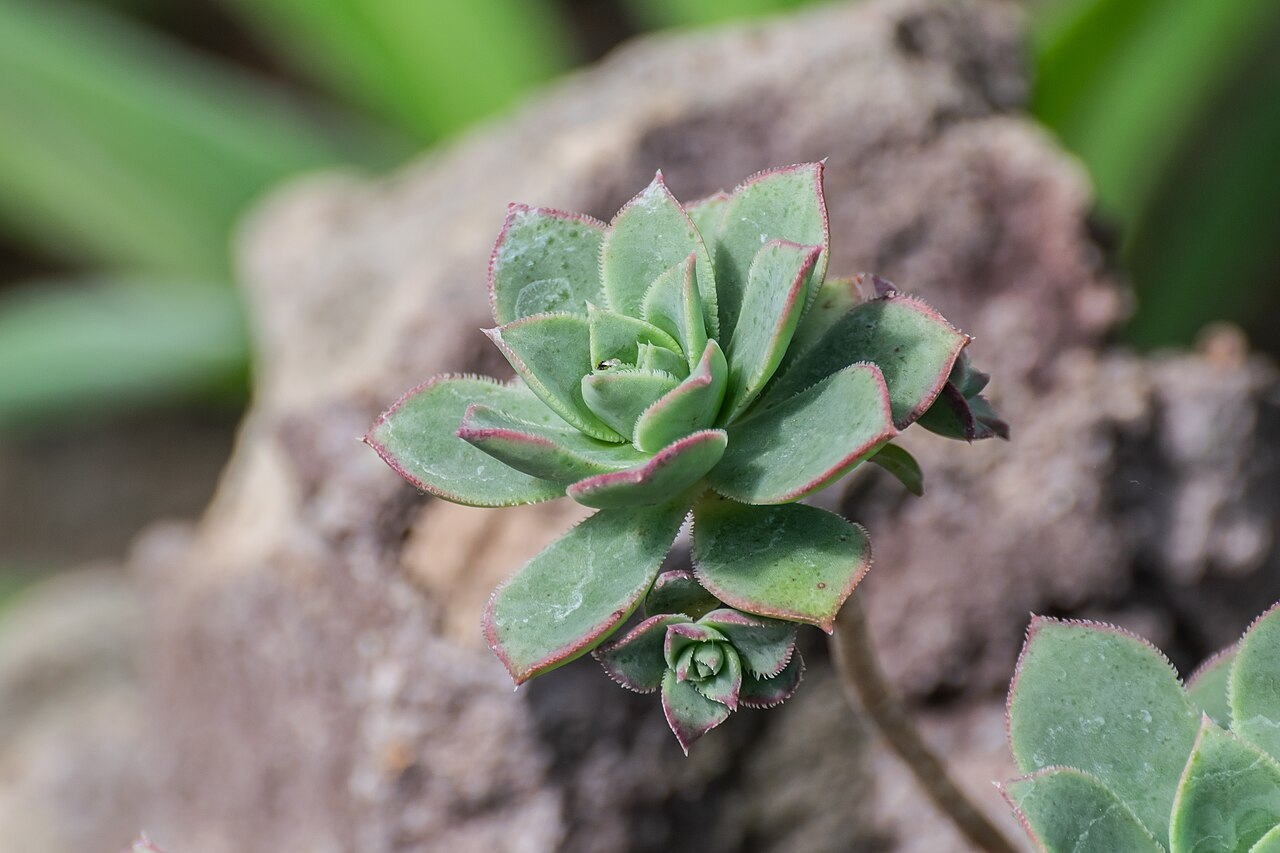
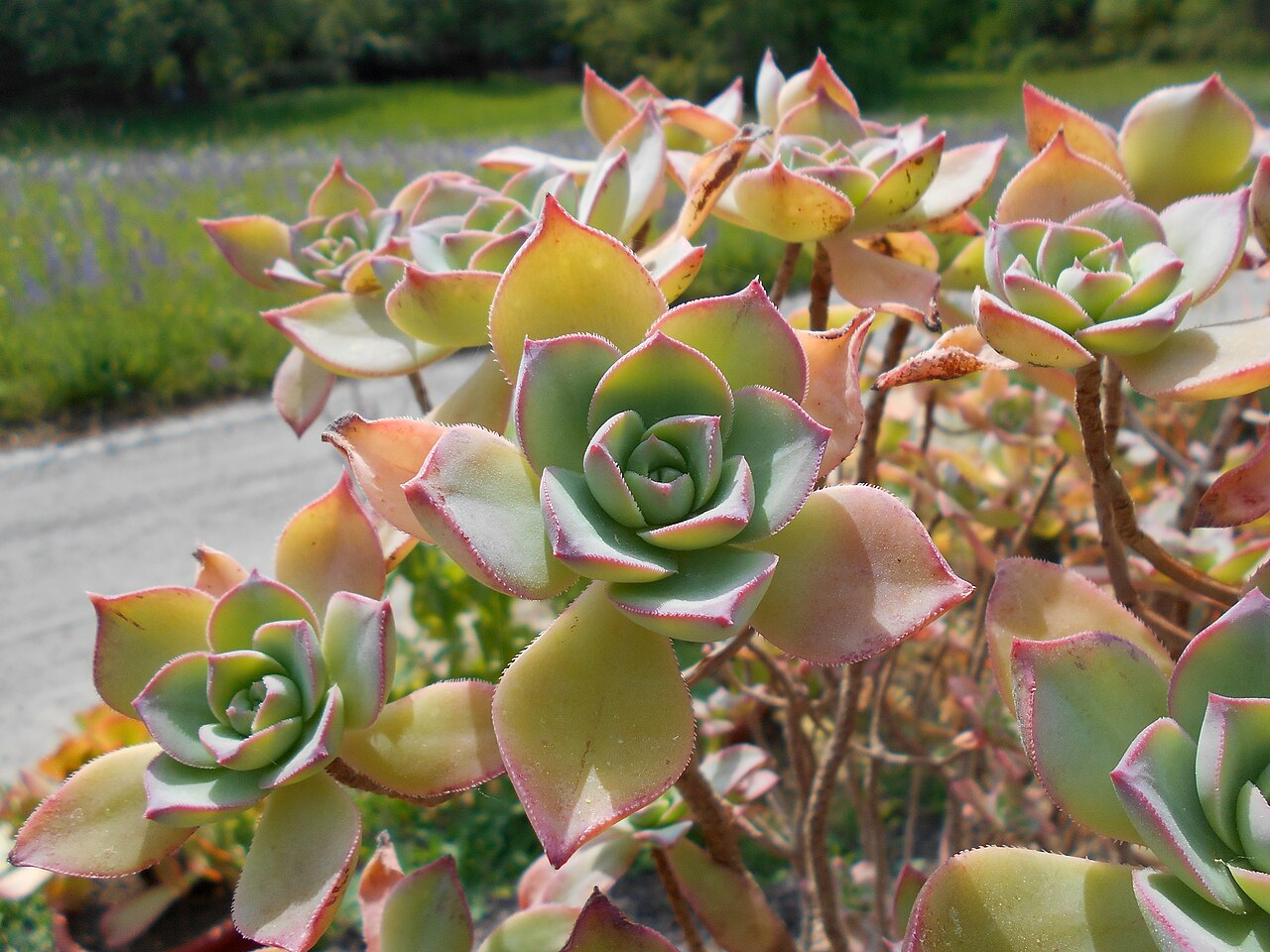
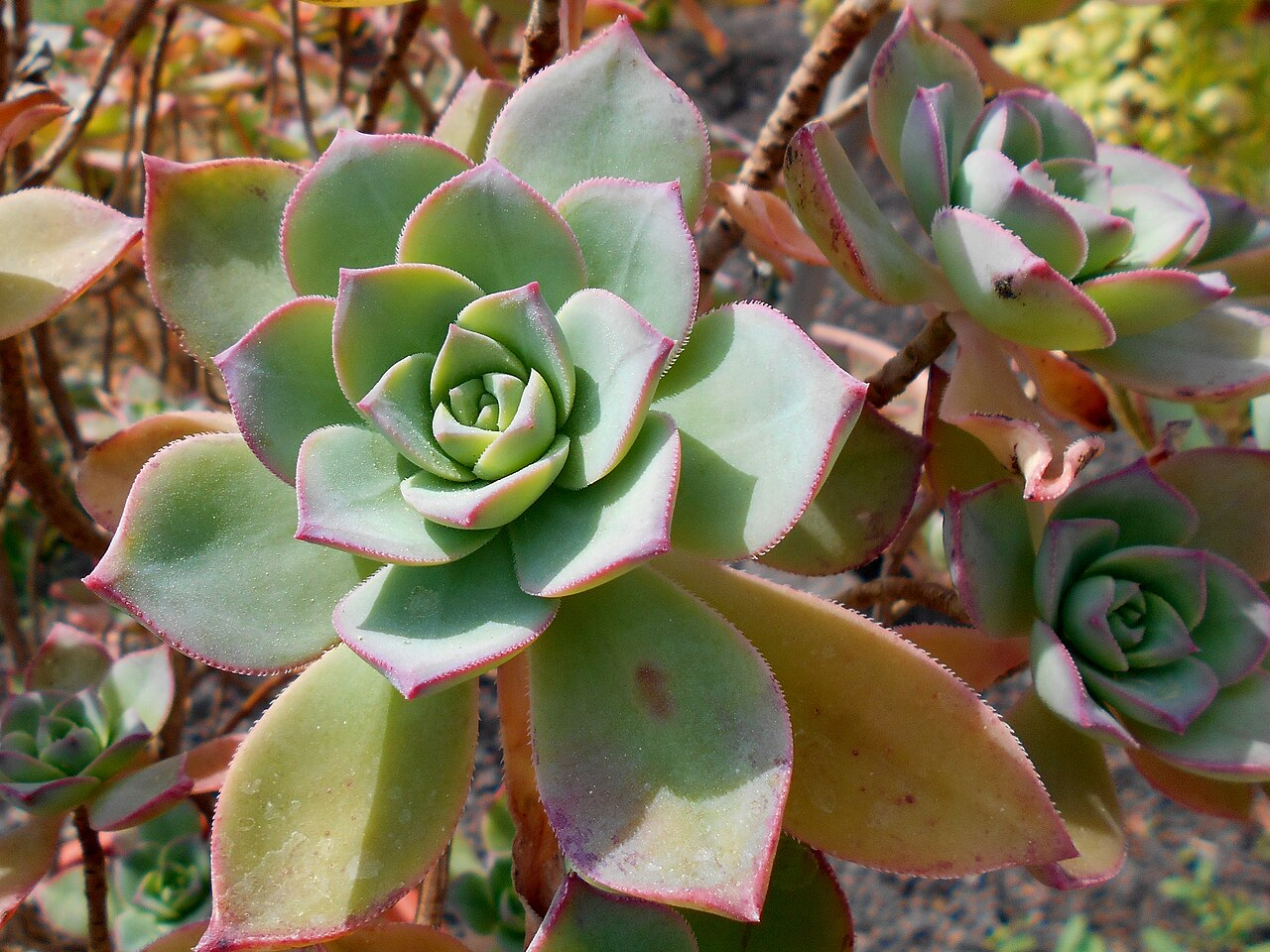
- Foliage:Branched, woody-looking stems topped with compact rosettes of thick, fleshy gray-green leaves. Many plants develop pink-tinged edges; some selections are variegated with cream-yellow margins and extra pink flushing along the leaf edges, especially with strong light and cooler weather.
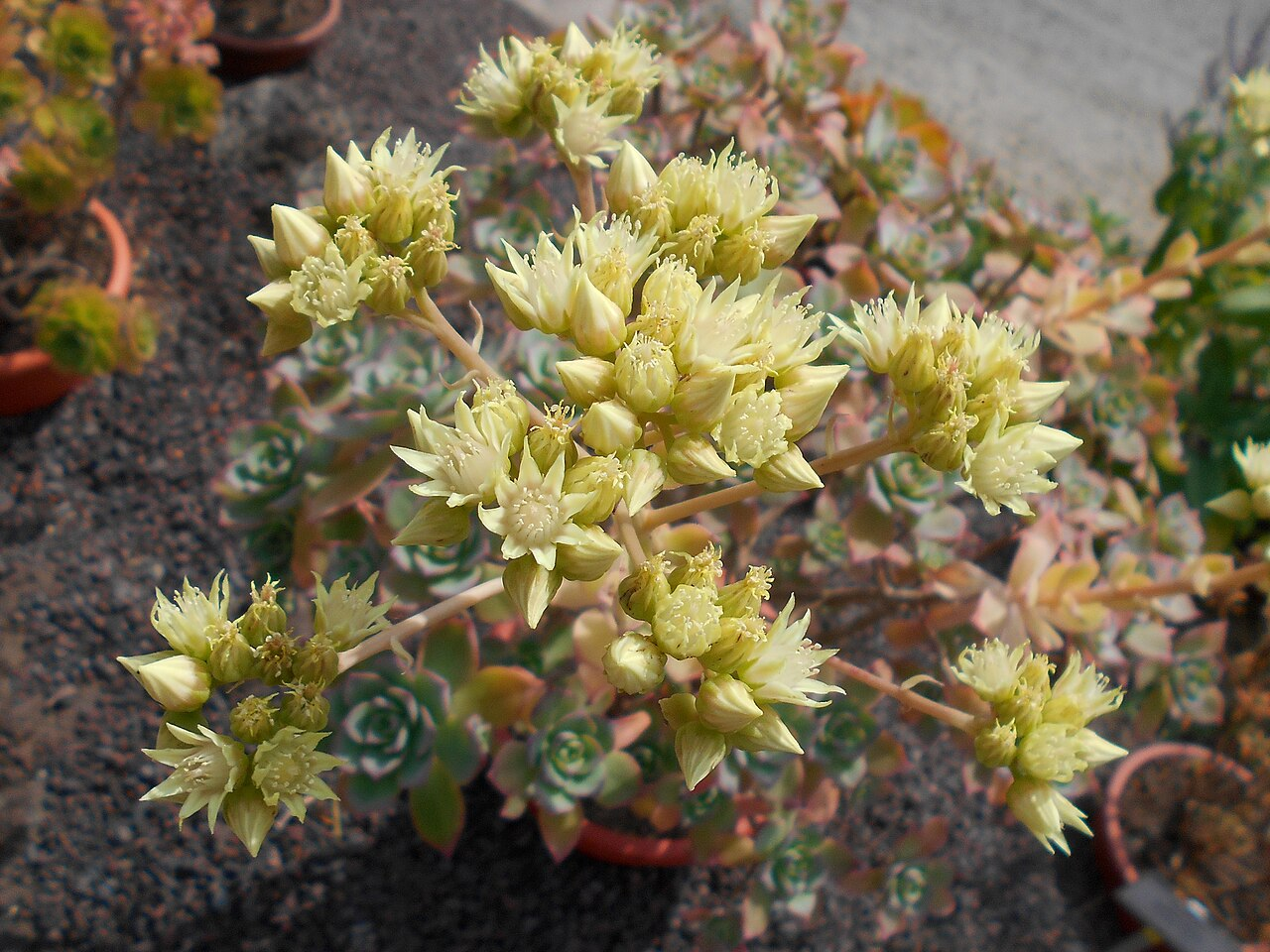
- Flower:Clusters of small, pale yellow flowers (sometimes with a soft pinkish cast) held above the rosettes on slender stalks.
- Flowering Season:Late spring
- Growth Habit:Branching, shrubby succulent with rosettes at stem tips
🌤️ Environment
Sunlight
Full sun to bright partial sun. Indoors, place in the brightest window possible. In very hot summers, protect from harsh midday sun to prevent leaf scorch.
Temperature
Best around 10–24°C (50–75°F). Protect from frost and avoid prolonged exposure below about 5°C (41°F).
Humidity
Low to average indoor humidity; good airflow helps prevent pests and rot issues.
Soil
Fast-draining cactus/succulent mix (gritty, airy, and free-draining). Use a pot with drainage holes; a pot around 15 cm (6 in) suits smaller plants.
Placement
Bright windowsill, sunroom, balcony, patio, or other high-light spot. Provide some midday shade in the hottest climates and keep away from cold drafts in winter.
Hardiness
USDA Zone 10–11; not frost hardy.
🪴 Care Guide
Difficulty
Easy overall, especially if you give it bright light, a gritty mix, and resist overwatering—this plant prefers much drier conditions during summer heat when it may slow down or go semi-dormant.
Buying Guide
Pick plants with firm, tight rosettes and clean, unblemished leaves. Avoid any with soft/darkened stem bases (a red flag for rot) or obvious mealybug residue tucked in leaf axils. For variegated types, look for crisp, stable patterning rather than irregular patchy damage.
Watering
Autumn through spring: water when the surface of the potting mix feels dry, then water thoroughly and let excess drain away. Summer: in extended heat the plant may go semi-dormant—keep the mix almost dry and water only lightly if rosettes begin to shrivel.
Fertilization
Winter through late spring: feed once a month with a balanced liquid fertilizer at 1/2 strength. Skip feeding during summer dormancy/heat slow-down.
Pruning
Remove spent flower stalks after blooming. A rosette that flowers may decline afterward; new shoots typically take over. Clean out any dead rosettes or dried leaves to keep the plant tidy and improve airflow.
Propagation
Mostly by stem cuttings: take a healthy rosette with a short length of stem, allow the cut to callus for several days, then set into a dry, gritty mix. Begin light watering only after roots start to form. Offsets (if present) can be separated and rooted as well.
Repotting
Repot every 2–3 years in spring, moving up only one pot size. Refresh with a gritty, fast-draining mix and avoid planting the stem too deeply.
📅 Seasonal Care Calendar
Autumn–spring: water when the surface dries. Winter–late spring: feed monthly at half strength. Summer: sharply reduce watering; keep almost dry during heat-induced dormancy and provide some midday shade. Spring (every 2–3 years): repot.
🔬 Pests, Diseases & Safety
Common Pests & Diseases
Mealybugs and scale may hide in rosettes and leaf axils—treat early (e.g., alcohol swabs for small outbreaks or insecticidal soap as needed). Overwatering and poor drainage can cause root/stem rot; prioritize a fast-draining mix, strong light, airflow, and letting the soil dry between waterings.
Toxicity
Generally considered low-toxicity, but the sap can irritate sensitive skin and chewing/ingestion may cause mild stomach upset in people or pets. Keep out of reach of curious children and animals.
🎋 Culture & Symbolism
Symbolism:Often linked with resilience and endurance—an architectural plant that stays handsome with bright light and minimal watering.
History & Legends:Aeoniums are iconic plants of the Canary Islands and have become favorites worldwide for their dramatic rosette shapes in pots and mild-climate gardens.
Uses:Ornamental: ideal for bright windowsills, patios, balconies, and mixed succulent containers; also popular in rock-garden-style plantings in frost-free climates.
❓ FAQ
What temperature range suits it best?
About 10–24°C (50–75°F). Protect it from frost and try to keep it above roughly 5°C (41°F).
How much light does it need?
Full sun to bright partial sun. Indoors, give it the brightest window you have; in very hot summers, avoid harsh midday sun to prevent leaf scorch.
How should I water it?
Autumn through spring: water when the surface is dry, then drain well. Summer: it may go semi-dormant in prolonged heat—keep the mix almost dry and water sparingly only if it starts to shrivel.
When should I fertilize?
Winter through late spring: once a month with a balanced liquid fertilizer at 1/2 strength; skip feeding in summer.
When do I repot?
Every 2–3 years in spring.
💡 Fun Facts
- The rosettes often develop their best pink edging when grown in strong light and cooler conditions.
- Unlike many succulents that peak in summer, aeoniums tend to grow most actively in the cooler seasons and slow down in summer heat.