🌱 Plant Features
- Size:Typically about 75 × 45 cm (30 × 18 in) as a houseplant.
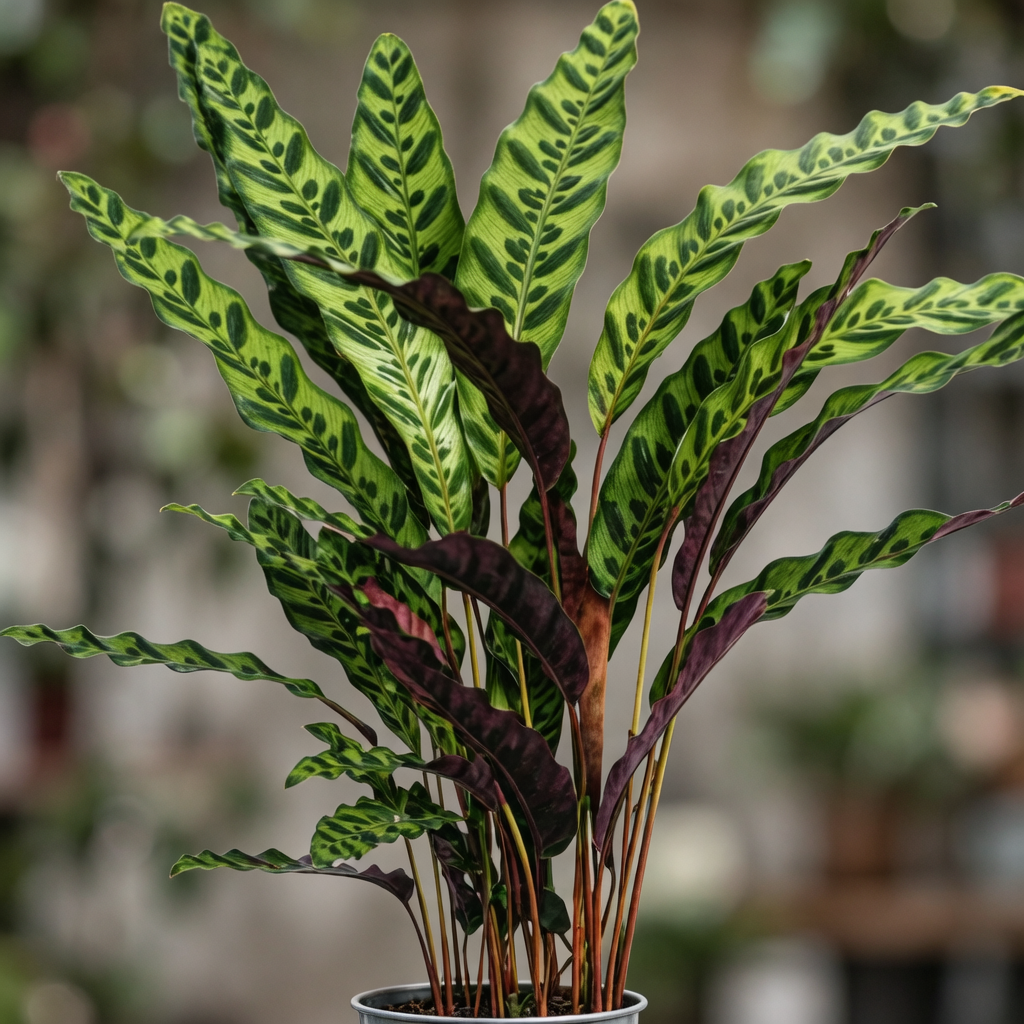
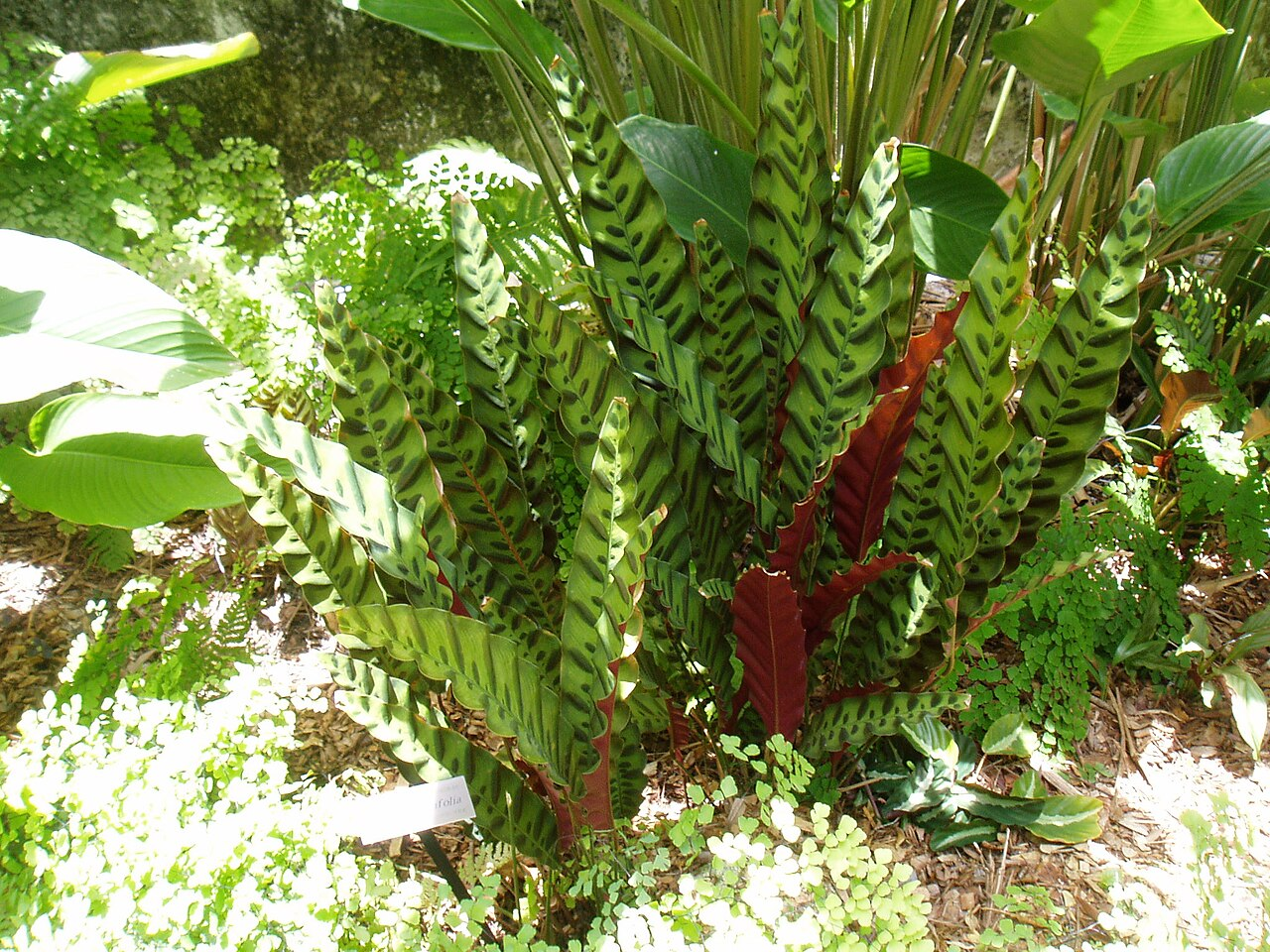
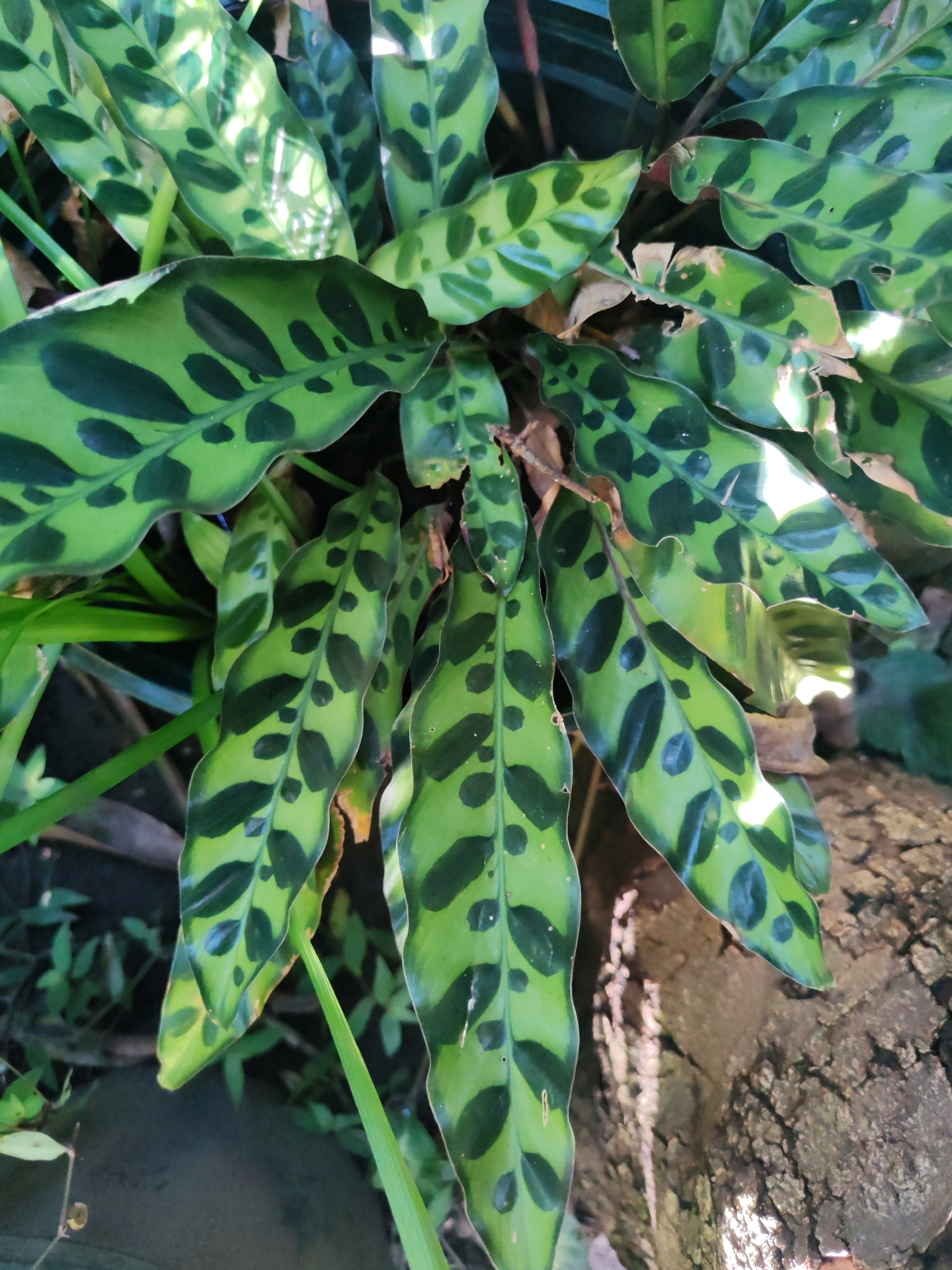
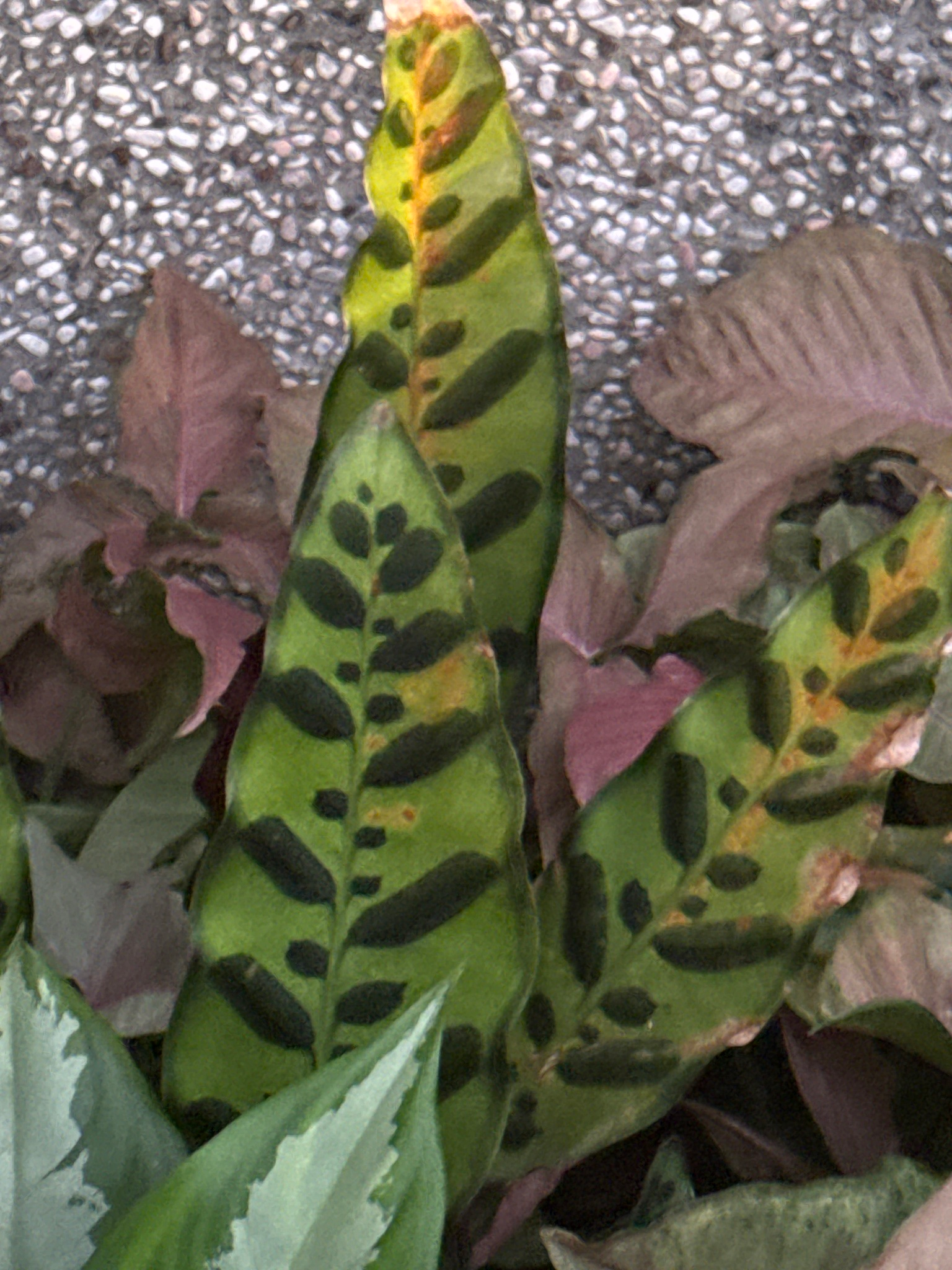
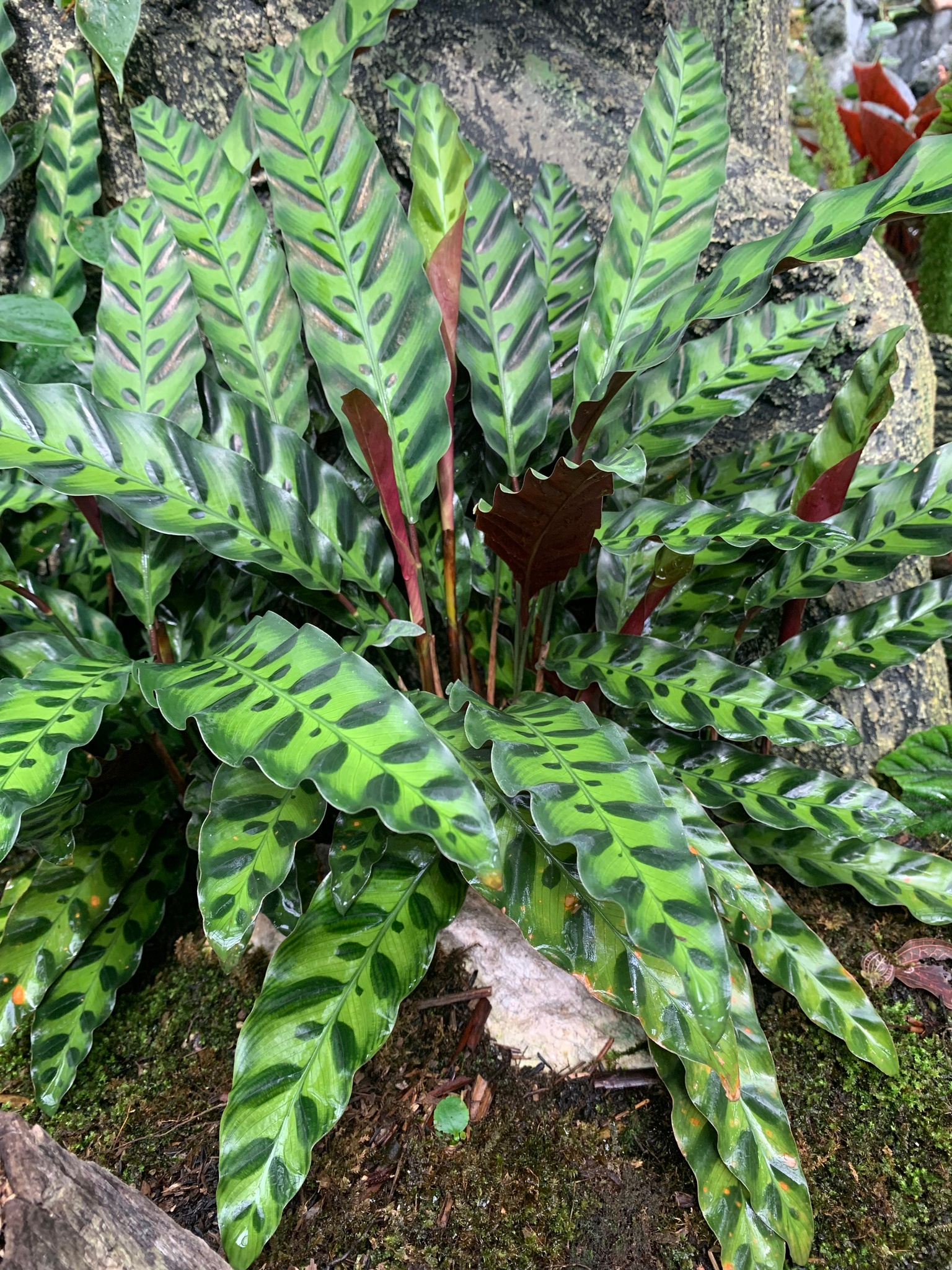
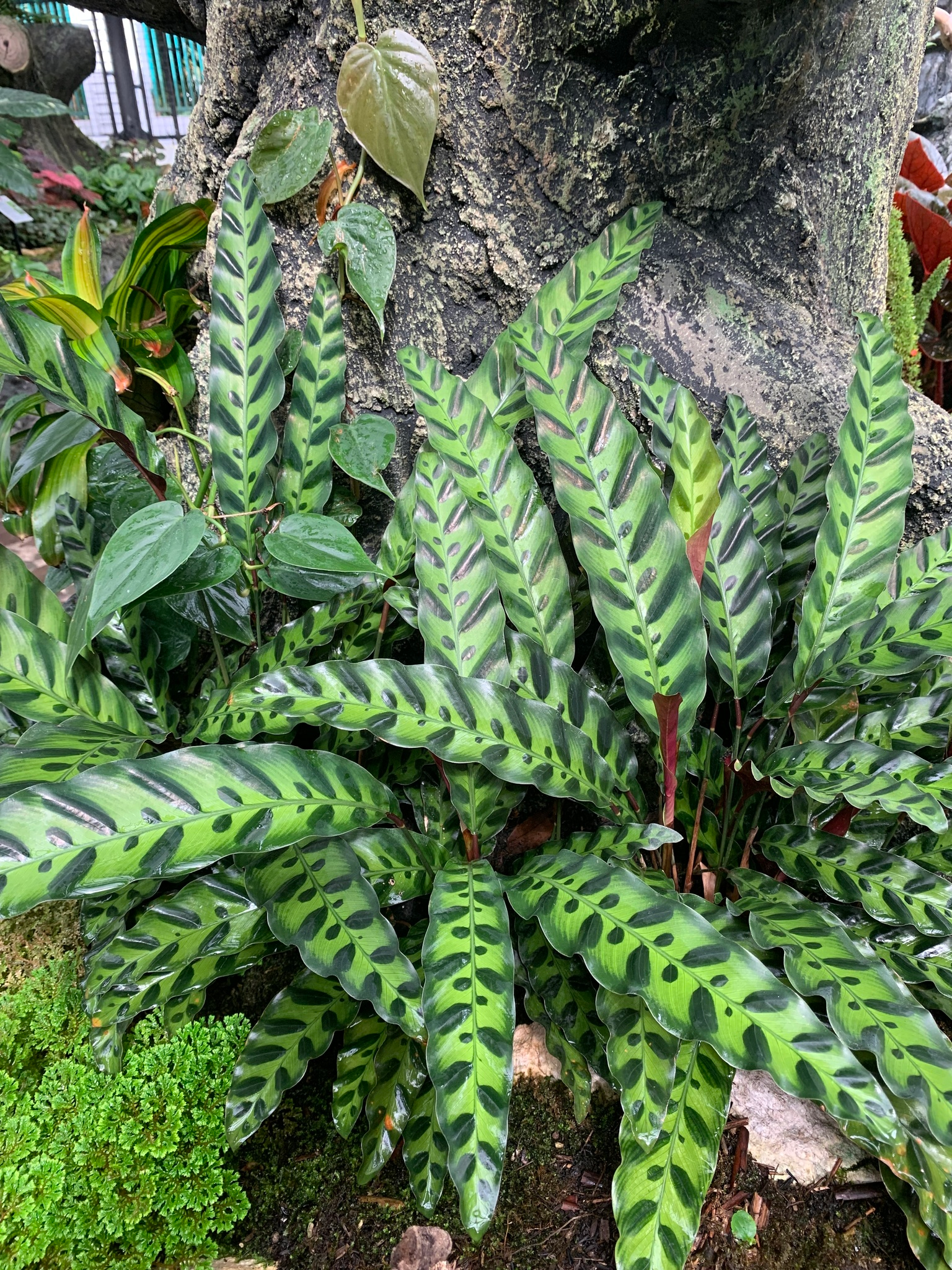
- Foliage:Long, lance-shaped leaves with noticeably wavy margins; the upper surface shows light yellow-green and deep green, snakeskin-like markings, while the underside is burgundy to wine-red.
- Flower:Flowers are uncommon indoors; if they appear, they are small and not especially showy compared with the foliage.
- Flowering Season:Sporadic; no reliable indoor season.
- Growth Habit:Clump-forming, with upright to gently arching leaves arising from the base.
🌤️ Environment
Sunlight
Bright, indirect light to light shade. Avoid harsh direct sun (it can scorch or fade the leaves) and keep the plant away from cold drafts or strong airflow from vents.
Temperature
15–24°C (59–75°F) year-round; avoid prolonged dips below about 13°C (55°F).
Humidity
Moderate to high humidity; aim for 50%+ (higher is even better). Thrives in naturally humid rooms like bathrooms/kitchens, or use a pebble tray or humidifier.
Soil
Moisture-retentive yet airy, free-draining mix—e.g., 2 parts houseplant potting mix to 1 part perlite (2:1).
Placement
Ideal in a bright bathroom or kitchen. Otherwise place near an east- or north-facing window with filtered light, and away from drafts and heating/cooling vents.
Hardiness
Not frost-tolerant; outdoors only in very warm climates (approximately USDA Zone 11–12).
🪴 Care Guide
Difficulty
Easy, especially when warmth and humidity stay consistent.
Buying Guide
Pick a plant with crisp, well-colored leaves and minimal browning at the edges. Check leaf undersides for spider mites, and sniff/inspect the potting mix—sour smells or mushy growth can point to overwatering or early rot.
Watering
Spring to autumn: keep the mix evenly moist but never soggy, watering when the top 1–2 cm (0.4–0.8 in) starts to dry. Winter: let the surface dry a little more between waterings. Use rainwater or distilled water when possible (tap minerals often cause brown tips). Misting can help briefly, but steady humidity from a humidifier or pebble tray works better long-term.
Fertilization
Spring to autumn: feed every 2 weeks with a balanced liquid fertilizer at 1/2 strength. Reduce or pause feeding in winter if growth slows.
Pruning
Remove yellowing or damaged leaves by cutting them at the base with clean scissors. You can also trim brown tips for appearance, but address the cause (usually low humidity, drafts, or mineral-heavy water).
Propagation
Best by division during repotting: separate a healthy clump into sections with roots attached and pot each piece up individually.
Repotting
Often started in a 12.5–15 cm (5–6 in) pot. Repot every 2–3 years, or sooner if root-bound, ideally in spring, using a fresh airy mix.
📅 Seasonal Care Calendar
Spring–autumn: keep evenly moist, use rain/distilled water, and fertilize every 2 weeks at 1/2 strength. Winter: water when the surface dries and keep temperatures steady and warm. Repot/divide every 2–3 years or when the clump becomes crowded.
🔬 Pests, Diseases & Safety
Common Pests & Diseases
Spider mites, mealybugs, and scale may show up—especially when air is dry. Raise humidity, rinse foliage, and treat with insecticidal soap or horticultural oil if needed. Root rot can occur if soil stays constantly wet or drainage is poor.
Toxicity
Generally considered non-toxic to cats and dogs, though chewing any houseplant may cause mild stomach upset.
🎋 Culture & Symbolism
Symbolism:Often linked with calm, renewal, and restful, spa-like spaces—partly because it thrives in warm, humid rooms.
History & Legends:A popular houseplant long sold as a “Calathea.” In modern botanical classification, many former Calathea species (including this one) are now placed in the genus Goeppertia.
Uses:Primarily an ornamental foliage houseplant, prized for its bold patterning and ability to flourish in warm, humid interiors.
❓ FAQ
Why are the leaf edges turning brown?
Most often it’s low humidity or mineral-heavy tap water. Boost humidity to 50%+ (ideally higher), keep it away from vents/drafts, and switch to rainwater or distilled water.
Can it handle direct sun?
Not well. Direct sun can scorch the leaves and wash out the patterns—bright, filtered light is best.
💡 Fun Facts
- It’s still widely sold as a “calathea,” but its accepted name is Goeppertia insignis.
- Those deep burgundy leaf undersides are a signature trait in many Marantaceae relatives and can look extra vivid in strong indirect light.