🌱 Plant Features
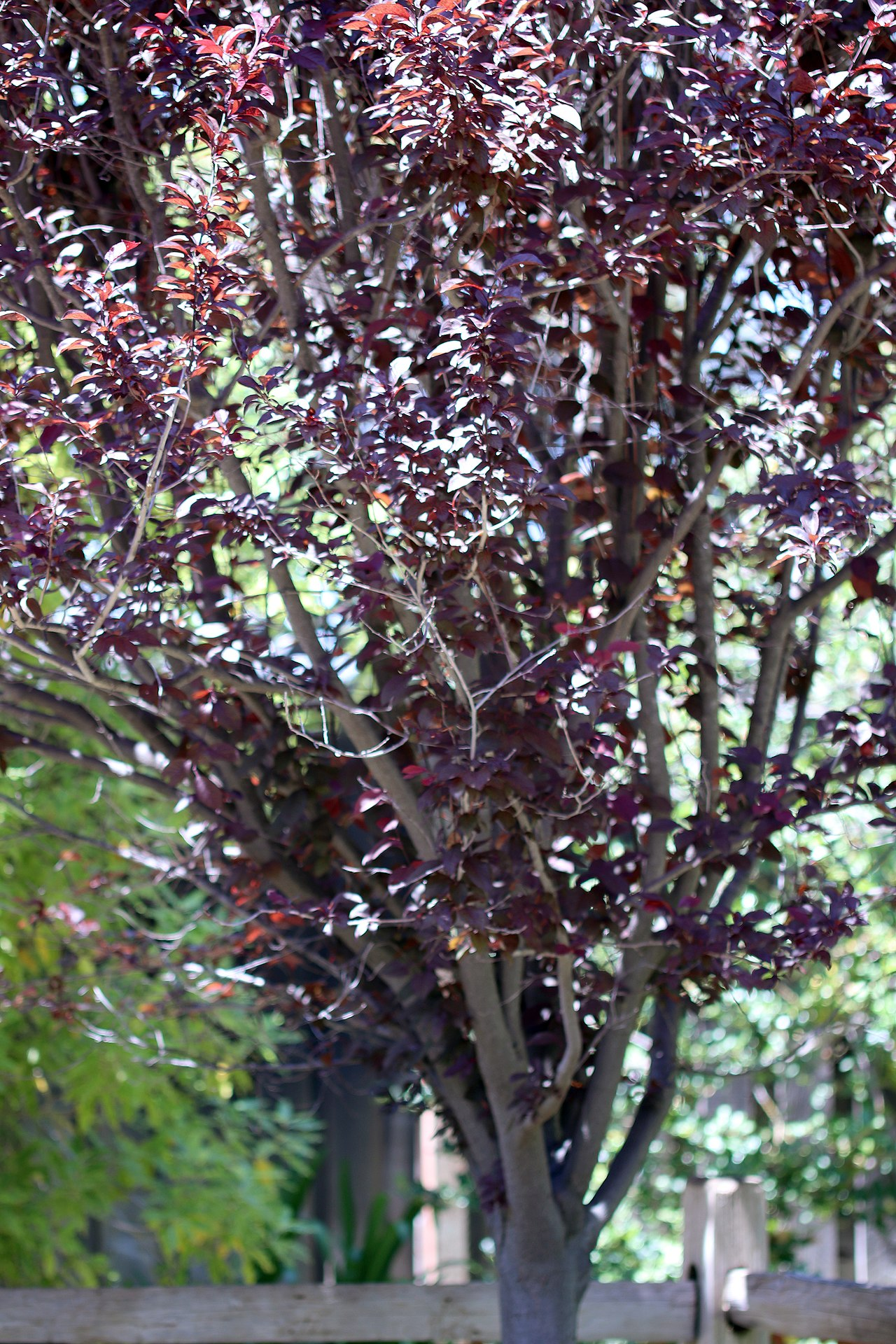
- Size:Up to about 8 m (26 ft) tall; crown spread commonly 4–6 m (13–20 ft) with age (site-dependent).
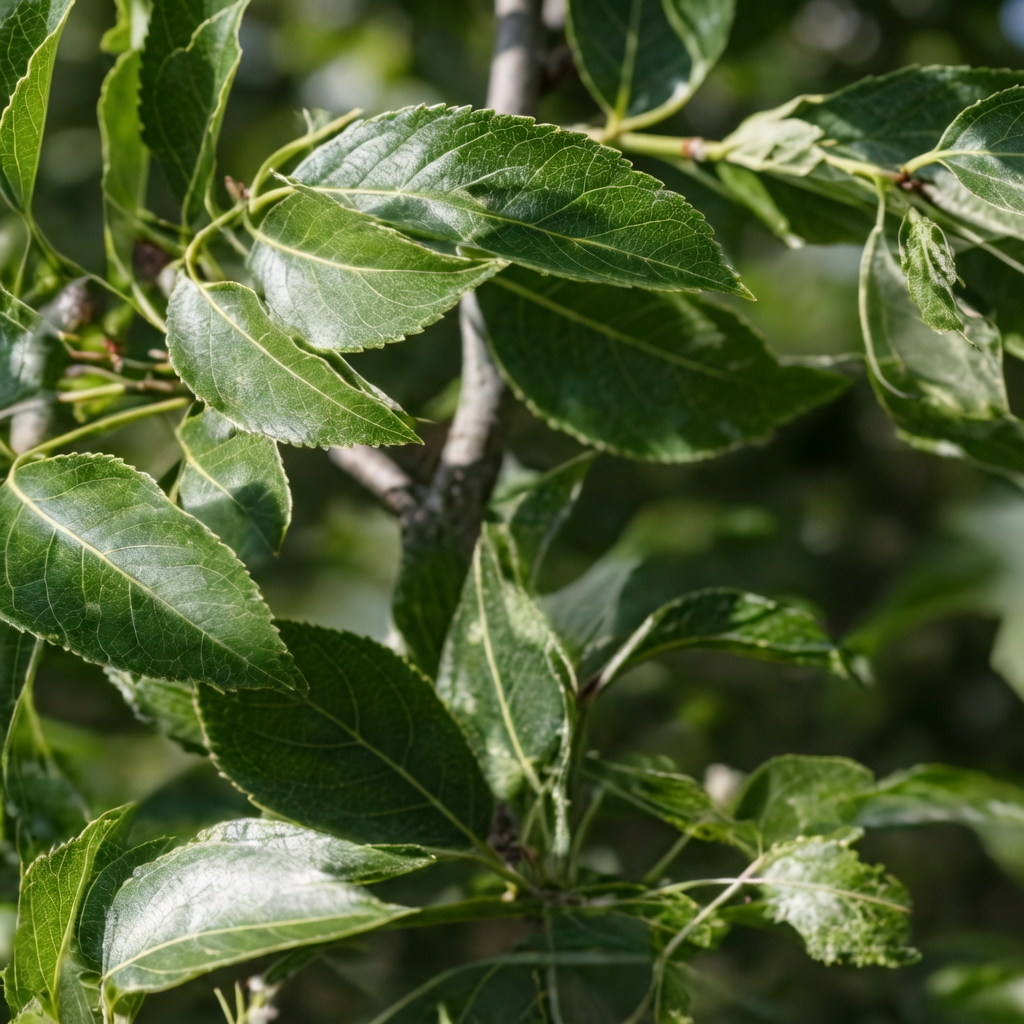
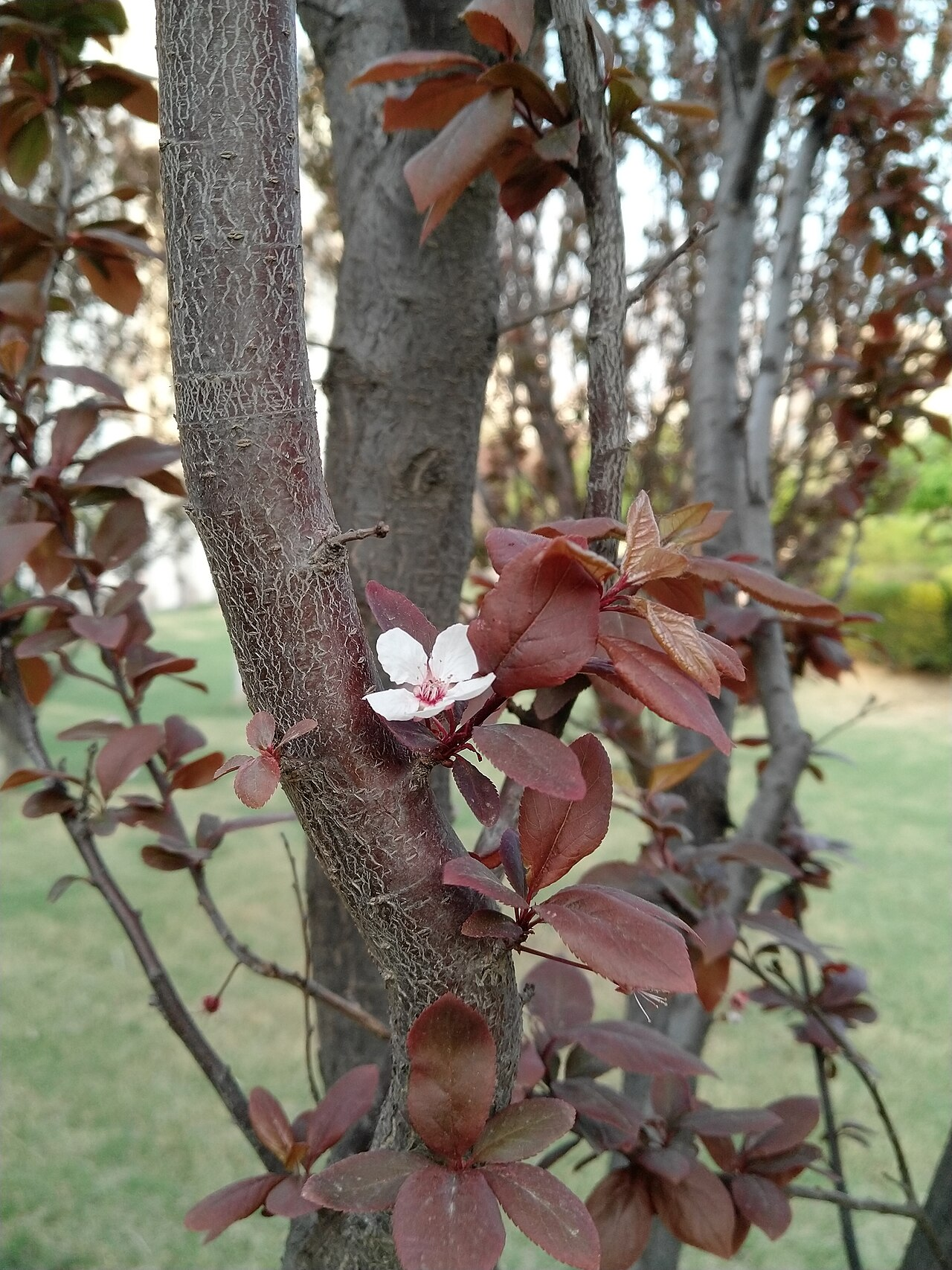
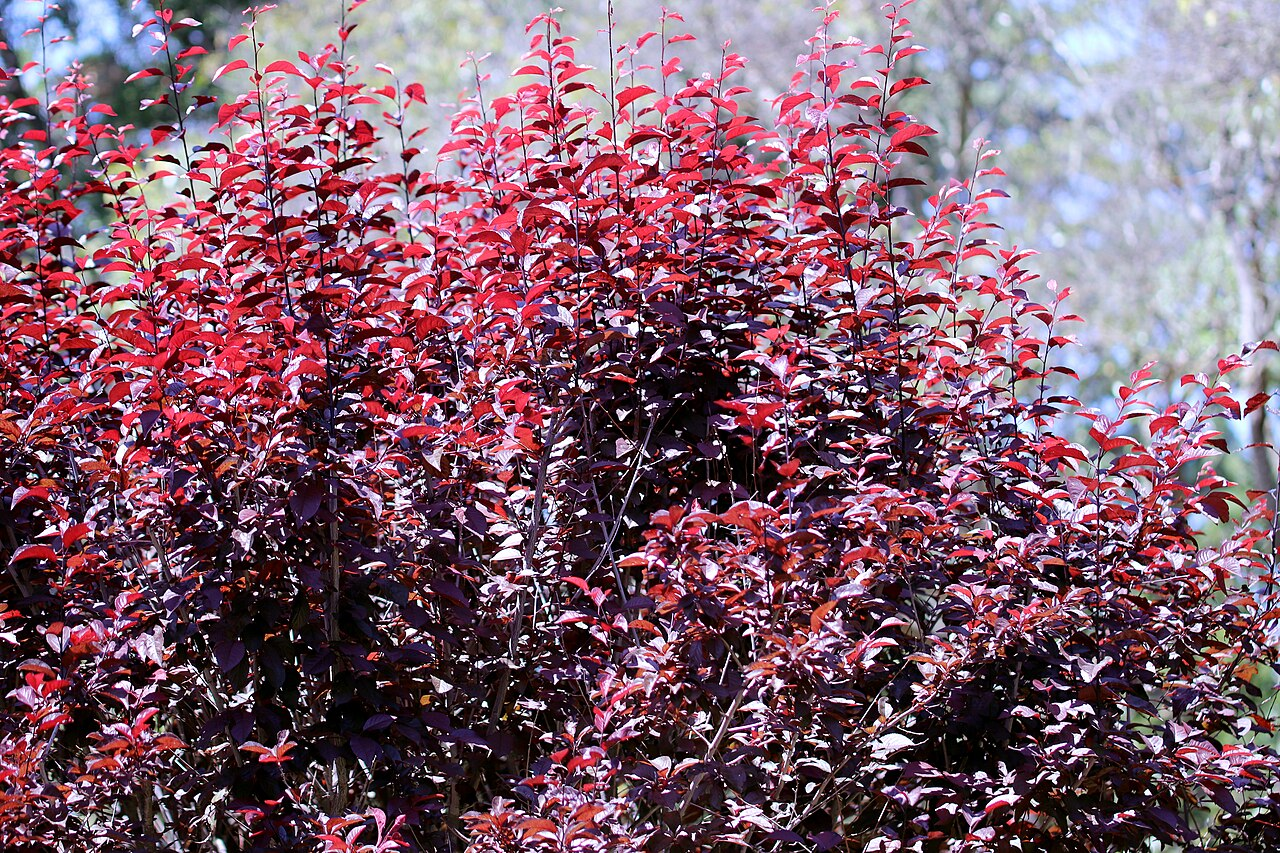
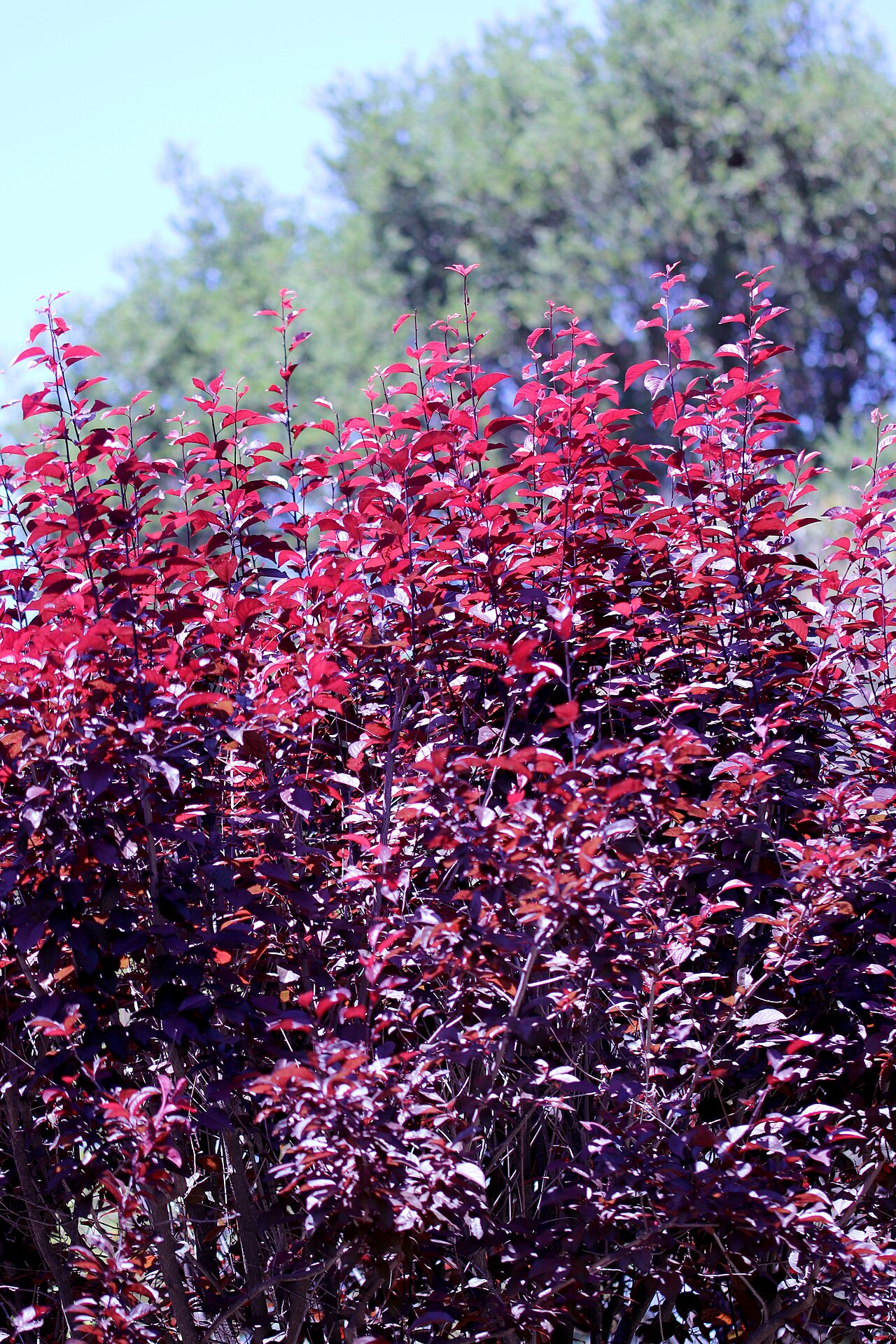
- Foliage:Leaves are ovate to elliptic with clearly serrated margins. Color is typically deep purple-red through the season in good light; in shade it can shift greener. Young stems and other tissues may also be purple-tinged, and the underside along the midrib area can be softly hairy.
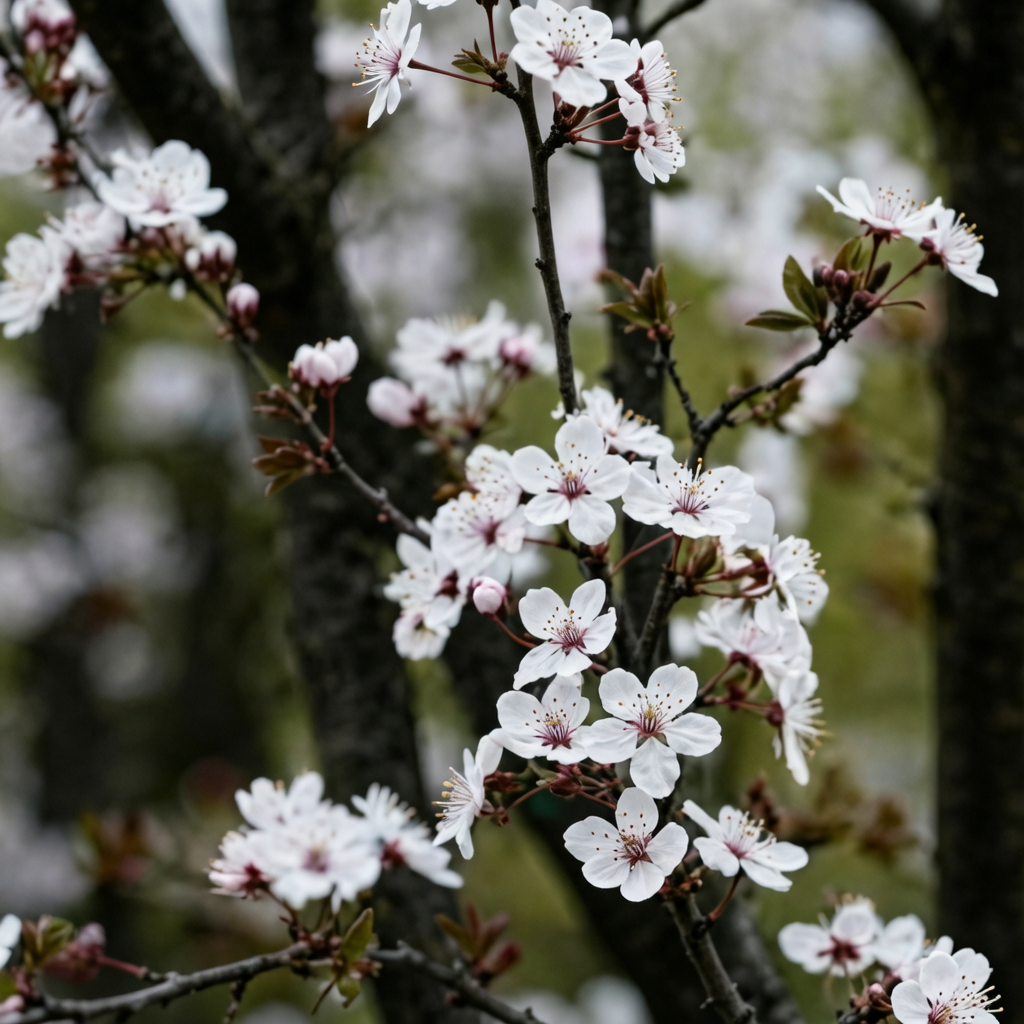
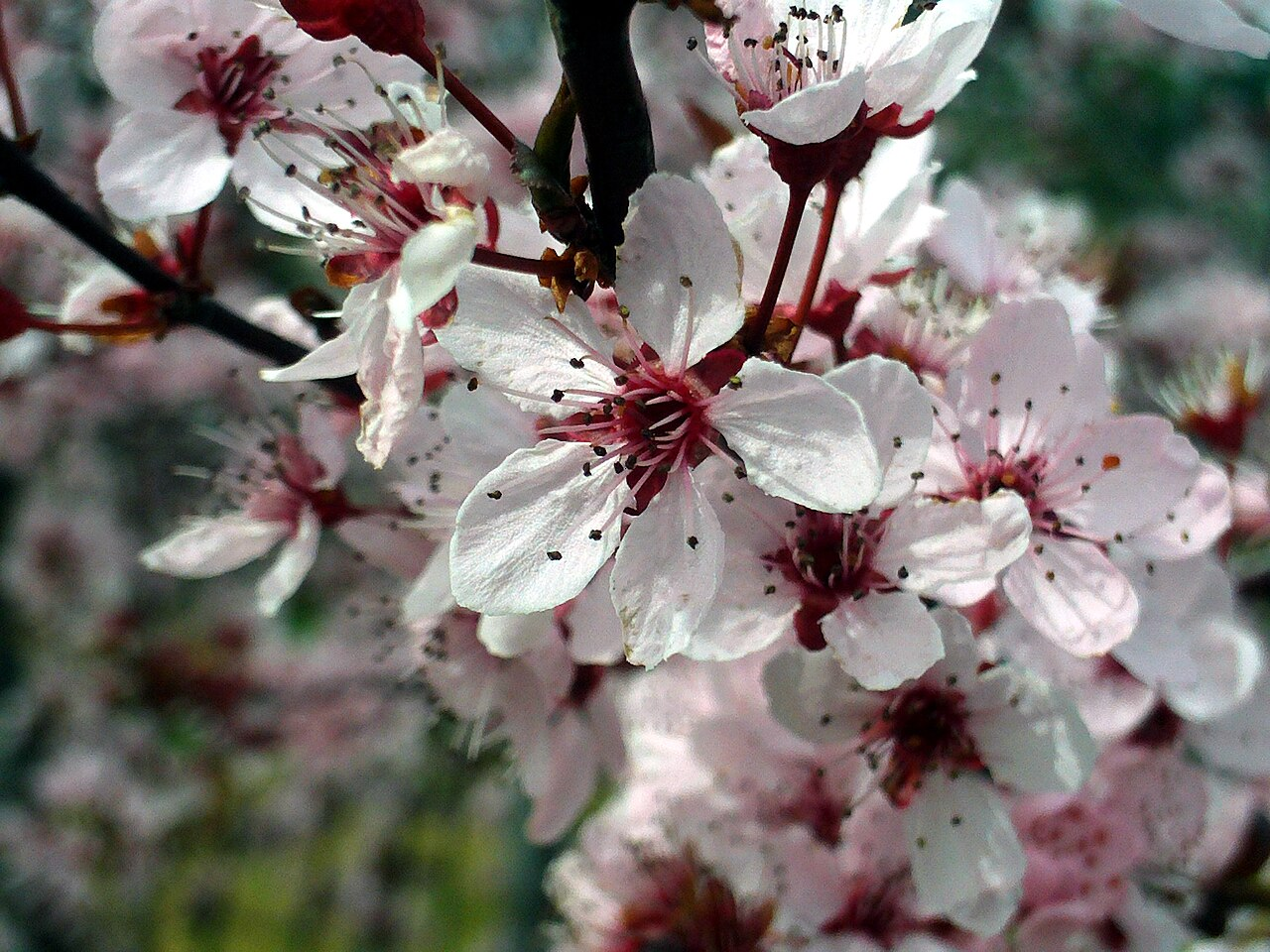
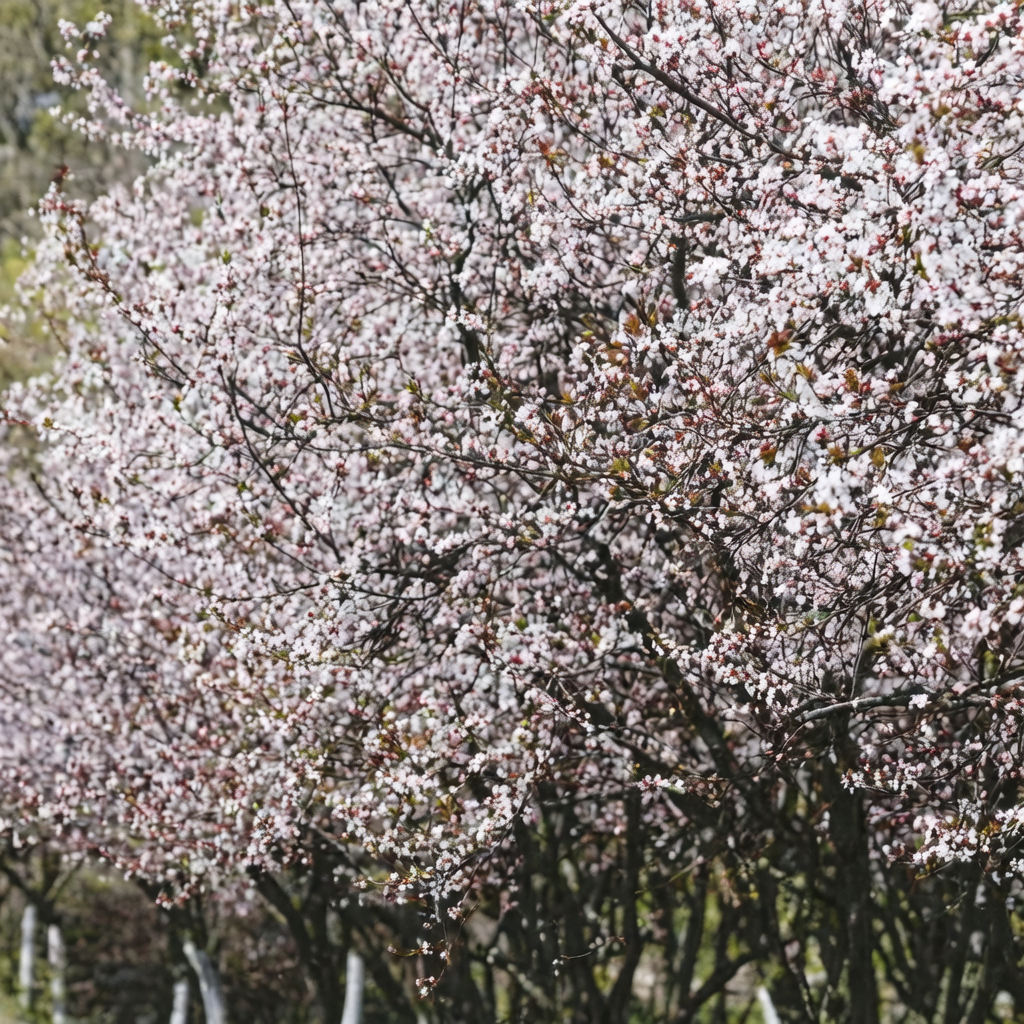
- Flower:Small blossoms appear early in spring. Flowers are usually pale pink to whitish overall (cultivar and conditions can shift the tone), while flower stalks, calyx, and even stamens may show purplish-red coloration—an extra bonus that echoes the foliage color.
- Flowering Season:April (spring)
- Growth Habit:Deciduous small tree with an upright-to-rounded outline; vigorous, and readily produces new shoots (including suckers and water sprouts if stressed or heavily pruned).
🌤️ Environment
Sunlight
Full sun is best for strong purple leaf color. It tolerates light shade, but foliage may become greener.
Temperature
Prefers warm, moderately humid conditions, but is generally cold-tolerant once established. Protect young trees from extreme cold winds and late freezes where possible.
Humidity
Does well in average to moderately humid conditions. Avoid prolonged drought stress in hot, dry weather—consistent moisture helps prevent leaf scorch and stress-related problems.
Soil
Adaptable to many soils (including heavier clay) as long as drainage is reasonable. For best growth and color, provide fertile, well-drained loam; avoid chronically waterlogged sites.
Placement
An outdoor specimen or accent tree: near entrances, along garden paths, or as a focal point at lawn corners. Allow breathing room from paving and foundations because roots can be relatively shallow.
Hardiness
USDA Zone 4–8 (approx. −34 to −7°C / −30 to 20°F), depending on local conditions and cultivar performance.
🪴 Care Guide
Difficulty
Easy to moderate: it’s vigorous and forgiving thanks to strong resprouting, but it looks best with full sun, sensible watering during establishment, and routine pruning to keep structure tidy.
Buying Guide
Pick plants with evenly colored foliage (a good deep purple/red is a great sign), a straight trunk if you want a standard form, and a balanced branching framework. Avoid trees with cankers, wounds, or sticky gumming on stems (a common Prunus warning sign). In containers, check for circling roots and avoid severely pot-bound stock.
Watering
First growing season: water regularly so soil stays evenly moist but never soggy. After establishment: water during prolonged dry spells—deep, thorough soaking is better than frequent light sprinkles.
Fertilization
Feed lightly in early spring with compost or a balanced slow-release fertilizer. Avoid excessive nitrogen, which can encourage soft, fast growth and dull the best purple coloration.
Pruning
Prune in late winter to early spring while dormant to shape the canopy and remove dead, diseased, or crossing branches. Remove suckers and vigorous water shoots as needed. If you’re growing it mainly for spring bloom, avoid heavy pruning right before flowering.
Propagation
Most reliably propagated by grafting or budding onto suitable Prunus rootstocks. Softwood or semi-hardwood cuttings may work in some situations, but success is generally less consistent than grafting.
Repotting
Usually grown in the ground. If kept in a container while young, up-pot every 1–2 years into a slightly larger pot with a free-draining mix, and transplant into the landscape once it’s outgrowing its container.
📅 Seasonal Care Calendar
Spring: enjoy bloom, apply a light feed, and begin monitoring for pests. Summer: deep-water during heat, especially in dry spells; watch for aphids and leaf issues. Autumn: tidy fallen leaves and fruit; a good time to plan planting/transplanting. Winter: do structural pruning during dormancy.
🔬 Pests, Diseases & Safety
Common Pests & Diseases
Common issues include aphids, scale, and spider mites. Disease problems can include leaf spot, powdery mildew, and canker with gumming—typical of many Prunus. Help prevent trouble with good airflow, avoiding overhead watering, cleaning up infected leaves, and using targeted controls only when necessary.
Toxicity
As with many Prunus, the leaves and the seeds/pits contain cyanogenic compounds and can be harmful if chewed or eaten in quantity. Keep pits, fallen fruit, and pruning debris away from pets and livestock. The fruit flesh of many Prunus is edible, but this cultivar is primarily grown for ornament rather than eating.
🎋 Culture & Symbolism
Symbolism:Often planted as a symbol of dramatic color contrast, vitality, and the beauty of seasonal change—its purple foliage makes a statement from spring through autumn.
History & Legends:A widely planted ornamental selection of cherry plum (Prunus cerasifera), long favored in gardens and streetscapes for its purple leaves and early spring flowers.
Uses:Primarily ornamental: used as a specimen tree, along paths and streets, near buildings, and as a lawn accent for long-lasting foliage color; may also add seasonal interest with spring bloom and occasional summer fruit.
❓ FAQ
Why are my purple leaves turning green?
Lack of sun is the most common reason—plant or move it into fuller sun if possible. Also avoid high-nitrogen fertilizer, which can push greener growth and reduce the intensity of purple coloration.
Does it produce fruit?
Yes, it can set small plum-like fruits in summer, but fruiting varies with pollination, climate, and pruning. Most people grow it mainly for the foliage color rather than the harvest.
Is it suitable for planting near paving?
It tends to have relatively shallow roots, so it’s best to give it space away from hardscapes and keep watering consistent during establishment to reduce stress and surface rooting.
💡 Fun Facts
- It’s a purple-leaved ornamental form of cherry plum (Prunus cerasifera).
- In strong sun, the leaves can stay purple-red for much of the growing season.
- Young shoots—and even parts of the flowers—often show purple tones, not just the leaves.
- It responds vigorously to pruning and can throw lots of new shoots afterward.
- In its native range, it may be found on rocky slopes and along valley waterways.