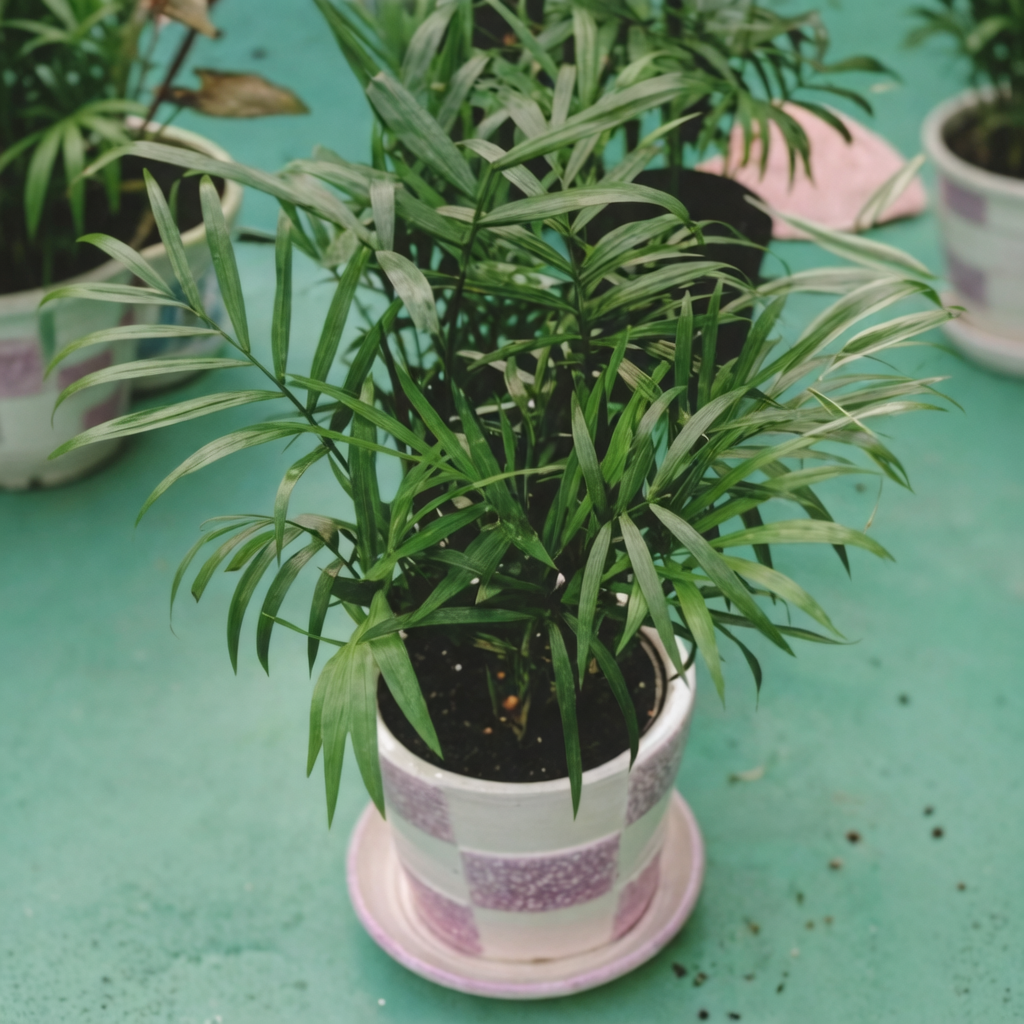
🌱 Plant Features
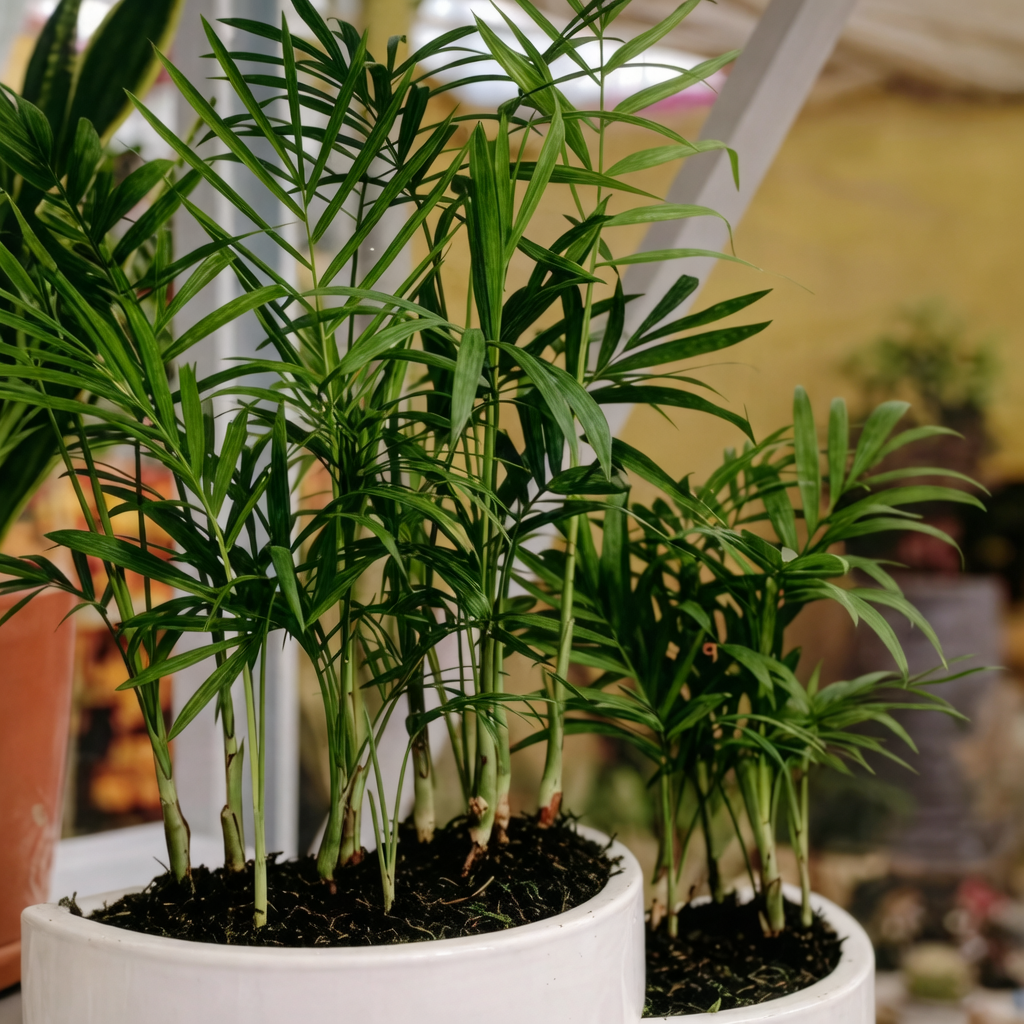
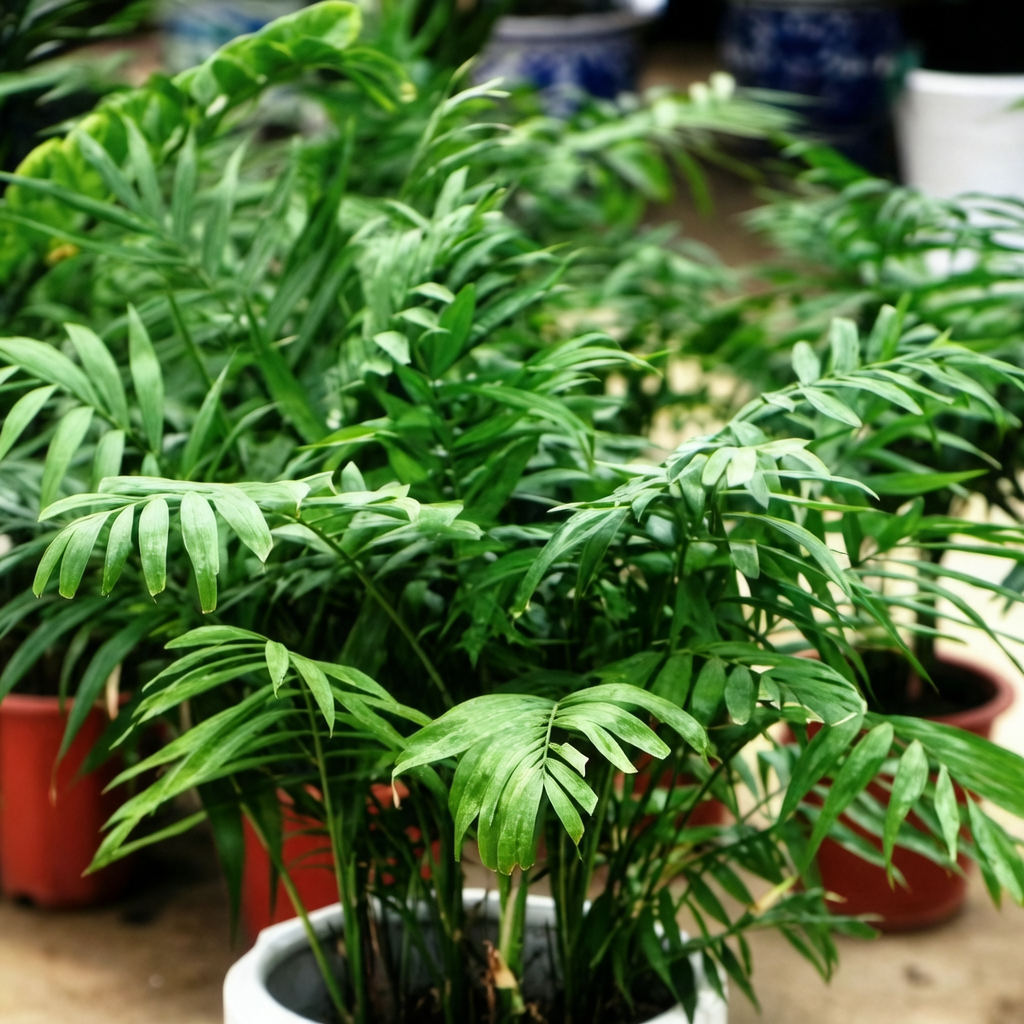
- Size:Typically 60–120 cm (2–4 ft) tall indoors, occasionally up to about 1.2 m (4 ft) with age; clumps often spread about 30–60 cm (12–24 in) wide. Often sold as multiple seedlings planted together for a fuller, ‘mini palm grove’ look.
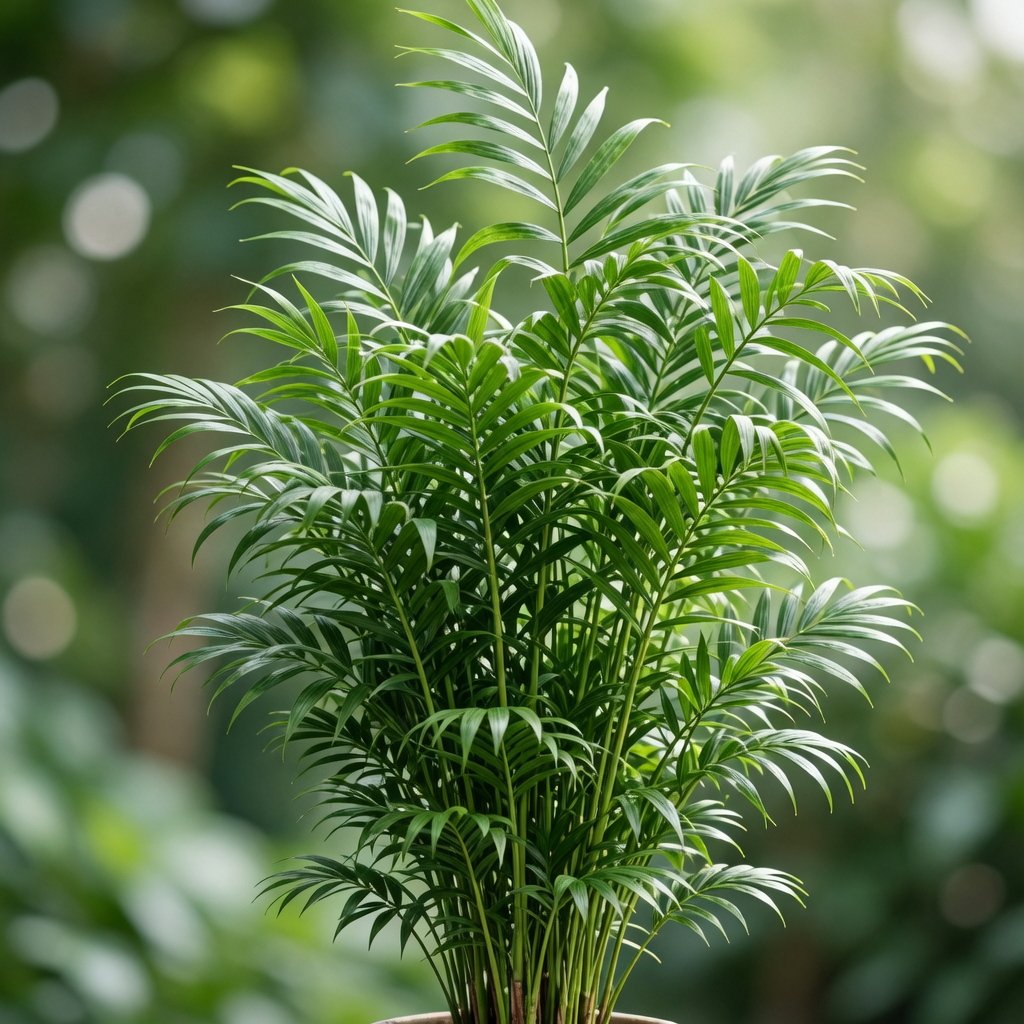
- Foliage:Arching, pinnate (feather-like) fronds with many narrow leaflets; dense and neat, typically glossy deep green when healthy. Leaves look best with bright, filtered light and moderate humidity. Cold stress (especially below about 10°C/50°F) can show as browning along tips and edges and general decline.
- Flower:On mature plants, small yellow to yellowish flowers appear on slender stalks in branched clusters. Indoors they’re usually modest and more of a botanical bonus than a main display.
- Flowering Season:Occasional indoors; most often from late winter/spring through autumn when light and warmth are steady.
- Growth Habit:Clumping, upright to arching; forms multiple stems from the base; slow to moderate growth and very well-suited to container culture.
🌤️ Environment
Sunlight
Bright, indirect light is ideal (think dappled ‘understory’ light). Tolerates medium to low light indoors, but grows slower and can look thinner. Avoid harsh direct sun, especially midday; near a strong window, use a sheer curtain or provide roughly 30%–50% shade.
Temperature
Best growth around 15–25°C (59–77°F), with an ideal indoor range about 18–24°C (64–75°F). Protect from drafts and chilling; keep above 10°C (50°F) to avoid cold damage. Short hot spells up to ~35°C (95°F) can be tolerated if humidity is higher and the plant isn’t allowed to dry out completely.
Humidity
Prefers moderate to higher humidity but adapts to average home levels. In dry weather or heated winter homes, occasional misting, a pebble tray, or a humidifier helps (avoid keeping foliage constantly wet in cool conditions).
Soil
Loose, fertile, well-draining houseplant mix (all-purpose potting mix improved with perlite/coarse sand and/or bark). Good drainage is crucial—heavy, waterlogged media quickly leads to yellowing and root rot. Typical pot sizes: about 15–25 cm (6–10 in) diameter for many home plants; larger established clumps may suit about 20–30 cm (8–12 in).
Placement
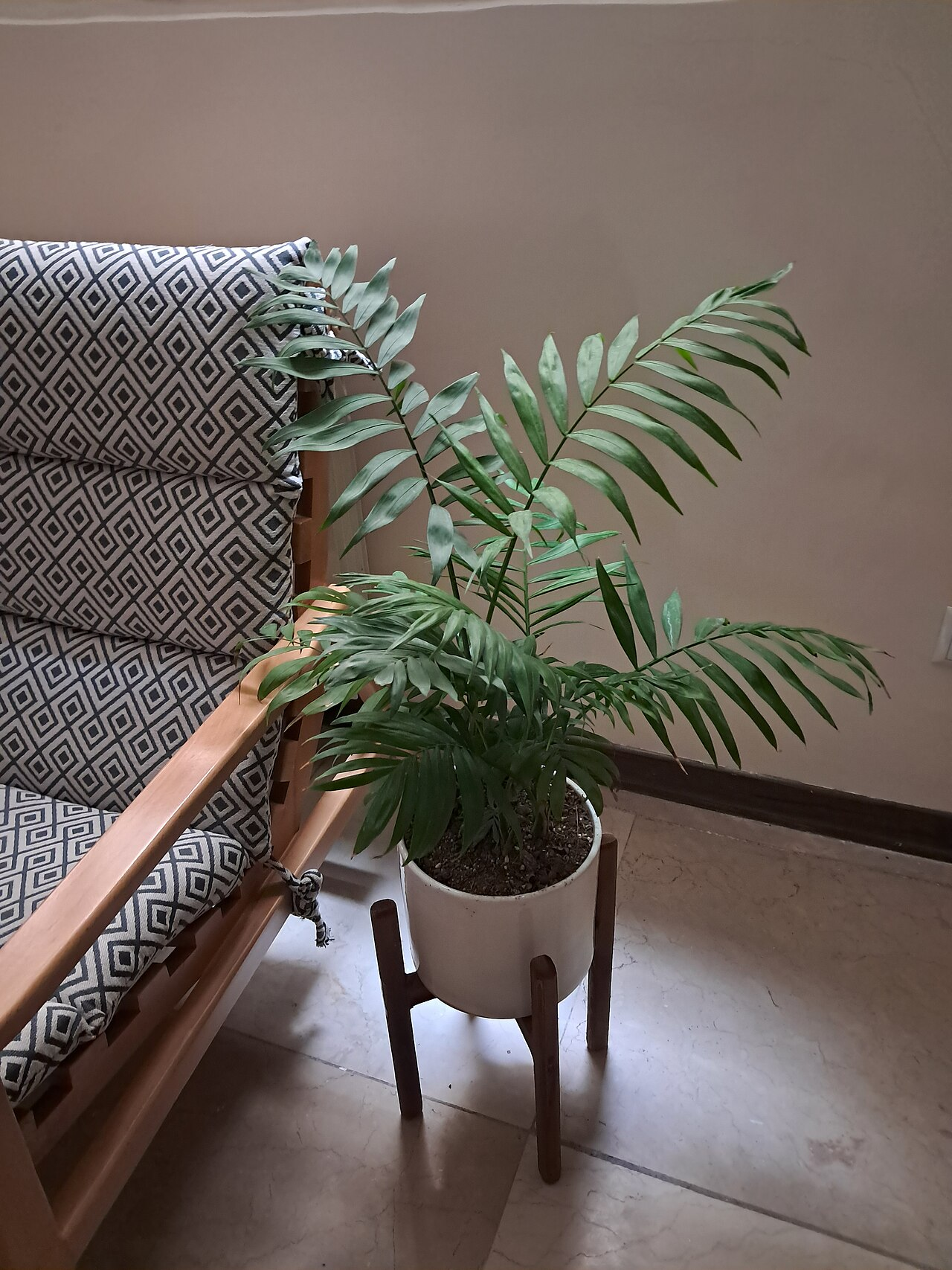
Indoors near an east- or north-facing window, or set a few feet back from a brighter south/west window behind a sheer curtain. Keep away from heating vents, AC drafts, and hot sun. Great for living rooms, bedrooms, offices, stair landings, and bright hallways.
Hardiness
USDA Zone 10–12; frost-tender and generally kept as a houseplant outside warm climates.
🪴 Care Guide
Difficulty
Easy to moderate: very tolerant of lower light, but not tolerant of cold + soggy soil. If you avoid waterlogging and protect it from chills, it’s one of the most beginner-friendly palms.
Buying Guide
Look for dense, compact growth with fresh deep-green fronds and upright stems. Avoid plants with widespread brown tips, torn leaves, spotting, sticky residue, or sour-smelling/waterlogged soil. Check undersides for spider mites, scale, and mealybugs. After purchase, let it acclimate in bright, filtered light; start fertilizing only after you see new growth.
Watering
Water thoroughly, then let the top 2–3 cm (about 1 in) of mix dry before watering again during spring–summer. Keep evenly moist but never soggy, and never leave the pot sitting in water—overwatering is the #1 cause of yellow leaves and root rot. In autumn and winter, reduce watering and allow the mix to dry a bit more between waterings (don’t keep it bone-dry for long). Use room-temperature water; if tips brown easily, consider filtered/rain water to reduce mineral buildup.
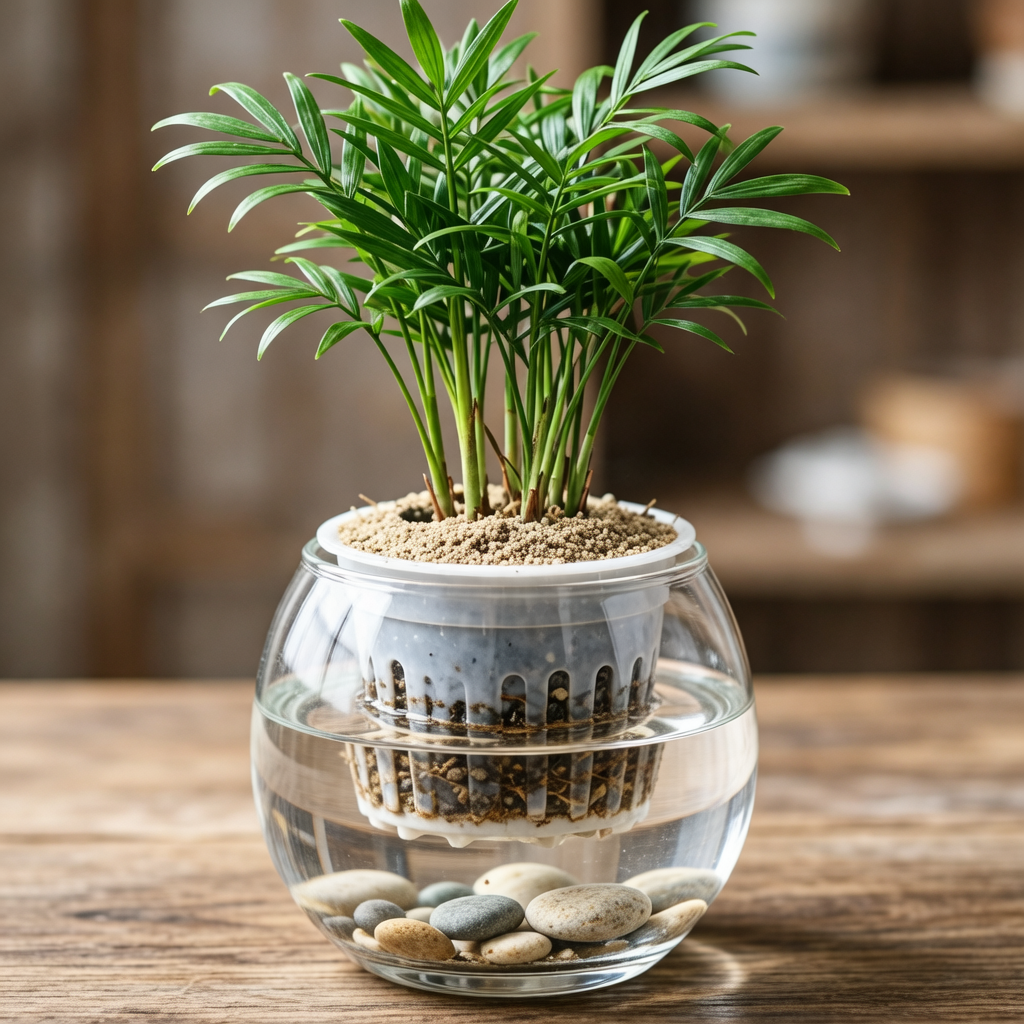
Water-culture (hydro-style) is possible: rinse soil from roots, trim damaged/rotted roots, keep roots in clean water with the stem base above the waterline, and refresh water frequently—about every 3–5 days in summer and every 10–15 days in autumn/winter—adding a small amount of hydroponic nutrient once stable.
Fertilization
During active growth (roughly spring to early autumn): feed with a balanced liquid fertilizer. Common schedules include monthly feeding (full or half strength) or every 2 weeks at half strength (often May–September). Apply lightly when new fronds are emerging. Stop feeding in winter or whenever growth slows due to low light/cool temperatures.
Pruning
Remove fully brown, yellow, or broken fronds at the base with clean pruners. Avoid trimming green tissue unless necessary. If repotting, only trim dead/rotted roots—heavy root pruning can set the plant back.
Propagation
Mostly by seed (the standard commercial method). For home growing, sow fresh seed in spring–summer at 20–25°C (68–77°F); germination often takes about 2–3 months. Transplant seedlings when they reach roughly 10–15 cm (4–6 in) (up to about 15 cm/6 in is also common guidance). Division is possible (best in spring) only if the clump can be separated with roots intact; it can stress the plant and slow recovery.
Repotting
Repot every 2–3 years in spring or when rootbound. Move up one pot size (about 2–5 cm / 1–2 in wider) and refresh the mix; don’t overpot. Always use a pot with drainage holes for soil culture. After repotting, keep warm and avoid overwatering while roots re-establish.
📅 Seasonal Care Calendar
Spring: resume regular watering; keep in bright, filtered light (30%–50% shade if sun is strong).
Summer: water when the surface dries; raise humidity as needed; protect from intense sun; never allow waterlogging.
Autumn: reduce watering slightly; maintain filtered light; mist only if air is very dry.
Winter: brightest safe spot; keep above 10°C (50°F) (ideally 15°C/59°F+ for best appearance); water sparingly; stop fertilizing.
Every 2–3 years (spring): repot if rootbound; remove dead fronds anytime.
🔬 Pests, Diseases & Safety
Common Pests & Diseases
Common indoor pests include spider mites (especially in dry air), scale, mealybugs, and sometimes thrips. Prevent by inspecting regularly and keeping leaves clean; treat early with insecticidal soap or horticultural oil and repeat as needed. Leaf spots/blights can occur with poor airflow and persistently wet foliage—improve ventilation, avoid late-day wet leaves, and remove badly affected fronds. Root rot and yellowing are most often caused by overwatering, especially when temperatures are cool; use a fast-draining mix and keep winter warmth above 10°C (50°F).
Toxicity
Generally considered non-toxic to cats and dogs (commonly listed as pet-safe). Still discourage chewing, as any plant material can cause mild stomach upset in sensitive pets or people.
🎋 Culture & Symbolism
Symbolism:Often linked with welcome and everyday elegance; also popularly associated with good luck, “staying youthful,” and long-lasting vitality—fitting for a plant that can live with you for years.
History & Legends:A beloved Victorian-era parlor and conservatory plant—its ability to tolerate indoor conditions better than many palms helped make it a timeless houseplant staple.
Uses:An ornamental indoor foliage plant used to soften interiors and add a gentle tropical feel. Commonly placed on desks, shelves, and in bright rooms; it can also be displayed in simple hydro-style water culture when roots are kept clean and oxygenated.
❓ FAQ
Why are the leaf tips turning brown?
Most often it’s dry air, inconsistent watering, mineral buildup from hard water, or cold drafts. Water when the top 2–3 cm (1 in) dries, don’t let the pot sit in water, keep it away from cold air, and consider filtered/rain water. A small boost in humidity usually improves tip condition.
Can it live in low light?
Yes—parlor palm is one of the better palms for low light. Expect slower growth and a slightly thinner look. For the fullest, darkest foliage, give bright, indirect light.
Why are my parlor palm’s leaves turning yellow and the roots rotting?
That combination is usually cold + overly wet soil. Keep it above 10°C (50°F) (warmer is better), use a well-draining mix, and only water after the top 2–3 cm (1 in) dries. Never leave the pot standing in water.
Can parlor palm be grown in water?
Yes, with care. Rinse soil off the roots, trim any rot, keep roots submerged while the stem base stays above water, and refresh water frequently (about every 3–5 days in summer; every 10–15 days in cooler seasons). Once stable, add a small dose of hydroponic nutrient.
💡 Fun Facts
- Despite the name, it’s naturally an understory palm—built for dappled forest light rather than blazing sun.
- Many pots contain multiple seedlings, which creates the lush, clumping look people love.
- Victorian homes helped make parlor palm famous because it coped with indoor life better than most palms.
- Cold stress often shows first as browning along the leaf tips and edges when temperatures dip below about 10°C (50°F).