🌱 Plant Features
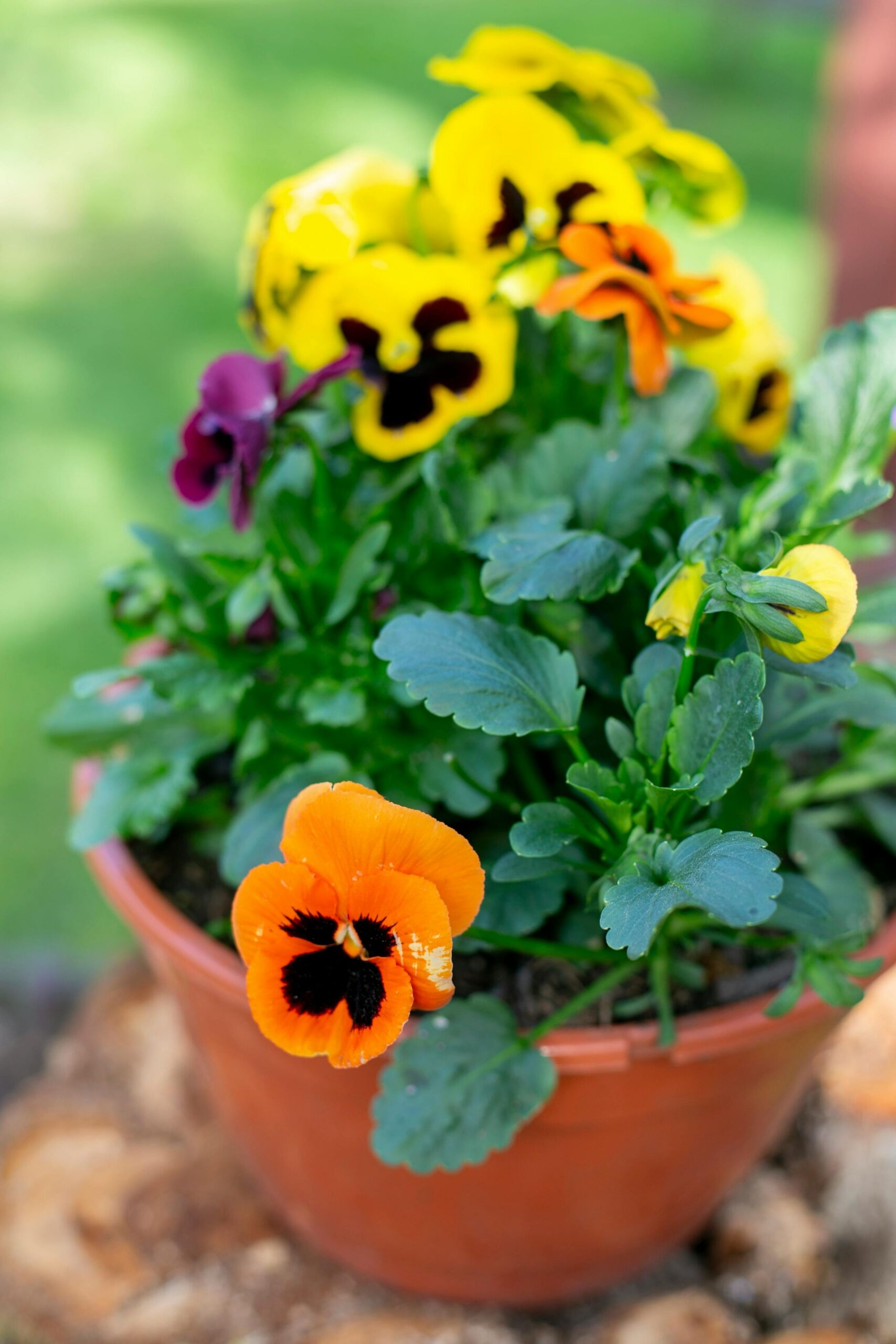
- Size:Typically 15–25 cm tall (6–10 in) and 15–30 cm wide (6–12 in), depending on cultivar and whether it’s a mounding or trailing type.
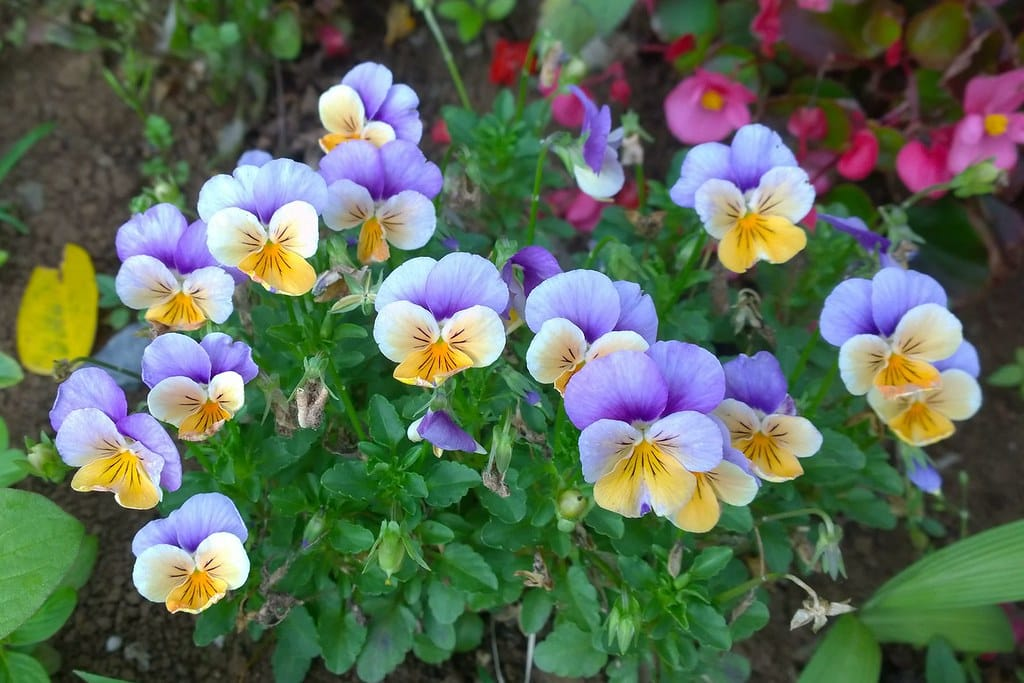
- Foliage:A compact, low-growing plant with dense green, oval leaves that often have gently scalloped edges. Basal leaves are usually on longer stalks, while stem leaves sit closer; you may also notice the large, leafy stipules typical of violets.
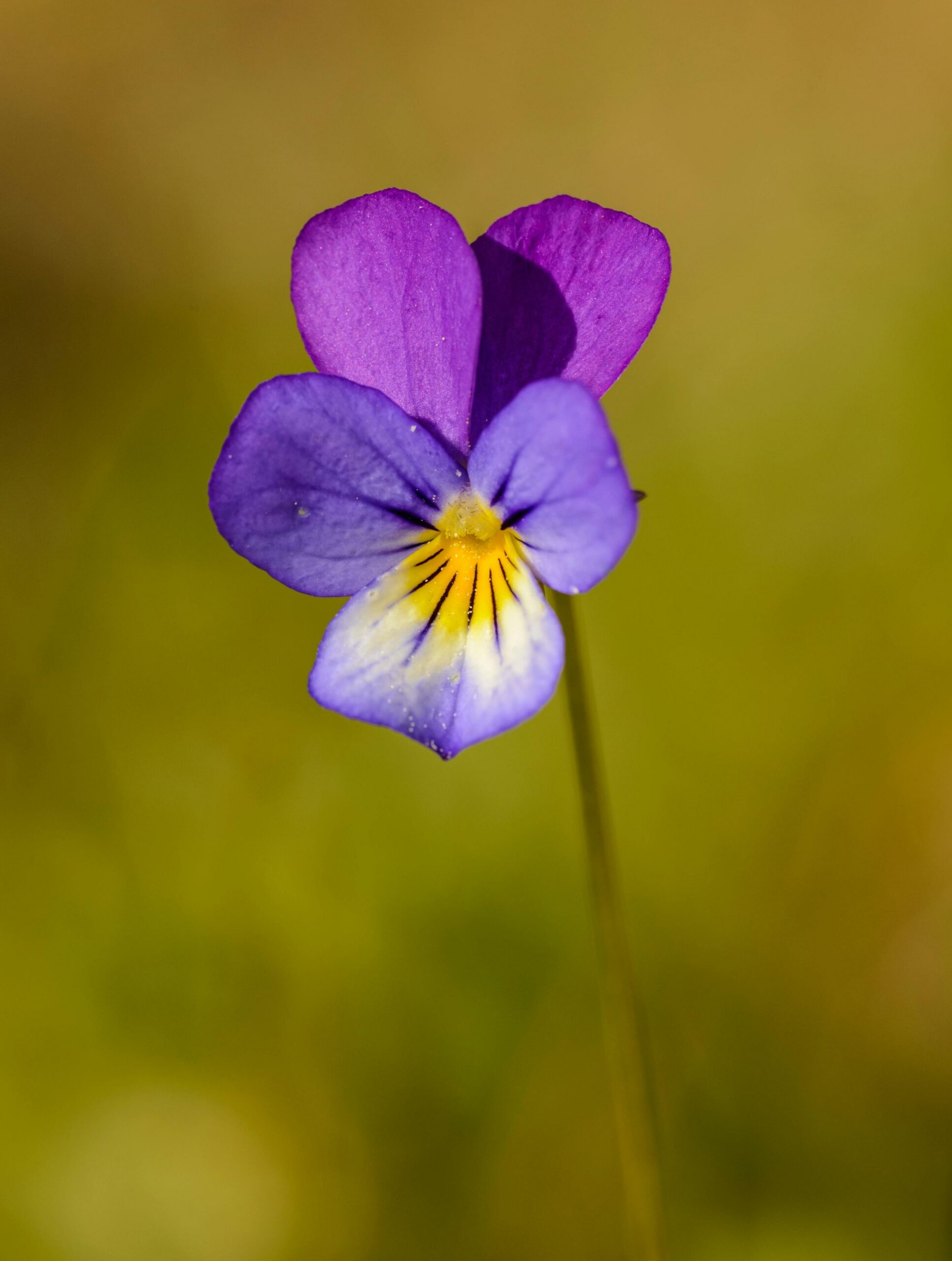
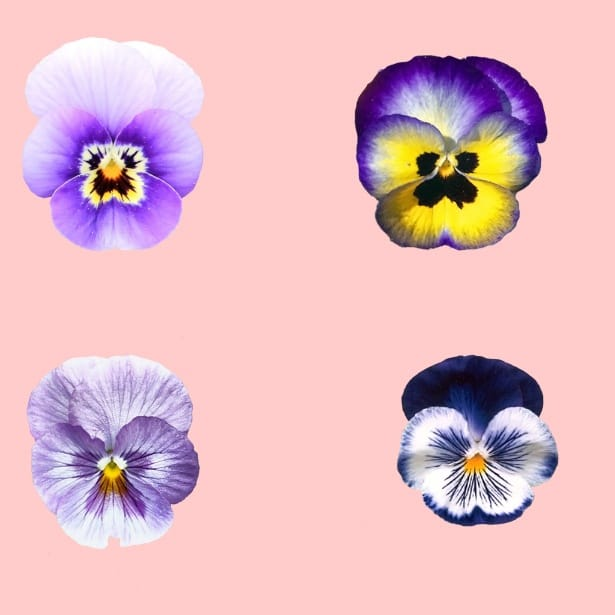
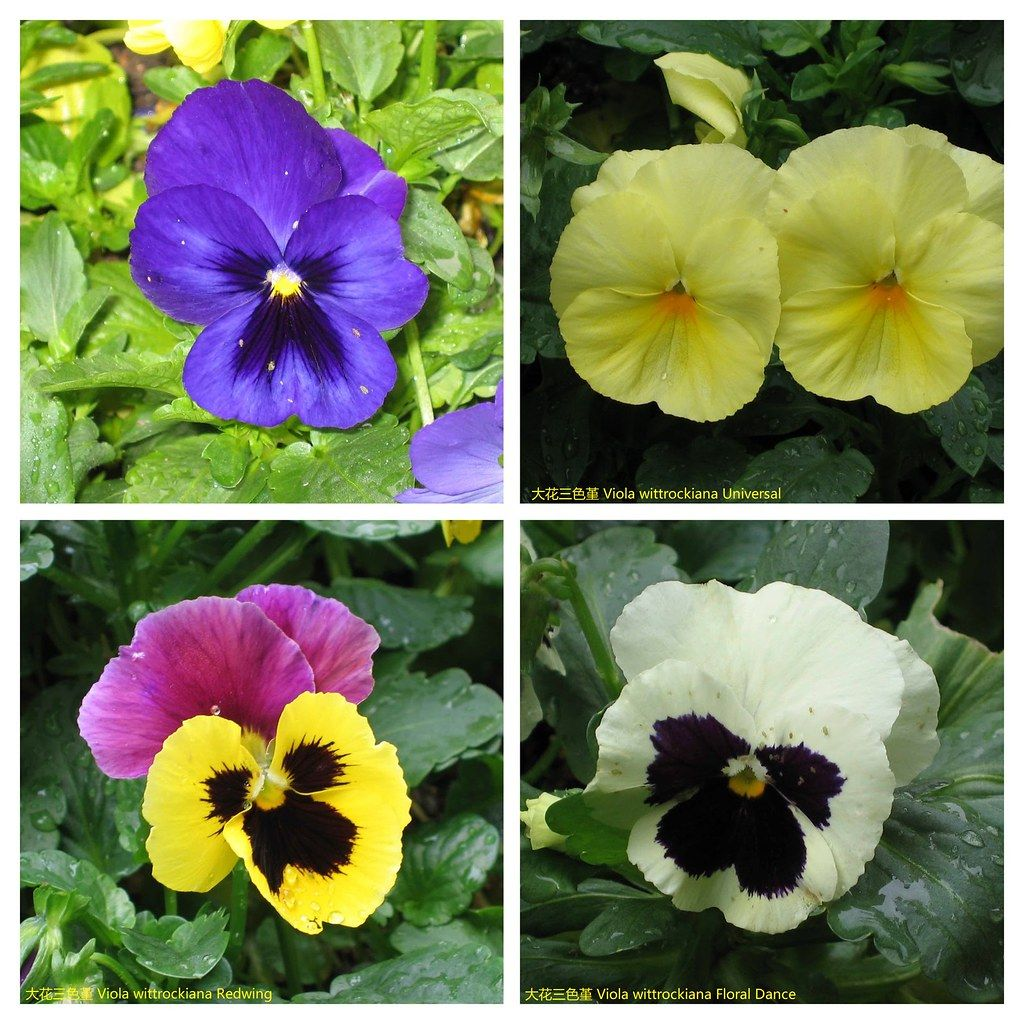
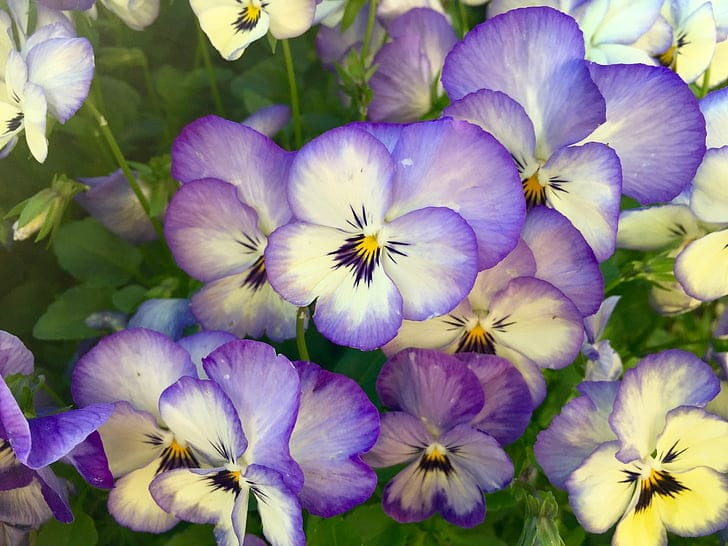
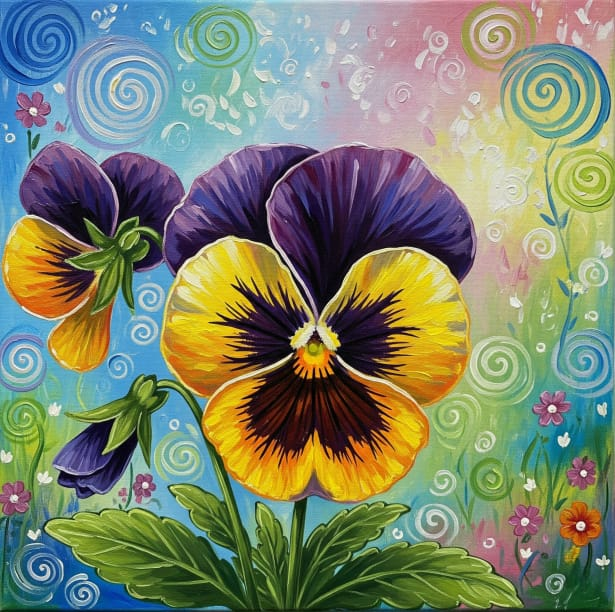
- Flower:Showy, often velvety flowers about 4–6.5 cm (1.5–2.5 in) across, usually marked with a distinctive “face” pattern and veining. Colors range widely, commonly bicolored or tricolored combinations including purple, yellow, white, and blue. Regular deadheading keeps the display coming.
- Flowering Season:Spring to early summer (about April–July) and again in fall; often continues through mild winters.
- Growth Habit:Compact, mounding/clumping habit; typically grown as a cool-season annual or short-lived perennial.
🌤️ Environment
Sunlight
Full sun to partial shade. Aim for at least ~6 hours of light; in warm climates, afternoon shade helps prevent heat stress and keeps blooms coming.
Temperature
Best performance in cool conditions: roughly 7–15°C (45–59°F) for steady growth, with many plants blooming well around 10–20°C (50–68°F). Prolonged heat above about 25°C (77°F) can slow growth and reduce buds; many plants struggle badly around 29°C (85°F) and up. Cold tolerance varies by cultivar—light frosts are usually fine, but damage can occur around -5°C (23°F) or lower, especially if the cold is prolonged.
Humidity
Prefers moderate humidity and good airflow. Avoid hot, humid, stagnant conditions; keep foliage and flowers from staying wet for long periods.
Soil
Fertile, humus-rich, consistently moist but well-drained soil or potting mix. A loose sandy/loamy blend amended with compost/leaf mold works well. Slightly acidic soil is often ideal; in containers, peat-based mixes are commonly used as long as drainage is excellent.
Placement
Great for beds, borders, edging, window boxes, containers, hanging baskets, patios, balconies, and bright cool windowsills—especially near entrances where you’ll enjoy the color up close.
Hardiness
Often grown as a cool-season annual. Overwintering depends on cultivar and winter conditions; commonly reliable in milder areas (roughly USDA Zones 6–10) and many cultivars tolerate cold well, with some pansies surviving into colder regions when protected. Not tolerant of repeated freeze–thaw or prolonged deep freezes.
🪴 Care Guide
Difficulty
Easy to moderate: very beginner-friendly in cool seasons, but it can decline quickly in sustained heat, poor drainage, or stagnant, humid air.
Buying Guide
Choose compact, well-branched plants with dense foliage, short internodes, and lots of buds (a few open flowers are fine). Avoid plants with yellowing leaves, mushy stems, spotted foliage, or obvious pests. Bright, intact petals and clean crowns usually signal a strong start.
Watering
Keep soil evenly moist but never waterlogged. In spring/fall growth, water when the top 1–2 cm (0.4–0.8 in) feels dry; in bright, breezy conditions this may be several times per week. Water at the soil level (not over the flowers) to reduce fungal problems, and never let pots sit in standing water. For seedlings, bottom-watering is helpful. In midsummer heat, pansies often pause—focus on cooling/shade and careful moisture rather than “more water.”
Fertilization
At planting, a light slow-release fertilizer can help. During active growth, feed regularly: either monthly with a balanced fertilizer, or every 2 weeks at half strength (common for containers). Once buds/flowers are underway, many growers switch to a bloom-leaning feed (higher phosphorus/potassium) and avoid overly high nitrogen, which can push leaves at the expense of blooms.
Pruning
Deadhead regularly by pinching off spent blooms (and their stems) to encourage nonstop flowering. If plants get leggy, trim them back to about 7.5–10 cm (3–4 in) to refresh growth, especially after a lull.
Propagation
Seed is the classic route: sow 8–12 weeks before transplanting, or in early autumn for cool-season flowering. Seeds germinate best in darkness and cool temperatures around 13–16°C (55–61°F); expect about ~2 weeks to sprout, and roughly 14–16 weeks from sowing to flowering. Cuttings can also work: take short shoots in late spring/early summer (around May–June) and root in a peat-based medium; rooting often takes about 15–20 days. Some plants can be divided after flowering by separating rooted side shoots.
Repotting
Often treated as a seasonal plant rather than something to repot repeatedly. Use a well-draining mix and pots with drainage holes. As a rough guide: a 10 cm (4 in) pot fits a single plant; for baskets and mixed containers, use larger pots (about 12–15 cm / 4.7–6 in or more) and avoid overcrowding to reduce mildew and rot. In beds/containers, typical spacing is about 15–20 cm (6–8 in) for compact types, wider for trailing forms.
📅 Seasonal Care Calendar
Spring: peak bloom—bright light, consistent moisture, deadhead often, and feed lightly. Summer: protect from heat (afternoon shade, airflow); many plants stall or decline—keep roots cool and avoid soggy soil. Fall: prime planting season in many regions—cool temps bring strong growth and flowers. Winter: in mild climates, pansies can keep blooming; protect from prolonged hard freezes and keep plants in bright, cool conditions (around 10–12°C / 50–54°F indoors) if overwintering in containers.
🔬 Pests, Diseases & Safety
Common Pests & Diseases
Common pests include aphids, slugs/snails, and spider mites; rabbits may also nibble plants. Diseases are often moisture/airflow related: powdery mildew, downy mildew, leaf spots, rust, anthracnose, gray mold (Botrytis), and root rot. Prevent trouble with excellent drainage, good spacing and airflow, and watering at the base (especially earlier in the day). Remove infected flowers/leaves promptly; use insecticidal soap for soft-bodied pests and appropriate fungicides if needed.
Toxicity
Generally low toxicity. Flowers are widely used as edible garnishes when grown without pesticides, but eating large amounts may cause mild stomach upset in people or pets. Keep pesticide-treated plants out of the kitchen and away from curious nibblers.
🎋 Culture & Symbolism
Symbolism:Pansies are classic “thinking of you” flowers—tied to remembrance, affection, and thoughtful love. In Victorian flower language they could hint at secret or “forbidden” affection, and different colors are sometimes given extra meaning (like purple for deep or silent love).
History & Legends:Wild Viola tricolor helped inspire the pansy’s lore and look, and the name “pansy” comes from the French pensée (“thought”). Modern garden pansies were developed in Europe in the 19th century by hybridizing Viola species, selecting for bigger blooms and richer color ranges. Literature and folklore loved the flower’s expressive little “face”—Shakespeare even referenced it as “love-in-idleness.”
Uses:Mostly ornamental: bedding displays, borders, edging, containers, baskets, and cool-season color near doors and patios. Many gardeners also use the flowers (untreated) as edible garnishes in salads, drinks, and desserts, including candied blooms.
❓ FAQ
How long do pansies bloom?
In cool weather they can bloom for weeks to months—typically spring into early summer, and again in fall. In mild climates they may keep flowering through winter. Once sustained heat arrives (often above about 25–29°C / 77–85°F), flowering usually slows or stops.
Can pansies survive winter?
Often yes, especially in mild climates or with some protection. Many cultivars handle light frosts well, but prolonged hard freezes (around -5°C / 23°F and below) can cause damage—containers are more vulnerable because roots chill faster.
Do I need to deadhead pansies?
Yes—regular deadheading keeps plants tidy and encourages more buds. Pinch off the spent flower and its stem so the plant doesn’t waste energy setting seed.
Are pansy flowers edible?
They’re commonly used as edible garnishes, but only eat flowers grown without pesticides or other chemicals intended for ornamentals. Use them as accents rather than large servings, since overindulgence may upset stomachs.
Why did my pansy stop forming buds?
Heat is the usual culprit. When temperatures stay above about 25°C (77°F), pansies often pause bud production. Move to a cooler spot, provide afternoon shade, improve airflow, keep soil evenly moist with excellent drainage, and avoid hot, humid, stagnant conditions.
💡 Fun Facts
- The word “pansy” traces back to the French pensée, meaning “thought.”
- That iconic “face” is part of why pansies are so popular for playful, high-contrast container designs.
- Modern garden pansies (Viola × wittrockiana) are hybrids bred for extra-large flowers and an enormous color range.
- Some pansies readily self-seed, and their smaller-flowered relatives are behind the nickname “Johnny-jump-up.”
- Pansies have been used as symbols of remembrance and were even associated with the 19th-century freethought movement.