🌱 Plant Features
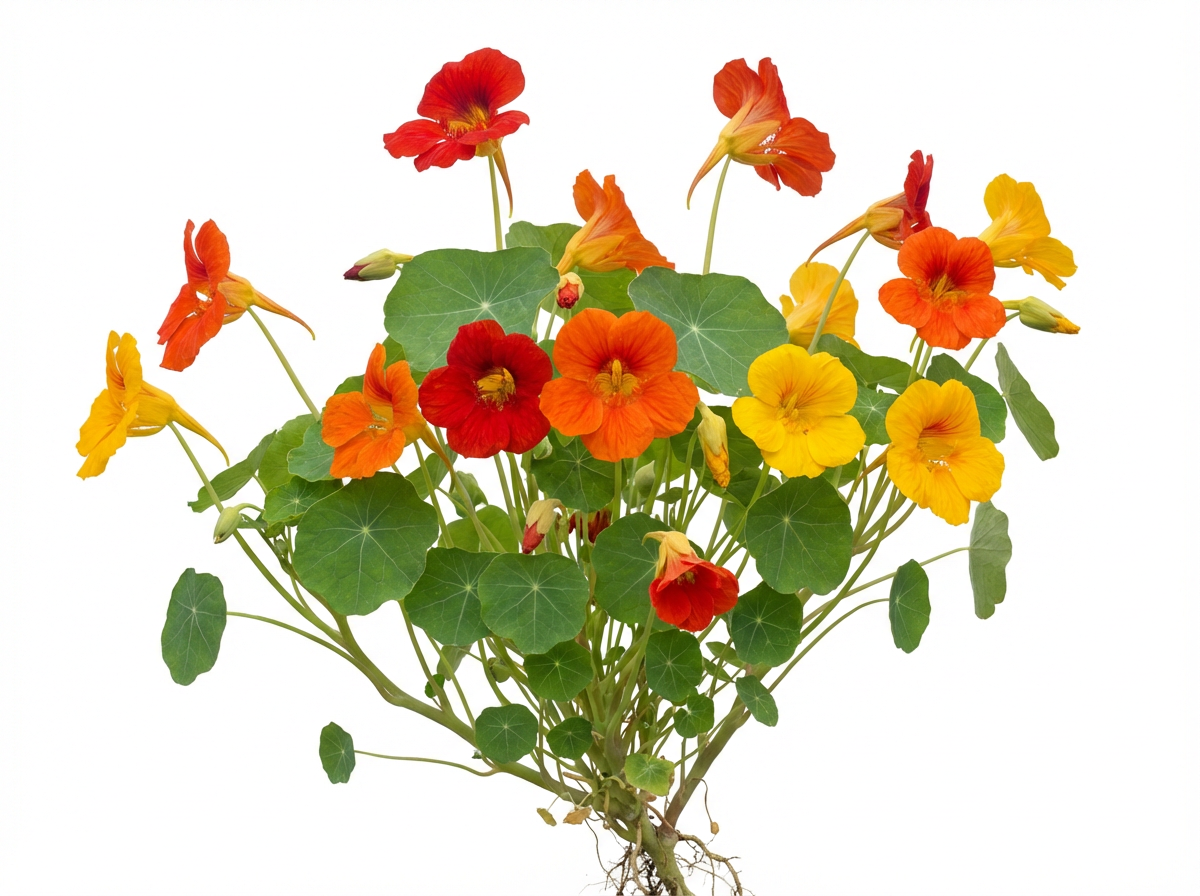
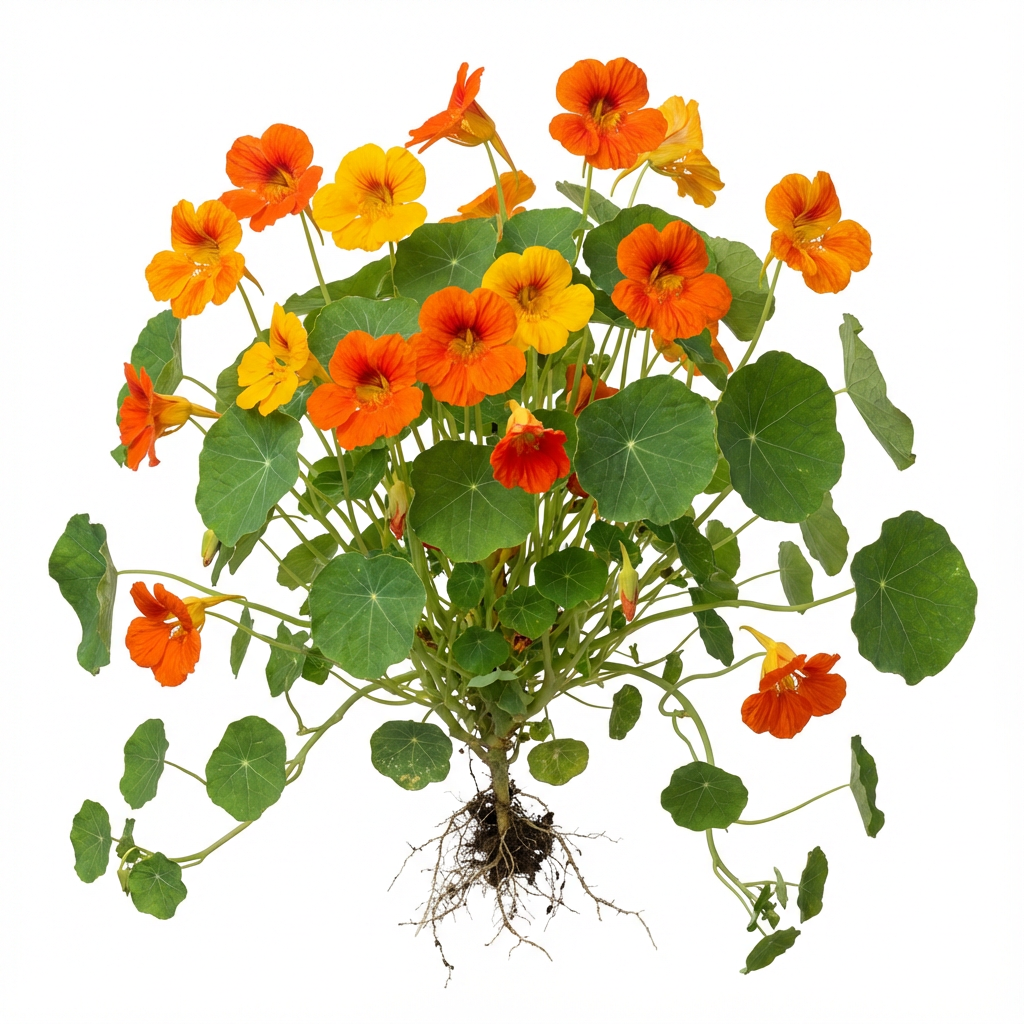
- Size:Trailing/vining types can reach several feet in length; bush/dwarf types stay compact at about 30–38 cm (12–15 in) tall.
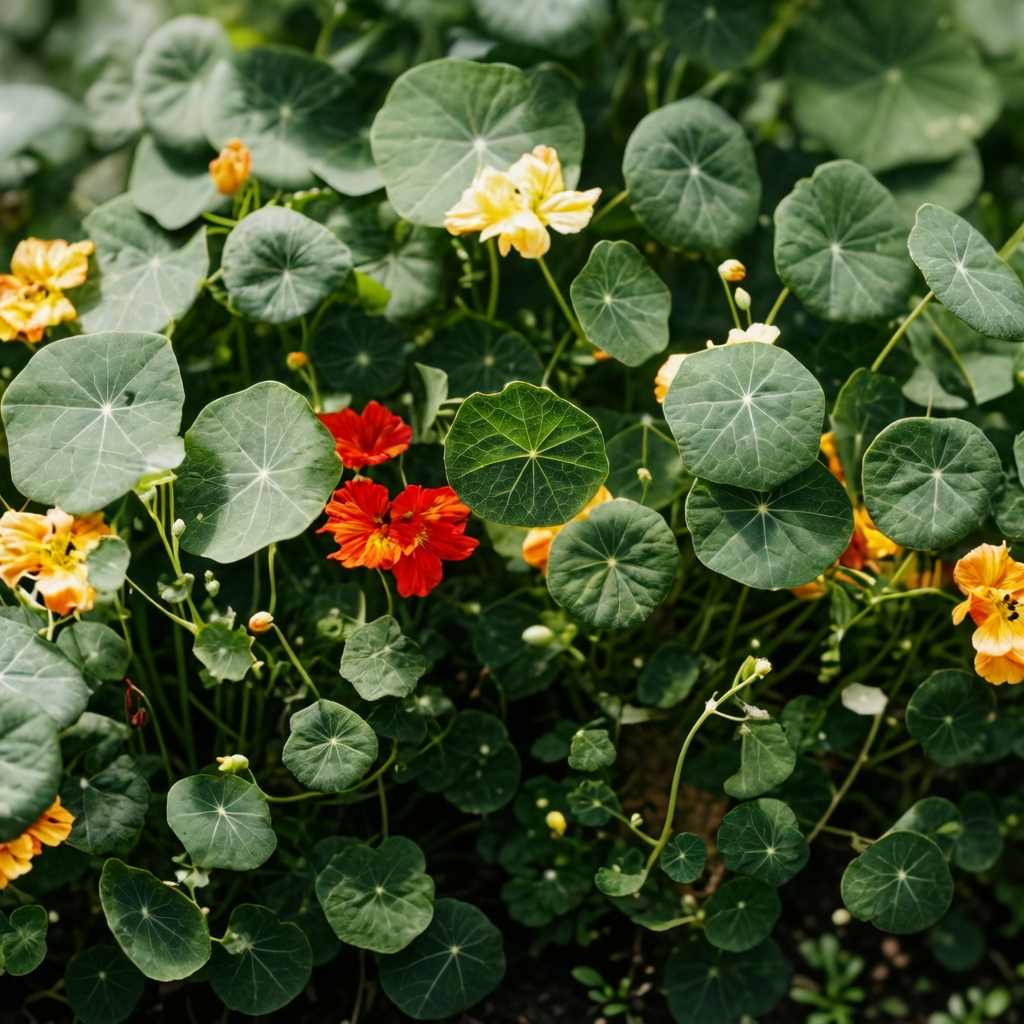
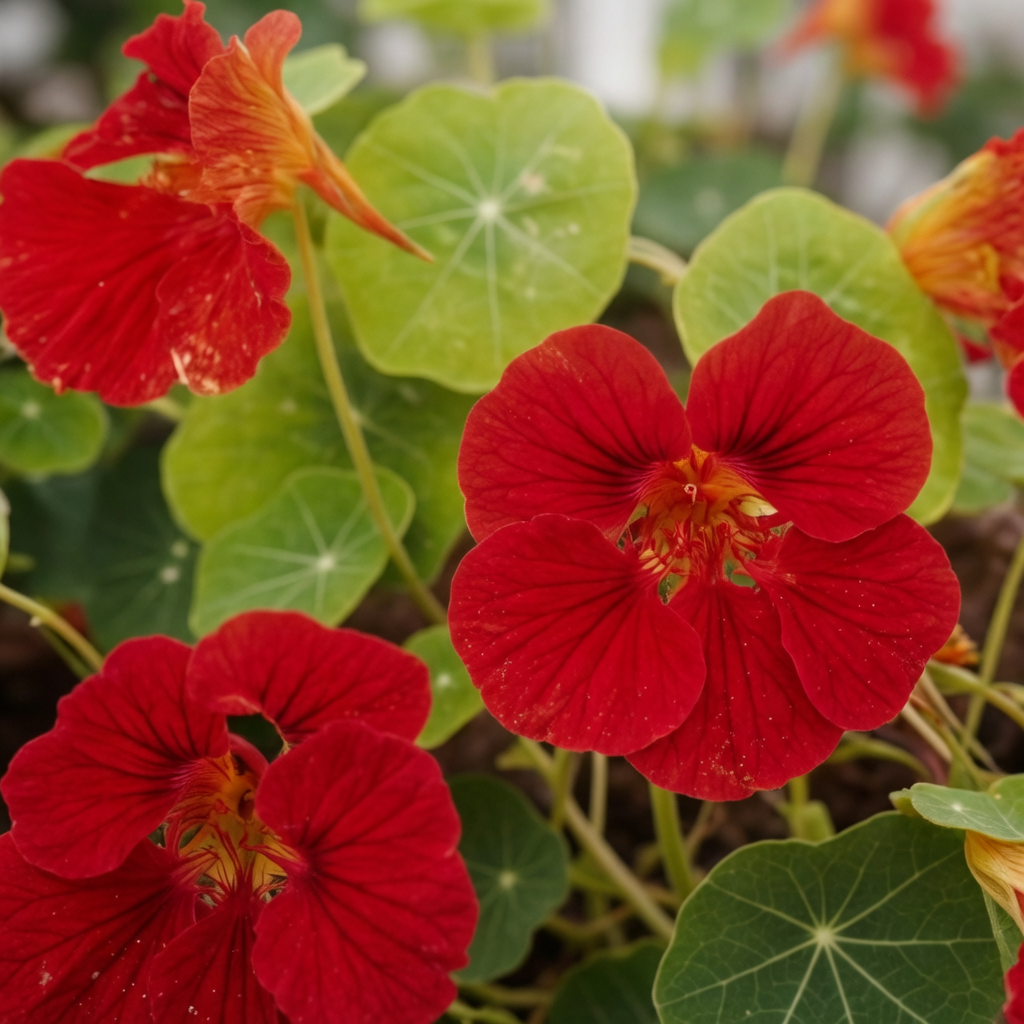
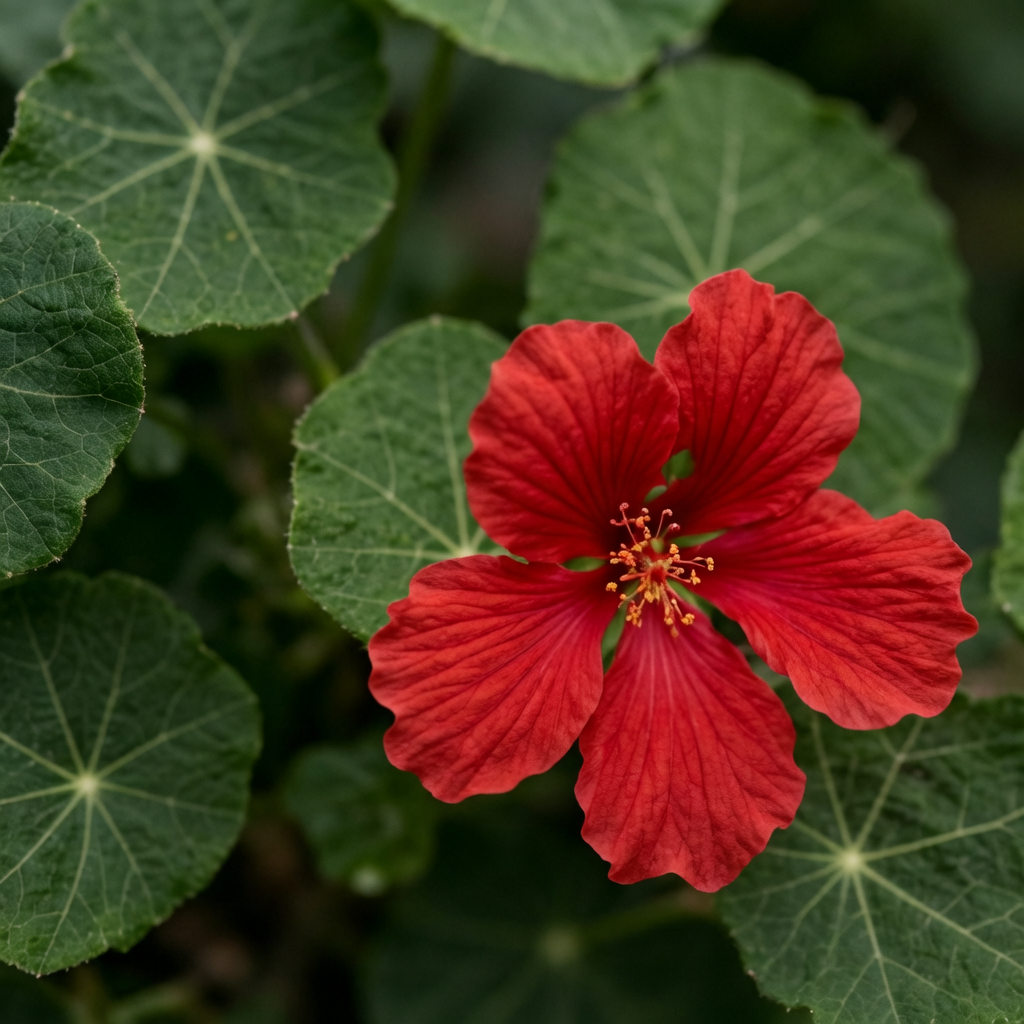
- Foliage:Leaves are round and shield-shaped (peltate), about 3–10 cm (1.2–4 in) across, with radiating veins and long leaf stalks around 6–31 cm (2.4–12.2 in). Foliage is light to medium green and can look slightly waxy.
- Flower:Funnel-shaped flowers about 2.5–6 cm (1–2.4 in) wide with five petals and a distinctive long spur at the back. Colors range from red and orange to yellow, cream, and bicolors. Flowers are carried singly on long stalks from the leaf axils; inside are eight stamens of different lengths and a single pistil.
- Flowering Season:Summer through fall (June to October in temperate climates)
- Growth Habit:Typically grown either as a trailing/climbing vine (classic Tropaeolum majus forms) that cascades or scrambles, or as compact, mounding dwarf/bush types often sold as “nasturtium” mixes.
🌤️ Environment
Sunlight
Full sun (6+ hours/day) for the best bloom show; tolerates partial shade (3–6 hours) but will flower less.
Temperature
Best growth at 18–24°C (65–75°F). Frost-tender; flowering may slow or stop in extreme heat above about 35°C (95°F).
Humidity
Prefers moderate humidity. Aim for evenly moist soil without sogginess.
Soil
Well-draining soil is key. Nasturtiums actually bloom better in poor to average soils; overly rich soil or high nitrogen pushes lots of leaves with fewer flowers. Slightly acidic to neutral pH around 6.0–7.0.
Placement
Great for containers, window boxes, borders, hanging baskets, and as ground cover. Trailing forms look especially good spilling over edges or climbing a small trellis.
Hardiness
Grown as an annual in most climates; can behave as a short-lived perennial in frost-free areas (roughly USDA Zones 9–11). Not cold hardy.
🪴 Care Guide
Difficulty
Easy—one of the most beginner-friendly flowering plants. Low-fuss and forgiving as long as the soil drains well and it isn’t overfed.
Buying Guide
Pick plants with fresh green leaves, sturdy stems, and no obvious pest issues (aphids are the big one to check). Choosing plants with buds (rather than all flowers fully open) usually gives a longer display at home.
Watering
Water to keep soil lightly and consistently moist, especially while establishing. Once settled, plants are somewhat drought-tolerant, but containers may need frequent watering in hot weather (even daily). Avoid waterlogging; slightly easing off water during peak flowering can encourage more blooms.
Fertilization
Usually unnecessary. Too much fertilizer—especially nitrogen—means lots of foliage and few flowers. If the soil is extremely poor, give a light, balanced feed once or twice during the growing season, and avoid nitrogen-heavy products once blooming begins.
Pruning
Deadhead spent flowers to keep blooms coming. Trim back leggy stems to shape the plant; light pruning in pots can encourage bushier growth and fresh leaves.
Propagation
Commonly grown from seed. Direct sow outdoors about 1–2 weeks after the last frost, or start indoors 2–4 weeks before last frost. Seeds typically germinate in 7–10 days at about 18–21°C (65–70°F). Can also be rooted from stem cuttings in spring or summer, often in about 2–3 weeks.
Repotting
Not usually needed because it’s typically grown as an annual. In warm climates where it can persist longer, refreshing the potting mix yearly helps keep plants vigorous.
📅 Seasonal Care Calendar
Spring: sow after frost danger passes (or start indoors a few weeks early). Summer: steady watering, deadhead, and trim if sprawling. Fall: continue enjoying until frost; in frost-free areas it may keep going. Winter: in Zones 9–11 it may survive mild winters with some protection.
🔬 Pests, Diseases & Safety
Common Pests & Diseases
Often used as a trap crop to draw aphids away from vegetables. Watch for aphids, flea beetles, caterpillars (including imported cabbageworm), whiteflies, leaf miners, and slugs hiding under the leaves. Possible diseases include aster yellows, bacterial leaf spot, and wilts. Best prevention is good drainage, good airflow, and not over-fertilizing with nitrogen.
Toxicity
Generally considered non-toxic to people and pets; flowers, leaves, stems, and seedpods are edible. As with many spicy greens, large amounts may cause mild stomach upset in pets due to the peppery compounds.
🎋 Culture & Symbolism
Symbolism:Traditionally associated with patriotism, victory, and “conquest” in the language of flowers. Red varieties are often linked with passion and love, while yellow feels especially cheerful and sunny.
History & Legends:Nasturtiums were valued by the Incas in Peru as both food and a medicinal herb, then carried to Europe by Spanish explorers. The name Tropaeolum refers to a “trophy,” inspired by how the round leaves and helmet-like flowers resemble shields and helmets displayed in triumph. A modern tradition: the Isabella Stewart Gardner Museum in Boston is famous for spectacular hanging displays where vines can trail about 6 m (20 ft).
Uses:Ornamental: colorful bedding, containers, hanging baskets, and cottage gardens. Edible: peppery leaves and flowers for salads and garnishes; young seedpods can be pickled like capers. Garden ecology: attracts pollinators such as bees, butterflies, and hummingbirds, and can serve as a trap crop for aphids. Traditional folk use: valued for vitamin C and for antiseptic/antibacterial properties in historical herbal practice.
❓ FAQ
Why are my nasturtiums not blooming?
Most often it’s too much nitrogen (from rich soil or fertilizer), which makes leafy growth instead of flowers. Also check that it’s getting at least 6 hours of sun, not staying overly wet, and not suffering extreme heat stress.
Why are the leaves turning yellow?
Yellowing can come from overwatering, underwatering, very nutrient-poor soil, or pests like aphids. Feel the soil moisture, confirm good drainage, and inspect leaf undersides for insects.
Can I eat nasturtiums from my garden?
Yes—flowers, leaves, stems, and seedpods are edible and taste peppery, similar to watercress. Only harvest from plants that haven’t been treated with pesticides not labeled for edibles.
Do nasturtiums come back every year?
In most climates they’re annuals, but they often self-seed, so you may get volunteer plants next season. In frost-free areas they can behave like short-lived perennials.
Are nasturtiums invasive?
Usually no, but in some mild coastal regions (for example parts of coastal California, Hawaii, and Malta) they can spread aggressively. If you garden in a sensitive area, check local invasive plant lists and deadhead to reduce self-seeding.
💡 Fun Facts
- Nasturtium flowers have a clever pollination timing: the stamens mature at different times, and the stigma becomes receptive only after pollen release, helping reduce self-pollination.
- Gardeners have long noted a “glow” at dusk in nasturtium flowers, linked to how their volatile oils reflect light.
- The seeds are big (roughly chickpea-sized), making them easy to collect and save for next year.