🌱 Plant Features
- Size:Indoors typically 1–2 m (3–6.5 ft) tall and 0.6–1.2 m (2–4 ft) wide; commonly kept smaller with pruning. In its native habitat it can reach about 18–23 m (60–75 ft) tall. Common retail pot sizes: 15–25 cm (6–10 in) diameter.
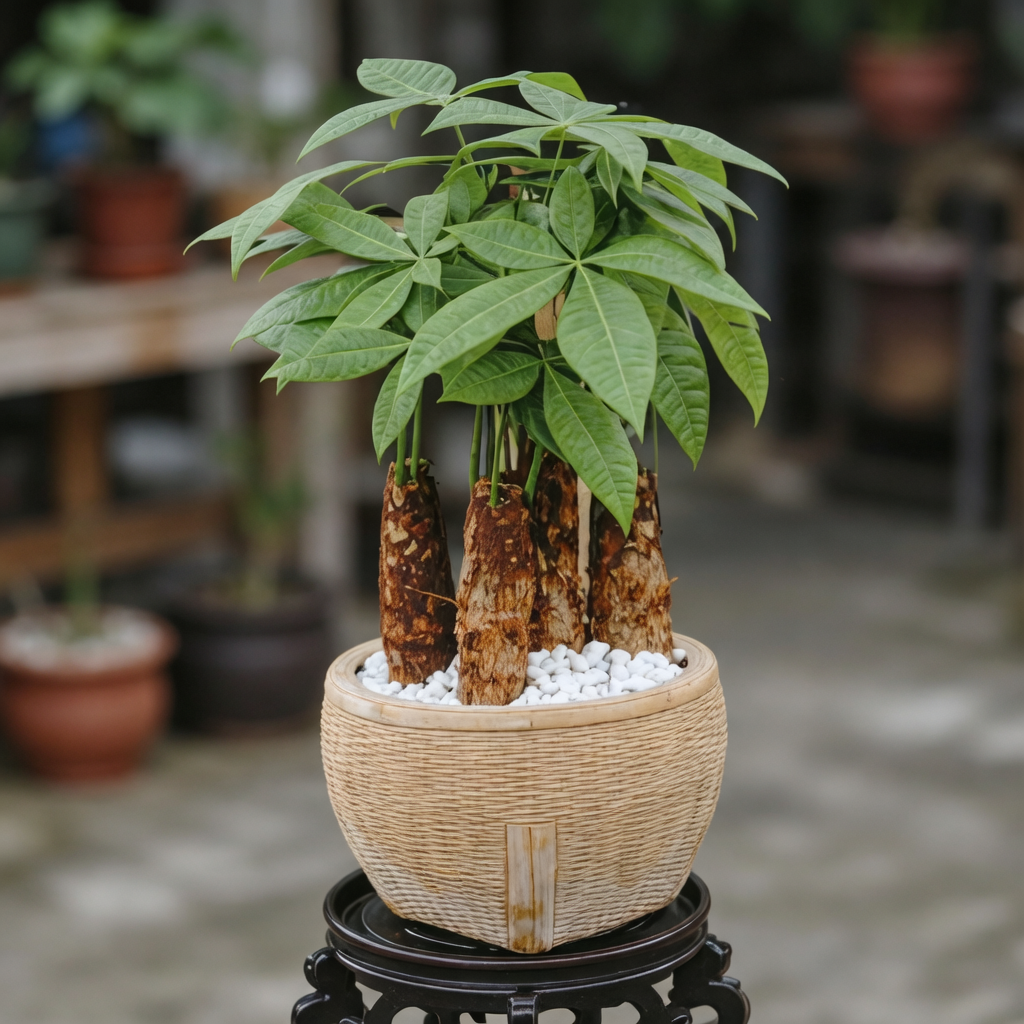
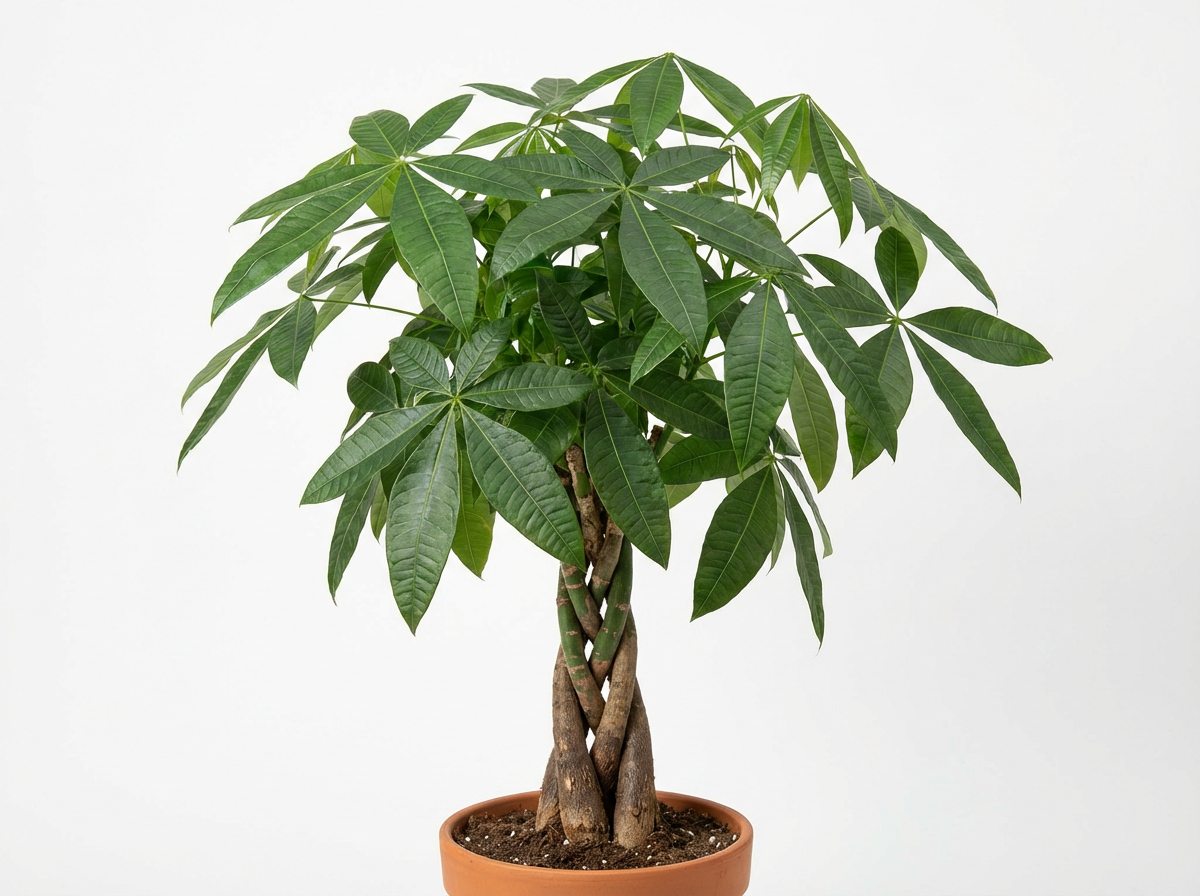
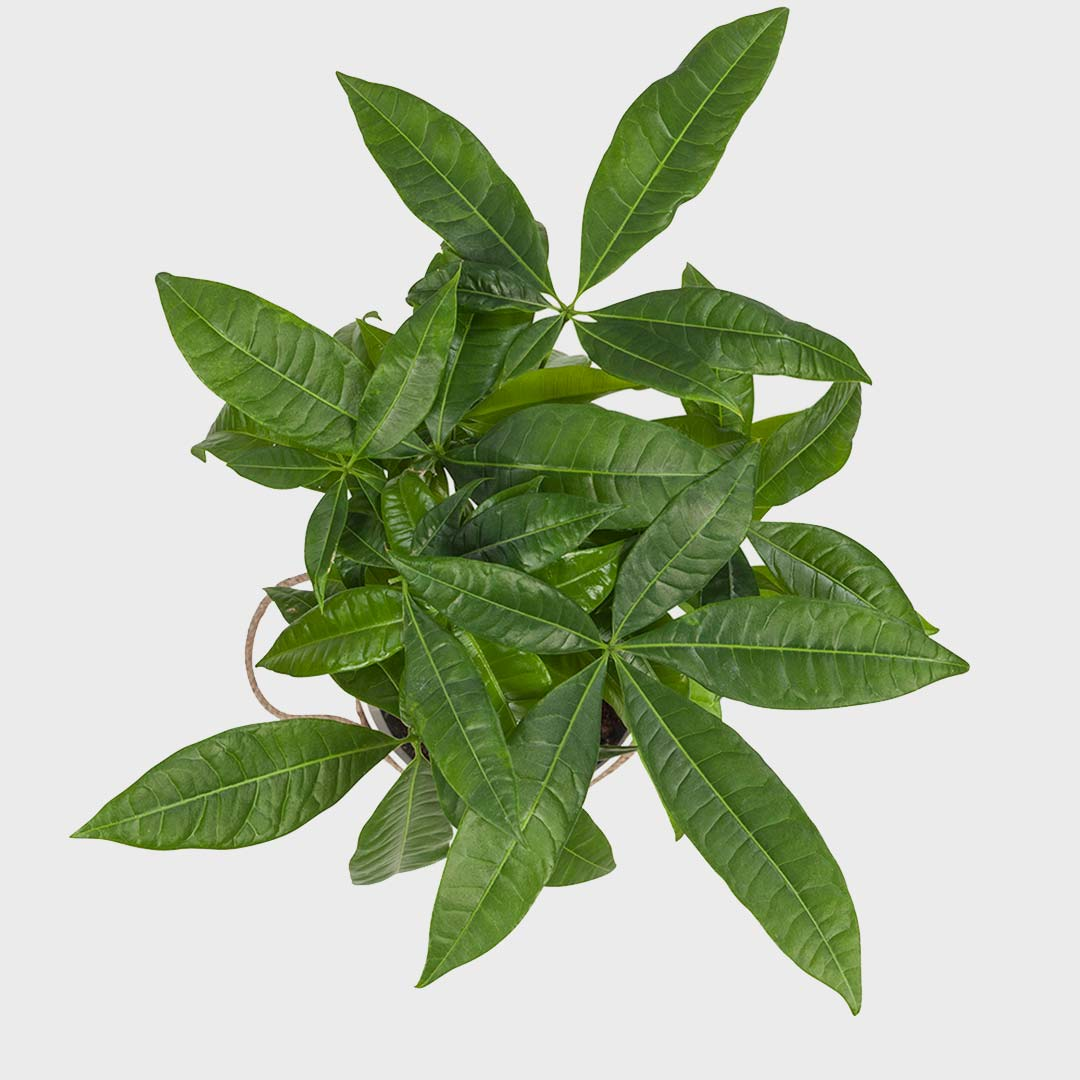
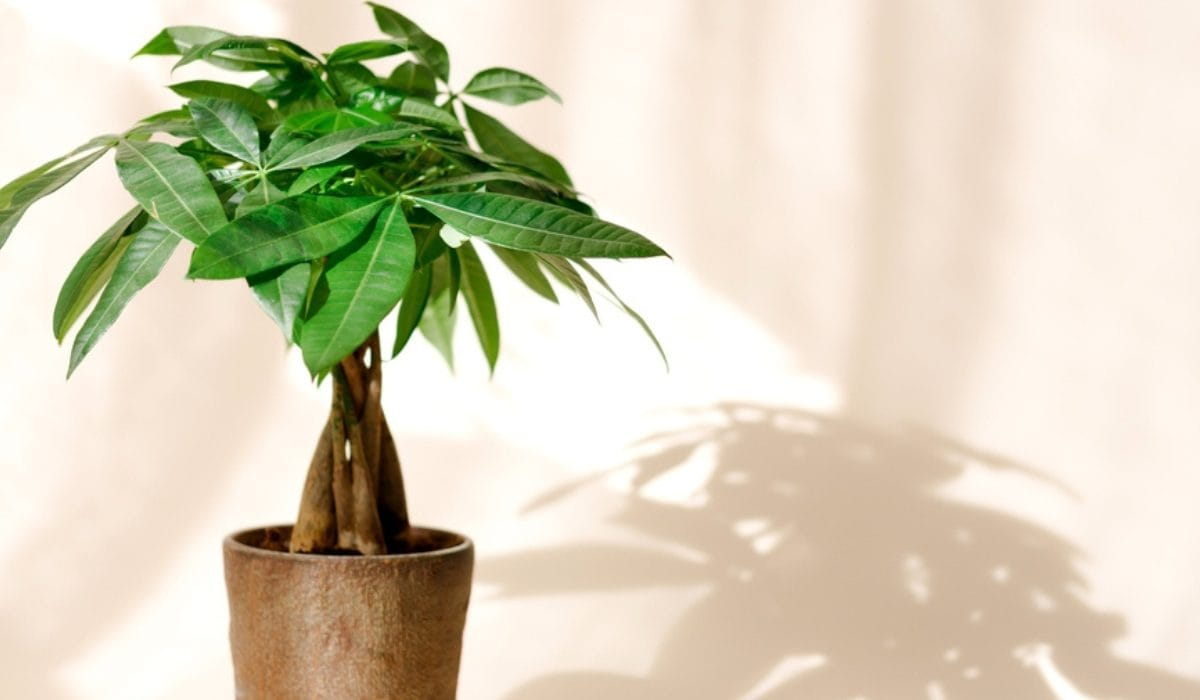
- Foliage:Evergreen to semi-deciduous in cooler/drier conditions. Leaves are palmately compound, usually with 5–9 narrow to oblong leaflets radiating from a single point. Leaflets are glossy green with prominent veins and pointed tips, roughly 10–23 cm (4–9 in) long. Keeping leaves dust-free (wipe with a damp soft cloth) helps them look their best and improves photosynthesis. Cold stress can slow growth and trigger leaf drop.
- Flower:Outdoors in warm tropical/subtropical climates, it can produce large, showy, fragrant flowers that are creamy white to pale yellow, with narrow petals and a dramatic, brush-like burst of many long stamens (often with reddish tips). Indoors, flowering is uncommon to rare.
- Flowering Season:Typically summer to early autumn outdoors in suitable climates; some reports note spring/summer flushes in habitat. Indoors: rarely flowers.
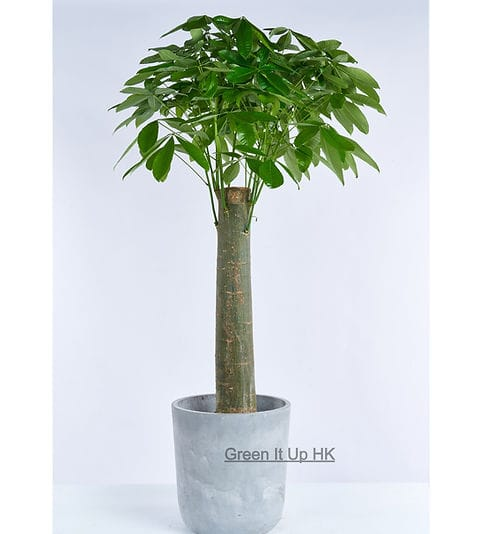
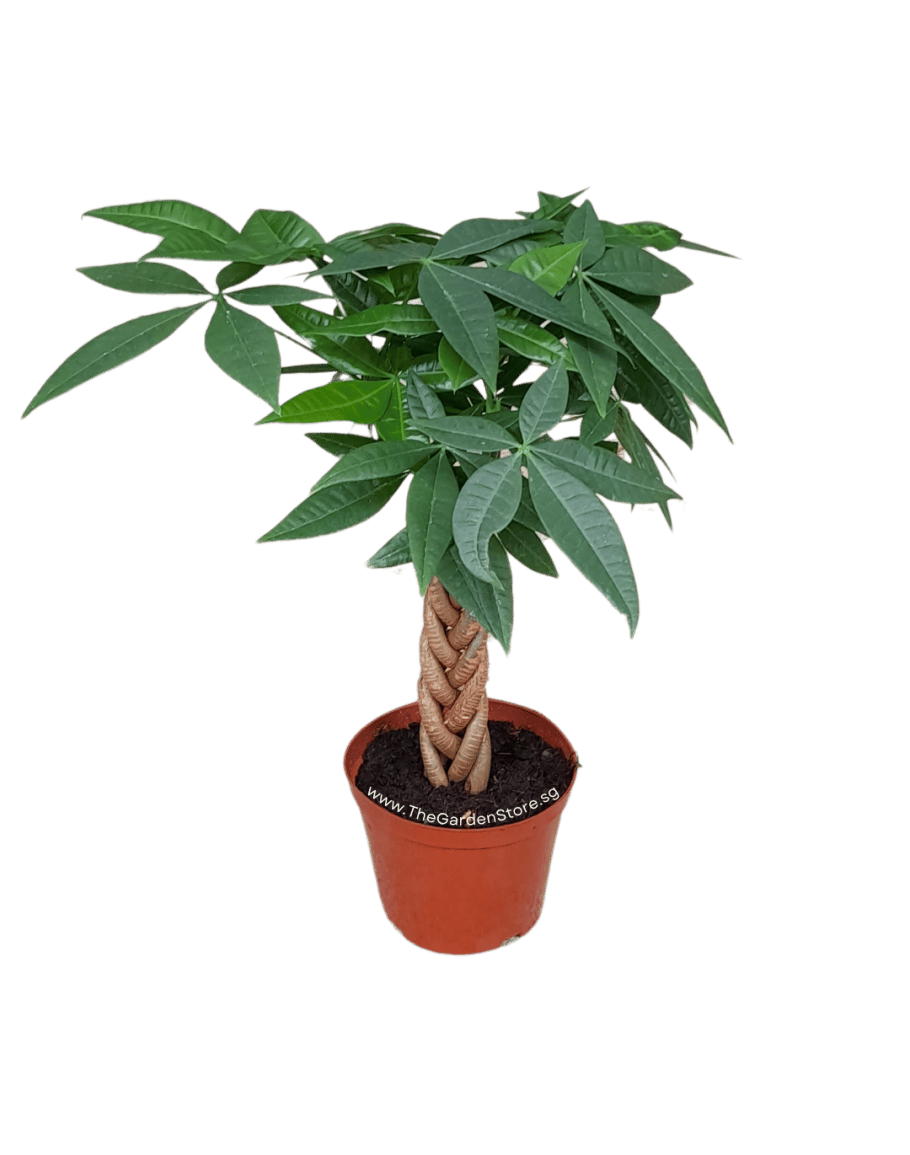
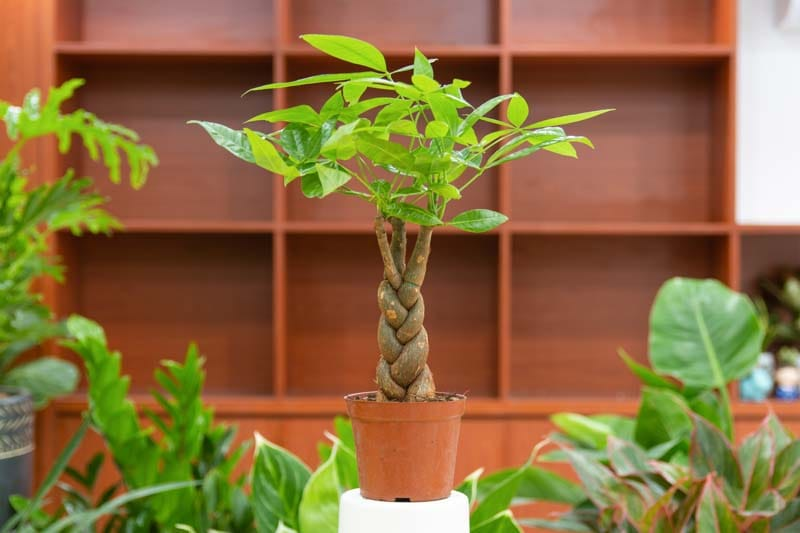
- Growth Habit:Upright, woody, branching tropical tree with a lush canopy. In pots it’s often trained from several young plants braided together; the braid thickens and can partially fuse over time. Dislikes waterlogged soil.
🌤️ Environment
Sunlight
Bright, indirect light is ideal. Tolerates partial shade and can take a few hours of gentle morning sun, but harsh midday direct sun indoors can scorch leaves.
Temperature
Prefers warm conditions: about 20–30°C (68–86°F) for best growth, but does well in typical home ranges around 15–24°C (59–75°F). Keep above 12°C (54°F) in winter; avoid prolonged exposure below about 10°C (50°F). Cold (around 5°C / 41°F or lower) can cause leaf drop and stalled growth; protect from frost.
Humidity
Enjoys moderate to higher humidity. Aim for about 50–70% if possible; it usually copes with average indoor humidity, but dry air can lead to brown tips and spider mites. Pebble trays, grouping plants, or a humidifier can help more reliably than misting alone.
Soil
Loose, rich, well-draining mix. A good recipe is quality potting mix with added perlite/coarse sand for drainage plus a little compost/leaf mold or coco coir/peat for moisture balance. Slightly acidic to neutral is fine. Always use a pot with drainage holes.
Placement
Great for bright living rooms, offices, and well-lit bedrooms; near an east window or a bright north window is often perfect, or set a few feet back from a sunny window with filtered light. Keep away from cold drafts and heating/AC vents.
Hardiness
USDA Zone 10–12; not frost-tolerant.
🪴 Care Guide
Difficulty
Easy to moderate. It’s quite forgiving, but most setbacks come from overwatering, low light, or cold stress.
Buying Guide
Choose plants with evenly green, glossy leaves and firm stems/trunks (especially at the base of braided plants). Avoid pots that smell sour or have many yellow leaves, soft spots, sticky residue, webbing, or obvious pests. Make sure the pot drains freely and the trunk base isn’t sitting in soggy media. After purchase, place in bright indirect light, keep above 12°C (54°F), and wait to fertilize until you see fresh new growth.
Watering
Water thoroughly only after the top 2–5 cm (1–2 in) of soil feels dry, then let excess drain completely—never leave the pot standing in water. In warm bright conditions this is often about weekly; in hotter summer weather it may be 1–2 times per week, while in winter it commonly stretches to every 10 days to 2–4 weeks depending on light and temperature. If room temperatures drop below 15°C (59°F), water sparingly. Water-culture display is possible short-term: keep stems above the waterline to reduce rot risk, refresh/top up regularly (about every 7–10 days), and use a very light hydroponic nutrient occasionally—long-term health is usually better in soil.
Fertilization
Feed during active growth (spring through early autumn). Options: a balanced liquid houseplant fertilizer every 2 weeks at label rate or half-strength, or a gentler monthly feeding—both approaches can work depending on your plant’s growth and light. Pause or stop feeding in late autumn and winter. For newly purchased or recently repotted plants, wait until you see new leaves before fertilizing.
Pruning
Prune or pinch tips in spring/summer to encourage branching and keep the plant compact. Remove yellowing leaves anytime. When cutting stems, trim just above a node; don’t cut into tight braided sections or leave ties on so long that they bite into thickening stems.
Propagation
Most often by stem cuttings in late spring/early summer. Take a healthy cutting about 10–20 cm (4–8 in), keep high humidity and warmth around 20–25°C (68–77°F), and root in a very free-draining medium (or start in water, then pot up). Seeds can be sown fresh—older seed loses viability quickly—at about 22–26°C (72–79°F).
Repotting
Repot in spring when rootbound, typically every 1–2 years for smaller plants and every 2–3 years for larger specimens. Step up one pot size (many retail plants suit 20–25 cm / 8–10 in pots). Refreshing the top layer of mix annually also helps. Trim damaged/circling roots and avoid overly disturbing healthy roots to reduce leaf drop.
📅 Seasonal Care Calendar
Spring: brighter placement, resume regular watering, repot/prune as needed, start feeding once new growth appears. Summer: fastest growth—water when the top layer dries, increase humidity, protect from harsh sun; good time for cuttings. Autumn: taper fertilizer, keep in bright light, let the mix dry a bit more between waterings. Winter: keep warm (above 12°C / 54°F), reduce watering significantly, stop or greatly reduce fertilizer, and avoid cold drafts.
🔬 Pests, Diseases & Safety
Common Pests & Diseases
Common pests: spider mites (especially in dry air), mealybugs, scale, aphids, and sometimes whiteflies. Rinse foliage, wipe leaves, and treat early with insecticidal soap, neem oil, or alcohol swabs for spot treatment; repeat as needed. Common diseases/problems: root rot from soggy soil and occasional leaf spot. Prevention: a free-draining mix, letting the top layer dry between waterings, good airflow, and removing affected leaves promptly.
Toxicity
Generally considered non-toxic to cats and dogs in common houseplant references, though chewing any plant can still cause mild stomach upset. Keep out of reach of pets that habitually eat foliage.
🎋 Culture & Symbolism
Symbolism:A classic “good luck” plant tied to prosperity and wealth—especially in feng shui. The hand-like leaves are sometimes linked with balance and harmony, and braided trunks are popularly said to “lock in” fortune.
History & Legends:Often shared is a modern legend of a poor farmer who found the plant and prospered by selling it. Regardless of the story’s truth, the money tree’s global popularity surged when braided-trunk forms were widely marketed in East Asia (notably from the late 20th century) as an auspicious gift plant. The braid itself is a horticultural training style, not a natural growth form.
Uses:Mostly grown as an ornamental indoor foliage plant for homes and offices, and commonly given as a celebratory gift. In its native range, the seeds are sometimes eaten (often roasted) and are said to have a peanut-like flavor; other local uses (e.g., fiber/bark uses) are noted, though these are not typical for houseplants.
❓ FAQ
Why are my Money Tree leaves turning yellow?
Most often it’s overwatering (leading to stressed roots), sometimes combined with low light or cold. Let the top 2–5 cm (1–2 in) dry before watering, make sure the pot drains freely, move it to brighter indirect light, and keep it warm (above 12°C / 54°F).
How often should I water a Money Tree?
Water when the top 2–5 cm (1–2 in) of soil is dry. In brighter, warmer months this is often about once a week (sometimes more in hot weather); in winter it may be every 10 days to 2–4 weeks. Always adjust to your light, temperature, and pot size.
Can a Money Tree grow in low light?
It can tolerate lower light, but it will grow slower and may become leggy or drop leaves. For the best shape and healthiest foliage, give bright, indirect light.
Why are the trunks braided, and is it good for the plant?
Braiding is done when stems are young and flexible to create a decorative look. It doesn’t improve health. Make sure any ties aren’t tight—tight bindings can girdle stems as they thicken.
Can I grow a Money Tree in water?
Yes, it can be rooted and displayed in water for a while. Start with a healthy cutting, refresh/top up water about every 7–10 days, keep the stem base from sitting too deep, and use very light hydroponic nutrients occasionally. For long-term growth and stability, a well-drained soil mix is usually better.
💡 Fun Facts
- That iconic braided trunk is a nursery-trained style made by weaving multiple young plants—it’s not how the tree grows in the wild.
- In nature, Pachira aquatica is adapted to seasonally flooded habitats, which is why it can handle brief “too wet” moments better than many houseplants—yet it still rots if kept constantly soggy in a pot.
- Outdoor plants in warm climates can produce spectacular brush-like flowers, but indoor blooming is rare enough that many people consider it a lucky event.
- It’s in the mallow family (Malvaceae), making it a distant cousin of hibiscus, okra, and cacao.
- Fresh seeds can germinate quickly under warm conditions, while older seed loses viability fast.