🌱 Plant Features
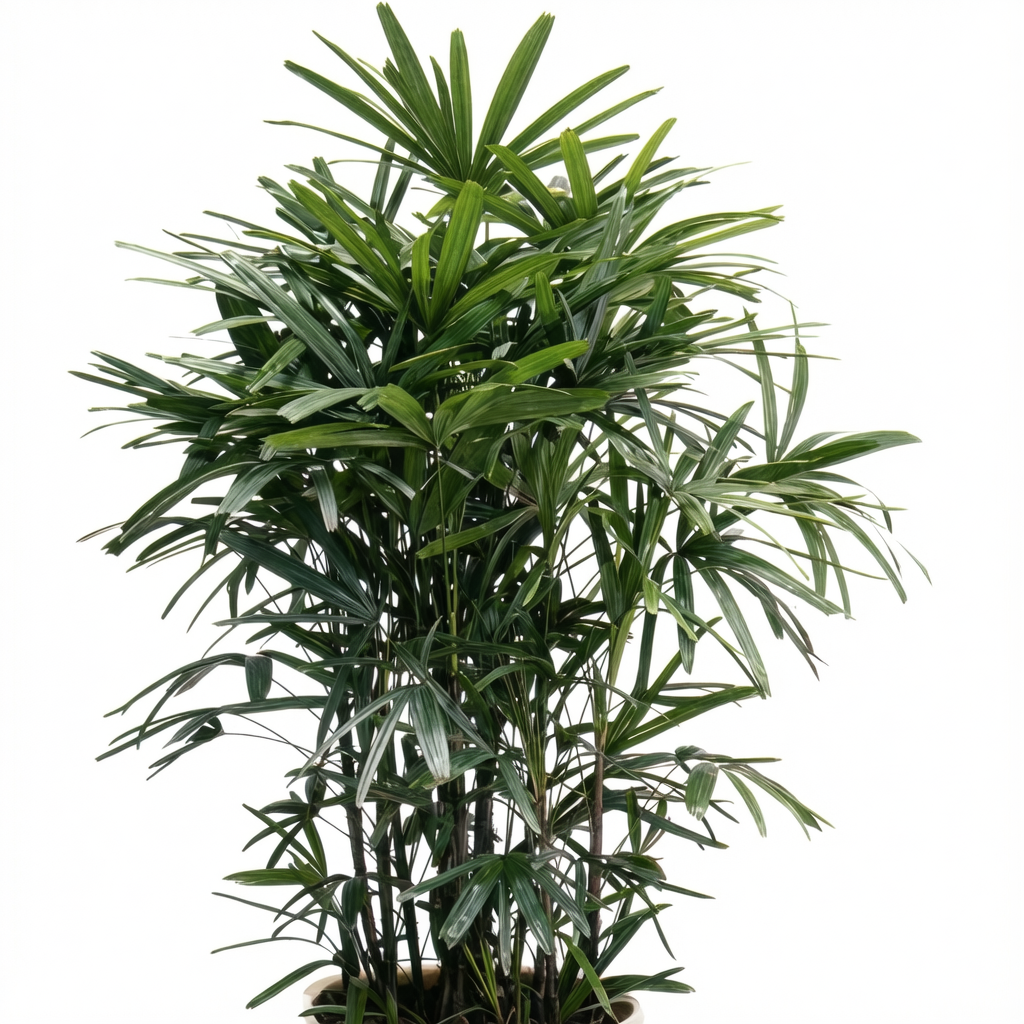
- Size:Indoors commonly 1–2 m (3–6.6 ft) tall. Spread typically about 0.6–1.2 m (2–4 ft) in pots, but mature indoor clumps can reach around 2 m (6.6 ft) wide in ideal conditions. Established plants are often grown in 20–30 cm (8–12 in) diameter pots (larger specimens may be in bigger tubs).
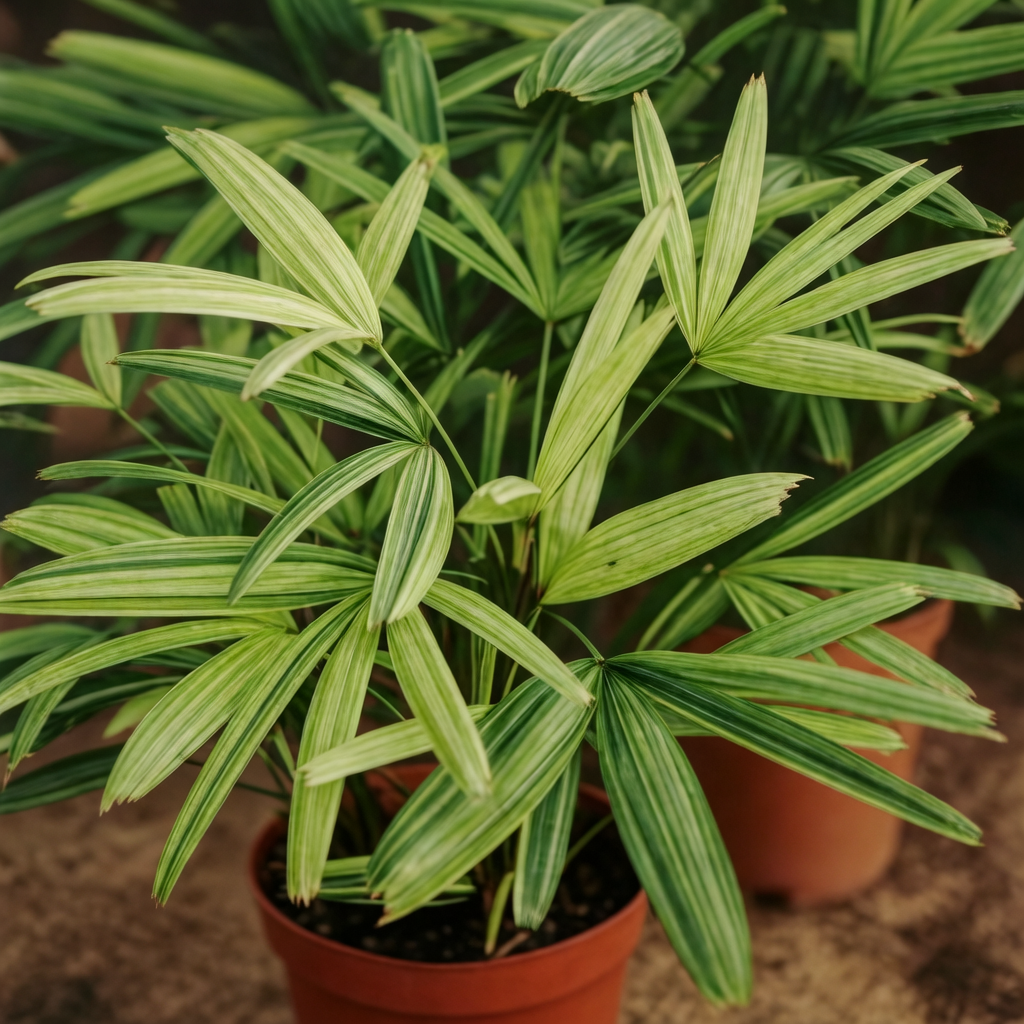
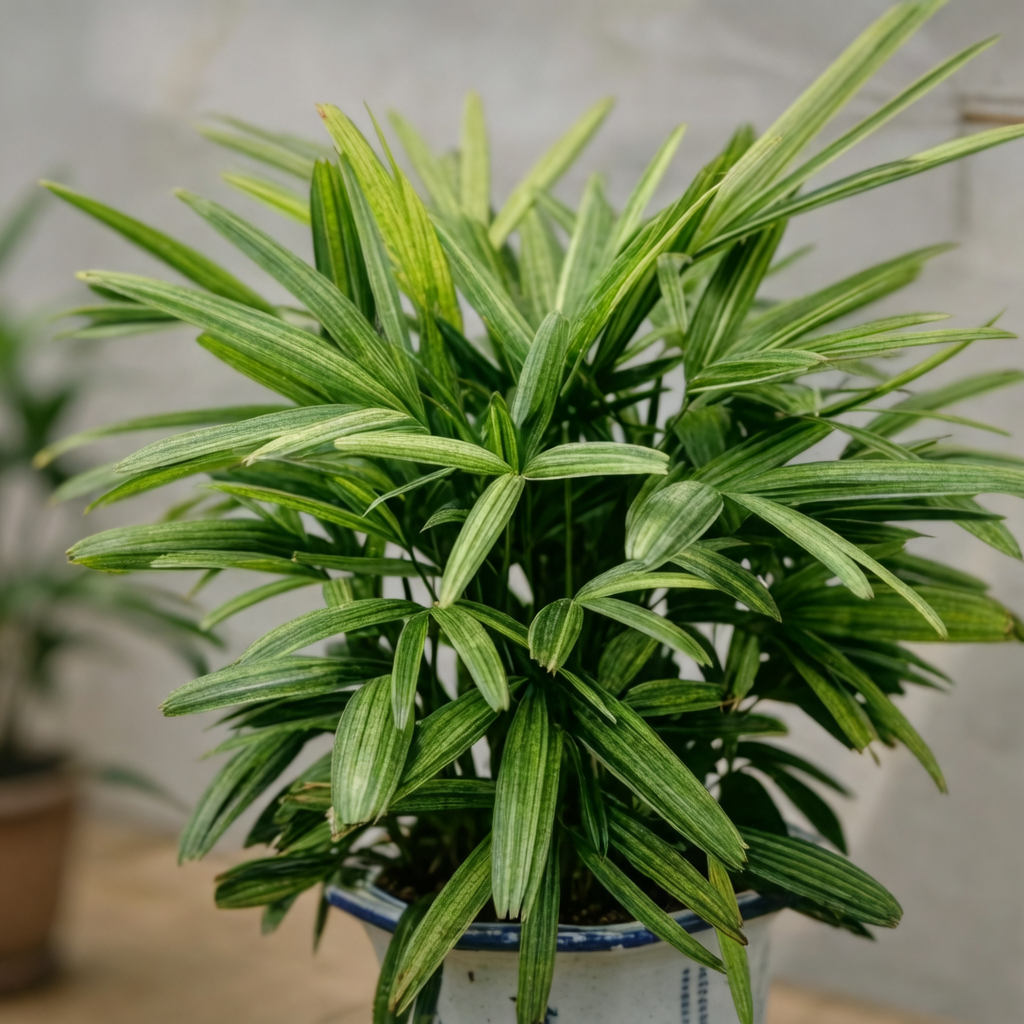
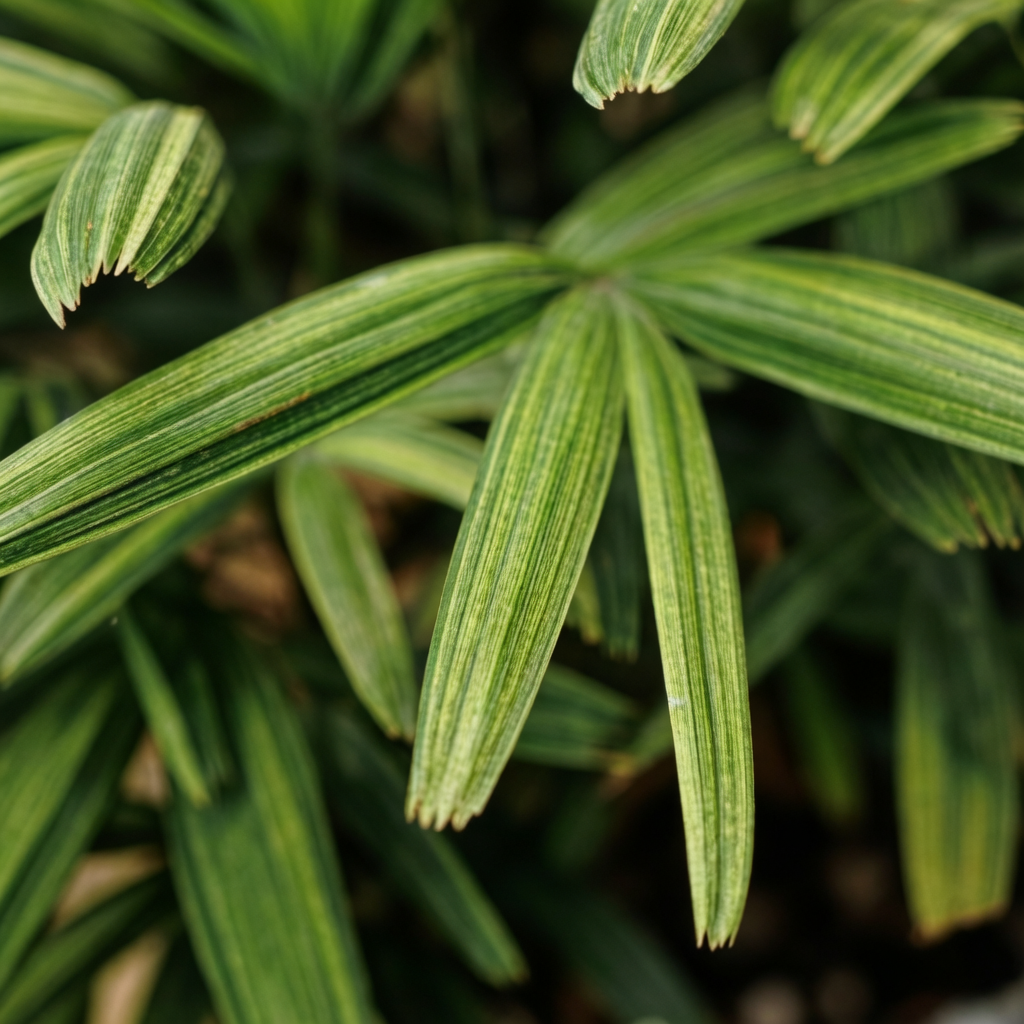
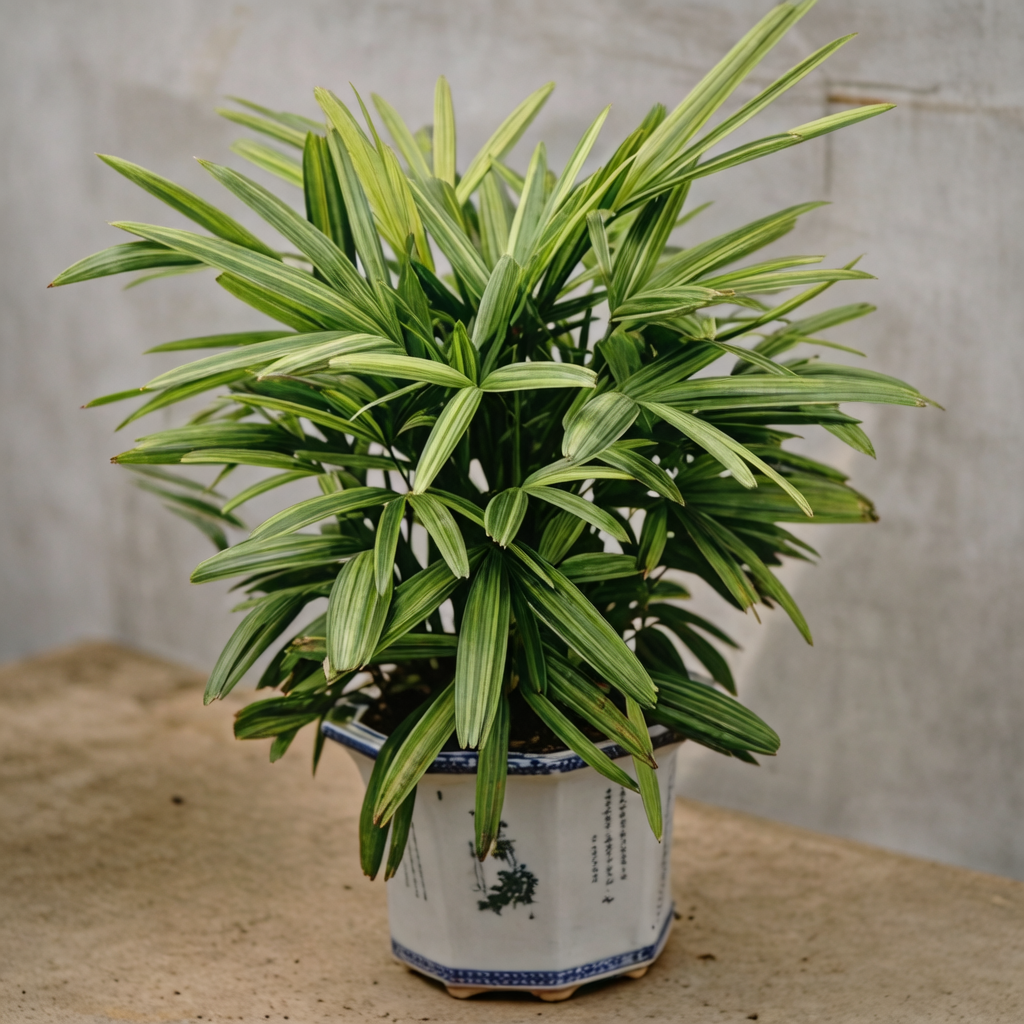
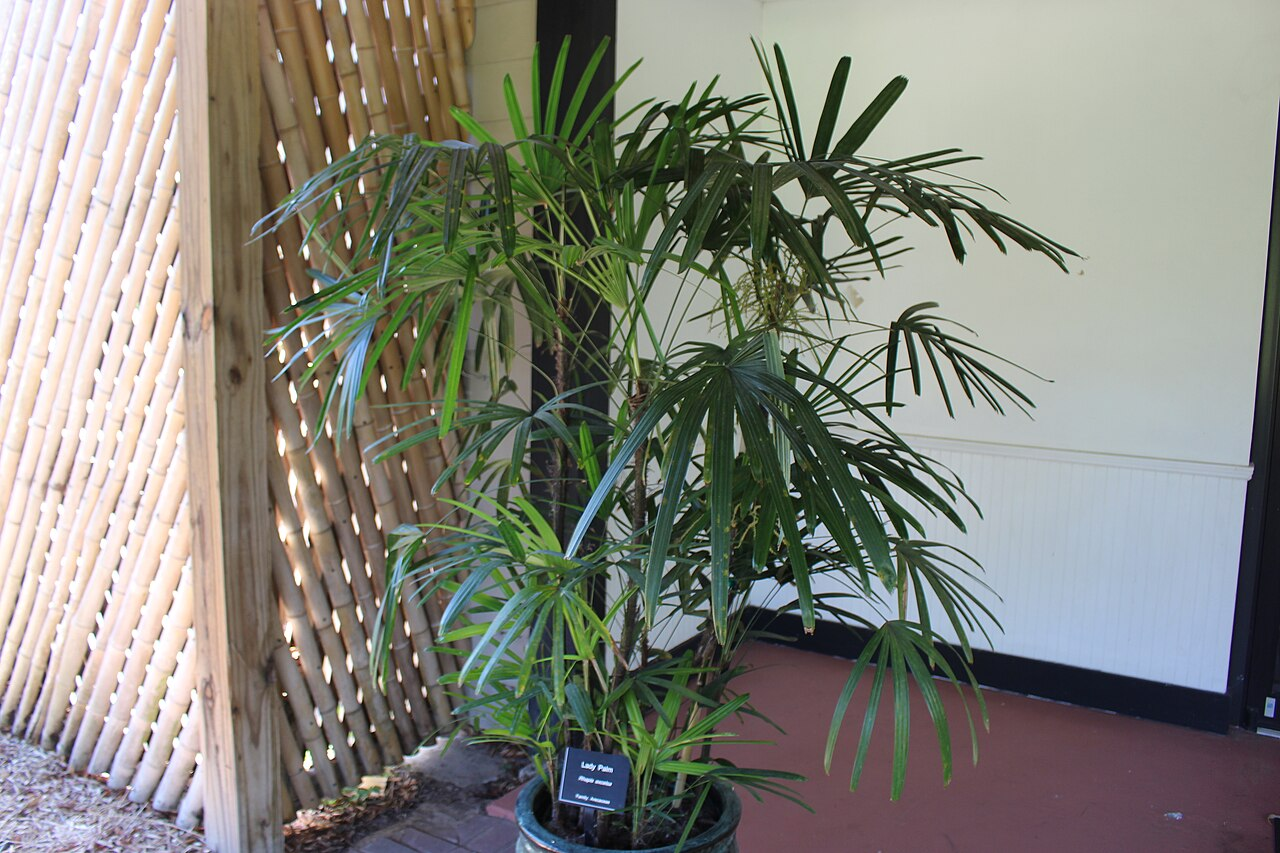
- Foliage:A dense, clump-forming palm with multiple upright, cane-like stems that resemble bamboo. Leaves are palmate fans divided into several tough, glossy, deep green segments (or cleanly variegated in some cultivars). The segments are stiff with blunt tips and visible ridging; a healthy plant looks full and unbroken, with minimal spotting or tearing. Cut stems and leaves are sometimes used as filler greenery in floral arrangements.
- Flower:Flowers are small and inconspicuous, produced on short inflorescences on mature plants. Indoor flowering is uncommon and usually not ornamental.
- Flowering Season:Late spring to early summer in suitable warm conditions; only occasional and rarely significant indoors.
- Growth Habit:Evergreen, slow-growing, upright, clump-forming (shrub-like) palm that produces multiple bamboo-like canes from the base.
🌤️ Environment
Sunlight
Best in bright, indirect light to light shade; it also tolerates deeper shade better than most palms. Avoid harsh midday sun, which can scorch or bleach the leaves. An east-facing window or a south-facing window filtered through a sheer curtain works well. In winter, moving it a bit closer to a bright window helps maintain growth and color.
Temperature
Ideal range about 10–25°C (50–77°F), with best growth roughly 10–24°C (50–75°F). Keep above 10°C (50°F) in winter; below about 5°C (41°F) leaves may brown, scorch at the edges, or suffer cold damage—especially with drafts.
Humidity
Prefers moderate humidity and does well around 50%+ if you can provide it, but it also copes with low to moderate household humidity. In dry air (especially summer or heated winters), occasional misting/spraying or a humidifier helps keep leaf tips looking neat.
Soil
Use a loose, free-draining potting mix. A peat/coco-based houseplant mix blended with perlite or coarse sand works well (a common approach is roughly 3:1 mix to perlite). Good drainage is essential—choose a pot with drainage holes and avoid mixes that stay soggy.
Placement
Great for entry halls, large rooms, and bright-shade corners. Indoors, place near a bright window with filtered light (or in part shade), away from hot midday sun and cold drafts. In winter, a brighter spot is usually beneficial.
Hardiness
Not frost hardy; outdoors year-round only in frost-free climates (approximately USDA Zone 10–11). Often grown as a houseplant due to excellent shade tolerance indoors.
🪴 Care Guide
Difficulty
Easy and forgiving for an indoor palm—especially because it tolerates lower light. The main things it dislikes are cold drafts, chronically soggy soil, and very stale/dry air for long periods.
Buying Guide
Choose a plant with upright, sturdy canes and a dense, symmetrical clump. Leaves should be deep green (or evenly variegated), intact, and free of spots, pests, webbing, and sticky residue. Pick a size suited to your space (compact and variegated forms are great for smaller rooms). Protect the foliage during transport so the fan segments don’t tear. After bringing it home, give bright indirect light, warmth, and moderate humidity; avoid keeping the mix constantly wet, and start feeding only once you see fresh new growth.
Watering
Spring to autumn (active growth): keep the mix evenly moist but never waterlogged—many homes land around about 2 waterings per week, adjusting for pot size, light, and temperature. Always empty any standing water from the saucer to prevent yellowing leaves and root rot. Winter: water less (often about once every 10 days), letting the surface dry slightly between waterings. If indoor air is dry, mist/spray foliage occasionally—more often in summer, more lightly in winter.
Fertilization
Feed during the growing season, then ease off in winter. Options: (1) apply a balanced liquid fertilizer 2–3 times from spring to autumn, or (2) feed monthly from April to September with a diluted balanced fertilizer (for example, 20-20-20), or (3) use one dose of slow-release fertilizer in early spring. Stop feeding in winter if the plant is cool or growth has slowed, then restart lightly when new leaves appear.
Pruning
Remove old brown, yellow, broken, or dead leaves as needed, cutting close to the cane without damaging it. If the clump is very congested, thinning a few inner canes during repotting can improve airflow and light penetration and encourage fresh shoots.
Propagation
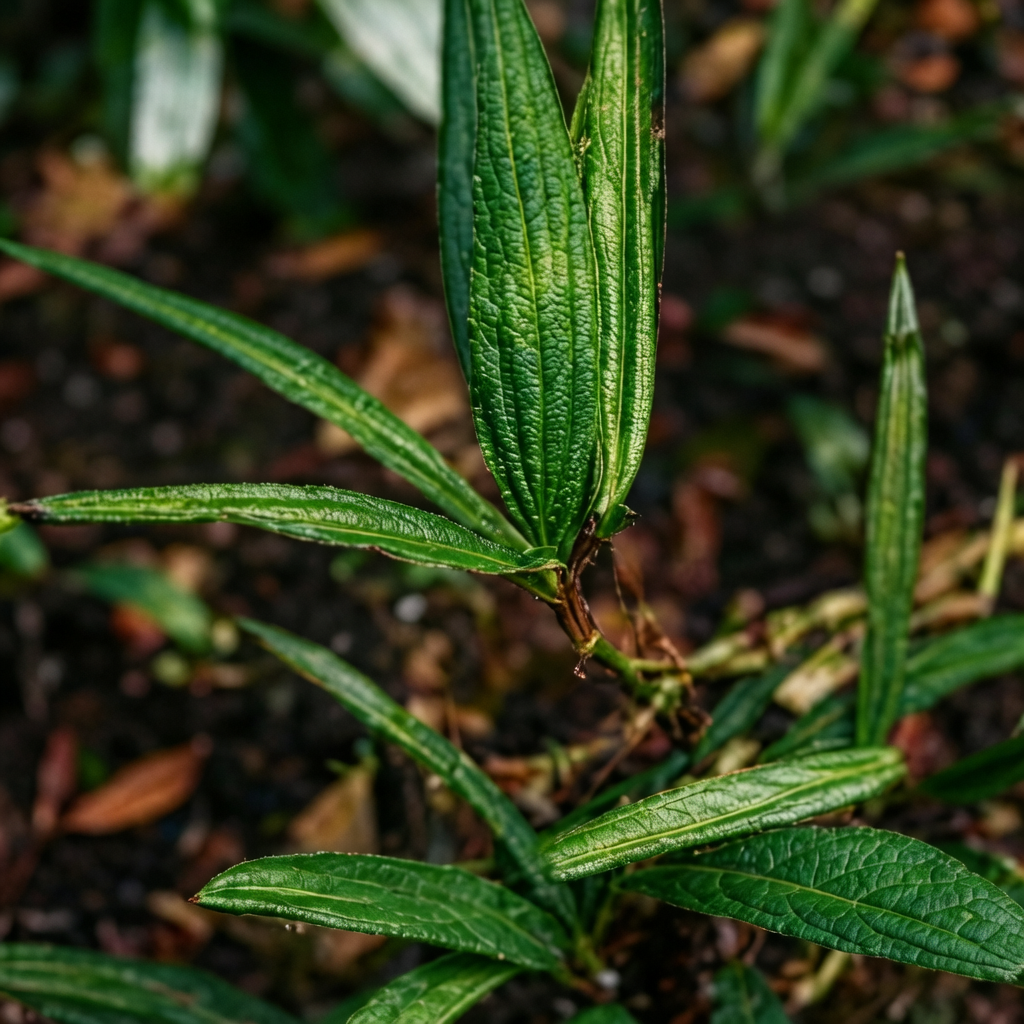
Most commonly by division of clumps (the easiest and most reliable method). In spring, lift the plant, then separate offsets so each division has roots and ideally 2–3 canes; pot up immediately into a free-draining mix. Seed propagation is possible but less common for home growers: sow fresh seed (often in spring), soak in 35°C (95°F) water for 24 hours, and keep around 27°C (81°F); germination can take about 4 weeks, with seedlings often ready to transplant after roughly 6 months.
Repotting
Repot every 2–3 years in spring or when root-bound. Step up only one pot size and refresh the mix (established plants are often in 20–30 cm (8–12 in) diameter pots, depending on specimen size). After repotting, keep the plant warm and slightly shaded while it re-establishes, and avoid overwatering.
📅 Seasonal Care Calendar
Spring–autumn: keep soil lightly and evenly moist; mist more often in summer if air is dry; fertilize during active growth (either monthly April–September or a few balanced feeds, or one slow-release dose in early spring). Summer: tolerates shadier positions; rinse foliage occasionally to reduce dust and pests. Winter: water less (let the surface dry slightly), keep above 10°C (50°F), avoid cold drafts, and place closer to a bright window if possible; stop fertilizing if growth slows. Repot every 2–3 years in spring; division is best done in spring.
🔬 Pests, Diseases & Safety
Common Pests & Diseases
Indoors it may attract spider mites (especially in dry air), scale insects, and mealybugs. Prevent problems by keeping leaves clean (occasional rinsing/wiping), improving airflow, and inspecting leaf bases and undersides. Treat early with insecticidal soap or horticultural oil and repeat as needed. Overwatering or poor drainage can cause root rot and yellowing. Leaf spot/blight can occur with persistently wet foliage plus poor ventilation—remove badly affected leaves, improve airflow, and use a suitable fungicide if necessary.
Toxicity
Generally regarded as non-toxic to cats, dogs, and people (often listed as pet-safe). Still, chewing any plant can cause mild stomach upset in sensitive pets or people.
🎋 Culture & Symbolism
Uses:Primarily grown as an ornamental indoor foliage plant, prized for its elegant, architectural fans and excellent tolerance of indoor shade. It’s especially useful for bright-shade corners, entryways, and large rooms. Young plants can be trained into bonsai-style arrangements, and cut foliage is sometimes used as florist greenery/filler.
❓ FAQ
What light does a lady palm need?
Bright, indirect light to light shade is ideal, but it tolerates deeper shade better than most palms. Avoid harsh midday sun. In winter, place it a bit closer to a window for stronger light.
What temperature range is recommended?
About 10–25°C (50–77°F). Keep it above 10°C (50°F) in winter and away from cold drafts; below ~5°C (41°F) can cause leaf damage.
How should I water it through the year?
Spring–autumn: keep the mix evenly moist but not soggy (often around twice weekly, depending on conditions). Winter: reduce watering (often about once every 10 days) and let the surface dry slightly between waterings. Never leave water sitting in the saucer.
When and how should I fertilize?
Feed during active growth, then stop or reduce in winter. You can fertilize monthly from April to September with a diluted balanced fertilizer (e.g., 20-20-20), or feed a few times spring–autumn, or use a slow-release dose in early spring.
My lady palm’s leaves turned yellow after winter—why?
Common causes are overwatering (or water left in the saucer), cold stress from low temperatures or drafts, poor ventilation, pest issues like scale, or an overcrowded clump that hasn’t been repotted in years. Check drainage and roots first, then review temperature, airflow, and pests.
When do I need to repot?
Usually every 2–3 years in spring, or when it becomes root-bound. Move up only one pot size and use a free-draining mix.
💡 Fun Facts
- Despite the name “bamboo palm,” it isn’t bamboo at all—its canes just mimic bamboo stems.
- It’s one of the most shade-tolerant palms commonly grown as a houseplant, which is why it’s so popular for indoor spaces.
- Slow growth is a plus indoors: it holds a neat shape for years with minimal pruning.
- Its sturdy fan leaves are commonly used by florists as long-lasting greenery.
- If grown from seed, warm conditions help a lot: soaking at 35°C (95°F) for 24 hours and germinating near 27°C (81°F) can produce sprouts in roughly 4 weeks, with seedlings often ready to transplant after about 6 months.