🌱 Plant Features
- Size:Typically 10–20 cm (4–8 in) tall; spreads about 20–45 cm (8–18 in) or more over time, especially as stems trail and the plant matures (size varies with light, pruning, and pot size).
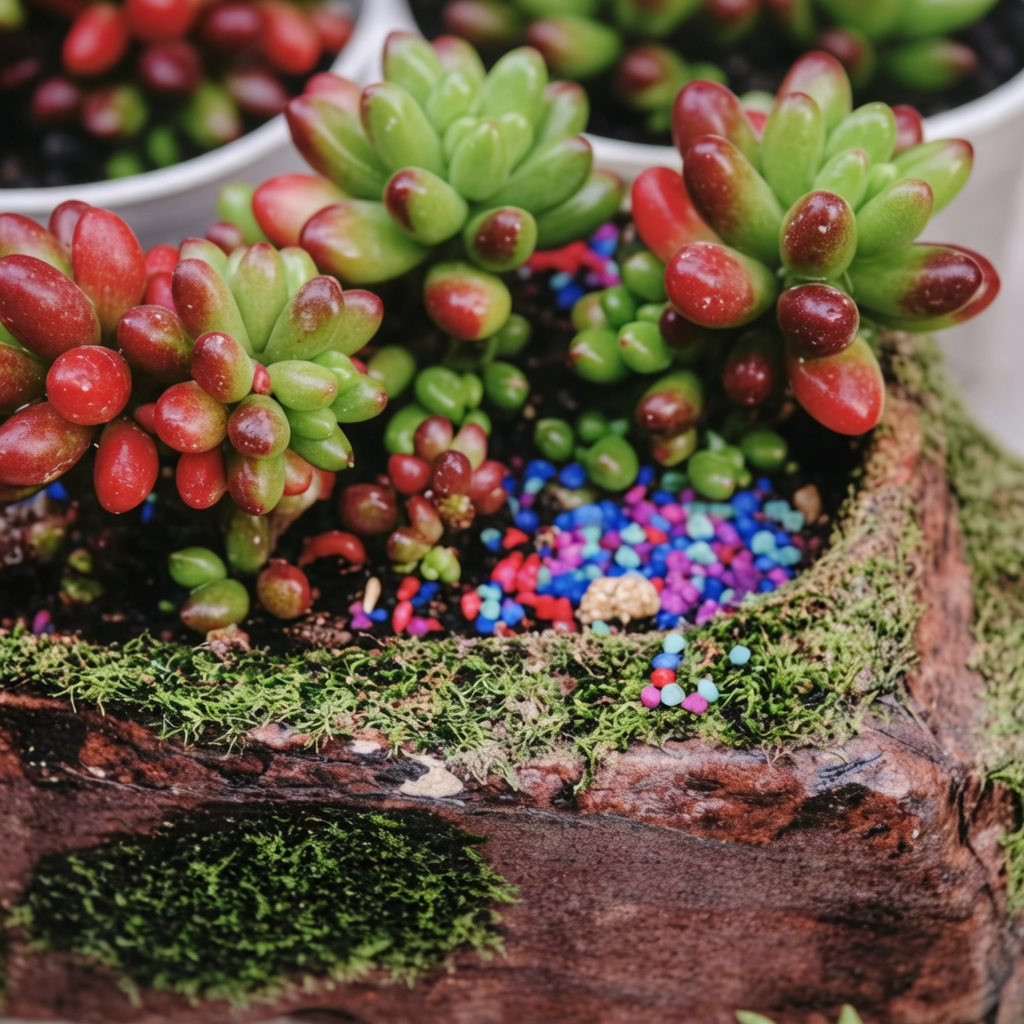
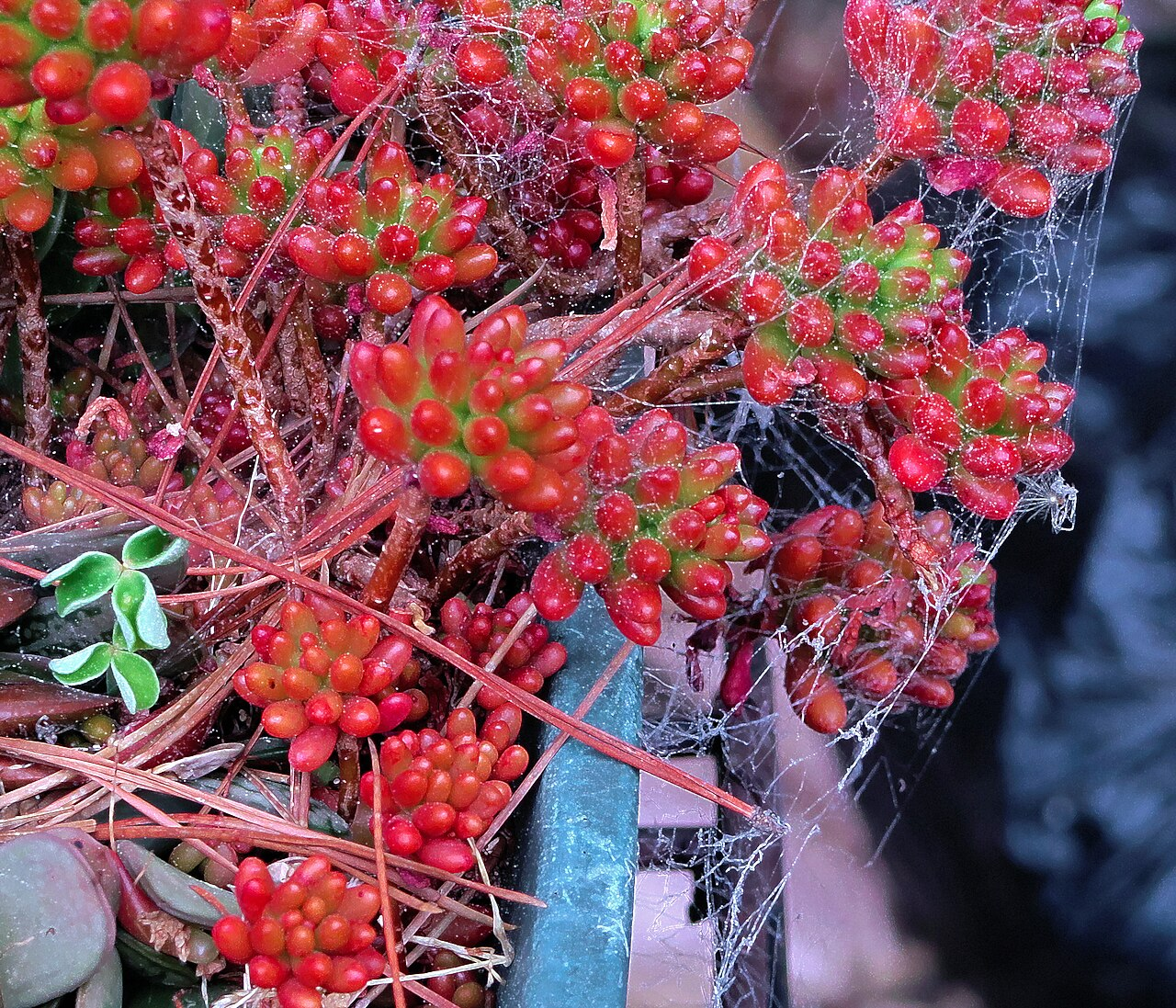
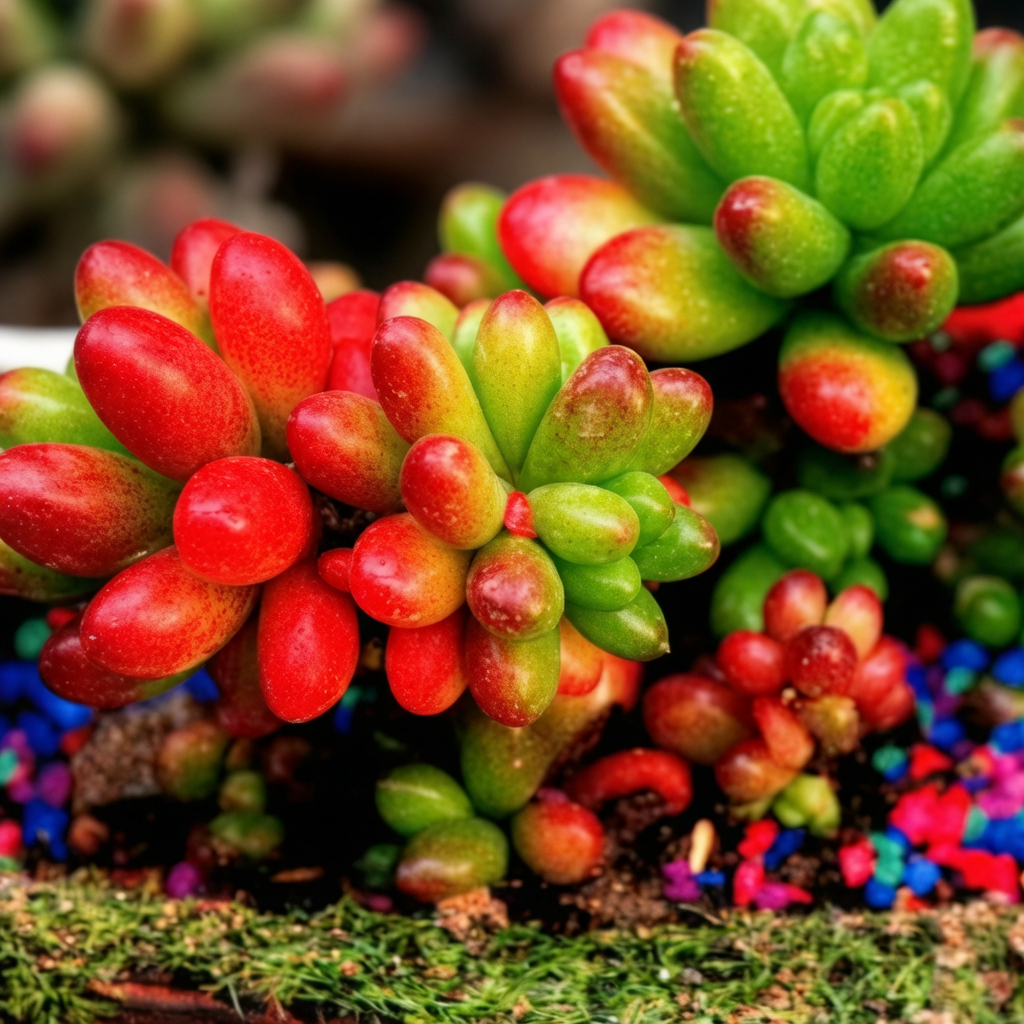
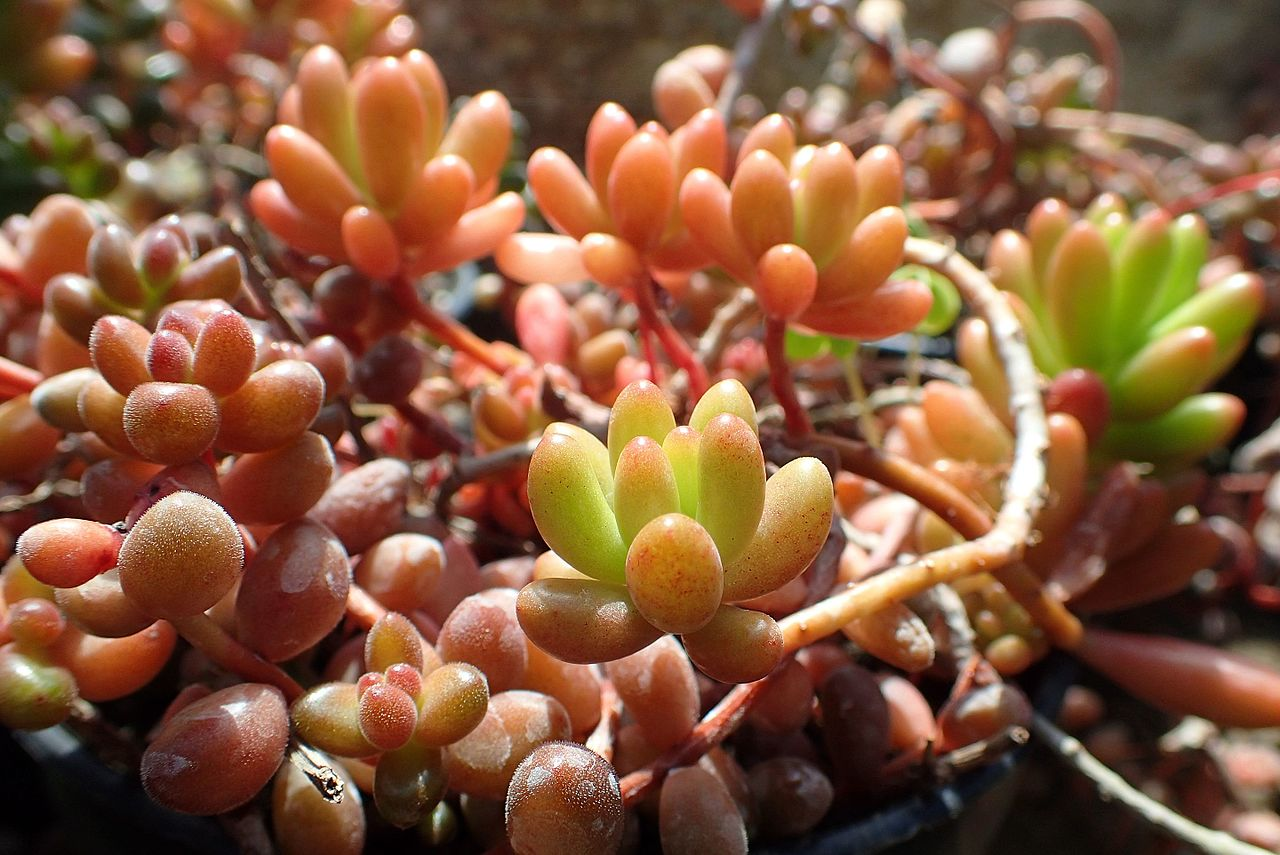
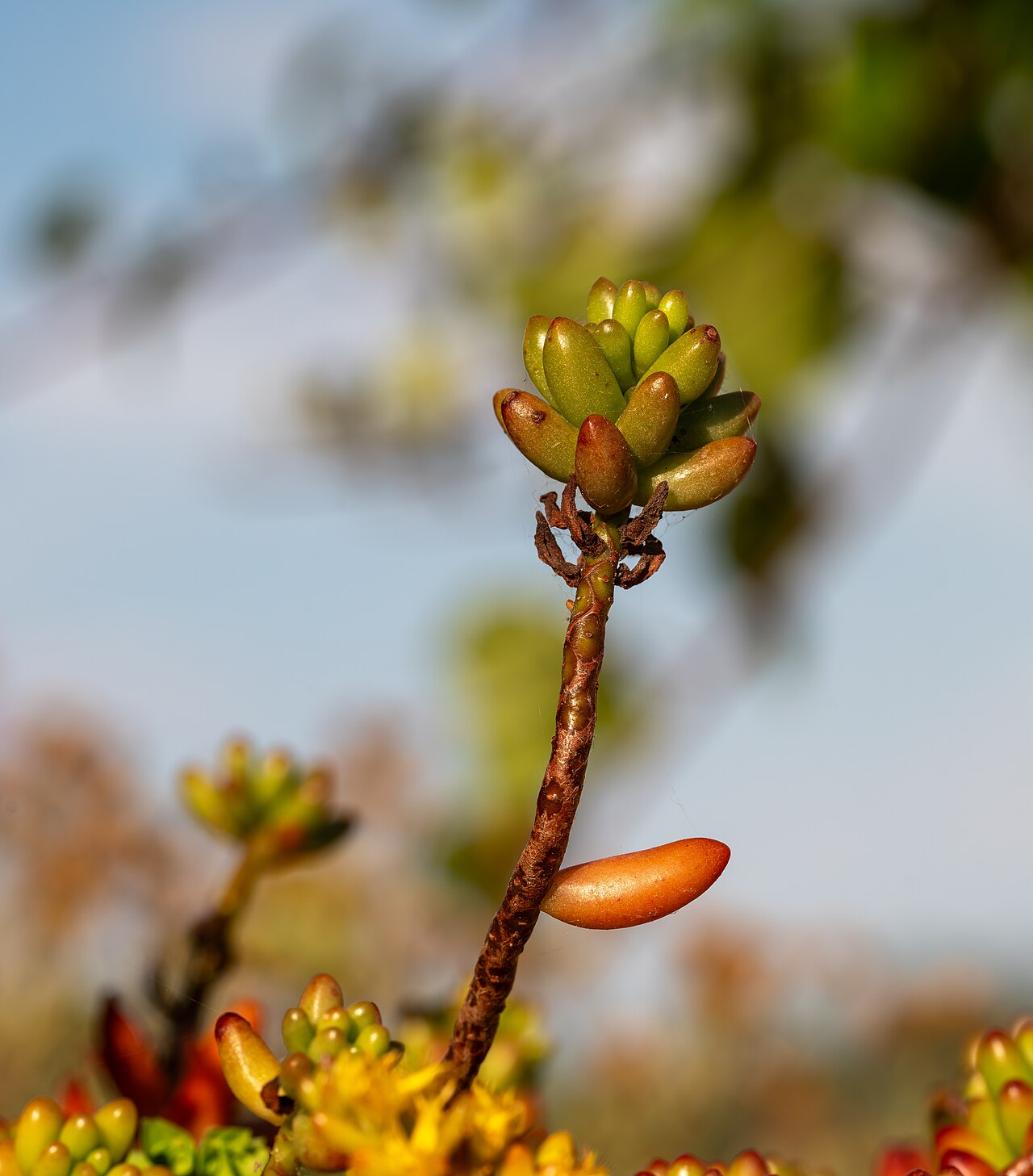
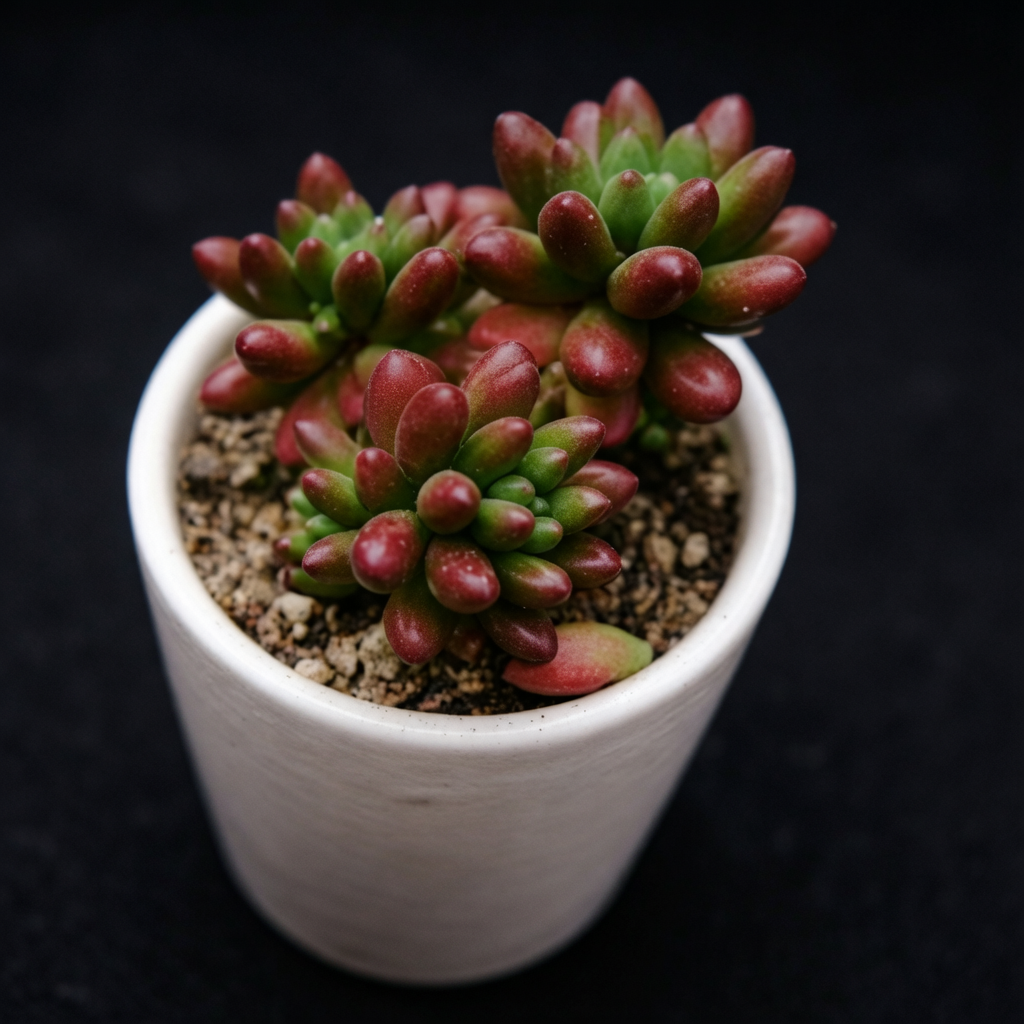
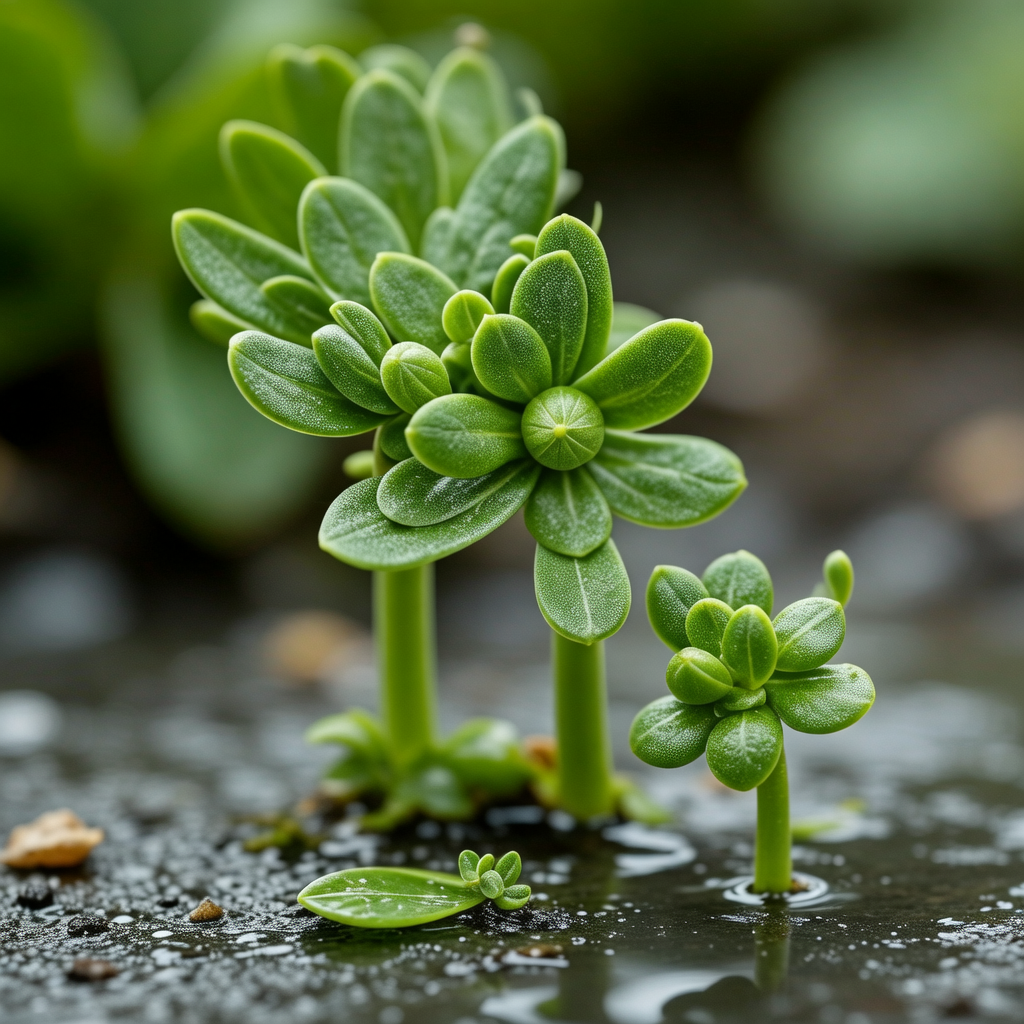
- Foliage:Thick, smooth, jelly-bean-shaped leaves packed densely along short stems. Leaves are glossy mid-green in lower light, but develop coppery red to red-brown tips and often an overall blush in strong sun, especially with noticeable day–night temperature swings. Leaves should feel firm when healthy and detach easily if bumped or handled.
- Flower:Small, star-shaped yellow flowers in clusters, usually appearing at stem tips. Blooming is most common in the cooler season and can be sporadic indoors.
- Flowering Season:Winter to spring
- Growth Habit:Low, mounding succulent that becomes trailing to semi-upright with age; forms clumps and can sprawl to cover the soil surface. Stays compact with strong light (tight internodes) but stretches and loosens in shade. Not frost-hardy and dislikes wet, heavy soil.
🌤️ Environment
Sunlight
Bright light to full sun. Best coloration comes from several hours of direct sun, but acclimate gradually to avoid sunburn. In very hot midsummer conditions, provide light midday shade—especially behind glass.
Temperature
Grows best around 13–18°C (55–64°F). Prefers warmth and should be protected from cold; keep above about 5°C (41°F) and avoid frost.
Humidity
Prefers dry air and good ventilation. Avoid persistently humid, stagnant conditions and wet foliage, which can encourage spotting and fungal issues.
Soil
Very fast-draining cactus/succulent mix. A reliable approach is potting soil cut with coarse sand/grit/perlite/pumice (about 1:1) to ensure water runs through quickly; avoid heavy, water-retentive media.
Placement
Indoors: the brightest window available (often south- or west-facing). Outdoors: sunny balcony/patio, rock garden, or (in frost-free dry climates) as a low groundcover; shelter from extreme midday heat and ensure excellent drainage.
Hardiness
Not frost-tolerant; suitable outdoors year-round mainly in warm climates (approximately USDA Zone 10–11). Elsewhere, grow as a houseplant or bring indoors before temperatures drop.
🪴 Care Guide
Difficulty
Easy and very resilient for beginners, as long as you’re conservative with water. It’s slow-growing, can drop leaves easily when handled, and is quick to rot if kept wet—especially in low light or cold weather.
Buying Guide
Look for a compact, well-shaped plant with tight internodes, evenly branched stems, and plump, unblemished leaves neatly arranged along the stems. Avoid stretched, sparse, floppy plants; skip any with yellowing, spots, mushy stem bases, or visible pests. A healthy red blush (especially in autumn) usually signals strong light and good form.
Watering
Water thoroughly, then wait until the potting mix has dried out well (almost completely) before watering again. Never keep it constantly moist.
Seasonal rhythm (adjust for your home and light):
– Spring (active growth): about every 2 weeks after dry-down.
– Summer: much drier; water lightly only after a full dry-out, and protect from extreme heat.
– Autumn: moderate, often about every 2 weeks; strong light boosts red coloration.
– Winter: reduce to roughly once a month (or less indoors), keeping the mix on the dry side.
Warning signs: frequent leaf drop with wrinkling plus a soft stem base often points to root/stem rot from excess moisture—unpot, remove rot, let cuts callus, and repot into fresh gritty mix.
Fertilization
Feed lightly during the growing season (spring through early autumn): about once a month with a diluted balanced fertilizer or a low-nitrogen cactus/succulent feed. Avoid heavy nitrogen, which causes weak, stretched growth and increases rot risk. Don’t overfeed newly purchased plants.
Pruning
Trim leggy, bare, or overcrowded stems to keep a tidy, compact shape. Handle gently and avoid frequent moving—leaves pop off easily (but can be reused for propagation).
Propagation
Exceptionally easy.
– Leaf propagation: lay a healthy fallen leaf on dry gritty mix; it readily roots and forms plantlets (a little humidity helps, but avoid wet soil).
– Stem cuttings: best in spring and autumn. Take a 5–7 cm (2–3 in) tip cutting, let the cut end callus, then place into dry-to-slightly-moist gritty mix. Roots typically form in about 10–21 days under warm, bright conditions (slower in extreme heat/cold).
– Seed: sow indoors late winter to spring (about February–May). Best germination around 18–21°C (64–70°F), often in ~12–15 days.
Repotting
Repot in spring every 1–3 years (or sooner if drainage declines and the mix breaks down). A pot around 12–15 cm (4.7–5.9 in) diameter suits a typical plant; for a fuller look, plant 3–5 cuttings together. Always use a fast-draining succulent mix and a pot with drainage holes.
📅 Seasonal Care Calendar
Spring: resume watering after dry-down; fertilize monthly; great time to prune and propagate.
Summer: protect from scorching midday sun and extreme heat; keep on the dry side.
Autumn: bright light for best red color; moderate watering after dry-down; propagate easily.
Winter: keep above 5°C (41°F), provide bright light and airflow, and reduce watering to prevent rot; flowering may occur from winter into spring.
🔬 Pests, Diseases & Safety
Common Pests & Diseases
Most problems come from dampness and poor airflow. Leaf spot or rust can appear in humid, poorly ventilated conditions—improve ventilation, keep foliage dry, and remove affected leaves. Aphids and scale are common; treat early with insecticidal soap or horticultural oil and repeat as needed. Root/stem rot is strongly linked to overwatering and slow-draining soil—switch to a grittier mix and water less often.
Toxicity
Toxicity isn’t consistently documented for Sedum rubrotinctum across references. It’s best to treat it as potentially mildly irritating if chewed or ingested: keep away from pets and small children, and seek medical/veterinary advice if ingestion occurs.
🎋 Culture & Symbolism
Symbolism:Often linked with resilience and enduring affection—fitting for a plant that bounces back quickly and can regrow from a single dropped leaf. It’s also sometimes associated with devotion and close companionship (“hearts in sync”).
History & Legends:A long-loved cultivated succulent, popular worldwide because it colors up beautifully in strong light and propagates so easily from leaves and cuttings—making it a classic “sharing plant” among friends.
Uses:Primarily ornamental for pots, dish gardens, windowsills, and sunny balconies. In warm, dry, frost-free regions, it can also be used as a low, spreading groundcover.
❓ FAQ
My jelly bean plant is dropping leaves—what should I do?
A little leaf drop is normal because the leaves detach easily, especially if the plant is bumped or moved. If lots of leaves fall and the plant looks wrinkled or the stem base feels soft, suspect root rot from too much water. Unpot it, cut away any rotten roots/stems, let the cuts dry and callus, then repot into fresh, very fast-draining mix. After that, water only when the soil has dried well.
How do I choose a healthy jelly bean plant?
Choose a compact plant with tight leaf spacing, evenly branched stems, and plump, smooth leaves. Avoid plants that are stretched and sparse, or any with yellowing, spots, mushy stems, or visible pests.
How should I care for it right after bringing it home?
Put it in very bright light (increase sun exposure gradually if it came from shade). Water sparingly at first—wait until the mix dries well. Hold off on heavy fertilizer, and prioritize airflow and fast-draining soil to prevent rot.
💡 Fun Facts
- A single healthy leaf can grow into a whole new plant—just set it on gritty soil and be patient.
- The best red “jelly bean” color often shows up with strong light plus cooler nights.
- In frost-free, dry climates, it can spread as a quirky, low groundcover.
- Dropped leaves may root on slightly damp surfaces—even without being planted.