🌱 Plant Features
- Size:Typically 4.5–8 m (15–26 ft) tall with a spread of about 3–4.5 m (10–15 ft); often grown as a multi-stemmed large shrub or small tree.
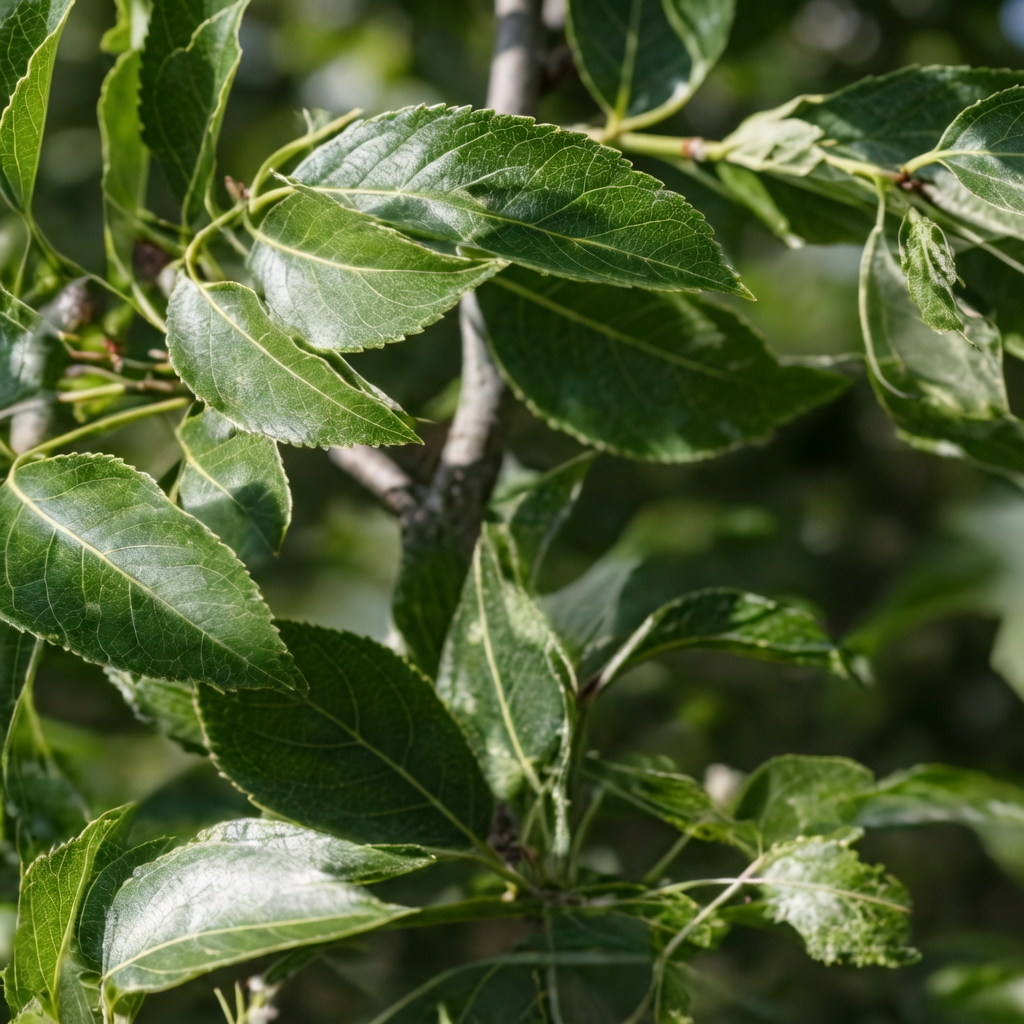
- Foliage:Leaves are opposite, simple, and oval to elliptical, about 5.5–12 cm (2.5–5 in) long. They’re dark green above and paler beneath with clearly marked veins; the underside may show small tufts of reddish-brown hairs along the veins. Fall color can range from yellow to rich reds, purples, and oranges.
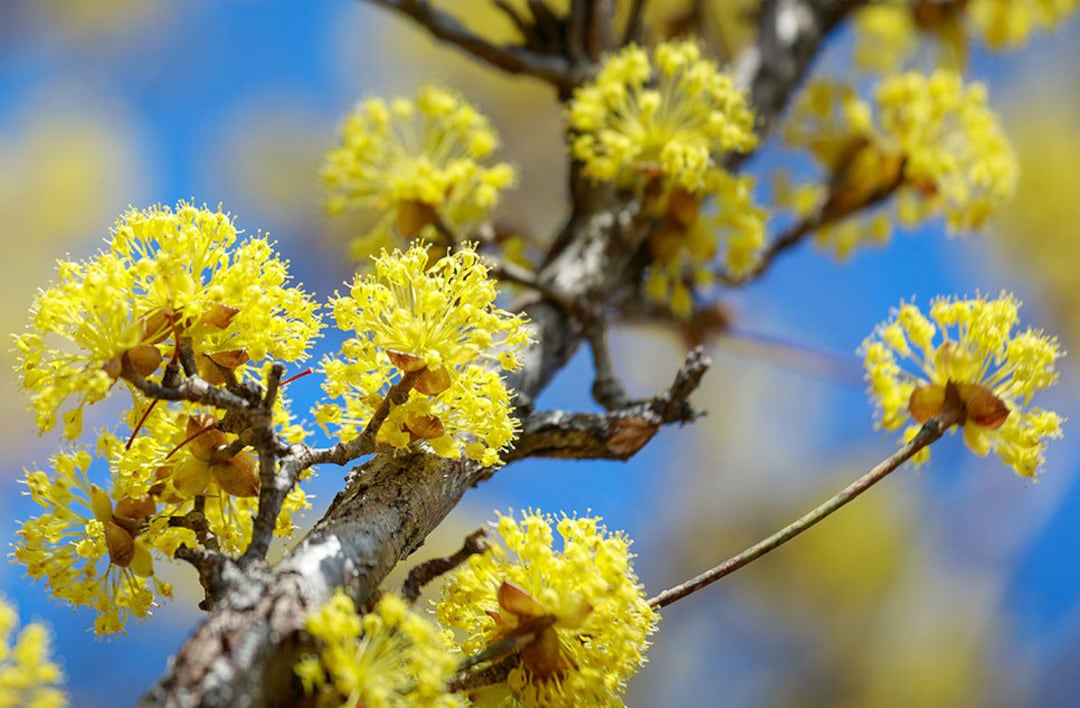
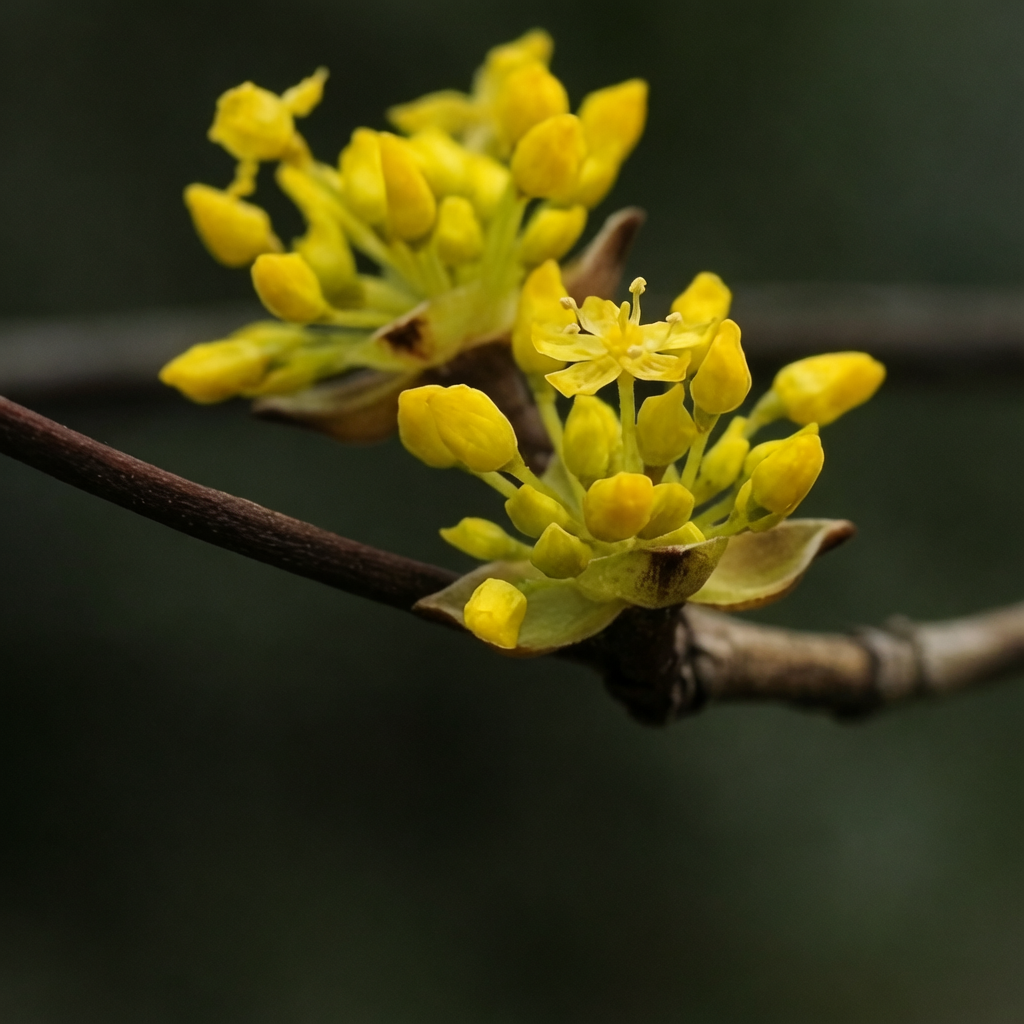
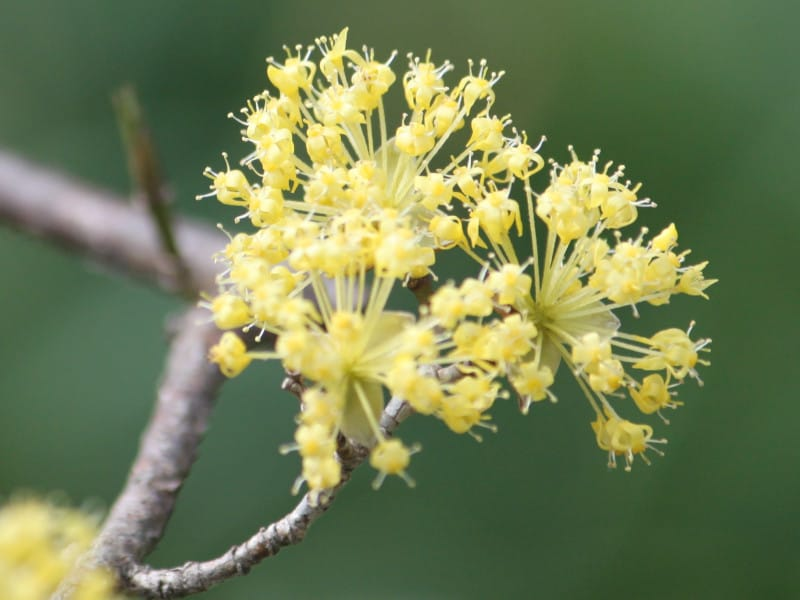
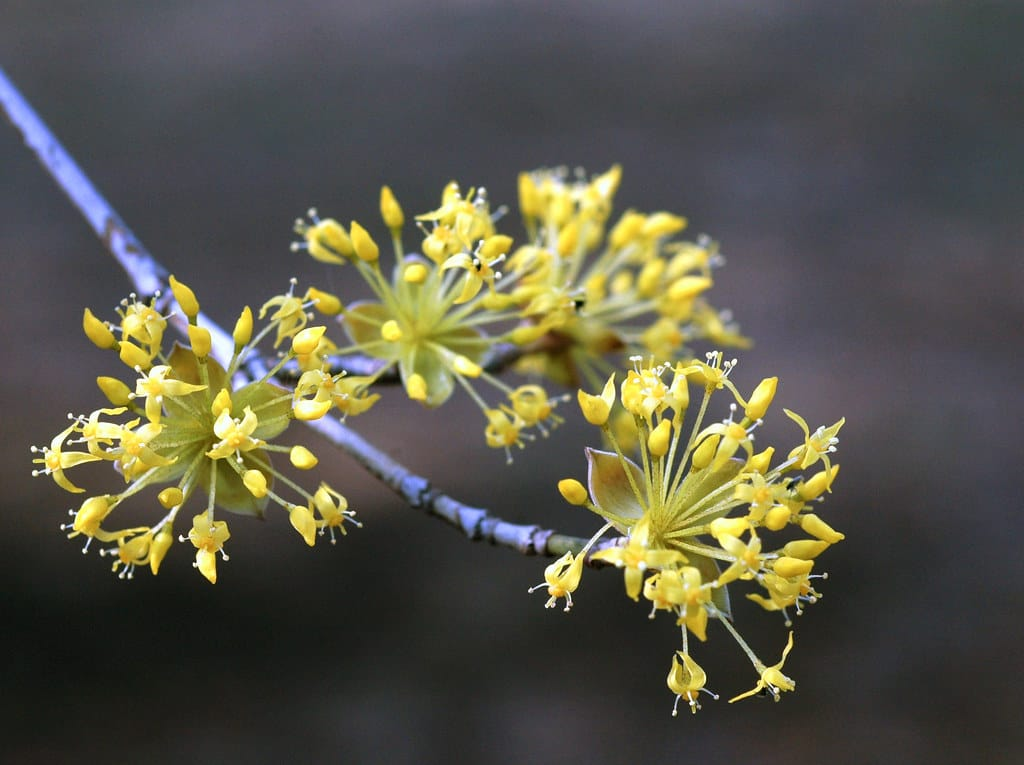
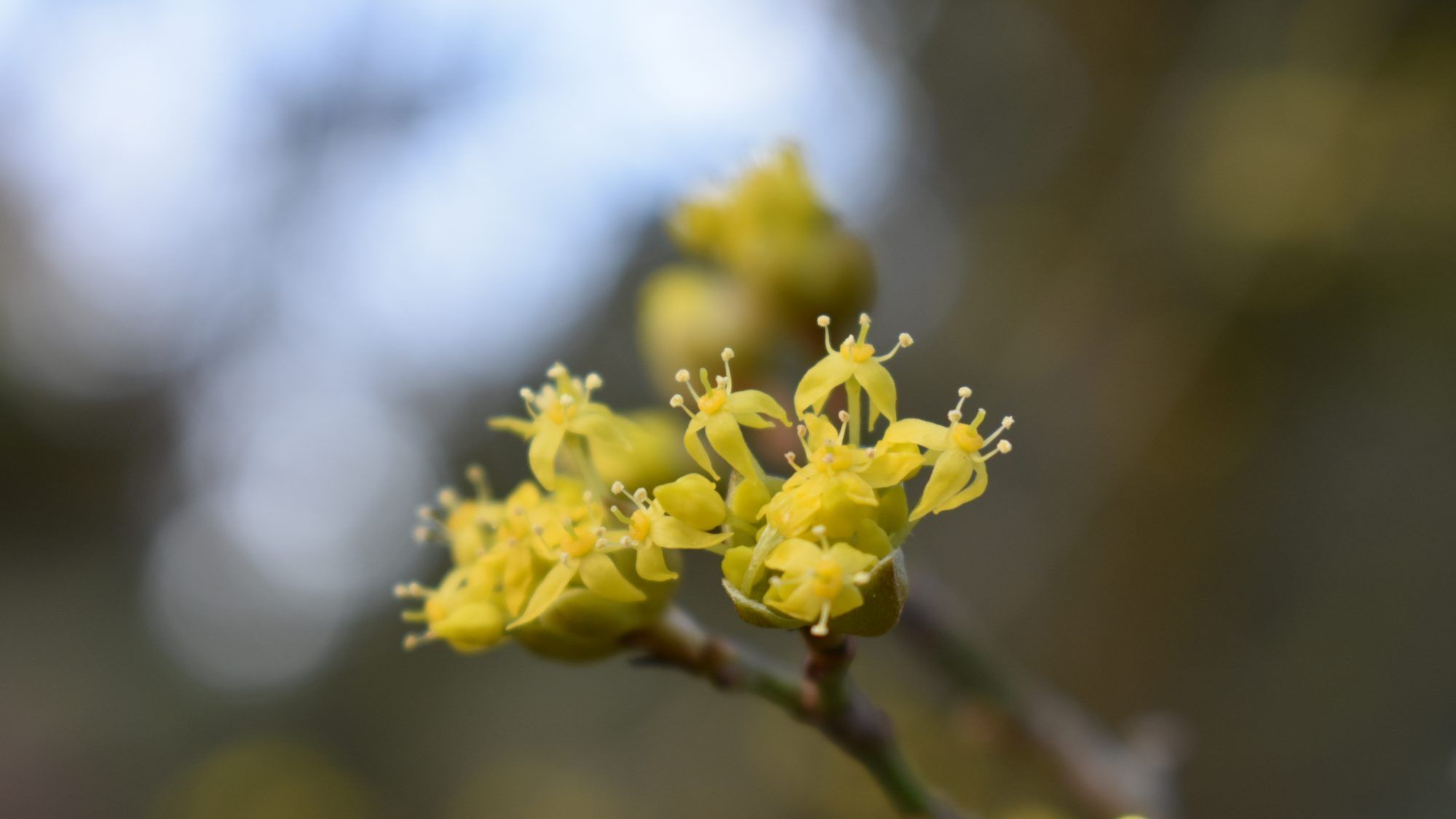
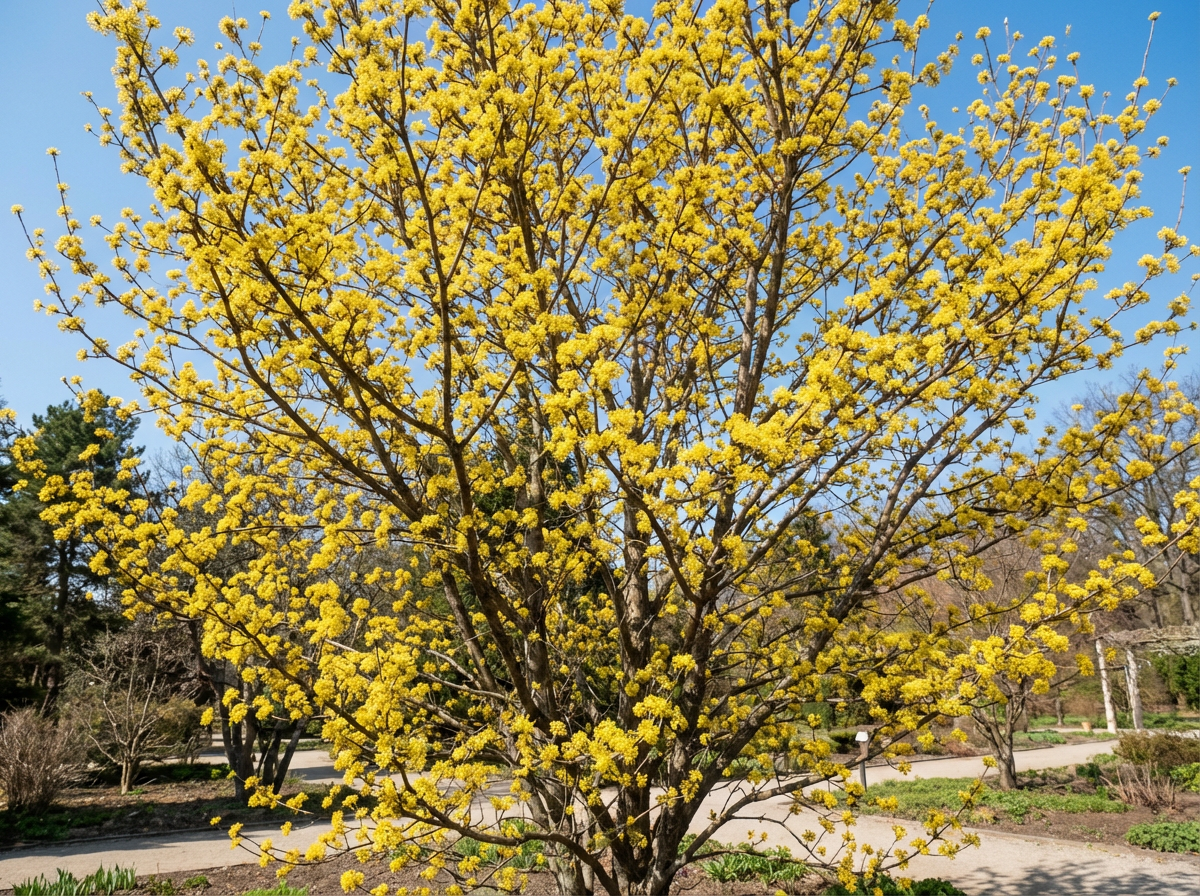
- Flower:Very small, bright yellow flowers appear in tight clusters (about 2.5 cm / 1 in wide) on bare stems before the leaves unfold. Individual flowers are around 3 mm (1/8 in) across with 4 narrow, tongue-like petals; the clusters are so numerous they create a striking “gold mist” effect.
- Flowering Season:Late winter to early spring (February to April). Bloom typically lasts up to about 30 days and occurs before leaf-out.
- Growth Habit:Multi-stemmed, low-branching large shrub/small tree with an open oval-to-rounded crown. Mature plants develop attractive grayish-brown exfoliating bark that peels in patches.
🌤️ Environment
Sunlight
Full sun to partial shade. Full sun generally gives the best flowering and fruit set; in hotter areas, light afternoon shade helps reduce stress.
Temperature
Grows best around 15–24°C (60–75°F). Once established it is cold-hardy and can tolerate brief dips to about -18°C (0°F). Like many temperate dogwoods, it benefits from winter chilling (about 3–7°C / 37–45°F for roughly 60–75 days) to set strong flower buds.
Humidity
Prefers moderate to fairly high humidity and does best with evenly moist conditions, especially while establishing.
Soil
Best in fertile, well-drained loam or sandy loam that holds some moisture but never stays waterlogged (to avoid root problems). Slightly acidic to neutral soil is typically ideal for dogwoods; the provided sources mention acidic, well-drained soil and a pH range of 6.5–7.5.
Placement
Great for woodland-style gardens, mixed borders, hedging, naturalized edges, and as a specimen near paths where the winter bark and early flowers can be appreciated. Suitable for home gardens, parks, and landscape plantings.
Hardiness
USDA Zone 5–8; generally not a plant for frost-free tropical climates and does not enjoy hot, arid exposure without irrigation.
🪴 Care Guide
Difficulty
Easy overall—tough, adaptable, and usually not bothered by major problems when sited well (good drainage, decent light, and steady moisture).
Buying Guide
Choose a vigorous plant with healthy buds, clean bark, and a strong branch structure (no cankers, dieback, or heavy insect scale). Young plants transplant most easily. It can be less common in some nursery markets, so buying from a reputable specialty nursery is often worthwhile.
Watering
Water regularly while establishing to keep soil evenly moist (not soggy). Once established, water deeply but less often—aim to let the surface dry slightly between waterings. A practical check: if the top ~2.5 cm (1 in) of soil is dry, it’s time to water. In typical garden conditions, this may work out to about every 2 weeks during the growing season, adjusting for heat, rainfall, and soil type.
Fertilization
Feed in the growing season with a balanced fertilizer (often best at a light/half rate rather than heavy feeding). Apply evenly over the root zone and water in well; avoid over-fertilizing, which can push soft growth.
Pruning
Prune just after flowering in spring so you don’t remove next year’s flower buds. Start by removing dead, diseased, rubbing, or crossing branches, then lightly shape as needed. Make clean cuts just above an outward-facing bud or node; avoid hard pruning unless renovation is necessary.
Propagation
Can be propagated by seed, cuttings, layering, and grafting. Seeds often need stratification because of dormancy (commonly involving warm and cold periods); soaking for about 24 hours before sowing can help. Softwood/semi-ripe cuttings around 10–15 cm (4–6 in) taken in spring can root more reliably with rooting hormone and consistent humidity. Layering is a patient, beginner-friendly method.
Repotting
Usually grown in the ground, so repotting isn’t typical. If grown in a container, repot in early spring while dormant into a container one size up with excellent drainage, and refresh the potting mix.
📅 Seasonal Care Calendar
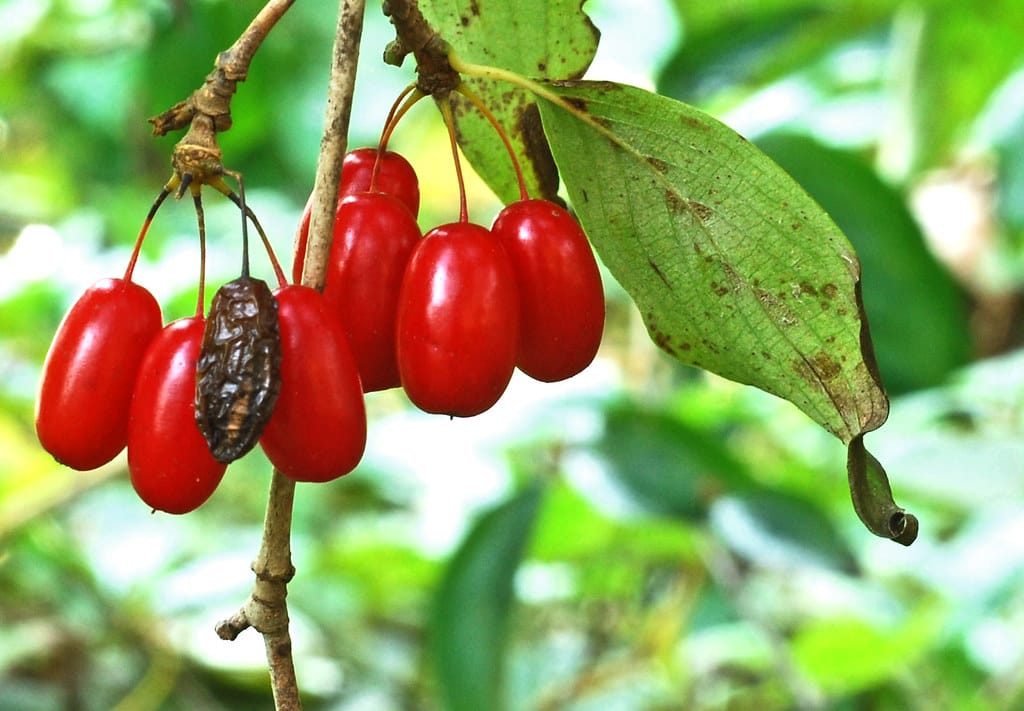
Spring: Enjoy flowering; prune after bloom; keep evenly moist as growth starts. Summer: Water during dry spells; mulch to keep roots cool; monitor for pests. Fall: Enjoy foliage color and harvest ripe red fruits if desired. Winter: Minimal care; admire exfoliating bark; protect young plants in very harsh winters and avoid salt spray exposure.
🔬 Pests, Diseases & Safety
Common Pests & Diseases
Usually trouble-free. Possible issues include dogwood borers, scale insects, and occasional leaf spots. Good airflow, proper watering (avoid constantly wet soil), and prompt removal of suckers and dead wood help prevent problems. If suckering becomes excessive, remove shoots at the base to keep it tidy.
Toxicity
Not known to be toxic to people or pets. Fruits are edible but notably sour/tart; as with any unfamiliar plant food, avoid large quantities unless you’re confident in identification and preparation.
🎋 Culture & Symbolism
Symbolism:Often linked with longevity, health, vitality, and prosperity in East Asian cultural contexts—fitting for a plant that blooms so early and is traditionally valued for its fruit.
History & Legends:The epithet “officinalis” hints at its long-standing role in traditional medicine—literally meaning a plant “of the shops” (an old reference to apothecaries). In China, 山茱萸 has been used for well over 2,000 years and has also been cultivated as an ornamental for its flowers, fruit, and handsome winter bark.
Uses:Ornamental: a classic four-season landscape plant (early flowers, summer canopy, fall color and fruit, winter bark). Edible: tart red fruits can be cooked into jams, preserves, and drinks. Traditional use: the fruit is an important ingredient in Chinese herbal traditions, commonly associated with supporting liver and kidney function. Wildlife: fruits can attract birds and the branching structure offers shelter.
❓ FAQ
When does Japanese cornel bloom?
It flowers in late winter to early spring (usually February to April), with blossoms opening before the leaves appear. In many gardens it’s among the first woody plants to bloom.
Are the red fruits edible?
Yes—technically edible, but they’re quite sour/tart fresh. They’re more enjoyable cooked into jams, syrups, or beverages, and they’re also famous for traditional uses in East Asia.
Is Japanese cornel easy to grow?
Generally yes. Give it sun to light shade, well-drained soil, and regular moisture while it establishes, and it’s usually resilient with few serious pest or disease issues.
How big will it get?
Most plants reach about 4.5–8 m (15–26 ft) tall and 3–4.5 m (10–15 ft) wide, depending on site conditions and whether you train it as a multi-stem shrub or small tree.
How is it different from Cornelian cherry (Cornus mas)?
They’re close relatives and can look similar. Japanese cornel often flowers a bit earlier, tends to ripen fruit later, and is especially valued for more noticeably exfoliating bark on mature plants.
💡 Fun Facts
- It can bloom as early as February, bringing a burst of yellow when most plants are still asleep.
- Each flower bud opens into a whole cluster (often dozens of tiny flowers), which is why the plant can look “covered in gold.”
- Its bark peels in decorative patches as it matures, giving winter structure and texture.
- It’s prized for four-season interest: flowers, foliage, fruit and fall color, then bark in winter.
- The species has a long history in Chinese culture as 山茱萸, valued both in gardens and traditional preparations.