🌱 Plant Features
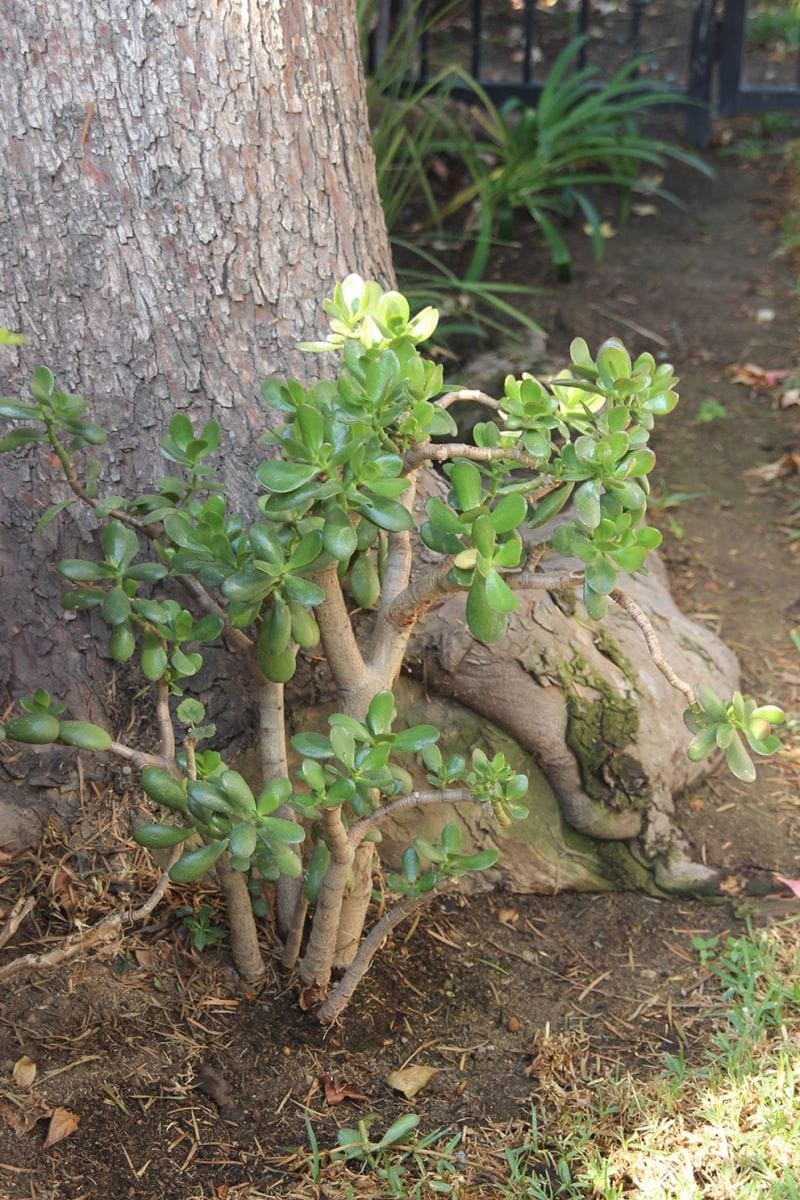
- Size:Typically grows 60–90 cm (2–3 ft) tall indoors; can reach up to about 2.5 m (8 ft) outdoors in suitable climates
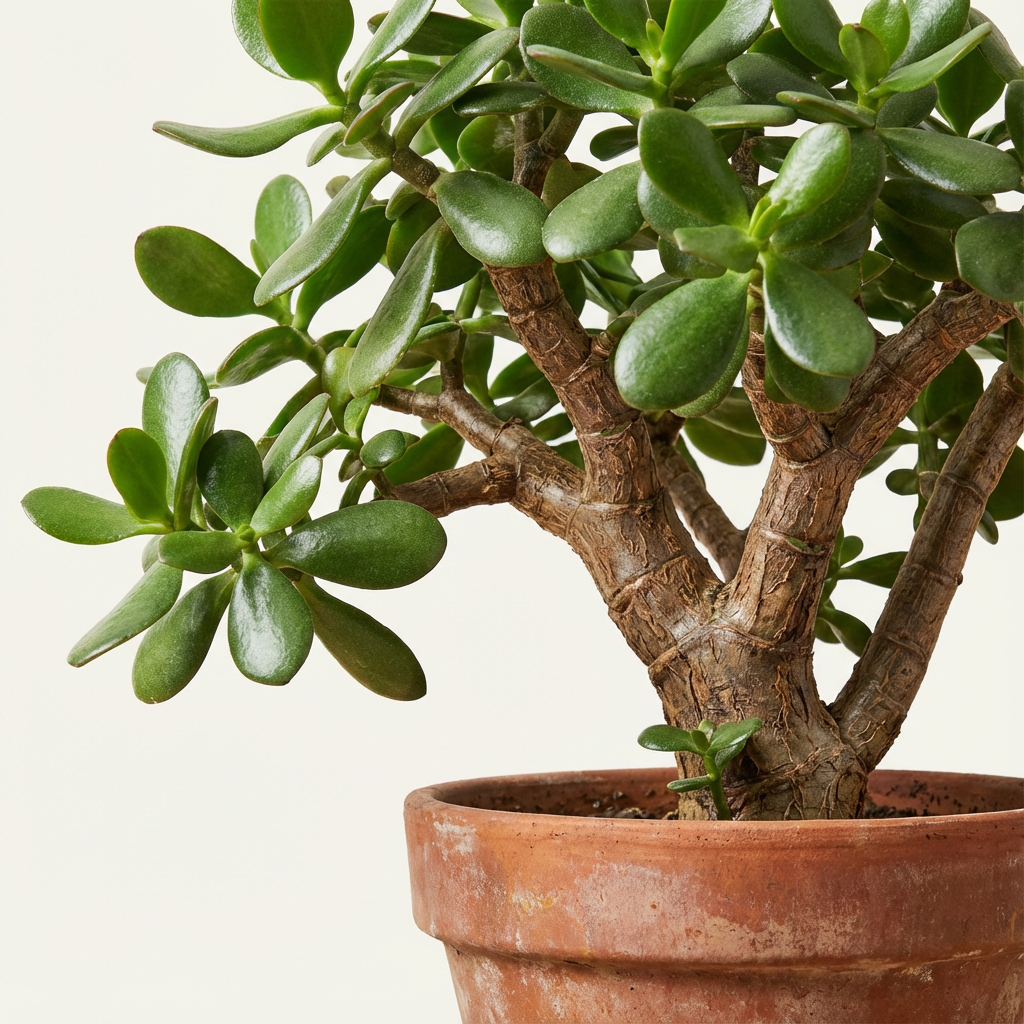
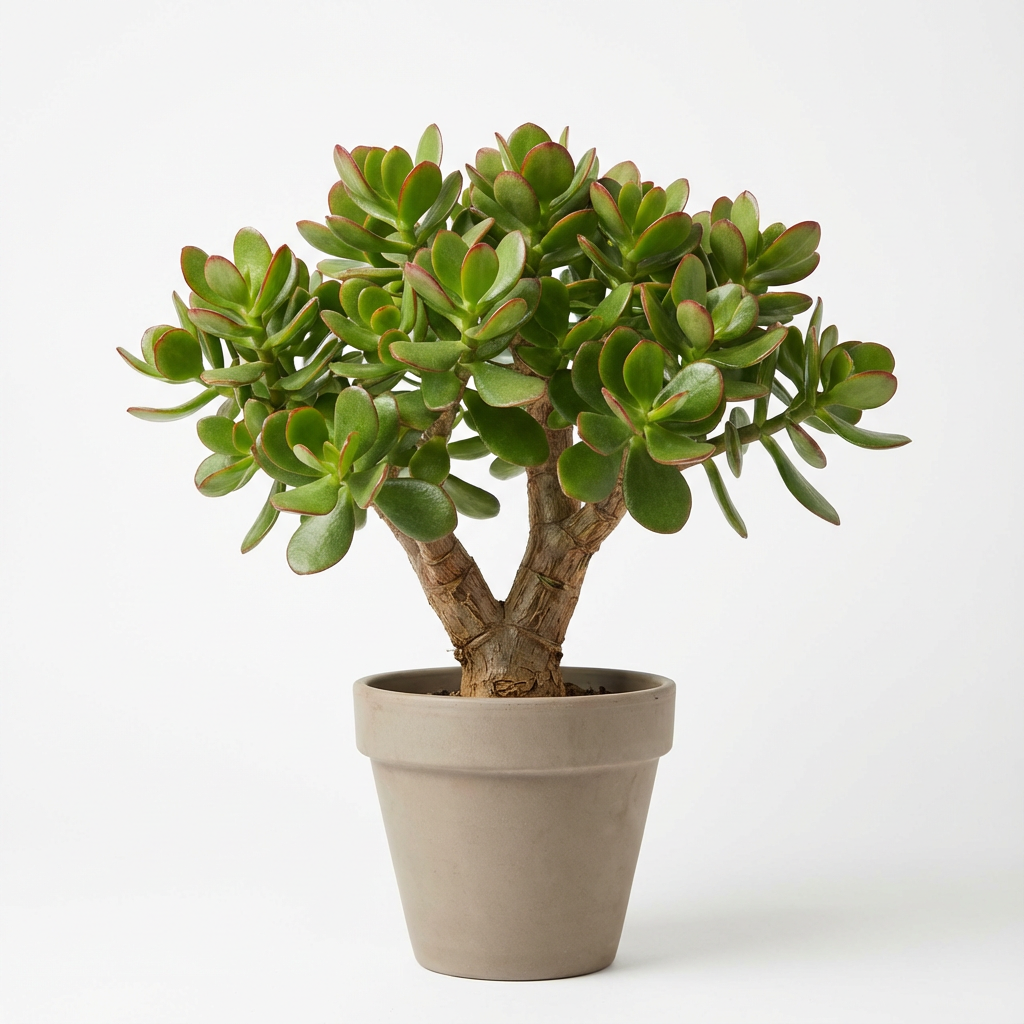
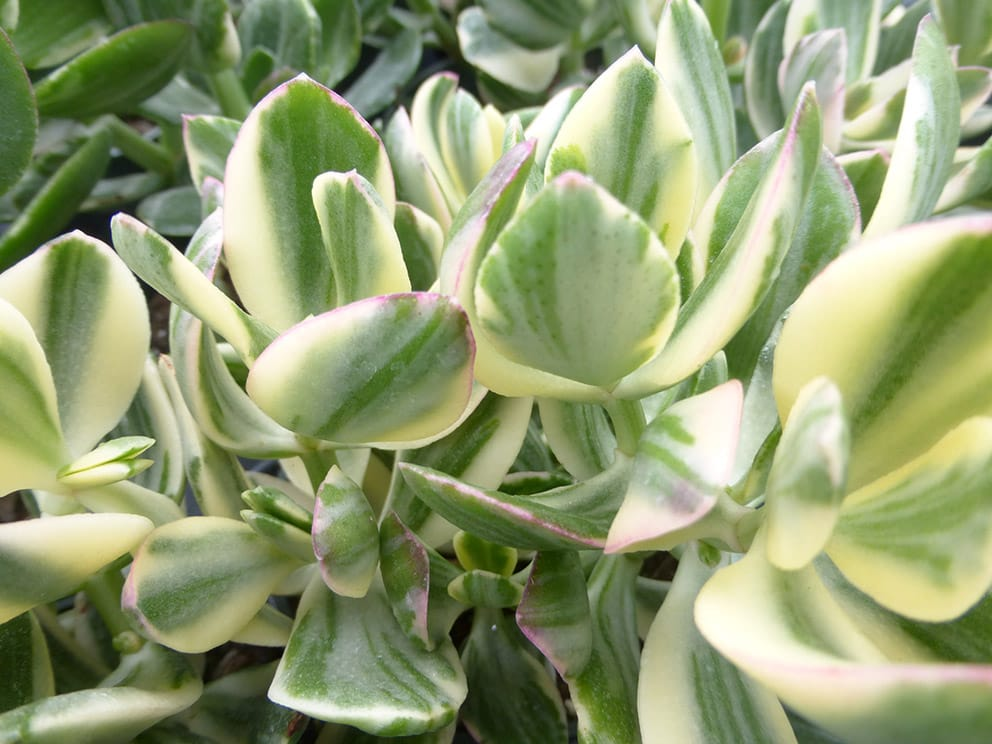
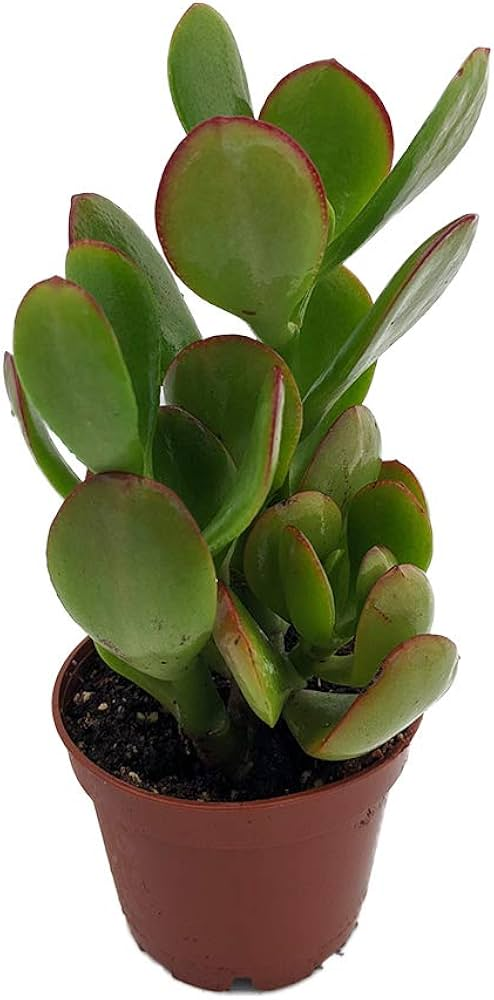
- Foliage:Leaves are thick, fleshy, and glossy—usually obovate (oval with a broader tip) to wedge-shaped—about 3–9 cm (1.2–3.5 in) long and 1.8–4 cm (0.7–1.6 in) wide. They’re a rich jade-green and often develop a reddish edge in strong light. Leaves sit in opposite pairs, with each pair rotated 90° from the previous (a classic Crassula look).
- Flower:Small, five-petaled, star-shaped flowers (about 15 mm / 0.6 in across), white to soft pink, often lightly sweet-scented. They appear in rounded, terminal clusters roughly 5 cm (2 in) across when conditions are right.
- Flowering Season:Winter (often triggered by shorter days, cooler nights, and reduced watering)
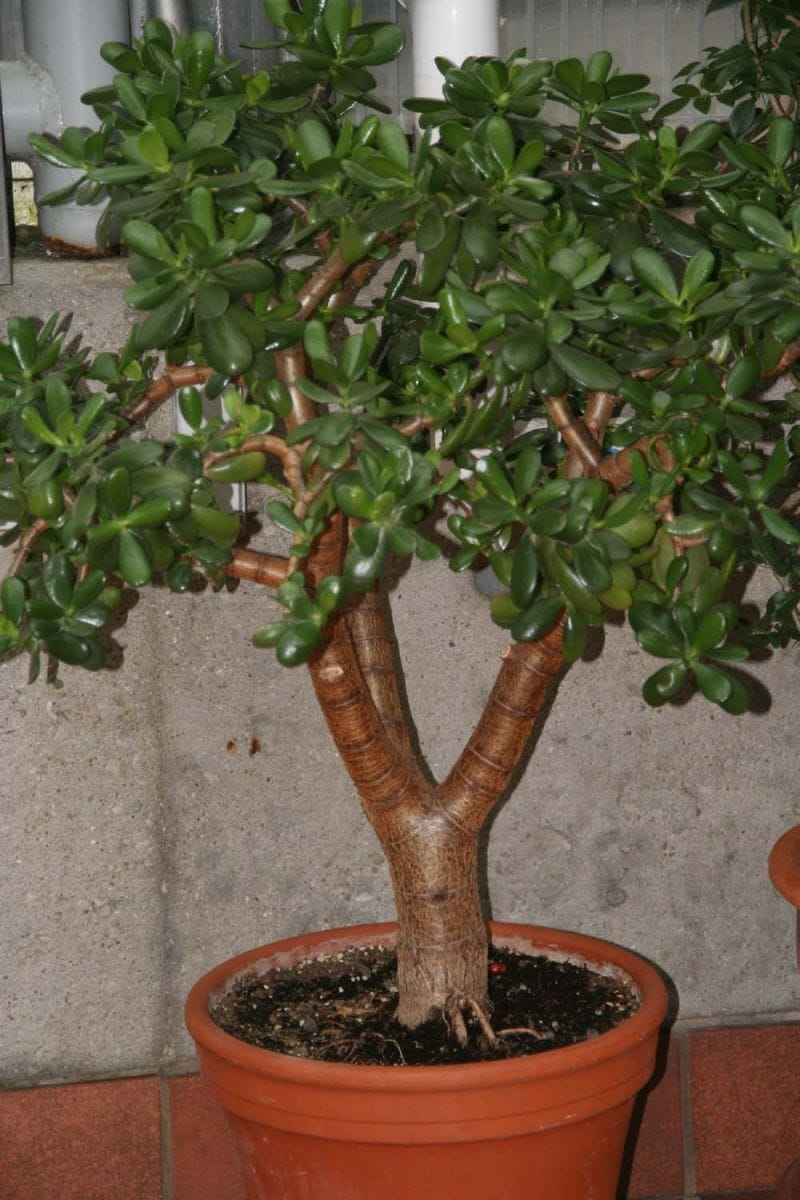
- Growth Habit:An upright, rounded, strongly branched succulent shrub. Young stems are green and fleshy; with age they thicken and turn brown, giving a trunk-like, “mini tree” appearance. Older bark may peel in horizontal strips.
🌤️ Environment
Sunlight
Bright light is key: aim for at least 4–6 hours of strong light daily. Younger plants appreciate bright indirect light, while established plants tolerate (and often prefer) some direct sun. Low light leads to stretched, leggy growth.
Temperature
Ideal indoor range is 18–24°C (65–75°F). It tolerates cooler winter nights down to about 13°C (55°F). Not frost-hardy—protect it and bring it indoors when temperatures approach 10°C (50°F) or below.
Humidity
Prefers dry air and is very comfortable in typical low-humidity indoor conditions.
Soil
Needs fast drainage. Use a cactus/succulent mix, or amend regular potting mix with perlite at about 2:1 (potting soil:perlite) for better airflow and drainage. Outdoors it thrives in sandy, rocky soils.
Placement
A sunny south- or west-facing window is ideal. Great for bright kitchen counters, sunny shelves, or an office desk near a window. In summer, it can be moved outdoors to bright shade/filtered sun (acclimate gradually to avoid sunburn).
Hardiness
USDA Zones 9–11 outdoors; elsewhere it’s best grown as a houseplant or overwintered indoors
🪴 Care Guide
Difficulty
Very easy and beginner-friendly—one of the most forgiving houseplants as long as you don’t overwater
Buying Guide
Choose a plant with firm, plump leaves and sturdy stems. Avoid any that feel soft/mushy (a common sign of rot), have lots of yellowing or shriveled leaves, or show visible pests.
Watering
Water deeply, then let the soil dry out completely before watering again. In spring/summer, that often means about once a week or less (depending on light and pot size). In fall/winter, water sparingly—only after the mix is fully dry, sometimes as little as once a month or less. Overwatering is the fastest way to lose a jade plant, so err on the dry side. Try not to splash water onto leaves and avoid leaving water sitting in a saucer.
Fertilization
Light feeder. During active growth (spring/summer), use a diluted cactus/succulent or balanced houseplant fertilizer every 2–4 weeks. Stop feeding in fall and winter. Water first, then fertilize to prevent root burn.
Pruning
Prune in early spring to shape and encourage branching. Cutting stems back to a side branch helps the plant become bushier and can strengthen the trunk over time. Also ideal for creating a bonsai-like silhouette. Cuts typically callus quickly, and new growth often follows within weeks in warm, bright conditions.
Propagation
Very easy from stem or leaf cuttings. Take a 7.5–10 cm (3–4 in) stem cutting or a healthy leaf with its attachment point intact, let it dry for a few days until the cut end calluses, then place it on (leaf) or into (stem) lightly moist, well-draining soil. Keep warm and bright; don’t water much at first. Roots usually form in about 1–2 weeks, then gradually increase watering. Best done in spring/summer.
Repotting
Repot young plants every 2–3 years; mature plants every 4–5 years or as needed. They don’t mind being slightly root-bound, which can help keep them compact. Repot in early spring; wait about 1 week before watering and about 1 month before fertilizing after repotting.
📅 Seasonal Care Calendar
Spring: Growth resumes—increase watering, begin light feeding, prune/shape, and repot if needed. Summer: Peak growth—steady “soak and dry” watering, optional outdoor vacation in filtered light, keep feeding lightly. Fall: Taper watering and stop fertilizing as days shorten. Winter: Rest period—keep brighter and cooler, water very sparingly, and protect from cold drafts/frost; flowering is most likely now if conditions are right.
🔬 Pests, Diseases & Safety
Common Pests & Diseases
Watch for mealybugs, scale, aphids, and spider mites. A common hands-on fix is dabbing pests with a cotton swab dipped in rubbing alcohol and repeating until they’re gone. Root rot is the most common disease problem and is nearly always caused by overwatering or poorly draining soil—reduce watering and improve drainage immediately if stems/leaves become soft or waterlogged. Powdery mildew is uncommon indoors but can occur with poor airflow.
Toxicity
Mildly toxic to cats, dogs, and horses if eaten (can cause vomiting, lethargy/depression, and poor coordination). Sap may irritate sensitive skin. Keep out of reach of pets and small children.
🎋 Culture & Symbolism
Symbolism:A classic symbol of good luck, prosperity, friendship, and longevity. In feng shui it’s strongly associated with wealth and positive energy—hence the many “money” nicknames.
History & Legends:Native to southern Africa and Mozambique, jade plant became a global favorite as an exceptionally durable houseplant. In parts of its native range, people historically made practical use of the plant—roots as food after preparation, and leaves in traditional remedies. Because it can live so long, it’s often shared between generations as a living keepsake.
Uses:Mostly ornamental: a tough, attractive houseplant for bright windows and sunny rooms. It’s also popular for bonsai-style training because it naturally forms a trunk and branches. Often gifted for housewarmings or business openings due to its reputation for bringing prosperity.
❓ FAQ
How often should I water my jade plant?
Only when the potting mix is completely dry. In spring/summer that may be about weekly or less; in winter it can be once a month or even less. The goal is a true “soak and dry” rhythm to avoid root rot.
Why is my jade plant dropping leaves?
Most commonly it’s watering stress—either overwatering (leading to root trouble) or long drought. Sudden temperature drops can also trigger leaf drop. Check the roots/soil moisture and keep temperatures stable and warm.
How do I make my jade plant flower?
Mature plants are more likely to bloom. Give very bright light, keep it slightly snug in its pot, reduce watering in fall/winter, and provide cool winter nights around 13°C (55°F). Avoid bright artificial light at night so it experiences naturally shorter days.
Why is my jade plant leggy and stretched out?
It needs more light. Move it to a brighter window (often with some direct sun) and prune back stretched stems to encourage bushier regrowth.
Are jade plants toxic to pets?
Yes. They’re considered mildly toxic to cats, dogs, and horses. If a pet chews on it and shows symptoms like vomiting or lethargy, contact a veterinarian.
💡 Fun Facts
- A well-kept jade plant can live for decades—sometimes long enough to become a family heirloom.
- Its thick leaves and stems store water so efficiently that established plants can go a long time between waterings.
- Bright sun can bring out red edging on the leaves—protective pigments that act like a natural sunscreen.
- Jade is famously easy to propagate: a single fallen leaf can root and start a new plant under the right conditions.
- Indoor flowering is relatively uncommon, which is why blooming jade plants are considered extra lucky by many growers.